This site is supported by our readers. We may earn a commission, at no cost to you, if you purchase through links.
A standard sewing machine meets denim the same way a butter knife meets sheet metal—it fights, skips stitches, and eventually surrenders. Most home machines top out around 60 watts and plastic frames that flex under pressure, which means the moment you stack two layers of canvas or feed through upholstery fabric, the whole operation starts falling apart. Tough fabric sewing machines solve this with metal frames, high-torque motors, and feed systems built to grip rather than guess. The difference between a machine that manages thick material and one that merely tolerates it comes down to a handful of specific specs worth knowing before you spend a dollar.
Table Of Contents
- Key Takeaways
- Top 10 Tough Fabric Sewing Machines
- 1. Singer Heavy Duty 4411 Sewing Machine
- 2. Singer Heavy Duty 4423 Sewing Machine
- 3. Singer Heavy Duty 4452 Sewing Machine
- 4. Singer Heavy Duty 4432 Sewing Machine
- 5. Singer Heavy Duty 6600C Sewing Machine
- 6. Singer HD500 Classic Sewing Machine
- 7. Brother ST150HDH Heavy Duty Sewing Machine
- 8. Singer Heavy Duty 6700C Computerized Sewing Machine
- 9. Singer Quantum Stylist 9960 Computerized Sewing Machine
- 10. Brother ST371HD Heavy Duty Sewing Machine
- Key Features for Thick Fabrics
- Compare Singer Heavy Duty Models
- Brother Models for Tough Fabrics
- Choosing Your Tough Fabric Machine
- Frequently Asked Questions (FAQs)
- Conclusion
Key Takeaways
- metal frame isn’t a luxury — it’s what keeps needle alignment, feed timing, and the motor mount from drifting when you’re pushing through stacked denim or heavy canvas.
- Motor torque matters more than stitch count; machines delivering 60–84W with 1,100 spm won’t bog down where the standard 60W plastic-frame models quit mid-seam.
- Your feed dog system and presser foot lift determine whether thick fabric advances cleanly or wanders — look for 7-point feed dogs and at least 12.7mm of clearance before committing to a machine.
- Match needle size to your material — 90/14 for mid-weight denim, 110/18 for canvas or layered seams — and swap it every 2–6 hours of heavy use, or the moment you hear a snag.
Top 10 Tough Fabric Sewing Machines
Not every sewing machine is built to handle denim, canvas, or thick upholstery without choking mid-seam. The ten machines below were chosen for their motor strength, frame durability, and real-world performance on tough materials. Here’s what made the cut.
Pairing the right machine with the right sewing machine accessories for upholstery projects makes a noticeable difference in how cleanly and consistently those heavy fabrics feed through.
1. Singer Heavy Duty 4411 Sewing Machine
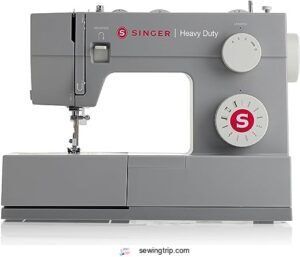
The Singer Heavy Duty 4411 is a workhorse that earns its name. Its 84W motor delivers 50% more power than standard models, pushing through denim, canvas, and upholstery at 1,100 stitches per minute without breaking a sweat. The full metal interior frame keeps everything stable under pressure, while the stainless-steel bed plate prevents thread skipping on dense layers. You get 69 stitch applications, a jam-resistant top-drop bobbin, and built-in LED lighting — solid fundamentals for any heavy-duty project.
| Best For | Home sewers, small-batch makers, and hobbyists who regularly work with heavy fabrics like denim, canvas, or upholstery and want a reliable machine that won’t quit mid-project. |
|---|---|
| Stitch Count | 69 stitches |
| Max Stitch Speed | 1,100 SPM |
| Frame Construction | Full metal frame |
| Bobbin System | Top drop-in |
| Machine Weight | 14.6 lb |
| Buttonhole Function | 4-step buttonhole |
| Additional Features |
|
- Punches through thick fabrics with ease — that 50% extra motor power is the real deal for denim and canvas
- Metal frame keeps stitches consistent whether you’re sewing a silk blouse or a canvas bag
- Top-drop bobbin and LED light make setup simple, even if you’re just starting out
- No automatic needle threader, which gets old fast if you’re switching threads often
- At nearly 15 pounds, it’s not something you’ll want to haul to a sewing class every week
- Tension and bobbin setup can take some trial and error before things run smoothly
2. Singer Heavy Duty 4423 Sewing Machine
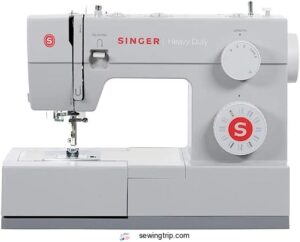
The 4423 builds on the same DNA as the 4411 but adds more stitch versatility. You get 23 built-in stitches with 97 applications — basic, stretch, decorative, and a one-step automatic buttonhole. The 84W, 0.7A motor pushes through denim and canvas at 1,100 stitches per minute, backed by a full metal interior frame and stainless-steel bed plate. Adjustable presser-foot pressure manages everything from sheer knits to heavy canvas, and the automatic needle threader keeps setup quick.
| Best For | Home sewers and DIYers who regularly work with heavy fabrics like denim, canvas, or leather and want a reliable, no-fuss machine that handles tough projects without breaking the bank. |
|---|---|
| Stitch Count | 97 applications |
| Max Stitch Speed | 1,100 SPM |
| Frame Construction | Full metal frame |
| Bobbin System | Top drop-in |
| Machine Weight | 14.6 lb |
| Buttonhole Function | One-step buttonhole |
| Additional Features |
|
- The 84W motor tears through thick fabrics and multiple layers at 1,100 stitches per minute — noticeably faster and more powerful than most home machines.
- 97 stitch applications across 23 patterns gives you solid versatility for garment sewing, repairs, and basic decorative work.
- The metal interior frame and stainless-steel bed plate make it feel solid and stable, not like it’s going to rattle apart mid-project.
- The included needles can bend on really heavy materials — you’ll want to swap in heavy-duty needles for serious denim or leather work.
- Only 23 stitches, so if you’re dreaming of embroidery or computerized designs, you’ll quickly outgrow it.
- The foot pedal runs sensitive and the cord is short, which can be awkward until you figure out the right setup for your workspace.
3. Singer Heavy Duty 4452 Sewing Machine
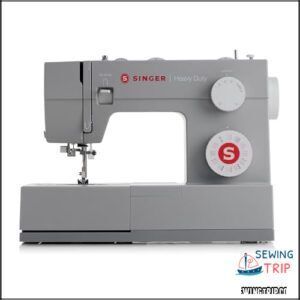
The 4452 pushes the heavy-duty line a step further. Its high-torque motor hits 1,100 stitches per minute and punches through denim, canvas, and upholstery without bogging down. You get 32 built-in stitches with 110 applications, plus a one-step buttonhole — plenty for serious project work. The full metal frame keeps vibration low during long sessions. At $219.99, it’s a capable mechanical machine if you don’t need a digital display.
| Best For | Sewists who regularly tackle heavy fabrics like denim, canvas, or upholstery and want a durable, no-frills mechanical machine that gets the job done without a steep price tag. |
|---|---|
| Stitch Count | 110 applications |
| Max Stitch Speed | 1,100 SPM |
| Frame Construction | Full metal frame |
| Bobbin System | Top drop-in |
| Machine Weight | 17.6 lb |
| Buttonhole Function | One-step buttonhole |
| Additional Features |
|
- Powerful 1,100 stitch-per-minute motor chews through thick materials without slowing down
- Full metal frame keeps things stable and quiet, even during long heavy-duty sessions
- Comes loaded with useful accessories — walking foot, non-stick foot, zipper foot, and more — right out of the box
- Knobs and dials aren’t well labeled, so you’ll be reaching for the manual more than you’d like
- No digital features — if you want automatic needle positioning or a screen, look elsewhere
- Some users run into thread jams and find the walking foot tricky to swap in and out
4. Singer Heavy Duty 4432 Sewing Machine
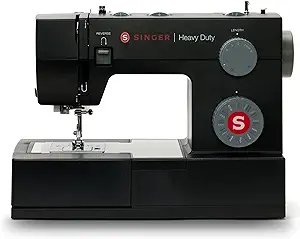
Step down from the 4452, and the 4432 holds its own at a slightly lower price point. You’re still getting that high-torque motor pushing 1,100 stitches per minute — no meaningful drop there. The 32 built-in stitches cover utility, stretch, and decorative work, and the metal frame with stainless-steel bedplate keeps feeding consistent through denim or canvas. One real drawback: the foot-pedal cable runs short, which matters on taller worktables.
| Best For | Sewists who work with heavy fabrics like denim or canvas and want a fast, reliable machine without paying top dollar. |
|---|---|
| Stitch Count | 110 applications |
| Max Stitch Speed | 1,100 SPM |
| Frame Construction | Full metal frame |
| Bobbin System | Top drop-in |
| Machine Weight | 14.6 lb |
| Buttonhole Function | One-step buttonhole |
| Additional Features |
|
- Pushes up to 1,100 stitches per minute with a motor built to handle thick materials without slowing down
- Metal frame and stainless-steel bedplate keep everything stable and feeding smoothly
- 32 built-in stitches cover the basics, stretch work, and decorative options — plenty for most projects
- The foot-pedal cable is short, which can be a real problem if your worktable sits higher than average
- The on/off switch and feed-dog lever are awkwardly placed low on the machine
- Some early units have had issues with speed consistency and bobbin alignment
5. Singer Heavy Duty 6600C Sewing Machine
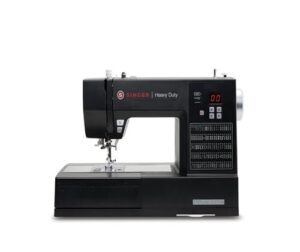
When you need more machine than the 4423 but don’t want to go fully industrial, the 6600C hits that middle ground. It runs the same 1,100 spm motor with 60% more power than standard models, backed by a full metal frame and stainless-steel bedplate that manages denim, canvas, and multi-layer seams without flinching. You also get 100 built-in stitches, a touch-button LCD, and a top-load visible bobbin — all for $309.99.
If you’re weighing the 6600C against other heavy-duty options, this breakdown of high-speed sewing machine models puts the 1,100 spm motor in useful context.
| Best For | Sewers who regularly work with heavy fabrics like denim or canvas and want a durable, feature-rich machine without jumping to industrial equipment. |
|---|---|
| Stitch Count | 215 applications |
| Max Stitch Speed | 1,100 SPM |
| Frame Construction | Metal interior frame |
| Bobbin System | Auto top-load |
| Machine Weight | 16.2 lb |
| Buttonhole Function | One-step buttonhole |
| Additional Features |
|
- Powerful 1,100 spm motor with 60% more torque handles thick, multi-layer materials without stalling
- Full metal frame and stainless-steel bedplate mean this thing is built to last through heavy use
- Top-load visible bobbin and touch LCD make setup and stitch selection quick and straightforward
- At 16 lbs, it’s not something you’ll want to haul to a class or a friend’s house
- The auto-threader can be finicky — some users end up threading it by hand anyway
- Decorative stitch options are limited; if you’re into embroidery or specialty work, you’ll hit a wall fast
6. Singer HD500 Classic Sewing Machine
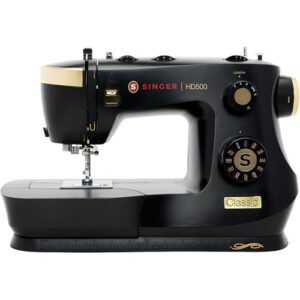
The HD500 Classic is where simplicity meets serious muscle. Its motor delivers 60% more torque than standard machines, pushing through denim and canvas at up to 1,000 spm without bogging down. You get 32 built-in stitches, a one-step buttonhole, and an automatic needle threader on a full metal frame that stays planted under load. At 13.67 lb, it’s compact enough to store but solid enough to trust.
| Best For | Home sewers and hobbyists who regularly work with heavy fabrics like denim, canvas, or quilts and want a reliable machine that won’t stall out mid-project. |
|---|---|
| Stitch Count | 32 stitches |
| Max Stitch Speed | 1,100 SPM |
| Frame Construction | Full metal frame |
| Bobbin System | Top drop-in |
| Machine Weight | 13.67 lb |
| Buttonhole Function | One-step buttonhole |
| Additional Features |
|
- The beefed-up motor handles thick, multi-layer fabrics without breaking a sweat — great for jeans, canvas bags, or stacked quilt pieces.
- Full metal frame keeps things steady at high speeds, so you get cleaner stitches and less vibration during long sewing sessions.
- Beginner-friendly touches like the auto needle threader and drop-in bobbin take a lot of the frustration out of setup.
- No printed manual in the box — you’ll have to download the PDF yourself, which isn’t ideal when you’re mid-project and just want a quick answer.
- The needle-position selector can get stuck on the left setting over time, and fixing it usually means a trip to a technician.
- The plastic bobbins that come with it can shift around at high speeds — worth swapping for metal ones if you’re doing heavy-duty work.
7. Brother ST150HDH Heavy Duty Sewing Machine
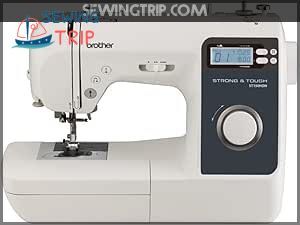
The Brother ST150HDH brings serious computing power to heavy-duty work. Its computerized LCD panel guides stitch selection clearly, while the 7-point feed dog system pulls denim and canvas through without slippage. You get 50 built-in stitches, a walking foot included, and a jam-resistant drop-in bobbin — all on a metal frame rated for thick layers. At 10.1 lb, it’s portable enough to move but sturdy enough to trust on demanding projects.
| Best For | Sewers who regularly work with heavy fabrics like denim, leather, or thick quilting layers and want a machine that’s intuitive enough for beginners but capable enough for serious projects. |
|---|---|
| Stitch Count | 50 stitches |
| Max Stitch Speed | Variable |
| Frame Construction | Unspecified metal |
| Bobbin System | Drop-in top bobbin |
| Machine Weight | 10.1 lb |
| Buttonhole Function | 5 auto-size buttonholes |
| Additional Features |
|
- The 7-point feed dog system handles thick, heavy materials smoothly — no skipped stitches or frustrating fabric jams.
- Comes with a walking foot plus eight more presser feet right out of the box, so you’re ready for a wide range of projects immediately.
- The LCD screen makes stitch selection straightforward, and you can run it without a foot pedal — great for precision work.
- Only works with 120 V U.S. outlets, so international use is completely off the table.
- The built-in LED lighting is pretty dim — you’ll likely want a separate lamp for detailed or close-up work.
- No built-in thread cutter, which is a small but noticeable omission when you’re in the middle of a project.
8. Singer Heavy Duty 6700C Computerized Sewing Machine
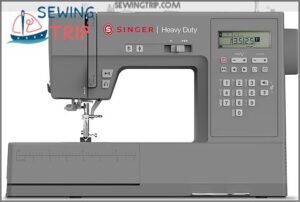
The Singer Heavy Duty 6700C is where computing power meets brute-force capability. Its high-torque motor pushes through denim, canvas, and leather at up to 1,100 stitches per minute — without stalling. You get 411 built-in stitches, an LCD screen for quick adjustments, and a variable speed limiter for precision work. Ten presser feet come included, so you’re not hunting for accessories. The metal frame keeps vibration low and needle alignment true, even under sustained load.
| Best For | Sewists who regularly work with heavy fabrics like denim, leather, or canvas and want a machine that can keep up with serious, high-volume projects. |
|---|---|
| Stitch Count | 411 stitches |
| Max Stitch Speed | 1,100 SPM |
| Frame Construction | Heavy-duty metal frame |
| Bobbin System | Drop-in bobbin |
| Machine Weight | Unspecified |
| Buttonhole Function | 7-style auto buttonhole |
| Additional Features |
|
- 411 built-in stitches plus 10 presser feet right out of the box — you’ve got a lot of creative ground covered without buying extras.
- The high-torque motor pushes through thick layers without skipping a beat, making it a solid pick for bags, jeans, and home décor.
- Speed control and needle-stop features let you slow things down for detailed or delicate work, so it’s not just a one-trick powerhouse.
- Some users run into thread breakage and tension issues on very thick or layered materials, which is frustrating given the machine’s heavy-duty billing.
- The foot-raising lever sits on the right side instead of the back — a small thing, but it throws off your rhythm if you’re used to the standard placement.
- No printed manual in the box, and the LCD can be hard to read in low light, so getting comfortable with the machine takes a bit more patience upfront.
9. Singer Quantum Stylist 9960 Computerized Sewing Machine
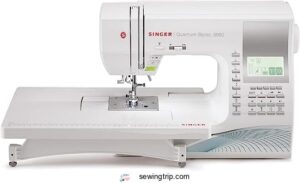
The 9960 isn’t built for brute force — it’s built for precision at scale. You get 600 built-in stitches with 1,172 stitch applications, plus 13 automatic one-step buttonhole styles and built-in lettering for monograms. Its DC motor runs up to 850 stitches per minute, handling denim and heavy décor fabrics reliably. The automatic thread cutter, transparent drop-in bobbin, and LCD stitch display keep your workflow tight. Thirteen presser feet and an extension table come standard — no extra shopping required.
If you’re weighing your options, this quilting machine comparison guide puts the 9960’s stitch library and versatility in perspective against other top picks.
| Best For | Sewers who want one machine that handles everything from garment construction and quilting to monogramming — without buying extras. |
|---|---|
| Stitch Count | 1,172 applications |
| Max Stitch Speed | Variable |
| Frame Construction | Standard metal frame |
| Bobbin System | Top drop-in |
| Machine Weight | 14.6 lb |
| Buttonhole Function | 13-style auto buttonhole |
| Additional Features |
|
- 600 stitches and 13 presser feet cover almost every project type right out of the box
- The automatic thread cutter and drop-in bobbin keep things moving during long sewing sessions
- Speed control and start/stop button let you work without a foot pedal, great for precision-heavy tasks
- No dedicated tension wheel, so dialing in decorative stitches can take some trial and error
- The throat plate is standard-sized, which can feel cramped on bigger quilting projects
- The needle threader works most of the time, but it can be finicky and occasionally needs a hand
10. Brother ST371HD Heavy Duty Sewing Machine
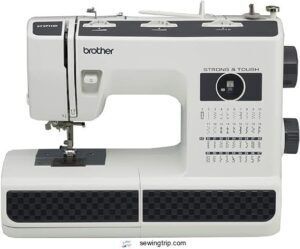
If you want a machine that earns its keep on denim, canvas, and faux fur without draining your budget, the ST371HD is worth a serious look. Its metal interior frame keeps vibration low and accuracy high through long sessions. You get 37 built-in stitches, automatic needle threading, and a quick-set drop-in bobbin — all at $189.99. The 800 spm motor manages thick layers cleanly, and the 25-year limited warranty backs every stitch.
| Best For | Home sewers and beginners who regularly work with heavy fabrics like denim or canvas and want a reliable, no-fuss mechanical machine without spending a lot. |
|---|---|
| Stitch Count | 37 stitches |
| Max Stitch Speed | 800 SPM |
| Frame Construction | Heavy-duty construction |
| Bobbin System | Quick-set drop-in |
| Machine Weight | 18.4 lb |
| Buttonhole Function | Auto-size buttonhole |
| Additional Features |
|
- Handles thick, tough fabrics really well thanks to the metal frame and 800 spm motor
- Super easy to set up with the automatic needle threader and drop-in bobbin
- Backed by a 25-year limited warranty, which is hard to beat at this price
- Foot pressure isn’t adjustable, so thin or delicate fabrics can be tricky
- No computerized features at all — skip it if you want embroidery or stitch memory
- The bobbin size doesn’t match older Brother models, so spare parts aren’t interchangeable
Key Features for Thick Fabrics
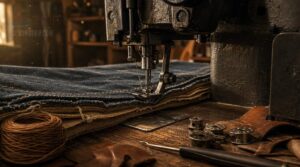
Not every machine can handle denim, canvas, or leather without throwing a fit halfway through a seam. The right one comes down to a handful of specs that actually matter when the fabric fights back. Here’s what to look for before you buy.
Powerful Motor and Torque
When a machine stalls mid-seam through double-layer denim, the motor is almost always the culprit. That’s why industrial-grade motor power separates capable machines from frustrating ones. Heavy-duty models deliver 60% stronger motor output than standard units — commonly 0.7 A to 1.4 A — giving you enough torque to push through canvas, leather, and thick seams without hesitation. Choosing machines with high efficiency motors can further reduce energy consumption during long sewing runs.
Metal Frame Construction
A powerful motor means nothing if the frame around it flexes under load. Full metal frame construction keeps everything locked in place — needle alignment, feed timing, motor mount — even after hours of continuous sewing. Steel resists deflection; aluminum handles heat and corrosion. Either way, metal construction for durability means fewer vibrations, tighter stitches, and a machine that holds its geometry session after session.
Here’s what that rigid core actually does for you:
- Vibration control — heavier metal frames absorb needle impact and chatter, reducing thread breakage at speed.
- Heat management — metal dissipates motor heat more evenly than plastic, preventing warp during long runs.
- Modular design — precision-machined frames support accessory feet, servo upgrades, and automated thread cutters without losing alignment.
A heavy-duty metal frame isn’t just about feeling solid in your hands. It’s the structural backbone that makes every other spec on the sheet actually perform.
High Presser Foot Lift
A rigid frame controls alignment, but presser foot lift controls access. If you can’t clear the material, even the strongest motor stalls out before the work begins.
Extra-high presser foot lift — up to 12.7 mm — gives you genuine clearance for bulky seams and multiple layers without forcing material under the foot.
Heavy-duty Needle Compatibility
Clearing the foot is half the battle — the other half is making sure your needle can actually punch through what you’re sewing. Heavy-duty needle compatibility means accepting sizes up to 110/18 or even 120/20, which are built for heavy gauge fabrics like denim, canvas, and leather. Larger needle eyes also reduce thread shredding when you’re running thick topstitching thread.
Strong Feed Dog System
The feed dog system is your machine’s grip on reality — without it, thick fabrics wander, layers shift, and your seams lose their line. Deeper tooth profiles on heavy-duty models bite into denim and canvas with authority, advancing material through each stitch cycle without slipping.
Without a strong feed dog system, thick fabrics wander, layers shift, and your seams lose their line
- Tooth Profile Impact — Hardened, deep teeth grip multiple layers without bite marks or creep
- Differential Feed Benefits — Front and rear feeds pull at different rates, eliminating puckering on wovens
- Fabric Grip Mechanisms — 7-point feed dogs distribute pressure evenly across thick fabrics for consistent advancement
- Alignment Techniques — Micro-adjustment screws keep feed dogs precisely aligned with the needle plate, preventing skipped stitches
Feed Dog Maintenance matters too. Clean the teeth regularly and replace worn ones before they start causing uneven seams on heavy fabric handling projects.
Compare Singer Heavy Duty Models
Singer’s heavy-duty lineup looks similar on the surface, but the differences between models matter more than you’d think. From mechanical basics to full computerized control, each machine is built for a specific kind of sewer and a specific kind of work. Here’s how the main models stack up across the specs that count.
Mechanical Versus Computerized Models
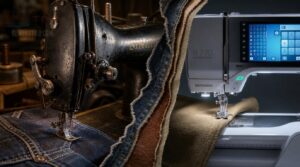
Choosing between mechanical vs electronic sewing machines comes down to control style and project demands. Mechanical controls give you immediate tactile control — turn a dial, feel the resistance, adjust on the fly. Computerized controls trade that directness for stitch memory and automation. For heavy denim or canvas, mechanical models win on repair simplicity and power stability under load.
Stitch Count Differences
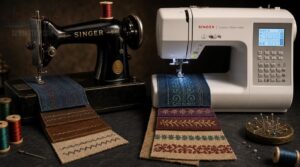
Singer’s mechanical models top out at 18 to 32 built-in stitches, while computerized versions like the 6600C and 6700C offer 200 to 600. That gap matters when your project calls for both utility and decorative stitches. Key stitch count factors to know:
- Bold fills demand higher stitch density than simple outlines
- Satin stitches add more penetrations per inch than running stitches
- Heavier fabrics tolerate denser fills without puckering
- Thicker thread raises visual density at similar stitch counts
- Stabilizers enable cleaner satin applications on tough materials
Speed and Motor Strength
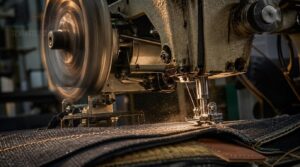
Regarding raw power, the Singer Heavy Duty lineup doesn’t mess around. Mechanical models like the 4411 and 4423 push up to 1,100 stitches per minute, backed by an industrial-grade motor delivering enough torque to drive through denim without hesitation. Torque optimization keeps stitch length consistent even when fabric thickness changes mid-seam.
Best Uses by Fabric
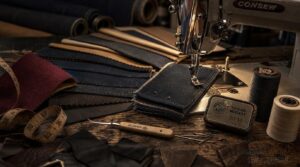
Not every machine matches every material — knowing which Singer model fits your project saves you time and ruined fabric. For denim and canvas, the 4423 and 4452 push through multiple layers cleanly using size 90/14 or larger needles. Leather sewing suits the 4452 with increased stitch length. The 6600C manages upholstery and twill comfortably, while the 4411 covers everyday heavy-duty sewing.
Value for Home Sewing
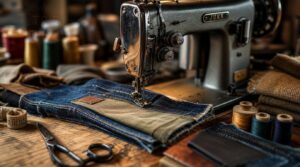
A heavy-duty sewing machine pays for itself faster than you’d think. Instead of replacing worn jeans or buying custom-fit curtains, you make exactly what you need. Singer’s metal-frame models handle repairs, alterations, and original projects without flinching. The easy-to-use features — automatic threaders, speed control, clear stitch guides — mean less frustration and more time doing what you actually enjoy.
Brother Models for Tough Fabrics
Brother might not always top the conversation when heavyweights clash, but the ST150HDH and ST371HD have quietly earned their place in serious workrooms. Both machines bring real muscle to denim, canvas, and multi-layer projects without the steep learning curve. Here’s a closer look at what makes each one worth your attention.
ST150HDH Feature Highlights
The ST150HDH is built around a heavy-duty metal frame that keeps everything rigid under pressure. Its powerful motor pushes through denim and canvas without bogging down. You get an LCD stitch selection panel, automatic threading system, jam-resistant bobbin, and LED work lighting — plus adjustable foot pressure to match whatever thickness you’re feeding through.
ST371HD Feature Highlights
The Brother ST371HD takes a slightly different approach than the ST150HDH — less LCD, more dial-driven simplicity. That’s not a step down; it’s a different tool for a different hand. Here’s what it brings to the table:
- Auto Needle Threader cuts setup time drastically
- Quick Bobbin System drops in and runs jam-free
- Free Arm Versatility manages cuffs and sleeves cleanly
- Variable Stitch Width reaches 7 mm for decorative work
- Non-Stick Foot glides over vinyl and thick fabrics without drag
The heavy-duty metal frame keeps vibration low, and adjustable presser foot pressure lets you dial in the right grip for denim or layered canvas.
Denim and Canvas Handling
Both the ST150HDH and ST371HD handle denim and canvas with authority — but raw power only gets you so far. Needle size matters most: use a 90/14 for mid-weight denim, step up to a 110/18 for 12–16 oz canvas or stacked layers.
| Fabric | Recommended Needle | Presser Foot |
|---|---|---|
| Light denim | 90/14 | Standard |
| Heavy denim | 100/16 | Walking foot |
| Canvas (8–12 oz) | 100/16 | Teflon-coated |
| Canvas (14–24 oz) | 110/18 | Walking foot |
| Vinyl/layered fabric | 110/18 | Non-stick foot |
Pre-wash your denim before cutting — it tightens the weave and reduces bulk at seams. For canvas, skip pre-washing waxed varieties; the coating helps the needle glide through cleanly. Polyester thread holds better than cotton on both fabrics, resisting tension and abrasion over time. Reinforce high-stress seams with a double-stitch or backstitch at each end. Swap your needle every 8–10 hours of heavy use — a dull needle causes skipped stitches before you even notice the damage.
Beginner-friendly Controls
After dialing in your needle and thread for denim, the next question is: can you actually use the machine without a manual in your lap? With the ST150HDH and ST371HD, the answer is yes. Color-coded controls and clearly labeled dials cut the learning curve fast. One-touch presets, a built-in tutorial mode, and an automatic needle threader mean you’re sewing, not troubleshooting.
Accessories and Included Feet
What comes in the box matters more than most buyers realize. Both Brother models ship with a solid accessory kit — zipper, walking foot, and nonstick foot included. Compatibility with low-shank standards means you can expand your presser feet variety without hunting for brand-specific adapters. For thick layers, that walking foot alone is worth its weight.
Choosing Your Tough Fabric Machine
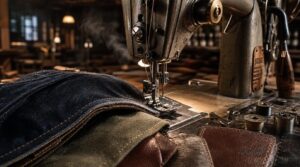
Picking the right machine comes down to more than horsepower — it’s about matching the tool to your work. Before you buy, there are five practical factors worth thinking through. Here’s what to weigh.
Fabric Type and Thickness
Fabric type is your first filter — not your budget. Denim, canvas, and leather each demand something different from a machine. Denim at 6–12 layers can hit 7 mm thick. Canvas runs 0.7–1.5 mm per layer. Leather alternatives add 0.5–1.0 mm per added layer.
- Measure before you buy using a calibrated thickness gauge
- Check your GSM rating — heavier fabrics need more torque
- Account for layering impact — each added layer compounds resistance
- Match needle size to thickness: 110/18 for dense weaves
Material blend effects matter too. Linen blends stiffen fabric by 10–25%. Fleece linings add 2–4 mm alone. A machine that manages single-layer denim may stall on a multi-layer seam.
Stitch Options Needed
Not every stitch belongs on tough fabric. Straight stitch at 3–5 mm manages most heavy canvas seams. Zigzag reinforces denim edges and controls fraying. For upholstery hems, blind hem stitch stays nearly invisible. Stitch tension control and adjustable presser foot pressure determine whether those stitches hold — or tear out under stress. Check your machine’s built-in stitch library before committing.
Portability and Workspace
Size matters when you’re hauling a machine to a client’s space or setting up in a cramped corner. A portable sewing machine under 15 pounds makes that realistic.
- Compact Design keeps the footprint between 12–18 inches wide
- Battery Power Options let you work without a fixed outlet
- Travel-Ready Features like grips and hard cases protect gear in transit
- Noise Control keeps shared spaces workable
- Storage Solutions include foldable trays and retractable legs
A free arm, extension table, and large throat opening round out an adaptable, space-smart setup.
Warranty and Support
A machine is only as good as the backup behind it. Warranty duration generally runs one to two years, with some brands offering a 25-year warranty on parts. Always register your machine — it activates coverage and simplifies claims.
| Feature | What to Know |
|---|---|
| Support channels | Phone, chat, authorized centers |
| Claim procedures | Proof of purchase required |
| Exclusion policies | Misuse voids coverage |
Keep your receipt. Professional servicing through authorized networks ensures genuine parts and protects your investment long-term.
Budget and Long-term Value
Spending more upfront on a metal frame machine often costs less over time. Total ownership includes purchase price, maintenance, and energy — and efficient motors trim those running costs noticeably. Strong durability means fewer repairs, and resale value holds well on trusted brands. Some offer a 25-year warranty, making budget-friendly heavy-duty options a genuinely smart long-term investment.
Frequently Asked Questions (FAQs)
What’s a good sewing machine for thick fabric?
For thick fabrics, you need a heavy-duty sewing machine with a strong motor and metal frame — the SINGER Heavy Duty 4411 tackles denim, canvas, and multiple layers reliably without stalling.
How loud are heavy duty sewing machines?
Expect 60 to 85 decibels at full throttle — roughly as loud as a busy restaurant. A servo motor runs noticeably quieter, and rubber isolation mats cut transmitted vibration fast.
Do these machines work with standard bobbins?
Most of these machines use Class 15 bobbins, which are widely available. The Singer Heavy Duty 4411 and Brother ST371HD both rely on them. Always confirm compatibility in your manual before swapping brands.
Whats the average lifespan of these machines?
With proper care, these machines last 10 to 25 years. Daily use on denim shortens that range, but regular oiling, needle changes, and annual servicing push longevity toward the upper end.
Are heavy duty machines suitable for beginners?
Yes — and often better than you’d expect. Adjustable speed controls, an automatic needle threader, and easy-to-use features flatten the learning curve fast, while durable construction and solid warranty coverage keep your investment protected as skills grow.
How do I maintain a heavy-duty sewing machine?
Keep a lint brush nearby and clean the bobbin area after every session. Oil moving parts every 8–12 hours, change needles regularly, and schedule a professional service every 6–12 months.
Can these machines handle leather and vinyl projects?
Leather and vinyl don’t forgive weak equipment. Walking foot and adjustable presser foot pressure handle layer shifts, while enhanced needle penetration and proper throat space keep stitch quality consistent across vinyl and leather sewing.
What thread types work best for thick fabrics?
For thick fabrics, reach for bonded polyester or nylon thread in 30–40 weight. Pair it with a 100/16 needle for clean penetration, steady stitch tension, and seams that hold without breaking down.
How often should needles be replaced during heavy use?
Replace needles every 4–6 hours of heavy use. For denim, leather, or canvas, drop that to 2 hours. Any snag, skip, or smoke? Change it immediately — don’t wait.
Conclusion
Cheap machines promise convenience but deliver frustration the moment real work begins. Tough fabric sewing machines don’t just handle denim, canvas, and upholstery—they handle it consistently, stitch after stitch, without skipping or stalling. Metal frames hold. High-torque motors push through. Feed dogs grip. You’re not buying a machine; you’re buying the ability to finish what you start. Match the right specs to your materials, and the fabric stops being the obstacle.
- https://www.singer.com/pages/best-heavy-duty-sewing-machine-models
- https://www.sewingmachineoutlet.com/collections/industrial-machines
- https://www.applegreencottage.com/best-heavy-duty-sewing-machines
- https://www.nytimes.com/wirecutter/reviews/best-sewing-machine
- https://en.wikipedia.org/wiki/Sewing_machine