This site is supported by our readers. We may earn a commission, at no cost to you, if you purchase through links.
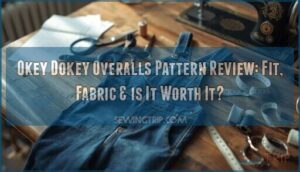
Finding a kids’ sewing pattern that looks store-bought polished is tough. Most children’s overalls patterns skip the details that make them feel authentic—real front pockets, proper hardware, that subtle faux fly.
The Okey Dokey Overalls from Peek a Boo Pattern Shop breaks that mold with classic five-pocket styling that rivals ready-to-wear denim. These aren’t simple rompers disguised as overalls. You get adjustable buckle straps, slant hand pockets, a front bib pocket, and back patch pockets that actually work.
The size range stretches from 3 months clear through 12 years, so you can sew matching sets for siblings or keep making the same beloved pattern as your kid grows. But here’s the catch—this pattern demands solid construction skills and won’t hold your hand through tricky hardware installation.
Table Of Contents
Key Takeaways
- The Okey Dokey Overalls pattern from Peek-a-Boo Pattern Shop delivers authentic five-pocket styling with working slant pockets, back patches, and adjustable hardware that rivals store-bought quality, but demands intermediate sewing skills and won’t work for beginners.
- This pattern covers an impressive size range from 3 months through age 12 in one purchase, letting you sew matching sibling sets or stick with the same beloved pattern as your kid grows through multiple years.
- Expect about five hours of construction time working with bottom-weight fabrics like denim or corduroy, plus you’ll need solid experience with buttonholes, multiple pocket types, and hardware installation to pull off the professional finish.
- At $8-$12 for the digital pattern, sewists give it a 4.8-star rating on Etsy and consistently report a better fit than store-bought overalls, making it worth the investment if you’ve got the construction chops to handle the technical details.
Okey Dokey Overalls Pattern Overview
The Okey Dokey Overalls pattern from Peek-a-Boo Pattern Shop brings classic five-pocket styling to your kiddo’s wardrobe with all the charm of store-bought denim but customized to actually fit.
This isn’t your quick beginner project—it’s a detailed PDF pattern that walks you through making proper overalls complete with hardware and multiple pocket styles.
Let’s break down what makes this pattern stand out and whether it’s the right choice for your next sewing adventure.
This classic Oxford button-up shirt pattern walks you through each technical challenge with clear instructions that respect the complexity involved.
Pattern Description and Style
The Okey Dokey Overalls PDF pattern gives you that classic silhouette kids love with a timeless bib design and relaxed straight legs.
For young sewers just starting out, a kid-friendly handheld sewing machine makes tackling those sturdy overall seams much easier.
You’ll find all the traditional overall aesthetics here—a front bib pocket, slant pockets up front, back pockets, and a faux fly that mimics real jeans.
The pocket styling and pattern making create that authentic workwear vibe perfect for playtime.
The peek-a-boo pattern shop pajama party pants nail this look with functional details and easy-to-follow topstitching guides.
Size Range and Options
This PDF pattern covers you from 3 months all the way through size 12—that’s infants, toddlers, and school-age kids in one purchase! You get 3M, 6M, 12M, 18M, 2T, 3T, 4T, and then 5 through 12 in the same file. The adjustable shoulder straps and side button tabs let you squeeze extra months of wear out of each size as your little one grows.
The overall construction process involves considering sewing machine usage and techniques.
Key Features and Design Elements
These overalls pack classic denim details into one serious package. You get that jeans-inspired look with real function built right in:
- Front bib pocket – keeps little treasures close at hand
- Slant pockets – roomy hand pockets just like grown-up jeans
- Back patch pockets – completing the five-pocket styling
- Faux fly detail – adds authentic denim character without complicated construction
- Adjustable buckle straps and side button tabs – easy on, easy off for squirmy kids
The optional snap inseam makes diaper changes quick in smaller sizes! The overall design includes perfect fit details that make it similar to store-bought clothing.
Recommended Fabrics and Materials
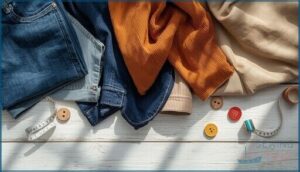
The right fabric can make or break your overalls project. You want something sturdy enough to handle playtime but comfortable enough for all-day wear.
Let’s look at what works best for these classic kids’ overalls.
Best Fabric Choices for Overalls
When choosing fabric for these overalls, reach for bottomweight fabrics like denim, corduroy, or sturdy cotton blends in the 9-12 oz range. Denim choices give you that classic overall vibe, while stretch fabrics add comfort without losing structure.
Heavier fabrics may need adjustments to your pattern’s ease allowance to maintain that relaxed, comfortable fit kids love.
Breathability options like linen work great for warmer weather! Fabric selection matters because you want something tough enough for playtime but soft enough for all-day wear.
Notions and Hardware Needed
You’ll need a solid lineup of notions to bring this pattern to life! Stock up on metal buckles sized to your straps, sturdy jeans buttons for side tabs, and optional snaps for the inseam.
Grab the right sewing needles for denim, plus interfacing types to stabilize buttonholes and hardware spots.
Don’t forget marking tools for placement precision and gold topstitching thread to nail that classic overall look!
Tips for Selecting Durable Materials
Kids put their clothes through the wringer, so picking fabrics that can handle spills, tumbles, and endless wash cycles is your secret weapon for overalls that actually last!
Go for tightly woven denim or corduroy with solid fabric durability. Match your thread choices to your fabric weight and check hardware options for rust resistance.
Always review care instructions before cutting—you want material that bounces back wash after wash!
Sewing Experience and Difficulty Level
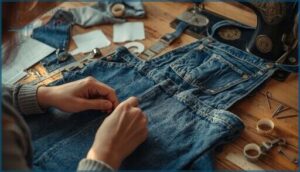
The Okey Dokey Overalls aren’t a beginner-friendly project. You’ll need some solid sewing experience under your belt to tackle all the pockets, hardware, and finishing details.
Here’s what you should know before you cut into your fabric.
Skill Level Required
This pattern lands squarely in intermediate territory—not for absolute beginners. You’ll need solid garment construction skills, including buttonholes, multiple pocket types, and hardware installation.
The sewing challenges here include managing heavy denim, precise topstitching, and aligning the bib section. One reviewer flagged the narrow straps as fiddly, highlighting the pattern complexity.
If you’ve tackled a few simpler projects first, the learning curve is totally manageable with the clear sewing tutorials provided.
Time Commitment and Project Steps
Expect a five-hour project timeline from start to finish once your pattern pieces are cut. The sewing complexity builds through these key workflow stages:
- Prepare and attach all five pocket types (bib, slant, patch)
- Construct the main body with faux fly detail
- Install side button tabs and snap inseam if using
- Attach straps and buckle hardware
Smart time management means tackling pockets first while you’re fresh!
Techniques and Construction Tips
Pressing seams before topstitching is your best friend for clean, professional-looking overalls. Use a walking foot when joining thick denim layers to prevent shifting, and switch to a jeans needle with heavier thread for those signature topstitch lines.
Strap construction gets easier with a tube-turning tool, especially in smaller sizes. Reinforce pocket openings with bar tacks and install hardware over a firm surface after testing on scraps.
These garment sewing and construction techniques transform your DIY sewing project from homemade to handmade!
Fit, Sizing, and Customization
One of the biggest wins with the Okey Dokey Overalls is the fit—these aren’t your typical store-bought overalls that run too short or too tight. You get real control over how they sit on your kid’s body and how long they’ll last through growth spurts.
Here’s what you need to know about sizing, adjusting for comfort, and making this pattern work for your little one.
Pattern Fit and Finished Measurements
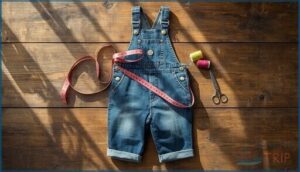
You’ll love how this pattern nails the classic relaxed fit right from the start! The Okey Dokey Overalls follow body measurements closely, and sewers report zero fit adjustments needed when you choose your size from the measurement charts.
Garment ease is generous through the torso and legs, perfect for active kids. Sewing accuracy matters here—cut precisely and you’ll get predictable finished measurements every time!
Adjusting for Growth and Comfort
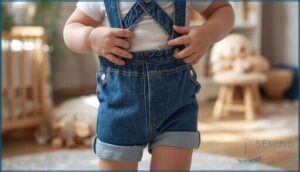
Building in room for your kiddo to grow is super smart with these overalls! Strap modifications are easy—just move buttons higher on the bib for quick length boosts. Add 3-5 cm at the hem for roll-up cuffs you can let down later.
Stretch denim fabric choices give comfort features that flex with growth spurts. Side button tabs adjust waist fit perfectly, and that high rise works great over diapers or layers!
Customizing Pockets and Details
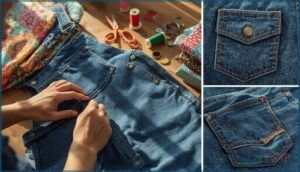
Beyond adjusting for growth, you can totally make these overalls your own! Pocket modifications let you reshape back patches or add divisions to the bib pocket. Custom buckles and hardware options change the whole vibe—swap finishes or add rivets at stress points. Topstitch details with contrast thread highlight seams beautifully.
Try these fabric choices for pockets:
- Line slant pockets with printed cotton for fun surprises
- Add contrast binding along pocket edges for pop
- Use heavier thread on back pockets for jeans-style stitching
- Stabilize bib edges with fusible interfacing
These sewing techniques give you garment construction skills while creating DIY sewing projects that beat store-bought every time!
User Reviews and Value Assessment
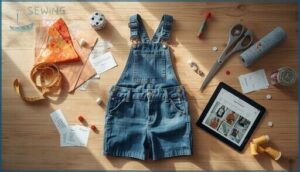
You want to know if this pattern is worth your time and money before you commit. Let’s talk about what other sewists are saying and how the Okey Dokey Overalls stack up against store-bought options.
Here’s the real deal on value, pros and cons, and whether this pattern deserves a spot in your collection.
Community Feedback and Results
Satisfaction ratings tell the real story. On Etsy, this pattern scores 4.8 out of 5 stars—buyers rave about “adorable” results and “easy to follow” instructions in their sewing pattern reviews. One sewist turned an oversized flannel shirt into perfect overalls and couldn’t hide her excitement. From chunky babies to preteens, user experiences show this ranks among quality children’s clothing patterns worth trying.
With a 4.8-star rating on Etsy, sewists praise this pattern’s adorable results and clear instructions that work from babies to preteens
| Review Highlights | What Sewists Said |
|---|---|
| Instructions | “Great instructions – easy to follow” |
| Finished Look | “ADORABLE,” buttons and topstitching praised |
| Fit Range | Perfect for chunky babies and size 12 kids |
| Project Feel | “Fun to make” despite time investment |
Value for Money Compared to Alternatives
At $8–$12, this digital sewing pattern hits the sweet spot for budget options. Price comparison shows it’s competitive with other indie children’s clothing patterns that run $9–$16.
You get multi-size coverage from baby to tween in one download—that’s serious cost effectiveness.
Pattern value goes beyond competitive pricing when sewists consistently report better fit than store-bought, making the Okey Dokey Overalls worth every penny.
Pros, Cons, and Final Recommendation
The Okey Dokey Overalls pattern review reveals honest strengths and drawbacks. You’ll appreciate the DIY fashion potential, but sewing challenges exist:
- Pattern accuracy shines with multi-size flexibility, though fit testing helps
- Fabric selection matters—sturdy bottom weights deliver best overall value
- Beginner tips: expect intermediate skills needed for hardware installation
For children’s clothing patterns, this delivers a better-than-store fit when you invest the time.
Frequently Asked Questions (FAQs)
What is the Okey Dokey overall pattern?
This digital sewing pattern from Peek-a-Boo Pattern Shop delivers classic five-pocket styling for kids aged 3 months through
You’ll get front slant pockets, back patches, bib detail, and authentic overalls hardware for that perfect denim look.
What is Oopsy Daisy overall jumper pattern?
The Oopsy Daisy overall jumper pattern features a one-piece bib design with adjustable straps and a playful silhouette.
This beginner-friendly digital sewing pattern offers step-by-step instructions for creating adorable children’s clothing patterns with customizable details.
Are sewing overalls for children a good idea?
Sewing for children brings practical benefits like custom fit and daily comfort, but overalls pose sewing challenges during toilet training.
Parent preferences vary—experienced sewists value control over fabric selection and child safety features in childrens clothing patterns.
Are DIY overalls a good idea?
Making your own overalls delivers real wins: you’ll save money, cut environmental impact, and access customization options that store-bought can’t match.
But DIY and handmade clothing demand time, skill development, and upfront costs.
What fabric should I use for overalls?
Think of bottomweight fabric choices for sewing patterns as building blocks—denim choices, cotton blends, and corduroy bring durability tests to digital sewing patterns.
Stretch factors matter for comfort! Fabric selection transforms sewing for beginners into confident creators.
Should you sew your own overalls?
If you want custom fit and durability, absolutely! Sewing benefits include better fabric choices and cost effectiveness over time.
Beginners might find digital sewing patterns challenging initially though.
How do the overalls fit different body types?
These overalls adapt beautifully across different torso proportions and body shapes! Adjustable straps compensate for height variations, while the bib and hip ease accommodate curves. Expect some strap and length tweaking for your perfect fit.
Can the pattern be easily modified?
Pattern hacking this design is surprisingly simple! Separate bib pieces invite custom details, and fabric swaps work beautifully—from denim to flannel.
Modification tips abound, from pocket placement to strap styles, giving you endless sewing variations for clothing design creativity.
Are there video tutorials available for this pattern?
Peek-a-Boo Pattern Shop doesn’t offer a dedicated video tutorial for the Okey Dokey Overalls.
Your sewing support comes from detailed PDF pattern instructions with color photos covering everything from pockets to hardware installation.
Is the pattern suitable for beginners?
This pattern demands solid sewing skills and comfort with intermediate projects.
The learning curve includes buttonholes, hardware installation, and pattern complexity that challenges beginners—but confident sewists ready to tackle fashion sewing will thrive.
Conclusion
This pattern review of the Okey Dokey Overalls from Peek-a-Boo Pattern Shop ain’t for beginners, but if you’ve got the chops, you’ll nail that store-bought vibe every single time.
The hardware placement takes grit, and the pocket construction demands focus. But your kid gets overalls that actually look legit, not homemade-wonky.
Skip it if you’re just starting out. Grab it if you want heirloom-quality pieces that’ll outlast every growth spurt and playground battle.
- https://sewingsociety.com/pattern-review-okey-dokey-overalls-from-peek-a-boo-pattern-shop/
- https://peekaboopatternshop.com/our-blog/top-overall-pattern
- https://www.reddit.com/r/sewing/comments/1hddn56/peekaboo_pattern_shop_overalls/
- http://miriamposner.com/classes/sewing/2018/07/19/okey-dokey-but-not-overalls/
- https://sewshellysew.wordpress.com/2014/08/21/okey-dokey-overalls/