This site is supported by our readers. We may earn a commission, at no cost to you, if you purchase through links.
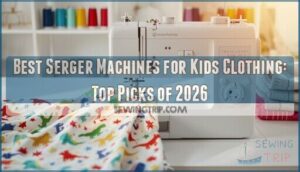
Kids outgrow clothes faster than you can finish hemming them—so every seam needs to survive the wash, the playground, and that one kid who somehow stress-tests every stitch. A serger changes that equation completely. Where a regular sewing machine leaves raw edges and stiff seams, a serger wraps, trims, and locks everything in one smooth pass, giving you the kind of stretchy, professional finish that holds up through years of active wear.
The right serger machines for kids’ clothing handle everything from jersey knits to delicate cotton with equal confidence—and the picks ahead make choosing one a whole lot easier.
Table Of Contents
Key Takeaways
- A serger wraps, trims, and locks seams in one pass, giving kids’ clothes the stretch and durability they need to survive years of hard wear.
- Features like differential feed and color-coded threading aren’t just conveniences—they’re what separate a frustrating machine from one you’ll actually reach for every time.
- Matching your serger to your budget matters: entry-level models work for occasional projects, but mid-range machines with metal frames and automatic tension deliver far better long-term value.
- The right stitch type—like a 4-thread overlock for activewear or a rolled hem for delicate edges—can be the difference between a seam that holds and one that gives out at recess.
Key Benefits of Sergers for Kids Clothing
Sewing clothes for kids isn’t just about cute patterns — it’s about making sure every seam holds up through tumbles, washes, and all the chaos in between.
That’s why starting with sewing projects for kids built around safety and durability makes a real difference when little ones put everything to the test.
A serger gives you that edge, delivering results that look polished and last long. Here’s why it’s the right tool for the job.
Creating Durable and Stretchy Seams
Kids move constantly — and their clothing needs to keep up. A serger machine creates seams with built-in fabric stretch, so nothing pops during playground chaos.
Set your differential feed between 1.0 and 2.0, dial in your thread tension, and you’ll get stitch quality that holds through every wash. Strong seam durability starts with the right serger settings.
For detailed guidance on choosing the right serger stitch types for finishing seams, you can achieve more professional results on all kinds of kids’ fabrics.
Fast and Professional Finishing
Strong seams are just the beginning. A serger machine takes your finishing to the next level by handling seam finishing, edge trimming, and fabric handling all in one pass.
That’s real speed optimization — no more back-and-forth between machines. With automatic threading and differential feed, you get professional results fast, so you spend less time at the machine and more time on what you love making.
For a deeper understanding of the variety of edge finishing techniques available in sewing, explore dedicated guides.
Handling Knits and Delicate Fabrics
Knit fabrics are the heart of kids’ wardrobes — think stretchy leggings, cozy tee shirts, and soft hoodies. Your serger machine manages all of it beautifully.
With proper Differential Feed Settings and Thread Tension Management, you get impeccable Knit Fabric Handling and Delicate Seam Finishing without puckering or stretching. Fabric Stretch Control keeps every seam smooth, making your garment construction look polished and professional every single time.
Safety Features for Family Use
Safety matters just as much as stitch quality when little ones are nearby. That’s why modern serger sewing machines come built with Blade Guards, Secure Housing, and Child Locks that keep curious hands protected.
Features like Automatic Shut-off and Safety Sensors make your sewing experience genuinely worry-free. Good sewing equipment doesn’t just perform well — it keeps your whole family safe.
Essential Serger Features for Children’s Garments
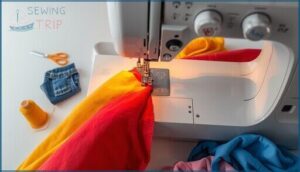
Not every serger is built the same, and when you’re sewing for kids, the right features make all the difference. Children’s clothing needs seams that hold up to rough play, stretchy fabrics, and wash after wash.
Here are the essential features to look for before you buy.
Differential Feed for Various Fabrics
Differential feed is your secret weapon for sewing kids’ clothing that actually holds up. With the right Differential Feed Settings, your serger machine manages everything from stretchy leggings to delicate cotton blends.
Feed Dog Adjustment prevents wavy seams on knits, while Fabric Stretch Control keeps edges clean. You can even use Fabric Gathering Techniques for cute ruffled hems — all in one pass.
Color-Coded Threading Systems
Threading a serger machine used to feel like solving a puzzle blindfolded. That’s where color-coded thread guides change everything. Each thread path is clearly marked, so your Thread Management becomes almost second nature.
Once you’ve got threading down, experimenting with finishes gets a lot more fun — thread color matching and specialty sewing techniques can turn a basic seam into something that actually stands out.
Visual Aids on the tension discs support Tension Control without guesswork, and automatic thread tension keeps stitches even.
With serger sewing machines like the Baby Lock Vibrant, color coding makes setup genuinely stress-free.
Adjustable Stitch Length and Width
Two simple dials can transform how your serger sewing machines manages everything from soft jersey to sturdy denim. Stitch Length ranges from 0.5 to 4.0 mm, giving you real Sewing Precision on tiny collar seams or reinforced hems.
Pair that with Stitch Width control for cleaner Edge Finishing, and your Thread Control stays consistent. More stitch options mean better Fabric Tension across every kids’ garment you make.
Easy Threading and Maintenance
Nobody wants to spend 20 minutes threading before cutting a single piece of fabric. That’s why Jet Air Threading and Automatic Tension are game-changers — they cut setup time dramatically. Color-coded guides make Thread Management almost foolproof.
For upkeep, follow simple Maintenance Tips: clean lint after every session and oil pivot points every 20–40 hours. Smart Serger Cleaning keeps your sewing machine running like new.
Top Serger Machines for Kids Clothing
Finding the right serger for kids’ clothing doesn’t have to feel overwhelming. There are some really solid machines out there that handle everything from stretchy jersey to delicate cotton with ease.
Here are six top picks worth considering in 2026.
1. Juki Mo1000 Serger Machine
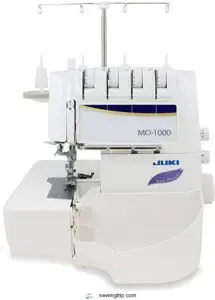
The Juki MO-1000 is a standout choice for sewing kids’ clothing, and once you try the push-button jet air looper threading, you won’t want to go back. Setup takes seconds, so you spend more time sewing and less time frustrated.
Its differential feed — adjustable from 0.7 to 2.0 — manages stretchy knits and delicate fabrics beautifully, which is exactly what you need for little ones’ garments. Quiet, steady operation and a built-in waste collector keep your workspace clean and your focus where it belongs.
| Best For | Sewing enthusiasts and professionals who work with delicate fabrics, fine knits, and garments that need clean, polished serged seams. |
|---|---|
| Thread Capability | 2/3/4 thread |
| Stitches Per Minute | Not specified |
| Weight | 24.4 lbs |
| Frame Material | Plastic/Metal |
| Differential Feed | Yes |
| Rolled Hem | Yes |
| Additional Features |
|
- The push-button jet air looper threader is a game-changer — threading takes seconds instead of minutes
- Runs quietly with minimal vibration, so you can sew for hours without the machine feeling like a jackhammer
- Handles tricky fabrics like fine knits and fraying materials with ease, giving you near-perfect seams every time
- The presser foot can be finicky — if it doesn’t stay put, you risk breaking needles mid-project
- The air threader doesn’t always cooperate, and when it doesn’t, you’re stuck doing it by hand
- Instructions leave a lot to be desired, so expect a learning curve if you’re new to sergers
2. VEVOR Serger Sewing Machine
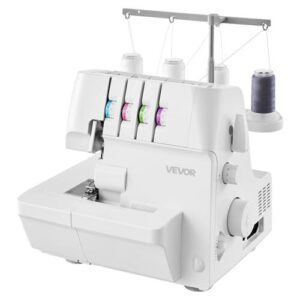
The VEVOR Serger Sewing Machine punches above its weight for kids’ clothing projects. With 2/3/4-thread flexibility and speeds up to 1,250 stitches per minute, you can fly through little leggings, stretchy tees, and tiny hems without breaking a sweat.
Color-coded threading makes setup straightforward, and the bright LED light keeps every stitch clearly visible. Its upgraded differential feed manages stretchy knits and even six layers of denim, so whatever your child’s wardrobe demands, this machine keeps pace.
| Best For | Home sewers and small-scale makers who work with stretchy fabrics, kids’ clothing, or layered materials and want a fast, flexible serger without a steep price tag. |
|---|---|
| Thread Capability | 2/3/4 thread |
| Stitches Per Minute | 1,250 |
| Weight | 16.53 lbs |
| Frame Material | Iron/Plastic |
| Differential Feed | Yes |
| Rolled Hem | Yes |
| Additional Features |
|
- Handles stretchy knits and up to six layers of denim with ease, thanks to the upgraded differential feed
- Color-coded threading and LED lighting make setup and visibility way less of a headache
- Runs up to 1,250 stitches per minute, so you can move through projects quickly
- Some users reported overheating after just a few minutes of use, which is a real concern for longer sessions
- The instruction manual is thin, and rethreading can get frustrating without solid guidance
- Electrical safety features are lacking, which is worth keeping in mind before you plug it in
3. Margar Metal Frame Serger Machine
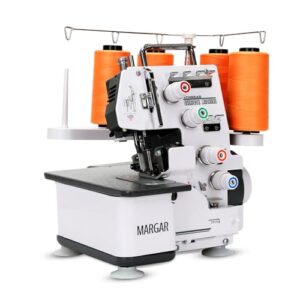
If you’re looking for something built to last, the Margar Metal Frame Serger Machine deserves a serious look. That solid metal frame cuts down on vibration, so your stitches stay clean and consistent — even at 1,250 stitches per minute.
It accommodates 12 stitch patterns, adjustable blades, and knit-friendly settings that make children’s garments a joy to sew.
The color-coded threading and quick-setup system mean less fussing and more sewing, which is exactly what busy parents and sewists need.
| Best For | Home sewists and busy parents who want a durable, reliable serger for finishing seams, working with knit fabrics, and tackling everyday sewing projects. |
|---|---|
| Thread Capability | 3/4 thread |
| Stitches Per Minute | 1,250 |
| Weight | 17.63 lbs |
| Frame Material | Metal |
| Differential Feed | Yes |
| Rolled Hem | Not specified |
| Additional Features |
|
- The metal frame keeps vibration low, so your stitches stay clean and consistent even at full speed.
- 12 stitch patterns plus adjustable blades give you real flexibility across different fabrics and project types.
- Color-coded threading and a quick-setup system mean you spend less time fussing and more time actually sewing.
- Tension settings take some trial and error — beginners should expect a bit of a learning curve.
- Thread breakage and skipping can happen if you use lower-quality thread, so budget for good thread.
- The setup and threading process may feel overwhelming at first if you’ve never used a serger before.
SINGER S14-78 Serger Machine
The SINGER S14-78 keeps things refreshingly simple without skimping on results. For kids’ garment sewing, that matters more than you’d think.
Reliable, straightforward, and genuinely kid-clothing friendly.
- Sewing speed reaches 1,200 stitches per minute — great for busy project days
- Thread tension adjusts easily for consistent, durable seams
- Fabric handling works smoothly across knits and lightweight cottons
- Machine durability holds up through long sewing projects
4. Feiyue Serger Overlock Machine
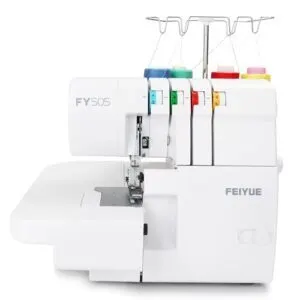
If the SINGER keeps things simple, the Feiyue FY505 keeps things moving. At 1,100 stitches per minute, it cuts through kids’ project days fast — and its heavy-duty metal frame means it won’t wobble on you mid-seam.
You get 2/3/4 thread capability, color-coded guides, and adjustable differential feed for everything from jersey knits to cotton playwear. The built-in rolled hem is a quiet bonus for finishing tiny sleeves and necklines cleanly.
Solid value for what you’re paying.
| Best For | Parents and hobbyists who need a fast, reliable serger for kids’ clothing and light-to-medium fabric projects without spending a lot. |
|---|---|
| Thread Capability | 2/3/4 thread |
| Stitches Per Minute | 1,200 |
| Weight | 13.89 lbs |
| Frame Material | Metal/Plastic |
| Differential Feed | Yes |
| Rolled Hem | Yes |
| Additional Features |
|
- Blazing 1,100 stitches per minute keeps projects moving fast
- Heavy-duty metal frame stays stable during heavy use
- Color-coded threading guides make setup less of a headache
- Thread cones sit too close together, which can cause thread breaks mid-project
- Thin fabrics can get eaten by the machine if you’re not careful
- The manual is hard to follow, and troubleshooting help is pretty scarce
5. Singer Metal Frame Serger Machine
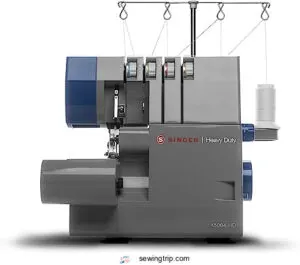
Step up from the Feiyue, and the Singer Metal Frame Serger X5004HD brings serious muscle to your kids’ clothing projects. Its heavy-duty metal frame keeps stitching smooth and steady at up to 1,300 stitches per minute — perfect for powering through denim, fleece, and thick jersey fabrics.
You get 2-3-4 stitch options, adjustable differential feed, and two LED lights for clear visibility. The color-coded threading system makes setup straightforward, even on busy sewing days.
| Best For | Home sewers and hobbyists who regularly work with thick, heavy-duty fabrics like denim, upholstery, or fleece and want professional-quality seams and finishes. |
|---|---|
| Thread Capability | 2/3/4 thread |
| Stitches Per Minute | 1,100 |
| Weight | 13.57 lbs |
| Frame Material | Metal/Plastic |
| Differential Feed | Yes |
| Rolled Hem | Yes |
| Additional Features |
|
- Heavy-duty metal frame keeps everything stable even at high speeds — up to 1,300 stitches per minute
- Adjustable differential feed handles thick and stretchy fabrics without bunching or stretching
- Two LED lights and color-coded threading make it easier to use, even on long sewing days
- Manual threading can be tricky and time-consuming, especially for beginners
- No instruction manual included, so setup may feel like a guessing game at first
- Only 8 built-in stitches, which might feel limiting if you’re looking for more versatility
How to Choose a Serger for Kidswear Projects
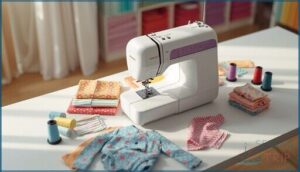
Picking the right serger for kids’ clothing doesn’t have to feel overwhelming. A few key factors will narrow down your choices fast and point you toward a machine that actually fits your needs.
Here’s what to look at before you buy.
Budget and Value Considerations
Your budget shapes everything. Entry-level serger machines ($150–$250) work for occasional kidswear projects, but a mid-range investment ($400–$800) delivers real value assessment gains — metal frames, differential feed, automatic tension. That’s smarter budget planning long-term.
Cost analysis wins every time with durability.
| Budget Tier | Price Range | Best For |
|---|---|---|
| Entry-Level | $150–$250 | Beginners, occasional use |
| Mid-Range | $400–$800 | Frequent garment construction |
| High-End | $1,000+ | Professional sewists |
User-Friendliness for Beginners
Starting out with a serger machine doesn’t have to feel overwhelming. Color-coded threading and Quick Setup guides make your first sewing session far less stressful.
Models like the Brother 1034D are packed with Beginner Tips right in the User Guides, covering Simple Stitches and Easy Threading step by step. That kind of Sewing Experience Enhancement turns a brand-new piece of Sewing Equipment for Beginners into a trusted daily tool fast.
Brand Reputation and Reliability
For kids’ clothing, you want a brand you can trust. Baby Lock consistently earns top marks in Customer Reviews and Reliability Tests, making it a go-to for Quality Control you can count on.
Brother and Juki also deliver strong Serger Machine Benefits with solid Warranty Support.
Brand Loyalty builds fast when your sewing experience stays smooth, stitch after stitch.
Tips for Sewing Kids Clothing With a Serger
Sewing kids’ clothing with a serger gets easier once you know a few practical tricks. Small habits make a big difference in your finished results, from picking the right fabrics to keeping your machine running smoothly. Here’s what you need to know to sew with confidence.
Selecting Suitable Fabrics and Threads
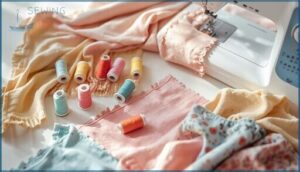
Your fabric selection sets the tone for every sewing project. For kids’ clothing, reach for soft knits, cotton blends, and stretch fabrics that move with little ones.
Thread types matter just as much — polyester core-spun threads handle heavy wear beautifully, while nylon blends shine on stretch knits.
A good serger machine trims and finishes with every pass, making fabric trimming smooth.
Using Safety Stitches for Active Kids
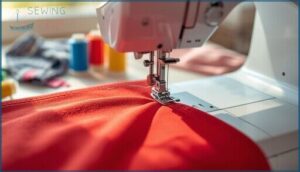
Active kids put every seam to the test — so your stitch choices really matter. A good serger machine gives you stitch options built for movement, durability, and fabric protection all at once. For kid-friendly garment sewing, lean on these safety stitches:
- Four-thread overlock for secure seams on activewear
- Flatlock stitch for comfortable, chafe-free activewear
- Three-thread overlock for lightweight fabric protection on delicate pieces
- Rolled hem for clean, bulk-free edges
- Stitch locking to keep sewing projects from unraveling
Creative Finishing Touches
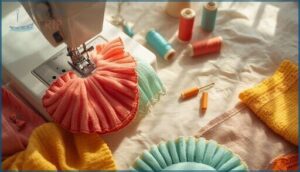
Your serger is more than a finishing tool — it’s a creative partner. Use decorative stitches and contrasting threads to add playful pops of color along edges. Rolled hems keep delicate fabrics light and tidy, while cover stitch sewing gives knit hems that store-bought look.
Your serger is a creative partner, turning rolled hems and decorative stitches into playful, polished edges
Try edge finishing with bold thread colors, and small fabric embellishments to make every kids’ garment uniquely theirs.
Maintaining Your Serger for Longevity
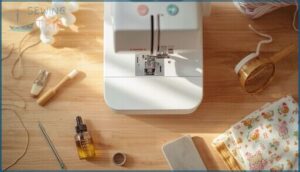
Keeping your serger in great shape is just as rewarding as finishing a beautiful kids’ garment. Regular cleaning after every project prevents lint buildup in tension discs and loopers.
Oil maintenance monthly reduces friction damage, and blade sharpening every few years keeps cuts clean.
Don’t skip professional servicing annually — it catches hidden issues before they slow you down.
Frequently Asked Questions (FAQs)
What sewing machine is best for kids?
The best sewing machine for kids’ clothing balances safety and simplicity. Look for beginner serging features and kid-friendly machines with color-coded guides. Sewing machine technology should make every sewing project idea feel approachable and fun.
Is a serger better than a sewing machine for clothes?
Neither wins outright — they each have a role. Serger Advantages shine in Sewing Speed and Fabric Edge finishing, while sewing machine precision manages zippers and buttons. Together, they define Garment Quality.
What is the difference between a serger and an embroidery machine?
Think of them as different tools in your kit. Serger machines handle overlock stitches and seam finishing, while embroidery machines add decorative designs — two distinct sewing functions, never interchangeable.
What serger stitch works best for baby clothes?
For baby clothes, a 3- or 4-thread overlock stitch is your best bet. It keeps seams soft, stretchy, and durable — perfect for sensitive skin and all that wiggling around.
Can beginners learn serging kids garments quickly?
Yes, absolutely — beginners pick up serging kidswear faster than you’d expect. With color-coded threading, Serging Basics tutorials, and beginner-friendly Sewing Machines, you’ll be finishing Kidswear Patterns confidently within just a few practice sessions.
How do you fix skipped stitches on knits?
Skipped stitches on knits usually come down to needle alignment or thread tension. Check your threading order first, swap in a fresh needle, and adjust machine calibration until the fabric stretch stops fighting you.
What thread weight is best for childrens clothing?
For kids’ clothing, 40–60 weight polyester thread hits the sweet spot in any Thread Weight Guide.
It balances Garment Durability with flexibility, manages Knit Fabric Care beautifully, and holds up through countless washes without fading.
Can a serger replace a regular sewing machine?
Not quite. A serger manages overlock stitches and fabric management beautifully, but sewing machine comparisons show it can’t install zippers or sew buttonholes — so both machines truly earn their place.
Conclusion
Picture a tiny shirt sailing through a full wash cycle, seams still crisp, fabric still soft—that’s what the right serger machines for kids’ clothing actually deliver. Every stitch you make becomes armor against playground tumbles, grass stains, and growth spurts.
You’re not just finishing edges; you’re building garments that grow into memories.
Choose the serger that fits your hands, your budget, and your projects, then sew with the confidence your kids deserve.