This site is supported by our readers. We may earn a commission, at no cost to you, if you purchase through links.
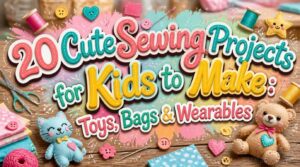
Hand a child a needle and thread, and something clicks—suddenly a scrap of felt becomes a puppet, a strip of fabric becomes a bookmark. That small spark of "I made this" builds real confidence, one stitch at a time.
The best sewing projects for kids to make start small: no-sew bookmarks, felt coasters, a scrunchie tied with a bow. From there, skills grow into pants, totes, and plush animals that actually stand up on their own two feet.
Whatever your child’s age or attention span, there’s a project sized just right for their hands and their patience.
Table Of Contents
Key Takeaways
- Start your kids with no-sew or felt projects like bookmarks and coasters, since felt doesn’t fray and builds confidence before tackling a needle.
- Match projects to age and skill level, from simple felt puppets for five-to-eight-year-olds up to totes and drawstring bags for kids nine and older.
- Teach just four core stitches—running stitch, backstitch, whipstitch, and slip stitch—to cover nearly every project in this list.
- Safety comes first: use blunt needles, child-safe scissors, and close supervision so cutting and threading stay accident-free.
Easy Beginner Sewing Projects for Kids
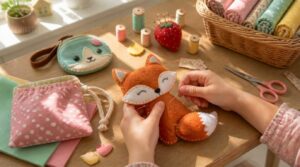
Every young sewist starts somewhere, and these first projects keep things simple, quick, and totally doable. You won’t need fancy tools or years of practice—just a little patience and some basic stitches. Here are five beginner-friendly ideas to get those little hands started.
If your child gets stuck on their first stitch, this friendly guide to mastering the running stitch breaks it down into simple, confidence-building steps.
No-Sew Fabric Bookmarks
A bookmark makes the perfect first project—no needle required! No-sew fabric bookmarks use heat bonding sheets to fuse two 3×7-inch fabric pieces together.
- Round corners for a polished look
- Sandwich a ribbon loop at the top
- Try seasonal fabric themes for gifts
This quick fabric craft builds confidence fast and sparks family bonding through creative play together. For a reusable option, consider making a fabric bookmark sewing project that can be washed and used repeatedly.
Felt Coasters
Once your scissors get comfortable cutting fabric, felt coasters are a fun next step. Felt doesn’t fray, so edges stay tidy with no sealing needed.
Choose 4–6mm thickness for good moisture absorption and cushion. Cut circles or squares, whip-stitch the edges by hand, and you’ve got coasters that protect tables and wash easily by hand.
Quilted Art Bookmarks
Ready to add some artistry to your stitching? Quilted art bookmarks layer fabric, batting, and backing for a soft, raised design—think tiny appliqué flowers or geometric patches in contrasting thread.
Kids stitch quilt lines by hand, turn the piece right-side out, and finish with a button or ribbon tassel. It’s a cozy step up from felt, teaching real hand sewing skills.
Simple Doll Skirt
Got a doll waiting for a wardrobe update? A simple kids doll skirt uses gathering technique on woven cotton, joined to an elastic waistband for instant fit—no zippers needed.
Quick facts:
- Fits 18" dolls
- Elastic: 1/4"–1/2" wide
- Fabric: cotton or voile
- Hem: turn twice, stitch
- Great beginner sewing project
Reversible Fabric Basket
Once that skirt’s hemmed, why not sew something for the toy shelf? A reversible fabric basket turns two coordinating cottons and interfacing into a sturdy, two-sided tray—one of the most practical beginner sewing projects for kids.
- Boxed corners give it a flat, standing base
- Two fabric faces mean double the style
- Carry grips add portability for little hands
- Machine washable for easy care
Sizes run 8–14 inches wide, holding books or blocks. Flip it anytime—an easy, giftable win for young sewists.
Before you sew the final seams, try understitching your facings so the edges stay smooth even after little hands flip it inside out.
Fun Wearable Sewing Projects Kids Can Make
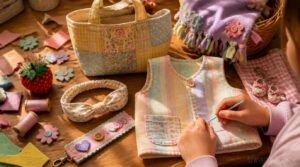
Once your child feels confident with basic stitches, it’s time to make something they can actually wear.
Clothes and accessories add a whole new layer of pride, since kids get to show off their work all day long.
Wearing something you sewed yourself adds a whole new layer of pride kids can show off all day
Here are five wearable projects that mix simple sewing with real, everyday style.
Elastic-Waist Skirt
No zippers, no buttons—just fabric and stretch. The elastic-waistband skirt is a favorite among beginner sewing projects for kids because a simple casing holds 1-inch elastic snugly at the waist.
Choose lightweight cotton or chambray for easy gathering, measure the waist for a comfy fit, and wash on gentle, low heat to protect elastic fibers long-term.
Bow Scrunchies
A little elastic and a scrap of ribbon go a long way here.
Easy bow scrunchies pair cotton or satin for the bow with soft, kid-friendly elastic—no tight creases. Backstitch keeps the bow secure; adjust elastic length for smaller wrists or ponytails. Hand wash and air dry to protect shape, keeping this hand sewing project safe and durable.
Simple Kids Pants
Two leg pieces, a straight seam, and an elastic waistband—that’s really all it takes. Cotton twill or jersey works great, keeping seam allowance around 1/4 inch for a clean fit. A basic pocket adds fun without extra fuss.
Best part? Simple pants come in multiple sizes, so growing kiddos always have room to move.
Easy Leggings
Ready for one leg piece at a time? A single curved pattern piece per leg keeps things simple—no confusing cuts here. Use knit fabric with good stretch, so it’s forgiving for beginners still learning stretch fabric basics.
An elastic waistband finishes the job fast, giving a comfy, gentle fit growing kids won’t outgrow overnight.
Fabric Headbands
A headband might be the fastest way to feel like a real seamstress. Sew a cotton or knit sleeve around a flexible foundation—no zipper, no fuss, just hand sewing basics.
Cotton breathes nicely; knits stretch for a snug fit. Kid sizes run 5.5 to 6.5 inches unstretched.
Wash cotton on gentle, air-dry elastic pieces, and this beginner-friendly project stays comfy for years.
Cute Plushies, Puppets, and Felt Toys
Once your kids master a few basic stitches, they’ll want something soft and huggable to show for it. Felt is perfect for this stage—it doesn’t fray, so beginners can focus on the fun part instead of finishing edges.
Here are five adorable projects that turn simple stitches into toys kids will actually want to play with.
Hand-Sewn Stuffed Animals
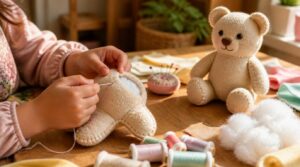
A hand-sewn stuffed animal is where sewing skills really come together. Kids ages 7+ use running stitch with a blunt needle on cotton or felt, then stuff with polyester fiberfill, adding it in small layers for a plump, even shape.
Facial features get stitched on securely—no loose buttons—keeping things safe and adorable from start to finish.
Felt Finger Puppets
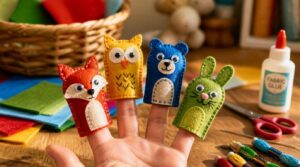
Once your needle skills feel steady, shrink things down—finger puppets are stuffed animals’ pint-sized cousin. Cut two matching felt fabric pieces, whip-stitch the edges with embroidery floss, and leave room for tiny fingers. Try:
- Whip stitch for quick edges
- Glue for younger sewers
- Blunt needle for safety
Add ears, googly eyes, and simple stories to bring characters to life!
Mix-and-Match Felt Monsters
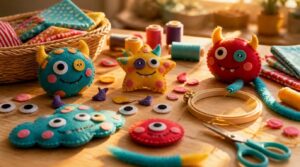
Puppets taught steady stitches—now let’s build monsters with personality. Mix-and-match felt animals use six body shapes, swappable eyes, mouths, and horns for endless combos.
| Piece | Options | Skill |
|---|---|---|
| Body | Round, star, cloud | Beginner-friendly |
| Face | Buttons, felt cutouts | Hand sewing |
| Extras | Horns, tails, blush | Glue or stitch |
Color mixing and swappable parts spark storytelling and emotion play every time.
Easy Sheep Softie
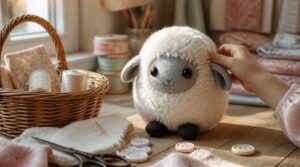
Monsters bring silly charm—the Easy Sheep Softie brings something gentler. This oval-bodied cutie stands 9–12 inches, perfect for hugging.
Fleece gives that woolly, fluffy look, while felt keeps hand sewing simple for beginners. Attach safety eyes securely, then add embroidered facial features instead of glued parts.
Finish stuffing, then close with a neat whip stitch—no visible seams, just a soft, squeezable friend.
Felt Food Play Sets
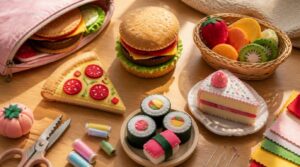
Once your sewing crew masters plushies, felt food patterns turn playtime into a pretend cafe. Try:
- Pizza slices with felt pepperoni
- Layered burgers
- Sushi rolls
- Frosted cake slices
- Fruit sets
Whip stitch and running stitch build fine motor skills while kids name ingredients—boosting vocabulary and imaginative play. Store pieces in zippered pouches for tidy, portable fun.
Practical Bags, Pouches, and Handmade Gifts
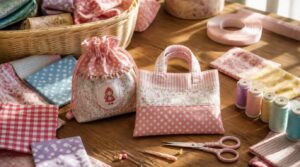
Once your child has mastered a few stitches, it’s time to sew something they can actually use every day. Bags and pouches make great next projects, combining simple sewing with real, practical results.
Here are five handmade favorites that turn fabric scraps into gifts kids will be proud to carry.
Beginner Tote Bag
A boxed bottom turns a flat pouch into a real tote that stands on its own. Kids stitch medium-weight cotton, add lining for neat seams, then topstitch straps for strength.
| Feature | Detail |
|---|---|
| Bottom | 4–6 inch boxed base |
| Straps | 1–1.5 inch topstitched |
| Closure | Snap or open-top |
| Lining | Hides raw seams |
Drawstring Backpack
Two cords do double duty here, cinching the top shut and looping over shoulders as straps—that’s the magic of the cord tension mechanism.
Add a front zip pocket for keys, plus reinforced stitching at strap points for durability.
It folds flat when empty, too.
Try our free drawstring backpack pattern for an easy, child-friendly project beginners love!
Mini Messenger Bag
Ready for a bag that grows up with your child? The Mini Messenger Bag holds 6–12 liters, with front pocket access for quick grabs and interior mesh organization for pencils.
Weather-resistant fabric sheds light rain, while reinforced stitching points and strap adjustment options—crossbody or shoulder—make it durable and comfy. A cheerful, beginner-friendly project in childfriendly sewing!
Pencil and Notebook Case
Nothing beats zipping up a case you made yourself! Choose durable coil zippers—smooth pulls prevent pinched fingers—and sturdy canvas or cotton for lasting wear.
Add interior pockets or elastic loops for erasers, size the case 6×2 to 9×4 inches, and finish with hand-sewn initials.
This beginner-friendly project builds fine motor skills while creating practical, custom school gear kids proudly show off.
Patchwork Drawstring Bag
Scrap fabric turns into treasure with this project! Grab a stack of cotton squares for patchwork fabric selection, then arrange them into a cheerful geometric front panel—no two bags look alike.
- Practice straight stitching joining squares with quarter-inch seams
- Learn drawstring casing tips by folding a reinforced channel
- Choose kid-safe closure methods like cord stops, not sharp hardware
- Customize bag size customization from small pouch to backpack-style tote
This beginner-friendly Patchwork Drawstring Bag builds real confidence—perfect for sewing with kids ready for their first true DIY tote bag pattern.
Tips for Choosing Safe Kid-Friendly Projects
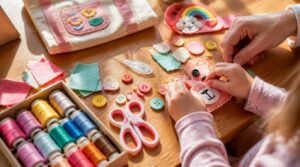
Picking the right project makes all the difference between a fun afternoon and a frustrating one. A few smart choices around age, tools, and materials keep every sewing session safe and enjoyable. Here’s what to keep in mind before you thread that needle.
Best Ages by Project
Younger kids—ages five to eight—do best with felt finger puppets and fabric bookmarks, since these projects use simple shapes and minimal stitching.
Hand sewing felt animals suits ages eight to twelve, especially with adult help.
For wearables, elastic skirts and fabric headbands fit ages six to twelve, while beginner tote bags and drawstring bags are ideal for ages nine and up.
Safe Sewing Tools
Matching the right project to the right age only works if your tools are safe, too. Pick child-safe scissors with blade guards, blunt-tip needles for little hands, and a magnetic pin cup for tidy storage. Washable marking pens beat solvent-based ones.
Keep everything organized in a labeled kit, and always supervise cutting and threading needles closely.
Easy Stitches to Teach
Good tools mean nothing without good technique. Start with running stitch—simple up-and-down stitching kids master fast. Add backstitch for strength, whipstitch for felt animal edges, and slip stitch for hiding openings invisibly. Once these stitches feel natural, make sure the machine backing them up is ready too, with a quick check of choosing the right bobbin type for your machine.
- Running stitch: seams, repairs
- Backstitch: strong, durable seams
- Whipstitch: sturdy, decorative edges
- Slip stitch: invisible closures
- Needle threading: builds confidence first
Kid-Friendly Fabric Choices
Once your child has stitches down, fabric choice makes or breaks comfort. Cotton breathability keeps little hands cool during long projects, while bamboo adds softness for sensitive skin. Hemp blends hold up to rough play, and Tencel wicks moisture nicely.
For fabric scraps and hand sewing projects for kids, organic cotton offers safety without harsh chemicals—choosing kid-friendly tools and materials starts here.
Adult Supervision Tips
Since needles and scissors are involved, adult supervision isn’t optional—it’s the whole safety net. Sit where you can see every hand and tool at once, keeping pins and machines away from play zones.
Explain rules in simple, kid-friendly language, set a hand-raise signal for help, and keep a first aid kit nearby. Calm, patient guidance keeps sewing safety second nature.
Frequently Asked Questions (FAQs)
What are some fun sewing projects for beginners?
Try no-sew fabric bookmarks, felt animals, or fabric coasters with backing—all quick wins. Beginner-friendly tote bags and elastic-waist skirts build confidence too.
Easy sewing projects like these keep young hands busy without overwhelming beginner quilting attempts or a first drawstring bag.
What can a 10 year old sew?
Ten year olds have steadier hands than folks assume. They’re ready for a simple doll skirt with elastic waistband, fabric headbands, mini messenger bags, felt animals, finger puppets, felt coin purses, drawstring bags, and reversible baskets—true easy sewing projects for beginners.
What to sew for a 7 year old girl?
Seven year olds love pretty, girly projects: an elastic-waist skirt, bow scrunchies, fabric headbands, or a felt coin purse. Felt flower brooches, lavender sachets, and felt food play sets add sweet variety too.
What can a 5 year old sew?
Little hands can learn the ropes with no-sew crafts and easy felt animals. Using a blunt embroidery needle, embroidery floss, and simple stitches on felt, five-year-olds build confidence through short projects with hand sewing—no rushing required.
What are some fun things to sew for kids?
Kids light up over handmade stuffed animals, felt finger puppets, and elastic waist skirts.
Beginner-friendly picks like fabric tote bags, no-sew bookmarks, and felt coasters build hand sewing skills fast while creating adorable handmade gifts.
How do I teach my child to sew?
Start with basic stitches on felt scraps around ages 6–7, using blunt needles before machines. Stay close, keep tools child-safe, and let patience turn practice into confident, creative skill-building your child will love.
What are some easy DIY sewing projects for kids?
Picture a toybox spilling over with handmade treasures: that’s what a stack of beginner-friendly patterns can build. Try bow scrunchies, elastic-waist skirts, fabric baskets, and felt softies—simple stitches, minimal pieces, real skills, age-appropriate fun.
Are there free sewing projects for kids?
Yes, tons! Free sewing projects for kids fill craft blogs everywhere—over 25 beginner free patterns for felt animals, teddy bears, and simple pants in multiple sizes, plus kid-friendly downloads perfect for community craft swaps and no-cost materials.
What can you sew for a toddler?
Choking hazards cause hundreds of toddler injuries yearly, so simple, secure stitching truly matters. Sew a fabric bib, toddler apron, or washcloth doll with soft, washable cotton, reinforced seams, and no small, detachable pieces.
When can a child learn to sew?
Most kids show sewing readiness signs around age 4, once fine motor skills allow safe needle handling. Machine sewing usually waits until 6–8, when attention span, hand coordination, and safety awareness catch up to age-appropriate sewing goals.
Conclusion
Somewhere in your fabric bin sits one small scrap, just waiting to become something truly special. That’s the quiet magic behind sewing projects for kids to make: every stitch builds skill, patience, and pride.
A bookmark today, a plush animal tomorrow, a tote bag next month—each project stacks confidence higher and higher. Your child isn’t just learning to sew. They’re learning to finish what they start, and that’s a gift no needle can ever measure.
- https://sewasoftie.com/2025/06/best-tips-and-easy-projects-for-sewing-felt-with-kids.html
- https://sewcutepatterns.com/blog/fabulous-fabrics-finding-the-perfect-material-for-handmade-toys
- https://www.redtedart.com/sewing-projects-for-kids
- https://jacquelynnesteves.com/25-free-sewing-projects-for-kids
- https://www.sabrina-lee.com/blog/2021/7/22/best-fabrics-for-beginners