This site is supported by our readers. We may earn a commission, at no cost to you, if you purchase through links.
A serger sitting idle costs you more than the price tag—it costs you every seam you’re finishing by hand, every hem that stretches out of shape, every order that ships late. Most small business owners underestimate what the right machine actually changes: not just speed, but the professional finish that turns a one-time buyer into a repeat customer.
The difference between a $300 machine and a $700 one isn’t always obvious in the specs—it shows up in your reject pile. Choosing the wrong serger for your workflow is a quiet, expensive mistake. The right one becomes your most reliable employee.
Table Of Contents
- Key Features of Sergers for Small Businesses
- Factors to Consider Before Buying a Serger
- Top 10 Serger Machines for Small Business Owners
- 1. Singer ProFinish Serger Machine
- 2. Juki White Serger Machine
- 3. Janome Serger Machine With Differential Feed
- 4. Juki Mo1000 Serger Machine
- 5. Bernette Funlock Serger Machine
- 6. Bernette Coverstitch Sewing Machine
- 7. Janome Serger Machine
- 8. Juki Serger Sewing Machine
- 9. Brother Coverstitch Serger Machine
- 10. Brother Heavy Duty Serger Machine
- Serger Vs. Coverstitch: Which is Best for You?
- Maintenance Tips for Business Productivity
- Frequently Asked Questions (FAQs)
- Conclusion
Key Features of Sergers for Small Businesses
Not every serger is built the same, and for a small business, the wrong machine can cost you time and money fast. Before you commit to a model, there are a handful of features that actually matter day-to-day.
A solid serger machine selection guide for fashion designers can help you cut through the noise and focus on what actually matters for your workflow.
Here’s what to look for.
Number of Threads and Stitch Types
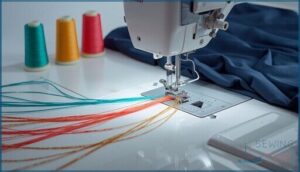
Most small business owners don’t realize that the number of threads your serger uses—three, four, or five—directly controls whether your seams hold up through a hundred washes or fall apart after ten.
A 3-thread overlock gives you flexibility for lighter fabrics; a 4-thread delivers the stitch quality your activewear customers expect.
More thread options mean more sewing modes—and real control over stitch variety without switching machines.
Differential Feed and Fabric Versatility

Thread count gets the attention, but differential feed is what actually saves your seams when you switch from woven cotton to a stretchy jersey knit. Differential control lets you dial your feed settings up or down—taming stretch fabrics that want to wave and pucker. Without it, your knit handling falls apart fast.
A serger machine with solid differential feed delivers real fabric versatility across heavy fabrics and delicate overlock stitches alike.
Adjustable Stitch Length and Width
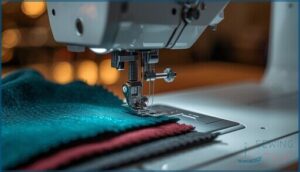
Once you’ve got your feed dialed in, stitch length and width become your next real levers for control. An adjustable stitch on your serger machine means you’re not locked into one setting for every job.
- Tight, short lengths for clean seam finishing on wovens
- Wider stitch width for fabric flexibility across heavier layers
- Precise thread tension adjustments for sewing accuracy on knits
Stitch precision isn’t a luxury—it’s your edge.
Threading Systems and Color-Coded Guides
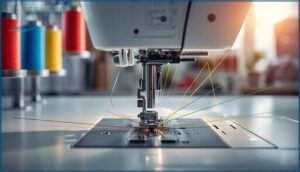
Getting your stitch settings perfect means nothing if threading your serger turns into a 20-minute ordeal every time you switch colors. Color-coded thread guides eliminate that friction fast. They map each thread path visually, cutting threading errors before they cost you time.
| Feature | Business Benefit |
|---|---|
| Color coding | Faster setup between projects |
| Automatic threading | Less downtime, more output |
| Guide systems | Consistent thread management |
| Automatic thread tension | Fewer tension-related rejects |
| Color-coded thread guides | Easier onboarding for new staff |
A smart threading system isn’t a nice-to-have—it’s a productivity tool.
Machine Weight and Portability
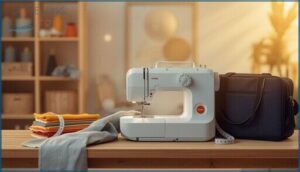
A serger that’s hard to move is a serger that stays in the wrong place. If you’re running a small operation, compact designs and portable options aren’t luxuries—they’re logistics.
Lightweight materials keep transport manageable, and travel cases protect your investment between locations. Portable serger machines fit tighter storage solutions without sacrificing sewing machine features like heavy fabric sewing capability or consistent machine maintenance access.
Factors to Consider Before Buying a Serger
Before you spend a dollar, you need to know what actually matters in a serger for business use. The wrong machine won’t just slow you down—it’ll cost you clients. Here’s what to check before you commit.
Stitch Quality and Tension Control
If your seams look like they were finished in a hurry, no amount of great fabric or smart design will save the sale. Stitch quality comes down to tension settings and differential feed working together.
Look for machines with precise thread tension dials and consistent stitch length control — these give you seam consistency across fabric stretch, so your thread management holds up from the first piece to the five-hundredth.
Ease of Threading and Maintenance
Threading a serger for the first time can feel like defusing a bomb — four spools, color-coded paths, and one wrong move sends everything back to square one. That’s why color-coded thread guides and automatic threading systems matter.
Pair that with clear user manuals, consistent maintenance schedules, and proper oil requirements, and your thread management stays tight. Automatic thread tension removes the guesswork — so you stay in production, not troubleshooting.
Fabric Handling and Speed Capabilities
Your serger’s speed and fabric handling aren’t just specs on a box — they’re what separates a machine that keeps up with your orders from one that holds you back. At 1,300 stitches per minute, stitch speed matters.
So does differential feed — it controls fabric stretch, keeping knits smooth and wovens flat. Dial in your thread tension and fabric feed right, and stitch optimization becomes automatic.
Durability and Build Quality
Build quality isn’t glamorous to talk about, but it’s what keeps your machine running through a 200-piece order without flinching. Metal frames aren’t optional — they’re the backbone of any serious setup.
Metal frames aren’t optional — they’re what keeps your machine running through a 200-piece order without flinching
Durable parts handle heavy-duty sewing projects without rattling apart after six months. Industrial serger machines are built to pass longevity tests that cheaper plastic-body models never could.
Quality control matters when your livelihood depends on it.
Budget and Brand Reputation
Budget isn’t just a number — it’s a business decision. Entry-level serger machines from Brother and Singer start around $250–$350, giving your sewing business a reliable foundation without draining capital. Midrange picks like the Juki MO-1000 run $500–$1,000 and punch closer to industrial sergers in performance.
Brand loyalty pays off here:
- Price comparison favors known brands — better resale value, easier parts sourcing
- Reputation matters when warranties stretch 25 years (Janome) or cover motors for five (Juki)
- Cost savings compound over time when you’re not replacing cheap machines annually
Best serger sewing machines come from brands with real support behind them. It’s important to examine like differential feed and color-coded threading when making your selection.
Top 10 Serger Machines for Small Business Owners
Not every serger deserves a spot in your business setup—only the ones that actually earn their place on your table. These ten machines cover the range from budget-friendly workhorses to high-speed production tools, so there’s a real option here no matter where you’re starting from.
Here’s what made the cut.
1. Singer ProFinish Serger Machine
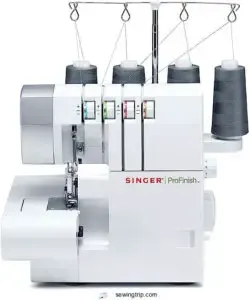
The Singer ProFinish 14CG754 earns its spot on this list by punching above its price class. You get 2-3-4 thread capability, eight built-in stitch options, and four rolled hem settings—all on a 13.5-pound frame you can carry to a trade show or client fitting without breaking your back.
It runs at 1,300 stitches per minute with differential feed to handle knits and wovens cleanly. The color-coded threading system and printed guides on the machine body mean less setup time, more output.
| Best For | Sewers who want professional-quality serging without spending a fortune—especially those working with knits, doing alterations, or taking their machine to fittings and events. |
|---|---|
| Thread Count | 2-3-4 |
| Differential Feed | Yes |
| Color-Coded Threading | Yes |
| Max Stitch Speed | 1300 spm |
| Weight | 13.5 lbs |
| Frame Material | Metal/Plastic |
| Additional Features |
|
- Handles 2, 3, or 4 threads so you can switch between seam types without swapping machines
- Differential feed keeps stretchy fabrics from puckering or bunching
- Color-coded threading and on-machine guides cut down setup time significantly
- Threading is still manual and can frustrate beginners until they get the hang of it
- Automatic trimming keeps things moving but leaves a bit of a mess to clean up
- Tension can be finicky and may need tweaking when you switch fabrics
2. Juki White Serger Machine
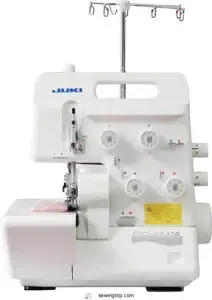
If you want something built closer to industrial specs without the industrial price tag, the Juki MO-654DE is worth a serious look. It runs at 1,500 stitches per minute—faster than the ProFinish—and manages 2, 3, and 4 thread configurations with a knife system that cuts clean through light and heavy fabrics alike.
Differential feed ranges from 0.7 to 2.0, so knits won’t wave on you. Color-coded threading and individual tension dials keep setup straightforward, even mid-production.
| Best For | Sewers of all skill levels who want near-industrial performance for garment construction, home decor, or serious crafting projects. |
|---|---|
| Thread Count | 2-3-4 |
| Differential Feed | 0.7-2.0 |
| Color-Coded Threading | Yes |
| Max Stitch Speed | 1500 spm |
| Weight | 15.18 lbs |
| Frame Material | Aluminum |
| Additional Features |
|
- Screams through fabric at 1,500 stitches per minute, so you’re not sitting around waiting
- Color-coded threading makes setup way less frustrating, even if you’re new to sergers
- Handles everything from sheer lightweight fabric to thick, heavy material without missing a beat
- No coverstitch or coverhem feature, so you’ll need a separate machine for those finishes
- If you’re outside the US, you’ll need a step-down transformer to plug it in safely
- The instruction manual may not be in your language, which can make troubleshooting a headache
3. Janome Serger Machine With Differential Feed
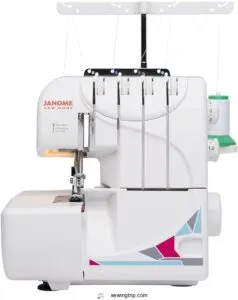
Juki runs fast, but Janome wins on control. The MOD-Serger manages 3 and 4-thread overlock stitches, and its differential feed—adjustable to match everything from stretchy jerseys to stiff canvas—keeps your seams clean without babysitting the machine.
Color-coded thread guides and lay-in tension slots mean rethreading mid-production doesn’t kill your momentum. At 14.3 pounds, it’s stable on the table.
For small shops juggling knits, wovens, and hemmed edges, it covers the range without demanding a specialist.
| Best For | Small shop owners and home sewers who work with a mix of fabrics—knits, wovens, denim—and want reliable overlock stitching without a steep learning curve. |
|---|---|
| Thread Count | 3-4 |
| Differential Feed | Yes |
| Color-Coded Threading | Yes |
| Max Stitch Speed | Not specified |
| Weight | 14.3 lbs |
| Frame Material | Metal |
| Additional Features |
|
- Color-coded thread guides and lay-in threading make rethreading quick, so you stay in flow during longer sessions.
- Differential feed adjusts to your fabric, keeping stretchy knits from warping and heavier canvas from puckering.
- Handles 3 and 4-thread overlock stitches, so it’s flexible enough for everything from light jersey dresses to canvas bags.
- No storage case for accessories, so small parts tend to wander.
- Threading can be tricky at first, especially if you’re new to sergers.
- Gets loud at higher speeds, which might be a problem in shared spaces.
4. Juki Mo1000 Serger Machine
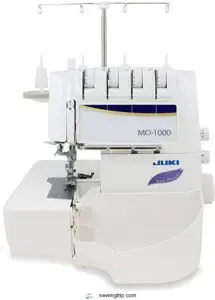
Control matters, but speed closes orders. The MO-1000 runs at 1,500 stitches per minute and threads its loopers with a push-button jet of air—no fishing thread through tight channels, no lost time.
It manages 2, 3, and 4-thread overlock stitches, plus rolled hems, so one machine covers most of your finishing needs. Differential feed adjusts from 0.7 to 2.0, keeping knits smooth and wovens flat.
At around 20 pounds, it stays put when production ramps up.
| Best For | Sewists who work with knits, fraying fabrics, or need clean professional finishes fast—whether they’re just starting out or running a busy workroom. |
|---|---|
| Thread Count | 2-3-4 |
| Differential Feed | Yes |
| Color-Coded Threading | Yes |
| Max Stitch Speed | Not specified |
| Weight | 24.4 lbs |
| Frame Material | Georgette |
| Additional Features |
|
- The jet air looper threader is a genuine time-saver—push a button and you’re ready to sew instead of fighting with thread
- Handles 2, 3, and 4-thread overlocks plus rolled hems, so one machine does most of what you need
- Runs quietly and smoothly, which makes a real difference during long sewing sessions
- The presser foot can shift during use, which risks breaking needles and interrupting your work
- The air threader doesn’t always cooperate, and the needle threading is still tricky even with help
- Instructions are thin and the included disc isn’t much better, so expect a learning curve upfront
5. Bernette Funlock Serger Machine
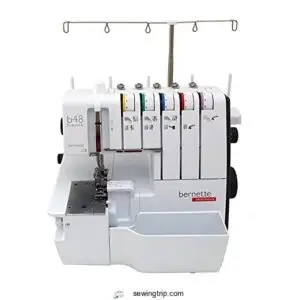
The Bernette Funlock 44 is a quiet workhorse that punches above its price point. You get 15 built-in stitch patterns—overlock, flatlock, rolled hem, and a super stretch option for demanding knits—plus 2, 3, and 4-thread configurations.
Differential feed adjusts from 0.6 to 2.0, so wavy seams on jersey aren’t your problem anymore. Speed hits 1,300 stitches per minute.
Color-coded threading paths and an internal accessory compartment keep your workflow tight. For a new small shop, it’s a focused, budget-friendly entry point.
| Best For | Sewers who already have some experience and want a capable serger that handles everything from delicate knits to heavy denim without breaking the bank. |
|---|---|
| Thread Count | Multiple |
| Differential Feed | Yes |
| Color-Coded Threading | Yes |
| Max Stitch Speed | 1300 spm |
| Weight | 21 lbs |
| Frame Material | Plastic |
| Additional Features |
|
- 23 built-in stitches give you a lot to work with—overlock, coverstitch, chain stitch, and more
- Handles a wide range of fabrics, from fine knits to thick denim, with speed up to 1,300 stitches per minute
- Bright LED lighting and an adjustable presser foot make detailed work a lot easier
- Threading is complex and can be frustrating, especially if you’re just starting out
- Some buyers have reported missing or damaged parts right out of the box
- Takes real time with the manual to get comfortable—not a plug-and-play machine
6. Bernette Coverstitch Sewing Machine
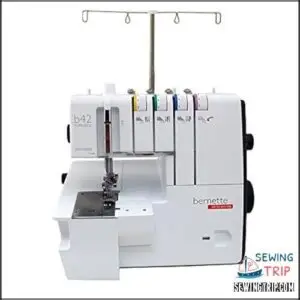
Coverstitch is a different animal—and the Bernette B42 Funlock owns that lane. Where a serger trims and encloses, this machine delivers three coverstitch widths plus a chain stitch, hitting up to 1,300 stitches per minute.
The 87 mm work area accommodates dresses and hoodies without fighting the fabric. Differential feed ranges from 0.6 to 2.0, keeping knits flat and professional.
At $699 with a 5-year mechanical warranty, it’s a serious production tool for shops doing volume hemming.
| Best For | Sewers and small shop owners who do a lot of hemming and finishing work on knits and garments. |
|---|---|
| Thread Count | Coverstitch/Chain |
| Differential Feed | Yes |
| Color-Coded Threading | Yes |
| Max Stitch Speed | Not specified |
| Weight | 19.26 lbs |
| Frame Material | Metal |
| Additional Features |
|
- Three coverstitch widths plus a chain stitch give you real versatility for professional-looking hems and edges
- The large 87mm workspace makes it easy to maneuver bigger pieces like dresses and hoodies
- Differential feed handles stretchy knits without puckering or distortion
- The presser foot lever feels awkward to some users, and there’s not much clearance under the foot, which can lead to jamming
- Threading can be tricky, especially if you’re new to coverstitch machines
- It’s probably not the best pick for heavy-duty, high-volume commercial use over the long haul
7. Janome Serger Machine
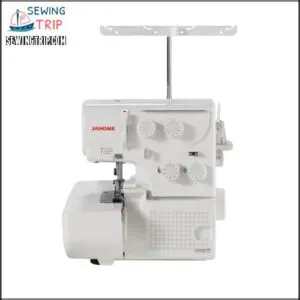
The Janome 8002D is built for people who want professional results without a steep learning curve. It manages 3 and 4 thread overlock stitches, switches to rolled hemming by sliding the needle plate to the R position—no swapping parts—and runs at up to 1,300 stitches per minute, nearly whisper-quiet.
Color-coded threading guides walk you through setup fast. At 19 pounds with a 5-year mechanical warranty, it’s a dependable, compact workhorse that earns its spot on any small business table.
| Best For | Home sewers and small business owners who want clean, professional-looking seams without spending months learning the craft. |
|---|---|
| Thread Count | 3-4 |
| Differential Feed | Yes |
| Color-Coded Threading | Yes |
| Max Stitch Speed | Not specified |
| Weight | 19 lbs |
| Frame Material | Aluminum |
| Additional Features |
|
- Switching between 3-thread and 4-thread overlocking is straightforward, and the rolled hem feature kicks in without swapping any parts.
- The color-coded threading chart makes setup way less intimidating, especially if you’re new to sergers.
- At under 20 pounds, it’s compact enough to move around but solid enough to feel like a real workhorse.
- Threading takes some patience to get right, and changing thread colors can be a bit of a process until you get used to it.
- No dust cover included, so you’ll need to grab one separately if you want to keep it protected between uses.
- It’s 110-volt only, so it’s strictly a US machine—not ideal if you travel or plan to use it abroad.
8. Juki Serger Sewing Machine
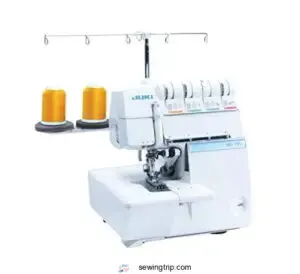
The MO-735 isn’t just a serger—it’s a two-in-one production station. You get 24 stitch options, including chainstitch, 5-thread safety stitch, and coverstitch, all in one 23-pound machine.
That means fewer equipment swaps between sportswear, activewear, and home fashions. It manages ultra-lightweight to heavyweight fabrics without complaint.
Threading can test your patience early on, but once you’re dialed in, this Juki earns its place as a serious small-shop workhorse built for semi-professional volume.
| Best For | Home sewers and small-shop owners who work with knits, activewear, and stretchy fabrics and want serging and coverstitching in one machine. |
|---|---|
| Thread Count | 5-thread |
| Differential Feed | Yes |
| Color-Coded Threading | Yes |
| Max Stitch Speed | Not specified |
| Weight | 23.1 lbs |
| Frame Material | Vinyl |
| Additional Features |
|
- Two machines in one — serger and cover hem combined saves you time and bench space
- 24 stitch options means you can handle almost any fabric project, light or heavy
- Built for semi-professional volume, so it won’t tap out when the workload picks up
- Threading is a real learning curve, especially if you’re new to sergers
- Instructions leave a lot to be desired — expect to lean on YouTube
- Some users have had issues with the needle plate, with needles coming unglued over time
9. Brother Coverstitch Serger Machine
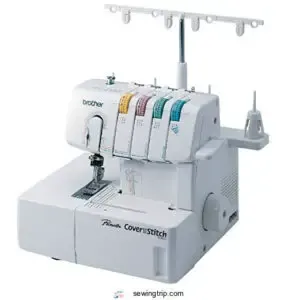
The Brother 2340CV does one thing and does it well—coverstitch hems that actually look retail-ready. At 12.35 pounds with a metal frame and a 25-year warranty, it’s built to last inside a small studio.
You get tri-cover, narrow, and wide stitch options, plus a differential feed that runs 0.7 to 2.0 to keep knits flat. The lay-in, color-coded threading saves real time on busy production days.
For T-shirts, activewear, and curved hems, this machine earns consistent results.
| Best For | Sewists and small studio owners who regularly work with knit fabrics and want professional-looking hems without sending work out. |
|---|---|
| Thread Count | 2-3-4 Coverstitch |
| Differential Feed | 0.7-2.0 |
| Color-Coded Threading | Yes |
| Max Stitch Speed | 1100 spm |
| Weight | 12.35 lbs |
| Frame Material | Metal |
| Additional Features |
|
- Metal frame and a 25-year warranty make it a solid long-term investment for regular use.
- Three cover stitch options plus differential feed keep stretch fabrics flat and looking clean.
- Color-coded, lay-in threading is a real time-saver when you’re switching threads mid-project.
- Thread breakage can be a headache if the machine isn’t threaded just right—there’s a learning curve.
- Tension needs tweaking for different fabrics, which takes some trial and error to dial in.
- Only works on 120V, so it’s not an option if you’re outside the US.
10. Brother Heavy Duty Serger Machine
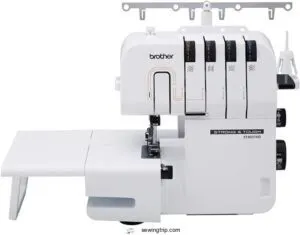
If you’re finishing denim, canvas, or heavy knits at volume, the ST4031HD is built for that load. Its metal frame stays stable at 1,300 stitches per minute—no rattling, no drift.
Color-coded threading guides cut setup time, and the adjustable differential feed manages everything from thick layers to stretchy knits without puckering.
The extension table accommodates bulky projects so your seams stay true. At 17.64 pounds, it’s desk-sized but punches well above its weight for small-batch production.
| Best For | Sewing enthusiasts, professionals, and small businesses tackling heavy fabrics like denim, canvas, and thick knits at volume. |
|---|---|
| Thread Count | 3-4 |
| Differential Feed | Yes |
| Color-Coded Threading | Yes |
| Max Stitch Speed | 1300 spm |
| Weight | 17.64 lbs |
| Frame Material | Metal/Plastic |
| Additional Features |
|
- Metal frame keeps things solid at 1,300 stitches per minute—no wobble, no slowdown
- Color-coded thread guides make setup faster and less frustrating
- Extension table gives you room to work on bigger, bulkier projects
- Threading can be tricky, so it’s not great for beginners
- Needs regular oiling to stay quiet and run smoothly
- Comes with a noticeable factory oil smell right out of the box
Serger Vs. Coverstitch: Which is Best for You?
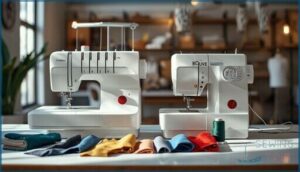
Choosing between a serger and a coverstitch machine is one of those decisions that can make or break your workflow. Both tools do very different jobs, and picking the wrong one wastes time and money.
Here’s what you need to know to make the right call.
Main Differences in Stitching Functions
Two machines, two completely different jobs—don’t confuse them.
A serger uses overlock techniques with 3–5 threads to trim, wrap, and seal raw edges in one pass. Stitch formation here is built for seam finishing and edge control. A coverstitch skips the blade entirely, focusing on flat, stretchy hems.
Those seeking more detail can review the key differences through this helpful.
| Feature | Serger | Coverstitch |
|---|---|---|
| Stitch formation | Overlock stitches wrap the edge | Straight rows on top, looping underside |
| Thread tension | Balanced across 3–5 threads | 2–3 needles plus one looper |
| Seam finishing | Trims and encases raw edge | Secures folded hem only |
| Fabric handling | Differential feed handles stretch | No knife; sews pre-finished edges |
| Stitch quality | Thick, durable rope-like edge | Flat, low-profile, hem-ready finish |
Ideal Uses for Sergers
Now that you know what sets them apart, here’s where a serger actually earns its place in your workflow.
| Use Case | Why It Works |
|---|---|
| Garment Construction | Trims and finishes in one pass |
| Fabric Finishing on knits | Differential feed prevents stretch distortion |
| Seam Construction for activewear | Durable overlock holds under tension |
| Garment Assembly at volume | Up to 1,300 stitches per minute |
Your sewing business moves faster when the right machine manages the right job.
Best Projects for Coverstitch Machines
A serger manages the rough work, but when your hems need to look retail-ready, that’s where a coverstitch machine steps in. For your sewing business, it’s the finishing detail that separates handmade from professional garment construction.
| Project | Why Coverstitch Wins |
|---|---|
| Knitwear Finishing & Activewear Seams | Flat, stretch-friendly hems |
| Garment Hemming & Fabric Embellishments | Clean topstitched look |
| Home Decor items | Polished, durable edge finish |
When to Choose a Combo Model
If your sewing business needs both seam finishing and stretch hems but space and budget constraints keep you from buying two machines, a combo model gives you project flexibility. You’ll trade a bit of conversion time for serious space savings—especially when growth planning is still uncertain.
| Need | Combo Model Advantage | Limitation |
|---|---|---|
| Space Savings | One machine, less clutter | Mode switching required |
| Budget Constraints | Lower startup cost | Fewer specialty stitches |
| Project Flexibility | Manages knits, wovens | Limits sophisticated features |
Maintenance Tips for Business Productivity
A neglected serger is a slow serger—and in a small business, slow costs you money. Keeping your machine running clean and tight isn’t optional, it’s part of your workflow.
Here’s what you need to stay on top of.
Regular Cleaning and Lubrication
Your serger is only as reliable as the care you put into it—skip the oil and cleaning routine, and even a top-tier machine will start fighting you mid-project.
Build a cleaning schedule around every 8–10 hours of use. Clear lint from the feed dogs, apply machine lubrication to moving parts, and check thread tension while you’re in there.
Consistent serger maintenance keeps your output consistent too.
Troubleshooting Common Issues
When your serger starts skipping stitches or puckering fabric mid-run, the fix is usually simpler than you’d think.
- Thread Breakage — Rethread completely. Poor thread management causes 80% of tension issues.
- Machine Jamming — Clear the stitch plate and check for lint blocking the feed dogs.
- Error Codes — Cross-reference your manual’s diagnostic tools before assuming mechanical failure.
Consistent sewing machine maintenance protects your stitch quality and your deadlines.
Needle and Thread Care
Dull needles and mismatched thread are silent production killers—swap your needle every 8 hours of run time and match thread weight to fabric before the machine tells you to.
Fiber selection directly affects thread tension and stitch quality. Poor yarn management causes thread breakage mid-run.
Use your machine’s threading system correctly, and thread capability stays consistent across every seam.
Accessing Manuals and Support
Every serger manual is a troubleshooting shortcut you haven’t used yet—pull it up before the problem costs you a production run. Most brands post User Guides, Online Tutorials, and FAQ Sections directly on their sites. Singer ProFinish even has live Technical Support.
Bookmark these now:
- Customer Forums with real serger machine fixes
- Thread Management guides by fabric type
- Sewing Machine Reviews that flag common issues
- Sewing Business Productivity tips from working operators
Frequently Asked Questions (FAQs)
What is the best simple serger machine?
The Lumina Moda stands out as the best simple serger machine — clean threading, solid thread tension, and beginner-friendly controls make it a reliable portable serger for anyone just getting started.
Can a serger replace a regular sewing machine?
Not quite. A serger machine manages overlock stitches and seam finishing fast — but sewing machines still win for garment construction details like zippers and buttonholes. Sergers limitations mean you’ll want both.
How do I price serger-finished products competitively?
Start with your cost analysis—materials, time, and machine overhead. Then check market research on comparable garment construction finishes.
Competitive pricing means covering profit margins without undercutting your value. Sergers and coverstitch quality justifies premium positioning.
What fabrics should beginners avoid with sergers?
Beginners should skip delicate fabrics, heavy denims, and thick textiles until they’ve mastered tension control.
Sensitive knits and stretchy materials punish bad differential feed settings fast—stick to medium-weight wovens first.
How long does learning to serge typically take?
Like riding a bike, the learning curve is short but real. Most beginners grasp serging basics within a few practice sessions—solid skill building usually takes two to three weeks of consistent sewing techniques and hands-on user experience.
Should I buy new or refurbished for my business?
New machines bring warranty options and reliability. Refurbished costs less upfront, but purchase risks are real.
For business budgeting, weigh long-term value over short-term savings — a warranty often pays for itself fast.
Conclusion
A hand-finished seam signals hustle. A serger-finished seam signals business. That’s the gap the right machine closes—and why choosing well matters more than choosing fast.
The serger machines for small business owners on this list aren’t just tools; they’re production partners that protect your reputation stitch by stitch. You’ve read the specs, weighed the options, and mapped your workflow. Now the only thing standing between you and a tighter operation is the decision.
- https://meissnersewing.com/blogs/inspiration/serger-vs-overlock
- https://so-sew-easy.com/must-features-first-serger/
- https://sewingmachineman.substack.com/p/the-definitive-guide-to-sergers
- https://sewcanshe.com/best-serger-machines-for-2026-finding-the-perfect-match-for-your-budget/
- https://www.sewcanshe.com/blog/2014/9/23/sewing-201-do-i-need-a-serger