This site is supported by our readers. We may earn a commission, at no cost to you, if you purchase through links.
Threading a serger for the first time feels like solving a puzzle designed by someone who hates you—four spools, color‑coded paths, tension dials that seem to communicate in a language only the machine understands.
Once everything clicks, though, you’re trimming and enclosing raw edges in a single pass at speeds a conventional sewing machine cannot touch.
That gap between struggle and mastery is exactly why choosing the right serger matters.
The wrong machine compounds the frustration; the right one becomes the workhorse your sewing room didn’t know it was missing.
What follows cuts through the spec sheets to show you exactly what to look for—and which five models deliver it.
Table Of Contents
Key Takeaways
- A serger isn’t a faster sewing machine—it’s a specialized tool that trims, stitches, and finishes raw edges in a single pass, making it essential once you’re regularly finishing 10 or more garments a year.
- Thread count (2/3/4/5) isn’t marketing fluff; it directly determines which stitches you can use and whether your seams will hold up in stretch fabrics, activewear, or heavyweight construction.
- Differential feed, air threading, and color-coded thread paths aren’t nice-to-haves—they’re the features that separate a machine you’ll actually use from one that collects dust after the first frustrating setup.
- No single serger fits every need: the Juki MO-1000 wins on threading speed, the Singer Professional 5 offers the broadest stitch range, and the Brother 2340CV is the right pick if clean knit hems are your primary goal.
What a Serger Can Do
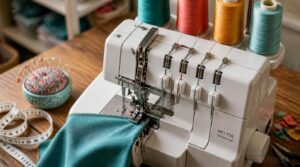
A serger isn’t just a faster sewing machine — it’s a different tool entirely, built to trim, stitch, and finish edges all in one pass.
It trims, overlocks, and seals the edge in a single pass — which is exactly why finding the best serger for your skill level makes such a noticeable difference in your finished seams.
Understanding what it actually does helps you figure out whether it fits your workflow or fills a gap your regular machine can’t.
Here’s what a serger brings to the table.
Key Differences Between Sergers and Sewing Machines
Think of a serger and sewing machine as two specialists — neither replaces the other.
- Needle vs Looper: A sewing machine locks two threads; an overlock machine loops 3–5 threads around fabric edges.
- Edge Finishing: Sergers enclose raw edges completely; sewing machines approximate this with zigzag.
- Speed Comparison: Sergers hit 1,500 stitches/minute — roughly double a sewing machine’s pace.
- Fabric Compatibility: Differential feed manages knits without puckering.
- Stitch Range: Cover stitch and thread tension adjustments live on sergers; buttonholes don’t.
Benefits of Trimming and Stitching Together
Once you understand how a serger differs from a sewing machine, the one-pass advantage clicks into place. Edge trimming, seam finishing, and overedge stitch formation all happen simultaneously — cutting your construction time nearly in half.
A serger’s one-pass advantage trims, stitches, and finishes edges simultaneously — cutting construction time nearly in half
That time efficiency compounds across long seams. You also get real seam durability, fabric stretch that moves with knits, rolled hem capability on sheer edges, and a professional appearance that signals factory-quality craft.
Modern sergers often include automatic threading systems that cut setup time.
Best Projects for a Serger
That speed advantage shines brightest when you put it to work on real projects. Napkin projects and snack bag creation let you practice fabric edge finishing fast — both done in under an hour.
Scrunchie making and wearable accessories like infinity scarves build tension control.
For garment construction, knit hem finishes, flatlock stitch seams, and cover stitch applications on leggings deliver genuinely professional results.
The Diana serger offers twelve stitch configurations for diverse projects.
When a Serger is Worth Buying
A serger earns its place once your production volume needs outgrow what a regular machine processes efficiently.
If you’re finishing 10 or more garments yearly, the cost‑benefit analysis tips quickly — entry‑level sergers start around $300 and pay back through time saved.
Factor in fabric compatibility, long-term durability across 5,000+ hours, and modest maintenance investment, and the professional finish justifies every dollar.
Stitch Types and Thread Counts
most buyers get confused — and where the wrong choice quietly costs you. Understanding those numbers actually mean will save you from buying a machine that can’t do what you need.
key stitch types and what each one is really for.
What 2/3/4/5 Thread Labels Mean
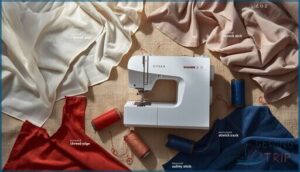
Those numbers printed on a serger’s label—2, 3, 4, 5—aren’t marketing shorthand. They define Thread Capacity and, directly, Stitch Strength. Each configuration unlocks different stitches:
For knit fabrics especially, a three-thread overlock stitch guide shows exactly how thread count shapes both the stretch and the finish of a seam.
- 2-thread overlock — lightweight edge finishing on shears
- 3-thread overlock — standard fraying prevention on wovens and knits
- 4-thread overlock — reinforced, stretch-ready seams for activewear
- 5-thread stitching — industrial Safety Stitch combining chain plus overlock
- Configuration Flexibility — one machine switching between all setups
Fabric Compatibility depends entirely on which thread count you deploy.
3. Thread Vs 4-Thread Overlock
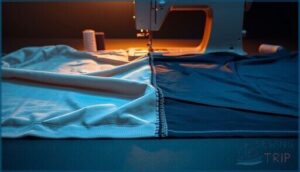
Both stitches finish edges, but the durability trade-offs matter when choosing. A 3thread overlock uses one needle for lightweight fabric compatibility on knits and wovens, keeping bulk flexibility and thread cost lower.
A 4thread overlock adds a second needle row, boosting seam strength for activewear and stress points. Adjust thread tension adjustment settings and differential feed accordingly on your serger models and thread count classification.
Rolled Hem and Flatlock Uses
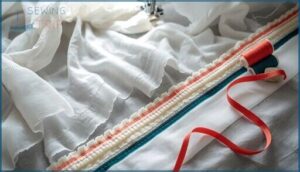
Choosing the right finish separates polished work from amateur edges.
A rolled hem wraps raw edges cleanly — ideal for lightweight scarves, bias roll finishes, lettuce edge effects, and pintuck detailing on sheers. Activewear flatlock stitches open flat, reducing bulk while staying flexible. Both depend on precise thread tension adjustment and differential feed. Three uses to master:
- Rolled hem on chiffon or knit hems
- Flatlock stitch for activewear seams
- Lettuce edges on stretchy knit trims
Chain Stitch, Safety Stitch, and Coverstitch
Three stitches most sewists overlook can transform what your machine processes.
| Stitch | Best Use |
|---|---|
| Chain Stitch Basting | Easy-remove seaming |
| Safety Stitch Reinforcement | Non-stretch seam strength |
| Coverstitch Elasticity | Knit hem flexibility |
Chain stitch unravels cleanly when pulled — perfect for fitting adjustments.
Safety stitch combines overlock and chainstitch in one pass.
Coverstitch delivers parallel topstitching that moves with fabric, essential for activewear hems.
Matching Stitch Types to Fabric
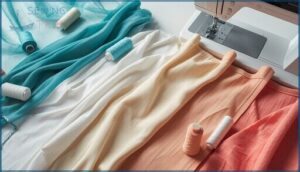
Every fabric has a stitch that fits it like a second skin. For knit overlock choice, a 4-thread seam stretches without breaking down.
Woven edge finish works best with a clean 3-thread pass.
Lightweight rolled hem manages chiffon beautifully.
Bulky stitch width keeps thick layers flat and even.
Stretch differential feed prevents wavy knit seams — test on scraps first.
Features to Compare Before Buying
Once you’ve sorted out which stitches you actually need, it’s time to think about what separates a frustrating machine from one that just works. Not every feature matters equally — it really comes down to how you sew, what fabrics you use, and how much patience you have for setup.
Here are the key things worth comparing before you spend a dollar.
Differential Feed for Stretch and Gathering
Differential feed is the feature that separates a capable serger from a frustrating one.
By adjusting the Front‑Rear Feed Balance between 0.7 and 2.0, you control whether fabric stretches or gathers beneath the needle. Stretch Ratio Calibration prevents wavy knit seams, while Gathering Dial Settings above 1.0 enable Gathered Seam Finishing without basting.
Always test Fabric Elasticity Mapping on a 10‑inch swatch first.
Color-Coded Threading and Air Threading
Threading a serger used to be the part nobody talked about — until air threading changed everything.
Color-coded threading paths map each thread’s exact route, acting as your personal Visual Thread Guides from spool to needle. Air Looper Setup pushes thread through tight internal channels in seconds, making Quick Thread Change easy.
Why these features matter:
- Color-coded threading paths eliminate guesswork during rethreading
- Air threading manages the hardest part — the loopers
- Automatic threading reduces Bird’s nesting errors markedly
- Beginner Threading Aid features like Jet Air Threading cut setup under five minutes
Tension Control and Stitch Adjustments
Once threading is sorted, Thread Tension becomes your next challenge. Most sergers give you separate dials for Needle Balance and Looper Settings — adjust one at a time, then run a Test Fabric strip to confirm.
Stitch Length and stitch width adjustment shape seam density, while Thread tension adjustment on sergers and automatic tension settings handle the rest. Differential feed adjustment keeps stretch fabrics honest.
Knife Quality and Edge Trimming
Once tension is dialed in, the knife becomes the focus. Blade Sharpness directly affects whether your overlock stitch and overedge stitch wrap cleanly or fray the fabric edge. Dull knives shred rather than slice — replace blades every 6–12 months.
Cutting Width Adjustment controls how much fabric the knife trims before edge finishing begins, keeping your rolled hem option or flatlock seam sitting right where it should.
Speed, Lighting, and Ease of Use
Beyond blade precision, speed and usability shape your daily workflow.
Home sergers hitting 1,300–1,500 stitches per minute deliver real stitch speed advantages over standard machines.
Pedal speed control keeps that power manageable during beginner setup.
LED illumination brightens the tight threading zone without heat buildup.
Simple stitch dials, automatic threading, and easy-to-use threading paths with color-coded guides cut setup time dramatically — letting you focus on sewing.
Budget, Durability, and Maintenance Needs
Your budget shapes every decision here. Entry-level machines start around $300, while heavy duty serger models with metal frame construction and stronger motors climb past $500.
- Initial cost reflects convenience features, not just stitch count.
- Warranty length signals manufacturer confidence in durability.
- Service schedule keeps knife, loopers, and feed dogs running clean.
- Replacement parts availability determines long-term ownership viability.
Budget friendly sergers work well for occasional projects — just factor in serger maintenance costs upfront.
Top 5 Serger Machines
all those features in mind, the next step is matching them to an actual machine you can buy today.
Each of the five sewing machines below was chosen for a specific reason — whether that’s threading ease, stitch range, or raw value for the price.
Here’s what made the cut.
1. Brother Designio DZ1234 Serger
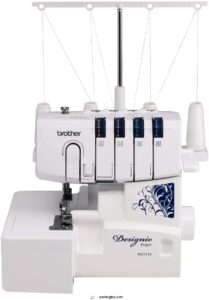
The Brother Designio DZ1234 is a solid entry point if you’re ready to serge without the steep learning curve. Its metal frame keeps it stable at up to 1,300 stitches per minute, and the color-coded threading system makes setup genuinely manageable.
You get 3- and 4-thread overlock, rolled hem, and ribbon lock stitches, plus differential feed for clean results on knits and stretch fabrics. Three specialty feet — blind hem, gathering, piping — are included.
One caveat: swap out the starter threads early.
| Best For | Home sewers and beginners who want clean, professional-looking seams and hems without spending weeks figuring out a complicated machine. |
|---|---|
| Max Speed | 1,300 spm |
| Thread Count | 3-4 thread |
| Differential Feed | Yes |
| Frame Material | Metal |
| Voltage | 120V |
| Color-coded Threading | Yes |
| Additional Features |
|
- Metal frame keeps it rock solid even when you’re flying at full speed
- Color-coded thread guides make setup way less intimidating than most sergers
- Differential feed handles knits and stretch fabrics without the wavy, stretched-out mess
- The starter threads that come with it are pretty low quality — swap them out before your first real project
- The built-in light is dim and runs hot, so you’ll want a good lamp nearby
- Speed is tough to dial in for tight spots like small cuffs or tricky L-shaped edges
2. Janome 8002D Serger Overlock Machine
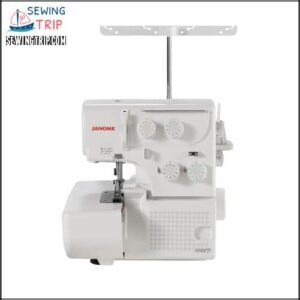
The Janome 8002D is where mechanical simplicity meets real-world performance. Sewing at up to 1,300 stitches per minute, it supports 3- and 4-thread overlock configurations with a retractable upper knife and cutting width adjustable from 3.1 mm to 7.3 mm. Differential feed spans 0.5 to 2.25, keeping knits and wovens feeding evenly.
Color-coded guides and a built-in threading chart reduce setup frustration. No LCD, no presets — just precise manual control, a 25‑year warranty, and clean professional edges at $360.
| Best For | Home sewists and hobbyists who want clean, professional seam finishes without the complexity of a computerized machine. |
|---|---|
| Max Speed | 1,300 spm |
| Thread Count | 3-4 thread |
| Differential Feed | Yes |
| Frame Material | Mechanical/Metal |
| Voltage | Not specified |
| Color-coded Threading | Yes |
| Additional Features |
|
- Trims, stitches, and finishes seams in one pass — a real time-saver
- Color-coded threading makes setup way less intimidating
- Handles everything from delicate fabrics to stretchy knits with the adjustable differential feed
- No automatic thread cutter or electronic features, so expect more hands-on adjustments
- Key specs like stitch width and voltage aren’t listed, so you’ll want to confirm before buying
- Not built for high-volume work — it’s a home machine through and through
3. Singer Professional 5 Serger Overlock
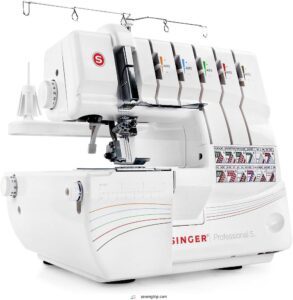
The Singer Professional 5 punches well above its weight class. Its 2/3/4/5-thread capability manages overlock, coverstitch, and chainstitch functions from a single machine — a genuinely rare combination at this price point.
The fully automatic tension system adjusts across stitch types without manual fiddling, and differential feed keeps knits and sheers tracking cleanly at 1,300 stitches per minute.
The heavy-duty metal frame adds reassuring stability. Threading still takes practice, but the included diagram shortens that learning curve considerably.
| Best For | Sewers who work with knits, fleece, and stretchy fabrics and want a fast, reliable serger that handles multiple stitch types without breaking the bank. |
|---|---|
| Max Speed | 1,300 spm |
| Thread Count | 2-3-4-5 thread |
| Differential Feed | Yes |
| Frame Material | Metal & Plastic |
| Voltage | 120V |
| Color-coded Threading | Yes |
| Additional Features |
|
- Five-thread capability means you can overlock, chainstitch, and coverstitch all from one machine — genuinely versatile for the price
- The automatic tension system takes a lot of guesswork out of switching between stitch types
- At 1,300 stitches per minute with differential feed, it handles stretchy and lightweight fabrics cleanly and quickly
- Threading is a real learning curve and takes time to get comfortable with
- The foot pedal can feel abrupt and takes some getting used to
- All the dials and settings mean more fiddling when you switch between stitch configurations
4. Brother 2340CV Coverstitch Serger
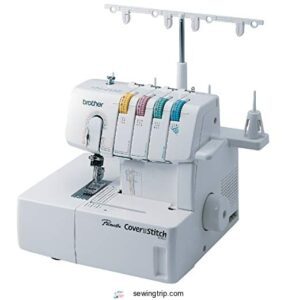
Not every project needs a trimming knife — sometimes you just need clean, professional hems on stretch fabric.
That’s exactly where the Brother 2340CV earns its place.
It’s a dedicated coverstitch machine offering narrow 3 mm and wide 6 mm cover stitches, tri‑cover stitching with three needles, and chain stitch capability.
The metal frame holds steady at 1,100 stitches per minute, while differential feed ranging 0.7–2.0 keeps knits smooth.
Color‑coded threading makes setup manageable, though tension adjustment still requires some hands‑on learning.
| Best For | Sewers who regularly work with knits and stretch fabrics and want professional-looking hems without hauling their work to a tailor. |
|---|---|
| Max Speed | 1,100 spm |
| Thread Count | 2-3-4 thread |
| Differential Feed | 0.7–2.0 mm |
| Frame Material | Metal |
| Voltage | 120V |
| Color-coded Threading | Yes |
| Additional Features |
|
- Handles knits, swimwear, and dance fabrics like a champ — differential feed keeps everything smooth and pucker-free
- Three cover stitch options (narrow, wide, and tri-cover) give you real versatility for hems and topstitching
- Color-coded threading and a sturdy metal frame make it feel like a machine built to last
- Not the friendliest starting point for beginners — threading and tension take some getting used to
- Some users run into thread breakage until they dial in the settings just right
- Removing fabric after finishing a seam can be a bit fiddly if you’re not used to the process
5. Juki MO-1000 Air Threading Serger
If air threading sounds like magic, the Juki MO-1000 makes it feel routine. A burst of air threads both loopers in seconds — no tweezers, no squinting.
It manages 2/3/4-thread overlock, rolled hems, and flatlock stitches at 1,500 stitches per minute, with differential feed adjustable from 0.7 to 2.0 mm for knits and sheers alike.
At $1,399, it’s a serious investment, but the hands-free threading system and quiet, stable performance make it worth every dollar for high-volume sewists.
| Best For | High-volume sewists and serious hobbyists who want fast, frustration-free threading and clean, professional overlock stitches on everything from knits to sheer fabrics. |
|---|---|
| Max Speed | Not specified |
| Thread Count | 2-4 thread |
| Differential Feed | Yes |
| Frame Material | Not specified |
| Voltage | Not specified |
| Color-coded Threading | Yes |
| Additional Features |
|
- Air threading both loopers in seconds — no tweezers, no threading nightmares
- Quiet and stable enough for home sewing rooms without rattling your whole table
- Handles a wide range of stitches and fabrics, from rolled hems to stretchy knits
- Needle threading still requires patience and sometimes a magnifying glass
- The foot pedal can loosen over time, which risks breaking needles if you’re not watching it
- The air threader needs regular cleaning to stay reliable, and warranty service can be slow
Frequently Asked Questions (FAQs)
Can sergers handle thick or heavy fabrics well?
Yes, but with conditions.
Heavy-duty sergers handle denim, canvas, and upholstery well when they have a stronger knife, higher presser-foot lift, and proper tension control.
Standard models struggle with multiple thick layers.
How loud are serger machines during operation?
Sergers run noticeably louder than standard sewing machines, usually in the high 70s to low 80s dB range.
The cutting knife, multiple loopers, and high stitch speed all contribute to that signature mechanical buzz.
Do sergers work with all thread types?
Not quite. Most all-purpose polyester and nylon threads work great, but heavy embroidery and metallic threads can jam loopers.
Woolly nylon is a favorite for stretch fabrics — it expands beautifully for clean, flexible edges.
What safety features should beginners prioritize?
Focus on safety switches, knife guards, and needle protection. A cover-interlock system that prevents the machine from running while internal parts are exposed is especially valuable when you’re still learning the basics.
Are replacement parts readily available for sergers?
For popular models like the Brother 1034D or Juki MO-series, replacement knives, loopers, and needle plates are widely stocked by parts retailers — keeping your machine running long after the warranty expires.
Can a serger replace a regular sewing machine?
No, serger can’t fully replace a regular sewing machine.
It excels at edge finishing and knit seams, but you’ll still need a regular machine for buttonholes, zippers, and precise construction work.
How often should serger needles be replaced?
Replace your needles every 8–10 hours of sewing, or after two to three garment projects. Heavy fabrics like denim demand faster changes — sometimes after just one project.
What thread brands work best in sergers?
100% polyester is your go-to — brands like Maxi-Lock, Gutermann Toldi-Lock, and Madeira Aerolock run cleanly at high speed, resist breakage, and handle overlock, coverstitch, and flatlock seams without trouble.
Is a serger suitable for quilting projects?
Yes, but with limits. A serger manages quilt-as-you-go projects and edge finishing well. For precise point matching in traditional patchwork, your regular sewing machine remains the better tool.
Conclusion
Like a medieval craftsman selecting the one tool that would define their life’s work, your choice in this serger sewing machine buying guide shapes every seam you’ll sew from here. The right machine doesn’t just finish edges—it finishes hesitation.
Differential feed manages the tricky fabrics, air threading cuts setup time, and stitch versatility opens projects you haven’t imagined yet. Stop browsing spec sheets and start sewing. Your workroom is waiting.
- https://www.singer.com/en-ca/collections/pfaff-overlock-serger-machines?srsltid=AfmBOopskg0qhtfY1V7BcxV_z2DO6Hs0C8xzzf2pbdvHgp_f19h8zmpz
- https://www.sewcanshe.com/blog/2014/9/23/sewing-201-do-i-need-a-serger
- https://shrsl.com/4wofd
- https://modaknits.com/what-does-a-serger-do-that-a-sewing-machine-cant/
- https://idcustomapparel.com/role-of-overlock-stitch-in-clothing/