This site is supported by our readers. We may earn a commission, at no cost to you, if you purchase through links.
That first garment you sew from a pattern won’t be perfect. Your seams might wander. Your darts might pucker. You’ll probably curse the pattern instructions at least twice. But here’s what nobody tells you: those imperfections are exactly how you learn.
Sewing clothes from patterns transforms you from someone who buys mass-produced garments into someone who creates custom pieces that actually fit your body. The pattern envelope holds more than tissue paper and cryptic symbols. It holds your blueprint for clothing independence. Once you crack the code of those markings and master the basic techniques, you’ll wonder why you ever settled for off-the-rack sizing.
Table Of Contents
Key Takeaways
- Sewing from patterns shifts you from buying mass-produced clothes to creating custom pieces that actually fit your body, giving you full control over your wardrobe.
- Start with beginner-friendly patterns that match your skill level, gather essential tools like sharp scissors and a clear ruler, and always prewash fabric to prevent shrinkage.
- Master pattern markings, grain line alignment, and accurate cutting techniques before you sew—these foundational steps determine whether your garment hangs right or twists awkwardly.
- Imperfections in your first projects teach you more than any tutorial, and with each seam you stitch, you build the skills to make clothes you’ll proudly wear.
Getting Started With Sewing Patterns
You’ve decided to sew your own clothes. That’s perfect. Before you cut into fabric, you need to understand three essential foundations: how patterns work, which one matches your skills, and what tools you’ll actually use.
Start by matching your fabric to your sewing pattern so the drape and weight actually work with your design.
Understanding Pattern Components and Markings
Pattern notation unlocks the language of sewing basics. You’ll find symbols that guide every stitch and cut. Seam allowances sit at 5/8 inch for wovens and 3/8 inch for knits. Grain lines align with your fabric’s selvage. Dart markings show where shaping happens.
- Notches mark matching points between pieces
- Fold lines indicate fabric placement
- Stitching lines guide your seam work
Master these fabric symbols and you’ll transform flat pieces into wearable art.
Choosing The Right Pattern for Your Skill Level
Now that you recognize those symbols, let’s talk pattern selection. Your skill assessment matters more than ambition here. Beginner sewing patterns use fewer pieces and simple seams. Intermediate designs add darts and invisible zippers. Expert options demand complex closures and varied techniques.
| Skill Level | Pattern Features |
|---|---|
| Beginner | Simple construction, fewer pieces, straightforward seams |
| Intermediate | More darts, shaping, sometimes invisible zippers |
| Expert | Complex closures, multiple facings, varied techniques |
| Learning Phase | Patterns with easy fit adjustments outlined |
| Safe Choice | Patterns close to current skill level |
Check the envelope for difficulty labels. Choose patterns matching your sewing skills for steady progress.
Essential Tools and Supplies You’ll Need
You’ve picked your pattern—now gather the right sewing gear. Sharp fabric scissors prevent frayed edges. A clear 6-inch ruler lines up seams perfectly. Magnetic pincushions keep pins handy while you work.
Stock matching thread types for your sewing machine and fabric prep supplies like an iron. These sewing notions build your foundation for all sewing projects ahead, strengthening your sewing skills and mastering essential sewing techniques.
Choosing the right thread—whether cotton, polyester, or specialty options—makes a real difference, and you can explore quality sewing thread options that match your fabric and project needs.
Selecting and Preparing Your Fabric
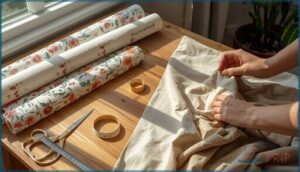
Your fabric choice can make or break your first sewing project.
The right fabric works with your pattern, not against it.
Here’s what you need to know before you cut a single piece.
Matching Fabric Types to Pattern Requirements
Your pattern envelope tells you exactly what fabric types work best. Look for weight recommendations like lightweight cotton or medium wool blends.
Knit compatibility matters for stretch patterns, while woven suit fabrics like cotton sateen give structure to custom pieces. Fabric drape affects how your garment hangs. Print scale impacts visual balance in garment construction.
Match these sewing techniques to your pattern making goals. Exploring fabric and pattern matching basics can help you choose materials with more confidence.
Calculating Yardage and Fabric Width Needs
Your pattern envelope lists yardage for standard fabric widths of 45 or 60 inches. Count each pattern piece and group them by width requirements to calculate total fabric length.
Add a quarter to half yard buffer for grain alignment and pattern efficiency. Wider fabric types reduce yardage because more pieces fit across each width.
This fabric estimation step ensures you buy enough material for garment construction. To get detailed guidance on measuring and calculating yardage, see this helpful explanation of fabric width considerations.
Prewashing and Preparing Fabric Before Cutting
Before cutting, toss your fabric into a warm wash cycle to prevent fabric shrinkage and color bleeding later. This preshrink method lets fibers relax evenly across your pieces. Dry on low heat, then press flat to lock in grain alignment.
Check sewing patterns for fabric types—cotton and linen blends need full preshrinking. These sewing techniques protect your finished garment from unexpected changes.
Transferring and Cutting Your Pattern
Getting your pattern onto fabric is where the real work begins. You’ll transfer markings, align everything just right, and make those first cuts.
Master these three steps and you’re on your way to garments that fit.
How to Transfer Pattern Markings to Fabric
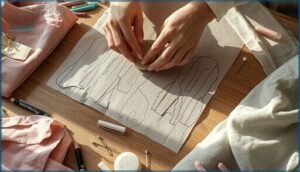
You’ve cut your pieces—now bring those cryptic symbols to life. Fabric marking tools like tracing wheels and tailor’s chalk translate pattern dots and darts into sewing roadmaps you can actually follow.
- Use carbon paper with a tracing wheel for dart precision on woven fabrics
- Mark notches as tiny triangles to align seams perfectly
- Try erasable pens on knits to avoid stretching during pattern transfer
Master these marking techniques and watch your garment take shape with confidence.
Understanding Grain Lines and Pattern Layout
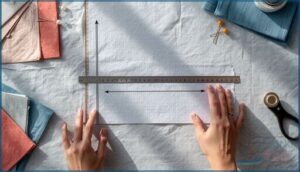
Think of grain lines as your fabric’s compass—they keep your garment hanging straight instead of twisting awkwardly. Every pattern piece shows an arrow that must run parallel to the selvage for proper drape and fit.
Grain lines are your fabric’s compass—align them parallel to the selvage so your garment hangs straight instead of twisting
| Grain Type | Direction | Best For |
|---|---|---|
| Lengthwise | Parallel to selvage | Stable drape, main body pieces |
| Cross grain | Perpendicular to edge | Stretch across body width |
| Bias grain | 45-degree angle | Maximum stretch, fluid movement |
| Off-grain | Misaligned placement | Nothing—causes distortion |
Place your pattern parallel to that selvage edge. Double-check with a ruler before pinning. Sewing tutorials emphasize this Layout Principle because garment construction depends on accurate grain alignment from the start.
Cutting Techniques for Accurate Pieces
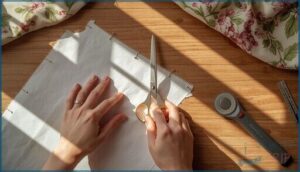
Sharp scissors and a steady hand transform your fabric preparation into professional results. Master these cutting tools and pattern alignment basics to nail seam accuracy every time.
- Pin at critical points like bust darts and shoulder lines to prevent shifting
- Keep your rotary blade perpendicular to avoid beveled edges
- Mark notches on seam allowances for clean construction
- Cut larger pieces first to minimize fabric distortion
Proper notching techniques and sewing skills enhance beginner sewing patterns into garments you’ll proudly wear.
Sewing Your Garment Step-by-Step

You’ve cut your fabric and transferred your markings. Now it’s time to bring your garment to life.
These three essentials will help you sew with confidence and handle any challenges that come your way.
Following Pattern Instructions Effectively
Read all notes before you start—skipping even one detail derails your project. Mark fabric pieces with numbers and transfer marks using tailor tacks for accuracy.
Follow sew sequence exactly as written; patterns guide you through proper construction order. Verify fit early at key points.
These sewing tips transform beginner sewing projects into polished pieces, making sewing patterns less mysterious and sewing tutorials easier to master.
Common Construction Techniques for Beginners
Once you follow the pattern instructions, mastering a few core garment construction techniques makes beginner sewing projects run smoothly:
- Use 5/8-inch seam allowances and backstitch at each end for secure locking
- Press seams flat after stitching to smooth fabric without distorting shape
- Finish raw edges with zigzag or overlock stitches to prevent fraying
- Apply stay stitching on curved edges before assembling pieces
- Topstitch cuffs and collars for durability and professional appearance
These sewing techniques build confidence fast.
Troubleshooting Fit and Sizing Issues
Even with careful construction, your first garment might need fit adjustments. Take accurate body measurements and compare them to the pattern’s finished measurements before cutting.
If armholes gape or waists pull, make a muslin test first. Pattern alterations like raising darts or adjusting shoulder slopes solve most sizing solutions. Document each change for future sewing projects.
Finishing Touches and Pattern Modifications
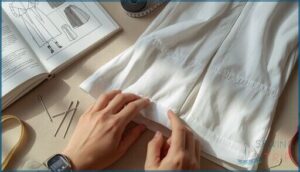
You’ve sewn your garment and it’s taking shape. Now it’s time to make it look professional and fit like it was made just for you.
Here’s how to add those final touches that transform your project from homemade to handmade.
Professional Finishing Techniques for Seams and Hems
Your garment deserves edges that last. Professional seam finishing transforms homemade into handmade quality.
Try these sewing techniques for fabric interfacing and edge stabilizing:
- French seams enclose raw edges completely with two narrow stitches—perfect for lightweight fabrics and a clean inside finish.
- Serged edges prevent fraying on knits using a 3-4 thread overlock for sewing reinforcement.
- Binding finish wraps hems with bias tape for hem binding and garment construction strength.
How to Modify Patterns for Custom Fit
Perfect seams deserve a perfect fit. Pattern alteration lets you tailor any design to your shape.
Try these custom fitting tricks: add width at the bust and remove excess at the upper chest to reduce gapping. Adjust shoulder slope by raising or lowering seams in quarter-inch increments.
These sewing modifications transform standard patterns into custom clothing that moves with you.
Caring for Your Handmade Garments
Your handmade fashion accessories deserve care that preserves every stitch. Gentle cleaning protects fabric storage investments and extends garment maintenance.
Master these DIY clothing essentials:
- Hand washing with cool water — Use mild detergent and skip the wringer to protect seam integrity.
- Ironing tips for delicates — Press inside out on low heat using a cloth barrier.
- Smart fabric storage — Fold knits flat and hang structured pieces on padded hangers.
Frequently Asked Questions (FAQs)
Is it legal to sell garments made from patterns?
Yes, you can sell what you make. Pattern copyright protects instructions, not finished items.
However, commercial licensing may apply for mass production. Always check each pattern’s legal implications and intellectual property terms before selling.
How do I transfer a pattern to fabric?
Transferring your pattern is like planting a blueprint onto fabric. You’ll use chalk markers, tracing paper, or a tracing wheel to mark darts and seams, ensuring accurate grain alignment for beginner-friendly sewing techniques.
What is the best pattern company for beginners?
Simplicity and McCall’s offer beginner friendly patterns with clear instructions.
Tilly and the Buttons provides sewing tutorials and community support. These popular brands deliver sizing consistency and fabric guidance, helping you learn how to sew with confidence.
How do I become a clothing pattern maker?
Start your Fashion Design journey with pattern drafting courses and hands-on garment construction practice.
Master CAD tools like Gerber AccuMark.
Build a portfolio showcasing your pattern inspiration and Industry Trends expertise to open up career paths.
How to use a piece of clothing as a sewing pattern?
Lay your favorite garment flat on pattern paper. Trace the edges carefully while adding seam allowances.
This Pattern Replication technique launches your sewing journey and lets you make your own clothes from existing pieces.
Is pattern drafting difficult?
Pattern complexity grows with grading rules and dart placements, but drafting skills develop through practice.
Fabric behavior and ease calculation challenge beginners initially.
The sewing community offers pattern making and design resources to help you master garment construction.
How do I store sewing patterns efficiently?
Keep patterns immaculate with protective plastic sleeves and labeled manila envelopes. Store by garment type in flat files or magazine holders. Digital archiving saves space while preserving your growing collection.
Which fabrics are best for detailed patterns?
Choose lightweight cotton calico or high thread count poplin for pattern accuracy.
Silk charmeuse shows fine seam lines clearly.
Lightweight wool crepe preserves crisp edges on small pieces while reducing bulk beautifully.
How can I fix mistakes in cut fabric?
Don’t panic—most cutting errors are fixable.
Trim edges evenly within your seam allowance, patch gaps with fusible interfacing, or add small fabric inserts where needed to preserve your garment’s fit and shape.
What are tips for sewing delicate fabrics?
Use a fine needle like 65/9 and lightweight thread for delicate stitches. Press with low heat and a cloth. French seams reduce fraying while maintaining drape on sheer fabric types.
Conclusion
Rome wasn’t built in a day, and neither is sewing mastery. Your first project teaches you more than any tutorial ever could. Each stitch you place builds your skills. Each mistake shows you what works.
Sewing clothes from patterns gives you control over your wardrobe. You’ll create garments that fit your body perfectly. Start with simple patterns. Practice your techniques. Soon you’ll be making clothes you’re proud to wear.