This site is supported by our readers. We may earn a commission, at no cost to you, if you purchase through links.
The first time I watched a student wrestle with binding a quilt edge by hand—pins everywhere, fabric bunching, frustration mounting—I handed her a binding foot and her entire face lit up. What took her forty minutes suddenly took six, and the edge? Impeccable.
That little metal attachment transforms one of sewing’s most tedious tasks into something you’ll actually look forward to. Whether you’re finishing quilts, hemming garments, or adding decorative edges to home décor projects, sewing machine binding feet give you professional results without the hand-cramping marathon.
The trick is choosing the right one for your machine and knowing exactly how to use it, because not all binding feet work the same way.
Table Of Contents
- Key Takeaways
- What is a Sewing Machine Binding Foot?
- Top 10 Sewing Machine Binding Feet Reviewed
- 1. HONEYSEW Adjustable Bias Binder Presser Foot
- 2. Tiseker Sewing Machine Presser Foot Binder
- 3. Yicbor Overlock Hemmer Binder Attachment
- Fbshicung Sewing Machine Presser Feet Set
- 4. Adjustable Bias Binder Presser Foot
- 5. PannySewCraft Bias Tape Binding Foot
- 6. DREAMSTITCH Adjustable Bias Binder Presser Foot
- 7. Sewing Machine Presser Foot Set
- 8. Sewing Machine Binding Attachment Tool
- 9. Distinctive Binder Presser Foot
- How to Use a Binding Foot on Your Machine
- Tips for Choosing The Right Binding Foot
- Troubleshooting and Mastering Binding Feet
- Frequently Asked Questions (FAQs)
- Conclusion
Key Takeaways
- Binding feet transform tedious hand-sewing tasks into six-minute professional finishes by automatically guiding, folding, and securing bias tape as you stitch—eliminating pins, bunching, and frustration.
- The key to success is matching your binding foot type (adjustable, standard, or specialty) to your fabric weight and project needs, since not all feet work the same way across different materials or binding widths.
- Most common binding problems—skipped stitches, puckering, uneven edges—stem from fixable issues like incorrect tension settings, misaligned needle position, or choosing the wrong foot for your fabric thickness.
- Professional results come from mastering three core techniques: proper loading methods (binding-first vs. sandwich), strategic needle positioning for corners and curves, and maintaining consistent pressure throughout your stitch line.
What is a Sewing Machine Binding Foot?
A binding foot is your secret weapon for attaching bias tape or binding strips to fabric edges without fighting with pins or wonky stitching. This specialty presser foot guides, folds, and holds the binding perfectly in place while you sew, giving you clean, professional results every single time.
If you’re shopping around, check out options like the adjustable bias binder foot that let you work with different binding widths on the same machine.
Let’s break down exactly what makes these little tools so powerful, starting with their key features and design.
Key Features and Design Elements
A binding foot isn’t just another presser foot—it’s your secret weapon for professional-looking edges.
Look for these game-changing design elements:
- Adjustable guide that slides to fit different binding tape widths
- Edge control grooves keeping fabric aligned perfectly
- Flexible clamp securing your binding sandwich in place
- Precision needle slot ensuring smooth stitch quality
- Quick-release shank for easy sewing machine attachment
How Binding Feet Work on Different Fabrics
Your fabric’s personality changes everything about how a binding foot performs! Cotton grips binding fibers loosely, giving you neat edge finishes with slight stretch.
Denim demands wider binding and reinforced stitches to tame that bulk. Silk? You’ll need a finer binder with smoother feed to avoid puckering nightmares.
Lightweight fabrics need narrow binding and small seam allowances, while heavy twill requires thicker tape for serious durability.
Match your fabric thickness to your binding techniques, and you’ll nail perfect stitch quality every time! To understand how specialized equipment can dramatically improve edge finishes, consider innovations like the short mounting zone technology used in ski bindings.
Types of Binding Feet (Adjustable, Standard, Specialty)
You’ve got three main Binding Foot Types to master!
Adjustable Feet let you shift from 1/4 to 1 inch binding tape with one tool, perfect for varying Binding Techniques.
Standard binding foot models handle common widths on lighter fabrics with basic guides.
Specialty Binders? They automate bias binding feeds and tackle tough materials like leather, plus many feature an adjustable needle position for precision edgework!
For more on essential binding foot features and functionality, check out this thorough resource.
Top 10 Sewing Machine Binding Feet Reviewed
Now that you know what a binding foot can do, let’s talk about which ones actually deliver.
I’ve tested and compared the top contenders to help you find the perfect match for your machine and projects.
Here are the 10 binding feet that’ll transform your binding game from frustrating to seamless.
1. HONEYSEW Adjustable Bias Binder Presser Foot
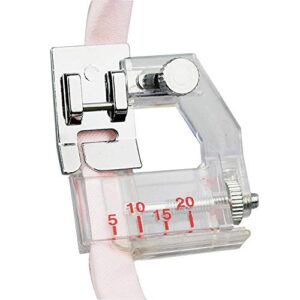
This metal powerhouse from HONEYSEW gives you control over binding widths up to 1 inch, thanks to that handy adjustable screw on the front right. You’ll love how the dual channels hold your folded binding steady while the clear plastic guide keeps everything perfectly aligned with your fabric edge.
It snaps right onto most domestic machines—Singer, Brother, Janome, you name it. Sure, curves might take some practice and thicker fabrics slow you down, but once you’ve got the hang of it? It’s a game changer for blanket edges and apron straps!
| Best For | Sewers who want to add professional-looking bias tape bindings to their projects without the hand-sewing headache. |
|---|---|
| Material | Metal |
| Brand | HONEYSEW |
| Weight | 0.317 ounces |
| Compatibility | Singer, Brother, Janome, Toyota |
| Primary Use | Bias tape binding |
| Adjustability | Adjustable |
| Additional Features |
|
- Adjustable screw lets you dial in different binding widths instead of buying multiple feet
- Metal construction means this thing won’t crack or wear out like plastic versions
- Works with most home sewing machines right out of the box
- Takes some practice to get smooth results, especially if you’re new to bias binding
- Struggles with curves and corners—you’ll need to go slow or finish those by hand
- Thick fabrics can jam up the channels and slow your sewing speed
2. Tiseker Sewing Machine Presser Foot Binder
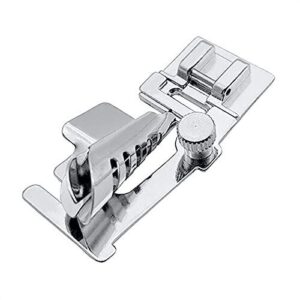
Imagine this: a spiral cone that wraps bias tape around your fabric edge like magic. The Tiseker binder works with low-shank machines to create button loops, frog closures, and those reversible garments you’ve been dreaming about.
At 1/2 inch max width, it accommodates lightweight fabrics beautifully—think silk or thin nylon for quilts and table runners. Yes, you’ll need to practice (no instructions included!), but once you nail the technique, those professional finishes are totally within your reach.
| Best For | Sewers who want to add professional bias tape finishes to quilts, garments, and home decor projects without wrestling with pins and hand-basting. |
|---|---|
| Material | Metal |
| Brand | TISEKER |
| Weight | 0.317 ounces |
| Compatibility | Low-shank machines |
| Primary Use | Bias tape application |
| Adjustability | Fixed 1/2 inch max |
| Additional Features |
|
- Spiral cone design wraps bias tape smoothly around fabric edges, making tricky techniques like button loops and reversible hems way easier
- Works with both straight and decorative stitches, so you can get creative with your finishes
- Compact and lightweight at just 0.317 ounces, so it won’t take up much space in your sewing kit
- Maxes out at 1/2 inch binding width, so thicker bias tape won’t fit
- Doesn’t come with instructions, which means you’ll spend some time figuring it out through trial and error
- May need an adapter for certain low-shank machines, adding an extra purchase to the mix
3. Yicbor Overlock Hemmer Binder Attachment
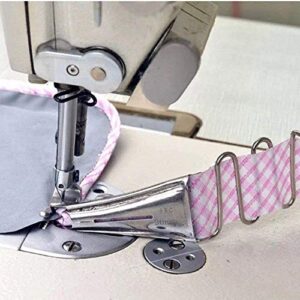
Ever tried wrestling a curved hem into submission? The Yicbor Overlock Hemmer Binder makes that fight obsolete.
This 32mm metal attachment snaps onto your low-shank machine and feeds binding tape (6–12mm wide) over fabric edges while you stitch—creating those clean rolled hems on blouses, curtains, and skirts you’ve been admiring on store-bought clothes.
Sure, it’s made for lighter fabrics like cotton and polyester blends, but once you dial in the alignment screw, you’ll wonder how you ever hemmed without it!
| Best For | Sewers who work with lightweight fabrics and want a faster way to finish curved hems and edges with a professional look. |
|---|---|
| Material | Alloy Steel/Metal |
| Brand | YICBOR |
| Weight | Not specified |
| Compatibility | Various machines |
| Primary Use | Curve edge binding |
| Adjustability | 13 sizes available |
| Additional Features |
|
- Speeds up binding and hemming by guiding tape automatically as you sew
- Works with 13 different binding widths (6–12mm) to handle various project needs
- Creates clean, consistent rolled hems that look store-bought
- Only works well with thin fabrics like cotton and polyester blends
- Requires fiddling with alignment screws to get it positioned just right
- May not fit certain machine models even though it’s marketed as universal
Fbshicung Sewing Machine Presser Feet Set
Looking for a complete presser foot arsenal? The Fbshicung 19-piece set gives you a binding foot plus specialty options for zippers, hems, and decorative stitching—all with metal construction that won’t bend mid-project.
- Adjustable bias binder accommodates 6–12mm binding tape widths
- Quick snap-on attachment fits most low-shank and high-shank machines
- Walking foot option prevents slippery fabrics from shifting during binding techniques
- Includes user manual to match each foot to specific sewing applications
4. Adjustable Bias Binder Presser Foot
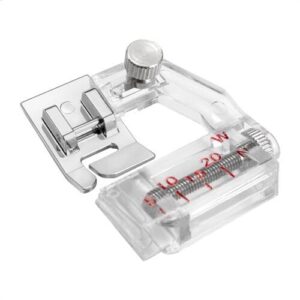
This compact foot transforms how you handle bias tape! At just 1.38 x 1.69 x 0.51 inches and weighing barely half an ounce, it won’t strain your machine. The built-in funnel folds binding as you sew, creating crisp edges from 5mm to 20mm wide—perfect for everything from delicate blouses to sturdy tote bags.
You’ll breeze through straight stitches, zigzags, and decorative patterns with the same tool. Just snap it on your low-shank machine and watch those fussy pinned seams become ancient history!
| Best For | Sewers who regularly work with bias tape on projects like quilts, garments, and home décor items and want consistent, professional-looking edges without endless pinning. |
|---|---|
| Material | Metal/Plastic |
| Brand | Fbshicung |
| Weight | 5.3 ounces |
| Compatibility | Low shank domestic machines |
| Primary Use | Various hemming/binding |
| Adjustability | Multiple feet included |
| Additional Features |
|
- Adjustable width (5mm to 20mm) handles everything from narrow trim to wide binding on a single foot
- Built-in funnel automatically folds and guides tape as you sew, eliminating prep work
- Snap-on design makes switching between regular sewing and binding projects quick and simple
- Doesn’t fit all machines—some users report compatibility issues even with supposedly matching low-shank models
- Learning curve can be steep without instructions, especially for first-time bias tape users
- Quality control problems reported, including broken plastic components arriving defective
5. PannySewCraft Bias Tape Binding Foot
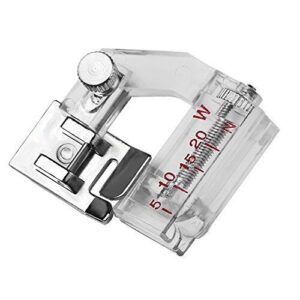
This white plastic wonder weighs just 0.317 ounces but manages bias tape from 5mm to 20mm like a champ. The PannySewCraft foot guides pre-folded binding through its small funnel, keeping edges perfectly aligned while you stitch.
You’ll nail straight, zigzag, and decorative stitches with its snap-on design that fits Brother, Janome, Singer, and most low-shank machines. Just know it works best on light to medium fabrics—heavy-duty projects might need something sturdier. Practice on scraps first, and you’ll be binding like a pro!
| Best For | Quilters and sewers who frequently work with bias tape on light to medium-weight fabrics and want a faster, more consistent binding application. |
|---|---|
| Material | Steel/Plastic/Alloy Steel |
| Brand | Generic |
| Weight | 1.13 ounces |
| Compatibility | Low shank snap-on machines |
| Primary Use | Cloth edging |
| Adjustability | 5mm to 20mm |
| Additional Features |
|
- Adjustable width range (5mm to 20mm) handles different binding sizes without switching feet
- Snap-on installation works with most major sewing machine brands like Brother, Janome, and Singer
- Works with multiple stitch types including straight, zigzag, and decorative stitches for versatile finishing options
- Not sturdy enough for heavy-duty fabrics or thick binding tape projects
- Requires practice and adjustments to get consistent results, especially for beginners
- Won’t fit all machines—some models like certain Kenmore machines lack compatible snap-on connections
6. DREAMSTITCH Adjustable Bias Binder Presser Foot
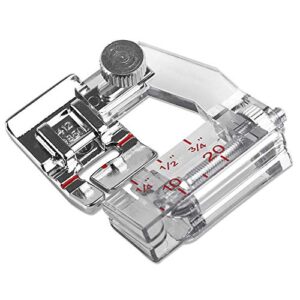
Need binding tool that plays by your rules? The DREAMSTITCH zinc foot lets you dial in any width from 1/4″ to 3/4″ with a simple adjustable screw—perfect for when you’re whipping up your own bias tape or switching between projects.
This snap-on champ fits most Husqvarna Viking models and guides binding through a clear channel so you can see exactly what’s happening. At 0.634 ounces, it’s sturdy enough for table runners and quilts, though thicker fabric stacks need some practice to master.
| Best For | Sewers who work with Husqvarna Viking machines and want the flexibility to create custom binding widths for quilts, table runners, and other edge-finishing projects. |
|---|---|
| Material | Plastic |
| Brand | PannySewCraft |
| Weight | 0.317 ounces |
| Compatibility | Brother, Janome, Singer |
| Primary Use | Bias binding application |
| Adjustability | 5mm to 20mm |
| Additional Features |
|
- Adjustable screw lets you switch between 1/4″ and 3/4″ widths without buying multiple feet
- Clear channel design shows your fabric as it feeds through for better control
- Lightweight zinc build (0.634 oz) keeps it sturdy without weighing down your work
- Only compatible with Husqvarna Viking models—won’t work on Pfaff or other brands
- Takes practice to handle thicker fabric layers smoothly
- Snap-on attachment might be too small for certain machine models
7. Sewing Machine Presser Foot Set
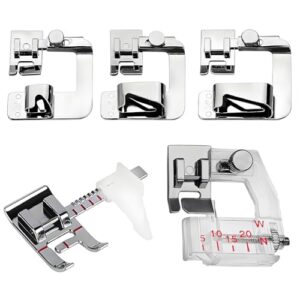
Want the whole toolbox instead of just one foot? The SXDLCX 5-piece set delivers three wide rolled hem feet, an adjustable guide foot, and a bias binder—all in stainless steel that snaps onto most low shank machines like Brother, Singer, and Janome.
You’ll nail precise top stitching and cloth edging without switching between multiple attachments, though Singer owners might need a low shank adaptor. At 1.76 ounces for the entire kit, it’s perfect for beginners building their collection or anyone tired of finicky single-purpose feet.
| Best For | Sewers who want a versatile presser foot collection for hem work, top stitching, and bias binding without buying individual attachments. |
|---|---|
| Material | Zinc |
| Brand | DREAMSTITCH |
| Weight | 0.634 ounces |
| Compatibility | Husqvarna Viking |
| Primary Use | Bias tape binding |
| Adjustability | 1/4 to 3/4 inch |
| Additional Features |
|
- Five-piece stainless steel set covers multiple techniques (rolled hems, top stitching, bias binding) in one purchase
- Compatible with most low shank domestic machines including popular brands like Brother, Singer, and Janome
- Lightweight kit (1.76 oz total) makes it easy for beginners to expand their sewing capabilities
- Some Singer machines need a separate low shank adaptor to work with the set
- Only works with low shank domestic machines, excluding other shank types
- May not fit all sewing machine models even within compatible brands
8. Sewing Machine Binding Attachment Tool
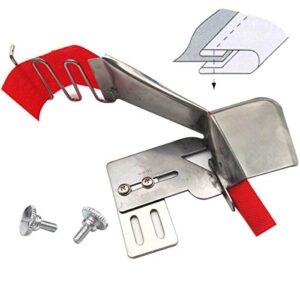
When you’re ready to bind like the pros, the ckpsms Industrial Binder (32MM tape size) transforms your home machine into a powerhouse. This red alloy steel attachment bolts directly to your table through screw holes, folding 1-1/4″ tape in half around fabric edges for that raw-finish look activewear demands.
At 4.8 ounces, it processes stretch fabrics and bias tape beautifully, though you’ll need to double-check your machine has those anchor holes—not all domestic models do!
| Best For | Sewers who work with activewear, stretch fabrics, or bias tape and want professional binding results on an industrial or compatible home machine. |
|---|---|
| Material | Stainless Steel |
| Brand | SXDLCX |
| Weight | 1.76 ounces |
| Compatibility | Low shank domestic machines |
| Primary Use | Hemming and binding |
| Adjustability | Multiple feet included |
| Additional Features |
|
- Folds tape cleanly in half for consistent, professional-looking edges
- Works great with stretch fabrics and activewear materials
- Adjustable design fits most industrial machines and some home models
- Requires screw holes in your sewing table for installation—not all home machines have them
- Takes some trial and error to dial in the right needle position and tape size
- Won’t work well with super stretchy or thin fabrics
9. Distinctive Binder Presser Foot
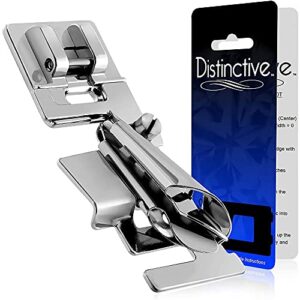
Looking for something that won’t break the bank? The Distinctive Binder Foot (model DBINDERSF) weighs just 0.32 ounces and snaps onto low-shank machines instantly—think Brother, Janome, Singer with adapters.
Its funnel-shaped guide folds bias tape in one smooth pass, handling widths from 1/4″ to 1″ for those clean, professional edges on aprons, hoods, and hems. At around five bucks, it’s packaged in blister-card instructions that actually help. Perfect for cotton and voile projects when you’re starting out!
| Best For | Beginners and hobbyists who want clean, professional-looking bias tape edges on quilts, aprons, and garments without the tedious hand-sewing. |
|---|---|
| Material | Alloy Steel |
| Brand | ckpsms |
| Weight | 4.8 ounces |
| Compatibility | Industrial and home machines |
| Primary Use | Tape/braid insertion |
| Adjustability | Fixed 32mm |
| Additional Features |
|
- Snaps on in seconds to most low-shank machines and handles multiple tape widths (1/4″ to 1″) for versatile projects
- Guides and folds bias tape automatically while keeping fabric flat, so you get consistent results every time
- Costs around five dollars with helpful blister-pack instructions included
- Won’t fit high-shank machines, and some Singer models need a separate low-shank adapter
- At 0.32 ounces it’s lightweight plastic, so durability might be a concern with heavy use
- Customer support and warranty details aren’t clear if you run into issues
How to Use a Binding Foot on Your Machine
Ready to master this game-changing tool? Getting started with a binding foot isn’t complicated, but you’ll want to follow the right steps to tap into its full potential.
Here’s everything you need to know, from attaching the foot to nailing those tricky curves like a pro.
Attaching The Binding Foot Properly
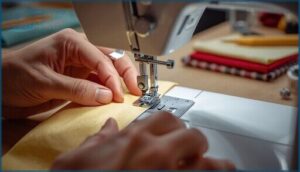
Getting your binding foot locked and loaded is the secret to impeccable edge finishing! First, align your presser foot so the adjustable guide sits flush to the fabric edge, then tighten that front screw until everything holds steady.
Position the binding under your sewing machine with raw edges extending past the needle, lower the foot, and anchor with 2-3 backstitches—you’re mastering binding tension and fabric guidance like a pro!
Loading Binding and Fabric (Binding First Vs. Sandwich Method)
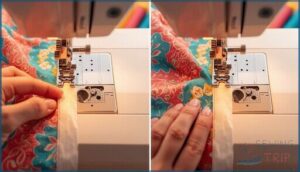
You’ve got two power moves for loading binding and fabric into your binding foot—choose the method that matches your rebel spirit!
The binding first technique slides your bias binding through the foot’s channel, then slips the fabric edge underneath for precision stitch control and perfect edge alignment.
The sandwich method pins fabric between folded binding, feeding everything as one fearless unit for corner management mastery!
Adjusting Guides and Needle Position
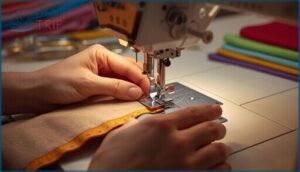
Precision is your secret weapon! First, raise your needle to the highest point, then twist the lower wheel on your Binding Foot until the adjustable bias binder foot snugly holds your binding—no gaps, no slack.
Next, shift your sewing machine’s adjustable needle position right for edge precision or left for extra seam allowance. Test-stitch on scrap fabric to confirm your stitch optimization rocks before conquering your project!
Techniques for Corners, Curves, and Straight Edges
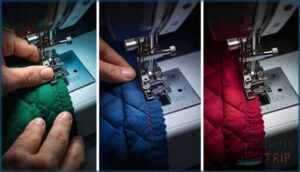
Conquering corners, curves, and straight edges unleashes your binding foot’s full power! For corner binding, stop with your needle down, pivot, then resume stitching to create crisp mitered corners.
Curve sewing demands slower feeding and consistent pressure—your guide marks maintain seam allowance precision. On straight edges, keep steady tension for impeccable edge finishing.
Master these sewing techniques, and stitch control becomes second nature!
Tips for Choosing The Right Binding Foot
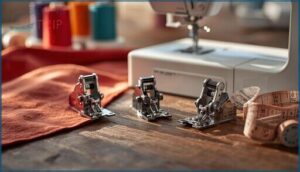
You’re ready to sew with binding foot, but here’s the thing—not every binding foot will work with your machine or your project.
Getting the right fit means thinking about compatibility, adjustability, and what you’re actually making. Let’s break down what matters so you can pick the perfect foot and start binding like a pro!
Compatibility With Sewing Machine Brands
Your binding foot and sewing machine need to speak the same language. Most binding feet fit standard lowshank system machines—think Brother, Singer, and Janome.
Check your machine’s shank type first, then grab machine adapters if needed. Brand compatibility matters because foot calibration and tension settings vary.
If the screw holes don’t match your presser foot holder, you’ll need sewing machine accessories designed for your model’s specifications.
Adjustable Features and Binding Widths
The right adjustable bias binder foot transforms edge finishing from frustrating to impeccable. You’ll want flexibility in binding widths—look for feet offering 28mm to 38mm range to handle everything from delicate bias binding to thick quilt edges.
Key features that give you control:
- Adjustable guides with locking increments for precise fabric compatibility across weights
- Needle position shifts paired with stitch settings for centered topstitching
- Adaptable openings that accommodate various tape widths without changing your sewing machine setup
Best Uses for Different Projects and Fabrics
Think of your binding foot as a specialist, not a generalist—matching it to fabric selection makes edge finishing smooth. Lightweight cotton and linen bind beautifully with standard sewing feet for quilts and garments, while canvas demands wider guides for bags.
Project planning starts with material compatibility: jersey needs stretch-friendly bias binding, and delicate chiffon requires gentle pressure. Your sewing machine’s binding techniques should flex with fabric weight for seamless fabric binding results.
Troubleshooting and Mastering Binding Feet
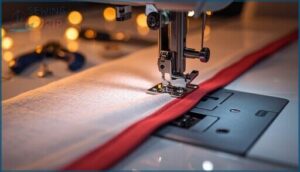
Even the best binding foot won’t work magic if you’re fighting skipped stitches, bunched fabric, or wonky edges.
The good news? Most problems have quick fixes once you know what to look for. Let’s tackle the most common hiccups, keep your foot running smoothly, and access those pro-level techniques that’ll make your binding look store-bought perfect.
Preventing Common Binding Issues
Mastery over your Binding Foot starts with dodging pitfalls before they happen. Adjust your Seam Allowance carefully, and match your Thread Choice to your fabric—polyester works wonders for Edge Finishing without adding bulk.
When Fabric Stretch causes waviness, shorten your stitch length slightly and keep tension even. For clean Binding and Edging, trim binding edges precisely and use guides to prevent misalignment during fabric binding work.
Maintenance and Cleaning for Smooth Operation
Keep your Binding Foot performing like new. Regular Binding Foot Care means you’ll conquer projects without frustrating skips or snags, and simple Cleaning Schedules paired with smart Storage Methods protect your sewing machine accessories from wear.
- Brush away lint and fabric fibers after every project
- Apply light sewing machine oil to moving joints monthly
- Wipe guides with a lint-free cloth to prevent buildup
- Store your sewing tools in dust-free containers
Advanced Tips for Professional Results
Once you’ve nailed the Stitch Quality basics, boost it by switching to an adjustable needle position—center works for most Binding Techniques, but shifting left or right tightens your Edge Finishing on tricky corners.
Pair smart Fabric Selection with slower speeds on curves, and your Binding Foot will deliver Professional Results that rival studio work. That’s the difference between good and impeccable Binding and Edging!
Frequently Asked Questions (FAQs)
Can I use a regular sewing machine to make a quilt?
Yes, like a reliable workhorse pulling a plow! Your regular sewing machine processes quilting beautifully with proper fabric selection and machine quilting basics, though throat space issues may limit quilt size and home quilting tips help.
What is a binding foot for in sewing machines?
A binding foot guides bias tape or fabric binding along your fabric edge, folding and positioning it automatically so you get a clean, professional finish without pins or hand-stitching every single fold.
Why is my sewing machine binding up?
Your sewing machine binding up usually points to thread tension problems, bobbins issues, or needle damage.
Check for lint buildup around feed dogs, verify your needle’s condition, and make certain proper threading through all tension disks.
What foot to use for machine binding?
Pick your presser power: adjustable bias binder feet fit most widths, standard feet suit simple single-fold binding, and specialty feet tackle tricky turns.
Match the foot to your fabric thickness and binding type for perfect results.
Why does my sewing machine foot keep falling off?
Your presser foot likely detaches because the shank isn’t locking properly, the attachment screw is loose, or you’re using an incompatible foot.
Check that the foot snaps or screws on securely before stitching.
What is the standard width for double-fold bias tape?
When you’re finishing a delicate neckline and that bias tape puckers, you know it matters.
Standard double-fold bias tape finishes at 3/8 inch wide, though heavier projects often use 1/2 inch for better coverage.
How do you attach binding without a foot?
You can attach binding without a foot by hand guiding bias tape along fabric edges, pinning every few inches, then edge stitching slowly with precise stitch control for clean seam finishing and professional fabric binding results.
Can you use any type of needle?
Not every needle plays nice with your binding foot! Thread size, fabric type, and needle gauge matter big time.
Universal needles work for most projects, but stretchy knits need ballpoint types to prevent snagging.
What is the benefit of adjustable pressure settings?
You’ll dial in the perfect fabric tension for every material—adjustable settings let you control pressure to prevent puckering, improve stitch quality, and handle delicate silks or thick denim with total binding precision on your sewing machine.
How do you prevent uneven fabric feed?
Think of fabric moving through your sewing machine like a conveyor belt—when one side moves faster, chaos follows!
Keep your presser foot pressure balanced, feed dogs clean, and sewing speed steady to prevent uneven fabric feed during binding.
Conclusion
Remember that student who nearly quit quilting over binding frustration? She now teaches binding workshops. That’s exactly what sewing machine binding feet enable—the confidence to tackle projects you’d otherwise avoid.
You’ve got the reviews, the techniques, the troubleshooting strategies. Now comes the fun part: watching that first perfectly bound edge roll out from under your presser foot. Your hands will thank you, and your finished projects? They’ll finally look as polished as you imagined.