This site is supported by our readers. We may earn a commission, at no cost to you, if you purchase through links.
Most sewists dread buttonholes. One wrong setting, one shaky pass, and you’ve got a lopsided gap that ruins hours of careful work.
The buttonhole foot is the one attachment that removes almost all of that risk—yet most people either skip it entirely or dig it out of the accessory bag without really knowing what they’re holding.
There’s more to this small foot than meets the eye: shank height, slider calibration, interfacing weight, and feed-dog grip all work together to produce a clean, repeatable result.
Get those details right, and buttonholes stop feeling like a gamble.
Table Of Contents
Key Takeaways
- Matching your buttonhole foot to your machine’s shank height — low, high, or snap‑on — is the single most important compatibility check before you buy or attach one.
- Interfacing isn’t optional: it’s the backbone that keeps your buttonhole from sagging, and the weight you choose should match both your fabric type and the stress that the opening will face.
- Whether you use a one‑step automatic foot or a four‑step manual process, clean results come down to testing stitch length, width, and tension on scrap fabric before you ever touch your project.
- Regular maintenance — clearing lint from the channel every few buttonholes, checking feed dog grip, and storing the foot in a protective case — keeps your results consistent long‑term.
Choosing The Right Buttonhole Foot
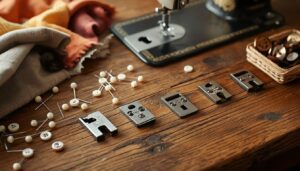
Picking the right buttonhole foot makes a bigger difference than most sewists expect. The wrong one can leave you with crooked holes, skipped stitches, or a foot that simply won’t fit your machine.
Getting your technique dialed in beforehand goes a long way, so it’s worth reading up on how to sew perfect machine buttonholes before you even thread the foot.
Here’s what to look at before you buy or attach one.
Automatic Vs Manual Buttonhole Feet
Think of it this way: an automatic buttonhole presser foot does the thinking for you. Its sensor technology reads your button size and sews a perfect hole in one continuous pass — no stopping, no fiddling.
A manual buttonhole presser foot hands you the precision control, letting you shape each step yourself.
The speed comparison is clear, but fabric versatility and setup complexity vary with each method. The sliding buttonhole foot(https://www.sewessential.co.uk/blog/sewing-machine-presser-feet-guide/) adds length markings for accurate sizing.
Low-shank, High-shank, and Snap-on Compatibility
Your machine’s shank height matters more than most beginners realize.
Low shank machines sit about 1 to 1⅛ inches high; high shank machines run around 1½ inches. A low shank buttonhole presser foot won’t clear a high shank bar — and vice versa.
Universal Snap-On Kits with adapter spacer types bridge that gap.
Always cross-check shank height charts and foot clearance guidelines against your machine shank profiles before buying.
Matching The Foot to Your Sewing Machine Manual
Once you’ve sorted shank height, crack open your machine’s manual — it’s your best friend here. Manual Compatibility Charts tell you exactly which foot fits your model. Here’s what to verify:
- Shank Type Verification — low shank or high shank buttonhole presser foot
- Adapter Specification Review — any required presser foot accessory or adapter
- Model Settings — foot calibration procedure and manual buttonhole presser foot configuration
Sewing machine compatibility starts there.
Transparent Buttonhole Feet for Better Visibility
Now, if you’re working in tight spaces — think collar bands or cuffs — a transparent buttonhole foot changes everything. Clear View Alignment becomes smooth because you can actually watch the needle track your buttonhole marking in real time.
That see-through body offers Windowed Stitch Monitoring, so you catch fabric slippage instantly.
Transparent Material Durability means See-through Guide Marks stay sharp after years of use.
When to Use a Stabilizer Plate
A buttonhole stabilizer plate earns its place the moment your fabric starts misbehaving.
On thick fabric support situations — denim, canvas, layered fleece — it keeps the opening from shifting mid‑stitch.
For delicate knit control, it prevents stretching.
It’s also your best tool for needle deflection prevention and consistent hole size across every layer.
If your machine has a dedicated machine stabilizer setting, use it.
Preparing Fabric for Buttonholes
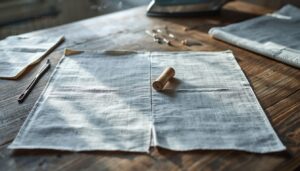
Before you even thread your machine, the fabric has to be ready — and that step matters more than most people think. A few simple prep moves are what separate a clean, professional buttonhole from one that puckers, shifts, or tears.
Here’s what you need to do first.
Marking Buttonhole Placement Accurately
Placement is everything — one off-center hole ruins a whole placket. Start with an expanding gauge to set even spacing, then transfer each point using a removable fabric marking tool.
Place your first mark about ½ inch from the top finished edge. Align every mark along the center front line, and double-check that each one sits perpendicular to the placket for clean pattern alignment.
Measuring Button Size for The Opening
Get your button diameter measurement right, and everything else falls into place.
Use a caliper for precise readings — aim for button diameter plus 0.5 to 1.0 mm of opening clearance on woven fabrics, or up to 2 mm more on thicker materials.
Think of it as your buttonhole measurement guide: record each size, test the opening on scrap fabric, and adjust from there.
Adding Interfacing for Stability
Think of interfacing as your buttonhole’s backbone — skip it, and even perfect stitching can’t save a sagging opening.
Interfacing is your buttonhole’s backbone — skip it, and even flawless stitching can’t save a sagging opening
- Interfacing Weight matters: Use 0.5–1.5 mm medium-weight for most wovens
- Fusible Application Technique: Press at 275–350°F with a protective cloth
- Bias-Cut Interfacing: Curve edges need bias-cut pieces to stay flexible
- Stretch Fabric Stabilization: Choose knit interfacing for stretch fabrics
- Buttonhole Stability Testing: Always test on scrap first
Choosing The Right Fabric Support
Your fabric type drives every stabilizer decision you make. For lightweight cotton or linen, a light fusible interfacing keeps things clean without stiffening the opening.
Heavy fabrics like denim need thicker, layered stabilizer techniques — sometimes two interfacing layers — for sharp edges.
A non-slip underlay selection prevents shifting during stitching, and stabilizer weight matching ensures your buttonhole stabilizer plate feeds evenly without distortion.
Preventing Distortion on Knit and Woven Fabrics
Knits are the trickiest — they stretch as you sew, warping your buttonhole before you’ve even finished. For stretch fabrics, use the Walking Foot Technique to keep layers moving together and practice Knit Stretch Management by lowering presser-foot pressure slightly. Fusible interfacing with Interfacing Alignment along the stress direction keeps openings clean.
For woven fabrics, Feed Dog Maintenance and Fabric Slip Prevention stop the Buttonhole Presser Foot from dragging and causing fabric distortion.
Attaching The Buttonhole Foot
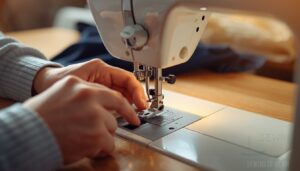
Getting the buttonhole foot attached correctly makes everything that follows so much easier. It only takes a minute, but each step matters if you want clean, consistent results.
Here’s exactly what to do.
Raising The Needle and Removing The Old Foot
Before swapping feet, get your machine ready in three quick moves:
- Hand-raise the needle to its highest point using the handwheel — proper needle clearance prevents accidental bending during removal.
- Lift the presser foot lifter to release tension on the shank.
- Remove the old foot by thumbscrew loosening or pressing the snap release lever, then clear any bar debris before proceeding.
Snapping The Foot Onto The Presser Bar
With your old foot cleared away, grab your buttonhole foot and position it just below the snap-on bar. Press it firmly upward until you hear that satisfying click — that’s your snap noise diagnosis confirming the foot is fully seated.
No click? Raise the needle higher and try again.
A proper bar height calibration keeps your low shank buttonhole presser foot level. Always do a quick foot alignment check and bar wear inspection before sewing.
Aligning The Center Marks With Your Fabric
Once the foot clicks into place, alignment is your next move. Use the Fold Intersection Technique — fold your fabric both ways, then mark where the creases cross. For dark fabrics, the Chalk Contrast Method keeps marks visible. Then confirm:
- Center the button over your mark.
- Check Edge Distance Verification — stay 1 inch from edges.
- Lower the needle to confirm it meets your fabric guide mark.
The markings on the side of the attachment should line up cleanly with your fabric’s center line before you sew.
Setting The Slider to Match Button Size
Now that your fabric is lined up, it’s time for Slider Calibration — setting the buttonhole foot’s slider to your exact button width. Slide the white and black tabs apart, place your button between them, and tighten the screw. That’s Button Width Mapping in action.
| Button Size | Slider Setting | Increment Steps |
|---|---|---|
| Small (½") | Narrow | 1 step |
| Medium (¾") | Mid-range | 2 steps |
| Large (1") | Wide | 3 steps |
Watch the Visual Feedback — the live opening preview confirms your buttonhole size adjustment before you sew.
Checking Shank Height and Adapter Fit
Before you sew a single stitch, run a quick Shank Height Verification.
Your buttonhole presser foot must match your machine’s shank type — low-shank snap-on adapter or high — or the foot simply won’t sit level.
Complete the Adapter Interface Check by snapping the snap-on presser foot firmly onto the presser bar, then do a Foot Leveling Procedure and Clearance Gap Assessment on scrap fabric to confirm smooth, unobstructed travel.
Sewing One-Step and Four-Step Buttonholes
Now that your foot is attached and your fabric is ready, it’s time to actually sew the buttonhole. The process looks a little different depending on whether your machine does it automatically or you’re guiding it step by step.
Here’s what you need to know to get it right.
Setting Stitch Length and Stitch Width
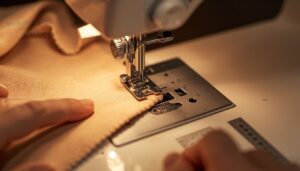
Getting your settings right before you stitch is everything. For buttonholes, set your stitch length to 2–2.5 mm and stitch width between 0–1 mm — this is your Stitch Length Basics sweet spot. Stitch Width Adjustment matters too: knits need slightly looser Tension Coordination, while wovens want tighter control.
Always run a Test Swatch Procedure first.
- Start at 2.5 mm stitch length for woven fabrics
- Drop stitch width to 0–1 mm for clean buttonhole edges
- Test your Buttonhole Presser Foot on scrap fabric first
- Adjust one setting at a time — never two at once
- Match Fabric Type Influence to your tension before committing
Sewing an Automatic One-step Buttonhole
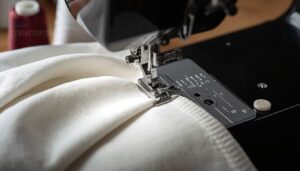
Once you’ve dialed in your settings, the automatic buttonhole function takes over the hard part. Select the 1 step buttonhole setting, place your button in the foot’s rear slot for Sensor Calibration, then lower the sewing machine buttonhole foot and press go.
| Step | Action | Key Setting |
|---|---|---|
| 1 | Select stitch mode | Automatic buttonhole function |
| 2 | Set Speed Adjustment | Slow for thick layers |
| 3 | Engage Material Stabilization | Stabilizer plate if needed |
Your automatic buttonhole presser foot manages Stitch Density Optimization and Thread Path Programming automatically — no pausing required.
Sewing a Four-step Manual Buttonhole
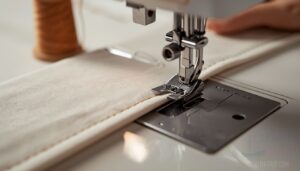
Not every machine has a one-step shortcut — and honestly, the four-step buttonhole process gives you more control anyway.
- Stitch the bottom bar tack technique using a short zigzag
- Sew both side edges with dense vertical stitches
- Finish with the top bar tack to lock it closed
Your needle size selection, thread choice, and edge finishing methods all shape the final result.
Using The Buttonhole Foot on Thick Fabrics
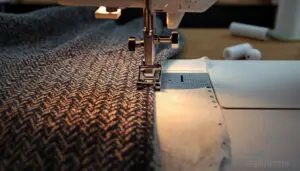
Thick fabric is where buttonholes either hold up—or fall apart. Before you touch your machine, do a bulk swatch test on matching layers.
Snap the buttonhole foot on firmly; foot tilt prevention matters here because even a slight lean causes uneven stitches. Run a needle clearance check, engage a Stabilizer Plate for Even Buttonholes, and apply heavy fabric lubrication. Adjust presser foot pressure down, add buttonhole reinforcement, and watch for fabric distortion throughout.
Opening The Finished Buttonhole Cleanly
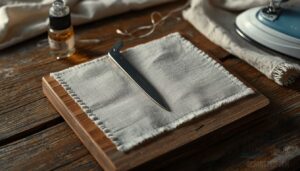
A sharp buttonhole cutter beats a seam ripper every time — place a wooden block underneath, center the blade, and press down with one confident stroke.
Tear away the stabilizer, then run a seam ripper gently through any skipped threads.
Apply fray stop along cut edges on delicate fabrics, then press with a pressing cloth.
Clean any lint or fabric fibers from the channel before storing.
Troubleshooting and Maintaining The Foot
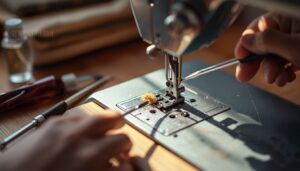
Even the best buttonhole foot runs into trouble now and then, and knowing how to fix it saves you a lot of frustration.
A simple adjustments and a little regular care go a long way toward keeping your results consistent.
Here’s what to check when things go sideways — and how to keep the foot in good shape for the long run.
Fixing Uneven or Too-tight Buttonholes
Uneven buttonholes usually come down to three things: wrong fabric tension, a skipped Button Size Recheck, or missing the Under Plate Stabilizer on thick layers.
Start troubleshooting common buttonhole problems by adjusting stitch length and pressure for buttonholes on scrap fabric first.
Watch for Stitch Overlap at the corners and clean up any ragged edges with careful Edge Trimming for even buttonholes every time.
Correcting Fabric Slipping and Poor Feed
Fabric slipping mid-stitch is one of those troubleshooting common buttonhole problems that sneaks up on you. A rubberized foot sole or non-slip foot design grips better — about 20% more than standard feet.
Check your feed dogs for lint buildup; feed dog lubrication keeps them moving evenly. Using a stabilizer plate for even buttonholes also helps with fabric handling on slippery or layered pieces.
Adjusting Tension and Presser-foot Pressure
Once your feed dogs are gripping properly, check your tension pressure balance.
If the top thread pulls to the bottom, ease the presser foot pressure down slightly — that’s your first pressure calibration step. For fabric feed synchronization across layers, raise pressure in small increments.
Adjusting stitch length and tension for buttonholes together keeps stitches even; always test needle pressure tweaking on a scrap first.
Cleaning Lint From The Foot and Channel
Once tension feels right, don’t overlook what’s hiding in your Buttonhole Presser Foot channel — lint builds fast.
Keep this Cleaning Frequency Schedule handy:
- Use a micro brush or lint brush techniques every 2–3 buttonholes to clean any lint or fabric fibers from the grooves
- Apply compressed air safety practices — unplug your machine first
- Try channel vacuum tips with a narrow nozzle for deeper debris
- Wipe the sewing machine foot attachment with a lint-free cloth
Storing The Foot to Prevent Damage
After all that cleaning and lubrication, where you store your buttonhole foot matters just as much. Tuck it into a protective pouch or protective case — never loose in a drawer where metal edges cause nicks.
Drop in a silica gel packet for humidity control, especially in damp climates.
A simple labeling system prevents compatibility mix-ups later.
Schedule a quick regular inspection before each project to catch cracks or burrs early.
Frequently Asked Questions (FAQs)
What is a buttonhole foot on a sewing machine?
A buttonhole foot is a specialized presser foot that guides your sewing machine through clean, consistent buttonhole stitches.
It holds your fabric steady while the machine sews the buttonhole stitch automatically around a measured opening.
How do you make a buttonhole on a sewing machine?
Attach your foot, mark your fabric, and let the machine do the work.
With the right setup — proper thread, stitch density, and pressure — clean buttonholes come down to prep and practice.
Can you sew buttonholes without a buttonhole presser foot?
Yes, you can.
Use a zigzag buttonhole stitch, hand guiding lines, and stabilizer interfacing to outline and trim the shape.
A scrap fabric trial first keeps your satin stitch edge clean and even.
How does a buttonhole foot work?
A buttonhole foot guides fabric through a narrow channel while a scavenger feed moves it evenly.
The size slider, sensor detection, and under-plate stabilizer work together so every buttonhole stitch lands exactly right.
How to use a buttonhole foot on a sewing machine?
Snap the foot on, match your button size using foot slider calibration, select the machine mode, fine-tune thread tension, and stitch.
That’s how to use a buttonhole foot on a sewing machine.
What setting do you set a sewing machine for a button hole?
Set your machine to the buttonhole function, select stitch length around 0–5 mm, and match stitch width to your fabric. Adjust tension and presser foot pressure, then test on scrap first.
What are the different types of buttonhole feet?
Not all buttonhole feet are created equal. You’ve got automatic, four-step manual, sliding adjustable, rolled hem, and button-specific feet — each built for a different job, fabric, or machine setup.
Do you need a special foot for button holes?
Technically, no — but your results will show it.
A dedicated buttonhole presser foot delivers stitch consistency, sensor‑based sizing, and clean edges that alternative methods simply can’t match, regardless of user skill level.
How do I troubleshoot uneven buttonholes?
Uneven buttonholes usually come down to three culprits: a dull needle, inconsistent thread quality, or stitch tension that’s slightly off. Check each one before blaming your foot.
Can buttonhole feet be used on all fabrics?
Not on all fabrics equally. Woven fabrics like cotton and linen handle buttonholes well.
Stretch knit adjustments, delicate fabric care, heavy material reinforcement, and multi-layer stability all require specific techniques for reliable results.
Conclusion
Perfectly placed, precisely pressed buttonholes don’t happen by accident—they happen because you understood your tools. This sewing machine buttonhole foot guide gave you everything: the right foot for your machine, fabric prep that holds, and stitch settings that deliver clean results every time.
That little foot in your accessory bag isn’t a mystery anymore. It’s your most reliable shortcut to professional finishes.
Trust the process, trust your preparation, and the buttonholes will follow.