This site is supported by our readers. We may earn a commission, at no cost to you, if you purchase through links.

A client hands you a pair of dress trousers with a blown-out inseam and needs them back by Friday. Your sewing machine can handle the stitch, but the edge finish? That’s where a serger earns its keep.
Most alteration tailors underestimate how much a quality serger tightens their workflow—not just on seam finishes, but on stretch fabrics, blind hems, and that clean professional edge clients notice even when they can’t name it.
The right serger machines for alterations handle denim one minute and jersey knit the next without skipping a beat. What separates a frustrating machine from a reliable workhorse comes down to a handful of features worth knowing before you spend a dollar.
Table Of Contents
Key Takeaways
- A quality serger with differential feed is essential for alteration work because it handles everything from denim to jersey knit without puckering or stretching seams out of shape.
- Choosing between a serger and a coverstitch machine isn’t a matter of preference—sergers win for edge finishing and side seams, while coverstitch delivers the clean, store-bought hem finish on knit fabrics.
- The features that actually matter at the alteration table are thread count (4 is the sweet spot), stitch length/width control, knife precision, and a heavy-duty metal frame that stays rigid under pressure.
- You don’t need to spend $1,500 to get professional results—budget picks like the Brother 1034D (~$250) and Singer X5004HD (~$300) cover the core alteration workload without compromise.
Top 5 Serger Machines for Alterations
Not every serger earns its place on an alterations table — but these five do. Each one brings something real to the work, whether you’re finishing knit hems or muscling through denim layers.
If you want to dig deeper before committing, this guide to the best sergers for garment work breaks down exactly how each machine handles everything from delicate knits to stubborn denim.
Here are the top picks worth your attention in 2026.
1. Brother 1034D Heavy Duty Serger
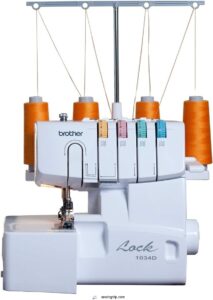
The Brother 1034D is a workhorse that earns its place on a professional alteration table. It runs at 1,300 stitches per minute on a heavy-duty metal frame — so it won’t flex when you’re pushing through denim or multiple fabric layers.
The color-coded threading and lower looper guide make setup less painful, and the free arm is genuinely useful for sleeves and cuffs.
Differential feed processes knits cleanly.
At 17.7 lb, it’s not the lightest, but that weight keeps it planted.
| Best For | Sewists and tailors who work with a variety of fabrics — from stretchy knits to heavy denim — and want a reliable, professional-grade serger without paying for bells and whistles they don’t need. |
|---|---|
| Stitch Speed | 1,300 spm |
| Thread Count | 3 or 4 thread |
| Differential Feed | Yes |
| Machine Weight | 17.7 lb |
| Frame Material | Heavy-duty metal |
| Rolled Hem | Yes, built-in |
| Additional Features |
|
- Handles tough materials like denim and layered fabrics without breaking a sweat, thanks to the heavy-duty metal frame.
- Color-coded threading and a lower looper guide make setup way less frustrating, even if you’re newer to sergers.
- Differential feed keeps knits and delicate fabrics from puckering, so your seams actually look good.
- Manual threading is still a learning curve — color codes help, but it takes some patience to get comfortable.
- A few stitch options (blind hem, pin tuck, flat lock) need extra presser feet that don’t come in the box.
- At 17.7 lb, it’s a bit of a beast to move around if you’re working in a tight or shared space.
2. Bernette B64 Airlock Overlocker Sewing Machine
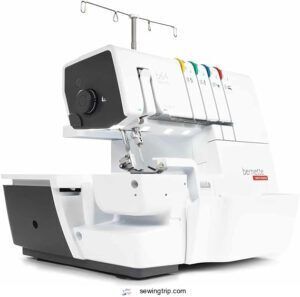
If the Brother is a dependable workhorse, the Bernette B64 is its more refined shop partner.
That single-push air threader manages both loopers automatically — no more squinting at looper eyes mid-project.
Micro Thread Control adjusts tension across fabric types without babysitting, and 16 stitch options cover everything from rolled hems to flat-lock seams.
The 130 mm right-side workspace manages bulky seams without constant repositioning.
At $1,499, it’s a serious investment — but for high-volume alteration work, the setup speed alone pays back fast.
| Best For | Serious sewers and alteration professionals who need fast setup, consistent results across fabric types, and a spacious work area for high-volume or heavy-duty projects. |
|---|---|
| Stitch Speed | 1,300 spm (est.) |
| Thread Count | 5 thread |
| Differential Feed | Yes |
| Machine Weight | 20.5 lb |
| Frame Material | Aluminum |
| Rolled Hem | Yes |
| Additional Features |
|
- Single-push air threading saves real time and makes setup much easier, especially if you’re doing repetitive work or have limited dexterity.
- Micro Thread Control handles tension automatically, so you get clean stitches on everything from chiffon to canvas without constant tweaking.
- The 130 mm right-side workspace gives you plenty of room for bulky seams and wide materials without awkward repositioning.
- The air threader on the upper looper occasionally fails, meaning you might end up threading it by hand anyway.
- At $1,499, it’s a big ask for hobbyists — and buying from an unauthorized seller could leave you with no warranty coverage.
- It’s heavy (over 20 lbs) and doesn’t include a printed manual, so expect a learning curve if you’re not comfortable hunting down tutorial videos online.
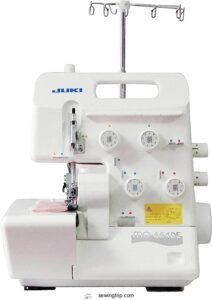
3. Juki Portable Thread Serger
Not every alteration shop needs a $1,500 powerhouse.
The Juki MO-654DE hits a practical middle ground at $601.99 — portable at 15.2 lb, fast at 1,500 stitches per minute, and steady enough for light to heavy fabrics alike.
Color-coded threading paths keep setup honest, and the differential feed range of 0.7 to 2.0 manages knits without stretching them out of shape.
It has no jet-air assist, but for a clean, reliable overlocker you can carry to a client site, it earns its place.
| Best For | Small alteration shops, home-studio sewers, and mobile seamstresses who need a fast, dependable serger they can actually carry to a job site. |
|---|---|
| Stitch Speed | 1,500 spm |
| Thread Count | 2, 3, or 4 thread |
| Differential Feed | 0.7–2.0 ratio |
| Machine Weight | 15.2 lb |
| Frame Material | Aluminum alloy |
| Rolled Hem | Yes, automatic |
| Additional Features |
|
- Color-coded threading makes setup quick, even if you’re not a serger veteran
- Handles everything from lightweight knits to heavier fabrics at up to 1,500 stitches per minute
- Built-in rolled-hem function means one less machine taking up bench space
- No coverstitch capability — you’ll need a separate machine for cover-hem work
- 110V only, so international users have to budget for a step-down transformer
- The manual is thin, and on-screen guidance doesn’t exist, so beginners may need a supplemental reference guide
4. Brother 2340CV Coverstitch Serger
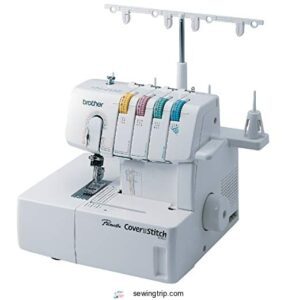
Not every job calls for overlocking. Sometimes you just need a clean, professional hem on a jersey or swimwear piece — and that’s where the Brother 2340CV earns its place.
At $499.99, it’s a dedicated coverstitch machine with a solid metal frame, tri-cover stitch options, and differential feed ranging from 0.7 to 2.0. It runs at 1,100 stitches per minute and threads quickly with color-coded guides. For stretch-fabric hemming, it’s a focused tool that does one thing well.
-only (120V), and using it outside that market voids the 25-year warranty entirely.
| Best For | Sewists and small-batch garment makers who regularly hem stretch fabrics like jersey, swimwear, or dancewear and want a dedicated coverstitch machine that skips the twin-needle workaround. |
|---|---|
| Stitch Speed | 1,100 spm |
| Thread Count | 3 needle + 1 looper |
| Differential Feed | 0.7–2.0 mm |
| Machine Weight | 13 lb |
| Frame Material | All-metal |
| Rolled Hem | No |
| Additional Features |
|
- All-metal frame and internals feel built to last, and the color-coded threading makes setup way less frustrating than it sounds.
- Differential feed (0.7–2.0 mm) handles everything from flimsy knits to heavier fabrics without puckering.
- At 1,100 stitches per minute, it moves fast — great if you’re knocking out multiple garments at once.
- Thread breakage on the left needle is a known headache — tension and thread path setup need to be spot-on.
- It only does coverstitch; no serging, overlocking, or buttonholes, so it’s a second machine, not a replacement.
- U.S.
5. Singer X5004HD Metal Frame Serger
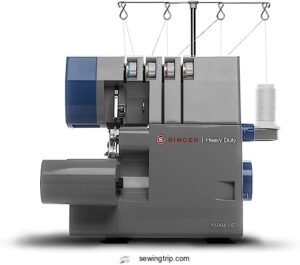
The Singer X5004HD brings serious muscle to the alterations table. Built around a heavy-duty metal frame with a stainless-steel bed plate, it holds steady at 1,300 stitches per minute — even through denim and upholstery.
That oversized cutting knife, 60% larger than standard, trims and overlocks in one clean pass.
At $299.99, you get 2-, 3-, and 4-thread capability plus eight built-in stitches.
Manual threading takes patience, but the color-coded guides help. Solid value for the price.
| Best For | Sewers and small-shop owners who regularly work with heavy fabrics like denim, leather, or upholstery and need a fast, reliable serger without breaking the bank. |
|---|---|
| Stitch Speed | 1,300 spm |
| Thread Count | 2, 3, or 4 thread |
| Differential Feed | Yes, adjustable |
| Machine Weight | 15.52 lb |
| Frame Material | Heavy-duty metal |
| Rolled Hem | Yes, built-in |
| Additional Features |
|
- Cuts and overlocks thick fabric in one pass thanks to the oversized knife — no extra trimming needed.
- Blazing 1,300 spm speed makes quick work of large projects like garment runs or home décor.
- Sturdy metal frame with suction-cup feet keeps everything rock-solid, even at full speed.
- Manual threading is a real chore, and there’s no printed manual in the box — you’re on your own with PDFs and YouTube.
- The scrap bag is tiny, so high-volume users will likely need to swap it out fast.
- Some users have run into random power-on issues and unclear setting instructions, which can slow down setup.
Best Serger Features for Alterations
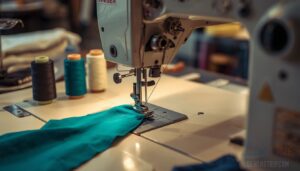
Not every serger feature matters equally when you’re doing alterations — some make a real difference, others just sound impressive on the box. The right combination of specs will determine how clean your seams look and how well the machine works with different fabrics.
Here are the features worth paying attention to.
Number of Threads for Stronger Seams
More threads mean stronger seams—it’s that straightforward. multi thread stitch distributes load across the fabric edge, so thread layering in a 4-thread overlock genuinely outperforms a 2-thread finish under stress.
Thread gauge selection matters too: heavier threads increase pull-out resistance on dense fabrics. thread tension balance tight, and your seam strength holds through every wash and wear.
Differential Feed for Knits and Stretch Fabrics
Differential feed is the feature that separates a capable serger from a frustrating one when you’re working with knit fabrics.
Two independent feed dog sets let you dial in precise Feed Ratio Tuning — from 0.7 for Pucker Control on slippery tricot, up to 2.0 for Wavy Seam Prevention on jersey.
That Fabric Tension Balance keeps your Knit Stretch Management on point through every alteration.
A 1:1 feed ratio provides neutral fabric advancement.
Adjustable Stitch Length and Width
Stitch Length Tuning and Width Adjustment Techniques give you real control over how a seam behaves — not just how it looks. Most sergers let you dial length from 1.0 to 4.0 mm and width from 3 to 7 mm, so your Fabric Compatibility Settings can match any job.
- Set 2.5 mm length for woven fabrics — reliable Seam Density Optimization.
- Use longer lengths on knits to prevent tearing under stretch.
- Apply Adjustable Width Control wider on denim, narrower on delicates.
- Combine short length with minimal adjustable stitch width for clean rolled edges.
- Test every garment alteration technique on a scrap piece first.
Blind Hem, Rolled Hem, and Flat-lock Stitches
Each of these three stitches solves a different problem — and knowing which to reach for separates clean alteration work from amateur finishing.
| Stitch | Best Use |
|---|---|
| Blind hem stitch | Trousers, dress skirts |
| Rolled hem technique | Scarves, ruffles, sheers |
| Flatlock stitch | Knit side seams, activewear |
Nail your Needle Bite Depth, Thread Tension Balance, and Hem Foot Guides, and your Stitch Visibility Control stays invisible where it counts — every time.
Knife Control for Clean Edge Finishing
A sharp knife is the unsung hero of clean edge finishing — and controlling it precisely makes all the difference. Most sergers let you disengage the blade entirely for techniques like rolled hem work or decorative edges without cutting.
- Cut Width Precision: Trim between 0.5–2.5 mm for delicate or heavyweight fabrics.
- Edge Trim Timing: Blade syncs with stitch formation for smooth edge finishing.
- Thread Edge Coordination: Stitching and trimming happen simultaneously in one clean pass.
- Blade Guard Activation: Auto-covers blades during threading for safe setup.
- Blade Replacement Schedule: Swap blades every 6–12 hours — a dull knife slices through thicker fabrics unevenly, ruining your seam.
Budget Vs Premium Serger Choices
Price shapes every serger decision, whether you’re outfitting a home studio or upgrading a professional setup. The gap between a $250 entry model and a luxury air‑threading combo isn’t just about cost — it’s about what you can realistically tackle on the table.
Here’s how the options break down across budget, features, and build.
Best Sergers Under $500
You don’t have to spend a fortune to get a capable serger. budget-friendly serger options under $500 — like the Brother 1034D at around $250 — cover the core alterations work without compromise.
Threading Simplicity, Warranty Coverage, and Included Accessories matter most at this tier.
| Feature | Under $500 Models |
|---|---|
| Thread Capacity | 3–4 threads |
| Noise Levels | Moderate |
| Power Consumption | Standard 120V |
| Warranty Coverage | 1–2 years |
Air-threading and Color-coded Guides for Beginners
Threading Efficiency makes or breaks your first few sessions on a serger. Air-Assist Setup models — like the Juki MO 1000 and Bernette B64 Airlock — push thread through loopers with a button press instead of tweezers. Color coding benefits beginners most when rethreading after a break; you follow one marked path, not four.
| Feature | Air-Thread Models | Color-Coded Budget Models |
|---|---|---|
| Looper Threading | Automatic air-assist | Manual, color-marked |
| Needle Threading | Manual | Manual |
| Beginner Error Reduction | High | Moderate |
| Visual Thread Guides | LED-lit zones | Printed charts |
| Best For | Fast rethreading | Budget-friendly serger learners |
Color coded guides, paired with printed on-machine charts, are your safety net in beginner sewing — no manual-digging required.
Heavy-duty Frames for Denim and Workwear
Color-coded guides get you threading faster — but when you’re wrestling denim, the frame underneath is what keeps everything honest.
Metal frame rigidity means your needle bar, loopers, and knife assembly stay in alignment stitch after stitch. That’s internal drive support doing its job.
| Feature | Heavy-Duty Machine | Standard Serger |
|---|---|---|
| Knife Assembly Strength | Resists deflection on thick seams | May flex under denim |
| Presser Foot Clearance | Stable over bulky crossings | Less consistent |
Long-term durability matters most when durable construction manages repeated workwear alterations daily.
Speed, Portability, and Build Weight
Frame strength gets you through denim — but how a machine moves matters just as much as how it performs.
Stitch rate tells part of the story. Juki hits 1,500 stitches per minute; Brother 1034D and Singer X5004HD reach 1,300. That Speed Vibration Balance shifts with Weight Class — lighter portable serger designs for beginners stay steadier at speed.
| Machine | Serger Speed (SPM) | Portability Features |
|---|---|---|
| Juki Portable | 1,500 | ~15 lbs, Compact Footprint |
| Brother 1034D | 1,300 | 12.6 lbs, top handle |
| Bernette B64 Airlock | 1,300 | 28.8 lbs, fixed station |
| Singer X5004HD | 1,300 | Mid-teen lbs, portable design |
Maintenance and Troubleshooting Basics
A neglected serger will betray you mid‑seam — so build a simple maintenance routine before problems start.
| Task | Quick Fix |
|---|---|
| Lint Removal | Brush feed dogs after every project |
| Oil Application | 1–2 drops at manual service points only |
| Needle Inspection | Replace at first sign of skipping or snagging |
Thread Thread Tension and Knife Alignment issues usually trace back to skipped cleaning steps, not broken parts.
Serger Vs Coverstitch for Hemming
Choosing between serger and a coverstitch machine isn’t always obvious — both hem, but they do it differently. The right pick depends on the fabric, the garment type, and the finish you’re after.
Here’s how each one holds up across the most common alteration scenarios.
When a Serger is The Better Choice
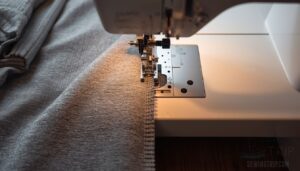
A serger wins every time you need speed and a factory-grade result in one pass. Raw Edge Finishing, Stretch Seam Strength, and High Speed Workflow all converge here.
| Situation | Why Serger Wins |
|---|---|
| Knit T-shirt taken in | Stretch Seam Strength + differential feed |
| Unlined dress side seam | Factory Style Interiors via overlock stitching |
Bulk Reduction keeps altered seams flat — professional finish, no extra steps.
When Coverstitch Works Better for Hems
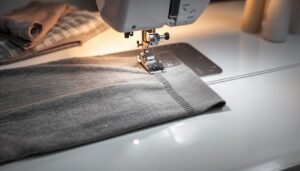
When your goal is a clean, store-bought finish on knit hems, coverstitch machines deliver what a serger simply can’t. Coverstitching gives you Stretch Recovery, a Ready-to-Wear Look, and Low Bulk Hem results — all without trimming a single thread of your fabric.
Coverstitch machines deliver the clean, store-bought knit hem finish that sergers simply cannot match
That Uncut Edge Control keeps your hem allowance intact.
| Benefit | Coverstitch | Serger |
|---|---|---|
| Stretch Recovery | Excellent | Moderate |
| Low Bulk Hem | Yes | No |
| Ready-to-Wear Look | Yes | Partial |
| Hem Width Accuracy | Consistent | Variable |
| Uncut Edge Control | Yes | No |
Coverstitch and overlock capabilities each serve a purpose, but for T-shirts and jersey hems, coverstitching wins.
Cuffs, Pant Legs, and Narrow Hems
Cuff height ratio matters more than most sewers realize — aim for 1 to 1.5 inches relative to leg length balance.
For pant leg taper and narrow hem tension, your serger’s rolled hem setting paired with differential feed keeps knits from stretching out.
Use the free arm for clean tube access, and adjustable stitch length locks in precise fabric cuff selection.
| Hem Type | Best Tool |
|---|---|
| Cuff and pant leg hemming | Serger |
| Narrow rolled hem | Coverstitch |
Finishing Alterations for a Professional Look
The final seam is where good work becomes great work. Pair Thread Color Matching — going one shade darker on navy or black — with smart Seam Bulk Reduction by trimming allowances to 6mm.
Use Tailor Hams and proper Pressing Techniques for shaped seams. Lock thread tails with a needle for clean Hidden Finish Details.
| Finishing Step | Tool | Result |
|---|---|---|
| Seam bulk trimming | Serger knife | Flat, clean edge |
| Curved seam shaping | Tailor ham + steam | Smooth contour |
| Thread tail securing | Large-eye needle | No unraveling |
Frequently Asked Questions (FAQs)
Is a serger good for alterations?
Yes — and more than you’d expect.
A serger manages edge finishing, rolled hem work, and thread tension adjustments with precision, giving altered garments a clean, professional finish a regular sewing machine simply can’t replicate.
What is the most sought after singer model?
Singer X5004HD leads Singer model demand among working tailors.
Its heavy-duty reputation, metal frame, and 1,300 spm speed make it the professional tailor’s choice as X5004HD sales consistently outpace lighter alternatives.
Can a serger replace a conventional sewing machine entirely?
No — a serger can’t cover the Straight Stitch Gap left by conventional machines. Sewing Machine Integration is still essential for zippers and buttonholes.
Think of it as a powerful partner, not a replacement.
How many thread stations do beginners actually need?
Four thread stations cover most beginner needs.
That’s your Essential Thread Set — enough for a Simple Thread Configuration that manages knit seams, edge finishing, and everyday alterations without overwhelming you with extra complexity.
What fabrics are sergers not suitable for?
Sheer chiffon, slippery satin, leather vinyl, sequin beaded, and thick pile fabrics are poor serger candidates.
The knife trims too aggressively, and delicate or embellished materials shift, snag, or suffer permanent damage.
How often should serger needles be replaced?
Change your needle every 8 hours of sewing—or at the start of each new project. Dull tips and skipped stitches are your clearest wear signs.
Fresh needles keep everything running clean.
Do sergers work well for decorative stitching projects?
Yes — rolled hems, lettuce edges, and decorative chain stitches all shine on a serger. With a solid thread palette and stitch library presets, fabric edge finishing becomes genuinely creative work.
Conclusion
Seams, like the right serger machine, make all the difference between a rushed finish and work clients actually brag about. The best serger machines for alterations handle the chaos of mixed fabrics, tight deadlines, and exacting clients without flinching.
Whether you’re locking down denim inseams or finishing jersey knit hems, the right machine becomes an extension of your hands.
Choose the features that match your workload—and every edge you finish will prove it was worth the investment.