This site is supported by our readers. We may earn a commission, at no cost to you, if you purchase through links.
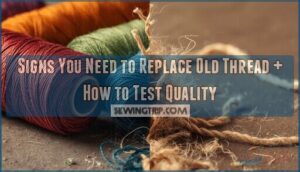
That beautiful spool of burgundy thread you’ve been hoarding for the perfect project? It might be sabotaging your seams right now. Old thread doesn’t just sit quietly on your shelf—it’s actively weakening, becoming brittle, and losing the strength that keeps your stitches intact.
Most sewers don’t realize their thread has an expiration date until a simple hem repair turns into a frustrating cycle of snapping, fraying, and re-threading. The tricky part is that thread degradation happens gradually, so you might not notice until you’re halfway through a project and your stitches start popping like bubble wrap.
Learning to spot the telltale signs you need to replace old thread saves you from seam failures, machine jams, and that special kind of rage that comes from re-sewing the same seam three times.
Table Of Contents
Key Takeaways
- Old thread loses strength over time through UV exposure, moisture, and dust contamination, with cotton lasting 1-2 years, polyester 2-5 years, and rayon degrading fastest at 6-12 months under proper storage conditions.
- The clearest signs you need to toss thread are repeated snapping during normal tension, fuzzy or fraying texture, color fading or yellowing, excessive lint buildup in your machine, and loss of twist or sheen.
- Quick at-home tests reveal thread quality without special equipment—tie a forearm-length piece in a knot and pull firmly, run thread between your fingers to check for roughness, or sew a test seam on scrap fabric to catch breakage before it ruins your project.
- Store thread in cool, dark, airtight containers between 60-75°F with silica gel packets to prevent degradation, and rotate your stock regularly to catch problems before weakened fibers sabotage your seams.
Key Signs Your Sewing Thread Needs Replacing
You know that sinking feeling when your thread snaps for the third time in a row? That’s your spool waving a white flag.
When your thread snaps repeatedly, it’s waving a white flag—time to replace it
Let’s look at the telltale signs that it’s time to toss that tired thread and grab something fresh.
Weakness and Frequent Breakage
Honestly, the most obvious red flag is when your thread snaps mid-stitch—again and again. This breakage signals that tensile strength has tanked below what your fabric demands. You’re dealing with fiber damage that creates weak seams destined to fail.
If you’ve been wondering why this keeps happening, check out these proper thread storage techniques to prevent future degradation.
Watch for these breakage patterns that scream “replace me now”:
- Thread snaps during normal sewing tension
- Stitches pop under light fabric stress
- Needle passes cause immediate thread deterioration
Your thread’s expiration date has arrived.
Fuzziness, Fraying, or Rough Texture
Run your fingers along the spool. Feel that fuzzy texture? That’s fiber breakdown screaming at you. Thread abrasion creates surface roughness that’ll gunk up your machine and skip stitches like crazy.
A quality seam ripper with a protective cap keeps your blade sharp enough to slice through compromised thread cleanly without dragging or snagging.
Here’s what thread degradation looks like:
| Visual Sign | What’s Happening | Impact on Sewing |
|---|---|---|
| Fuzzy halo around thread | Raised fiber ends | Increased lint buildup |
| Fraying at cut end | Structural deterioration | Needle heat problems |
| Rough surface feel | Lost filament smoothness | Skipped stitches |
| Micro-splits visible | Broken filaments | Tension failures |
Thread quality tanks fast when fuzziness appears—fray prevention starts with tossing compromised spools.
Color Fading or Yellowing
Your thread’s gone from navy blue to sad denim or cotton-white to creepy beige—that’s not just an aesthetic problem, it’s a strength warning. Color fading signals dye degradation from UV exposure and heat.
Beyond the visible fade, weakened fibers lose their structural integrity—which is why choosing durable natural fibers matters for projects meant to last.
Yellowing effects hit cotton hardest—those fibers are literally oxidizing. Thread discoloration means compromised textile durability.
Rotating your stock using a simple thread organization system helps catch degradation early before brittleness becomes a real problem.
Don’t ignore the color shift. Faded thread equals weakened thread quality and fabric degradation risks.
Excessive Lint Buildup in Sewing Machine
Pop open that bobbin case—if you’re seeing clouds of fiber debris, that’s old thread literally shedding itself. Excessive lint buildup isn’t just messy; it cranks up needle friction by 15–30%, causing skipped stitches and tension nightmares. Quality thread doesn’t leave fiber confetti everywhere.
Lint removal tools become your best friend when thread degradation gets real, but prevention beats cleanup every time.
Loss of Twist or Sheen
Healthy thread practically glows with a tight spiral structure and silky surface finish. When that luster fades to dull and the fibers look limp or unraveled, you’re holding thread that’s past its prime.
To determine if your thread is still usable, check for signs of deterioration by evaluating its thread quality factors. Fiber degradation kills thread strength fast, causing seams that won’t hold under stress.
No amount of thread restoration fixes this—toss it and grab fresh spools with proper storage solutions for color preservation.
Investing in an industrial overlock machine ensures your new thread gets put to work with clean, durable seams that won’t unravel over time.
How Thread Deteriorates Over Time
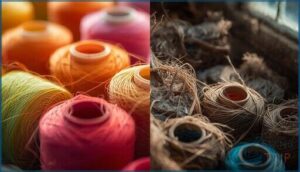
Your thread doesn’t just wake up one day and decide to fail on you. It breaks down slowly through a mix of environmental enemies and the passage of time.
Let’s look at the main culprits that turn your trusty spools into brittle disappointments.
Exposure to Sunlight and Heat
Ever wonder why that spool by the window snaps mid-seam? Sunlight’s UV rays attack thread fibers like a slow-motion wrecking ball, causing serious fiber breakdown and slashing thread strength over time. Heat amplifies the damage—polyester holds up better than cotton, but no thread’s invincible.
Protect your thread lifespan by ditching sunny storage conditions. Think cool, dark spaces to dodge UV damage and extend that expiration date. Understanding thread science basics is essential for maintaining thread quality and longevity.
Humidity and Moisture Damage
Moisture sneaks into your stash like an uninvited guest, swelling thread fibers until they snap under the slightest tension. High humidity accelerates fiber degradation—cotton and rayon suffer most, while polyester shows better resistance.
Combat moisture effects with smart storage solutions:
- Seal threads in airtight containers to block humidity and preserve thread quality
- Add silica gel packets to absorb excess moisture
- Monitor storage conditions with a hygrometer to maintain ideal levels
Dust, Air, and Contaminant Effects
Airborne particles settle on your thread spools like invisible sandpaper, grinding down fibers with every passing day. Dust accumulation creates friction points that weaken threads before you even load them into your machine.
Thread contamination from oils, smoke, and pollutants accelerates fiber degradation—leading to unexpected thread breakage mid-project.
Keep spools covered or sealed to prevent dust from sabotaging your thread quality well before any expiration date hits.
Impact of Thread Material (Cotton Vs. Polyester Vs. Silk)
Not all thread ages the same—your material choice matters more than you think. Cotton thread usually lasts 50 to 100 years but fades faster under sunlight and struggles with humidity.
Polyester thread boasts exceptional fiber strength and can maintain sewing performance for roughly 200 years with proper storage.
Silk offers impressive initial thread strength but yellows quickly when exposed to light, affecting both thread quality and textile longevity in your projects.
Simple Tests to Check Thread Quality
You don’t need fancy equipment to figure out if your thread’s still good. A few quick tests using just your hands will tell you everything you need to know about strength and quality.
Here’s how to check your thread in under a minute.
Forearm Knot Strength Test

Want to know if your thread’s worth keeping? Cut a forearm-length piece, tie a simple knot in the middle, and pull firmly at both ends. If it snaps easily, toss it—knot tensile strength drops about 50% from unknotted thread, so fiber durability really shows up here. This quick strength test reveals thread quality better than almost anything else.
- Cut thread to your forearm length for consistent thread testing
- Tie one overhand knot at the midpoint
- Pull steadily with both hands until you feel real resistance
- Watch for thread breakage at or near the knot area
- Repeat on several samples if results seem inconsistent
Gentle Pull or Tension Test
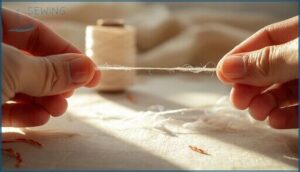
If knots aren’t your thing, try this: unwind about six inches of thread and pull firmly between your hands. Good thread resists; bad thread snaps right away.
This hand pull method is your quick breakage analysis tool—testing thread strength without fancy equipment. Pull several segments to confirm fiber durability across the spool.
If multiple samples break easily, that thread’s done, and your tension settings won’t fix it.
Friction Test for Smoothness

Now grab some thread and run it between your thumb and forefinger. Feel that? Smooth gliding means good thread quality. But if you catch snags, rough patches, or a grabby sensation, that’s surface roughness signaling trouble.
This friction testing reveals fiber friction issues before sewing thread hits your machine. Damaged threads create higher friction coefficients, leading to thread breakage and heat buildup during stitching.
Machine Sewing Performance Test
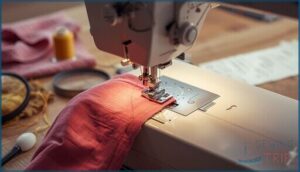
But smoothness alone won’t tell you everything. Run a test seam on scrap fabric at your normal sewing speed—this machine calibration check reveals the truth. Watch for consistent stitch quality, balanced thread tension, and zero breakage.
Frequent snapping, looping underneath, or excessive lint screams “replace me now!” Good fabric compatibility and strength test results mean your sewing thread still performs like a champ.
Top Products for Managing Old Thread
Once you’ve identified thread that’s past its prime, you’ve got options beyond tossing it in the trash.
A few smart products can help you repurpose old thread for crafts, repairs, and creative projects that don’t require full strength.
Here’s what actually works for giving expired thread a second life.
1. Metrosene All Purpose Sewing Thread Set
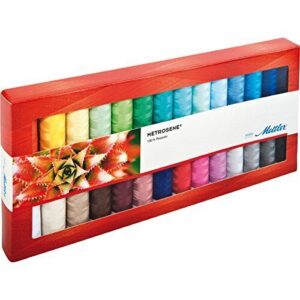
If you’re serious about replacing old thread, the Metrosene All Purpose Sewing Thread Set is pure sewing essentials gold. This 28-piece polyester powerhouse manages everything from silk to synthetics without breaking a sweat.
The thread quality stays consistent across fabrics, and you won’t deal with that annoying shredding that screams expiration. Thread durability? Check. Fabric compatibility? Absolutely.
Plus, proper thread storage in its included box keeps your collection fresh longer. It’s the strength test champion for everyday projects, and those sewing hacks you’ve been perfecting finally get the reliable partner they deserve.
| Best For | Home sewers looking for an affordable all-purpose thread starter pack that handles everyday fabrics without constant breakage. |
|---|---|
| Brand | Metrosene |
| Primary Material | 100% Polyester |
| Item Form | Thread Spools |
| Package Size | 28 Pieces |
| Primary Use | Sewing Projects |
| Special Feature | Heat Resistant |
| Additional Features |
|
- Covers 28 popular colors in one affordable set, saving you from buying individual spools
- Works smoothly with standard sewing machines and maintains consistent strength across cotton and synthetic blends
- Comes with organized storage to keep threads fresh and protected from light and moisture damage
- Thread can rough up or break under high-tension sewing situations
- Color selection might not match specialty fabrics perfectly
- Some users report lower quality compared to premium individual thread brands
2. X Acto Precision Knife
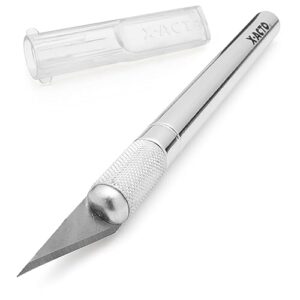
When precision tips matter for cutting old thread or removing stubborn fibers, the X Acto Precision Knife delivers surgical accuracy. Its stainless steel blade sharpness manages thread breakage cleanup and craft cutting without the fuzzy edges that scream amateur hour.
Tool safety? The cap keeps you protected between uses. Knife maintenance stays simple with easy blade replacements, so you’re always working with peak sharpness.
This isn’t just about cutting—it’s about respecting your sewing thread quality by removing expired material cleanly and decisively.
| Best For | Sewers, crafters, and hobbyists who need surgical precision for removing threads, cutting fabric details, or working on delicate projects where clean edges matter. |
|---|---|
| Brand | X-Acto |
| Primary Material | Stainless Steel |
| Item Form | Precision Knife |
| Package Size | 9 Inches |
| Primary Use | Precision Cutting |
| Special Feature | Easy Blade Change |
| Additional Features |
|
- Stainless steel blade delivers sharp, clean cuts without fraying fabric or leaving fuzzy edges
- Easy blade replacement system keeps the tool performing at peak sharpness without needing to replace the entire knife
- Safety cap protects you between uses and makes it safe to toss in your craft bag
- Blade can fall out when cutting through very thick materials like heavy cardboard or wood
- Sharpness decreases over time, meaning you’ll need to buy replacement blades regularly
- Safety cap may arrive loose in some units, reducing protection during storage
3. Beacon Fabric Adhesive Glue

When expired thread leaves you with weak seams and constant thread breakage, Beacon Fabric Adhesive Glue becomes your backup plan for fabric repair. This waterproof formula manages fabric bonding on cotton, denim, and synthetics with adhesive strength that dries flexible and washable.
Glue application takes care—thin layers beat goopy messes every time. You’re basically doing thread reinforcement when standard sewing thread quality fails you. It won’t replace good thread maintenance or extend thread lifespan, but it’ll rescue projects when breakage threatens your sanity.
| Best For | Crafters and sewers dealing with thread breakage or weak seams who need a flexible, waterproof adhesive backup for fabric repairs on cotton, denim, and synthetic materials. |
|---|---|
| Brand | Beacon |
| Primary Material | Liquid Adhesive |
| Item Form | Liquid Spray |
| Package Size | 4 Ounces |
| Primary Use | Fabric Bonding |
| Special Feature | Waterproof |
| Additional Features |
|
- Dries flexible and washable, maintaining bond strength through multiple gentle wash cycles without cracking or stiffening fabric
- Works across multiple fabric types including cotton, denim, polyester, and nylon when surfaces are properly cleaned and prepped
- Waterproof formula with fast-drying properties makes it practical for quick repairs and projects that need moisture resistance
- Application requires careful handling since the formula can be goopy and stringy, making it easy to get adhesive on unwanted surfaces
- Bond strength varies significantly based on fabric type, thickness of application, and curing conditions—too much glue weakens the seam
- May yellow over time with UV exposure on lighter fabrics and isn’t suitable for high-temperature areas like direct ironing
4. Mod Podge Gloss Sealer Glue Finish
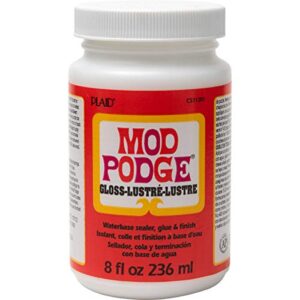
When old thread isn’t salvageable and you’re pivoting to craft projects instead, Mod Podge Gloss Sealer Glue Finish transforms thread scraps into decoupage art and surface protection layers. This water-based formula delivers adhesive properties with a glossy finish that dries clear—perfect for sealer applications on fabric, paper, and wood.
You’re basically giving expired sewing thread a second life in craft projects. It won’t fix thread breakage during actual sewing or extend thread lifespan, but it turns thread quality failures into creative wins. Apply thin coats and let each layer dry completely.
| Best For | Crafters repurposing old thread into decoupage projects, scrapbooks, and mixed-media art who need a versatile glue-sealer combo that dries clear with a glossy finish. |
|---|---|
| Brand | Mod Podge |
| Primary Material | Waterbase Sealer |
| Item Form | Liquid |
| Package Size | 8 Oz |
| Primary Use | Decoupage & Sealing |
| Special Feature | Fast Drying |
| Additional Features |
|
- Dries to a durable, clear gloss that doesn’t yellow over time, keeping your projects looking fresh and protecting them from dust and light wear
- Works on practically any craft surface—wood, paper, fabric, canvas, even plastic—so you can experiment without buying different adhesives
- Quick-drying and water-based formula means easy cleanup with soap and water before it sets, plus it’s non-toxic for safer crafting
- Can get messy with generous application needed for mounting, leading to more cleanup and potential spillover compared to spray adhesives
- Brush strokes may show if you don’t apply thin, even coats, and achieving a smooth gloss finish takes practice
- Durability in high-moisture areas like bathrooms is hit-or-miss and may need testing or reapplication for long-term protection
5. Golden Heavy Gel Gloss Medium
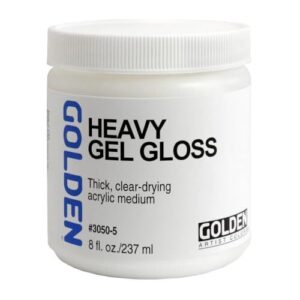
If you’re ready to turn your thread scraps into textured art pieces with serious staying power, Golden Heavy Gel Gloss Medium is the thick, professional-grade acrylic medium that locks everything in place. This USA-made gel works wonders for mixed media and craft projects—think thread collages, weaving experiments, and acrylic painting enhancements.
It won’t rescue thread quality issues or prevent thread breakage in actual sewing techniques, but it transforms deteriorated sewing thread into artistic techniques gold. The 8-ounce bottle offers excellent flexibility and UV resistance, making thread maintenance failures feel like creative opportunities instead.
| Best For | Artists and crafters who want to transform thread scraps and textile failures into permanent mixed media art with professional-grade texture and durability. |
|---|---|
| Brand | GOLDEN |
| Primary Material | Acrylic Medium |
| Item Form | Gel |
| Package Size | 8 Fl Oz |
| Primary Use | Paint Medium |
| Special Feature | UV Resistant |
| Additional Features |
|
- Thick, versatile gel works as both a medium and adhesive for thread collages and mixed media projects
- Excellent UV resistance and flexibility means your textile art pieces stay vibrant and durable indoors or outdoors
- Made in the USA by an employee-owned company with proven quality for extending and enhancing acrylic paints
- $15.30 price point might feel steep if you’re just experimenting with small thread art projects
- The heavy thickness means you’ll likely need to mix it with other products to get the exact consistency you want
- Won’t help with actual sewing or prevent thread breakage—this is strictly for finished art pieces
Frequently Asked Questions (FAQs)
How should I store thread to prevent deterioration?
Think of your thread stash like fine wine—it craves cool, dry conditions between 60-75°F.
Store spools in closed containers away from sunlight to prevent dust accumulation and moisture damage that causes thread breakage.
Whats the typical lifespan of different thread types?
Cotton and silk threads usually last 1–2 years with proper storage methods, while polyester boasts 2–5 years of shelf life.
Rayon weakens fastest at 6–12 months, and metallic threads hold strong for 2–3 years with careful handling.
Is slightly faded thread still safe for garments?
Wondering if that pale spool is risky? Faded thread signals weakened fibers and compromised thread safety.
Color fading often accompanies material degradation that threatens fabric durability, so replace it before sewing thread breakage ruins your garment’s seams.
What creative projects work well with expired thread?
Expired thread shines in mixed media collage, fabric sculpture, and embroidery art where strength doesn’t matter.
Try thread jewelry, decoupage crafts, or weaving projects—repurposing adds texture and vintage charm to your crafting ideas!
Conclusion
That spool of thread isn’t just fiber—it’s the invisible promise holding your fabric together. When you ignore the signs you need to replace old thread, you’re gambling with every seam you sew.
Trust the snap test, trust the fraying, trust your machine’s complaints. Toss the expired spools without guilt.
Fresh thread means reliable stitches, fewer frustrations, and projects that actually stay together. Your sewing deserves better than compromised materials.
- https://www.coats.com/en-us/info-hub/protect-your-threads-from-uv-rays/
- https://www.textilessupplychain.com/news/top-sewing-thread-testing-methods-you-should-know-based-on-gb-t-6836-2007/
- https://lupinepublishers.com/fashion-technology-textile-engineering/fulltext/effect-of-process-parameters-on-changes-in-tensile-properties-of-cotton-sewing-thread.ID.000149.php
- https://www.scribd.com/document/381267436/1390-9353-1-PB-pdf
- https://discovery.researcher.life/questions/what-is-the-impact-of-sewing-thread-properties-on-the-performance-of-seams-in-polyester-fabrics/c60d65c63edb3af294762ce7351998b1f30c734c