This site is supported by our readers. We may earn a commission, at no cost to you, if you purchase through links.
You thread your machine, press the pedal, and watch the stitches form—only to find tangled loops underneath or puckered seams that refuse to lie flat. Testing bobbin thread tension isn’t just a technical step; it’s the difference between a perfect seam and a headache that ruins your project.
If you want stitches that hold strong and look clean, you’ll need to get hands‑on with your bobbin case, tension screw, and the right tools. Once you know how to spot trouble and adjust with precision, you’ll turn frustration into smooth, reliable sewing—every time.
Table Of Contents
Key Takeaways
- Proper bobbin thread tension prevents tangled loops, puckered seams, and weak stitches, making your sewing look professional.
- Regular cleaning, using the correct bobbin size and thread, and careful adjustment of the tension screw are essential for consistent stitch quality.
- Manual drop tests, visual stitch inspection, and tension gauges help you diagnose and fine-tune bobbin tension for reliable results.
- Persistent tension issues, machine errors, or unusual wear call for professional servicing to avoid costly damage and maintain performance.
What is Bobbin Thread Tension?
Bobbin thread tension is the amount of pull on the thread as it feeds through the bobbin case during sewing. Get it wrong, and stitches will tell you immediately.
If you’re struggling to balance both threads, the ultimate sewing machine tension guide breaks down common issues and easy fixes for perfect stitches.
Here’s what you need to understand first.
How Bobbin Tension Impacts Stitch Quality
Bobbin tension quietly controls everything about stitch quality.
When it’s off, you’ll notice fabric puckering along seams, uneven stitch uniformity, or visible bobbin thread on the surface.
Too tight, and thread breakage becomes a real problem.
Too loose, and seam elasticity suffers — stitches won’t hold under stress.
Proper thread tension management keeps that knot centered in the fabric, right where it belongs.
Achieving matching top and bottom tension is essential for balanced stitches.
Differences Between Bobbin and Upper Thread Tension
You manage two tension systems—each with its own quirks.
Upper thread tension uses numbered dials and multiple discs, adjusting grip with Tension Dial Mechanics.
Bobbin thread tension relies on a flat spring inside the case, set manually.
Thread Path Geometry differs: upper thread winds through guides; bobbin thread exits straight.
Proper Thread Tension Management depends on understanding these Spring Pressure Differences.
Remember that incorrect threading issues are a common cause of tension problems.
Signs of Incorrect Bobbin Tension
Once you know the tension systems, spotting problems gets easier. Watch for these signs:
- Upper thread loops or birds nest formation on the underside.
- Fabric puckering along seams from tight bobbin tension.
- Frequent thread breakage and skipped stitches—especially with bunched stitches or thread snapping.
These clues signal your thread tension needs adjustment. Don’t ignore them; weak seams and messy stitches follow.
Causes of Bobbin Tension Problems
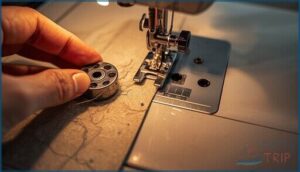
Bobbin tension problems usually start with a handful of common issues. If your stitches look off, the cause is often hiding in plain sight. Let’s break down what you should check first.
For a step-by-step guide on checking your bobbin case, this sewing machine troubleshooting resource walks you through the process clearly.
Common Mistakes Affecting Tension
Ever notice your stitches bunch up or loop underneath? Foot‑down threading is a top culprit—skipping disc tension leads to bird’s nests.
Lint under spring cuts thread tension by half. Overtightened screw crushes flow, while uneven winding throws bobbin tension off balance.
Wrong bobbin size jams the case. These mistakes demand careful Bobbin Tension Adjustment and precise Sewing Troubleshooting.
Thread and Bobbin Compatibility Issues
If your stitches look uneven or keep skipping, chances are you’re facing compatibility issues.
Thread and bobbin mismatches throw bobbin tension off and frustrate even seasoned sewists.
Here’s what to check:
- Bobbin Size Mismatch
- Material Friction differences
- Thread Weight Balance
- Fiber Type Pairing
- Brand Specific Fit
Each impacts thread tension and stitch reliability.
Effects of Lint and Debris in The Bobbin Case
When lint buildup creeps into your bobbin case, it’s more than a nuisance—it causes stitch irregularities, fabric puckering, and thread feed blockage. Compacted lint forces case misalignment and accelerates spring wear, throwing thread tension off.
Lint buildup in your bobbin case leads to stitch irregularities, fabric puckering, and thread tension problems that can ruin your sewing
Regular sewing machine maintenance is essential. Use a dental pick to clear lint and keep your bobbin case clean, preventing skipped stitches and costly repairs.
How to Test Bobbin Thread Tension
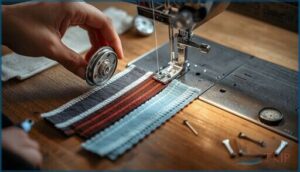
Testing bobbin thread tension isn’t guesswork—it’s a step-by-step process you can master.
You’ll need to check your stitches, handle the bobbin, and sometimes use a tool for accuracy. Here’s how you can approach each method to get reliable results.
Visual Inspection of Stitches
Want to spot tension trouble fast? Inspect your stitches like a mechanic checks engine oil. Look for:
- Loop Identification—loose loops or birds nests under the seam.
- Stitch Line Uniformity—wavy lines signal tension imbalance.
- Thread Color Visibility—bobbin color peeking on top means tension’s off.
- Fabric Puckering Signs—tight bobbin tension draws fabric into ridges, hurting stitch quality.
Manual Bobbin Drop and Pull Tests
Think of the manual drop test as your first line of defense against bobbin tension issues. With a full calibration bobbin, suspend the case by the thread tail—no table contact.
Snap the thread; aim for a drop distance guideline of 1–3 inches. For pull resistance feel, tension should be firm yet smooth.
Adjust the tension screw if movement is too tight or loose.
Using Tension Gauges for Accuracy
Ever wonder how pros dial in bobbin tension so precisely? Tension gauges take the guesswork out. Digital vs analog—both deliver real numbers for Gauge Calibration. Here’s your checklist:
- Secure bobbin case in gauge.
- Match thread weight.
- Interpret readings for adjustment.
- Clean gauge regularly.
- Retest after each tweak.
Consistent readings mean professional Embroidery Thread Tension every time.
Step-by-Step Bobbin Tension Adjustment
Getting bobbin tension right takes a steady hand and a clear plan. Each step matters if you want strong, even stitches.
Here’s how you can adjust your bobbin tension for reliable results.
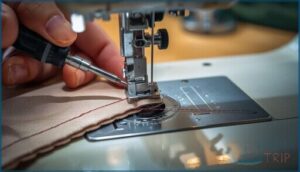
Adjusting The Bobbin Case Screw

Ready to tackle bobbin tension? First, identify the correct tension screw—it’s the small slotted one nearest the thread exit.
Clean under the spring before adjusting.
Turn clockwise to tighten, counterclockwise to loosen.
Use 1/8 or 1/4 turns for precise thread tension adjustment.
Never force the screw; safety precautions prevent damage.
Proper machine maintenance starts here.
Marking and Tracking Adjustments

Once you’ve adjusted the tension screw, keep your changes clear. Baseline Marking lets you reset if needed. Increment Tracking ensures you don’t overdo a turn.
Use an Adjustment Log for each project—write down screw turns and thread types.
Stitch Strip Samples show results visually.
Case Labeling prevents mix-ups.
These habits make bobbin tension predictable, repeatable, and easy to troubleshoot.
Reseating and Checking The Bobbin Case

After tracking tension screw adjustments, focus on reseating the bobbin case. Use Alignment Marks—like dots or arrows—to make sure the case sits flush.
Lubrication Points need a single drop of oil, then wipe excess. Listen for a click during Seating Confirmation. Run Installation Checks: turn the handwheel, inspect thread feed, and check for smooth movement. Tension Spring Inspection prevents hidden issues.
Re-testing After Each Adjustment

Once your bobbin case is seated, re-testing is where you see results. Don’t skip these checks—each thread tension adjustment needs proof.
Try a Yo-Yo Drop, then stitch on scrap fabric, watching for Stitch Consistency. Use a Color Contrast Test, update your Screw Turn Log, and match your test fabric weight. That’s how you confirm bobbin tension fixes stick.
Tips for Maintaining Proper Bobbin Tension
Keeping your bobbin tension steady takes a bit of routine and know‑how. There are a few key habits that make all the difference. Let’s walk through what you need to keep your stitches strong and balanced.
Regular Cleaning and Maintenance
Think of a Lint Removal Routine as your first defense against tension trouble. Use a soft nylon brush—part of any solid Brush Selection Guide—to sweep out lint every 2–5 bobbins.
Stick to your Lubrication Schedule: one drop of oil every 5–10 sewing hours. Follow a Reassembly Checklist and Maintenance Frequency Plan to keep Sewing Machine Maintenance and Thread Tension Adjustment on track.
Choosing The Right Bobbins and Thread
Once you understand how bobbin size compatibility and thread weight matching affect bobbin tension, you’ll avoid half of your headaches. Choose wisely:
- Match bobbin size and style (Class 15, L, or M) to your machine.
- Consider plastic vs metal for thread management and fabric type.
- Balance thread material pairing—polyester for high speed, cotton for natural blends.
Don’t push bobbin capacity limits.
Troubleshooting Persistent Tension Issues
If your bobbin tension keeps slipping, check for Humidity Effects or Component Wear first—both can throw off thread tension.
Presser Foot Alignment matters; a raised foot can skew results.
Watch for Incremental Adjustment Errors when tweaking the tension screw.
Clean the bobbin case, try Thread Conditioning, and always test changes on scrap.
Sewing machine troubleshooting starts with these basics.
When to Seek Professional Assistance
Persistent E1 Codes, Complex Timing Errors, or Safety Hazards—like needle strikes or severe thread tension issues—it’s time for professional help.
Warranty Service Signs or Warranty Issues also demand expert attention.
When basic Sewing Machine Troubleshooting and Machine Maintenance and Repair can’t fix bobbin tension, let a technician inspect the Bobbin Case and internal parts.
Frequently Asked Questions (FAQs)
Can bobbin tension affect specialty thread performance?
If you’re chasing thread excellence like it’s the gold rush, bobbin tension can make or break specialty thread results.
Metallic Thread Balance, Monofilament Tension Effects, Heavy Thread Backlash, Fine Thread Sensitivity, and Rayon Thread Puckering—all hinge on proper adjustment.
How does bobbin tension vary with different fabrics?
Bobbin tension shifts with fabric type.
Cotton tension range sits at 190–220 mN, silk tension range drops to 150–180 mN, denim tension range climbs to 250 mN, and knit tension range stays lower for flexible seams.
Thread weight influences every adjustment.
Are there machine brands with unique bobbin tension requirements?
Yes, sewing machine brands often set unique bobbin tension specs.
Bernina gauge specs, Singer Featherweight standards, Brother screw types, Janome dual screws, and Pfaff drop test all shape tension adjustment and control for thread tension and stitch quality.
What happens if bobbin tension is ignored long-term?
Neglecting bobbin tension causes stitch degradation, thread breakage, and puckered fabric. Over time, you’ll see machine wear, fabric weakening, and longevity loss.
Stitch irregularities multiply, seam construction suffers, and thread tension issues turn minor repairs into major headaches.
Is bobbin tension different for quilting versus embroidery?
Think of bobbin tension as the gatekeeper—its role shifts with quilting or embroidery.
Quilting tension ranges are looser for thick layers, while embroidery tension standards are tighter. Thread weight impact and machine type differences demand careful gauge selection tips.
Conclusion
Threading the needle on bobbin tension isn’t just clever wordplay—it’s your path to crisp, reliable stitches.
Testing bobbin thread tension transforms guesswork into control, letting you spot issues before they unravel your project.
When you adjust with care—tracking every turn and checking your results—you build confidence with each seam.
Clean tools, matched threads, and patient troubleshooting make the difference.
Now, you’re not just sewing—you’re mastering your machine, one stitch at a time.
- https://www.hooptalent.com/hu/blogs/news/master-bobbin-tension-step-by-step-fix-for-perfect-stitches
- https://www.magnetichoop.com/blogs/news/how-to-tighten-bobbin-tension-master-adjustment-for-flawless-stitches
- https://www.maggieframes.com/blogs/embroidery-blogs/fix-bobbin-tension-too-loose-ultimate-troubleshooting-guide
- https://www.pinterest.com/pin/742882901024677115/
- https://ylithreads.com/blogs/thread-education/adjust-bobbin-tension-guide