This site is supported by our readers. We may earn a commission, at no cost to you, if you purchase through links.
Your sewing machine’s presser foot does more heavy lifting than you probably realize. That small metal piece pressing down on your fabric is the difference between professional-looking seams and a frustrating tangle of threads.
Most sewers stick with the standard foot that came with their machine, never knowing they’re missing out on dozens of specialized feet designed to make tricky tasks almost simple. Each presser foot is engineered for specific jobs—from creating perfect buttonholes to wrestling multiple layers of denim into submission.
Once you understand which foot does what, you’ll stop fighting your machine and start producing the kind of finished projects that make people ask, ‘Wait, you made that yourself?’ The types of presser feet explained here will transform how you approach every sewing challenge.
Table Of Contents
Key Takeaways
- Presser feet are interchangeable attachments that hold fabric steady against feed dogs and control stitch quality—swapping to specialized feet like zipper, buttonhole, or walking feet unlocks professional results that standard feet can’t achieve.
- Match your presser foot to both fabric weight and sewing task: lightweight materials need finer feet to prevent puckering, heavy fabrics require walking feet for even feed, and specialty feet like rolled hem or gathering attachments handle specific techniques in single passes.
- Verify your machine’s shank type (high or low) and attachment system (snap-on or screw-on) before buying presser feet, since wrong combinations cause skipped stitches and compatibility issues that waste time and money.
- Clean presser feet after every project with a lint-free brush, store them in dry compartmented containers to prevent rust, and inspect regularly for bent edges or chips that snag fabric and ruin stitch quality.
What Are Presser Feet?
Presser feet are the unsung heroes of your sewing machine—they’re the attachments that sit right under the needle and hold your fabric steady as you stitch. Without them, your machine would just be a fancy needle holder, unable to guide fabric smoothly or create anything beyond basic stitches.
Each type of presser foot is designed for a specific task, so learning to identify your sewing machine feet helps you pick the right one for zippers, buttonholes, or hemming.
Let’s break down what these little workhorses actually do and why they matter so much to your sewing projects.
If you’re curious whether this machine lives up to the hype, check out our hands-on Singer 4411 review for all the details.
Definition and Function
A presser foot is your sewing machine’s workhorse—the device that holds fabric firmly against the feed dog and needle while you stitch. It transforms downward pressure into controlled fabric movement, giving you the fabric control you need for consistent stitch formation and reliable seam quality. Understanding presser foot mechanics is your first step toward true sewing precision.
Getting your pressure settings dialed in makes all the difference when you’re working with delicate silks or heavy denim.
Here’s what makes presser feet essential:
- They anchor your fabric – No shifting, no bunching, just clean lines every time
- They guide material smoothly – Your feed dogs pull evenly when fabric stays put
- They determine stitch consistency – Pressure equals precision in seam formation
- They’re interchangeable for different tasks – Swap feet, expand your sewing capabilities instantly
- They impact your final results – The right sewing machine feet make professional-quality work achievable
How Presser Feet Work
Your sewing machine presser foot applies downward pressure on fabric while feed dogs pull material beneath it. The needle penetrates through a small gap in the foot, creating stitches that the bobbin thread forms below. This pressure control stabilizes fabric tension and ensures consistent feed mechanism action, which directly impacts stitch formation quality and sewing accuracy every single time.
| Component | Action | Result |
|---|---|---|
| Presser Foot | Applies downward pressure | Holds fabric steady |
| Feed Dogs | Move fabric forward | Even material advancement |
| Needle & Foot Gap | Penetration point | Clean stitch formation |
Importance in Sewing
The right presser foot isn’t optional—it shapes stitch quality, prevents fabric slippage, and keeps your seam allowance consistent across different materials.
Your sewing machine feet control fabric guidance and thread tension in ways that directly affect how professional your work looks.
Poor foot choice leads to thread breakage and uneven seams, while smart selection unlocks sophisticated sewing techniques and saves construction time.
Start by matching your foot to the fabric weight and technique, much like choosing the right batting for your quilting project affects the final drape and finish.
Basic Types of Presser Feet
Every sewing machine comes with a standard presser foot, but that’s just the beginning. Once you start exploring different projects, you’ll quickly realize you need specialized feet to handle zippers, buttonholes, and finishing edges.
Let’s look at the five basic presser feet that’ll handle most of your everyday sewing tasks.
Before diving in, check out this complete presser foot guide to confirm your machine’s shank height and stitch width compatibility.
Standard Presser Foot
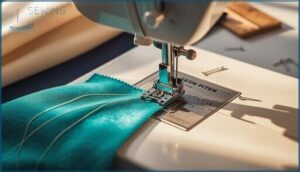
When you unbox your sewing machine, this is the foot already attached—your workhorse for everyday stitching. The standard presser foot manages straight and zigzag stitches while maintaining fabric guidance and proper foot alignment.
It keeps your seam allowance consistent on most woven fabrics, delivering reliable stitch quality. Think of it as your go-to for basic seams, hems, and topstitching before you venture into specialty sewing machine feet.
Zipper Foot
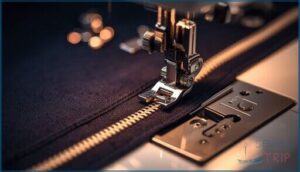
This narrow, offset attachment slides right past zipper teeth, letting you stitch as close as a millimeter to the raised metal or plastic coils. You’ll position it on either side of your sewing machine needle for zipper alignment, making zipper installation and zipper repair straightforward.
Invisible zippers become manageable when you’re sewing zippers with this essential piece among your sewing machine accessories—it’s a heaven send for clean finishes.
Buttonhole Foot
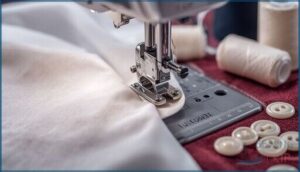
A buttonhole foot takes the guesswork out of creating uniform openings for your buttons. This presser foot uses built-in guides and sensors to deliver precise buttonhole stitch placement, maintaining consistent stitch density across multiple garments.
You’ll adjust the foot length to match your button diameter, and the fabric guidance system keeps everything aligned—no more uneven or lopsided buttonholes on your projects.
Overcast Foot
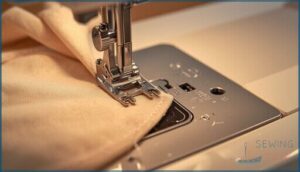
An overcast foot wraps thread around raw fabric edges like a professional serger, preventing fraying without the need for bulky equipment. The metal wire or prong beside the needle opening guides your fabric while overcast stitches wrap securely around the raw edge.
You’ll achieve clean edge finishing on seams and hems without puckering, giving your garments that polished, store-bought look.
Blind Hem Foot
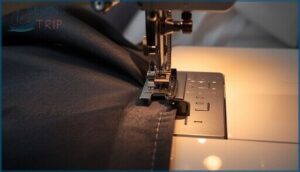
Blind hem foot magic happens when you want hems that practically vanish. The guiding channel on this presser foot keeps your folded fabric edge aligned while the blind stitch catches just a tiny bit of the garment’s right side.
- Fabric folding places the hem edge along the foot’s guide
- Stitch alignment ensures minimal thread shows on the right side
- Foot adjustment controls hem allowance width and precision
Perfect for dress pants and skirts.
Specialty Presser Feet Explained
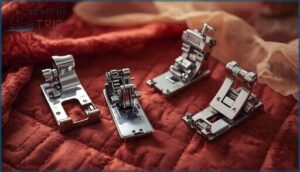
Once you’ve got the basics down, specialty presser feet are where things get really interesting. These attachments handle jobs that standard feet just can’t tackle—think quilting through thick layers, creating perfect pleats, or stitching delicate hems.
Let’s walk through the most useful specialty feet you’ll want in your collection.
Walking Foot
You’ll find the walking foot is a heaven-sent tool when your fabric layers shift out of sync. This presser foot adds a second feed mechanism on top, matching your sewing machine’s bottom feed dogs perfectly. Both surfaces grip your work together, delivering rock-solid fabric alignment through thick quilts, leather, or slippery satins.
| Best For | Key Benefit | Maintenance Need |
|---|---|---|
| Multi-layer quilting | Even feed top & bottom | Clean feed dogs weekly |
| Heavy denim or canvas | Prevents fabric bunching | Inspect for wear regularly |
| Slippery satin blends | Consistent sewing accuracy | Remove lint after projects |
Your walking foot transforms quilting techniques by eliminating the frustration of shifted seams. While standard sewing machine feet push fabric from below only, this specialized tool synchronizes pressure from both directions. That dual-action feed mechanism means your topstitching stays precise and your batting won’t bunch mid-seam. Just remember: foot maintenance matters. Brush out debris between your feed dogs, and you’ll maintain perfect performance on every project.
Quilting Foot
You’ll master professional quilting techniques with a dedicated quilting foot—it’s built with a wide, stable sole that glides smoothly over dense batting without dragging.
This quilting accessory often includes clear visibility plates and guide bars for fabric guidance, letting you align parallel stitch patterns with precision.
Check foot compatibility with your machine’s shank type, then watch your quilter foot transform sewing machine feet into a quilting powerhouse.
Embroidery Foot
Your embroidery foot is designed with a smooth, low-profile sole that won’t snag delicate fabric stabilizers during dense stitch patterns. It keeps thread tension consistent across complex embroidery techniques, preventing puckering on lightweight materials.
When you’re working intricate monograms or satin stitches, this sewing machine presser foot gives you the clearance and stability needed for professional quilting and embroidery results every time.
Gathering Foot
Your gathering foot is a heaven-sent tool for creating even ruffles and controlled fullness on lightweight fabrics. This sewing machine presser foot draws fabric from the edge during stitching, giving you professional gathering techniques without manual bunching.
Here’s what makes this sewing machine foot essential for fabric manipulation:
- Creates uniform gathers on cotton batiste and lightweight silks
- Adjustable tension controls the degree of ruffle creation
- Works with straight or zigzag stitches for gather control
- Perfect for puff sleeves and decorative waistlines with sewing fullness
Rolled Hem Foot
Your rolled hem foot takes narrow hem finishing to the next level with precision fabric rolling. This hemmer foot guides your material through a small curl, folding the edge twice before it reaches the needle—no pre-folding required.
You’ll get clean, professional edge folding on chiffon, silk, and lightweight fabrics in just one pass. It’s perfect for scarves, ruffles, and delicate hemming methods.
Cording and Piping Feet
When you need to add raised definition to seams, cording and piping feet become your heaven send. These Sewing Machine Feet guide cord through a narrow groove, letting you stitch perfect piping techniques along cushion edges or garment seams.
Your Cording Foot manages:
- Edge finishing with uniform cord thickness
- Decorative stitching along collars and lapels
- Fabric guidance for consistent placement
- Professional upholstery-quality results
Choosing The Right Presser Foot
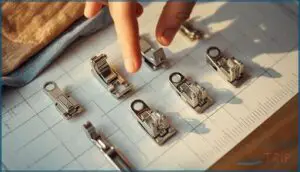
Picking the right presser foot isn’t rocket science, but it does require you to think about what you’re sewing and what machine you own. You can’t just grab any foot off the shelf and expect it to fit or work properly.
Let’s walk through the key factors that’ll help you make smart choices every time.
Fabric Type and Sewing Task
Your fabric choice and sewing task should drive which presser foot you grab. Lightweight fabrics like silk demand finer feet to avoid puckering, while heavy denim needs sturdy options with higher lift. Knits? They’ll stretch less with a walking foot. Match your foot to your material and project—it’s the difference between frustration and professional results every single time.
Match your presser foot to your fabric and project—it’s the difference between frustration and professional results every time
| Fabric Type | Recommended Foot |
|---|---|
| Lightweight | Fine presser feet |
| Heavy fabrics | Walking foot |
| Knit materials | Non-stretch/walking foot |
Machine Compatibility (High Shank, Low Shank, Snap-On, Screw-On)
Before you buy another presser foot, know your sewing machine’s setup. Shank height determines which presser foot fits—measure from the needle to the machine surface. Snap on or screw threads? That’s your attachment style. Here’s what matters:
- Check your machine’s compatibility charts for exact foot alignment specs.
- Low shank machines fit most standard sewing machine feet.
- High shank models need adapters or dedicated sewing machine presser feet.
- Verify snap-on versus screw-on before ordering any sewing machine accessories and parts.
Wrong combinations cause skipped stitches and frustration.
Tips for Selecting Presser Feet
Start with your most frequent sewing tasks—that’s the foundation of any Sewing Machine Presser Feet Guide.
Match Presser Foot Materials to fabric weight and Stitch Quality Factors you prioritize. Verify Sewing Machine Compatibility and Foot Attachment Systems before ordering Sewing Machine Accessories and Parts.
Study Fabric Handling Techniques each Presser Foot facilitates. Your Sewing Machine Feet Guide should reflect real projects, not wishful thinking.
Presser Foot Care and Maintenance
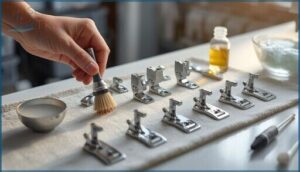
Your presser feet are an investment worth protecting. A little care goes a long way in keeping them working smoothly and lasting for years. Here’s how to maintain your presser feet so they stay in top shape.
Cleaning and Storage Tips
You don’t want lint and thread bits turning your presser foot into a rusty mess. After each project, grab a soft brush and wipe down your sewing machine presser feet—it’s basic foot maintenance that pays off.
Store these sewing tools in a dry container with compartments for smart organization tips. Keep sewing machine accessories away from moisture for rust prevention, and your cleaning methods will protect precision surfaces for years.
Inspecting for Wear and Damage
Every few months, you should run a visual inspection on your presser foot—bent or chipped feet mess up stitch quality fast. Here’s your damage assessment checklist:
- Check the toe and heel for irregular wear that could snag fabric
- Look for corrosion or rust on metal sewing machine parts and mounting screws
- Confirm the foot attaches securely without wobbling during sewing machine maintenance
Extending Presser Foot Lifespan
Proper presser care can double your foot’s working life if you treat it right. Clean your presser foot after each project with a lint-free cloth to prevent abrasive buildup. Smart sewing machine maintenance means using the correct foot for each task, which prevents uneven wear.
Store sewing machine accessories and feet in a dedicated case to dodge bent edges. During foot inspection, catch nicks early—they snag fabric fast.
Frequently Asked Questions (FAQs)
Can I use presser feet from different brands?
Yes, you can use presser feet from different brands—most sewing machines accept universal feet that match your shank type. Just verify compatibility first, since foot adapters or minor adjustments might be needed.
How do I attach a presser foot correctly?
Attaching a presser foot is easier than threading a needle. Raise the needle to its highest point, align the foot with the holder, then snap it on or tighten the screw securely.
What causes presser feet to break or malfunction?
Presser feet break from material fatigue, mechanical stress, improper alignment, overuse damage, and maintenance neglect.
Loose screws, incompatible shanks, fabric buildup, and mounting wear accelerate failure—regular inspection of your sewing machine accessories prevents most malfunctions.
Are universal presser feet worth the investment?
Universal presser feet offer solid investment value for hobbyists needing sewing versatility across multiple projects. They deliver cost benefits and foot compatibility with most machines, though dedicated sewing machine feet provide better performance for heavy professional use.
How many presser feet does a beginner need?
You’ll get the most mileage from just three presser feet—standard, zipper, and buttonhole.
That starter kit covers basic sewing tasks and garment construction without overwhelming your budget or storage space.
Conclusion
The right tool for the job isn’t just a nice-to-have—it’s what separates amateur results from work that looks store-bought. Now that you’ve got the types of presser feet explained, you’ll recognize exactly which foot solves which problem.
Your machine already has the power to handle complex techniques. You just needed the specialized feet to release it. Stop wrestling with workarounds and start using the attachments that make professional sewing feel easy.