This site is supported by our readers. We may earn a commission, at no cost to you, if you purchase through links.
Your sewing kit is only as strong as its needle collection. I learned this the hard way when a stubborn denim hem snapped my third universal needle in a row—turns out, one-size-fits-all doesn’t actually fit all. The right needle transforms frustrating projects into satisfying ones, but stocking your kit means understanding which types genuinely earn their space.
You’ll want a core selection that covers everything from sheer silk to upholstery canvas, plus a few specialty options for those moments when standard tools won’t cut it. Getting this foundation right means fewer mid-project runs to the craft store and better results on every fabric that crosses your workspace.
Table Of Contents
- Key Takeaways
- Essential Needle Types for Every Sewing Kit
- Choosing Needle Sizes for Different Fabrics
- Hand Sewing Vs. Machine Needles: What to Include
- Needle Storage and Maintenance Tips
- Top Products for Needle Organization and Use
- 1. Sewing Kit Storage Box Organizer
- 2. Brother Sewing And Quilting Machine
- 3. Kai Bent Handle Scissors
- 4. Wintape Mini Retractable Tape Measure
- 5. Sewing Machine Needles Assortment Set
- 6. Distinctive Brother Sewing Machine Bobbins
- 7. Dritz See Thru Dressmakers Ruler
- 8. Turn It All Sewing Tool
- 9. Tailor’s Wooden Clapper Tool
- Frequently Asked Questions (FAQs)
- Conclusion
Key Takeaways
- Stock your kit with universals (70/10-90/14), sharps, embroidery, quilting, and heavy-duty needles to handle everything from sheer silk to denim without mid-project store runs.
- Match needle size to fabric weight—fine needles (60-75) for delicate materials, medium (90/14) for everyday cotton and knits, and large (110/18-130/21) for canvas and upholstery.
- Replace machine needles after 8-12 hours of use or when you notice bent shafts, rounded tips, or poor stitch quality to prevent fabric damage and frustrating project failures.
- Organize needles by type and size in labeled containers with moisture protection, and dispose of broken ones in FDA-cleared sharps containers to keep your workspace safe and efficient.
Essential Needle Types for Every Sewing Kit
Your sewing kit won’t get far without the right needles in your arsenal. Different projects call for different needle types, and having a well-rounded collection means you’ll never have to stop mid-stitch to run to the store.
If you’re just getting started, check out this guide on building a complete sewing kit to see which needles pair best with other essential tools.
Let’s break down the essential needle types every sewing kit needs to handle whatever project comes your way.
Universal Needles for Everyday Sewing
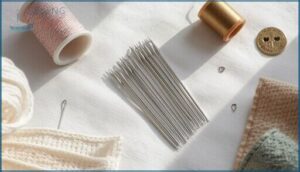
Your sewing kit needs universal needles because they’re the workhorses of everyday sewing. These adaptable tools handle cotton, linen, and light knits beautifully!
Stock sizes 70/10 through 90/14 to match fabric thickness and maintain stitch quality. They’re perfect for beginner sewing projects and work with standard thread at any sewing speed.
Remember this maintenance tip: replace them after 8–12 hours of use! For more guidance, see this resource on.
Sharps Needles for Precision Work
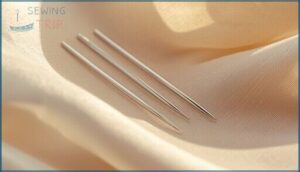
When you’re ready to master precision sewing, reach for sharps needles! Their fine slender shaft creates clean stitches in lightweight and midweight fabrics without fabric distortion—perfect for delicate seams and detailed hand sewing. These sewing tools are made from high-carbon needle materials that resist bending, making them ideal additions to any beginner sewing kit.
- Sharp tips penetrate fabric precisely while maintaining thread tension throughout your project
- Sizes 5, 7, and 8 handle most precision tasks on woven materials
- The small eye near the bend minimizes thread tangling during fine work
For more guidance, explore to choose the best sharp for your fabric and technique.
Embroidery Needles for Decorative Stitches
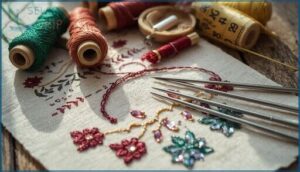
Decorative stitches demand embroidery needles with larger, elongated eyes that accommodate multiple strands of floss without fraying. Their long, slender shaft glides through dense stitches while preventing fabric distortion—exactly what you need for satin stitch and backstitch work! These essential sewing tools fit beautifully into any sewing kit alongside your standard sewing notions.
| Feature | Purpose | Benefit |
|---|---|---|
| Large elongated eye | Holds embroidery floss and rayon threads | Reduces thread fraying during decorative work |
| Long slender shaft | Reaches through layered decorative stitches | Prevents bending in intricate embroidery stitch types |
| Sharp or ballpoint tip | Fits woven or knit fabrics | Ensures needle thread compatibility across materials |
| Polished surface | Minimizes friction through fabric | Aids fabric distortion prevention in decorative stitch techniques |
| Sizes 7, 8, 9 | Matches various thread weights | Optimizes needle eye sizes for different projects |
Replace your embroidery needles every 6 to 8 hours of stitching to maintain sharp edges and clean decorative results!
Quilting Needles for Layered Fabrics
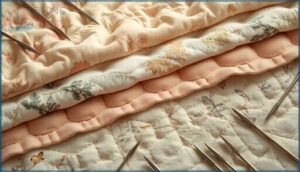
Layered fabric like quilt batting requires specialized quilting needles with rounded points that glide through multiple layers without snagging. These hand sewing needles resist bending when you stitch through thick seams—perfect for mastering quilting techniques!
Sizes 8 to 12 work beautifully for most projects, ensuring fabric compatibility while your needle selection matches the density of your work. Smart needle choices prevent skipped stitches in your sewing kit!
Heavy Duty Needles for Thick Fabrics
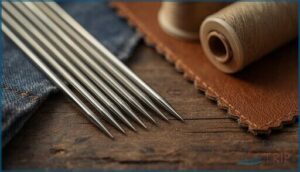
Denim, canvas, and leather demand reinforced heavy-duty needles with chromium or titanium coatings to resist fabric resistance and prevent needle breakage. You’ll need sizes 16 to 24 for thick fabric sewing—their larger eyes accommodate topstitch threads while strong shafts handle multiple layers without bending.
Check sewing machine compatibility before stitching! These essential sewing tools and notions transform your sewing kit for heavy-duty materials.
Tapestry Needles for Yarn and Embroidery
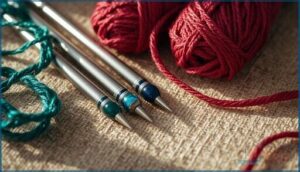
These blunt-tipped beauties glide through knitted fabrics without snagging delicate yarn fibers—perfect for weaving in loose ends and creating tapestry stitches! Add steel or plastic tapestry needles to your sewing kit for adaptable embroidery tips:
- Large eyes accommodate thick embroidery threads and multiple yarn strands
- Rounded tips preserve stitch integrity on needlepoint canvases
- Longer shafts navigate curved seams effortlessly
- Rust-resistant needle materials guarantee lasting durability
Choosing Needle Sizes for Different Fabrics
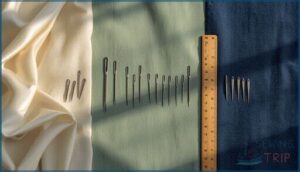
Picking the right needle size isn’t just about what looks good in your hand—it’s about matching the tool to your fabric’s weight and texture. Use a needle that’s too fine for denim, and you’ll bend or break it in seconds.
Let’s break down which sizes work best for different materials so you can sew with confidence every time.
Fine Needles for Lightweight Fabrics
When you’re working with chiffon, silk, or other delicate fabrics, fine needles in sizes 60-75 are your best friends for fabric snag prevention! These Micro Fiber Needles glide through lightweight materials without leaving holes or puckers.
For silk sewing tips, remember: microtex sharp points create clean seams on satin and voile. Your sewing kit needs these delicate stitching heroes, plus compatible fine thread for lightweight embroidery projects.
Medium Needles for Standard Materials
Most everyday fabrics call for medium needles sized 9 to 14, your go-to sewing tools for cotton blends, polyester, and light denim. These adaptable sewing supplies deliver reliable stitch quality across varied fabric thickness!
Your sewing kit should include:
- Universal sharps for crisp, clean seams on woven materials
- Ball point needles to prevent snags on knits
- Durable needle material that maintains sewing speed through multiple layers
- Compatible thread weights from 50 to 70 cotton count
Trust needle durability for consistent results!
Large Needles for Heavyweight Fabrics
Heavyweight fabric sewing demands larger needles sized 110/18 to 130/20 to punch cleanly through canvas and upholstery! Your sewing kit needs sturdy needle material selection that won’t bend under pressure.
These sewing tools handle thick thread management with reinforced eyes and sharp points for precise fabric piercing techniques. Trust heavy-duty sewing supplies to deliver heavyweight stitch quality every single time!
Matching Needle Size to Thread Type
Thread weight and needle diameter work together like dance partners—when they’re matched, your stitch quality soars!
Keep these sewing tools coordinated: lighter threads (Tex 16–35) pair with 70/10 to 90/14 needles, while heavier threads demand 110/18 or larger.
Your sewing kit needs this variety for proper tension control across different fabric thickness levels!
Hand Sewing Vs. Machine Needles: What to Include
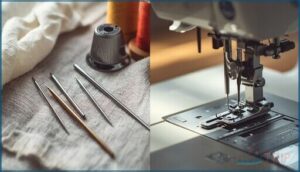
Hand sewing and machine sewing require completely different needles, and mixing them up won’t end well for your project. Your sewing kit needs both types to handle everything from quick repairs to full garment construction.
Let’s break down exactly which needles belong in each category so you’re ready for any sewing situation.
Essential Hand Sewing Needle Types
Your sewing kit demands three hand sewing needle categories for beginner sewing success. Sharps (sizes 7-9) handle woven fabrics and general tasks perfectly. Embroidery needles feature smaller eyes for delicate threads and decorative stitches. Betweens (sizes 3-7) excel at basting lighter fabrics with precision.
| Needle Type | Best For |
|---|---|
| Sharps 7-9 | Woven fabrics, hems |
| Embroidery 7-9 | Decorative work |
| Betweens 3-7 | Basting, delicate seams |
| Heavy Duty 90-100 | Denim, canvas |
| Tapestry | Yarn projects |
Pair these sewing tools with quality thread selection and needle threaders to simplify fabric preparation!
Must-Have Machine Needle Varieties
Your sewing machine performs best with five needle types in your sewing kit. Universal needles (size 80) handle most cotton and linen without puckering. Stretch needles glide through knits smoothly, while denim needles tackle heavy weaves. Don’t forget microtex sharp needles for high thread count fabrics!
| Machine Needle Types | Fabric Compatibility |
|---|---|
| Universal 80 | Cotton, linen, woven fabrics |
| Stretch | Synthetic knits, jersey |
| Denim 90-110 | Heavy weaves, thick materials |
Specialty Needles for Unique Projects
Beyond basics, unique projects demand specialized sewing tools in your sewing kit. Beading needles (size 10-12) thread through tiny seed beads without fraying. Leather sewing requires wedge-point needles that pierce dense hides cleanly. Twin needles create decorative parallel rows, while chenille stitch designs need bristle needles for thick yarns. Ribbon work? Use wide-shaft needles to prevent buckling!
| Specialty Needle | Best For | Key Feature |
|---|---|---|
| Beading 10-12 | Bead embroidery, seed beads | Slender shaft, long eye |
| Leather 3-8 | Heavy hides, saddlery | Wedge point, heat-treated |
| Twin | Decorative topstitching | Creates parallel rows |
| Ribbon | Ribbon work, flat trims | Wide shaft prevents buckling |
| Bristle 8-20 | Chenille stitch, rugmaking | Bulky eye for thick yarns |
Needle Storage and Maintenance Tips
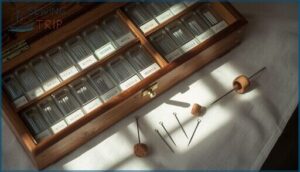
Your needles won’t do you much good if they’re rusty, bent, or lost in the bottom of your sewing basket. Proper storage and care keeps them sharp, safe, and ready when you need them.
Here’s how to organize your needles, protect them from damage, and know when it’s time to toss them out.
Organizing Needles by Type and Size
Your sewing efficiency depends on smart organization systems that keep needles where you can grab them fast. Storage solutions that separate by classification make every project smoother—no more hunting through jumbled sewing supplies!
- Sort by type: Group sharps, embroidery, and quilting needles in labeled sections of your sewing kit
- Arrange by size: Use color-coded bands or numbered compartments for quick identification
- Separate hand from machine: Keep these sewing tools in distinct pouches to prevent bending
Preventing Rust and Damage
Without proper protection, your needles will turn into rusty relics faster than you’d think! Apply a thin layer of light machine oil or silicone spray to metal surfaces in your sewing kit—this simple coating creates a moisture barrier that stops corrosion before it starts.
Store these essential sewing tools in airtight containers away from humidity, and you’ll keep your sewing supplies in spotless condition for years.
Safe Disposal of Used Needles
When your needles bend or break, proper disposal protects everyone around you. Never toss damaged needles into regular trash—they can pierce bags and injure sanitation workers!
Here’s how to handle needle safety and waste management:
- Use FDA-cleared sharps containers for secure storage of all used sewing needles
- Place each needle immediately into the container after it breaks or dulls
- Keep containers upright and sealed between uses to prevent spills
- Follow local disposal regulations for drop-off sites or mail-back programs
- Never overfill—replace when three-quarters full
Your sewing kit deserves smart sewing notions and sewing tools that last, but broken ones need responsible handling!
Signs It’s Time to Replace Needles
Precision suffers when you ignore needle wear. Replace your sewing needles after eight hours of machine use or when switching fabrics. Watch for bent shafts, rounded tips, or thread fraying—these signal it’s time! Poor stitch quality and fabric damage mean your needle’s toast.
Smart replacement schedules protect your projects and keep your sewing kit performing like new.
Top Products for Needle Organization and Use
Having the right needles is only half the battle—you also need tools that keep them organized and make your sewing projects run smoothly.
A well-stocked kit includes storage solutions that protect your needles and accessories that improve your work. Here are the top products that’ll help you organize your needles and boost your sewing experience.
1. Sewing Kit Storage Box Organizer
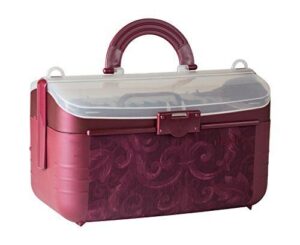
A good storage box keeps your needles safe and your workspace sane! This organizer features a transparent lid and removable tray with compartments, making it easy to spot what you need.
At 14.02 x 6.5 x 6.5 inches, it holds threads, scissors, and all your essential tools in one sturdy plastic container. The snap closure keeps everything secure, while the foldable handle lets you carry your kit anywhere.
Available in red and blue with a cute floral design—practical meets pretty!
| Best For | Sewers who want a portable, organized solution for storing threads, needles, scissors, and other essentials in one easy-to-carry case. |
|---|---|
| Primary Material | Plastic |
| Weight | 2.55 pounds |
| Primary Use | Sewing storage |
| Portability | Portable with handle |
| Skill Level | All levels |
| Country Origin | Not specified |
| Additional Features |
|
- Transparent lid and removable compartment tray make it easy to find what you need at a glance
- Foldable handle and snap closure make it secure and portable for travel or moving between workspaces
- Decent storage capacity with a cute floral design that looks good on your craft table
- Price point may be higher than some users expect for a plastic organizer
- Limited space for storing small thread spools compared to larger storage systems
- Fabric decoration quality can be inconsistent, and the box may look cheaper in person than in photos
2. Brother Sewing And Quilting Machine
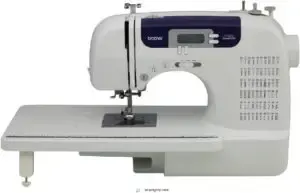
Your sewing kit deserves a partner that grows with your skills! The Brother CS6000i brings 60 built-in stitches—decorative options, utility basics, and seven one-step buttonholes—to life on a bright 2.0″ LCD screen.
It threads needles automatically and sews everything from delicate fabrics to vinyl with nine included feet. At just 13 pounds, you’ll carry it easily to classes or craft nights.
The wide table? Perfect for sprawling quilts. It’s beginner-friendly but packed with features you won’t outgrow.
| Best For | Beginners and intermediate sewists who want room to grow, especially if you’re into quilting or need a portable machine for classes. |
|---|---|
| Primary Material | Aluminum and Plastic |
| Weight | 13 pounds |
| Primary Use | Sewing and quilting |
| Portability | Portable, 13 lbs |
| Skill Level | Beginner to experienced |
| Country Origin | Not specified |
| Additional Features |
|
- 60 stitches and automatic features (needle threader, one-step buttonholes) make complex projects surprisingly easy
- Wide table and free arm give you flexibility for everything from quilts to pants hems
- Lightweight at 13 pounds with a 25-year warranty, so you’re covered for the long haul
- Plastic construction raises durability concerns—some users report issues after extended use
- Included case feels flimsy and may not protect the machine well during transport
- You’ll need to budget for extras like quality thread, needles, and possibly a sturdier carrying case
3. Kai Bent Handle Scissors
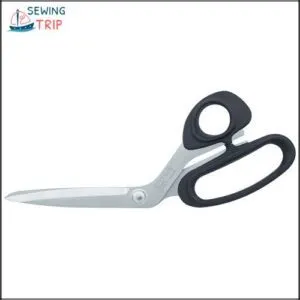
Your fabric won’t lie flat when you’re wrestling awkward shears! That’s why the Kai 9-inch bent handle scissors change everything—the angled grip keeps your hand above the cutting surface while fabric stays put on your table.
Those stainless steel blades slice through multiple layers without snagging, and at just 4.8 ounces, your wrist won’t ache after an hour of cutting. The soft grip feels natural even if you’ve got arthritis. They’re sharper than you’d expect and stay that way.
| Best For | Sewers, quilters, and crafters who need precision cuts through multiple fabric layers, especially those with arthritis or hand strength issues. |
|---|---|
| Primary Material | Stainless Steel |
| Weight | 4.8 ounces |
| Primary Use | Fabric cutting |
| Portability | Lightweight, portable |
| Skill Level | All levels |
| Country Origin | Japan/Vietnam |
| Additional Features |
|
- Bent handle design keeps fabric flat on your cutting surface for cleaner, more accurate cuts
- Sharp stainless steel blades slice through multiple layers without effort
- Lightweight at 4.8 ounces with a comfortable grip that reduces hand fatigue
- Large 9-inch size may be awkward for people with smaller hands
- Higher price point compared to standard fabric scissors
- Conflicting product information about country of origin (Japan vs. Vietnam)
4. Wintape Mini Retractable Tape Measure
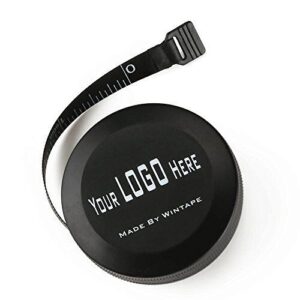
You can’t eyeball a hem and expect it to turn out straight! The Wintape Mini Retractable Tape Measure fits right in your pocket at just 2.3 inches wide, and that 60-inch blade gives you enough length for most sewing tasks without the bulk of a traditional tape.
The lock button holds your measurement steady while you transfer it to fabric. Black markings on the yellow blade won’t make you squint, and at 60 grams, it won’t weigh down your kit.
| Best For | Sewers and crafters who need a compact, portable tape measure that won’t take up space in their project bag. |
|---|---|
| Primary Material | Plastic |
| Weight | Not specified |
| Primary Use | Measuring |
| Portability | Compact, retractable |
| Skill Level | All levels |
| Country Origin | Not specified |
| Additional Features |
|
- Lightweight at 60 grams and pocket-sized at 2.3 inches, making it easy to carry anywhere
- Lock button keeps measurements in place while you work
- Clear yellow blade with black markings is easy to read without straining your eyes
- Some users reported the build quality feels cheap
- Durability concerns based on mixed customer experiences
- Customer service issues mentioned in reviews
5. Sewing Machine Needles Assortment Set
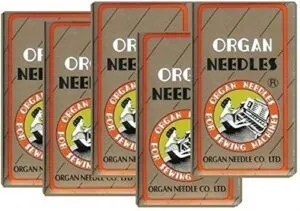
Once you’ve got your measurements, you need needles that match every fabric challenge. The MSB Sewing Machine Needles Assortment Set delivers 50 needles across five sizes—9, 11, 14, 16, and 18—so you’re ready whether you’re stitching silk or denim.
Ten needles per size means you won’t run out mid-project, and the flat-back shank fits most domestic machines. At 75 millimeters long with regular points, these adaptable needles handle everything from lightweight cottons to heavier blends without breaking your budget.
| Best For | Home sewers who work with different fabric types and want an affordable variety pack to handle everyday projects. |
|---|---|
| Primary Material | Metal |
| Weight | Minimal |
| Primary Use | Machine sewing |
| Portability | Stationary |
| Skill Level | All levels |
| Country Origin | Not specified |
| Additional Features |
|
- Includes 50 needles across five standard sizes (9, 11, 14, 16, 18) with 10 per size, so you won’t run out quickly
- Compatible with most domestic sewing machines thanks to the flat-back shank design
- Budget-friendly price for an all-purpose assortment that covers lightweight to medium-heavy fabrics
- Not designed for industrial machines or heavy-duty professional work
- Quality might not match premium needle brands, and some users report breakage
- Limited to standard sizes only—no specialty or heavy-duty options included
6. Distinctive Brother Sewing Machine Bobbins
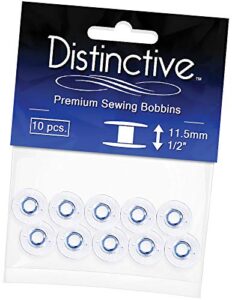
Needles need smooth thread flow from top and bottom—that’s where your bobbins come in. Distinctive Brother Sewing Machine Bobbins are molded plastic Class 15 bobbins designed to reduce wear on your bobbin case while maintaining consistent tension across cotton, polyester, and decorative threads.
The 10-pack fits over 100 Brother models, including Innov-is and Ninja 15 machines, and each bobbin features clear labeling so you’ll never guess compatibility.
Properly matched bobbins prevent bird-nesting and skipped stitches, keeping your projects frustration-free.
| Best For | Brother sewing machine owners who need reliable replacement bobbins for everyday sewing, quilting, and embroidery projects across compatible models. |
|---|---|
| Primary Material | Plastic |
| Weight | Not specified |
| Primary Use | Bobbin replacement |
| Portability | Small, portable |
| Skill Level | All levels |
| Country Origin | Not specified |
| Additional Features |
|
- Compatible with over 100 Brother machine models, including popular Innov-is and Ninja 15 series
- Molded plastic construction reduces bobbin case wear while maintaining consistent thread tension
- Clear compatibility labeling helps prevent guesswork and ensures proper fit
- Only works with Brother machines that accept Style SA156 bobbins—not universal
- No warranty or return policy details mentioned in product information
- Some customer reviews indicate potential quality or performance inconsistencies
7. Dritz See Thru Dressmakers Ruler
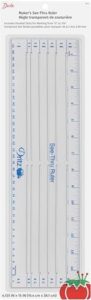
Once your needles and bobbins are ready, you’ll need to mark your fabric with accuracy—that’s where the Dritz See Thru Dressmakers Ruler earns its place. This 4″ x 15″ clear plastic tool features five parallel slots ranging from 1/4 inch to 3-3/8 inch, perfect for marking buttonholes, pockets, and pleats with consistent spacing.
The see-through design lets you trace directly over pattern lines without guesswork, while inch and centimeter graduations keep measurements precise. It’s lightweight, won’t snag delicate fabrics, and manages everything from bias strips to decorative stitching guides!
| Best For | Sewers who need precise, repeatable measurements for buttonholes, pleats, and pattern markings without losing sight of their fabric lines. |
|---|---|
| Primary Material | Plastic |
| Weight | Not specified |
| Primary Use | Marking and measuring |
| Portability | Portable |
| Skill Level | All levels |
| Country Origin | Not specified |
| Additional Features |
|
- Clear design lets you see exactly what you’re marking without lifting the ruler
- Five parallel slots make spacing buttonholes and pockets dead simple
- Dual graduations (inches and centimeters) cover most pattern needs
- Ships damaged or cracked more often than it should
- 15-inch length won’t cut it for larger quilting or home dec projects
- Lightweight plastic feels a bit flimsy if you’re used to heavier rulers
8. Turn It All Sewing Tool
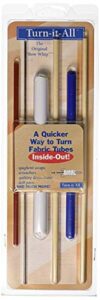
After measuring and marking your fabric, you’ll want the Turn It All Sewing Tool to transform narrow strips into smooth tubes without the headache. This clever set includes three plastic tubes and a dowel to flip bag grips, doll limbs, and spaghetti straps right-side out in seconds.
The different sizes handle lightweight to medium fabrics beautifully, cutting down tedious hand-turning time while preventing fraying. Made in the USA at just 2.1 ounces, it’s perfect for quilters and purse makers who want consistent, professional-looking straps every time!
| Best For | Quilters, bag makers, and crafters who frequently work with narrow fabric tubes like straps, ties, or doll parts and want a faster, easier way to turn them right-side out. |
|---|---|
| Primary Material | Plastic |
| Weight | 2.1 ounces |
| Primary Use | Turning fabric tubes |
| Portability | Lightweight, portable |
| Skill Level | Intermediate to advanced |
| Country Origin | USA |
| Additional Features |
|
- Three different tube sizes handle everything from delicate spaghetti straps to medium-weight fabric tubes
- Makes turning narrow fabric quick and painless, especially helpful if you have arthritis or grip issues
- Lightweight USA-made tool that prevents fabric fraying and creates professional-looking results
- The smallest tube only works with very thin fabrics, limiting its range
- You need a steady hand with the dowel to avoid poking holes through delicate material
- Missing a mid-range size between the smallest and middle tubes that would fill a common gap
9. Tailor’s Wooden Clapper Tool
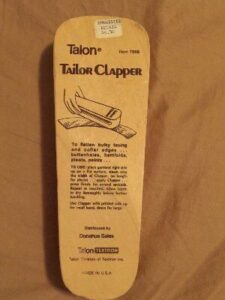
When pressing seams for quilts or waxed canvas, the Tailor’s Wooden Clapper Tool becomes your secret weapon for crisp, professional creases. This 9.3 x 4.3 x 2-inch hardwood block traps steam and heat right where you need it, setting seams that actually last!
The grooved sides make gripping easy, and at 15.2 ounces, it’s got enough heft to flatten stubborn fabrics without shifting.
Perfect for altering jeans or giving custom-fitted garments that couture finish—no more wrestling with irons alone!
| Best For | Sewers, quilters, and tailors who want professional-looking creases and perfectly set seams without relying on the iron alone. |
|---|---|
| Primary Material | Wood |
| Weight | 15.2 ounces |
| Primary Use | Pressing creases |
| Portability | Stationary |
| Skill Level | All levels |
| Country Origin | Not specified |
| Additional Features |
|
- Creates sharp, long-lasting creases by trapping steam and heat directly on fabric
- Grooved sides provide a comfortable, secure grip during use
- Works great on tough materials like waxed canvas and denim that need extra pressing power
- Some users find the price point higher than expected for a wooden block
- Wood may arrive with rough edges that require light sanding before use
- Pricing varies significantly depending on where you purchase it
Frequently Asked Questions (FAQs)
Can I use machine needles for hand sewing?
You shouldn’t use machine needles for hand sewing. They have smaller eyes that make threading difficult, and their shaft design feels awkward in your fingers, leading to frustration and potential fabric damage.
How often should needles be replaced during projects?
Keeping your stitches sharp starts with a simple rule: swap machine needles after every project or every 5 to 6 hours of use to prevent skipped stitches and fabric snags!
What causes needles to break while sewing fabric?
Needles break when you use the wrong type for your fabric, push material too hard, or sew with a bent or dull needle that can’t handle the stress.
Should beginners buy individual needles or assortment packs?
Starting out? Grab an assortment pack! You’ll explore which needles fit your projects without breaking the bank. As your skills grow, you can add individual premium needles for specialized tasks.
Conclusion
Like a carpenter who’d never show up with just one drill bit, you shouldn’t tackle projects with a single needle type. Building what needles to include in a sewing kit means stocking adaptable basics—universals, sharps, and heavy-duty options—alongside a few specialty choices for those curveball fabrics.
Organize them properly, replace them before they betray you mid-seam, and you’ll transform frustrating moments into smooth sailing. Your collection becomes the quiet confidence behind every finished project.
- https://www.montavillasewing.com/blog/what-to-expect-in-your-first-quilting-class
- https://www.mhthread.com/blog/products/sewing-thread-needle-size-chart
- https://www.tolindsewmach.com/thread-chart.html
- https://richword.com/blogs/news/how-can-embroidery-threads-of-different-materials-and-specifications-be-paired-with-different-types-of-needles
- https://www.hooptalent.com/da/blogs/news/ultimate-needle-chart-guide-sizes-types-thread-matching-troubleshooting