This site is supported by our readers. We may earn a commission, at no cost to you, if you purchase through links.
You grab your sewing machine, ready to tackle that new project, and suddenly freeze. Which presser foot should you use? That innocent-looking metal piece determines whether your seams lie flat or pucker, whether your zipper sits invisibly or screams “homemade disaster.”
Most sewers own at least a dozen presser feet but only use two or three—because nobody actually explained what those mysterious attachments do! Here’s the truth: matching the right foot to your fabric and technique transforms frustrating projects into professional results. Once you understand how each foot works (and why it matters), you’ll wonder how you ever managed with just the standard zigzag foot.
Table Of Contents
- Key Takeaways
- What is a Presser Foot Used For?
- How Do I Choose The Right Presser Foot?
- Presser Feet Every Sewer Should Know
- Specialty Presser Feet and Their Uses
- Presser Feet for Quilting and Embroidery
- How to Identify Compatible Presser Feet
- Changing and Installing Presser Feet
- Where to Buy and Expand Your Presser Foot Collection
- Frequently Asked Questions (FAQs)
- Conclusion
Key Takeaways
- Presser feet determine stitch quality and fabric handling by controlling feed, preventing puckering, and maintaining seam alignment—matching the right foot to your fabric and technique transforms amateur projects into professional results.
- Four essential feet handle 90% of everyday sewing: the standard/zigzag foot for basic seams, straight stitch foot for delicate fabrics, zipper foot for close stitching near teeth, and buttonhole foot for uniform closures.
- Specialty feet like walking feet (for thick layers), hemmer feet (for rolled edges), and gathering feet (for ruffles) solve specific challenges that would be nightmares with standard attachments.
- Check your machine’s shank type (low vs. high) and attachment method (snap-on vs. screw-on) before buying presser feet—using incompatible feet risks needle strikes, broken parts, and machine damage.
What is a Presser Foot Used For?
Think of the presser foot as your sewing machine’s helping hand. It holds fabric steady as you stitch, guides it through smoothly, and ensures every stitch comes out just right.
Without proper tension settings, even the best presser foot can’t prevent skipped stitches—check out this serger thread guide tutorial to get both working together perfectly.
Let’s break down exactly what this small but mighty tool does for your projects.
If you’re looking for inspiration to get started, check out these small sewing project ideas perfect for selling that work great for beginners and pros alike.
Role in Fabric Handling
Your presser foot isn’t just holding fabric down—it’s your secret weapon for fabric guidance and seam alignment! As fabric glides along the feed dogs, the right foot prevents fabric slippage and controls those annoying puckering issues.
Before you start stitching, remember that proper fabric preparation prevents post-wash surprises that could throw off your carefully aligned seams.
Think of it as your fabric handling partner, creating consistent feed patterns that keep everything moving smoothly. Different sewing machine feet and quilting feet give you total control over fabric sewing and handling.
Choosing the best sewing machine foot for quilting ensures your fabric feeds evenly and your stitches stay precise from start to finish.
Impact on Stitch Quality
Here’s the thing—the foot you choose shapes every single stitch! Stitch consistency depends on how your presser foot controls fabric drag across the throat plate. Poor edge guidance? Your straight stitch wanders off course. The right foot keeps loop formation perfect and maintains stitch balance, whether you’re doing zig zag stitches or precision seams.
Your presser foot choice determines every stitch—the right one prevents fabric drag, keeps seams straight, and maintains perfect stitch balance
How Your Presser Foot Affects Stitch Quality:
- Consistent feeding prevents uneven stitches that ruin professional-looking seams
- Proper fabric control stops puckering before it even starts (total transformation!)
- Accurate stitch guide alignment delivers straight, beautiful topstitching every time
- Balanced tension across the fabric creates uniform decorative stitches
- Reduced distortion means your seams stay flat and smooth on any sewing machine
Types of Presser Foot Attachments
Your sewing machine feet connect through two main attachment methods. Snap-on presser foot designs click instantly onto the shank—super convenient! Screw-on types need manual fastening but offer rock-solid stability.
Most machines use low shank compatibility, while vintage models require high shank variants. Presser foot materials range from standard metal to Teflon-coated plastic. Walking foot, zipper foot, and quilting feet all follow these attachment standards for smooth foot interchangeability.
| Attachment Type | Best For |
|---|---|
| Snap-on | Quick changes, modern machines |
| Screw-on | Secure hold, heavy-duty work |
| Low Shank | Most standard sewing machine compatibility |
How Do I Choose The Right Presser Foot?
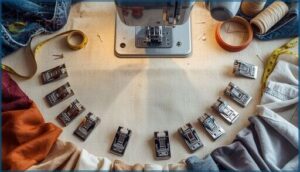
Choosing the right presser foot isn’t guesswork—it’s about matching the tool to the job. You need to think about what you’re sewing, what fabric you’re working with, and whether the foot will even fit your machine.
Let’s break down the three key factors that’ll help you pick the perfect presser foot every time.
Matching Foot to Sewing Task
Your project drives your presser foot choice—it’s that simple!
When quilting multiple layers, grab a walking foot to prevent shifting and maintain machine efficiency. Attaching zippers? Use a zipper foot for close stitching. Buttonholes demand a buttonhole foot with proper stitch optimization.
Each sewing task needs specific fabric guidance, so match your sewing machine feet to what you’re creating (not what’s already on your machine).
Considering Fabric Type
Cotton and linen work best with standard presser feet that prevent puckering. Delicate knits require a walking foot to avoid stretching.
For intricate quilting designs, a free motion sewing machine gives you complete control to stitch curves and elaborate patterns with ease.
Leather and vinyl need teflon-coated feet for smooth fabric sewing without sticking (trust me on this one!).
Heavy denim requires a walking foot paired with the right needle types and stitch length.
Match your presser foot and sewing machine setup to your fabric selection—not the other way around.
Checking Machine Compatibility
Your machine manual holds the key to matching presser feet correctly. Check for shank types—low or high—listed in the compatibility charts. Most domestic machines use snap-on attachment systems, but verify yours first.
Foot adapters can bridge some gaps, but they’re not foolproof.
When expanding your sewing machine accessories collection, cross-reference model numbers before buying. This simple sewing machine maintenance step prevents costly mistakes!
Presser Feet Every Sewer Should Know
You can’t master every presser foot at once, and honestly, you don’t need to. There are four essential feet that’ll handle about 90% of your everyday sewing projects.
Think of these as your core toolkit—the ones you’ll reach for again and again.
Standard/Zigzag Foot
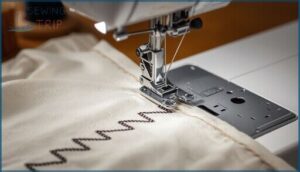
Think of this foot as your everyday workhorse—it came with your sewing machine for a reason.
The standard/zigzag foot manages straight stitch and zig zag work beautifully on most woven fabrics, thanks to its wide opening that allows stitch width control.
You’ll get consistent presser foot alignment and fabric guidance for seams, plus it maintains zigzag stitch quality without the fuss of switching to specialized attachments.
Straight Stitch Foot
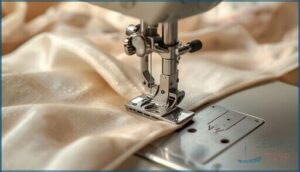
When you’re working with delicate silks or lightweight cottons that pucker under your standard foot, it’s time to reach for the straight stitch foot.
This presser foot has a small needle opening that holds fabric right up to the needle, preventing it from being pulled down into the needle plate.
You’ll see immediate improvements in sewing accuracy and stitch precision—especially on tricky, thin materials that need extra guidance.
Zipper Foot
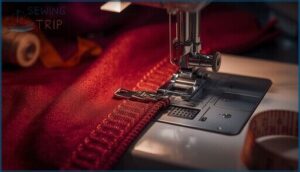
You can’t sew zippers without fighting the bulk—unless you’re using the right presser foot. A zipper foot has a narrow profile that lets your needle stitch super close to the zipper teeth without hitting them.
You’ll find adjustable versions that shift left or right for perfect zipper alignment, making centered or lapped applications way easier.
Clean lint from the foot edge after every project to keep it accurate!
Buttonhole Foot
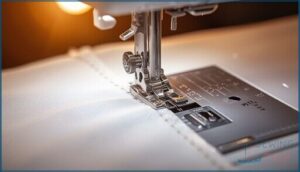
You’ll never hand-sew a buttonhole again once you master this presser foot! The buttonhole foot guides fabric evenly around the needle path, keeping stitch alignment consistent. Most models work with standard zigzag stitches and include marked guides for uniform length.
Always test buttonhole settings on scrap fabric first—this calibrates stitch density for your fabric thickness and ensures sewing accuracy before touching your actual project.
Specialty Presser Feet and Their Uses
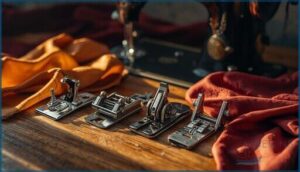
Once you’ve mastered the basics, it’s time to level up your sewing game with specialty feet. These aren’t your everyday tools—they’re designed to tackle specific jobs that would be a nightmare with a standard foot.
Let’s walk through five specialty presser feet that’ll make you wonder how you ever lived without them.
Invisible Zipper Foot
The invisible zipper foot is your secret weapon for creating those smooth, professional closures that disappear right into the seam—no clunky bumps or visible stitching lines to give away your handiwork.
This specialized presser foot unzips fabric selection mysteries with precise foot adjustment capabilities:
- Guides zipper teeth directly under your needle
- Works with standard sewing machine zipper installation
- Features dual grooves for proper zipper types alignment
- Eliminates bulk through expert sewing techniques
- Creates impeccable invisible closures every time
Walking Foot
If you’ve ever wrestled with layers of fabric that slide apart like they’re trying to escape your machine, you need a walking foot in your life. This heavy duty presser foot grabs multiple layers and feeds them through evenly—no more shifting or puckering.
It’s essential for thick fabric projects like quilts, where fabric control makes the difference between amateur and professional results. Your sewing machine just became way more capable!
Hemmer Foot
Want razor-sharp hems without hand-folding fabric? Your hemmer foot curls lightweight material—chiffon, silk, lawn—into a perfect rolled edge as you stitch.
This presser foot guides fabric toward the needle with its curved profile, giving you consistent hem edge control and professional fabric folding every time.
It’s a breakthrough for garment construction and sewing delicate pieces where edge finishing matters most!
Gathering Foot
Ruffles bring that dreamy flair to your projects—and your gathering foot makes it happen without endless hand-basting! This presser foot creates uniform fabric ruffles while you stitch, giving you complete gather control through adjustable guides that manage gather density.
You’ll master sewing gathered seams on cottons and silks in minutes (yes, minutes!). For anyone exploring sophisticated sewing techniques and tips, this specialized presser foot transforms your sewing machine into a ruffle-making powerhouse.
Open Toe Foot
Visibility matters when you’re placing appliqués or tackling intricate decorative stitching! Your open toe presser foot features an exposed front edge that lets you see exactly where your needle lands, giving you perfect stitch precision every time.
- Offers excellent toe visibility for detailed appliqué work and embroidery
- Provides excellent edge control on fine or dense fabrics without bulk
- Ensures accurate fabric guidance during freehand embroidery sessions
- Works with most low-shank sewing machine presser feet configurations
- Delivers professional results on decorative stitches and precise topstitching
Presser Feet for Quilting and Embroidery
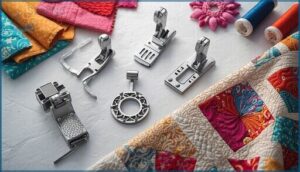
Quilting and embroidery work demands presser feet that can handle precision, curves, and creative stitching. You’ll need different feet depending on whether you’re piecing together quilt blocks, doing free-motion designs, or adding decorative touches.
Here are the essential presser feet that’ll take your quilting and embroidery projects from good to absolutely stunning.
1/4” Quilting Foot
Your patchwork blocks need perfect seams every single time—that’s where the 1/4″ Quilting Foot shines. This specialized presser foot maintains an exact 1/4 inch seam allowance, essential for quilting accuracy and stitch precision.
The built-in guide aligns with your fabric edge, eliminating guesswork in fabric guidance. Most low-shank sewing machines accept snap-on versions, making this essential tool accessible for quilters mastering precise quilting techniques.
Free Motion/Darning Foot
Free Motion Quilting transforms your sewing machine into an artist’s canvas! The Darning Foot liberates your needle from those rigid feed dogs, letting you create custom Quilting Patterns and intricate Embroidery Stitches through complete Fabric Manipulation control.
- Spring-loaded sole reduces pressure for smooth fabric movement
- Open toe design ensures clear visibility during stitching
- Compatible with most low-shank domestic machines
- Essential for meandering and creative Darning Techniques
- Facilitates independent needle movement for artistic Free Motion work
Appliqué Foot
The Appliqué Foot gives you laser-sharp Stitch Visibility around those tricky curves! This specialized attachment from your Sewing Machine Presser Feet Guide collection features an open toe design that perfects Edge Control during complex Appliqué Techniques.
You’ll master Curved Seaming with confidence as the Applique Stitch Foot provides exceptional Fabric Guidance—whether you’re working blanket stitches or satin edges on your Sewing Machine. (No more guessing where your needle lands!)
Satin Stitch Foot
The Satin Stitch Foot transforms dense zigzag stitching into smooth excellence! This specialized Presser Feet attachment features a wide groove underneath that accommodates heavy Stitch Density without bunching.
You’ll achieve exceptional Edge Control and Fabric Guidance on your Sewing Machine—ideal for monograms and decorative borders. (Simple Foot Adjustment prevents puckering!) Like the Applique Stitch Foot, it’s essential in your Sewing Machine Presser Feet Guide collection.
How to Identify Compatible Presser Feet
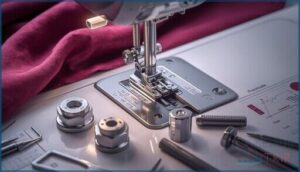
You can’t just grab any presser foot off the shelf and expect it to work with your machine. Compatibility matters more than most sewers realize (trust me on this one).
Let’s break down the three key factors that determine whether a presser foot will fit your sewing machine or end up collecting dust in your drawer.
Snap-on Vs. Screw-on Types
Most presser feet attach one of two ways: snap-on or screw-on. Snap-on feet click into place on a shank adapter—no tools needed—making foot changes quick and easy. Screw-on feet require loosening and tightening a screw each time you switch (slightly slower, but rock-solid).
Modern machines usually use snap-on, while vintage and industrial models often stick with screw types. For best sewing results, understanding the presser foot options is essential.
Low Shank Vs. High Shank
Beyond attachment style, shank height matters even more for foot compatibility. Most home sewing machines are low shank—measuring about half an inch from the presser bar to the needle plate. High shank machines (around one inch) are usually industrial or high-end embroidery models.
You can’t swap feet between them without an adapter, so check your machine’s shank type before shopping for presser feet or quilting feet! Understanding the correct shank height guide is essential for choosing the right accessories.
Manufacturer Compatibility Guides
Once you know your shank type, head to your sewing machine manufacturer’s website for brand charts and compatibility tools. Brother and Janome publish detailed lists showing which presser feet and quilting feet work with each model. Many retailers offer cross-brand guides too!
Don’t skip this step—using wrong feet can trigger warranty considerations and damage your machine. Shank adapters expand options if needed.
Changing and Installing Presser Feet
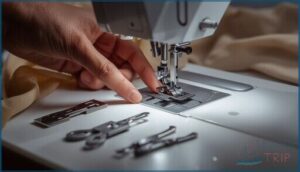
Changing your presser foot doesn’t have to feel like brain surgery. Once you know the basic steps, you’ll swap feet faster than you can thread a needle (okay, maybe not that fast).
Let’s walk through the attachment process, safety tips, and quick fixes for when things don’t click into place.
Step-by-Step Attachment Process
Switching presser feet doesn’t have to feel like defusing a bomb! Once you know the drill, attachment safety becomes second nature. Here’s your foolproof sequence:
- Power down and raise everything – Turn off your machine, crank the handwheel to lift the needle high, then raise the presser bar fully (this gives you room to work).
- Release the old foot – For snap-on types, press the lever release button and catch the foot as it drops. Screw-on presser feet need that tiny screwdriver to loosen the side screw before sliding off.
- Attach the new foot – Snap-on? Slide the foot’s bar under the holder and lower the lever until you hear a satisfying click. Screw-on or walking foot? Position it around the shank, check foot alignment, then do proper screw tightening until snug.
Always hand-crank the wheel afterward to confirm shank compatibility and verify your needle won’t smack the foot. (Trust me, that metallic ping isn’t the sound of success!) Test on scrap fabric before diving into your project—these sewing hacks and tricks save both time and heartache.
Tips for Safe Handling
Your fingers should never play chicken with the needle! Keep them at least one inch from the presser foot while you sew—that safe zone is accident prevention in action.
Always turn off your machine before swapping feet or adjusting anything near the needle area. (Accidental pedal taps have sent plenty of folks to the ER!)
Consider finger guards or needle protection attachments if you’re teaching kids these essential sewing tips.
Troubleshooting Common Issues
When things go sideways with your presser foot, don’t panic—most problems have quick fixes:
- Skipped Stitches – Check thread tension and lower that presser foot pressure slightly so fabric makes solid contact with the feed dogs.
- Fabric Puckering – You’ve cranked the pressure too high; dial it back for smoother feeding.
- Needle Breakage – Misalignment or too much pressure at seam bumps causes this. Reduce pressure when crossing thick layers.
- Presser Foot Noise – Generic feet click and wobble. Make sure yours snaps in completely!
Where to Buy and Expand Your Presser Foot Collection
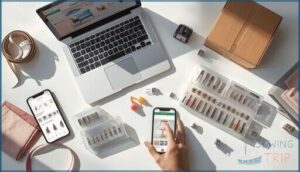
You’ve mastered the art of choosing and installing presser feet—now let’s talk about where to actually get them. Knowing which retailers carry quality feet and whether to buy sets or singles can save you time and money.
Here’s what you need to keep in mind when expanding your collection.
Recommended Retailers and Brands
You’ll find genuine presser feet at authorized dealers—think Ken’s Sewing Center for Bernina, or direct from Singer, Brother, Janome, Pfaff, Husqvarna Viking, and Baby Lock. Their customer support and warranty options beat generic sellers hands down.
Want broad compatibility? MadamSew and Sew Much Easier offer universal low-shank sets with solid product quality and retailer reviews backing their multi-brand claims.
Presser Foot Sets Vs. Individual Purchase
Starter sets tempt you with variety, but here’s the truth—most sewers only reach for three or four feet regularly. Cost comparison shows individual purchase wins for targeted needs.
Bundle savings make sense if you’re exploring techniques like quilting (grab that walking foot!). But foot storage becomes a headache with unused sewing machine attachments collecting dust.
Purchase prioritization beats set versatility every time—buy what you’ll actually use.
Evaluating Quality and Materials
Not all presser feet are built to last! Material durability matters—look for stainless steel or nickel-plated brass for solid corrosion resistance. Check the sole design: smooth, polished surfaces glide better than scratched metal.
Surface finish quality shows up fast (Teflon coatings rock for vinyl!). Manufacturing quality separates reliable sewing accessories from cheap sewing notions that fail mid-project.
Frequently Asked Questions (FAQs)
Can I use presser feet from different brands?
Yes, but tread carefully! Low shank machines from Brother, Singer, and Janome often share universal feet.
Always check shank type and use proper adapters—wrong combinations risk needle strikes and broken parts.
How do I clean and maintain presser feet?
Wipe your presser feet after every project with mild dish soap and warm water. Dry them completely to prevent rust.
Store in labeled containers away from humidity, and inspect regularly for burrs or damage.
What happens if I use the wrong foot?
Mistakes multiply fast! Wrong presser feet wreak havoc—causing needle breakage, fabric damage, and poor stitch quality.
You’ll see skipped stitches, puckering, and feeding problems that compromise both machine safety and your seam’s durability.
Are there presser feet for leather or vinyl?
Teflon or roller feet glide over sticky surfaces without drag. They’re essential for leather sewing, vinyl stitches, and heavy-duty feet needs.
These thick fabric guides make synthetic material handling and upholstery work much easier.
Do I need different feet for thick fabrics?
When tackling thick denim or canvas, standard feet struggle with bulky seams.
A Walking Foot levels layers smoothly, while a Teflon Foot glides over sticky vinyl—essential upgrades for Heavy Duty Sewing success!
Conclusion
The right presser foot puts you on the right footing for every project. Now that you know what presser foot you need for zippers, hems, quilting, and everything in between, those dusty attachments in your accessory box finally make sense!
Start with the basics—straight stitch, zipper, and buttonhole feet—then expand as your skills grow. Your machine came equipped to handle far more than you imagined. Time to use it.
- https://www.sewmucheasier.com/will-this-presser-foot-fit-my-sewing-machine/
- https://madamsew.com/blogs/sewing-blog/understanding-sewing-machine-shanks-presser-feet
- https://www.craftsy.com/post/sewing-machine-feet-types
- https://www.vintagesingerparts.com/blogs/sew-central/sewing-machine-presser-feet-a-comprehensive-guide
- https://topnotchsewvac.com/blogs/sewing-machine-blog/a-complete-sewing-machine-presser-foot-guide