This site is supported by our readers. We may earn a commission, at no cost to you, if you purchase through links.
The White Superlock 534 serger doesn’t chase trends. Metal frame. Four-thread overlock. Differential feed that actually works. This machine outlasted brands that promised easier threading and flashier controls, yet most sewers hunting for one today don’t realize what separated it from the disposable sergers flooding garage sales.
You’re looking at engineering from an era when a serger meant investment, not experiment—when stitch quality mattered more than the number of buttons on the face plate. Whether you’re comparing used market prices, decoding tension dials, or deciding if a vintage workhorse beats a modern plastic marvel, the 534’s specs tell a straightforward story about what lasts and what doesn’t.
Table Of Contents
Key Takeaways
- The White Superlock 534’s metal frame and four-thread overlock system represent old-school engineering that prioritizes durability over flashy features, making it a workhorse that outlasts modern plastic sergers in long-term reliability.
- Used market pricing ranges from $50 to $800 depending on condition, with fully functional units typically running $100-$260—a price point that reflects its proven value as vintage sewing equipment worth maintaining.
- The machine handles lightweight to medium fabrics exceptionally well through adjustable differential feed and tension controls, though it lacks modern conveniences like color-coded threading guides and requires hands-on skill development.
- Maintenance is straightforward—regular lint removal every 8-10 hours, strategic lubrication every 2-3 bobbin changes, and attention to tension settings keep this serger running for decades without the need for specialized repairs.
White Superlock 534 Serger Overview
The White Superlock 534 isn’t flashy, but it gets the job done. This machine has been around long enough to prove itself in real sewing rooms, not just on paper. The White Superlock 534 earns its reputation as a reliable overlock machine for heavy fabric in professional settings.
Let’s break down what you’re actually getting with this classic serger. Let’s break down what you’re actually getting with this classic serger and how it compares to your regular sewing machine.
Key Features and Specifications
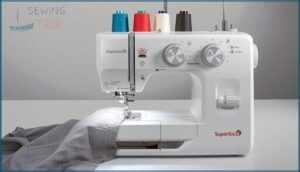
The White Superlock 534 delivers four-thread overlock stitches with adjustable stitch length and differential feed—essentials you’ll master quickly. This lockstitch sewing machine sales favorite manages varied serging techniques through thread options that suit knits and wovens alike. The White Superlock 534 offers versatile four-thread overlock capabilities, while industrial lockstitch machines excel at high-speed straight seaming.
Its metal frame anchors reliable sewing equipment performance, while standard electrical specs keep your workspace simple. You’re looking at classic White Superlock 534 engineering built for real-world serger work. The White Superlock 534’s metal frame exemplifies what makes strong sewing machine models dependable for demanding serger applications.
The serger’s performance can be enhanced by understanding methodological rigor in its design and functionality.
Stitch Options and Capabilities
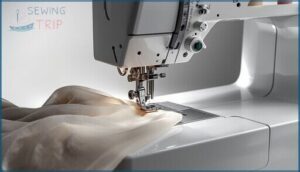
You’ll master three core sewing techniques here: overlock stitch, rolled hem, and flatlock options. For knit fabrics, three-thread overlock stitches create the perfect balance of seam flexibility and lightweight edge finishing.
Your serger accommodates one- to four-thread configurations, giving you flexibility across knits and wovens. Differential feed prevents puckering on tricky fabrics—essential for professional finishes.
While this overlock machine doesn’t include cover stitch capability, its threading versatility delivers clean seam construction every time.
Classic Design and Build Quality
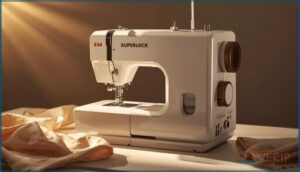
Metal frame. Sturdy stability. Threading paths minimize friction. Motor system balanced. Torque steady.
Your White SuperLock 534 serger uses engineered stitch plates. Presser feet align precisely. Fabric slippage reduced. Consistency improved.
Enclosure materials resist vibration. Durability rated high. This sewing machine built solid. Crafting tool that lasts. Sewing equipment designed right.
User Experiences and Performance
Real-world feedback tells you what this serger actually does on your table. Users report strengths, quirks, and how it holds up over years of stitching.
Here’s what owners experienced with fabric handling, learning curves, and long-term performance.
Handling Different Fabrics
You’ll find this serger manages lightweight knits beautifully when you narrow the stitch width and switch to a ballpoint needle. Fabric tension adjustments are critical—lower settings prevent puckering on cottons and silk, while heavier materials like denim demand increased stitch length.
Thread selection matters too; polyester works best for synthetics. Use fabric stabilizers on delicate wovens to avoid tunneling.
Edge finishing stays clean across different textiles with proper sewing techniques and garment construction principles.
Ease of Use for Beginners
Threading this serger initially challenges you—four-thread setups demand precision. User manuals clarify tension dials and stitch controls, though threading guides aren’t color-coded like modern machines.
Pedal ease matches standard sewing machine feel. Beginner modes don’t exist here; you’ll master threading through practice. Serger reviews confirm: expect a learning curve.
Once you grasp basic sewing techniques, it becomes second nature. You’re building real skill, not relying on automated shortcuts.
Once you learn the basics, you’re building real skill—not relying on automated shortcuts
Long-Term Reliability and Durability
You’ll find metal components in the drive system—cast frames and hardened needle plates resist daily wear. Serger reviews confirm decades of service when you follow maintenance schedules.
- Regular oiling prevents friction wear on timing mechanisms
- Hardened steel feed dogs maintain alignment under heavy fabrics
- Periodic belt checks avert cascading failures
Longevity factors hinge on your care. Durability tests show proper sewing machine maintenance extends lifespan beyond ten years—this workhorse rewards consistent attention.
Buying a White Superlock 534 Serger
Used White Superlock 534 machines sell between $50 and $800. Prices depend on condition, seller, location. You’ll find them on resale sites, community shops, authorized dealers.
Price Ranges for Used Models
You’ll find used White Superlock 534 sergers priced between $100 and $180 for basic working units. Mid-condition models with clean cosmetics typically run $180 to $260.
Machines lacking accessories or showing uncertain stitch quality range from $120 to $220.
Immaculate complete sets with manuals and extra feet occasionally reach $250 to $320, depending on seller credibility and local demand.
Where to Buy Online and Locally
You’ve got solid options across digital and brick-and-mortar channels. Start with eBay and Online Marketplaces offering Buy It Now listings—often shipped via USPS Priority Mail. Check the Online Crafting Market for private sales and Auction Sites with real-time bidding.
Don’t overlook Local Dealers and sewing shops for hands-on inspection. Refurbished Options from authorized centers provide peace of mind.
Online Shopping expands your reach beyond your zip code.
Evaluating Seller Reputation and Reviews
You want to dodge seller headaches? Start with Seller Ratings above 99%. Dig into Review Analysis—Verified Purchase feedback reveals whether that serger actually runs. Check Feedback Systems for Buyer Protection triggers, Online Marketplace Reputation Scores, and Seller Performance patterns.
Customer Satisfaction spikes when Seller Feedback spans 300+ transactions. Numbers don’t lie; vague photos and zero detail? Walk away fast.
Delivery Fees and Return Policies
Shipping costs range from $4.75 to $71.91, depending on the seller. Free delivery is available in some cases, so check before purchasing.
Return policies allow for thirty days to return items, provided they are in their original packaging and with proof of purchase. Be aware that some sellers charge restocking fees.
The eBay Money Back Guarantee covers most transactions, and free returns are offered by select sellers. For international orders, expect higher costs and stricter return windows.
Refund options include store credit or exchange. While packaging fees are rare, they are possible, so read the fine print on shipping and delivery before clicking Buy It Now.
Maintenance and Troubleshooting Tips
Keep your White Superlock 534 running smooth and you’ll get decades out of it. Regular upkeep isn’t complicated—just a few simple habits that prevent most headaches.
Here’s what you need to know to maintain your machine and tackle problems when they pop up.
Cleaning and Oiling Procedures
Precision is your serger’s lifeline. Keep your White Superlock 534 running smoothly with targeted serger maintenance and strategic oil change tips that prevent costly repairs.
- Establish your cleaning schedule: Remove lint from looper areas with a soft brush every 8–10 hours of use, ensuring lint removal before threading issues emerge.
- Master pivot point lubrication: Apply manufacturer-approved oil to moving metal parts every 2–3 bobbin changes, wiping excess to protect fabric.
- Test after maintenance: Run practice stitches on scrap material to verify smooth operation and tension consistency.
Common Issues and Solutions
Even with regular care, you’ll face occasional hiccups. Here’s your troubleshooting guide to master thread tension and stitch issues quickly.
| Problem | Likely Cause | Your Fix |
|---|---|---|
| Thread tension wonky | Incorrect threading path | Rethread each looper carefully |
| Skipped stitches appear | Dull or bent needle | Replace needle immediately |
| Fabric bunching occurs | Differential feed off | Adjust feed ratio setting |
| Edge threads loop | Tension discs dirty | Clean with soft brush |
Address these serger sewing machine challenges before they derail your project momentum.
Finding Replacement Parts and Accessories
Source your White 534 parts through OEM dealers specializing in vintage suppliers or legacy inventory vendors. Cross-reference model numbers with replacement guides before purchase.
Accessory kits bundle lubricant, needles, and waste bins. Presser feet—zipper, overedge, blind hem—work across compatible brands.
Tension discs, feed dogs, timing belts need exact 534 specs. Check sewing equipment deals for part compatibility verification.
Comparing The White Superlock 534 to Other Sergers
You’re weighing the 534 against newer machines. Smart move. Let’s break down how this classic stacks up on performance, project fit, and whether it holds its value.
Pros and Cons Versus Modern Sergers
When stacking the White Super Lock 534 against modern sergers in any serger comparison, you’ll notice trade-offs. Modern features like differential feed sharpen fabric handling and expand serging techniques, but cost efficiency tilts toward the 534.
Sewing machine reviews confirm it’s a workhorse for basic serging. Updated models offer broader capabilities yet demand steeper investment—your serger buying guide depends on project scope and sewing techniques and tips priorities.
Suitability for Different Sewing Projects
You’ll command lightweight to medium fabrics—cotton, silk blends, knits—with overlock seams that define garment construction. Thread management stays simple across three- and four-thread options, while textile finishing shines on T-shirts and activewear where fabric selection matters most.
- Edge finishing controls stretch without distortion when serging knits
- Differential feed prevents puckering during sewing techniques on softer materials
- Fewer decorative stitches limit fashion-forward textile finishing compared to modern sergers
Value for Money and Resale Considerations
Your investment drops 40–60% within five to eight years, but collector demand keeps resale values steady when you’ve maintained tension dials and original accessories. Price negotiation thrives in verified purchase forums where Buy It Now listings show market trends clearly.
| Factor | Impact on Resale |
|---|---|
| Complete parts/manual | Higher buyer confidence |
| Service history documented | Premium pricing justified |
| Third-party part access | Stronger used price stability |
Frequently Asked Questions (FAQs)
Does the White Superlock 534 have differential feed?
No, the White 534 lacks differential control. You won’t find feed mechanism adjustments in the manual or on the machine itself—fabric handling relies entirely on thread tension and your technique.
Can I find a manual for this serger?
You’ll find manuals online easily—digital copies appear on sewing forums, eBay, and Archive.org. PDF downloads work perfectly for threading and maintenance. Original prints run $6-$20 if you prefer physical repair guides.
For further assistance, refer to the vintage sewing resources for detailed information.
What thread brands work best with this model?
Your serger threading choices matter more than you’d think. Standard polyester from Gutermann or Coats Simplex delivers smooth fabric handling and solid tension settings.
Match needle selection to thread weight for balanced serger thread performance.
How do I adjust tension on the 534?
Turn the tension dials in small increments—start with the upper looper for thread control, then adjust needle tension for stitch balance. Test on scrap fabric after each change to verify results.
Is the 534 compatible with standard serger feet?
Foot compatibility follows fundamentals: your low shank, snap-on feet fit most generic serger accessories designed for overlock stitching.
Test presser foot alignment first—proper positioning prevents skipped stitches and maintains consistent tension during differential feed operations.
Conclusion
A million flashy sergers will come and go, but the White Superlock 534 serger stands unmoved—metal frame, proven differential feed, stitches that don’t quit. You’ve seen the specs, weighed the used-market realities, mapped out maintenance. Now you know what separates a tool from a gamble.
Whether you’re hunting one down or already threading bobbins, you’re holding engineering that refused to compromise. That’s not nostalgia. That’s simply what happens when function outlives hype.
- https://x.com/godofprompt/status/1990526288063324577
- https://www.ebay.com/itm/389183861981
- https://www.sewingpartsonline.com/products/instruction-manual-white-534-serger
- https://www.facebook.com/groups/231028183730700/posts/3136057179894438
- https://www.victoriansweatshop.com/post/sewing-machine-manuals-and-parts-lists-on-archive-org-12733747