This site is supported by our readers. We may earn a commission, at no cost to you, if you purchase through links.
A single yard of fabric can become a bag you’ll carry for years. That’s the quiet magic of tote bag sewing—small investment, big payoff, and a finished project you can actually use by tonight.
Most beginners don’t realize how forgiving these projects are. No complex curves, no tricky zippers to wrestle with, no pattern pieces that make your head spin.
Canvas, a straight stitch, and an afternoon are genuinely all you need to start.
Whether you’re chasing a quick one-hour win or ready to tackle a structured everyday bag with pockets and a clean lining, these sewing machine projects for tote bags meet you exactly where you are.
Table Of Contents
Key Takeaways
- Canvas is your go-to fabric for tote bags that actually hold their shape — 10 oz works for everyday use, while 12 oz handles books and groceries without sagging.
- You don’t need fancy tools or complex patterns to start; a straight stitch at 2.5 mm, the right needle for your fabric weight, and a walking foot will carry you through almost any tote project.
- One yard of fabric is genuinely enough to finish a functional bag in an afternoon, making tote sewing one of the fastest skill-builders in beginner sewing.
- Smart finishing details — like reinforced pocket openings, a boxed corner lining, and topstitching at 3–3.5 mm — are what turn a basic tote into something that feels store-bought.
Quick Tote Bag Projects
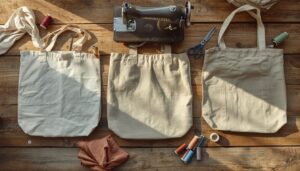
If you want a tote bag done fast, you’ve come to the right spot. These quick projects are built for real life — no complicated steps, no fancy supplies.
Grab a few fabric scraps and dive in — these beginner sewing project ideas and templates make it easy to build confidence one quick stitch at a time.
Here are some great options to get you started.
One Yard Magic Hobo Bag
One yard of fabric is all it takes to sew the One Yard Magic Hobo Bag — one of the best quick sewing tutorials out there.
Pick a medium to heavyweight cotton canvas for solid bag shape stabilization.
Follow step‑by‑step instructions to sew side seams, fold the hem, and attach straps.
Add topstitch design variations around the opening for a clean, polished finish.
Personalization options like charms make it truly yours.
You can also explore over 35 easy bag patterns designed for a single yard of fabric.
Easy Fold-Over Messenger Bag
Want a bag that does more than just hold your stuff? The Easy Fold-Over Messenger Bag is your answer. Its Weather Shield Flap keeps light rain off your things, while the Compact Compression Design packs flat when empty. Sew it in about an hour using canvas fabric on your sewing machine.
Follow these step-by-step instructions:
- Magnetic Snap Closure secures the flap fast
- Adjustable Shoulder Strap fits any body type
- Key Leash Attachment keeps keys within reach
- Fold-over flap adds 2–3 inches of coverage
- No interfacing needed — heavy fabric does the work
Canvas Book Bag
A canvas book bag is the workhorse of DIY tote bag tutorials with step-by-step instructions. Use 12–14 oz canvas for structure, then add rivet reinforcement at stress points so it won’t give out mid-commute.
| Feature | Option A | Option B |
|---|---|---|
| Handle Length Options | 20 inches | 26 inches |
| Weight Capacity | 15 books | 20 books |
| Reinforced Stitching | Single row | Double row |
| Rivet Reinforcement | Copper rivets | Steel rivets |
| Key Leash Feature | Interior clip | D-ring loop |
Your sewing machine manages this beautifully with straight stitches throughout.
Fast One-hour Sewing Projects
If the canvas book bag felt like a workout, fast one-hour sewing projects are your breather.
These beginner-friendly tote bag designs rely on minimalist pattern design and speed stitch techniques — straight seams, no curves.
Grab pre-cut fabric packs, and efficient thread management keeps things moving.
Easy tote bag patterns like these use fast bagmaking projects using minimal fabric so you’re done before dinner.
No-interfacing Tote Bag Options
Skip the interfacing, and you’re not cutting corners — you’re sewing smarter. No-interfacing bag constructions work best with stiff fabric selection like canvas or heavy denim that naturally holds its shape.
For best results with those heavier fabrics, pair them with the right needle — this sewing machine needle size guide for fabric weight takes the guesswork out of it.
Skip the interfacing and sew smarter — stiff canvas or heavy denim holds its own shape naturally
Add reinforced box corners, cross-bar stitching on grips, and bias binding edges to keep things sturdy. With visible seam design as a style choice, these beginner-friendly tote bag designs look intentional, not unfinished.
Choose The Right Tote Pattern

Picking the right pattern is where your tote bag really takes shape. There’s no single perfect choice — it depends on your skill level, what you’ll carry, and how much time you want to spend.
Here are some great options to help you find your match.
Beginner-friendly Tote Bag Patterns
The right starting point makes all the difference. Look for beginner-friendly tote bag designs with clear cutting diagrams and color coordination guides — they save so much guesswork.
Free tote bag patterns and DIY tote bag tutorials with step-by-step instructions are widely available as PDFs, so pattern scaling is easy. Budget-friendly materials like quilting cotton and eco-friendly fabrics work great, and DIY pocket inserts keep things simple without overwhelming you.
Reversible Tote Bag Designs
reversible tote bag pattern gives you two bags in one. You sew two lined halves together, then flip — and suddenly you’ve got a whole new look.
Symmetrical topstitching and flip-ready edge binding keep both sides clean and crisp. Add interchangeable lining colors, balanced hardware placement, and dual closure mechanisms, and your handmade tote bag works hard, no matter which face is out.
Japanese Style Square Bag
The Japanese style square bag is one of those beginner‑friendly tote bag designs that just clicks. Its clean square silhouette makes cutting and sewing feel straightforward on your sewing machine.
Here’s how it comes together:
- Cut two fabric squares with proper fabric grain alignment
- Sew right sides together, leaving a turning opening
- Fold and stitch darts for that signature boxy design
- Turn it right side out through the opening
- Topstitch the edges closed — dart placement shapes everything
Japanese style tote bag inspirations like this make DIY tote bag tutorials with step-by-step instructions feel totally doable.
Grocery and Market Tote Patterns
A good grocery tote bag pattern does more than hold your haul — it keeps things organized. Look for designs with a flat bottom gusset and divider panels so your eggs don’t get crushed.
Reinforced grips on DIY reusable shopping bags handle heavy loads without tearing. Try a waxed canvas free tote bag pattern with a low profile fold for easy storage between trips.
Large Tote Bags for Everyday Use
Everyday life needs a tote that can keep up. A large tote bag pattern usually runs 17–20 inches wide with a deep gusset — enough room for your laptop, lunch, and everything in between.
Build yours with these features in mind:
- Laptop sleeve integration for a padded 13-inch fit
- Durable bottom panels to hold shape under heavy loads
- Adjustable shoulder straps for all-day comfort
- Water‑resistant coatings or eco‑friendly materials for real‑world use
Best Fabrics and Stabilizers
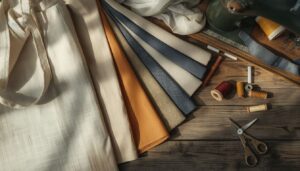
The fabric you choose makes or breaks your tote bag. Pick the wrong one and it flops, stretches, or falls apart after a few uses.
Here’s what actually works for different styles and how stabilizers help everything hold its shape.
Canvas for Sturdy Tote Bags
Canvas is your best friend when you want a tote that holds its shape. Canvas weight selection matters — 10 oz works great for everyday bags, while 12 oz supports books and groceries without sagging.
Weave tightness impact shows up fast: tighter weave means cleaner topstitching on your sewing machine.
Prewash first, add reinforced corner trim, and consider sealing water resistance with wax for exposed panels.
Quilting Cotton for Lightweight Bags
Quilting cotton is where lightweight fabrics really shine. It hits 140–190 GSM — sturdy enough for a solid tote bag shell, light enough to run smoothly through your sewing machine.
Weight advantages are real: minimal interfacing needed, thanks to its tight plain weave and natural Shape Retention. Print Sharpness stays crisp too.
Prewash for best Washability Tips results, then press flat before cutting.
When to Use Fusible Fleece
Sometimes lightweight padding is all your bag needs. Fusible fleece gives you that soft, Heat‑Bonded Structure without the bulk — just iron it onto the wrong side of your fabric, and you’re set.
It’s a smart Batting Replacement for pouches and small bags, keeping seams clean and smooth. Think of it as your Quick Edge Finish secret for tablet sleeves, too.
Heavy Fabrics for Structured Shapes
Heavy fabrics do the heavy lifting when your bag needs to hold its shape. Think duck cloth weight (10–24 oz), waxed canvas, or denim stiffness — these keep your tote standing tall even when loaded up.
Here’s what works best:
- Duck cloth or canvas for a reinforced rollup tote bag
- Twill reinforcement for crisp, crease-resistant edges
- Calendered finish fabrics for structure without extra padding
Pair any of these with a walking foot and foam stabiliser for clean results.
Lining Fabric for Added Durability
A good lining is what separates a bag that lasts from one that falls apart fast.
Pick polyester satin or nylon-backed fabric for heavy-duty satin linings that resist wear.
Add reinforced corner patches inside for extra strength where stress hits hardest.
Stain-resistant linings are a smart move, too — they wipe clean and stay looking good.
| Lining Type | Best For | Durability |
|---|---|---|
| Polyester Satin | Everyday totes | High |
| Canvas | Structured bags | Very High |
| Water-Resistant Nylon | Market/grocery bags | High |
Use fusible interfacing like Pellon P44F Fusible Interfacing to bond layers during bag lining assembly.
Sewing Machine Setup Tips
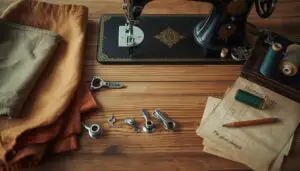
Before you sew a single seam, your machine needs to be dialed in just right. Small settings make a big difference in how clean and strong your tote turns out.
Here’s what to check before you start.
Straight Stitch Settings for Tote Bags
Your stitch length sets the tone for the whole bag.
For most seams, set it to 2.5 mm — strong enough to hold, smooth enough to feed through canvas or quilting cotton without bunching. Bump up to 3.5 mm for top stitching along edges so it looks clean and intentional.
Match your needle size to your fabric weight, and always use polyester thread for lasting bag construction.
Seam Allowance for Clean Assembly
Get your seam allowance right, and the whole bag comes together cleanly.
Here’s what to keep in mind:
- Allowance Consistency — use 1 cm across all panels, so lining and exterior match up perfectly.
- Heavy Fabric Allowance — bump to 1.8 cm for canvas; it endures stress without tearing.
- Curved Seam Allowance — trim curves down to 0.7 cm, so your bag turns and topstitches smoothly.
Topstitch Length for Neat Edges
Topstitch length makes a bigger difference than you’d think. For quilting cotton, stitch length selection around 3.0 mm keeps edges crisp and clean.
Canvas and heavier fabrics need 3.5 to 4.0 mm — otherwise you’ll get skipped stitches. Always use the scrap testing method before committing. Needle size matching matters too — go 90/14 for canvas.
edge distance guidelines at 3 to 6 mm for polished topstitched seams.
Using a Walking Foot
A walking foot is your secret weapon for Layer Feeding Control. It grips both fabric layers evenly — that’s the Slippery Fabric Grip doing its job on vinyl or faux leather.
Follow the Foot Alignment Procedure: bar over the needle clamp, screw tight. You’ll get Batch Stitch Consistency across every seam, making modern sewing machine techniques, with a walking foot essential for clean tote bag construction.
Cutting Tools and Marking Supplies
The right tools make cutting and marking feel easy.
A rotary cutter with a sharp 45mm blade glides through multiple layers quickly — pair it with a self‑healing cutting mat for clean, accurate cuts every time.
Use fabric marking pens for quick layout lines, or a marking pencil for finer detail.
Pinking shears reduce fraying on edges, and pattern weights keep everything flat while you work.
Add Handles, Pockets, Finishing
This is where your tote really starts to feel like yours. A few smart finishing moves — grips, pockets, and a clean lining — turn a basic bag into something you’ll actually reach for every day.
Here’s what to tackle next.
Rope Handles and Fabric Straps
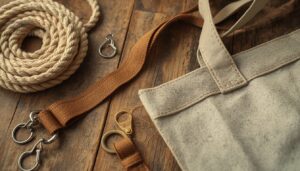
Grips make or break a tote — and your Rope Material Choices matter more than you’d think. Cotton rope feels soft and natural, while nylon holds up better over time.
Grip Attachment Methods, grommets and D-rings spread the load evenly.
Strap Reinforcement Techniques to keep things sturdy:
- Interface fabric straps before sewing
- Topstitch at 3 mm for clean edges
- Knot ends for Knot Decoration Styles
- Hardware Integration Options like D-rings for a crossbody strap
Interior and Exterior Pockets
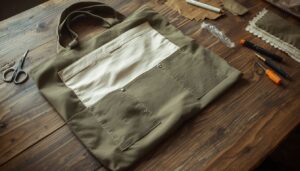
Now that your straps are done, pockets pull the whole tote together. Pick the right spot first — exterior pockets for quick grabs, interior for keeping things sorted.
| Pocket Type | Placement Strategies | Material Choices |
|---|---|---|
| Slip exterior | Front panel | Match bag fabric |
| Zippered interior | Near top lining | Lightweight lining |
| Gusseted exterior | Side panel | Sturdy canvas |
Reinforce every pocket opening with topstitching.
Sewing Linings and Turning Bags
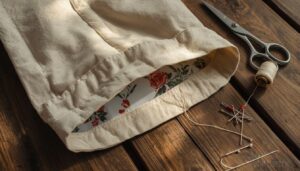
Pockets done? Now it’s time to close things up.
Sew your lining bag separately, leaving turning hole size big enough to birth the bag through.
A boxed corner lining keeps the base flat and wrinkle-free.
Use a zigzag edge finish on seams, then stitch a partial top seam.
Turn right side out, close with a hand-stitched closure, and you’re set.
Topstitching for a Polished Finish
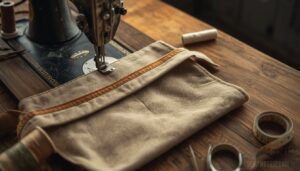
Your bag’s turned and closed — now topstitching gives it that store-bought edge.
Set your stitch length to 3–3.5 mm and check your thread tension on scrap fabric first. Stitch consistency is everything here.
- Use a walking foot for smooth, even seam finishing methods across thick layers.
- Try decorative topstitching with contrasting thread for a personal touch.
- Match needle selection — size 90/14 — to your fabric weight.
Optional Appliqué and Quilting Details
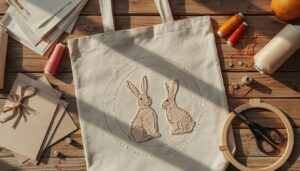
If your tote feels a little plain, appliqué and quilting are easy ways to make it yours. Try fusible web options to attach shapes fast — the Cute Tote’s optional appliqué bunnies are a great starting point.
| Technique | Effect |
|---|---|
| Layered Appliqué Design | Adds depth and dimension |
| Stitch Border Techniques | Blanket or satin stitch seals edges |
| Quilted Motif Placement | Echo quilting frames shapes beautifully |
Thread color contrast makes every detail pop.
Frequently Asked Questions (FAQs)
What is the best stitch for a tote bag?
Want stitches that actually hold? Use a straight stitch for main seams, backstitch at the start and end, and a triple stitch or box stitch on grips.
Polyester thread keeps everything strong.
Is a tote bag a good first sewing project?
It’s one of the best beginner sewing projects out there.
Simple tote bag patterns build real skills fast, boost your confidence, and most beginner-friendly tote bag designs only need basic tools and one yard of fabric.
What are some unique tote bag design ideas?
Think of your tote as a blank canvas. Try Geometric Patchwork panels, Embroidered Monograms, or a cute tote bag with optional applique bunnies.
A Magnetic Closure or Convertible Backpack strap takes any design from basic to impressive.
How do I make a free tote bag?
Grab some upcycled fabric and a free PDF resource, and you’re already halfway there. A simple cutting layout, a straight stitch, and a no-hardware design keep this totally cost-free.
What is a free tote bag sewing pattern?
A free tote bag sewing pattern is a PDF Download with a Printable Layout, Material Checklist, and Size Adjustments — basically everything you need to cut, sew, and finish your bag without guessing.
What can you do with a tote sewing pattern?
A tote pattern is a starting point, not a finish line.
You can customize size, add embellishments, create matching sets, explore color blocking, or incorporate upcycled materials — all from one simple design.
Are tote bags easy to sew?
Yes, they really are. Most use straight seams, simple rectangles, and a Low Material Count.
With Pattern Clarity and Tool Simplicity, you can sew in a day — even on your first try.
What stitch is best for tote bags?
Want seams that hold up to daily abuse? A heavy-duty straight stitch is your best bet. Reinforce sections with a triple stitch, and zigzag raw edges so nothing frays.
What fabric should I use to sew a tote bag?
Canvas is your best bet for a sturdy everyday bag. Quilting cotton works great for soft, lightweight totes.
For eco-friendly fabric choices, try jute or recycled cotton — both hold up well and look good.
How to make tote bag ideas?
Pick your fabric, sketch your shape, and let the design lead you.
Free tote bag patterns and DIY tote bag tutorials with step-by-step instructions make beginner sewing feel totally doable from day one.
Conclusion
Stitching something strong starts with a single seam. Every sewing machine project for tote bags journey begins exactly where you’re right now—one yard, one afternoon, one finished bag you’re proud to carry.
Pick your fabric, set your stitch length, and just start cutting. The pockets, linings, and polished topstitching will come naturally as your confidence builds.
Your tote won’t just hold your stuff—it’ll carry what your hands can make.