This site is supported by our readers. We may earn a commission, at no cost to you, if you purchase through links.
A good tote bag outlasts trends, holds everything, and never asks for much in return. The problem is that store-bought ones wear out fast or cost more than they should for what you get.
Making your own puts you in control—of the size, the fabric, the straps, and how long it actually lasts.
Free printable sewing patterns for tote bags make that easier than most people expect. Whether you want a simple everyday carry or something with pockets, flaps, and a clean lining, the right pattern gets you there without the guesswork.
Table Of Contents
Key Takeaways
- Free printable tote bag patterns come in over 150 styles—from basic rectangular designs to quilted and reversible versions—so there’s a solid starting point no matter your skill level.
- Fabric choice makes or breaks your tote’s durability, with canvas (10–18 oz) holding its shape best, while interfacing adds the hidden structure that keeps any bag looking good wash after wash.
- Sewing a tote bag is genuinely beginner-friendly—you can finish a clean, functional bag in about an hour using straight seams, reinforced stress points, and a simple lining.
- Customizing your tote—resizing, adding pockets or zippers, or upcycling fabric scraps—turns a basic pattern into something that fits your life and stays out of the landfill.
Best Free Printable Tote Patterns

With over 150 free patterns to choose from, there’s genuinely something for every skill level and style. The trick is knowing where to start — and that’s exactly what this list is for.
Browse the full collection of free hand embroidery patterns sorted by skill level — with 145 beginner, 188 intermediate, and 25 expert designs, finding your perfect starting point is surprisingly easy.
Here are some of the best free printable tote patterns worth bookmarking.
Classic Tote Bag Templates
Classic tote bag templates are the perfect starting point for any DIY tote bag pattern. Free printable tote bag patterns usually follow a simple, reliable formula:
- rectangular body with a flat bottom — no tricky shaping needed
- Standard strap length of 22–28 inches for shoulder or hand carry
- Simple straight seams with a reinforced base to hold real weight
- Optional lining for a clean finish inside
Free downloadable sewing patterns for tote bags like Beginners First Tote Bag keep it beginner‑friendly without sacrificing durability.
Ensuring dimensional accuracy standards helps avoid production delays and fit issues.
Fold-over Messenger and Hobo Bags
Ready to try something with more personality? Fold-over messenger and hobo bags bring real style to your DIY tote bag projects.
These free printable tote bag patterns use flap closure mechanisms — magnetic snaps or zippers — to keep things secure. Hidden frame reinforcement holds the shape, while adjustable strap hardware lets you switch between crossbody and shoulder carry.
| Feature | Messenger Bag | Hobo Bag |
|---|---|---|
| Silhouette Shape Variations | Rectangular with straight flap | Crescent, slouchy |
| Material Drape Performance | Structured canvas or faux leather | Soft suede or flexible textile |
| Cross Body Bag Tutorial | Yes, adjustable strap included | Optional crossbody strap |
Japanese-inspired Square Bag Designs
If structured simplicity speaks to you, Japanese-inspired square bag designs are worth exploring. Rooted in wabi sabi aesthetics, these free tote bag patterns favor calm minimalist color palettes and clean geometry over flashy details.
Here’s what makes them special:
- Boxed bottom construction gives the bag a true square footprint
- Hidden magnetic closures keep the exterior flat and clean
- Linen blend textures add a soft, natural look
- Compact 8–12 inch proportions suit everyday carry perfectly
- Customizable tote patterns let you swap fabrics freely
Patchwork and Quilted Tote Patterns
From minimal squares to scrappy charm — patchwork and quilted totes let your fabric stash shine. Free downloadable sewing patterns for tote bags like the DIY Patchwork Tote Bag use quilting cotton scraps in coordinated Patchwork Block Layouts for a mosaic effect.
| Element | Beginner Option | Pro Tip |
|---|---|---|
| Fabric Scraps Sourcing | Old shirts, remnants | Coordinate by value and scale |
| Quilted Bag Stability | Fusible fleece backing | Add interfacing layer beneath |
| Stitch Density Guidance | Along grid seams only | Echo quilting adds texture |
Reversible and Multi-use Tote Styles
Two bags for the price of one — that’s the magic of a reversible tote bag pattern. With dual-sided fabric and a flip-over closure, you can match any outfit or occasion instantly.
Free downloadable sewing patterns for tote bags make this easier than you’d think.
Here’s what makes worth sewing:
- A reversible pocket design keeps your essentials reachable from either side.
- An adjustable strap system works in both orientations without tangling.
- Interchangeable interior linings let you swap styles like a pro.
No-lining and Minimal-interfacing Options
Sometimes less really is more.
No-lining free tote bag patterns give you structure without lining by leaning on canvas or duck cloth for natural fabric stiffness choices. lightweight edge finishes like zigzag stitching or bias tape keep things clean and simple.
Add reinforced bottom panels for durability, external pocket solutions for organization, and you’ve got a beginner sewing project that’s both practical and eco-friendly.
Top 7 Sewing Tools for Tote Bags
Having the right tools makes sewing a tote bag so much easier—and a lot more fun. You don’t need a huge collection, just a few reliable ones that do the job well.
Here are the top seven tools worth keeping in your sewing space.
1. FNV Complete Sewing Kit
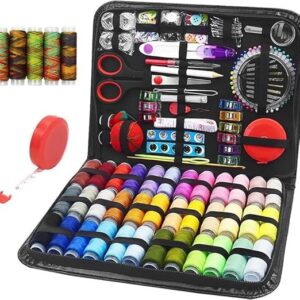
If you’re just getting started, the FNV Complete Sewing Kit (BSK01) is a solid first investment.
It pairs especially well with beginner-friendly projects like this step-by-step tote bag sewing guide that walks you through fabric selection, straps, and lining.
For under $20, you get 229 pieces — including 41 color-coded thread spools, 30 needles, two scissors, pins, clips, and even a magnifying glass.
Everything fits in a compact hard case, so nothing gets lost. It’s not professional-grade, but it covers the basics well. One heads-up: stick to the centimeter side of the tape measures, since the inch markings are inaccurate.
| Best For | Beginners, travelers, and anyone who needs a reliable all-in-one kit for basic repairs without spending much. |
|---|---|
| Primary Use | Hand & machine sewing |
| Skill Level | Beginner |
| Kit Included | Yes – 229 pieces |
| Material | Steel, plastic, glass |
| Storage Solution | Hard case |
| Price Range | Budget |
| Additional Features |
|
- 229 pieces including 41 thread colors — you’re covered for almost any quick fix
- Compact hard case keeps everything organized and easy to grab on the go
- At $19.98, it’s a great low-risk starter kit or gift
- Inch markings on both tape measures are off — centimeters only
- Not built for heavy use; durability may disappoint frequent sewers
- Packs in tools many minimalists will never touch
2. Vizoshi Polyester Sewing Thread Kit
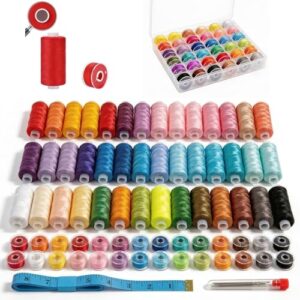
Running low on thread mid-project is the worst. The Vizoshi Polyester Sewing Thread Kit fixes that before it happens.
You get 36 color-coded spools — each with 400 yards — plus 36 pre-wound matching bobbins, so color changes take seconds instead of minutes.
The 100% polyester thread works with canvas, denim, and cotton well, making it a great match for tote bag projects.
Just check your machine’s bobbin size first, since compatibility isn’t guaranteed across all models.
| Best For | Home sewers, beginners, and craft lovers who want a ready-to-go thread collection without the hassle of buying colors one at a time. |
|---|---|
| Primary Use | Hand & machine sewing |
| Skill Level | Beginner |
| Kit Included | Yes – 90 pieces |
| Material | 100% polyester |
| Storage Solution | Portable case |
| Price Range | Budget |
| Additional Features |
|
- 36 pre-wound bobbins mean you spend less time prepping and more time actually sewing
- 400 yards per spool is plenty for most home projects, so you’re not constantly swapping out thread
- The wide color range makes it easy to find a match for repairs, quilting, or everyday crafts
- Bobbin sizing isn’t specified, so you’ll want to double-check compatibility with your machine before buying
- Polyester thread isn’t the best pick for stretchy or heavy-weight fabrics that need something more specialized
- It’s a budget kit, so serious or professional sewers may find the quality falls short of their expectations
3. Singer Heavy Duty 6700C Computerized Sewing Machine
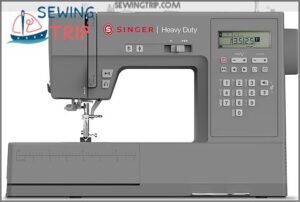
Singer Heavy Duty 6700C is built for tote bags that actually get used. Its metal frame manages denim, canvas, and leather without skipping a stitch — even through thick, layered seams.
You get 411 built-in stitches, a one-step automatic buttonhole function, and a high-torque motor that keeps going when other machines slow down.
The LCD screen lets you dial in stitch length and width quickly.
At $329.99, it’s a solid investment if you plan to sew regularly.
| Best For | Sewers who regularly work with heavy fabrics like denim, canvas, or leather and want a durable machine that can handle demanding projects without constant frustration. |
|---|---|
| Primary Use | Machine sewing |
| Skill Level | Beginner to advanced |
| Kit Included | Yes – 10 presser feet |
| Material | Metal chassis, steel |
| Storage Solution | Dust cover |
| Price Range | Premium |
| Additional Features |
|
- Metal frame and high-torque motor power through thick, layered fabrics without skipping stitches
- 411 built-in stitches plus a one-step automatic buttonhole function cover just about any project you can think of
- Comes with 10 presser feet and all the essentials, so you’re not hunting for accessories before you even start
- Some users run into thread breakage and tension issues right out of the box, which can be a headache
- The LCD screen can be dimmer than expected, making it tricky to read stitch icons clearly
- No printed manual included — everything’s through the app, which isn’t ideal if you prefer flipping through pages
4. JollMono Large Eye Hand Sewing Needles
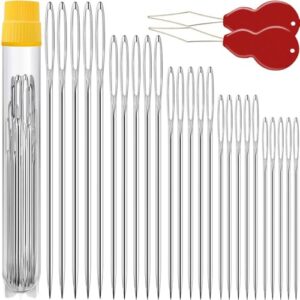
Hand sewing still has its place — especially for finishing touches and repairs. The JollMono Large Eye Hand Sewing Needles make that part easier.
Each pack comes with 25 stainless steel needles in five lengths, from 1.6 to 2.4 inches, so you’ve got options for different tasks.
The large eye accommodates thicker threads without a fight, and two needle threaders are included for when you’re in a hurry.
They’re rust-free, smooth, and beginner-friendly.
| Best For | Hobbyists and crafters who do embroidery, cross-stitch, quilting, or general mending and want a no-fuss needle set that’s easy to thread. |
|---|---|
| Primary Use | Hand sewing |
| Skill Level | All levels |
| Kit Included | Yes – 2 threaders |
| Material | Galvanized stainless steel |
| Storage Solution | Clear tube |
| Price Range | Budget |
| Additional Features |
|
- Five needle lengths in one pack, so you’re covered for most hand-sewing jobs without buying multiple sets.
- Large eye makes threading way less frustrating, especially if your eyesight isn’t perfect or your hands aren’t steady.
- Rust-free stainless steel means they’ll stay sharp and clean in your kit for the long haul.
- The big eye leaves larger holes in fabric, so these aren’t great for fine or delicate materials where that would show.
- Not a good pick for small bead work — the eye size just doesn’t work for tiny beads.
- The storage tube doesn’t have a screw top, so it might not play nicely with your existing needle storage setup.
5. Whitmor Foldable Tabletop Ironing Board

Good needles manage the details — but a good ironing board supports the foundation.
The Whitmor Foldable Tabletop Ironing Board is a solid pick for sewists short on space. It weighs just over 2 pounds and opens in seconds — no assembly, no fuss.
The vented steel top lets steam pass right through, so your fabric seams press flat and crisp. Non-slip feet keep it steady, and the retractable hook means it hangs neatly on a door when you’re done.
| Best For | Sewists and crafters in small spaces who need a quick, stable ironing surface without dragging out a full-size board. |
|---|---|
| Primary Use | Fabric ironing |
| Skill Level | All levels |
| Kit Included | No |
| Material | Alloy steel, polyester |
| Storage Solution | Retractable hook |
| Price Range | Budget |
| Additional Features |
|
- The vented steel top lets steam flow through evenly, which means cleaner, crisper seams every time.
- At just over 2 pounds, it’s light enough to toss in a bag or move from room to room without thinking twice.
- The retractable hook and foldable legs make storage a non-issue — hang it on a door and forget it’s there.
- The padding runs thin, so delicate fabrics might pick up faint iron marks if you’re not careful.
- The legs have a little flex to them, so you can’t really bear down hard without feeling some give.
- It’s sized for small to medium pieces — great for shirts and seams, but awkward for anything larger like curtains or tablecloths.
6. CllyCnny Straight Glass Ball Sewing Pins
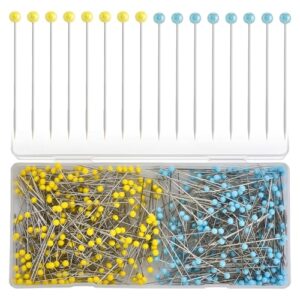
Pins might seem like a small thing, but the wrong ones slow you down fast.
The CllyCnny Straight Glass Ball Sewing Pins come in a pack of 500 — 250 yellow and 250 blue — so you can color-code sections of your tote pattern without losing track.
The 1.75-inch stainless steel shanks push through multiple fabric layers without bending, and the glass heads stay cool during pressing.
Bright, easy to spot, and easy to pull out.
| Best For | Sewers, quilters, and crafters who work with multiple fabric layers and want an easy way to stay organized with color-coded pins. |
|---|---|
| Primary Use | Fabric pinning |
| Skill Level | All levels |
| Kit Included | Yes – storage case |
| Material | Stainless steel, glass |
| Storage Solution | Clear plastic case |
| Price Range | Budget |
| Additional Features |
|
- Two colors (yellow and blue) make it simple to separate sections or mark different parts of a project at a glance.
- The 1.75-inch stainless steel shanks push through thick layers and quilting batting without bending or breaking.
- Glass heads are heat-resistant and stay visible on both light and dark fabrics, so you’re not hunting for lost pins.
- Glass heads can crack if dropped on a hard surface, so you have to handle them with a bit of care.
- At 1.75 inches, they’re on the longer side — not the best choice for fine or delicate fabrics that need a shorter pin.
- The plastic case keeps things tidy but won’t hold up well under pressure, so it’s not great for tossing into a packed bag.
7. Readers Digest Complete Sewing Guide
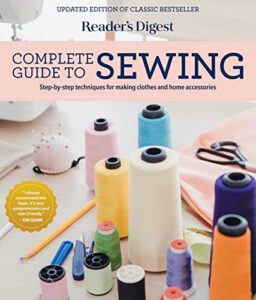
Sometimes the best tool isn’t a gadget — it’s a book. The Reader’s Digest Complete Sewing Guide packs 384 pages of illustrations, fabric tips, and step-by-step technique breakdowns into one solid reference.
It covers everything from basic stitches to zipper insertion, and it walks you through about 20 real projects. At just over $20, it’s the kind of book you’ll keep coming back to long after your first tote bag is done.
| Best For | Anyone learning to sew — from total beginners to intermediate sewists who want one reliable book to cover techniques, projects, and fabric know-how. |
|---|---|
| Primary Use | Sewing reference |
| Skill Level | Beginner to intermediate |
| Kit Included | No |
| Material | Paper (print) |
| Storage Solution | Book binding |
| Price Range | Budget |
| Additional Features |
|
- Packed with thousands of illustrations and diagrams, so you’re never guessing what a technique should look like.
- Walks you through 20 real projects — shirts, bags, home accessories — so you’re actually making things, not just reading about them.
- At just over $20, it’s a one-time buy that replaces a whole shelf of pattern books.
- It reads more like a magazine compilation than a step-by-step course, so jumping around can get confusing.
- No digital version or video companion — if you learn best by watching, this one has limits.
- Doesn’t include full pattern sheets or advanced tailoring, so serious dressmakers may eventually outgrow it.
Download and Print PDF Patterns

Getting your pattern from screen to cutting mat is easier than you think. A few simple steps make sure everything prints correctly and fits together the way it should.
Here’s what to keep in mind before you cut a single piece of fabric.
Where to Find Reliable Free Patterns
trustworthy free tote bag patterns doesn’t have to feel like a treasure hunt. Curated Pattern Hubs like So Sew Easy and SewCanShe offer free downloadable sewing patterns for tote bags with clear photo tutorials.
User Review Platforms like BurdaStyle and Ravelry let you browse community feedback before downloading. verified community sources and pattern aggregator sites keep every free pattern PDF current and creator-linked.
Printing at 100% Scale
Before you cut a single piece of fabric, make sure your PDF sewing pattern prints true to size. Set your printer to 100% scale and disable fit-to-page options — that one step covers most scale accuracy checks automatically.
Use paper size matching for your region (Letter or A4), then do a quick test ruler verification to confirm the printed inch matches a real ruler.
Checking Grid Marks and Layout Guides
Once your pattern prints, take a moment to check the grid marks before reaching for your scissors. Each crosshair should be sharp and exactly 1 inch apart — that’s your Grid Accuracy Verification in action.
Use Layout Guide Placement along the fabric edges for Margin Alignment Checks, and confirm Pattern Block Registration is spot-on for clean, accurate pattern cutting techniques every time.
Assembling Multi-page Pattern Sheets
Taping your multi-page PDF sewing pattern together doesn’t have to feel like a puzzle. Start with the corner pages and work inward — that’s the easiest way to keep everything stable.
Use the pattern layout map to guide your Layout Mapping and Edge Matching, then apply a light 0.25-inch overlap between pages.
Smooth Overlap Markings and solid Taping Techniques keep your Free Tote Bag Patterns from shifting mid-cut.
Matching Seam Allowance Instructions
Seam allowance is the unsung hero of a well-made tote. Most Free Tote Bag Patterns note the allowance right near the edge — usually between ¼ and ⅝ inches.
Use Seam Marking Techniques to draw a clear stitch line, then apply Parallel Edge Verification with a ruler. Notch Alignment Tips and Pinning for Consistency keep pieces from shifting, making adjusting allowance width stress‑free.
Choosing Letter or A4 Paper
Before you hit print, check which paper size your printer uses. In North America, Letter (8.5×11 inches) is standard, while most of the world defaults to A4.
Paper Size Compatibility matters because wrong Printer Tray Settings can shift your Free Tote Bag Patterns. Always print PDF files at 100% for Scaling Accuracy Tips, and check grid marks to catch any Margin Adjustments before cutting.
Sew a Tote Bag Step by Step
Now comes the fun part — actually putting it all together. Each step builds on the last, so you’ll want to take them in order.
Here’s exactly what to do, from your first cut to your last stitch.
Cutting Fabric Pieces Accurately

Good cuts make everything easier down the line. Before you pick up your rotary cutter, square up your fabric and align those grain lines with the selvage — that’s Grain Alignment in action, and it keeps your bag from twisting later.
- Mark all pieces clearly using chalk or erasable pens (Pattern Marking Techniques)
- Stick to four layers max for consistent Layer Cutting Limits
- Keep your blade fresh — Rotary Cutter Maintenance matters more than you’d think
Sewing Seams and Reinforcing Stress Points
Now that your pieces are cut, it’s time to stitch them together — and do it right.
Start every seam with Backstitch Reinforcement at both ends so nothing unravels under weight. Double Stitching along side seams adds real strength, and Bar Tack Placement at strap junctions keeps grips from tearing off.
Use Heavy Thread Choice and Stay Tape Application at the top edge for lasting results.
Adding Linings and Interior Pockets
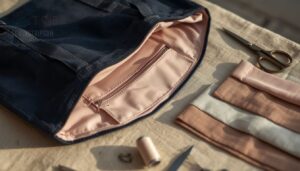
With the outer shell stitched up, a clean lining takes your DIY Tote Bag Pattern from rough to polished.
Lining Fabric Selection matters — cotton sateen or lightweight rayon hides raw seams beautifully.
For Smooth Lining Attachment, sew it to the top edge and topstitch.
Interior pockets keep things organized using these Sewing techniques for tote bags:
- Cut lining panels to match outer pieces exactly
- Add a Hidden Zipper Pocket for cards or keys
- Use Interfacing Pocket Structure to keep pocket shapes firm
- Reinforce with Pocket Bag Reinforcement at stress points
- Align patch pockets for a clean, wrinkle‑free finish
Free tote bag patterns like the DIY Tote Bag With Tablet Pocket show how useful smart interior planning really is.
Attaching Straps, Rope Handles, or Webbing
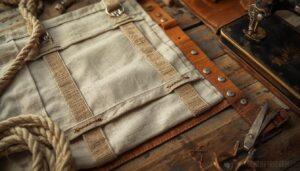
Now that your lining is set, strap are next — and this step makes or breaks your bag.
| Strap Type | Key Tip |
|---|---|
| Webbing Edge Finishing | Fold raw ends before stitching |
| Rope Handle Protection | Encase rope in a fabric channel |
| Leather-look shoulder straps | Use box-stitch for strength |
| Stitch Reinforcement Techniques | Sew 6–8 passes minimum |
| Hardware Load Rating | Rate hardware at 2× bag weight |
Strap Attachment Testing — load the bag and lift. Your DIY tote bag pattern deserves customizable straps that actually hold.
Topstitching The Opening for Durability
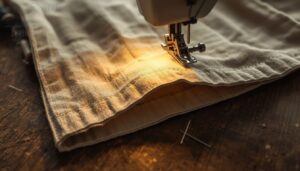
With straps locked in, topstitching the opening pulls everything together.
Run two parallel lines along the top edge — that’s your Double Line Stitching doing real work.
Keep your Stitch Length Control steady, use a Walking Foot Technique through corners, and apply Edge Reinforcement with Interfacing Application underneath.
Most free tote bag patterns and sewing tutorials recommend stitching ⅛ inch from the edge for a clean, lasting hold.
Finishing Edges to Prevent Fraying
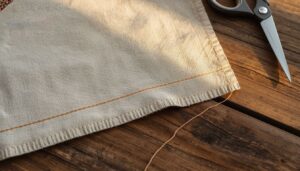
Raw edges fray quickly, so finishing them is crucial for ensuring your tote lasts. Overlock Edge Finish and Zigzag Stitch Edge are effective machine-sewing methods that prevent unraveling by tightly wrapping threads around seams or using a zigzag pattern suitable for most fabrics.
For a decorative touch, consider Bias Binding Trim. Alternatively, Pinking Shears or a Fray Check Seal offer simple, non-sewing solutions that also prevent fraying beautifully.
Customize Durable Tote Bag Designs
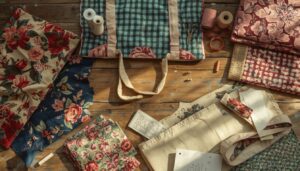
Once you’ve got the construction down, the real fun begins — making the bag yours. From fabric choices to finishing touches, a few simple decisions can turn a basic tote into something you’ll actually want to carry every day.
Here’s how to customize your tote for both style and long-term durability.
Choosing Canvas, Denim, or Quilting Cotton
Your fabric choice sets the whole tone of your tote.
Canvas wins on weave durability and stiffness drape balance — at 10–18 oz, it holds shape beautifully. Denim offers a softer middle ground. Quilting cotton is lightweight and budget-friendly, great for casual styles.
Check your free sewing patterns for needle size guidance, since canvas needs a size 16 needle.
Smart fabric selection makes all the difference.
Using Interfacing for Extra Structure
Interfacing is the secret backbone of any sturdy handmade tote bag. It manages the heavy lifting — literally — so your bag keeps its shape wash after wash. Whether you’re following free sewing patterns or DIY tote bag tutorials, the right interfacing makes everything cleaner and stronger.
- Panel Stiffness: Heavy interfacing on front and back panels helps your bag stand upright when full.
- Corner Reinforcement: Interfacing corner panels to prevent sagging and keep crisp edges.
- Gusset Support: Add interfacing in the base gusset to maintain bag width under load.
- Handle Stability & Seam Reinforcement: Fuse interfacing along straps and attachment points to prevent stretching and fraying.
Adding Appliqués, Pockets, and Zippers
This is where your tote goes from plain to yours. Applique Edge Finishes, like satin stitch or blanket stitch, keep designs sharp and fray‑free — perfect for a Bunny Applique Tote Bag.
Use Pocket Placement Techniques and Zipper Mounting Methods to add real function.
| Feature | Technique | Best For |
|---|---|---|
| Layered Applique Details | Fusible web + satin stitch | Quilting cotton totes |
| Reinforced Pocket Construction | Topstitched patch pockets | Simple Six Pocket Sewing Tote Bag |
| Zipper Mounting Methods | Exposed coil zipper | Zipped Sew Tote Bag |
Browse the free sewing patterns collection for DIY tote bags with built-in pocket and zipper guides.
Resizing Bags for Everyday Use
One size rarely fits all — and your tote shouldn’t either. free downloadable tote bag sewing patterns is easier than you’d think when you follow these steps:
- Scale 90–125% for Proportion Adjustments that keep the shape balanced
- Widen side panels evenly for Strap Length Scaling comfort
- Increase interfacing density for Material Thickness Adaptation
- Shift rivets outward for clean Hardware Placement Shifts
- Recalculate pockets for smart Pocket Reconfiguration
Upcycling Leftover Fabric Into Patchwork Totes
Don’t toss those leftover scraps — they’re the start of something beautiful.
DIY fabric patchwork designs let you turn odds and ends into upcycled tote bags with real personality.
Cut pieces into 3-inch squares, focus on Color Balancing with light, medium, and dark tones, and use Interfacing Tips to keep everything stable.
Smart Scrap Planning and Eco-friendly Upcycling mean free bag patterns go further than you’d expect.
Making Reusable Bags for Sustainable Shopping
Every bag you sew keeps another plastic one out of the landfill. With a Free Pattern and the right Eco-friendly Fabrics, your DIY tote bag projects for beginners become real Sustainable crafting practices and upcycling wins. Small choices add up fast.
Every tote bag you sew keeps another plastic bag out of the landfill
- Pick natural canvas to support Zero-waste Production
- Use Sustainable Dye Choices like plant-based or low-impact colors
- Follow Bag Longevity Tips — reinforce seams and add interfacing
- Choose Eco-friendly reusable shopping bags over fast-fashion alternatives for Carbon Footprint Reduction
Frequently Asked Questions (FAQs)
Is there a pattern for a tote bag?
Yes, plenty exist. Free sewing patterns and pattern PDF files are easy to find online.
Whether you want an Easy Tote Bag Pattern or a complex DIY tote bag, there’s something for every skill level.
How many free tote bag patterns are there?
There are over 150 free patterns in this collection alone, including 31 tote-specific pattern PDF files.
And thanks to monthly new releases and steady designer contribution rates, the global repository size keeps growing.
Can you sew a tote bag with one yard?
One yard sounds too little — but it’s actually plenty. You can sew a clean, structured tote with a simple two-piece exterior and lining, hitting roughly 12 to 14 inches wide.
Where can I find free patterns for tote bags & purses?
You can find free patterns for tote bags and purses through Community Pattern Libraries, Designer Portfolio Sites, Social Media Groups, Open-source Pattern Repositories, and University Craft Archives — all offering free sewing patterns and free DIY bag sewing tutorials.
What are some free tote bag sewing patterns?
Oddly enough, the simpler the pattern, the more you can make it your own.
You’ll find classic totes, fold-overs, patchwork styles, and reversible designs — all free sewing patterns with real design variations.
Are bag sewing patterns easy to make?
Most bag sewing patterns are beginner-friendly. Simple Shape Patterns with a Minimal Stitch Count and Clear Instruction Diagrams make starting easy.
Beginner Friendly Layout designs mean Low Material Waste and less stress for new sewers.
Can a beginner sew a tote bag?
Absolutely, a beginner can sew a tote bag. Simple, structured, and surprisingly satisfying, it builds skill confidence fast.
With beginner-friendly sewing projects and easy tote bag patterns, you’ll finish your first bag in about an hour.
How do I choose durable sewing threads?
Pick polyester thread for tote bags — it’s strong, colorfast, and endures repeated washing well.
Match thread weight to your fabric: heavier canvas needs 30–40 weight, while quilting cotton works best with 50–60 weight.
What are tips for sewing straight seams?
Keep seams straight with a Magnetic Edge Guide on your needle plate, use the Walking Foot Technique for thick layers, try the Pin Alignment Method every two inches, and maintain Consistent Feed Pressure throughout.
Can tote bags be machine washed safely?
Yes, most canvas and cotton tote bags handle machine washing just fine.
Use a cold water cycle, toss it in a mesh laundry bag, avoid bleach, and air dry to keep it looking great.
Conclusion
Maria started with one free printable sewing pattern for tote bags she found online, a yard of canvas, and a free afternoon. Six months later, she hasn’t bought a bag since.
That’s the quiet win hiding inside this hobby—you build something useful and keep building on it.
Every stitch adds skill. Every finished bag fits your life better than anything off a shelf.
Start simple, customize as you go, and make it yours.
- https://www.applegreencottage.com/tote-bag-pattern/
- https://www.youtube.com/watch?v=PZgjPrzMYVw
- https://sewcanshe.com/sew-easy-big-tote-bag-free-sewing-tutorial/
- https://www.sewcanshe.com/blog/2019/3/23/beautiful-color-blocked-tote-free-sewing-pattern
- https://www.skiptomylou.org/how-to-make-a-simple-reversible-totebag/