This site is supported by our readers. We may earn a commission, at no cost to you, if you purchase through links.
outdoor furniture doesn’t wear out—its fabric does. A chair frame can last decades, but cheap upholstery fades, cracks, or grows mold after a single harsh season.
The fabric is where the real battle happens, and most buyers don’t realize it until they’re shopping for replacements two years in.
Choosing the right durable fabric for outdoor furniture comes down to understanding what each material actually tolerates well—UV rays, moisture, abrasion, or all three.
The differences between solution-dyed acrylic, olefin, and coated polyester aren’t just technical; they determine how your furniture survives the specific conditions outside your door.
Table Of Contents
Key Takeaways
- Solution-dyed acrylic (like Sunbrella) is the top choice for outdoor fabric because the color is locked into the fiber itself, giving you 10–15 years of fade and mold resistance.
- Your climate should drive your fabric pick—humid regions need quick-drying olefin or acrylic, while full-sun spots demand strong UV protection above all else.
- Cheap upfront options like natural cotton wear out fast outdoors, so spending a bit more on the right fabric actually costs you less over time.
- Low-maintenance wins come from choosing stain-resistant materials like olefin or acrylic and storing cushions dry with good airflow each offseason.
Best Outdoor Fabric Materials
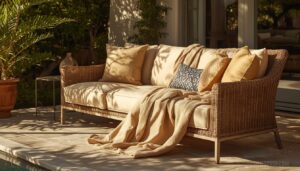
Not all outdoor fabrics are built the same, and the one you pick will shape how your furniture holds up for years to come. Each material brings its own strengths depending on your climate, lifestyle, and how much upkeep you’re willing to do.
If you’re sewing your own cushions, this guide to choosing the best fabric for outdoor cushions breaks down exactly which materials hold up best in different conditions.
Here are the five most common options worth knowing before you buy.
Solution-dyed Acrylic
Solution-dyed acrylic fabrics — like Sunbrella — are the preferred choice for outdoor use. Through dope dyeing, pigment is embedded directly into the fiber before weaving, not applied on top.
That means UV resistance, stain resilience, and mold-resistant protection that won’t wash away. You’re also getting eco-friendly production with less water waste.
Lifecycle longevity? Expect 10–15 years of vivid, weatherproof color. The fabric also provides high abrasion resistance for lasting durability.
Olefin
If solution-dyed acrylic is the paragon, olefin fabric runs a close second — especially for sling furniture.
Its molecular structure, built around carbon-carbon double bond reactivity, drives the polymerization process that makes olefin upholstery sling fabric naturally water-repellent and quick-drying.
You get solid UV resistance, mildew resistance, and impressive weather resistance at a lower price point.
Olefin’s eco-friendly production and cost efficiency make it a smart, practical pick.
Vinyl-coated Polyester
When olefin isn’t quite enough, vinyl-coated fabrics step up for serious weather resistance. Think of them as the armored option — fully waterproof, with zero moisture penetration.
Here’s what makes vinyl-coated polyester a standout for outdoor furniture:
- Coating thickness directly controls waterproofing performance
- Continuous joins via RF welding eliminate stitch-point leaks
- Mildew inhibitors built into the PVC keep surfaces clean longer
- Temperature flexibility prevents cold-weather cracking
- Chemical resistance manages salt, oil, and environmental exposure
UV resistance and easy wipe-clean maintenance make this weatherproof upholstery a genuinely practical choice.
PVC-coated Polyester Blends
PVC-coated polyester blends sit right between vinyl-coated fabrics and lighter performance options — a solid middle ground for most outdoor setups.
| Feature | Detail | Benefit |
|---|---|---|
| Coating Weight | Measured in oz/yd² | Controls stiffness and abrasion resistance |
| Seam Sealing Techniques | Edge tapes and reinforced hems | Prevents water infiltration at stress points |
| Hydrophobic Treatments | Surface-applied repellents | Speeds drying after rain |
| Edge Reinforcements | Reinforced hem construction | Reduces tearing in high-friction zones |
| Flexibility Stiffness Balance | Adjustable via coating thickness | Maintains comfort without sacrificing durability |
For PVC-coated polyester sling furniture, this weather-resistant material delivers UV-resistant, waterproof performance with enough flexibility for everyday comfort.
Natural Cotton Limitations
Natural cotton might feel luxurious, but outdoors, it struggles fast.
Poor water resistance means cushions stay wet longer, inviting mildew.
Tucking silica gel packets for outdoor moisture control inside cushion storage bags can significantly slow that mildew-friendly dampness.
Weak UV resistance and low fade resistance cause colors to dull quickly.
Fiber weakness leads to lint shedding and shrinkage tendency after washing.
Add pest vulnerability to the list, and you’re looking at frequent replacement — not the freedom you want from your outdoor setup.
Compare Durability Factors
Not all outdoor fabrics hold up the same way once the sun, rain, and daily wear get involved.
Knowing which durability factors actually matter helps you pick something that’ll last — not just look good on day one.
Here’s how the key materials stack up across the factors that count most.
UV Resistance and Colorfastness
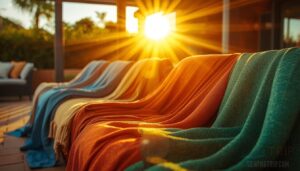
Sun is your outdoor fabric’s worst enemy.
Solution-dyed acrylic fabrics — like Sunbrella — lock pigment loading directly into each fiber using solar stabilizer chemistry, hitting colorfastness ratings of 4–5 on the AATCC scale.
Tighter weave density and UV protective coatings block up to 95% of harmful rays. The result? Color retention metrics that hold strong for 10–15 years.
Water Resistance and Quick Drying
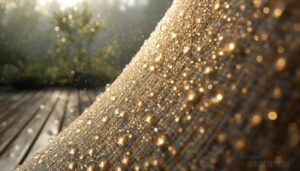
Rain shouldn’t ruin your afternoon. Outdoor fabrics with Hydrophobic Coatings and Water-Repellent Finishes bead water off the surface before it soaks in. Moisture-Wicking Structures and Fast-Dry Mesh designs pull dampness away fast. Vapor-Permeable Laminates keep things breathable while staying waterproof.
Top quick-drying features to look for:
- Olefin fibers with moisture resistance under 0.4%
- Crosscut weaves that boost airflow by 40%
- Hydrophobic Coatings lasting 20–40 wash cycles
Abrasion and Tear Strength
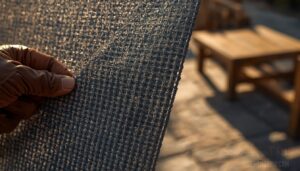
Think of abrasion resistance as your fabric’s armor. Higher weave density and yarn twist keep fibers locked in place through thousands of abrasion cycles without thinning out.
Fiber reinforcement and coating impact add another layer of protection, boosting fabric tensile strength so tears don’t spread.
For outdoor upholstery, look for performance fabrics rated above 10,000 Wyzenbeek cycles — that’s real durability built to last.
Breathability and Comfort
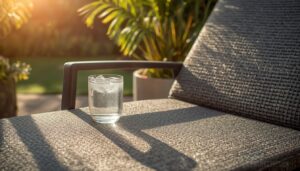
Hot seats aren’t just a game show thing — they’re what you get when breathability fails.
Fabrics with mesh weave structures and airflow channels let heat escape instead of trapping it under you. Spacer fabric in outdoor cushion padding creates a breathable gap between layers.
Moisture wicking fibers pull sweat to the surface fast, keeping your seating cooler, drier, and genuinely more comfortable on scorching days.
Mold and Mildew Resistance
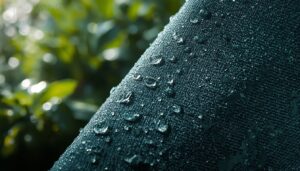
Mold doesn’t need much — just moisture and time. That’s why mold and mildew resistant fabrics use hydrophobic fibers to shed water fast, leaving little for spores to feed on.
Antimicrobial coatings and silver ion technology block surface growth before it starts.
Non-porous sealants keep dampness out, while ventilated cushion cores promote airflow.
Mildew prevention really comes down to keeping things dry from the inside out.
Match Fabric to Climate

Your climate does a lot of the deciding for you as far as outdoor fabric is concerned. The wrong pick can mean faded cushions, mold problems, or cracked material within a season or two.
Here’s how different fabrics hold up depending on where you live.
Hot, High-UV Climates
Living under an intense sun puts your outdoor fabric through a real test.
Solar heat management starts with the right material — solution-dyed acrylic fabrics, like Sunbrella, embed heat-resistant dyes directly into each fiber, delivering color fading metrics of 7–8 on the ASTM scale.
Reflective fabric finishes and lighter colors support fabric cooling technology, keeping UV resistance high and your cushions looking sharp for years.
Humid or Rainy Regions
Rain changes everything. When humidity stays above 70 percent year-round, your fabric choices need to work harder.
Look for hydrophobic fabric finishes, rain-resistant stitching, and moisture-drainage design in every cushion you pick.
Olefin and solution-dyed acrylic both deliver quick-drying performance and mold-resistant, mildew-resistant properties.
Pair them with ventilated cover design and humidity-controlled maintenance to keep airflow steady and black mold from taking hold.
Seasonal Storage Needs
Even in mild climates, offseason storage makes or breaks fabric longevity. When wet weather fades into colder months, how you pack things away matters just as much as what you bought.
Follow these seasonal storage and care of outdoor cushions basics:
- Lay moisture barriers under stored cushions to block ground dampness
- Use ventilated storage with breathable protective covers to prevent mildew
- Practice seasonal rotation and humidity monitoring with silica gel packs
- Keep temperatures stable for proper outdoor furniture maintenance
Cold-weather Cracking Concerns
Cold storage helps, but winter itself can still attack your fabrics. Frost Cycle Fatigue weakens fibers through repeated freeze-thaw stress, while Thermal Gradient Stress causes layers to contract unevenly.
Coating Brittleness hits vinyl hardest at sharp folds. Seam Crack Initiation is common in acrylic and PVC.
Backing Reinforcement improves durability considerably.
| Fabric | Cold-Weather Risk |
|---|---|
| Solution-dyed Acrylic | Seam cracking, edge crazing |
| Olefin | Fold cracking when stiff |
| Vinyl-coated Polyester | Coating splits at folds |
| PVC-coated Polyester | Layer delamination |
| Natural Cotton | Moisture absorption, mildew |
Shaded Versus Full-sun Spaces
Where your furniture sits changes everything. Full-sun spots bring intense UV exposure and Sun Heat Gain, so you’ll want UV resistance and sun protection fabrics that won’t fade after one summer.
Shaded areas feel cooler, but Shade Humidity Levels, Leaf Litter Accumulation, and Wind Shelter Effects create the perfect setup for mold. Choose mold-resistant, weatherproof textiles, and match your fabric to your actual Microclimate Temperature Swings.
Choose Low-Maintenance Options
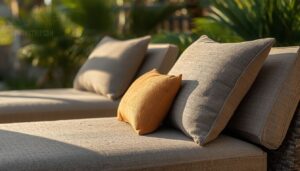
Nobody wants to spend their weekends scrubbing cushions or re-treating fabric every season. The good news is that some materials make upkeep genuinely easy — you just need to know which ones to look for.
Here’s what to think about when choosing a low-maintenance outdoor fabric.
Easy Cleaning Methods
Keeping outdoor fabrics clean doesn’t have to be a chore. Most materials built for the outdoors are designed with cleanability in mind — you just need the right approach.
- Start with Microfiber Dusting to lift dust and oils before they settle
- Use the Spot Blotting Technique — blot fresh spills, don’t rub
- Do a quick Hose Rinse after spills to stop stains from setting
- Loosen ground-in dirt with Gentle Brush Cleaning before rinsing
Stain Resistance and Protectants
Once stains settle into fabric, they’re much harder to beat. That’s why applying a protectant before problems start is the smarter move.
Hydrophobic Coatings, Nano Emulsion Treatments, and Silicone Shielding create stain-resistant barriers without altering feel or color. Clear Top Coats and UV Stabilizer Layers add both cleanability and UV resistance.
Reapply fabric protectant sprays or waterproof outdoor fabric sprays every 6–24 months to stay ahead.
Cushion Care and Storage
Your cushions work hard all season — treat them the same way before storing them. Always dry them fully, then slip them into breathable storage bags that let air circulate and prevent mildew.
Add silica gel packs to control moisture, and use upright shelving units for compression prevention.
A simple labeling system makes seasonal storage and care of outdoor cushions straightforward every year.
Bleach-safe Versus Sensitive Fabrics
Not all fabrics handle bleach the same way. Solution-dyed acrylic and olefin are naturally bleach cleanable and stain‑resistant, so diluted solutions won’t cause fiber weakening or dye fading.
But always follow bleach dilution guidelines and run a spot test procedure on a hidden area first.
Protective finishes can still suffer finish stripping, even on UV‑resistant outdoor upholstery fabric — so go gentle.
Maintenance Needs by Material
Each material has its own rhythm for upkeep.
- Acrylic Color Refresh — Rinse annually; it retains 90% brightness with simple hose-down cleaning.
- Olefin Stain Guard — Naturally stain-resistant; quick-dry weaving means mold and mildew resistance is built in.
- Vinyl Seal Maintenance — Wipe clean; check seams seasonally with a PVC Seam Check.
- Cotton Dehumidify Routine — Store dry; cotton needs the most hands-on outdoor cushion care and maintenance.
Compare Brands and Value
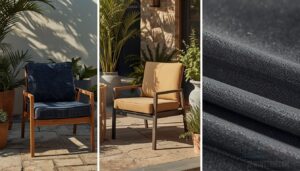
Not all outdoor fabric brands are built the same, and the price tag doesn’t always tell the whole story. Knowing what you’re actually paying for — durability, warranty, or just a name — helps you make a smarter choice.
Here’s a closer look at the key comparisons worth making before you buy.
Sunbrella Versus Perennials
Both brands use solution-dyed acrylic fabrics, but they serve slightly different goals.
Here’s a quick side-by-side:
| Feature | Sunbrella | Perennials |
|---|---|---|
| UV resistance | Proven, long-term fade protection | Strong colorfastness across palette |
| Water resistance | Quick-drying, mold-resistant | Low absorption, moisture-resistant |
Sunbrella fabrics offer broader warranties and wide availability. Perennials leans into marine suitability and heavier fabric weight with eco-friendly production focus. Both deliver.
Sling Fabric Versus Upholstery Fabric
Choosing between sling fabric and upholstery fabric comes down to how you use your space.
- Sling Fabric offers airflow cooling and near-zero weight when wet
- Upholstery Fabric wins on cushion comfort and color matching flexibility
- Modular replacement makes sling repairs simple and affordable
- UV protection and weather resistance are strong in both
- Price per foot favors sling; durability favors quality upholstery
Warranty and Lifespan Expectations
Once you’ve picked your fabric type, check what the warranty actually covers.
Most offer a 1–5 year Warranty Coverage Period, with Extended Warranty Options adding a few more years for premium lines.
Watch for Pro Rata Replacement terms — payouts shrink as the fabric ages.
A Colorfastness Guarantee generally covers 3–5 years, but Care Dependent Lifespan means improper cleaning voids claims fast.
| Fabric Type | Typical Lifespan |
|---|---|
| Solution-dyed Acrylic | 5–7 years |
| Olefin | 3–6 years |
| Vinyl-coated Polyester | 4–8 years |
| Natural Cotton | 1–3 years |
Sample Testing Before Buying
Don’t just take a brand’s word for it — request fabric samples first. Check weight thickness with a simple scale (aim for 6–8 oz per sq yard).
Tug seams to test seam strength. Run a burn test verification to confirm fiber content.
Try a stain resistance simulation with a coffee splash. Colorfastness evaluation under a sunlamp rounds out smart fabric sample testing.
Budget Versus Long-term Cost
Spending more upfront doesn’t always feel good, but it often saves you money down the road. Solution-dyed acrylic costs 20–40% more per yard than olefin, yet its longer fabric lifespan and lower lifetime replacement frequency cut your total ownership cost considerably.
Solution-dyed acrylic costs more upfront, but its longer lifespan makes it the cheaper choice over time
Factor in maintenance expense trends and weather resistance, and budget-friendly outdoor fabrics with strong durability usually win over cheap, short-lived alternatives.
Frequently Asked Questions (FAQs)
What is the most durable fabric for outdoor furniture?
Solution-dyed acrylic fabrics are your best bet for durability.
Sunbrella fabrics lead the pack — weather-resistant, colorfast for up to 15 years, and built with sustainability certifications that make eco-friendly fibers a real option.
What is the most durable material for outdoor furniture covers?
For covers, solution-dyed acrylic fabrics—especially Sunbrella fabrics—lead the pack. Their UV stabilization and mold-resistant properties, combined with stitching reinforcement and smart weight management, make them the most reliable weather-resistant textiles you can choose.
Is there another fabric as good as Sunbrella?
Yes. Perennials is a strong alternative premium brand, offering solution-dyed acrylic fabric with similar outdoor fabric performance.
Olefin also competes well on durability and weather resistance, often at a lower price point.
What is the strongest material for outdoor furniture?
Ironically, the "strongest" outdoor material isn’t fabric at all. Aluminum frames, teak wood, and HDPE wicker outlast most textiles. For fabric, solution-dyed acrylic like Sunbrella leads in UV-resistant, mold-resistant performance.
What fabric lasts longest outside?
For pure longevity, solution-dyed acrylic wins. Its fiber density locks in color retention testing results that hold up for 10–15 years.
Add UV protection and mold resistance, and it outlasts almost everything else outside.
What is the most fade resistant outdoor fabric?
Solution-dyed acrylic fabrics win the fade resistance race.
Pigment locking seals colorfast dye technology right into the fiber, so UV inhibitor additives and Sunbrella outdoor fabrics deliver long-term color retention that outlasts the competition.
What fabric is like Sunbrella but cheaper?
Olefin fabric is your best bet.
It’s a cost-effective outdoor fabric choice with solid fade resistance, quick-drying properties, and wide retail availability — all at a lower price per yard than Sunbrella fabric.
How often should I clean outdoor cushions?
Vacuum weekly, wipe monthly, spot clean after events, and deep clean every one to three months.
Before storing for winter, do a full pre-storage inspection to keep cushions fresh season after season.
Whats the best fabric for pet owners?
For pet owners, olefin is your best bet.
It’s stain-resistant, easy to clean, and its water resistance fights odor neutralization naturally.
Claw scratch resistance and mold and mildew resistance make it built for real pet interaction durability.
Are there eco-friendly outdoor fabric options?
Yes. Several outdoor fabrics are made with eco-friendly processes.
Solution-dyed acrylic uses Low-Impact Dyeing with less runoff. Biobased Olefin resists moisture naturally.
PVC-coated polyester often uses a Recycled Polyester Base, making them solid EcoFriendly Outdoor Fabric Options.
Conclusion
You don’t need to spend a fortune to get fabric that lasts. The best durable fabric for outdoor furniture isn’t always the priciest option—it’s the one matched to your actual conditions.
A shaded patio needs different protection than a sun-drenched deck. Once you know your climate, your usage, and your maintenance limits, the right choice becomes obvious.
Pick the fabric that fits your life outside, and your furniture will hold up season after season.
- https://www.awin1.com/awclick.php?awinmid=21814&awinaffid=103504&clickref=homesandgardens-us-1022527549151477042&p=http%3A%2F%2Fwww.andrewmartin.co.uk%2F
- https://kathykuohome.pxf.io/c/221109/1131654/14326?subId1=homesandgardens-us-9977264374031674447&sharedId=homesandgardens-us&u=https%3A%2F%2Fwww.kathykuohome.com%2F
- https://go.redirectingat.com/?id=92X1623321&xcust=homesandgardens_us_1193822042899147772&xs=1&url=https%3A%2F%2Fwww.sunbrella.com%2F&sref=https%3A%2F%2Fwww.homesandgardens.com
- https://kbpatiofurniture.com/
- https://www.watsons.com/outdoor/outdoor-patio-furniture