This site is supported by our readers. We may earn a commission, at no cost to you, if you purchase through links.
The first time you run a needle through viscose, you’ll notice something different—the fabric seems to glide under your presser foot like silk, but it also shifts and stretches in ways cotton never would. That’s because viscose sits in a fascinating middle ground between natural and synthetic fibers, giving you the drape of rayon with its own unique personality.
The catch? This beautiful fabric demands respect. Rush through your prep work or choose the wrong needle, and you’ll end up with puckered seams, frayed edges, and a garment that shrinks the moment it meets water.
But master a few key techniques—from prewashing to the right stitch length—and you’ll transform this temperamental material into flowing dresses, blouses, and skirts that move like a dream.
Table Of Contents
Key Takeaways
- Viscose demands prewashing in cold water (below 30°C) and air-drying flat to prevent up to 3% shrinkage before you even cut the fabric.
- Use a ballpoint needle (size 70/10 to 80/12), polyester thread, and a stitch length of 2.0–2.5 mm to prevent puckering and achieve smooth seams that won’t unravel.
- A walking foot or Teflon foot stops viscose from slipping under your presser foot, while single-layer cutting with sharp rotary blades prevents frayed edges.
- Press with medium heat through a cotton press cloth and never slide your iron across the surface—lift and press to avoid permanent shine marks on the fabric.
Key Properties of Viscose Fabric
Viscose feels like silk but behaves more like a moody friend—gorgeous when you understand it, frustrating when you don’t. Before you cut into that beautiful drape, you need to know what makes this fabric tick.
Viscose is like a moody friend—gorgeous when you understand it, frustrating when you don’t
Let’s look at the key properties that’ll shape how you work with viscose from start to finish.
If you’re working with viscose curtains, you’ll also want to know how to hem curtains without sewing for quick adjustments that won’t damage the delicate fibers.
Softness, Drape, and Texture
Viscose fabric wins hearts with its silk-like softness—thanks to those long-chain cellulose fibers that create a touchable, flowing texture. You’ll notice how this delicate fabric falls with seamless grace, shaping garments beautifully.
Many people confuse it with rayon, but understanding the difference between viscose and rayon reveals how weave density affects that signature drape.
Drape factors like yarn quality and fiber blends influence that fluid movement, while the fabric’s natural luster adds subtle elegance.
Natural fibers bring softness and breathability that synthetic blends often can’t match, making them a top choice when exploring natural fiber sewing benefits for garments that need to move beautifully.
When sewing with delicate fabrics like viscose, understanding these texture characteristics helps you handle this beginner-friendly material confidently without fabric softeners interfering with its natural hand.
When you’re ready to put these skills into practice, explore creative beginner sewing projects that work beautifully with viscose and other forgiving fabrics.
Breathability and Absorbency
Beyond that lovely drape, you’ll appreciate how this fabric breathes—its hydrophilic properties let viscose fabric sewing work beautifully for warm-weather projects. The fiber structure pulls moisture away from your skin, absorbing 15-20% of its weight while maintaining air permeability.
Breathability tests confirm what you’ll feel: viscose keeps you comfortable. That’s why fabric preparation tips matter when sewing with delicate fabrics like this moisture-loving material.
Common Challenges When Sewing Viscose
All those wonderful qualities come with trade-offs you’ll notice at your machine. Fabric instability tops the list—this slippery fabric shifts under your presser foot, throwing off seam alignment. Edge fraying starts the moment you cut, and sewing tension becomes finicky with viscose’s delicate fibers.
Needle selection matters more than usual, and fabric shrinkage can surprise you if you skip prewashing. Working with viscose rewards patience.
Preparing Viscose for Sewing
Getting viscose ready for sewing makes everything easier once you’re at the machine. A little prep work now saves you from frustration later, especially when you’re dealing with a fabric that shifts and frays.
Let’s walk through the three essential steps that set you up for success.
Prewashing and Shrinkage Prevention

Before you even think about stitching, give your viscose a gentle cold-water wash—fabric shrinkage can reach up to 3% if you skip this step.
Here’s your prewash game plan for viscose preparation:
- Wash below 30°C with mild detergent for shrinkage control
- Use a delicate cycle to protect fibers
- Air dry flat for fabric stabilization
- Iron on low heat to set the weave
- Re-measure width before cutting
This fabric handling ritual saves you from heartbreak later.
Pressing seams flat as you go prevents puckering and keeps your work looking professional, no matter which sewing machines are best for your project.
Cutting Techniques and Tools
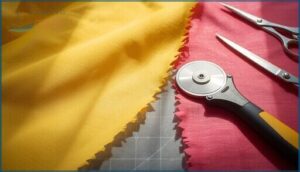
Sharp tools are your best defense against frayed edges. A 45 mm rotary cutter paired with a cutting mat gives you the cleanest lines, while fabric shears work beautifully if you prefer the traditional approach. Replace blades after a few meters—dull edges tug fibers and create ragged cuts.
| Tool | Best For |
|---|---|
| Rotary cutter | Straight seams, multiple layers |
| Fabric shears | Curves, notches, detailed work |
| Cutting mat | Surface protection, blade longevity |
| Sharp scissors | Pattern adjustments, thread snipping |
Single-layer fabric cutting on a stable table prevents distortion.
Marking and Handling Tips

Tailor’s chalk or a fading fabric pen keeps pattern alignment accurate without leaving permanent traces on viscose fabric. Mark on the wrong side to protect the surface, testing your tool on a scrap first.
Fine pins placed perpendicular to edges prevent poke-through during seam preparation.
Keep fabric flat while handling—any pulling distorts grain and compromises edge finishing later.
Choosing The Right Sewing Supplies
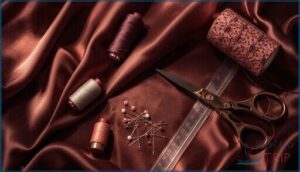
Your tools matter more than you might think when working with viscose. The right needle, thread, and accessories can mean the difference between a frustrating project and one that flows smoothly.
Here’s what belongs in your sewing kit before you cut that first piece.
Needle Types and Sizes
Your needle selection shapes everything about stitch quality on viscose. Ballpoint needles in sizes 70/10 to 80/12 glide through the fibers without snagging, while universal needles work when ballpoints aren’t handy. Skip sharp microtex needles unless your viscose has an exceptionally tight weave—they’ll damage soft fabric.
Match needle types to fabric tension and sewing speed, replacing them every eight hours to maintain perfect sewing techniques.
Thread Selection for Viscose
All-purpose polyester thread delivers the strength viscose fabric needs without sacrificing drape. Polyester thread manages repeated laundering without shrinking or fading, keeping your seams secure through every wash.
Choose 40 to 50 weight thread (Tex 25 to 30) for lightweight viscose blends—it balances fiber compatibility with fabric durability better than cotton alternatives.
This sewing thread works across most sewing techniques for beginners, making viscose fabric sewing tips easier to master. Understanding the thread weight properties is essential for achieving professional results in sewing viscose fabrics.
Essential Notions and Accessories
Pattern weights save you from pin marks that show on delicate viscose—they’re worth the investment. Keep water-soluble fabric markers handy for temporary guidelines, and grab micro scissors with serrated edges to minimize fraying during fabric preparation.
Lightweight interfacing materials stabilize necklines without stiffening your drape. Fine sewing needles (size 60/8 or 70/10) glide through fibers cleanly, while quality thread and proper sewing notions and supplies transform tricky projects into confident wins.
Best Stitching Techniques for Viscose
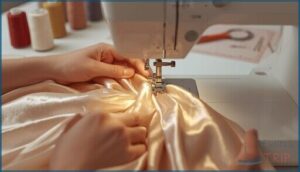
Getting viscose to behave under your needle doesn’t have to be a guessing game. The right stitch settings and foot choices make all the difference between a seam that holds beautifully and one that puckers or stretches out of shape.
Let’s break down the techniques that’ll give you smooth, professional results every time.
Recommended Stitch Lengths
Your stitch length can make or break a viscose project. Start with 2.0–2.5 mm for most viscose fabric—this sweet spot balances seam elasticity and fabric tension beautifully.
If you’re working with drapy, fluid viscose, bump it to 2.5–3.0 mm to prevent puckering.
Always test on scraps first, adjusting your sewing speed and thread selection until your sewing machine glides smoothly through those delicate fibers.
Backstitching and Securing Seams
Once you’ve set your stitch length, secure stitching becomes your safety net. Backstitch techniques require 4–6 stitches at each seam start and finish—enough for seam reinforcement without bulk. This fray prevention step locks threads beautifully on viscose fabric.
Keep your backstitch length between 2.0–3.0 mm, matching your forward stitches. Test seam finishing by gently tugging the fabric along the grain to confirm garment construction holds strong.
Using Walking and Teflon Feet
Beyond securing your stitches, the right presser foot transforms how viscose fabric feeds through your machine. A walking foot stabilizes slippery layers, preventing puckering and seam creep—essential sewing machine tips for delicate fabrics.
Switch to a Teflon foot when dealing with shiny viscose finishes; its nonstick surface reduces friction and skipped stitches. Check foot compatibility with your machine, then test both on scraps to master fabric sewing techniques.
Preventing Fraying and Finishing Edges
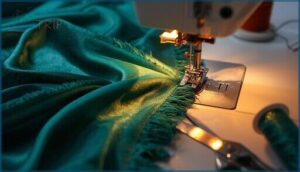
Viscose loves to fray, and those raw edges can unravel faster than you’d expect if you don’t protect them. The good news is that a few simple finishing techniques will keep your seams strong and your hems clean.
Here’s how to lock down those edges and give your project the polished durability it deserves.
Overlocking and Zigzag Methods
A serger trims and finishes viscose edges in one pass, but you’ll need to test overlock settings on scraps first. Aim for 1.5–3.0 mm stitch width and balance your thread tension to prevent puckering.
If you don’t own a serger, zigzag stitches work beautifully—use a 1.5–3.0 mm width with 1–2 mm length for edge finishing that flexes with the fabric.
Seam Finishes for Durability
Once you’ve enclosed those edges, you’ll want seam reinforcement that lasts. French seams hide raw allowances beautifully on lightweight viscose fabric—perfect for garment construction that won’t shed threads. Edge binding with Hong Kong finishes offers fray prevention on delicate weaves, while flat-felled seams create a continuous barrier against unraveling.
Here are five durable seam finishes for viscose:
- French seams for sheer blouses and dresses
- Flat-felled seams for structured garments
- Hong Kong binding for jacket and coat edges
- 3-thread overlock methods for knit-blend viscose
- Reinforced backstitching at stress points and corners
Tips for Clean Hems and Raw Edges
Crisp hems on viscose fabric demand edge stabilization before you fold. Stitch 2–3 mm from the raw edge to prevent stretching, then finish with a narrow zigzag or overlock for raw edge treatment.
A double-fold hem 6–8 mm wide gives clean results, while invisible hems with blind stitching keep seam allowance discreet.
Pin with fine silk pins to avoid marks during hemming—your fabric handling makes all the difference.
Pressing and Ironing Viscose Safely

Viscose can be tricky regarding heat—press too hot and you’ll end up with shiny spots or even scorch marks.
The good news is that with the right temperature and a few smart habits, you can keep your fabric looking fresh and smooth. Let’s walk through the essentials of pressing viscose without damaging those delicate fibers.
Temperature Settings and Press Cloths
Viscose demands a gentle touch when pressing—think of heat as your fabric’s frenemy. Start with a medium heat setting (around polyester/medium), and always test a hidden spot first to avoid scorching disasters.
- Use a cotton or muslin press cloth as your heat shield to prevent direct contact shine
- Keep your iron temperature below the viscose threshold to maintain fabric integrity
- Steam through the press cloth relaxes fibers without flattening viscose’s natural drape
- Lift and press in short passes rather than sliding across the surface
- Replace your press cloth if it shows any scorch marks or excessive dampness
Avoiding Shine and Fabric Damage
Shine happens when heat compresses viscose’s surface fibers—it’s the telltale mark of over-pressing. Keep your iron moving in brief lifts rather than long slides, and always use a press cloth for fabric shine reduction.
Set your sewing machine to low heat if you’re using an attachment press, and avoid lingering on seams. These fiber protection methods preserve viscose’s matte finish while keeping fabric care instructions simple and effective.
Steam Vs. Dry Ironing Methods
Steam’s moisture relaxes fibers fast, but dry ironing techniques give you sharper control over heat delivery and reduce water mark risks on delicate viscose fabric. Both pressing tools work—it’s about matching fabric care to your project’s needs.
- Steam settings loosen weave tension for quicker crease removal with less temperature
- Dry ironing prevents shine better on synthetic blends using precise, controlled heat
- Lightly dampen fabric with a spray bottle if steam equipment isn’t available
- Test your ironing techniques on scraps before tackling visible seams or hems
Care Tips for Viscose Garments
You’ve sewn something beautiful from viscose, and now you want it to last. The truth is, this fabric needs a gentler touch than your everyday cotton tee.
Let’s walk through the essentials for keeping your viscose garments looking fresh and feeling soft for years to come.
Washing and Drying Guidelines
You’ve conquered the sewing—now protect your hard work with smart fabric care. Always machine wash viscose fabric on a gentle cycle using cold water washing at 30 degrees Celsius or below to minimize fabric shrinkage, which stays around 2-3 percent in cool conditions. Skip the dryer entirely—air drying prevents the 10-plus percent shrinkage that heat causes. Follow care labels religiously, and your viscose pieces will last beautifully.
To guarantee the longevity of your viscose garments, consider using gentle cleaning methods to preserve their texture and color.
Ironing and Storage Recommendations
Your iron can be viscose’s best friend or worst enemy. Set it to low-medium heat—no higher than 110°C—and always use a press cloth to avoid shine. Press from the wrong side when you can, and let the fabric cool flat before hanging.
For fabric storage, skip plastic bags—breathable garment bags prevent humidity buildup and keep your viscose pieces ready to wear.
Maintaining Fabric Appearance Over Time
Proper care keeps your viscose looking fresh beyond the first wear. Color preservation starts with cool water washes and mild detergent—skip the bleach entirely. Limit wash frequency by spot-cleaning between wears, and always turn garments inside out to protect the surface. These small habits add up to serious fabric longevity and dye stability.
- Fold garments flat rather than hanging to prevent shoulder stretching
- Store away from direct sunlight to slow color fading
- Use padded hangers only for short-term hanging needs
- Keep pieces in breathable bags to reduce dust and friction
- Treat spills from perfume or alcohol immediately to avoid permanent marks
Frequently Asked Questions (FAQs)
Can viscose fabric be dyed at home?
Yes, you can dye viscose at home using reactive dyes designed for cellulose fibers. Proper dye bath preparation and colorfastness testing guarantee vibrant results, though home dyeing safety precautions are essential throughout the process.
How do you fix puckered seams on viscose?
Loosen your thread tension and re-press the seam with a pressing cloth on medium heat.
If puckering persists, restitch using a walking foot, slightly longer stitch length, and reduced presser foot pressure for better fabric tension control.
What interfacing works best with viscose fabric?
Like pairing tea with honey, lightweight fusible interfacing complements viscose beautifully. Choose polyester-based adhesive types for shrink resistance, always weight-matching fabric to interfacing. Non-fusible options preserve fluid drape.
Test first—every swatch reveals compatibility secrets before committing to your garment.
Does viscose stretch out after wearing it?
Pure viscose has minimal stretch recovery, so garments can develop bagging at knees and elbows with wear.
Viscose blends with elastane resist garment distortion better, maintaining shape through improved stretch recovery and reduced fiber creep.
How do you prevent viscose from slipping while sewing?
Pinning techniques and fabric grip tools keep viscose from shifting. Fine pins perpendicular to seams, stabilizer sprays, and a walking foot provide feed control during sewing. Fabric handling improves with these sewing aids.
Conclusion
Remember the fairy tale where straw spun into gold? That’s viscose—plant fibers transformed into liquid luxury.
You’ve learned the viscose fabric sewing tips that turn frustration into flow: prewash without mercy, cut with patience, stitch with a light touch. Now your needles won’t snag, your seams won’t pucker, and your hems will hang just right.
The fabric that once fought you’ll finally drape like it was always meant to—effortlessly beautiful.
- https://poundfabrics.co.uk/pages/search-results-page?q=viscose%20fabric
- https://mellysews.com/types-of-thread-for-sewing/
- https://www.superiorthreads.com/education/rayon-thread
- https://www.madeira.com/embroidery-solutions/embroidery-supplies/industrial-embroidery-threads/rayon-viscose
- https://candlethreadusa.com/blog/which-one-is-better-polyester-or-viscose-rayon-embroidery/