This site is supported by our readers. We may earn a commission, at no cost to you, if you purchase through links.
single needle and thread can do something a sewing machine never will—give every seam a human signature. Tailors have known this for centuries, which is why the finest suits, leather goods, and heirloom quilts still get finished by hand.
The stitches behind that work aren’t random; each one solves a specific problem, whether that’s holding denim under pressure or vanishing into a silk hem without a trace. Knowing the different types of hand stitching techniques changes how you see fabric—and what you can do with it.
Table Of Contents
Key Takeaways
- Every hand stitch has a specific job — running stitch for quick seams, backstitch for strength, and prick stitch for near‑invisible finishes on tailored edges.
- The saddle stitch is the gold standard for durability: two needles, one thread, and a lock that holds leather and canvas through serious wear.
- Finishing stitches aren’t optional — overcast, whip, and slip stitches are what keep raw edges from unraveling and make the difference between a polished piece and a messy one.
- Specialized stitches like the ladder stitch and French tack solve problems that machines can’t — invisible closures, hidden lining control, and pattern transfers without ink or damage.
Basic Hand Sewing
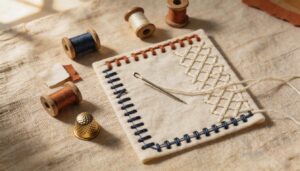
Basic hand sewing starts with just a handful of stitches — but the right ones make all the difference. Each technique has its own job, and knowing which to reach for is half the skill.
Once you learn when to use each one, you’ll find that a few core hand sewing stitches can carry you through almost any project with confidence.
Here are the core stitches worth learning first.
Running Stitch Technique
The running stitch is where every hand sewing journey begins. Think of it as your foundation — simple, reliable, and surprisingly flexible. It’s a basic up‑and‑down hand stitch commonly used in embroidery and hand‑basting.
Push the needle up through fabric, then down again at even intervals, creating that familiar dashed line. Hand stitching techniques don’t get cleaner than this.
- Keep stitch length between 1–3mm for neat seams
- Use fabric tension and an embroidery hoop for control
- Rhythm practice to build speed and consistency
- Start with lightweight fabric choice like muslin or cotton
- Try bead integration or color shifts for decorative line work
Even Backstitch Method
Once you’ve got the running stitch down, the even backstitch is your natural next step — and it’s genuinely stronger. Each stitch loops back into the previous exit point, locking thread in place. That’s what gives it such reliable seam reinforcement on cotton, linen, and denim.
| Feature | Detail |
|---|---|
| Stitch Spacing | 1–2mm apart |
| Thread Tension | Firm, not puckering |
| Fabric Suitability | Woven, medium-weight |
| Edge Reinforcement | Strong, continuous line |
| Visual Consistency | Mimics machine stitching |
Half-Backstitch Application
The half-backstitch sits right between speed and strength — less rigid than a full backstitch, but far more reliable than a running stitch for lightweight seam reinforcement. Each stitch moves forward, then hitches back halfway, keeping your seam line soft and flexible.
It’s your go-to for temporary stitching, fine outline work, and embroidery keylines where bulk would ruin the detail.
On delicate cotton or linen, this hand stitching technique manages fabric edge detailing without puckering or pulling.
Prickstitch Usage
Where the half-backstitch gives you flexibility, prickstitch gives you near-invisibility. It’s the stitch tailors reach for when the finish has to look clean from the outside — think lining attachment, facings reinforcement, or collar edge finishing where bulk simply can’t show.
Here’s what makes prickstitch worth mastering in hand sewing:
- Tiny surface dots stay neat on delicate fabric hems
- Works beautifully for cuff reinforcement without added stiffness
- Pairs with fine thread for discreet hand stitching results
- Enables smart stitch selection for fabric types across hand embroidery projects
Pickstitch Benefits
Pickstitch earns its place in tailoring because it does two jobs quietly — keeping edges flat and reinforcing seams without showing off.
| Benefit | What It Does | Best Use |
|---|---|---|
| Edge Flatness | Prevents rolling at seams | Jacket lapels, collars |
| Seam Tension Control | Distributes stress evenly | Pockets, hems |
| Fabric Compatibility | Works on silk to wool | Delicate and heavy fabrics |
Stitch selection for fabric types matters here. That subtle visual cue of tiny, evenly spaced dots signals real craftsmanship — and hand stitching durability considerations don’t get better than this for seam reinforcement.
Decorative Hand Stitches
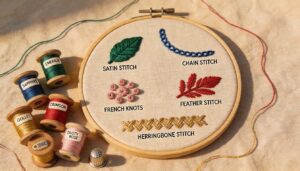
Decorative stitches are where hand sewing gets genuinely fun. You’re not just holding fabric together — you’re adding something that belongs to you. Here are five stitches worth learning first.
Once you’re hooked on decorative work, choosing the right thread colors becomes just as creative as the stitches themselves.
Overhand Stitch Tutorial
The overhand stitch is a quiet workhorse — simple, clean, and surprisingly satisfying once you get the rhythm. It’s one of the best beginner practice stitches for hand sewing basics.
- Start with knot reinforcement at your thread end
- Work small, even stitch spacing along the edge
- Finish with trim attachment for lace or ribbon
Edge sealing doesn’t get more approachable than this.
Whip Stitch Guide
The whip stitch wraps thread diagonally over raw edges — neat, reliable, and one of the most flexible hand stitching techniques you’ll use. Nail your edge alignment first; uneven fabric shifts everything. Keep thread tension consistent so stitches lie flat without puckering.
It’s compatible with cotton, linen, and even leather.
Try colored thread for decorative variations that double as a design statement.
Cross-Stitch Patterns
Cross-stitch is fundamentally pixel art on fabric — each X lands on a specific square of Aida fabric, and together they build something beautiful. Start by reading your Color Symbol Legend carefully; it maps every floss color to its symbol on the chart.
Pay attention to Floss Strand Count, since one strand gives delicate detail while two add boldness. Use Shading Techniques with close color families for depth, and always check your Pattern Sizing Guide before cutting fabric.
Chain Stitch Decorations
Think of chain stitch as drawing with thread — every loop connects to the next, building flowing lines across fabric. It’s one of the most adaptable decorative hand stitches you’ll use.
- Try Lazy Daisy Chains for flower petals or Stem Chains to trace vines naturally.
- Use Spiral Chain Fill or Double Chain Rope lines for bold, textured areas.
- Add Beaded Chain Embellishment by slipping beads inside loops for sparkle.
Buttonhole Stitch Instructions
Buttonhole stitch is hand sewing’s armor — small, tight knots that lock a raw edge against fraying.
Bring your needle up at the inner edge, loop the thread behind it, then pull through. That loop forms each knot.
Keep knot spacing even, your thread tension consistent, and reinforce corners with bartacks. Try metallic thread on dark fabric for striking edge reinforcement.
Hemming and Finishing
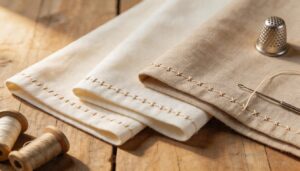
A clean hem can make or break a finished piece. Knowing which stitch to use — and when — is what separates a polished result from a fraying edge.
Here are the key hemming and finishing techniques worth adding to your skill set.
Blind Hemming Stitch Technique
Mastering the blind hem stitch transforms your hemming and finishing methods completely. Press your fabric first, then fold the hem allowance to the wrong side — fold alignment keeps everything precise. Use a matching thread and maintain steady thread tension; too tight, and you’ll get puckers. The needle angle matters too: a slight tilt helps the thread glide without dragging.
Key steps for invisible seam methods:
- Catch only one or two outer threads per stitch
- Bury your end knot inside the fold
- Use a zigzag anchor at the edge for reinforcement
- Keep stitch length short for cleaner edge reinforcement
Blind Catchstitch Method
The blind catchstitch takes invisible seam methods a step further.
Where the blind hem catches the surface, this stitch tucks everything beneath the fold.
Needle selection matters — go slender.
Thread matching is non-negotiable; even a slight contrast shows.
Careful fold placement and consistent stitch depth are your best puckering prevention tools.
Done right, edge visibility drops to zero, making it a quiet champion of seam reinforcement strategies.
Overcast Stitch Application
Once you’ve hidden a seam, you’ll want to protect those raw edges too. That’s where the overcast stitch earns its place. It’s a foundational fabric edge finishing technique — wrapping thread diagonally over the edge for reliable fray prevention and seam durability.
- Match your thread to your fabric weight
- Space diagonal stitches 1/8–1/4 inch apart
- Wrap each stitch firmly for edge reinforcement
- Use wider coverage on heavyweight overcast projects
Hemming Stitches Guide
Raw edges are handled — now let’s talk about hems. A blind hem anchor stitch secures your starting point invisibly inside the fold, keeping hand sewn hems clean from the outside.
Slip hem tension matters too; pull too tight and lightweight fabric puckers. Match your thread weight to the fabric, stabilize delicate pieces first, and your invisible hem will look simple.
Finishing Stitches Tutorial
Every seam deserves a strong send-off. Finishing stitches — the overcast stitch, whip stitch, or slip stitch — lock your edges and stop fraying before it starts. Nail your knotting techniques and keep thread tension even to avoid puckering.
Weave ends back through previous stitches for invisible ends. Smart fabric stabilization and blind hem stitch work together for a truly polished finish.
Specialized Hand Stitches
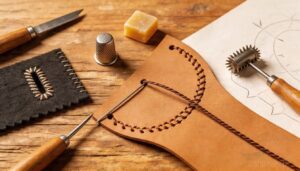
Some stitches go beyond the basics — they’re built for specific jobs that everyday stitches just can’t handle. Whether you’re reinforcing a buttonhole, transferring a pattern, or joining heavy leather, the right specialized stitch makes all the difference.
Here are five you’ll want in your toolkit.
Buttonhole Stitch Fix
A fraying buttonhole isn’t a lost cause — it’s just waiting for the right fix. The buttonhole stitch is one of the most reliable hand sewing repair methods you can learn.
Work tight, evenly spaced loops around the edge, keeping stitch tension moderate so the fabric doesn’t pucker.
This technique covers most repair applications well, from shirts to jackets. Match your thread carefully for finishing details that look intentional, not patched.
Tailor’s Tack Transfer
Tailor’s tacks are one of those hand sewing basics every maker should know. They use temporary loops of contrast thread to transfer pattern markings with real marking accuracy — no ink, no damage. This layer interaction works beautifully on delicate fabrics where pins cause holes.
- Pick a contrast thread that pops against your fabric
- Push loose stitches through all layers at each pattern alignment point
- Leave small loops, don’t pull tight
- Separate layers gently, snipping the loops between them
- Remove tails once pieces are cut and aligned
Clean, precise, and beginner-friendly.
French Tack Connection
French tacks are the quiet fixers inside your favorite lined coat. They handle Lining Alignment without adding bulk — pure Bulk Reduction at work. Each adjustable loop sits loosely between layers, giving you Adjustable Loop Length and Alteration Flexibility if the fit ever changes. No stiff joins, no Fabric Sliding. Just clean, hidden control.
French tacks quietly align lining and reduce bulk, offering hidden flexibility without stiff joins
| Detail | Description | Beginner Tip |
|---|---|---|
| Placement | Hem or sleeve join | Mark spots before stitching |
| Loop Length | Short for hems, longer for coats | Match to fabric stiffness |
| Thread Type | Strong, matching thread | Doubled thread holds better |
| Securing End | Pull needle through final loop | Tug firmly to lock |
| Best Fabrics | Custom linings, silky layers | Test on scrap first |
Flat Catchstitch Hemming
The flat catch stitch is your secret weapon for clean, hidden hems on structured garments. It’s a staple of hand stitching for beginners and pros alike.
By mastering Edge Tension Control and Fabric Edge Preparation, you get Seam Visibility Reduction without bulk.
- Catches only edge fibers — nearly invisible outside
- Ideal for Lightweight Lining Application on coats and jackets
- Edge Stabilization Techniques keep hems flat and smooth
Saddle Stitch Strength
Think of the saddle stitch as the backbone of hand stitching techniques — built to last. Two needles, one thread, crossing through every hole: that’s your Load Distribution working in real time.
Your Material Choice matters here. Nylon or polyester thread boosts pullout resistance by up to 30 percent over cotton. Nail your Edge Preparation, keep consistent Stitch Spacing, and control Thread Tension evenly — and you’re strengthening seams with hand stitches that genuinely hold.
| Factor | Weak Approach | Strong Approach |
|---|---|---|
| Material Choice | Cotton thread | Waxed nylon/polyester |
| Stitch Spacing | Irregular gaps | Uniform 1/4-inch intervals |
| Thread Tension | Over-tightened | Moderate, even tension |
| Edge Preparation | Raw, unfinished | Clean, prepped edge |
Advanced Hand Stitching
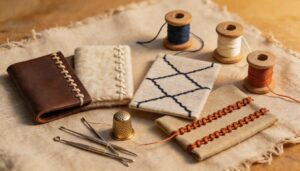
Once you’ve got the basics down, it’s time to push your skills further. Elevated hand stitching opens up a whole new level of control, strength, and precision.
Here are five techniques worth adding to your toolkit.
Saddle Stitch Technique
When durability is non‑negotiable, saddle stitch delivers. Using two needles and one thread, you work both sides simultaneously — each pass locks the last. It’s the preferred option for leather, heavy canvas, and anywhere seam strength truly matters.
- Thread both needles on a single strand
- Push needle one through, then cross needle two
- Pull both sides evenly to avoid puckering
- Finish with a secure backstitch knot
Tent Stitch Application
Saddle stitch manages the heavy lifting — tent stitch manages the beauty. In hand embroidery, this small diagonal stitch is your best friend for Background Filling and Color Blocking.
Canvas Preparation matters here: use mono canvas and keep Tension Management steady throughout.
Try the basketweave or continental embroidery stitch variations for large areas.
Consistent Edge Finishing and even hand stitching techniques make the difference between flat and polished.
Topstitch Guide
Topstitching is where structure meets style. Place your stitches about 1/8 inch from the seam edge, and keep your Stitch Length between 3.0–3.5mm for clean, visible lines.
Thread Contrast is your call — match for subtle, contrast for bold. Pay attention to Edge Alignment using chalk marks as guides.
For beginners, this is one of the best hand stitching techniques to practice first. Twin Needle setups make parallel lines easy.
Whipstitch Tutorial
Where topstitching adds polish on the outside, whip stitch works on the edges — and it’s one of the most satisfying beginner hand stitch techniques to learn.
- Great for edge reinforcement on felt projects
- Ideal for toy assembly closures
- Works with any needle type and thread choice
- A true step-by-step stitch tutorial favorite
Keep your diagonal wraps even, and hand sewing suddenly feels smooth.
Ladder Stitch Benefits
ladder stitch as hand sewing’s best‑kept secret. It creates an invisible seam by alternating entry points on opposite edges, hiding the thread completely beneath the surface.
Even tension is everything here — pull too tight, and you’ll distort the edge alignment. Get it right, and you’ll have a professional finish that rivals machine work.
It’s also your go‑to for a quick repair on stuffed toys, cushions, or split seams.
Hand Sewing Techniques
Good technique is less about talent and more about knowing the right moves. Once you understand a few key methods, everything clicks into place.
Here’s what you need to practice first.
Threading and Inserting Needle
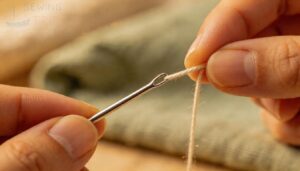
Getting your needle threaded is half the battle. Start with a clean cut — no frayed ends, no fighting the eye.
For easier entry, try the Rub Trick for Threading a Needle: flatten the thread into a small loop before guiding it through. Eye alignment matters, so keep the needle facing upward in good light.
Mind your needle angle 5° to the right to reduce hand strain. Keep your thread tail length around 18 inches, and you’re ready to stitch.
Backstitch Motion
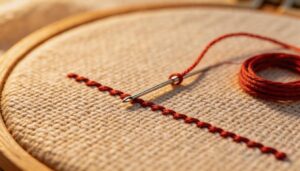
Mastering the backstitch starts with one key habit: moving backward to go forward. Push your needle ahead for the Forward Anchor Stitch, then bring it back to fill the same gap — that’s the Backward Needle Travel.
Keep Even Tension Control so stitches sit flat, not puckered.
Consistent Stitch Length and even stitch spacing matter here.
Sharp Turn Handling stays smooth because backstitch follows curves without leaving gaps.
Cross Stitch Grid
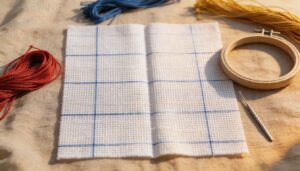
A solid grid is the backbone of any cross stitch project. Start by finding your fabric’s center using Center Alignment Methods — fold it both ways and mark the midpoint.
From there, grid marking techniques keep everything on track:
- Use Water‑Soluble Markers for clean, removable lines
- Weave Nylon Fishing Line for a durable, reusable grid
- Try Pre‑Gridded Fabric to skip marking entirely
- Grid every 10 squares to control stitch density
- Match stitch spacing to your pattern chart consistently
Blanket Stitch Loop
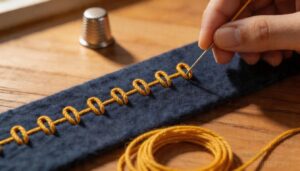
The blanket stitch is one of the most satisfying decorative hand stitches to learn. Position your needle a quarter-inch from the edge, bring the thread up, then loop it before pulling through — that’s your Edge Reinforcement ridge forming.
Keep your Loop Height consistent, around 2.5–5mm depending on fabric weight.
Try Contrast Thread for a bold look, or Stacked Loops for texture.
Material Compatibility is strong across wool, felt, and cotton.
Slip Stitch Fold
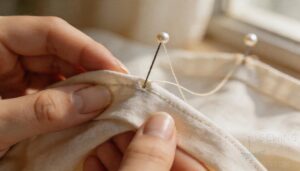
The slip stitch is your secret weapon for invisible hems. Push your needle between the folded seam, catching just the fold on each side — that hidden join keeps thread completely out of sight.
Use fine silk thread and an anchor stitch at the start to hold everything steady.
Finish with an internal knot tucked inside. Clean fabric edge finishing, no visible hand stitch patterns, just a smooth close.
Frequently Asked Questions (FAQs)
What are the 12 types of stitching?
There are 12 essential types of hand stitches spanning basic, decorative, hemming, and structural categories.
Each stitch classification fulfills a specific purpose, from thread selection to stitch tension, matching hand stitch patterns to fabric compatibility.
What are three basic hand stitching techniques?
Three hand stitching basics carry most beginners through their first projects: the running stitch for quick seams, the backstitch for strength, and the basting stitch for temporary seam holds before committing.
Can sewing help with stress relief?
Yes, it really can. The Rhythmic Motion and Tactile Grounding of Mindful Stitching activate your parasympathetic nervous system, offering genuine Anxiety Relief.
Even simple hand stitching for beginners creates Creative Flow that quiets a busy mind.
What are the 7 types of stitches?
Seven hand stitching techniques cover most projects: running stitch, backstitch, basting stitch, slip stitch, blanket stitch, whipstitch, and chain stitch.
Each fulfills a different purpose — from seams to hems to decorative edges.
How many types of hand stitch are there?
There are over 20 types of hand stitches spanning functional groupings — from basic hand stitch techniques like running and backstitch to decorative embroidery — each rooted in centuries of historical evolution and regional variations across textile traditions.
What are the seven hand stitches?
Every hand sewing project builds on seven core stitches: running stitch, backstitch, split stitch, satin stitch, blanket stitch, buttonhole stitch, and chain stitch.
Stitch selection and tension shape both strength and finish.
What is the strongest hand stitch?
The backstitch is your strongest option. Each stitch overlaps the last, building a reinforced seam that rivals machine stitching.
For leather or canvas, the saddle stitch wins — two needles, one thread, nearly unbreakable.
How long does hand-stitched clothing typically last?
With proper care, hand-stitched clothing can last 3 to 20 years.
Fabric choice, seam reinforcement, and maintenance practices all play a role. Stitch density and strength matter just as much as how you wash and store each piece.
What tools are essential for hand sewing beginners?
Grab a few key sewing tools before your first stitch: fabric scissors, a needle set, measuring tape, a pin cushion, thread spool, and a needle threader. Simple kit, solid start.
Can hand stitching replace machine sewing completely?
Yes, hand stitching can replace machine sewing — but it’s a trade-off. You gain precision and control, especially for repairs or detailed tailoring.
The real cost is time. Large projects aren’t practical by hand.
Conclusion
Cut from the same cloth, you now know the different types of hand stitching techniques. With practice, your stitches will become second nature. Mastering these techniques takes time, but it’s worth it.
You’ll find that hand stitching is a skill that pays off, giving your work a personal touch. Different types of hand stitching techniques will improve your sewing, making every seam a work of art.