This site is supported by our readers. We may earn a commission, at no cost to you, if you purchase through links.
Threading a needle by hand feels like a small tax you pay before every project—squinting, re-wetting thread, missing the eye three times in a row. Modern sewing machines with automatic features have quietly made that ritual obsolete, along with a dozen other friction points that used to slow down even experienced sewers.
A built-in threader, automatic tension adjustment, and programmable stitch memory can cut setup time from ten minutes to under two. Whether piecing a quilt, hemming jeans, or stitching embroidery, the right machine works with you instead of against you—and the difference shows up immediately in your finished seams.
Table Of Contents
- Key Takeaways
- Top 10 Sewing Machines With Automatic Features
- 1. Singer Heavy Duty Sewing Machine
- 2. Singer Start 1304 Sewing Machine
- 3. Brother XR9550 Computerized Sewing Quilting Machine
- 4. Singer M3500 Sewing Machine
- 5. Singer Heavy Duty 4452 Sewing Machine
- 6. Singer Quantum Stylist 9960 Sewing Machine
- 7. Juki TL2000Qi Sewing Quilting Machine
- 8. Brother SE600 Embroidery Sewing Machine
- 9. Brother XM2701 Lightweight Sewing Machine
- 10. Mini Portable Sewing Machine for Beginners
- Key Automatic Sewing Features
- Automatic Versus Mechanical Machines
- Computerized Machine Benefits
- Buying Considerations Before Choosing
- Price Ranges and Value
- Best Features by User Type
- Setup, Maintenance, and Care
- Common Automatic Feature Problems
- Frequently Asked Questions (FAQs)
- Conclusion
Key Takeaways
- Automatic features like needle threading, tension adjustment, and stitch memory cut setup time dramatically — so you spend more time creating and less time fussing.
- Your skill level and fabric type should drive your machine choice more than price or stitch count alone.
- Computerized machines offer serious creative range with built-in stitch libraries, memory functions, and embroidery capabilities — but they need more maintenance than mechanical models.
- Regular cleaning, correct oiling, and timely needle changes keep every automatic feature running reliably for years.
Top 10 Sewing Machines With Automatic Features
Finding the right automatic sewing machine doesn’t have to feel overwhelming. These 10 models cover a wide range of budgets, skill levels, and project types — so there is a solid option no matter where you’re starting from.
Whether you’re a total beginner or ready to tackle complex projects, this guide to the best automatic sewing machines for every budget and skill level makes the decision a whole lot easier.
Here’s a closer look at each one.
1. Singer Heavy Duty Sewing Machine
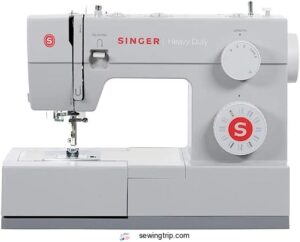
The Singer Heavy Duty 4423 is built for sewists who don’t want to slow down. With a high-torque motor pushing up to 1,100 stitches per minute, it tears through denim, canvas, and thick layers without missing a beat.
You get 23 built-in stitches, an automatic needle threader, LED lighting, and a metal interior frame that keeps vibration low. These features ensure durability and precision for demanding projects.
It weighs about 14.6 lb — sturdy, not portable — but if heavy fabrics are your territory, this machine holds its ground.
| Best For | Sewists who regularly work with heavy fabrics like denim or canvas and want a fast, reliable machine that can keep up with serious projects. |
|---|---|
| Built-in Stitches | 23 stitches |
| Weight | 14.6 lb |
| Bobbin System | Top drop-in Class 15 |
| Auto Needle Threader | Yes |
| Work Lighting | LED |
| Warranty | 25-year frame |
| Additional Features |
|
- Blazing fast at 1,100 stitches per minute — great for getting through big projects without losing your mind
- Tough metal frame handles thick, layered fabrics without the skipping and stalling you’d get from a lighter machine
- Auto needle threader and clear bobbin window save time and eye strain, especially during long sessions
- Louder than most home machines, so late-night sewing might not go over well with the household
- Stock needles won’t cut it for very heavy fabrics — you’ll need to grab heavy-duty ones separately
- At nearly 15 lbs, it’s not something you’re tossing in a bag and taking to a class
2. Singer Start 1304 Sewing Machine
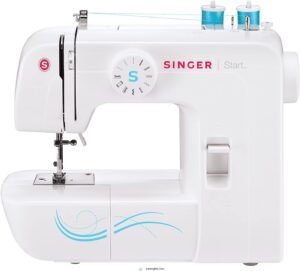
If the Heavy Duty 4423 is a workhorse, the Singer Start 1304 is its lighter, friendlier sibling. It’s designed for beginners seeking a straightforward way to learn sewing without feeling overwhelmed.
The machine offers six essential stitches: straight, zigzag, blind hem, scallop, satin, and a four-step buttonhole. It also includes free-arm capability, making it easy to handle sleeves and cuffs.
Weighing just 11.5 lb, the Singer Start 1304 is easy to move and store, ideal for crafters with limited space.
Setup is simplified by quick threading guides printed directly on the machine’s body, letting users focus on sewing rather than troubleshooting.
| Best For | Beginners and occasional sewers who want a simple, portable machine for basic home repairs, hemming, and light garment projects. |
|---|---|
| Built-in Stitches | 6 stitches |
| Weight | 11.5 lb |
| Bobbin System | Class 15 drop-in |
| Auto Needle Threader | No |
| Work Lighting | None listed |
| Warranty | 25-year limited |
| Additional Features |
|
- Easy to learn on — six essential stitches cover most beginner needs without the overwhelm of too many options
- Lightweight and compact, so it’s easy to store in a small space or take to a sewing class
- Comes with a solid accessory kit (needles, bobbins, seam ripper) so you’re ready to sew right out of the box
- Fixed stitch width means you can’t adjust it for thicker fabrics or more decorative work
- Only six stitches, which will feel limiting if you eventually want to tackle more advanced projects
- Can jam if the bobbin or thread isn’t seated just right, so setup needs to be done carefully each time
3. Brother XR9550 Computerized Sewing Quilting Machine
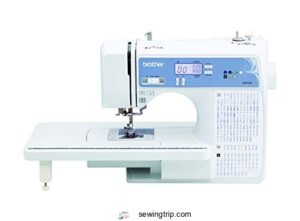
Ready to level up from basic to bold? The Brother XR9550 is where sewing gets seriously interesting. It packs 165 built-in stitches, an automatic needle threader, and a jam-resistant drop-in bobbin—all in a 10.1 lb frame you can actually carry.
The 3-line LCD makes stitch selection fast and clear. And with the detachable wide table, quilting large blocks stops being a wrestling match.
At $269.99, it delivers computerized control without the intimidating price tag.
| Best For | Beginners and hobbyists who want to grow into quilting and garment sewing without spending a fortune on a high-end machine. |
|---|---|
| Built-in Stitches | 165 stitches |
| Weight | 10.1 lb |
| Bobbin System | Top drop-in |
| Auto Needle Threader | Yes |
| Work Lighting | None listed |
| Warranty | 25-year limited |
| Additional Features |
|
- 165 built-in stitches plus an automatic needle threader and drop-in bobbin make it easy to jump in and stay focused on sewing, not troubleshooting.
- The detachable wide table and free-arm design handle everything from big quilt blocks to tight cuffs and sleeves.
- Lifetime technical support and a 25-year warranty give you real peace of mind for the price.
- The hard storage cover reportedly doesn’t fit well for some users, which is frustrating if portability is a priority.
- Heavy plastic construction means a serious defect could mean replacing the whole machine rather than fixing it.
- Long-term users have noticed a slight leftward stitch drift and wear on the automatic button label over time.
4. Singer M3500 Sewing Machine
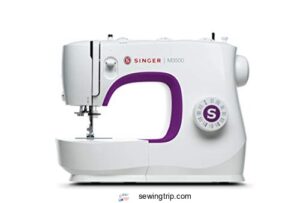
Want something lighter on the wallet but still loaded with smart features? The Singer M3500 fits that bill. It offers 110 built-in stitches, an automatic needle threader, a one-step buttonhole, and automatic tension adjustment—all in a 13-lb frame that ensures portability.
The machine’s free arm simplifies tasks like cuffs and sleeves, while its compact design prevents it from anchoring you to one spot. It’s a solid pick for those building skills, providing a capable tool that keeps pace without unnecessary complexity.
| Best For | Beginners, hobbyists, and older users who want an easy-to-use machine that handles everyday sewing projects without a steep learning curve. |
|---|---|
| Built-in Stitches | 110 stitches |
| Weight | 13 lb |
| Bobbin System | Top drop-in |
| Auto Needle Threader | Yes |
| Work Lighting | LED |
| Warranty | Not specified |
| Additional Features |
|
- 110 built-in stitches plus a one-step buttonhole maker give you plenty of options for everything from basic repairs to garment projects
- The automatic needle threader and LED worklight make setup quick and easy, especially in low-light spaces
- At just 13 lbs with a free arm included, it’s light enough to move around and handy for tricky spots like sleeves and cuffs
- Some users run into occasional bobbin jams, and the manual isn’t always in the box—so expect some YouTube troubleshooting
- Only works with 110 V outlets, making it a no-go for UK and EU homes without a voltage converter
- Customer support can be hit or miss, which makes resolving issues a bit more frustrating than it should be
5. Singer Heavy Duty 4452 Sewing Machine
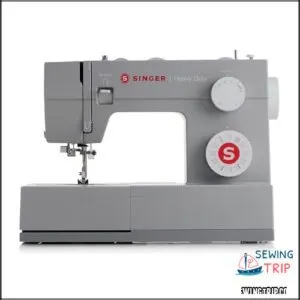
If the Singer Heavy Duty 4452 is tailored for heavy fabrics, its high-torque motor powers through denim, canvas, and leather at up to 1,100 stitches per minute without breaking a sweat. The machine’s full metal frame ensures stability under pressure, making it a reliable choice for demanding projects.
It offers 32 built-in stitches, a built-in automatic needle threader, and a top-drop-in bobbin for quick setup. These features streamline the sewing process, allowing you to focus on creativity without technical delays.
At $219.99, this workhorse delivers unmatched efficiency, enabling you to tackle thick materials at high speeds without compromise.
| Best For | Sewers who regularly work with heavy fabrics like denim, canvas, or leather and want a durable, feature-packed machine without jumping to an industrial price tag. |
|---|---|
| Built-in Stitches | 32 stitches |
| Weight | 17.6 lb |
| Bobbin System | Top drop-in |
| Auto Needle Threader | Yes |
| Work Lighting | None listed |
| Warranty | Not specified |
| Additional Features |
|
- Powerful high-torque motor punches through thick, multi-layer fabrics with ease — denim and canvas are no problem
- Comes loaded with useful accessories (walking foot, quilting guide, zipper foot) so you’re not buying extras right out of the box
- Top-drop-in bobbin with a clear cover makes thread monitoring simple and keeps jam-related headaches to a minimum
- The knobs and dials aren’t clearly labeled, so expect to have the manual nearby, especially when dialing in tension or switching stitches
- Can get noisy at high speeds, and zig-zag performance on stretchy fabrics leaves something to be desired
- Ships with a US plug only — international buyers will need a voltage converter, which is an added cost and hassle
6. Singer Quantum Stylist 9960 Sewing Machine
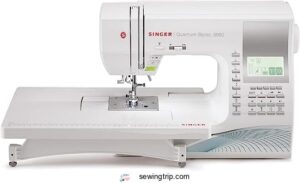
The Singer Quantum Stylist 9960 doesn’t just sew — it expands creative possibilities. With 600 built-in stitches and 1,172 stitch applications, your creative range is practically limitless.
The automatic needle threader, built-in thread trimmer, and one-step buttonhole function cut setup time dramatically. A drop-in bobbin and variable speed control keep you in charge at every stage.
Whether you’re quilting thick layers or finishing fine details, this machine adjusts to your needs — not the other way around.
| Best For | Home sewers and hobbyists who want a feature-packed machine for quilting, garment making, and creative projects without stepping up to an industrial model. |
|---|---|
| Built-in Stitches | 600 stitches |
| Weight | 14.6 lb |
| Bobbin System | Top drop-in Class 15 |
| Auto Needle Threader | Yes |
| Work Lighting | LED |
| Warranty | Not specified |
| Additional Features |
|
- Huge stitch library with 600 built-in stitches and 1,172 applications — plenty of variety for everything from basics to decorative work
- Automatic needle threader and built-in thread trimmer save real time, especially on long or repetitive sewing sessions
- Handles heavy, multi-layer fabrics well, making it a solid pick for quilters and anyone working with thick materials
- The throat plate is on the smaller side, which can get frustrating when you’re working on large quilts or wide fabric
- A lot going on for beginners — the sheer number of stitches and settings can feel overwhelming at first
- At nearly 15 pounds, it’s not easy to haul around, and the included dust cover won’t do much if you need to transport it
7. Juki TL2000Qi Sewing Quilting Machine
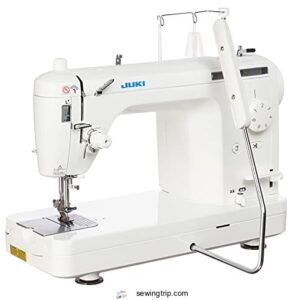
Built for quilters who mean business, the Juki TL2000Qi operates at 1,500 stitches per minute, supported by an aluminum die-cast frame that minimizes vibration. This robust construction ensures exceptional stability, even when handling large projects like king-size quilts.
The machine’s stability significantly eases the challenge of maneuvering bulky fabrics, making it a reliable choice for demanding tasks.
Key features include an automatic needle threader, a heel-activated thread cutter, LED lighting, and a knee-lift presser foot, streamlining the quilting process for efficiency.
As a straight-stitch specialist with no decorative stitching options, the TL2000Qi excels in heavy-duty quilting and thick-fabric applications, where its performance is unmatched.
| Best For | Quilters and sewists who work with large, heavy, or thick materials and need a fast, rock-solid straight-stitch machine that can keep up with serious projects. |
|---|---|
| Built-in Stitches | 1 stitch |
| Weight | 25.4 lb |
| Bobbin System | Standard bobbin |
| Auto Needle Threader | Yes |
| Work Lighting | LED |
| Warranty | Not specified |
| Additional Features |
|
- Screaming fast at 1,500 SPM with an aluminum frame that stays steady — no rattling around even on king-size quilts
- Auto thread cutter and LED lighting make long sewing sessions a lot less tedious
- Handles tough stuff like canvas, leather, and thick batting without breaking a sweat
- Straight stitch only — if you ever need a buttonhole or a zigzag, you’re out of luck
- No built-in speed control, so beginners may find it a handful at full throttle
- The automatic needle threader is hit or miss, and you’ll need a voltage converter outside of 110V regions
8. Brother SE600 Embroidery Sewing Machine
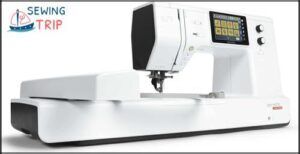
The Brother SE600 opens a new door if you want both embroidery and everyday sewing in one machine. It includes 80 built-in embroidery designs, a 4×4-inch embroidery field, and a 3.2-inch color LCD touchscreen for intuitive design editing.
To keep your SE600 running smoothly through all those embroidery projects, understanding how a sewing machine servo motor works can help you catch issues before they turn into costly repairs.
The touchscreen simplifies customization, allowing you to rotate, mirror, and resize patterns right on screen. This streamlines the creative process without external software.
Setup is efficient, thanks to the automatic needle threader and top drop-in bobbin, which minimize preparation time. These features ensure quick setup for both embroidery and sewing tasks.
Weighing 18–20 pounds, the machine remains portable enough for a home studio without sacrificing capability, making it versatile for various projects.
| Best For | Hobbyists and home sewers who want to tackle decorative embroidery, cosplay projects, and light quilting without juggling two separate machines. |
|---|---|
| Built-in Stitches | Multiple stitches |
| Weight | 47 lb |
| Bobbin System | Standard bobbin |
| Auto Needle Threader | Semi-automatic |
| Work Lighting | LED |
| Warranty | Not specified |
| Additional Features |
|
- Hands-free operation is a genuine time-saver — the programmable foot control with back-kick means you stay in the flow while sewing
- Built-in embroidery designs, on-screen editing, and multiple file format support make customizing patterns surprisingly straightforward
- The cast-aluminum frame and LED lighting give it a solid, well-lit workspace feel that cheaper machines just don’t have
- That 40-second startup time every single session gets old fast, especially mid-project
- The menu system is a maze, and having to download a 170-page manual instead of getting one in the box is a frustrating first impression
- Heavy fabrics, thick layers, and bag-making are off the table — and ongoing maintenance like oiling and bobbin adjustments adds up quickly
9. Brother XM2701 Lightweight Sewing Machine
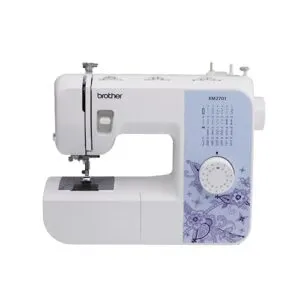
The XM2701 delivers capable and portable performance without the price tag. At $149, it weighs just 12.6 lb and offers 27 built-in stitches—from zigzag to blind hem—alongside a one-step buttonhole that functions reliably. The automatic needle threader and drop-in bobbin significantly reduce setup time.
While it isn’t built to handle thick denim, the machine excels at garments, quilts, and everyday repairs, delivering impressive results for its class.
| Best For | Beginners and hobbyists looking for an affordable, easy-to-use machine for everyday sewing projects like garments, quilts, and repairs. |
|---|---|
| Built-in Stitches | 27 stitches |
| Weight | 12.6 lb |
| Bobbin System | Top drop-in |
| Auto Needle Threader | Yes |
| Work Lighting | LED |
| Warranty | 25-year limited |
| Additional Features |
|
- Automatic needle threader and drop-in bobbin make setup quick and frustration-free
- 27 built-in stitches plus a one-step buttonhole give you solid variety for everyday projects
- Lightweight and compact at 12.6 lb, so it fits small spaces and travels well
- Struggles with heavy fabrics like thick denim, leather, or multiple layers
- Fewer features than computerized machines—no LCD screen or embroidery options
- The plastic spool pin can feel fragile with regular use over time
10. Mini Portable Sewing Machine for Beginners
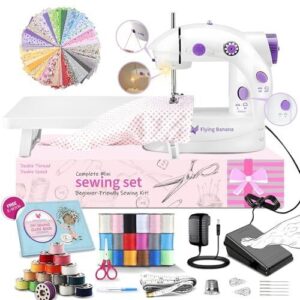
This mini portable machine weighs just 1.7 lb and fits on any desk without taking over your space. It runs on batteries or an AC adapter, so you can sew anywhere.
You get automatic bobbin rewinding, a built-in thread cutter, and an extension table for stability. These features make it practical for quick tasks and learning the basics.
It’s best for lightweight fabrics and simple repairs—don’t expect it to chew through denim. As a first machine, it’s a genuinely low-risk way to learn.
| Best For | Beginners and kids who want a simple, low-pressure way to learn the basics of sewing without spending a lot on a full-sized machine. |
|---|---|
| Built-in Stitches | 1 stitch |
| Weight | 1.7 lb |
| Bobbin System | Standard bobbin |
| Auto Needle Threader | No |
| Work Lighting | Built-in lamp |
| Warranty | Not specified |
| Additional Features |
|
- Super lightweight at 1.7 lb and small enough to tuck away anywhere—great for travel or small spaces
- Runs on batteries or an AC adapter, so you’re not tied to an outlet
- Comes with everything you need to get started: bobbins, needles, a threader, foot pedal, and an extension table
- Only does one basic stitch, so you’ll outgrow it quickly if you get serious about sewing
- Plastic build means it won’t hold up to thick fabrics or heavy use
- Some units have had reliability issues—like the motor not stopping or stitches not forming correctly
Key Automatic Sewing Features
The right automatic features can completely change how you sew — less fussing, more creating.
The right automatic features mean less time fussing and more time creating
Whether you’re a beginner or someone who’s been at the machine for years, knowing what each feature actually does helps you choose smarter.
Here are the key automatic functions worth understanding before you buy.
Automatic Needle Threader
The automatic needle threader is one of those features that quietly changes everything. A small hook lever mechanics system moves past the needle eye, captures your thread, and pulls it through in one motion. Dual eye slots handle both fine and wide needles, while the spring return system resets instantly.
Check your machine’s compatibility chart and thread path alignment before you start — it saves real frustration.
One-step Buttonhole Function
Threading your needle automatically is just the beginning. The 1Step Buttonhole function takes that momentum further — you input your button size, let the foot slider calibration do its measuring, and the machine manages the rest. Stitch density settings and automatic backtack reinforce each end cleanly.
- Stretch fabric handling keeps knits from puckering
- Sensor bars start and stop stitching precisely
- Works across lightweight to medium-weight wovens
Automatic Thread Cutter
After the buttonhole seals itself, you still need clean thread ends. That’s where the automatic thread cutter earns its place. A solenoid-driven blade fires with precise Solenoid Timing, severing both top and bobbin threads in under a second.
Blade Alignment ensures cuts remain close to the fabric, maintaining Tail Length Consistency. This precision eliminates manual trimming, streamlining the sewing process.
| Feature | Benefit |
|---|---|
| Safety Shielding | Protects fingers during cutting |
| Cutting Precision | Uniform thread tails every seam |
| Automatic thread trimmer | Reduces post-stitch cleanup |
| Solenoid actuation | Fast, reliable engagement |
Top automatic sewing machines of 2026 treat automatic thread cutting as standard — not a luxury.
Automatic Tension Adjustment
Clean thread ends are just the start. What really keeps your stitches balanced is tension — and modern machines handle that automatically. Real-time Feedback Loop sensors detect fabric thickness in milliseconds and trigger Servo Tension Control to adjust instantly.
Here’s what Automatic Tension Adjustment does for you:
- Reads fabric density using Sensor Calibration
- Stores settings in Fabric Profile Libraries for repeat use
- Adjusts upper thread pressure without manual input
- Flags problems via Tension Fault Diagnostics on-screen
Programmable Stitch Settings
Programmable stitch settings let you build custom stitch sequences and save them for every project. Width Preset Programming and Length Parameter Storage store your adjustable stitch width and length directly on the machine.
Density Custom Profiles, Foot Modifier Mapping, and USB Stitch Backup ensure your customizable stitch patterns remain accessible across sessions.
Your digital display sewing machine recalls everything instantly.
Drop-in Bobbin Convenience
Drop-in bobbin systems take the frustration out of mid-project interruptions. A transparent bobbin cover lets you monitor thread supply at a glance, while the quick-release mechanism makes a one-handed change possible in under 15 seconds. Many models add a bobbin light indicator for low-light clarity.
Reduced thread jams and smooth tension synchronization mean you spend less time fixing and more time creating.
Speed Control and Start/stop Buttons
Most automatic machines let you dial in speeds from 0 to 1,100 SPM using a Variable Speed Dial or Foot Pedal Sensitivity controls.
Start/Stop Ergonomics matter, too—a tactile button means no pedal is needed.
Some models store a Speed Profile Memory for repeated projects, while an Emergency Stop Feature halts everything instantly.
Your LCD display shows the current SPM, making Understanding Stitch Speed and SPM easy across all automatic features.
Automatic Versus Mechanical Machines
Choosing between an automatic and a mechanical machine is one of the biggest decisions you’ll make as a sewist. Each type manages things like stitch control, setup, and consistency in very different ways — and your skill level plays a big role in which one actually fits your workflow.
Here’s how they stack up across the factors that matter most.
Manual Stitch Controls Versus Digital Controls
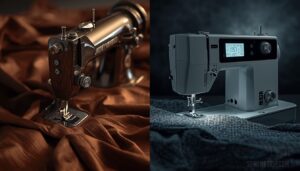
Manual sewing machines offer tactile feedback through dials and levers, allowing users to feel every adjustment. This design ensures mechanical reliability stays high even without power, prioritizing durability and hands-on control.
Digital LCD interfaces replace physical controls with touchscreen menus and LCD display precision, enhancing adjustment accuracy. However, this approach introduces sensor dependence, trading direct feedback for technological convenience. Both systems function effectively, leaving the choice to individual preference: Your hands, your call.
Automatic Setup Advantages
Setting up a machine used to mean guessing—wrong tension, missed threading, wasted fabric. Automatic setup changes that completely. With rapid configuration built in, your machine reads the project and adjusts itself.
Here’s what automatic setup actually manages for you:
- Automatic needle threader captures and pulls thread through in under a second
- Automatic tension adjustment technology reads fabric thickness and balances stitches instantly
- Fabric presets load correct stitch length and width without manual input
- One-touch start coordinates motor speed and presser foot together
- Automatic buttonhole measures button size and sews clean results every time
Uniform stitch results and real error reduction aren’t luck—they’re built-in. This is what modern automatic stitching technology delivers, and it’s why any solid Automatic Sewing Machine Buying Guide puts setup automation at the top.
Stitch Consistency Differences
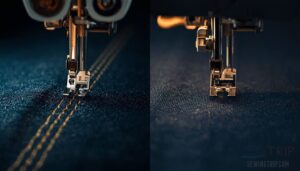
Stitch length variation tells the whole story. On mechanical machines, stitch quality depends on you—your hands, your speed, your tension.
Automatic machines handle thread path precision, feed dog consistency, and needle up/down timing without guessing. Real-time stitch monitoring catches drift before it ruins a seam.
With automatic tension adjustment built in, thread tension stays stable, ensuring precision stitching across every fabric.
Learning Curve for Beginners
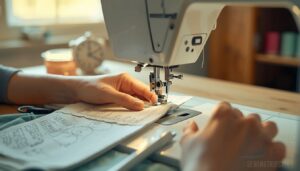
Consistent stitches build confidence fast. With an easy-to-use interface and Automatic Needle Threading Technology, threading speed drops to seconds, giving you more time for actual sewing. Ease of use for beginner sewers matters here — error reduction happens naturally after just two or three sessions.
Short daily practice, around 15 minutes, is all it takes for real stitch mastery to click.
Maintenance and Repair Considerations
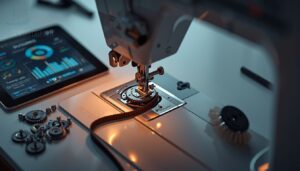
Automatic machines require a bit more attention than mechanical ones. Lubrication schedules matter: oil moving parts every 8 to 12 hours of use. Maintain a spare parts inventory for belts, bobbins, and feed dogs to ensure uninterrupted operation.
Run diagnostic software checks when errors appear, and back up firmware promptly when updates arrive. This prevents data loss and maintains system integrity.
Monitor belt wear consistently, and schedule professional servicing every 12 to 24 months to protect the machine’s long-term durability.
Best Choice by Sewing Skill Level
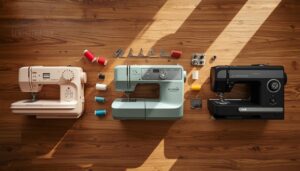
Your skill level shapes everything. Think of it as your personal Skill Progression Guide — matching the machine to where you actually are, not where you hope to be.
- Beginner Model Picks: Beginner-friendly automatics handle threading and tension for you
- Intermediate Project Fit: Buttonholes and zipper feet expand your range
- Expert Garment Mastery: Precision stitching manages collars and custom-fitted sleeves
- Accessory Matching Guide: Presser feet determine what projects you can actually finish
Computerized Machine Benefits
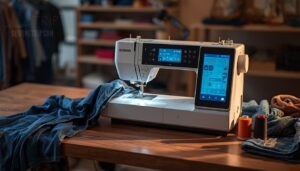
Computerized machines open up a whole new world of what’s possible with fabric and thread.
They pack in features that make sewing faster, more flexible, and a lot more fun to experiment with.
Here’s what makes them worth a serious look.
Built-in Stitch Libraries
Think of a built-in stitch library as your creative toolkit — always ready, never misplaced. Computerized machines offer impressive built-in stitch variety, with some packing 185 built-in stitches across utility, decorative, and embroidery categories.
These libraries streamline your workflow through intuitive organization. Browse stitches by category, apply user-defined tags for quick recall, or use category renaming to align labels with your personal process. Firmware updates ensure your stitch library evolves with the latest 2026 sewing machine technology trends, keeping your creative options cutting-edge.
| Feature | What It Does | Why It Matters |
|---|---|---|
| Built-in Stitch Count | Stores 100–500+ stitches | More options per project |
| Stitch Previews | Shows pattern on screen | Helps you choose faster |
| Category Renaming | Customize group labels | Fits your personal workflow |
| User-Defined Tags | Tag and recall custom stitches | Speeds up repeat projects |
| Cross-Model Transfer | Shares formats across models | Protects your saved work |
LCD and Touchscreen Stitch Selection
Ever wonder why some machines just feel easier to use? A clear LCD display changes everything. You can tap through Navigation Icons on a touchscreen, check your Stitch Preview before committing, and adjust Brightness Controls for late-night sessions.
With smooth LCD Navigation and responsive Touch Sensitivity, digital LCD interfaces in sewing machines make stitch selection feel less like guesswork and more like creative control.
Memory Functions for Repeated Projects
Memory functions let you pick up right where you left off. Computerized sewing machines with Stitch Template Management save your settings permanently, so no re-dialing before each session.
- Project Preset Recall applies stitch, tension, and foot settings instantly
- Layered Stitch Memory preserves complex multi-layer sequences
- Quick Library Tags organize up to 100 profiles by fabric or skill
- Memory Backup Sync protects your data automatically
Embroidery and Quilting Compatibility
Computerized machines open up a whole new world for both embroidery and quilting. With built-in embroidery capabilities in sewing machines, you can handle Quilt Block Alignment, Thread Tension, and Stabilizer Selection from one interface. Hoop Compatibility and Fabric Weight settings adjust automatically, keeping your layers smooth.
Automatic stitching technology makes multi-step quilt designs far less intimidating — and far more consistent.
More Precise Stitch Customization
Fine-tuning your stitches is where you take real control. Stitch density tuning lets you dial in 10 to 12 stitches per inch for solid, durable seams. Adjustable stitch length and adjustable stitch width give you flexibility across fabrics.
Needle offset calibration keeps your lines true, while foot pressure modulation manages thick layers smoothly.
Thread break alerts and automatic tension adjustment mechanisms catch problems before they ruin your work.
Edge-stitching precision and stitch-pattern diversity round out your creative range.
Easier Decorative Sewing Options
Decorative sewing used to mean hours of setup. Now, one-step decorative modes and built-in stitch variety let you jump straight into creating. You can preview patterns with the stitch tester preview, swap specialty stitch feet, and adjust stitch width on the fly.
Quick pattern loading, embroidery capabilities, an automatic thread trimmer, and an automatic needle threader keep your creative momentum going. These features streamline the process, ensuring uninterrupted workflow.
Additionally, integrated buttonhole and decorative stitch functionality further enhance versatility, allowing seamless transitions between techniques without sacrificing precision or time.
Buying Considerations Before Choosing
Before you spend a single dollar, it’s worth slowing down and thinking through what you actually need from a machine. The right choice depends on more than just price — your skill level, your projects, and even how often you’ll move the machine all play a role.
Here are the key factors to keep in mind before you decide.
Sewing Experience Level
Your skill level shapes every machine decision you’ll make. Beginner shortcuts—like automatic needle threading and drop-in bobbins—remove early frustration, while intermediate pattern fitting and professional fit adjustments demand broader stitch libraries and tension control.
Consider your skill progression timeline honestly:
- Beginners need beginner-friendly, forgiving features
- Intermediate sewers benefit from programmable settings
- Pro embroidery workflow requires professional-grade computerized precision
Fabric Types and Project Needs
Your fabric choices shape which machine you actually need. Lightweight fabrics require adjustable tension and gentle feed, while denim demands a heavy-duty motor and metal frame for stitch strength. Precise stitch control is essential for print pattern matching.
Whether quilting delicate cotton or punching through canvas, prioritize fabric compatibility and heavy fabric penetration over mere feature lists. This ensures your decision aligns with practical needs rather than superficial specifications.
Number of Built-in Stitches
Stitch Count Tiers matter more than you’d think. Entry-level machines usually offer 27 built-in stitches — enough for basics, but limiting as your projects grow. Mid-range models jump to 69 stitch applications or more. Premium machines like the Brother SE400 deliver 185 built-in stitches across 97 stitch applications.
More built-in stitch count means more creative freedom without buying separate machines.
Included Presser Feet and Accessories
What comes bundled with your machine matters. More presser feet mean more project options right out of the box.
A walking foot grip manages thick layers evenly, a zipper foot precision attachment gets stitching close to teeth, and an overedge foot finish prevents fraying. The narrow hem foot delivers clean edges on delicate fabrics.
Machines offering 6 to 8 included feet give you real versatility without extra spending.
Machine Weight and Portability
Weight matters more than you’d think. A machine with a lightweight design under 15 pounds travels easily to classes or retreats.
Compact design models fit neatly on small desks. Built-in grips with solid handle ergonomics make short carries manageable.
For true battery mobility and portable sewing solutions, some compact and portable sewing machine options run on battery power — ideal when you’re sewing beyond the studio.
Motor Strength and Sewing Speed
When you’re pushing through denim layers or dense quilts, motor power is what separates smooth sailing from a stalled needle. Look for strong torque capacity and an RPM range that enables high-speed sewing up to 850 stitches per minute.
Servo motors offer cleaner load handling and better heat dissipation. Automatic features like sewing speed control let you dial in the right pace for any project.
Warranty, Support, and Spare Parts
Before you commit to a machine, think beyond the price tag. Warranty duration typically spans 12 to 36 months, covering manufacturing defects—but excluding wear items like needles.
Support channels—including phone, email, and online portals—are available for assistance. Spare part lead time averages 3 to 14 business days through authorized repair networks.
For heavy usage, extended service plans offer valuable additional coverage.
User details can be edited via the IEEE account settings.
Price Ranges and Value
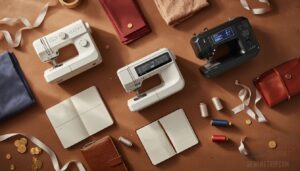
Price shapes everything when you’re shopping for an automatic sewing machine. Whether you’ve got $80 to spend or $800, there’s a machine built for your needs and skill level.
Here’s a breakdown of what each price range actually gets you.
Budget Automatic Sewing Machines
Budget-friendly sewing machines don’t mean settling for less — they mean choosing smarter. Automatic sewing machines under $150 give you real functionality without draining your wallet. When choosing the best automatic sewing machine on a budget, look for these four wins:
- Portability benefits — the Singer Start 1304 and Brother XM2701 weigh under 10 lbs
- Accessory packages — basic presser feet for hems and seams included
- Energy efficiency — compact motors draw less power
- Warranty duration — check brand support before buying
Mid-range Computerized Models
Mid-range computerized sewing machines, priced between $150 and $500, strike the ideal balance for serious sewists. These machines offer built-in stitch libraries with 60 to 200-plus options, thread sensor precision for balanced tension, and user interface ergonomics that streamline stitch selection.
Additional features include memory functions, power consumption efficiency, and software update support, ensuring long-term value as skills evolve. This tier delivers real value for growing skills without compromising on advanced functionality.
Premium Sewing and Embroidery Machines
Premium automatic sewing machines, priced above $500, are built for serious work. They feature a Heavy-Duty Metal Frame, High Torque Motors, and Precision Stitch Sensors that maintain stability when sewing through denim, canvas, and layered quilts.
These machines offer Large Hooping Capacity and High-Level Embroidery Design Integration, enabling professional-grade embroidery capabilities.
The Differential Feed Control ensures clean seams, proving these machines don’t just sew—they perform.
Features Worth Paying Extra For
Automatic tension adjustment mechanisms and Fabric Sensor Technology eliminate guesswork on tricky fabrics.
Automatic Needle Threader saves real time, while precise Needle Positioning keeps your seams straight.
Heavy-Duty Torque and a Heavy-Duty Metal Frame handle thick layers without slowing down.
Integrated Lighting, Quiet Operation, LCD display stitch previews, and embroidery functions ensure you’re set for anything.
Features Beginners Can Skip
Not every feature you’re paying for will matter on day one. Stick to core stitch selection and simplified foot control — that’s all you really need to build confidence. These beginner-friendly choices reflect smart "How to Choose an Automatic Sewing Machine" thinking: buy for where you are now.
Manual thread trimming, a minimal accessory set, and no visual display keep things straightforward. This approach ensures you focus on essentials without overwhelming complexity.
Brand Reputation and Owner Reviews
Brand reputation and customer reviews tell you a lot before you spend a cent. Singer Heavy Duty models earn strong Reliability Ratings, with owners reporting years of use without major repairs. Brother’s Warranty Satisfaction and Customer Support scores stay consistently high.
Use this quick checklist when comparing brands:
- Durability Feedback from long-term owners
- Value Perception across price tiers
- Warranty response speed
- Spare parts availability
- Support accessibility
Long-term Ownership Costs
Knowing a brand’s reputation is just one piece of the puzzle — the real picture shows up in your Total Ownership costs over time. Depreciation Rate, Maintenance and Care for Sewing Machines, Spare Parts Pricing, and Energy Consumption all stack up. Factor in Warranty Expenses and run a quick Cost vs Feature Analysis for Sewing Machines before buying.
Durability and frame construction of sewing machines directly shapes how long your investment lasts.
Best Features by User Type
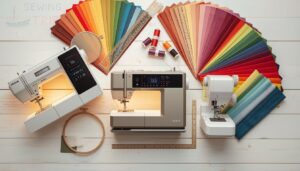
Not every sewing machine fits every sewer the same way. The features that matter most depend entirely on what you’re making and how you work.
Here’s a breakdown of the best automatic features matched to your specific sewing style.
Best Automatic Features for Beginners
Starting out doesn’t have to feel overwhelming. The best automatic sewing machines for beginners include features like an automatic needle threader, guided thread loading, and beginner stitch templates that take the guesswork out of setup.
An easy-to-use interface with contrast display mode makes reading settings easier.
Choosing the right automatic sewing machine with an ergonomic hand grip also reduces fatigue during longer sessions.
Best Features for Quilting Projects
Quilting projects demand more from your machine than most tasks. Large throat space lets you maneuver bulky layers without fighting the feed.
Walking foot compatibility keeps multiple fabrics moving evenly together.
Automatic sewing machines with quilt memory recall save your preferred settings between sessions.
LED lighting sharpens seam visibility, and an adjustable guide foot locks in precise allowances.
Real quilt-making capabilities built for serious work.
Best Features for Garment Sewing
Garment sewing rewards precision at every step. You’ll want Seam Finish Precision and a Fabric Pull Adjuster to keep fabric feeding true.
Stitch Length Memory and Adjustable Stitch Length Width let you lock in settings across layers.
Thread Break Detection, Adjustable Presser Pressure, and thread tension adjustment protect delicate fabrics.
Automatic Needle Threader, clear LCD display, and smooth buttonhole function round out a capable garment machine.
Best Features for Embroidery Work
Embroidery work demands more than just a machine that can stitch — it needs a true creative partner. Look for strong Hoop Compatibility, Stabilizer Integration, and Design Editing Tools so you can resize, rotate, and preview patterns before committing.
Fast embroidery speed and Thread Variety Support keep your workflow moving.
Sophisticated Embroidery Design Integration, Digital LCD Interfaces in sewing machines, and broad embroidery capability define the best features of computerized sewing machines for this work.
Best Features for Thick Fabrics
Thick fabric is where weak machines tap out — but the right automatic sewing machine pushes through denim, canvas, and leather without breaking a sweat. Motor power and durability for heavy fabrics matter most here, and metal frame stability keeps everything aligned under pressure.
- Heavy-Duty Needles (size 90/14 or 100/16) prevent skipped stitches
- Walking Foot feeds multiple layers evenly without shifting
- High-Torque Motor drives through dense weaves consistently
- Sturdy Feed Dogs grip thick material for smooth, controlled movement
- Reinforced Bobbin reduces thread tension issues on bulky seams
Heavy-duty machines with solid fabric handling turn difficult projects into clean, confident results.
Best Accessibility Features
Sewing shouldn’t have barriers — and today’s best accessible machines prove it. A High‑Contrast Display paired with a bright LED Light ensures your LCD display remains readable in any room.
A self-threading sewing machine with a built-in needle threader eliminates the fussiest setup step entirely.
Additional features like a Voice Command Interface, Audio Feedback System, Tactile Knob Design, and an Adjustable Foot Pedal further enhance accessibility.
Together, these elements create a truly user-friendly interface built for everyone.
Best Portable Automatic Options
Your next creative adventure shouldn’t wait for a power outlet. The Singer Start 1304’s lightweight design at just 9 pounds makes it a natural travel companion, while its automatic needle threader ensures quick setup on the go.
Pair that with a travel-friendly case, compact power unit, and cable-free design, and you gain unmatched portability. These features collectively transform the machine into a truly compact and portable automatic sewing machine, ready for anywhere inspiration strikes.
Setup, Maintenance, and Care
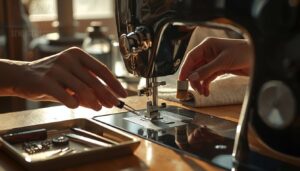
Getting your machine set up right from the start makes everything that follows easier. Proper initial configuration ensures long-term efficiency and minimizes future complications.
A little routine care goes a long way toward keeping all automatic features running smoothly for years. Here’s what you need to know to stay ahead of problems before they show up.
Threading and Bobbin Setup
Getting the thread path right is half the battle. Start at the spool mounting pin and follow the manual thread path through each guide — keep thread guide cleanliness in mind, since lint buildup causes snags.
Master bobbin winding techniques before each project, then secure the bobbin case securing latch until it clicks.
A drop-in bobbin and automatic needle threader makes setup genuinely fast.
Cleaning Lint From Automatic Mechanisms
Once setup feels smooth, keeping your automatic sewing machine clean is what keeps it running that way. Feed dog lint and bobbin case lint are the usual troublemakers — pull the bobbin, brush both areas gently, then wipe metal surfaces dry.
Clear sensor dust carefully on computerized models, as buildup can disrupt functionality. Motor vent dust reduces cooling, so brush this area regularly to prevent overheating.
Consistent sewing machine maintenance protects every automatic feature long-term, ensuring reliability and performance.
Needle Replacement Guidelines
A clean machine still needs sharp tools. Your needle does more work than you’d think — and a dull one ruins it all.
- Replace after every project for a fresh needle lifespan
- Match fabric-specific needles to your material (denim, silk, knits)
- Follow a needle maintenance schedule: every 2–3 hours on thick fabrics
Proper needle insertion ensures functionality: push it fully up, flat side back, then tighten the screw. Your automatic needle threader and self-threading features rely on a correctly seated needle. Use needle up/down and position settings for safe adjustments.
Always unplug first before disposing of used needles to prioritize safety.
Oiling Requirements by Machine Type
Sharp needles and proper oiling go hand in hand. Your automatic sewing machine requires the right lubricant—not just any oil. Domestic machines operate efficiently using Mineral Oil Usage principles: apply light mineral oil to the needle bar and hook race every 6–12 months.
Heavy-duty and industrial setups demand Synthetic Blend Oils with superior heat tolerance. These formulations outperform standard oils under extreme conditions.
Prioritize Lubrication Intervals, target Application Points accurately, and avoid Viscosity Errors that compromise performance. Consistent maintenance ensures longevity and prevents buildup.
Protecting Computerized Controls
Your computerized sewing machine‘s digital display and touchscreen deserve real protection. Think of it as guarding a smartphone—dust, moisture, and power surges are silent enemies. To safeguard these components, apply physical hardening basics: keep controls away from liquids, enable access controls on shared machines, and run firmware verification after every update.
Real-time monitoring through encrypted communications ensures sophisticated models remain secure, particularly as threats evolve. These proactive measures—combining physical safeguards and digital vigilance—make such safety features essential for smart machine maintenance.
Safe Storage Practices
Storing your machine properly is just as important as how you use it. Use Anti Slip Machine Mats to prevent tipping and Breathable Machine Covers to block dust without trapping moisture.
Organize accessories by tucking cords into Labeled Cord Storage and sorting feet into Presser Foot Bins.
Store everything on Climate Controlled Shelving — simple machine maintenance that protects your investment long-term.
When to Schedule Professional Servicing
Even the best machines need expert hands sometimes. Know when to book a pro:
- Seasonal Service Timing — Schedule in January or June to beat peak-season backlogs.
- Error Code Response — Don’t ignore warning lights; prompt servicing prevents bigger repair bills.
- Stitch Misalignment Inspection — Unusual machine noise and vibration levels, puckering, or Motor Overheat Prevention concerns all signal it’s time.
Warranty Expiration Alerts matter too — service before coverage lapses.
Common Automatic Feature Problems
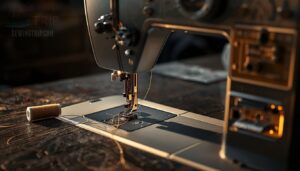
Even the best automatic sewing machines hit a snag now and then. Knowing what can go wrong puts you ahead of the problem before it derails your next project.
Here are the most common automatic feature issues and what you can do about them.
Automatic Needle Threader Not Working
When your automatic needle threader stops working, the fix is usually simpler than you’d think. Most failures can be traced back to four causes:
| Problem | Solution |
|---|---|
| Hook misalignment | Raise needle fully before threading |
| Thread path obstruction | Clear lint from all guides |
| Incompatible thread size | Switch to standard thread weight |
| Lubrication wear | Schedule a maintenance service |
A needle height issue or bent hook is the most common culprit on self-threading sewing machines. This often relates to the first problem listed above (hook misalignment).
Refer to your manual’s threading diagram for guidance, as proper alignment and maintenance are critical to resolving these issues.
Thread Cutter Leaving Long Tails
Long tails after cutting usually mean your upper thread tension is too loose. Tighten it slightly and the cutter trims closer every time. Don’t overlook bobbin tension either — uneven winding causes irregular cuts.
Clean your thread path regularly to prevent lint from interfering. Using a starter tail technique before your seam also helps automatic sewing machines trim more consistently.
Automatic Tension Causing Puckering
Puckering often points to a mismatch between your tension adjustment system and the fabric you’re using. Thread type influence matters here — cotton thread on synthetics tightens differently from polyester.
Try stitch length tweaks by going longer on delicate layers.
Fabric pre-treatment, like pressing before stitching, helps too. Adjust presser foot pressure and use differential feed usage to keep automatic sewing machines feeding evenly without pulling seams.
Buttonhole Sensor Alignment Issues
Sensor alignment significantly impacts automatic buttonhole results, often more than anticipated. Fabric Thickness Effects play a critical role—thick interfacing pushes fabric away from the sensor, causing misaligned hole placement. Thread Tension Impact also matters, as improper tension lifts fabric and disrupts edge detection.
To resolve these issues quickly:
- Run the Sensor Calibration Process using your project fabric.
- Follow a Sensor Cleaning Routine to clear lint from the needle plate.
- Check your Error Code Interpretation guide for model-specific alerts.
Skipped Stitches on Automatic Settings
Skipped stitches can sneak up on you even when your machine’s automatic features are running the show. Usually, it comes down to needle positioning being off, bobbin tension drifting, or feed dog sync breaking down at higher speeds.
Check your stitch length adjustment first, then reseat the bobbin. Speed calibration and clearing any sensor obstruction often solve what re-threading alone won’t fix.
Error Messages on Computerized Machines
Computerized machines speak their own language — and error codes are how they talk. When your Digital LCD Interface flashes a warning, don’t panic. Whether it’s a Mechanical Jam Alert, Sensor Calibration Alert, or Firmware Update Failure, each code points to something specific.
Your manual’s Error Code Lookup section is your best starting point. Network Connectivity Errors can usually clear with a simple restart.
When Troubleshooting is Not Enough
Sometimes, no amount of troubleshooting fixes the real problem. Hardware Failure, Firmware Corruption, or Environmental Interference — like dust or humidity — can push your machine beyond a simple reset. If you notice repeating errors after following your user manual’s guidance, that’s often a Design Flaw Detection moment. Contact your warranty support and book professional service before small issues cascade.
- Worn belts causing uneven automatic feeding
- Voltage spikes resetting computerized stitch memory
- Dust buildup blocking needle-threader sensors
- Bobbin case wear disrupting automatic tension
- Bent needle bars misaligning automated functions
Frequently Asked Questions (FAQs)
What is an automatic sewing machine?
Think of it as your sewing co-pilot. An automatic sewing machine uses motorized needle actuation and sensor-driven operation to handle fabric feed, thread tension, and automatic threading — so your hands stay free, your stitches stay consistent.
How do automatic features affect machine weight and portability?
Automatic features add weight. Motors, sensors, and control boards can add up to 4 kg. Look for carry grips and detachable modules to stay portable without sacrificing automation.
Are replacement parts easily available for computerized components?
Finding parts for a computerized sewing machine is like shopping at a well-stocked hardware store — common brands remain accessible.
OEM parts networks, third-party compatibility, and solid warranty parts coverage keep most repairs straightforward.
Do automatic features work with all thread types?
Not quite. Specialty thread compatibility varies — metallic fiber challenges and thread thickness impact can trigger sensor sensitivity issues.
Your automatic needle threader and thread tension control hit tension calibration limits with unusual fibers, so test first.
Whats the learning curve for transitioning from manual machines?
Most beginners hit their stride after 4 to 6 practice hours. Skill milestones come fast with an easy-to-use interface, and confidence building follows naturally as error reduction rate drops with each session.
Can automatic machines handle leather or vinyl fabrics?
Yes, many automatic sewing machines handle leather and vinyl well.
Heavy-duty machines with metal frame construction, Leather Feed Systems, Servo Torque Control, and Vinyl Needle Options make heavy fabric penetration clean and consistent.
How do automatic features affect electricity consumption?
Automatic features add small power bursts, not constant drains. Motor Duty Cycle, Standby Power, and Energy Saving Modes keep your automatic sewing machines efficient.
Speed vs Consumption matters most with heavy-duty machines.
Are automatic sewing machines safe for children to use?
With the right precautions, automatic sewing machines can be safe for children. Look for a finger guard design, adjustable speed settings, a non‑slip base, and parental supervision tips to keep young sewers protected.
Do automatic features work with specialty or unusual threads?
As the saying goes, the right tool still needs the right hand. Automatic features handle standard threads well, but specialty threads like metallics or silk may need manual tension tweaks and careful needle selection.
Can automatic settings be disabled for manual control?
Most machines let you disable automatic settings. Look for an override switch placement near the tension dial.
Manual tension tuning, custom stitch presets, and hybrid speed settings give you full control.
Conclusion
The guesswork is gone now. A sewing machine with automatic features doesn’t just remove small frustrations—it clears the path between your idea and a finished project. You’re no longer fighting your equipment; you’re just sewing.
Whether piecing your first quilt or hemming your hundredth pair of jeans, the right machine quietly takes care of the tedious groundwork. This lets your hands stay focused on what actually matters: making something worth keeping.