This site is supported by our readers. We may earn a commission, at no cost to you, if you purchase through links.

You thread your machine, load the fabric, press the pedal—and watch in frustration as the needle punches ragged holes through delicate silk or snaps mid-seam on heavy denim. The culprit isn’t your technique or your machine’s settings, it’s the tiny numbers stamped on your needle that you’ve been ignoring.
Those cryptic combinations like 80/12 or 100/16 aren’t arbitrary manufacturer codes; they’re a precise measurement system that determines whether your needle can cleanly pierce fabric fibers without causing damage, skipped stitches, or thread breakage.
Understanding what sewing needle numbers mean transforms needle selection from guesswork into a strategic decision, one that directly impacts stitch quality, fabric integrity, and whether your project looks handmade or professionally finished.
Table Of Contents
Key Takeaways
- Sewing needle numbers (like 80/12 or 90/14) indicate the exact thickness of the needle shaft—the metric number measures diameter in hundredths of a millimeter, while the imperial number provides a corresponding size reference for matching thread and fabric weight.
- Choosing the correct needle size directly prevents fabric damage, skipped stitches, and thread breakage—too large creates visible holes and weakens delicate materials, while too small causes excessive tension and thread snapping.
- Match needle size strategically to your project: lightweight fabrics like silk require 60/8 to 70/10 needles, medium-weight cottons work with 80/12 to 90/14, and heavy materials like denim demand 100/16 to 110/18 for reliable stitch formation.
- Replace your needle after every project or 8-10 hours of sewing time regardless of visible wear, since dull needles cause puckering, uneven stitches, and fabric pulls that compromise professional results.
What Do Sewing Needle Numbers Mean?
When you pick up a pack of sewing machine needles, you’ll notice numbers like 80/12 or 90/14 printed right on the package. These numbers aren’t random—they tell you the exact thickness of the needle shaft, which directly impacts how it performs with different fabrics and threads.
Understanding what these numbers mean gives you the power to choose the right needle every time, preventing frustration and ensuring clean, professional stitches.
Overview of Needle Numbering Systems
You’ll notice that needle sizing and selection combine two numbering systems on most sewing machine compatibility guides. Metric conversions run from 60 to 120, measuring needle thickness in hundredths of a millimeter, while imperial sizing ranges from 8 to 18. Needle size charts show both numbers together, like 80/12, helping you match needle gauge to fabric weight without guessing.
Understanding the importance of methodological rigor is essential for precise measurements.
Metric Vs. Imperial Sizing Explained
Metric sizing measures needle thickness in millimeters—80 means 0.8 mm diameter—while imperial equivalents use Singer size numbers that correlate with thread gauges rather than exact measurements. When you see dual labeling like 80/12, the metric size acts as your primary reference for needle thickness, and the imperial component helps you match older equipment or thread recommendations.
A sewing machine needle types chart breaks down which needle works best for each fabric weight and fiber type, so you’re not guessing every time you switch projects.
Both sizing systems increase as needles get thicker, but metric conversion charts reveal they don’t translate directly across brands. Understanding language patterns is essential for effective communication in sewing communities.
Dual Number Labels (e.g., 80/12)
Once you understand both systems, dual sizing makes needle compatibility across brands much simpler. An 80/12 label shows you the European metric thickness—roughly 0.8 mm—alongside the American numbering standard, so you can confidently match needles to your sewing machine needle bar, fabric weight, and thread gauge without second-guessing metric conversion tables or label standards.
- Match both numbers when replacing needles to maintain consistent hole size and stitch quality across your projects.
- Use dual sizing as your shopping reference when brands publish metric and imperial sizes side by side for needle calibration.
- Verify needle size and type against manufacturer charts, since tolerances vary and affect sewing needle selection.
- Test on scrap fabric first to confirm stitch quality before committing to delicate or expensive materials.
- Record both needle sizes in project notes to guarantee consistency when collaborating or repeating similar tasks.
How Needle Size Affects Sewing Results
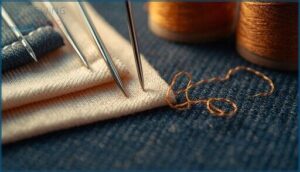
Choosing the right needle size isn’t just about following a chart—it’s about understanding how that tiny piece of metal affects everything from the holes it creates to the strength of your stitches. Match needle size to your fabric and thread, and you’re setting yourself up for smooth sewing, clean finishes, and professional results.
Choosing the right needle size affects stitch quality, fabric integrity, and sewing success more than any chart can capture
Let’s look at the three main ways needle size influences your work and why getting it right matters more than you might think.
Impact on Stitch Quality and Fabric Health
The right needle size is crucial, as it influences stitch formation and the long-term durability of your fabric. Larger needles create bigger holes, which can weaken delicate materials, while smaller needles reduce fabric perforation but increase thread tension. The needle point type also plays a significant role in determining stitch quality, and an incorrect choice can lead to fabric damage, puckering, and other frustrating issues.
For instance, selecting the right sewing machine needle type and size for your project ensures cleaner stitches and prevents unnecessary wear on both fabric and thread.
| Needle Choice | Effect on Your Project |
|---|---|
| Too large | Visible holes, fabric weakening, poor stitch quality |
| Too small | Thread breakage, skipped stitches, excessive tension |
| Correct size | Clean perforation, balanced thread tension, professional results |
| Wrong point type | Uneven stitches, fabric damage, thread issues |
| Proper match | Uniform stitch formation, fabric protection, longevity |
The table above summarizes the impact of needle choice on your project, highlighting the importance of selecting the correct size and point type to achieve professional results and ensure fabric longevity.
Beyond needle size and point type, understanding how thread weight pairs with specific needle gauges prevents common issues like skipped stitches and fabric damage.
Preventing Skipped Stitches and Thread Breakage
When your sewing machine needle doesn’t match your fabric weight and thread size, skipped stitches multiply and thread breakage becomes inevitable. Proper needle alignment and correct sizing reduce fabric friction and heat buildup at the surface, while ensuring the needle eye accommodates your thread size.
Replace your needle after each project to maintain stitch consistency and prevent breakage—fresh needles mean smoother sewing every time.
Needle Size and Fabric Compatibility
Fabric thickness and fabric type work together to determine which needle size you need, while thread size confirms your choice. Match your needle to your project’s specific demands:
- Lightweight fabrics like chiffon and organza perform best with 60/8 or 70/10 needles to prevent visible holes and puckering.
- Medium-weight cottons and linens require 80/12 to 90/14 sizes for balanced penetration without fabric distortion.
- Heavy materials such as denim and canvas demand 100/16 to 110/18 needles for reliable stitch formation across seams.
Fabric density affects sewing speed and thread tension, so correct needle material and thread and needle compatibility prevent deflection and breakage.
Common Needle Number Ranges and Uses
Now that you understand how needle size impacts your sewing, it’s time to match those numbers to real fabrics and projects. The right needle range can make the difference between smooth, professional seams and frustrating tangles or skipped stitches.
Let’s break down the most common needle sizes you’ll reach for, from delicate silks to heavy denim, so you can confidently pick the right one every time.
Lightweight, Medium, and Heavy Fabric Needle Sizes
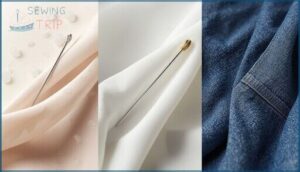
Choosing the right needle size is like pairing the right tool to the task—you need precision to match fabric thickness with needle sharpness and thread weight.
For lightweight fabrics like silk, use 60/8 to 70/10 sewing machine needle sizes to prevent fabric damage and guarantee clean stitch formation.
Medium cottons work best with 80/12 to 90/14 universal needles, while heavy denim demands 100/16 to 110/18 for proper fabric type compatibility.
Examples of Needle Numbers for Different Projects
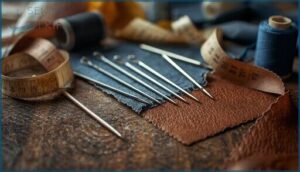
When project planning meets precision, you’ll find that needle selection transforms your entire sewing experience. Consider these practical examples for different fabric selection scenarios:
- Use a 70/10 ballpoint for jersey knits to prevent snagging during delicate garment construction
- Choose 90/14 jeans needles for stitched denim seams, ensuring proper needle conversion for heavyweight materials
- Apply 110/18 leather needles when working with genuine or faux leather, matching sewing machine needle sizes to demanding projects
Choosing Needle Size for Specific Threads
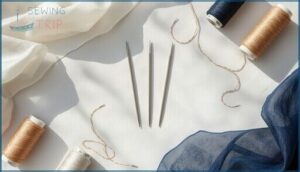
Your thread selection directly influences needle size and overall sewing performance. For delicate threads, use fine needles (60–70) to minimize fabric damage and improve stitch quality, while metallic varieties require smoother, mid-range sizes (70–90) to prevent friction.
Heavy topstitching threads demand larger needles (90–110), ensuring proper thread compatibility and best needle selection for excellent results.
Decoding Needle Types and Their Numbers
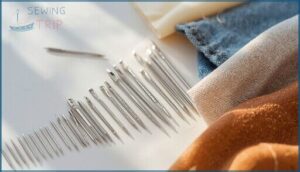
Understanding needle numbers is only half the picture—you also need to know what each needle type does and how its numbering system works.
Different needle types are designed for specific fabrics and techniques, and each comes with its own size range that tells you exactly what it can handle.
Let’s break down the most common needle types you’ll encounter and what their numbers mean for your sewing projects.
Universal, Ballpoint, and Sharp Needles
You’ll encounter three fundamental needle point types on your sewing machine: universal needles with their slightly rounded tip work across both woven and light knits, ball point needles feature a medium ball that slides between knit fibers without snagging, and sharp needles deliver that crisp, precise penetration you need for tightly woven silks and microfibers—each designed for specific fabric compatibility.
Jeans, Quilting, Leather, and Embroidery Needles
When you’re working with specialized fabrics, jeans needles sized 90/14 to 110/18 prevent needle breakage while maintaining proper thread tension through dense denim weaves.
Quilting techniques demand thin-shaft needles to minimize fabric distortion across multiple layers, while leather needles feature triangular points for clean penetration.
Embroidery needles, with their larger eyes, guarantee smooth stitch formation at controlled sewing speeds, reducing thread fraying in decorative work.
Needle Numbering for Specialty Needles
Specialty needle codes combine numeric sizing with suffix designations that identify shank reinforcement, point geometry, and thread compatibility for your sewing machine needle selection.
When you see dual numbers like 90/14 on universal needles or ball point needles, the first indicates metric conversion while the second shows imperial measurement, with both referring to needle sizes that determine shaft diameter and ideal fabric penetration across different needle material constructions.
Tips for Selecting and Maintaining Needle Size
Understanding needle numbers is one thing, but knowing when to swap them out and how to match them to your project separates good sewing from great sewing. Your needle isn’t a permanent fixture—it’s a consumable tool that needs attention and strategic selection.
Let’s cover two essential practices that’ll keep your stitches clean, your fabric intact, and your machine running smoothly.
When to Change Your Sewing Needle
Even experienced sewists can overlook needle wear signs until fabric damage prevention becomes necessary. Your sewing machine care routine should include regular needle replacement to avoid thread breakage causes and maintain professional results. Replace your sewing machine needle based on these guidelines:
- Change after every project to prevent skipped stitches and fabric pulls
- Replace when you notice uneven stitches, thread breakage, or loop formation on your fabric
- Switch needles immediately if the tip becomes bent, dulled, or develops burrs
- Update your needle size when shifting between different fabric types, like moving from woven to knit materials
- Establish a needle replacement schedule after 8-10 hours of sewing time, regardless of visible wear
Following proper needle care and sewing techniques ensures your machine performs optimally and your projects maintain consistent quality throughout.
Matching Needle Size to Fabric and Thread
Your fabric thickness and thread weight drive needle selection more than any other factor. Lightweight materials like chiffon work with size 9–11 (60–80 metric) needles, while denim demands 100–110 sizes for proper stitch formation.
Thread compatibility matters too—metallic threads need polished-eye needles to prevent shredding. Test your fabric and thread selection on scraps first, adjusting tension control until your sewing needle sizes deliver clean, consistent results.
Frequently Asked Questions (FAQs)
Can I use one needle for all fabrics?
Picture trying to hem silk with your denim needle—puckered disaster. You can’t rely on one sewing machine needle for all fabrics; needle selection depends on fabric compatibility, preventing thread breakage and fabric damage while maintaining peak sewing performance.
How do I know when my needle is dull?
You’ll notice dull needle symptoms like skipped stitches, popping sounds as the needle punches through fabric, thread shredding, or puckered seams—all clear needle wear signs demanding immediate replacement for peak sewing performance.
What happens if I use wrong needle size?
What happens when you choose the wrong needle size? Fabric damage, thread breakage, and poor stitch quality follow quickly.
You’ll encounter skipped stitches, needle wear, and sewing errors that compromise your work’s durability and appearance.
Are expensive needles worth the extra cost?
Premium needle benefits include high-quality coatings, consistent eye size, and extended sharpness—worthwhile for delicate fabrics or high-volume sewing.
For casual projects, standard needles offer cost effectiveness without compromising basic needle selection needs.
Conclusion
Think of needle numbers as your fabric’s first line of defense—the difference between a clean puncture and permanent damage lies in that two-digit code.
Now that you understand what sewing needle numbers mean, you hold the blueprint for matching needle diameter to fiber structure, thread weight to eye size, and project type to point geometry.
Your next seam won’t just hold; it’ll disappear into the fabric, invisible evidence of informed decision-making.
- https://www.thesewingdirectory.co.uk/sewing-machine-needle-guide/
- https://www.sewjersey.com/blogs/quilting-tips/what-do-sewing-machine-needle-sizes-mean
- https://www.sewing.org/files/guidelines/22_115_sewing_machine_needle_charts.pdf
- https://www.maggieframes.com/blogs/embroidery-blogs/machine-needle-sizes-explained-your-guide-to-perfect-stitches-every-time
- https://www.madeirausa.com/education/the-basics-of-75-11-needles-and-when-to-use-them/