This site is supported by our readers. We may earn a commission, at no cost to you, if you purchase through links.

Mid-alteration on a Tokyo hotel bed, you realize the hem you’re fixing needs three inches of careful ripping—and your only tool is your fingernails. Every traveling sewist knows this moment.
A forgotten seam ripper isn’t a minor inconvenience; it’s a project killer. The right seam rippers for travel fit inside a pencil case, clear airport security without drama, and hold an edge through denim, silk, and everything between.
Compact blade caps, featherweight grips, multi‑size kits—there’s more to pick from than ever.
These nine options cover every packing style and every type of stitch work you’ll tackle on the road.
Table Of Contents
Key Takeaways
- A forgotten seam ripper can kill a project mid‑trip, so packing one with a protective cap and compact closed length (40–70mm) is non‑negotiable for any traveling sewist.
- Match your ripper to the job — a 5‑gram micro‑tip like the Clover 463 handles embroidery, while a reinforced steel blade like the Missouri Star tackles thick denim and dense quilt seams.
- Stainless steel beats cheap plastic every time: a $10–$15 tool that holds its edge for years costs less in the long run than replacing budget blades every few months.
- Keep your ripper sharp and ready by wiping the blade with isopropyl alcohol after each use, storing it dry with the cap on, and replacing it the moment it starts dragging instead of cutting.
Top 9 Seam Rippers for Travel
Not all seam rippers are built for life on the road, but these nine are. Each one earns its place in your kit through sharp blades, smart design, or serious portability. Here’s what made the cut.
If you sew with your left hand, seam rippers designed for left-handed sewers can make a real difference in control and comfort on the go.
1. Pink Sewing Seam Ripper Set
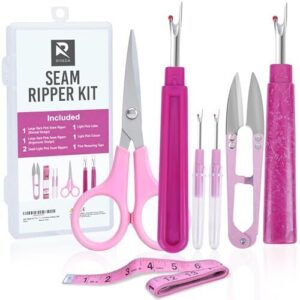
The Pink Sewing Seam Ripper Set packs serious utility into a compact, travel-ready case. You get seven pieces total — two large rippers at 5.5 in, two small at 3.5 in, an ergonomic ripper, thread cutter, scissors, and a pink foldable measuring tape in both inches and centimeters.
All rippers feature sharpened metal tips and a safety ball on the blade to protect your fabric. The hard-case holder keeps everything organized and grab-ready.
| Best For | Quilters, tailors, and embroidery enthusiasts who want a versatile, all-in-one seam ripper kit that’s easy to carry and covers every basic stitching repair need. |
|---|---|
| Handle Material | Plastic |
| Blade Material | Metal |
| Safety Tip | Sharpened metal tips |
| Protective Cover | Sturdy hard-case holder |
| Tool Length | 3.5–5.5 in |
| Kit Count | 7 pieces |
| Additional Features |
|
- Comprehensive 7-piece kit covers everything from heavy-duty seam removal to quick thread snips, all in one organized case
- Ergonomic handles make extended sewing sessions more comfortable and reduce hand fatigue
- Built-in foldable measuring tape means one less tool to dig around for mid-project
- Some users have reported cracked lids and snapped scissor tips after regular use, suggesting durability could be an issue over time
- A few customers received scissors with a yellow residue, pointing to possible quality control gaps in packaging
- Not designed to compete with premium-grade tools, so heavy-duty or professional use may wear them out faster
2. Dual Size Seam Ripper Set
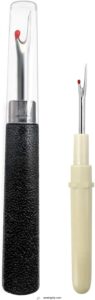
If one ripper isn’t cutting it, the Dual Size Seam Ripper Set fixes that immediately.
You get 3.5‑in and 5‑in rippers — together weighing just 10 g — so fine embroidery and thick seams are both covered without hauling extra tools.
Hardened‑steel blades stay sharp through repeated use, and the translucent protective caps double as handle extensions for tight spots.
A compact zipper pouch keeps both rippers organized and ready.
| Best For | Sewers, embroiderers, and crafters who work across a range of projects and want two reliable rippers on hand instead of switching between mismatched tools. |
|---|---|
| Handle Material | Plastic |
| Blade Material | Hardened steel |
| Safety Tip | Safety ball on small fork |
| Protective Cover | Clear plastic caps |
| Tool Length | 3.5–5 in |
| Kit Count | 2 rippers |
| Additional Features |
|
- Two sizes in one set — the 3.5 in ripper handles delicate embroidery while the 5 in tackles thicker seams, so you’re covered either way
- Hardened-steel blades hold their edge through repeated use, keeping cuts clean and precise
- Translucent caps protect the tips during storage and double as handle extensions for hard-to-reach spots
- Sharp points need to be kept away from children, so storage matters
- Blades can dull faster on very thick or tough materials like heavy canvas
- Plastic handles aren’t built for heavy-duty work — forcing them on leather or upholstery risks cracking
3. Savina Wooden Seam Ripper
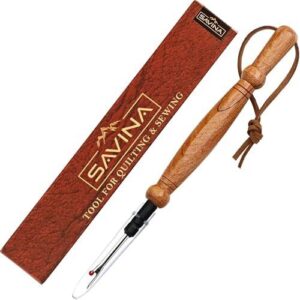
Sometimes you want a tool that feels like it was made to last — not just for this trip, but for years.
The Savina Wooden Seam Ripper delivers exactly that. Its hand-carved hardwood handle gives you real grip and control, while the 1.44 oz weight adds just enough leverage for thick seams without tiring your hand.
The stainless-steel fork stays sharp, and the red safety ball protects your fabric between uses.
| Best For | Hobbyists and professional tailors who want a durable, comfortable seam ripper they can reach for day after day. |
|---|---|
| Handle Material | Hardwood |
| Blade Material | Stainless steel |
| Safety Tip | Red safety ball on tip |
| Protective Cover | Plastic blade cover |
| Tool Length | 6.4 in |
| Kit Count | 1 ripper |
| Additional Features |
|
- Hand-carved hardwood handle feels solid and comfortable, reducing hand fatigue during long sewing sessions
- Sharp stainless-steel fork handles stitches, zig-zags, and overlocks with precision, without snagging delicate fabric
- Lightweight at just 1.44 oz, with a leather hanging strap for easy, organized storage
- The long, slender handle can feel unwieldy if you prefer holding a tool closer to the tip
- The plastic blade cover is small and may feel fragile with heavy everyday use
- The metal fork is relatively delicate and can bend if you push it too hard on thick threads or dense fabrics
4. Ergonomic Colorful Seam Ripper Set
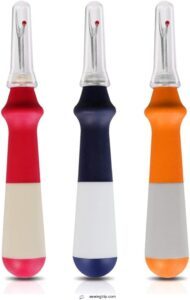
If the Savina’s wood handle is more your speed, this set takes a different path — built for color, comfort, and variety.
The Ergonomic Colorful Seam Ripper Set comes with three rippers in red, orange, and navy. Each has a rubberized non-slip grip that cuts down on hand fatigue fast. At 5.5 inches and 2.46 oz per tool, they’re light enough to pack without a second thought. Every blade includes a red safety ball and protective cap.
| Best For | Sewers and crafters who want comfortable, easy-to-find tools that can handle long unpicking sessions without wearing out their hands. |
|---|---|
| Handle Material | Rubberized plastic |
| Blade Material | Stainless steel |
| Safety Tip | Red mini-ball on fork |
| Protective Cover | Safety caps included |
| Tool Length | 5.5 in |
| Kit Count | 3 rippers |
| Additional Features |
|
- Rubberized non-slip handles reduce hand fatigue during extended use
- Bright red, orange, and navy colors make them easy to spot in a busy workspace
- Safety caps and protective mini-ball keep both fingers and fabric safe
- Larger handle size can feel bulky in tight or detailed stitching areas
- Blade edge will dull over time and need sharpening
- Color coating may wear off with heavy, repeated use
5. Clover White Ergonomic Seam Ripper
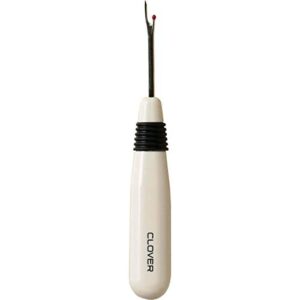
Few seam rippers earn a cult following, but the Clover White Ergonomic has. At just 5 inches and 0.02 lb, it slips into any travel kit without adding bulk.
The sharp steel blade cuts thread cleanly without snagging, while the safety ball tip protects delicate fabric.
For tackling tough layers, pairing this tool with the best stitch for denim ensures clean, durable hems every time.
Its non-slip rounded handle reduces hand fatigue — a real win if you deal with carpal tunnel.
The vinyl safety cap keeps the blade covered between uses.
| Best For | Sewists and crafters who frequently remove seams or hems and want a comfortable, low-fatigue tool — especially those dealing with carpal tunnel or hand pain. |
|---|---|
| Handle Material | Vinyl |
| Blade Material | Steel |
| Safety Tip | Pointed tip with cap |
| Protective Cover | Vinyl safety cap |
| Tool Length | 5 in |
| Kit Count | 1 ripper |
| Additional Features |
|
- Sharp steel blade cuts thread cleanly without snagging or damaging fabric
- Ergonomic rounded handle reduces hand strain during extended use
- Lightweight and compact at just 5 inches, making it easy to store or take on the go
- The vinyl safety cap can wear out over time with repeated use
- No hard plastic storage cap included for more secure blade protection
- Best suited for light-to-moderate tasks — may struggle with heavy-duty fabrics
6. Dritz Ergonomic Large Seam Ripper
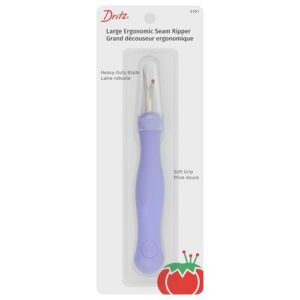
The Dritz Ergonomic Large Seam Ripper means business. Weighing just 0.09 lb, it won’t drag down your travel kit — but that chunky, rounded handle delivers serious control where standard rippers fall short.
If arthritis or carpal tunnel slows you down, this one’s built for you. Soft finger grips keep your hold steady, and the electronically ground blade stays sharp through thick denim, tight seams, and stubborn buttonholes.
Just note: the large head isn’t ideal for tiny, delicate stitches.
| Best For | Sewers dealing with arthritis or carpal tunnel who need a comfortable, reliable ripper for heavy-duty tasks like thick seams, denim, and buttonholes. |
|---|---|
| Handle Material | Rubber-coated |
| Blade Material | Stainless steel |
| Safety Tip | Red mini ball on fork |
| Protective Cover | Clear safety caps |
| Tool Length | 5.12 in |
| Kit Count | 3 rippers |
| Additional Features |
|
- Ergonomic rounded handle reduces hand strain during extended use
- Electronically ground blade stays sharp and handles thick, tough fabrics with ease
- Safety ball tip protects fabric from accidental snags or tears
- Safety ball tip can wear down over time with heavy use
- Bulky handle makes it tricky to navigate very tight or tiny stitching areas
- Oversized blade may be too aggressive for delicate or fine fabrics
7. Fiveizero Sewing Seam Ripper Kit

Five tools in one compact case — the Fiveizero Seam Ripper Kit packs serious value at just $4.24.
You get two large (5.5 in) and two small (3.4 in) stainless-steel rippers, plus sharp sewing scissors. The red protective caps keep blades safe in transit.
Large rippers handle denim; small ones manage embroidery and labels cleanly. Plastic grips won’t survive heavy industrial use, but for travel repairs and quick alterations, this kit covers you without weighing down your bag.
| Best For | Beginners and hobbyist sewers who need a versatile, travel-friendly kit for everyday repairs, quilting tweaks, and embroidery corrections without breaking the bank. |
|---|---|
| Handle Material | Plastic |
| Blade Material | Ground steel |
| Safety Tip | Safety ball on tip |
| Protective Cover | Included blade cap |
| Tool Length | Not specified |
| Kit Count | 1 ripper |
| Additional Features |
|
- Four rippers in two sizes mean you’re covered for everything from thick denim to delicate chiffon
- Stainless-steel blades and scissors stay sharp through regular home use
- Compact case keeps all five tools organized and easy to toss in a bag
- Plastic handles can become brittle over time and won’t hold up to heavy or industrial use
- The small eye hole struggles to pull cleanly through multiple layers of heavyweight fabric
- No needle threader included, despite being mentioned in the product description
8. Missouri Star Heavy Duty Seam Ripper
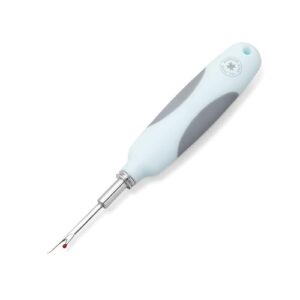
When thick seams fight back, you need a ripper built to win. The Missouri Star Heavy Duty Seam Ripper is made for quilters who don’t mess around — a reinforced steel blade that stays sharp through dense threads and stubborn fabric layers.
The ergonomic, non-slip handle reduces hand fatigue on longer projects, and the protective blade cap keeps things safe in your travel kit. Replacement tips are sold separately, so you won’t have to retire the whole tool when one blade dulls.
| Best For | This heavy-duty seam ripper is best for quilters and sewers tackling thick seams, dense threads, and multi-layer patchwork or hemming projects, including those who experience hand fatigue or arthritis. |
|---|---|
| Handle Material | Plastic |
| Blade Material | Stainless steel |
| Safety Tip | Red mini-ball on each ripper |
| Protective Cover | Compact plastic case |
| Tool Length | 3.5–5.5 in |
| Kit Count | 5 tools |
| Additional Features |
|
- Reinforced steel blade slips easily under tight stitches and stays sharp through dense threads and stubborn fabric layers
- Ergonomic, non-slip handle reduces hand fatigue during long quilting or hemming sessions
- Protective blade cap keeps the tool safe and secure for storage or travel
- Blade attachment can feel loose and may wobble if not held steady, which could concern beginners
- Some buyers have reported units arriving with surface dirt or residue
- The handle’s slight magnetism may unintentionally attract pins or other small metal objects
9. Clover 463 Seam Ripper
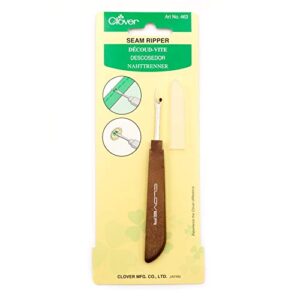
For embroidery lovers, this tiny tool packs serious precision. The Clover 463 weighs just 5 grams, yet its small, extremely sharp blade glides through fine stitches without snagging fabric.
The brown ergonomic handle keeps your grip steady during detailed repairs, though larger hands might want more room. A protective cap shields the blade in transit — just watch it, since it can pop off easily.
Perfect for embroidery, hand stitching, and leather projects, but not heavy‑duty seams.
| Best For | This seam ripper is best for embroidery enthusiasts, hand-stitchers, and leather crafters who need a precise, lightweight tool for detailed work. |
|---|---|
| Handle Material | Soft-grip rubber |
| Blade Material | Chrome-plated steel |
| Safety Tip | Mini ball protector |
| Protective Cover | Detachable blade cover |
| Tool Length | 5.5 in |
| Kit Count | 1 ripper |
| Additional Features |
|
- Quickly and cleanly removes seams, threads, and buttonholes without damaging fabric
- Compact, lightweight (5 g) design makes it easy to carry in a sewing kit or travel bag
- Extremely sharp blade and ergonomic handle allow for fine, controlled work on embroidery and leather projects
- Short handle may feel less comfortable for users with larger hands
- Protective cap can detach easily, so it needs careful handling
- Blade’s extreme sharpness requires extra caution during use and storage
Travel Seam Ripper Buying Guide
You’ve seen the top picks, but how do you know which one fits your travel style? The right seam ripper comes down to a few key factors, not just looks. Here’s what to check before you toss one in your bag.
Compact Closed Length
Size makes or breaks a travel-friendly tool. Compact closed length keeps your ripper pocket-ready, usually 40-70mm.
Shorter hinge depth shrinks bulk, cutting the tool’s footprint for tight kits. Less blade protrusion means safer storage and meets real pocketability standards.
The MiniCut Travel Seam Ripper proves a true portable sewing accessory, still delivers control for seam repair on the go.
Lightweight Kit Storage
Once your ripper is compact, the next question is where it lives in your bag. A zippered pouch or organizer keeps everything together without the scramble. Look for moisture‑resistant storage with a soft interior lining — it protects blades and stays light.
Snap‑together pouches measuring 6 by 4 inches hit the sweet spot for carry‑on kits without eating up space.
Blade Sharpness
A sharp blade separates the best seam ripper from the rest. Edge geometry, steel hardness, and blade grinding control cutting force and sharpness retention.
A lower edge angle benefits the initial sharpness, giving smooth cuts.
- Thin edge geometry for quick bite
- Hardened steel hardness for edge retention
- Smooth blade grinding cuts down burrs
- Stainless steel blade resists rust
- Compact tool design holds its edge
That’s what makes a travel-friendly tool reliable.
Handle Comfort
A sharp blade gets you started, but the handle is what keeps you going. Ergonomic grip materials like soft silicone or rubberized coatings prevent slipping and cut down on hand fatigue reduction during longer mending sessions. Look for finger groove design and a balanced 0–40 gram weight — your wrist will thank you.
| Feature | Benefit | Best For |
|---|---|---|
| Rubberized grip | Non-slip hold | Sweaty hands |
| Finger grooves | Even pressure | Extended sessions |
| Lightweight build | Wrist strain prevention | Travel kits |
Price Versus Durability
A comfortable handle only matters if your tool holds up long enough to use it. Premium materials like tempered steel and reinforced plastics deliver noticeably better edge retention and resist chipping under repeated use — meaning fewer blade swaps mid-trip.
The lifecycle cost analysis is straightforward: a $10–$15 tool that lasts years beats a $2 ripper you replace every few months. Budget kits often seem like a win upfront, but cumulative blade replacements quietly overtake that one-time investment in tool durability.
A $10 tool that lasts years will always outlast the hidden cost of cheap blades replaced again and again
Best Features for Travel Sewing
A sharp blade means nothing if it’s shredding your luggage lining or impossible to find at the bottom of your bag. The best travel seam rippers are built with specific features that make them safer, smarter, and easier to use on the road. Here’s what to look for before you pack one.
Protective Blade Caps
A protective cap is one of the smartest features on any travelfriendly tool — it’s the difference between a sharp blade and a ruined one. Rigid plastic caps shield the edge from dust, lint, and bumps inside your project bag essentials. Key things to look for in your seam ripper kit:
- Color-coded caps identify blade sizes instantly
- UV-stabilized plastic resists yellowing on sunny trips
- Snap-on grip prevents accidental detachment
- Integrated storage cavities hold a spare pin or needle
Caps with magnetic attachment features provide an additional layer of handtool safety by keeping the shield locked in place during transit.
Folding Handle Designs
When your folding handle design locks flat, it slips into any compact starter kit without snagging zippers or fabric. Models like the Bohin use a hinge axis alignment that folds flush to just ¾ inch closed.
A spring assist mechanism returns the handle automatically after use. Secondary safety latches and quick release levers keep your seam ripper kit secure and ready — no fumbling, no loose parts in transit.
Retractable Blade Safety
A retractable blade is your best defense against accidental lacerations when digging through a packed bag mid-trip. Unlike manual and auto-retractable seam rippers, automatic retraction mechanisms pull the blade back the instant you lift off — no slider to forget, no exposed edge waiting to catch your fingers.
- Pressure-sensitive blade exposure keeps the blade out only while you’re actively cutting
- Controlled blade extension limits how far the blade travels, reducing snag risk
- A locking mechanism blocks unintended blade extension during transport
- Auto-retractable models can’t be bypassed by propping the slider open
- Slice’s textured slider ensures the blade can never be accidentally left exposed
This makes it a reliable precision cutting tool for any compact starter kit.
Bright Handle Colors
A bright handle isn’t just style — it’s strategy. When your sewing toolkit is buried in a bag, neon visibility cuts your search time down fast.
Pink and neon grips resist fading through UV exposure and temperature swings.
A colorful ergonomic set also uses color coding to match blade size at a glance, so you grab the right hand tool for sewing without second-guessing.
Multi-size Ripper Options
One tool, two sizes — that’s the whole point of a multisize set. A dual-size seam ripper kit uses staggered tooth heights to hit different stitch depths in one pass, so you’re not swapping tools mid-repair.
Varying tooth heights mean better fabric coverage across lightweight cotton and heavier denim. For a compact set of hand tools for sewing, this setup accommodates more without adding bulk.
Choosing by Sewing Project
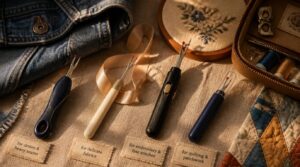
Not every seam ripper fits every job, and the wrong tool can turn a simple fix into a frustrating mess. Your project type should drive your choice just as much as size or price does. Here’s how to match the right ripper to what you’re actually working on.
Garment Alterations
Garment alterations on the road demand precision — and a sharp seam ripper delivers it.
Whether you’re hemming trousers, tapering sleeves, or reshaping a neckline, clean stitch removal is step one.
Side seams can be taken in up to two inches. Shoulder adjustments improve drape fast.
For zipper replacement, a pointed-tip blade reaches tight stitches without damaging surrounding fabric.
Quilting Repairs
Quilting repairs call for a steady hand and the right fabric repair tools.
Use your seam ripper for clean quilting corrections — pulling damaged stitches without tearing layers.
- Invisible ladder stitching rejoins open seams nearly invisibly
- Batting leveling techniques restore even loft in lumpy sections
- Frayed edge binding and color matching patches preserve heirloom fabric integrity
Embroidery Details
Embroidery repairs demand precision cutting — one wrong slip and you’ve pulled the wrong thread.
A small seam ripper with a pointed tip lets you target individual stitches without disturbing surrounding embroidery thread removal work. Control stitch density carefully: dense fill stitches sit close together, so slow, deliberate passes protect the fabric beneath.
Thick Fabric Seams
Thick denim, canvas, or leather doesn’t forgive a weak blade. For these jobs, reach for a heavy-duty seam ripper with a sharp stainless-steel blade.
Opt for needle sizes 90–110 to handle bulk cleanly. Wider seam allowances and stitch density adjustments keep seams from gaping when you rip and re-sew on the road.
Beginner Travel Kits
If heavy‑duty repairs push your packing limits, a beginner travel kit resets the bar. Keep it simple: one or two rippers, a clear zippered pouch, and a spare blade.
A budget starter set with a protective cap and color‑coded grips covers most easy repair scenarios — loose hems, minor seam splits — without overwhelming you.
Packing Seam Rippers Safely
Packing a seam ripper wrong can mean a sliced bag lining or a confiscated tool at security. How you store it matters just as much as which one you buy. Here’s what to know before you zip up your bag.
Carry-on Safety Concerns
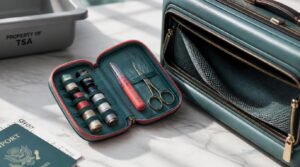
Carrying a seam ripper in your carry-on isn’t complicated — but it does require a little forethought. TSA and equivalent agencies treat exposed blades as a safety risk, so your ripper must have its blade cap intact before you reach the checkpoint. Loose or uncapped tools can get flagged, pulled, or confiscated.
- Keep your ripper in a zippered sewing pouch
- Face the handle down, blade covered
- Allow extra screening time at security
Bright-colored grips help crew identify sharp items fast.
Checked Bag Storage
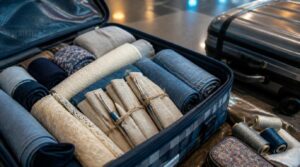
Checked bags take a rougher ride than most people expect. Automated sorting systems and cargo loading equipment can shift your sewing tools hard. Wrap your seam ripper tightly — handle cracks happen.
Cargo temperature fluctuations can warp plastic or wooden grips too.
Your baggage liability coverage likely won’t reimburse craft supplies, so protect them yourself. Keep sharp tools buried deep inside clothing layers.
Zippered Pouch Protection
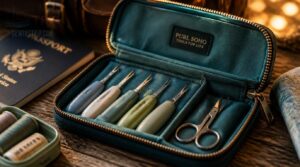
A good zippered pouch is your seam ripper’s first line of defense.
Look for moisture-resistant interiors that shield blades from humidity. Padded storage layers prevent your sewing tools from shifting or making contact with scissors. Anti-snag fabrics keep zippers smooth, trip after trip.
Secure seam construction stops the pouch itself from splitting under a packed travel case.
Blade Cover Placement
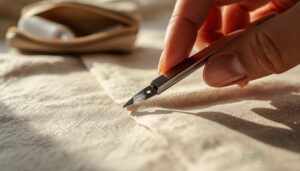
The protective cap only works if you place it right. Fit the cover so the blade edge is fully enclosed, with the opening facing away from you.
The short side of the cap locks toward the tool to engage the safety catch.
A snug fit stops shifting during transport and lets you do a quick visual inspection without full removal.
Preventing Luggage Damage

Can a tiny seam ripper damage your suitcase? Yes, if you skip basic protection. Keep your protective cap snapped on, and store sewing accessories smartly:
- Corner guard benefits cushion bag edges from punctures.
- Zipper reinforcement stops snags during travel.
- Wheel durability improves with sealed bearings.
- Shell scuff resistance guards glossy exteriors.
- Interior stabilization methods keep dividers locked, ensuring fabric protection.
Travel Seam Ripper Care

A sharp seam ripper doesn’t stay sharp on its own. A little care after each trip keeps your tool ready for the next one. Here’s what your travel kit needs to stay in top shape.
Clean Lint After Use
Lint is a seam ripper’s worst enemy. Effective lint removal after every session keeps your sewing accessories sharp and ready for repeat sewing repairs. Here’s what works best:
| Tool | Action | Result |
|---|---|---|
| Microfiber cleaning cloths | Wipe blade | Avoiding blade corrosion |
| Specialized cleaning tools | Sweep grooves | Preventing fiber buildup |
This simple tool maintenance step protects fabric maintenance routines on every trip.
Keep Blades Dry
Once lint is cleared, dry your blade fully to stop rust before it starts.
- Pat dry, air dry fully open
- Apply a light moisture barrier oil
- Toss in a desiccant pack
- Control humidity, skip steamy rooms
Choose rust-resistant steel, leave your protective cap off until dry. This tool maintenance step boosts corrosion resistance, advice for any seam ripper buying guide.
Store With Cap
Once dry, always snap the protective cap back on your seam ripper before packing for travel. Cap material durability matters—plastic resists moisture, metal resists impact.
Snap latch security keeps it closed in transit, while a translucent window lets you check blade condition. Proper cap reseating techniques prevent blade dulling, protecting this handheld fabric repair tool and your other sewing accessories.
Replace Dull Blades
A dull blade drags instead of cuts—don’t wait until it’s ruining fabric. Honing stone techniques can restore edge sharpness and extend blade life by up to 40 percent. When sharpening isn’t enough, replace it.
- Match your replacement blade’s mount type to your ripper model
- Use manufacturer-compatible blades for the best fit and longevity
- Apply a light lubricant coat after installing for smoother cuts
Avoid Heat Damage
A fresh blade means nothing if heat warps your handle next. Use heat resistant storage, dodge sunlight exposure risks, and pack with luggage temperature control.
Lower handle material temperature prevents cracking, while blade corrosion prevention keeps your seam ripper smooth for travel. This protects sewing accessories and prevents fabric damage, making hand tool maintenance simple every trip this travel season.
| Heat Risk | Travel Fix |
|---|---|
| Hot car interior (140°F+) | Store in shaded luggage |
| Direct sunlight exposure | Use a ventilated pouch |
| Blade left exposed | Cap blade, add silica gel |
Frequently Asked Questions (FAQs)
Can I bring seam rippers on international flights?
TSA guidelines allow seam rippers in carry-on bags, but enforcement varies by checkpoint. International airports differ. When in doubt, pack them in checked luggage to avoid confiscation.
Whats the best seam ripper material for travel?
Stainless steel blades win for travel. They resist rust from humidity and hold a sharp edge through heavy use. Lightweight, low-maintenance, and reliable — stainless steel is your smartest choice in a travel sewing kit.
How do I clean my seam ripper while traveling?
Wipe your blade with isopropyl alcohol on a lint-free cloth after every session. Use a soft brush to clear thread fragments from the tip. Always dry thoroughly to prevent corrosion.
Are magnetic seam rippers better for travel use?
Like a magnet drawn to true north, magnetic seam rippers pull your sewing accessories together. They hold loose pins nearby and keep your travel kit organized — but won’t sharpen your blade or speed up stitch removal.
Where can I buy replacement blades for travel rippers?
Replacement blades are sold on Amazon, Walmart, and brand sites like Clover and Dritz. Local craft stores stock refills too. Bulk packs cut per-blade cost. Always verify blade size before buying.
Can seam rippers go through airport security screening?
Yes, but it depends. TSA evaluates blade tools individually at checkpoints. Retractable or capped rippers often pass in carry-on. Checked bags are safer. International rules vary — always verify before you fly.
Are ergonomic handles better for arthritis sufferers traveling?
Absolutely. Ergonomic grips reduce grip force and keep your wrist in a neutral position — a real win for arthritis sufferers. Less hand strain means less travel fatigue, so you can sew longer without the pain.
What blade types work best for embroidery repairs?
For embroidery errors, micro point precision beats blunt blades every time. Use pointed tip blades for tight stitches, ceramic coated edges for metallic thread cutting, and duckbill blades for needlework correction without piercing fabric.
How do I know when my blade needs replacing?
A dull blade tells on itself fast. Watch for visible nicks, fraying cuts, or rust. If you’re forcing extra passes to split threads, replace the blade — a sharp seam ripper does the work, not you.
Conclusion
sharp tool in hand is the difference between a wardrobe crisis and a quiet fix before breakfast.
The best seam rippers for travel don’t just solve problems—they hand back control when you’re far from your sewing room.
Pick the size that fits your kit, protect the blade, keep it dry, and you’re ready for whatever stitches come loose mid-trip.
Your next destination won’t catch you unprepared.