This site is supported by our readers. We may earn a commission, at no cost to you, if you purchase through links.
Your first decorative stitch probably won’t look perfect—and that’s exactly the point. The zigzag might wobble, the featherstitch could lean, but each wobbly line teaches your hands something new.
Beginner decorative sewing stitches transform plain fabric into something personal, turning basic skills into creative expression. You don’t need an expensive machine or years of experience to start embellishing towels, pillows, or clothing with eye-catching patterns.
The right thread, proper tension settings, and a willingness to practice on scraps will take you further than natural talent ever could. Once you master straight stitches and basic zigzags, you’ll discover how combining simple patterns creates surprisingly refined designs that make people wonder where you bought that beautifully detailed piece.
Table Of Contents
- Key Takeaways
- Essential Decorative Stitches for Beginners
- Choosing The Right Thread and Fabric
- Setting Up Your Sewing Machine for Decorative Stitches
- Step-by-Step Tutorial: Sewing Decorative Stitches
- Combining Decorative Stitches for Unique Effects
- Troubleshooting Common Decorative Stitch Problems
- Top 5 Products for Beginner Decorative Stitching
- Tips for Perfecting Decorative Stitches
- Frequently Asked Questions (FAQs)
- Conclusion
Key Takeaways
- Master six foundational stitches—straight, zigzag, featherstitch, cross stitch, fagoting, and blind hem—to build your decorative sewing skills from simple lines to intricate patterns.
- Pair your thread type and fabric weight deliberately, using polyester for durability, rayon for sheen, and lightweight weaves like cotton broadcloth or Aida fabric for maximum stitch visibility.
- Set up your machine correctly by selecting the right presser foot, adjusting stitch width between 0-7mm and stitch length between 0-5mm, and testing all settings on scrap fabric before starting your project.
- Prevent common problems like thread breakage, fabric bunching, and skipped stitches by matching needle size to fabric weight, cleaning your bobbin area regularly, and using stabilizer on stretchy or delicate materials.
Essential Decorative Stitches for Beginners
Every sewing machine comes with a handful of built-in stitches that can transform plain fabric into something special. You don’t need fancy equipment to get started—just a willingness to experiment with what’s already at your fingertips.
From simple straight lines to zigzags and beyond, understanding basic machine stitch types helps you choose the right technique for borders, fills, and decorative details.
Let’s look at six beginner-friendly decorative stitches that’ll give you the confidence to add texture and personality to your projects.
Straight Stitch
The straight stitch is your foundation—a clean, simple line that joins fabric with precision. On your sewing machine, adjust stitch tension and length between 2.0 to 3.0 millimeters for balanced seams.
Your fabric choice matters: wovens work beautifully, while knits need extra care. Control your sewing speed, match your needle to the material, and you’ll master this essential technique quickly.
Zigzag Stitch
Once you’ve mastered the straight stitch, the zigzag stitch opens up adaptable creative possibilities. Your sewing machine moves the needle side to side, creating that signature back-and-forth pattern perfect for edge finishing and decorative stitches.
Zigzag Basics and Practical Applications:
- Adjust stitch width and length to customize your zigzag from subtle to bold decorative borders
- Prevent fraying on woven fabrics with a narrow zigzag along raw edges
- Reinforce stretch fabric seams since the zigzag accommodates fabric movement beautifully
- Control tension to avoid puckering—reduce stitch length and loosen thread tension slightly if needed
For more on optimizing your settings and understanding, explore detailed guides made for both beginners and seasoned sewists.
Featherstitch
Featherstitch brings a delicate, branching elegance to your decorative stitch patterns. You’ll create alternating V-shaped loops along a guideline—think tiny twigs growing from a central stem.
Featherstitch Basics start with proper Stitch Tension; pull gently to keep the pattern airy. Use Embroidery Hoops to prevent puckering, and match your Thread Selection and Fabric Choice to your sewing machine’s capabilities for crisp, beautiful results.
For more details on how featherstitch can be adapted for both straight and curved lines, check out embroidery stitch variations.
Cross Stitch
Now let’s explore cross stitch—a timeless decorative stitch pattern where X-shaped stitches form charming designs on counted fabric.
Cross Stitch Basics rely on precise Thread Management and Fabric Selection; choose Aida cloth with a clear grid. Stitch Variations like half-cross and backstitch outlines expand your creative palette.
Color Theory helps you blend DMC shades for depth. This needlework technique transforms simple embroidery into woven artistry.
Fagoting Stitch
Fagoting creates an airy, lace-like bridge between two fabric panels—perfect for Heirloom Sewing and adding Openwork Effects to vintage-inspired projects. This elegant stitch comes from Fagoting History, where needleworkers valued delicate gaps in seams.
Master these essentials:
- Keep Stitch Tension even to prevent puckering
- Choose lightweight Fabric Choice like cotton or linen
- Space parallel stitches uniformly across the gap
- Secure ends with small backstitches
You’ll love this airy embroidery technique!
Blind Hem Stitch
Want a hem that practically vanishes? The Blind Hem Structure uses tiny zigzag bites on the fold to secure fabric invisibly—ideal for Edge Finishing on skirts and trousers.
Master this by practicing Fabric Folding, adjusting your sewing machine’s Stitch Tension, and testing Stitch Visibility on scraps.
These Hemming Techniques blend decorative stitch patterns with practical hidden stitches for polished, professional results.
Choosing The Right Thread and Fabric
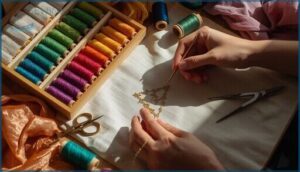
The thread and fabric you choose can make or break your decorative stitching—it’s that simple. When they work together, your stitches pop with clarity and precision.
The right thread and fabric pairing makes your decorative stitches pop with clarity and precision
Let’s look at what you need to know about selecting the right materials for beautiful results.
Thread Types for Decorative Stitches
Your thread choice can make or break your decorative stitches. Here’s what works best:
- Polyester thread resists fraying and delivers colorfast results for lasting designs
- Rayon embroidery thread offers gorgeous sheen that makes stitches pop on lighter fabrics
- Cotton thread provides smooth, classic finish for traditional decorative work
- Metallic thread adds sparkle but needs stabilizers to prevent snagging
Thread weights and fiber blends affect stitch visibility dramatically.
Best Fabrics for Stitch Visibility
Your fabric choice sets the stage for how well those decorative stitch patterns shine. Light weave linen with 52 to 60 threads per inch creates crisp stitch density that’s easy to see. Cotton broadcloth’s smooth fabric texture gives clean lines on both sides.
For maximum thread contrast and visibility factors, try 14-count Aida fabric—its grid-like weave patterns make every stitch pop beautifully.
Matching Needle to Fabric
Your needle selection can make or break decorative stitches. Match your needle to fabric density and thread compatibility for impeccable results.
- Sharp needles slice through woven cotton and linen without fraying edges
- Ballpoint tips glide between knit fibers to prevent runs and holes
- Topstitch needles power through denim with their reinforced shaft and larger eye
- Microtex points create clean punctures in silk without snagging delicate threads
Proper needle-to-fabric pairing controls stitch tension beautifully.
Setting Up Your Sewing Machine for Decorative Stitches
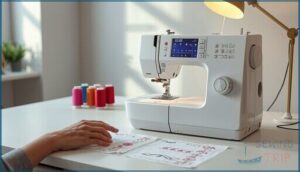
Getting your machine ready for decorative stitches doesn’t have to feel like decoding a puzzle. A few smart adjustments will set you up for smooth, beautiful results every time.
Let’s walk through the key setup steps that’ll make your decorative stitching easier and more enjoyable.
Selecting The Correct Presser Foot
Your presser foot choice makes or breaks decorative stitches. The standard all-purpose foot manages basic patterns, but you’ll want an embroidery foot or open-toe foot for better stitch guidance and fabric feeding. These specialized presser foot types let you see exactly where your sewing machine stitches land.
Check your machine compatibility before buying new feet—not all sewing techniques work with every model.
Adjusting Stitch Width and Length
Once you’ve got the right foot attached, it’s time to dial in your width and length settings. Most machines offer 0 to 7 millimeters for stitch width and 0 to 5 for stitch length.
Start at mid-range defaults—around 2.5 millimeters width—then adjust based on fabric interaction. Lighter fabrics need narrower settings to prevent puckering, while heavier materials handle bolder patterns.
Test on scraps to nail your stitch balance and thread tension.
Filling and Inserting The Bobbin Properly
Your bobbin might seem simple, but proper thread winding and bobbin placement make or break stitch tension. Wind evenly until thread sits flush with the bobbin edge—no overflow.
Insert it so the thread feeds from the direction marked on your case, then pull a few inches through. Check that it spins freely and sits flat.
This small step of sewing machine calibration prevents thread contrast issues and keeps your decorative work smooth.
Step-by-Step Tutorial: Sewing Decorative Stitches
Now that your machine’s set up and ready to go, it’s time to sew some decorative stitches.
This tutorial walks you through the complete process, from preparing your materials to finishing your work with clean, professional results. Follow these steps in order, and you’ll build confidence with each row you stitch.
Preparing Your Fabric and Thread
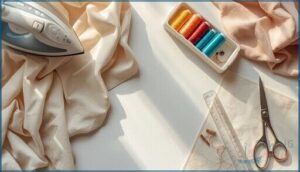
Before you dive into stitching, a little prep work goes a long way. Wash your fabric to prevent shrinkage, then iron it smooth.
Thread selection and fabric choice matter—test your thread types on scraps for contrast visibility. Match your needle to fabric weight for tension control.
Add stabilizer for stretchy or sheer materials. This fabric preparation sets you up for success.
Choosing and Selecting Stitches
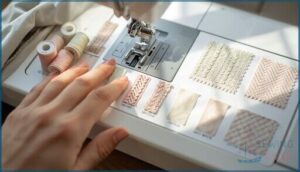
Now you’re ready to pick your stitch pattern. Browse your machine’s decorative stitch patterns—start simple with straight or zigzag for fabric selection on cottons.
Thread choice and fabric selection affect stitch density, so match them carefully. Adjust stitch tension and width controls between 0.5 and 6 millimeters depending on thread contrast goals.
Test settings first to build your sewing skills confidently.
Sewing Practice Rows
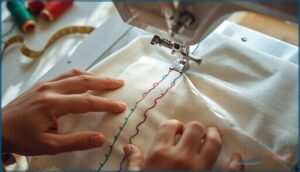
Before testing on your project, fabric prep makes all the difference. Cut a scrap piece matching your main fabric’s weight and weave.
Sew practice rows—parallel lines about one to two inches long—to check stitch tension and thread control. Watch for even stitch density across each row.
These sewing machine techniques sharpen your sewing skills and reveal if you need adjustments before tackling decorative stitch patterns.
Securing and Finishing Stitches
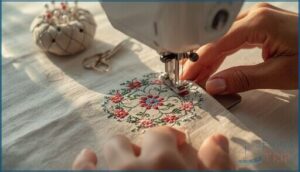
Stitch security keeps decorative stitches from unraveling. Use your sewing machine’s backstitch function—run one to three stitches backward at each end. For delicate fabric, tie thread tails in small knots, then weave them under the seam.
Check stitch tension before finishing; balanced tension prevents puckering. These finishing techniques protect edge work and lock stitch patterns permanently, letting you embellish seam lines with confidence.
Combining Decorative Stitches for Unique Effects
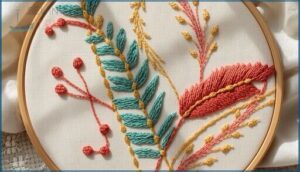
Once you’re comfortable with individual stitches, the real magic happens when you start mixing them together. Combining different patterns, colors, and techniques opens up endless creative possibilities for your projects.
Let’s explore three powerful ways to layer and blend decorative stitches for truly one-of-a-kind results.
Layering Stitch Patterns
Think of layering techniques like building a decorative sandwich—you’re stacking decorative stitch patterns to create depth you can’t get from a single pass. Start with a base layer using one stitch density, then add a contrasting pattern on top.
That texture creation happens when you offset angles slightly. Fabric interaction shifts as layers build, so test your stitching methods on scraps first to nail the color contrast and prevent puckering.
Mixing Thread Colors
Pairing complementary colors in your decorative stitches creates high contrast that makes each pattern pop. Try thread blending with analogous colors for smooth tonal gradation—think blue into purple for subtle ombre effects.
Your sewing machine can layer variegated threads with matte ones for striking contrast stitching. Test color harmony on scraps first, because embroidery reveals how warm hues advance while cool tones recede in stitching.
Creating Borders and Motifs
Border designs frame your fabric embellishments beautifully when you align your sewing machine needle just 1 to 2 mm from the edge. Motif patterns sized between 8 and 40 mm won’t crowd small borders.
Try edge finishing with featherstitch or tiny blanket stitch for texture.
Repeating decorative stitches in stitch combinations builds geometric embroidery—perfect for turning simple fabric into statement pieces.
Troubleshooting Common Decorative Stitch Problems
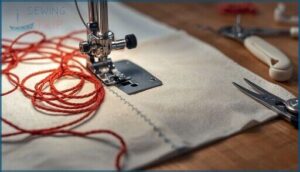
Even when you’re following all the right steps, decorative stitches can still throw you a curveball. Don’t worry—most problems have simple fixes once you know what to look for.
Let’s tackle the most common issues you’ll run into and how to solve them quickly.
Fixing Thread Breakage
Thread breakage can turn decorative stitches into a frustrating mess. Start by checking your thread tension—decorative stitches often need looser upper tension than straight stitches. Next, inspect your needle selection; a dull or bent needle causes breaks and skipped stitches.
Clean lint from your bobbin area, and re-thread completely. Match your thread weight to fabric type for smoother embroidery and weaving results.
Preventing Fabric Bunching
Bunching happens when your sewing machine feeds fabric unevenly. Adjust presser foot pressure to match fabric weight—too much pressure stretches and puckers decorative stitch patterns. Add a stabilizer under slippery or lightweight fabric choices for better stitch regulation. Let the machine control feed; don’t pull or tug.
Try these bunching prevention steps:
- Match pressure to fabric thickness
- Use temporary stabilizers
- Slow your stitch speed
- Test tension adjustments first
Resolving Skipped Stitches
Skipped stitches frustrate even patient sewers. Start with needle selection—replace bent or dull needles immediately. Match needle size to your thread and fabric weight for consistent decorative stitches.
Check thread compatibility; rayon or metallic threads need slower speeds and looser tension adjustment. Clean your sewing machine’s bobbin area regularly.
Test stitch length on scrap fabric, adjusting until you achieve smooth, uninterrupted stitching every time.
Correcting Uneven Designs
Uneven decorative stitch patterns often result from poor design alignment or inconsistent stitch density. Adjust your tension adjustment first—looser upper tension prevents tight loops on top fabric.
Your fabric choice matters too; use stabilizer on slippery materials to maintain even feeding. Increase stitch length on dense patterns to prevent fabric tearing.
Test thread contrast and sewing machine techniques on scrap fabric before committing to your final project.
Top 5 Products for Beginner Decorative Stitching
The right tools make learning decorative stitches so much easier. You don’t need a massive collection to get started, but a few smart picks will save you frustration and help your stitches look clean from day one.
Here are five products that’ll set you up for success as you explore decorative stitching.
1. Brother Sewing And Embroidery Machine
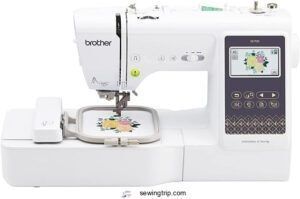
When you’re starting with decorative stitches, you’ll want a machine that grows with you. The Brother SE700 combines sewing and embroidery in one 15.6-pound package.
You’ll love the 3.7-inch touchscreen that makes browsing 135 built-in designs simple. The auto needle threader saves your eyesight on long projects.
While the 4×4-inch embroidery field won’t handle massive quilts, it’s perfect for learning lettering, monograms, and smaller embellishments.
Plus, wireless LAN means you can add fresh patterns whenever inspiration strikes.
| Best For | Beginners and hobbyists who want to explore both sewing and embroidery without investing in separate machines. |
|---|---|
| Primary Use | Sewing & Embroidery |
| Material | Metal & Plastic |
| Skill Level | Beginner to Advanced |
| Project Type | Clothes & Decor |
| Made In | Not Specified |
| Compatibility | Standalone Machine |
| Additional Features |
|
- Large touchscreen and auto needle threader make setup quick and painless
- Wireless connectivity lets you import custom designs from your phone or computer
- Combines two machines in one, saving space and money
- 4×4-inch embroidery area limits you to smaller projects
- Threading feature can be unreliable and frustrating
- You’ll need to budget for extra threads, needles, and possibly design software
2. Brothread Polyester Embroidery Thread Kit
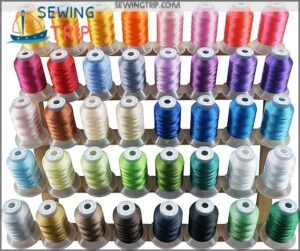
Color is the secret sauce that makes decorative stitches pop. The Brothread 40-spool kit gives you 500 yards per spool across a rainbow of vibrant shades that won’t fade or fray mid-project.
You’ll find it fits Brother, Janome, Singer, and most machines without fuss. The included color chart takes the guesswork out of matching hues.
At 40 WT polyester, this thread won’t pucker your fabric. Perfect for practicing those featherstitches and cross stitches you’ve been eyeing.
| Best For | Embroidery enthusiasts who want a versatile color palette for decorative stitching on everything from uniforms to quilts without constantly switching thread. |
|---|---|
| Primary Use | Thread for Embroidery |
| Material | Polyester |
| Skill Level | All Levels |
| Project Type | Decorative Stitching |
| Made In | Not Specified |
| Compatibility | Multiple Brands |
| Additional Features |
|
- 40 spools with 500 yards each give you tons of vibrant colors that stay bright wash after wash
- Works with most major embroidery machines like Brother, Janome, and Singer right out of the box
- Strong polyester construction means less thread breakage and fewer frustrating mid-stitch snags
- No storage rack included, so you’ll need to find your own way to organize 40 spools
- You might need to experiment with needle sizes to get the best results on your specific machine
- Loose thread ends can unravel if you don’t secure them properly on the spool
3. HBI Water Soluble Embroidery Stabilizer
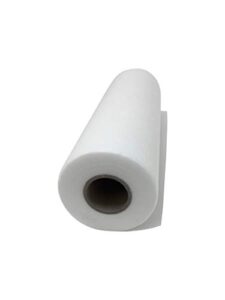
Delicate fabrics deserve gentle support. The HBI Water Soluble Stabilizer dissolves completely in warm water, leaving zero residue behind your decorative stitches.
You’ll get a 12″ x 25-yard roll of fibrous, non-woven material that’s easy to hoop. At 1.5 oz weight, it’s perfect for low to medium density designs without adding bulk.
Stack multiple layers for complex patterns or use it as topping on textured fabrics. After stitching your free-standing lace or intricate embroidery, just rinse it away.
| Best For | Embroiderers working on delicate fabrics, free-standing lace, or low to medium density designs who need a stabilizer that disappears completely after washing. |
|---|---|
| Primary Use | Embroidery Stabilizer |
| Material | Non-woven |
| Skill Level | All Levels |
| Project Type | Lace & Embroidery |
| Made In | USA |
| Compatibility | Universal |
| Additional Features |
|
- Dissolves completely in warm water with no residue left behind
- Easy to hoop and handle, with the option to layer for extra support
- Great value with a 12″ x 25-yard roll made in the USA
- Too thin for high-stitch-count or heavy embroidery projects on its own
- Requires multiple layers for adequate stability in some applications
- Doesn’t provide permanent support, so it won’t work for projects that need lasting structure
4. VANICE Monogramming Sewing Machine Foot
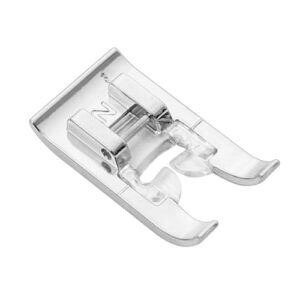
Lettering and monograms become surprisingly easy with the right tool. The VANICE Monogramming Foot features an open toe design that lets you see exactly where your stitches land. Its larger needle passage manages wide satin stitches without crowding, while the smooth underside channel guides fabric through curves and letters.
Made from durable alloy steel, it fits standard low shank machines. You’ll appreciate how the reinforced opening keeps decorative stitches visible as you work. Just pair it with stabilizer for best results on your customized projects.
| Best For | Sewers who want clear visibility and control when adding monograms, lettering, or decorative stitches to their projects. |
|---|---|
| Primary Use | Monogramming Presser Foot |
| Material | Alloy Steel & Plastic |
| Skill Level | All Levels |
| Project Type | Monograms & Lettering |
| Made In | Not Specified |
| Compatibility | Low Shank Machines |
| Additional Features |
|
- Open toe design gives you a clear view of exactly where your stitches are going
- Larger needle opening handles wide decorative stitches without jamming or thread buildup
- Durable steel construction works with most standard low shank machines
- You’ll need to verify compatibility with your specific sewing machine before buying
- Foot only—doesn’t include the machine itself
- Best results require using stabilizer, which adds an extra step to your projects
5. Water Soluble Embroidery Stabilizer Film
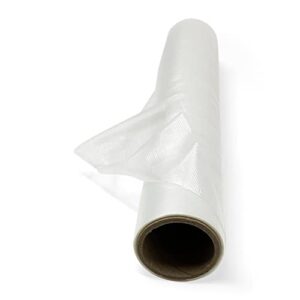
Plush fabrics like terry cloth and velvet can swallow your stitches whole. That’s where this water-soluble film saves the day.
You’ll place it on top of textured fabrics before embroidering, keeping your design crisp and visible. Made from polyvinyl alcohol, it dissolves completely in warm water without leaving residue behind.
The 12″ x 15-yard roll gives you plenty to work with, though you might need two layers for extra stability. Just rinse your finished piece and watch the film disappear.
| Best For | Embroiderers working with high-pile fabrics like towels, fleece, and velvet who need their stitches to stay visible on top of the texture. |
|---|---|
| Primary Use | Embroidery Topping |
| Material | Water-soluble Film |
| Skill Level | All Levels |
| Project Type | Textured Fabrics |
| Made In | USA |
| Compatibility | Universal |
| Additional Features |
|
- Dissolves completely in warm water, leaving no residue on washable projects
- Made in the USA with a generous 12″ x 15-yard roll that reduces how often you need replacements
- Works as both a topping and light stabilizer for different embroidery techniques
- Thin material can roll up and stretch during hooping, making it tricky to work with
- Often requires double layering for adequate stability, which uses product faster
- Higher price point compared to other stabilizer options
Tips for Perfecting Decorative Stitches
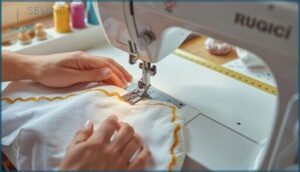
You’ve learned the basics, chosen your supplies, and practiced the stitches. Now it’s time to polish your technique so every decorative stitch looks crisp and professional.
These simple tips will help you troubleshoot problems, improve consistency, and keep your machine running smoothly for years to come.
Practicing on Scrap Fabric
Think of scrap fabric selection as your creative testing ground—it cuts fabric waste reduction while helping you master decorative stitch patterns. Try pieces from 2 by 6 inches to test stitch tension testing and edge finishing techniques on your sewing machine.
Mixed textures like cotton or muslin reveal how your fabric choice affects decorative stitches, making thread visibility tips easier to spot before starting real projects.
Using Contrasting Threads for Visibility
Contrast stitching transforms your practice from guesswork to precision sewing. Pair light fabric with dark thread, or vice versa, to see every stitch clearly on your sewing machine.
Cotton weaves show this best—think poplin or muslin for crisp visibility. Polyester embroidery threads hold bright colors that pop, while complementary color theory (opposites on the wheel) gives you the sharpest visible edge techniques for decorative stitches.
Overlapping and Securing Stitches
Once you’ve mastered visibility with contrasting threads, locking your decorative stitch patterns becomes the next skill to nail. A 2 to 3 stitch overlap at the beginning secures ends without bulk, while gentle fabric tension prevents puckering.
Use your sewing machine’s tie-off function or hand-bury thread tails for clean edge finishing that keeps your decorative stitches looking professional and prevents unraveling.
Cleaning and Maintaining Your Machine
Your decorative stitches won’t shine if your sewing machine is clogged with lint and debris. Clean the feed dogs and throat plate every 2 hours of stitching to prevent skipped stitches. Replace your needle every 8 to 12 hours of use, and apply machine oil to moving parts as your manufacturer recommends.
- Remove bobbin lint buildup after each project session
- Check thread tension settings after cleaning or needle replacement
- Store your machine covered to prevent dust accumulation
Frequently Asked Questions (FAQs)
How do I remove decorative stitches if I make mistakes?
Made a stitching mistake? Use a sharp seam ripper from the fabric’s back side, lifting threads gently to prevent holes.
For dense embroidery techniques, snip every few stitches for easier thread management and fabric repair.
Can decorative stitches be used on stretchy fabrics?
Yes, you can absolutely use decorative stitches on stretchy fabrics.
Choose zigzag or stretch stitch patterns with ballpoint needles, adjust presser foot pressure, and test on scrap knit first for best results.
Whats the difference between hand and machine decorative stitches?
Machine embroidery delivers consistent stitch patterns with precise tension control, while hand technique allows artistic variation and portability.
Machines excel at fabric durability and thread visibility, but hand decorative stitches create textured, one-of-a-kind effects.
How much thread do decorative stitches typically use?
Thread consumption depends on stitch density and fabric interaction. Plan for 2 to 5 meters per 10 centimeters of decorative stitching. Thread tension and estimation tips help you avoid running short mid-project.
Should I use stabilizer for all decorative stitch projects?
You don’t need stabilizer for every project, but fabric support prevents puckering on stretchy materials and dense decorative stitches.
Embroidery backing ensures stitch stability and tension control, especially with satin fills.
Conclusion
Think of beginner decorative sewing stitches as your creative alphabet—once you know the letters, you can write entire stories on fabric.
That wobbly zigzag from your first attempt? It’s already part of your growing fluency. Keep your practice scraps, adjust your tension without fear, and remember that every professional started exactly where you’re now.
Your next project doesn’t need flawlessness—it just needs you to start stitching.
- https://www.diaryofaquilter.com/make-decorative-stitches-catalog-for-your-sewing-machine/
- https://www.hooptalent.com/ru/blogs/news/mastering-feather-embroidery-stitch-step-by-step-guide-and-creative-applications
- https://trc-leiden.nl/trc-needles/techniques/embroidery/embroidery-stitches/feather-stitch
- https://www.pamashdesigns.com/blog/2018/2/2/how-to-make-the-feather-stitch-variations-and-embellishments
- https://createwhimsy.com/projects/embroidery-feather-stitch/