This site is supported by our readers. We may earn a commission, at no cost to you, if you purchase through links.

You’ve fought with reversed blades your entire sewing life, straining to see your cutting line while pushing fabric apart instead of slicing cleanly through it. Right-handed scissors weren’t designed for your grip angle, which means every cut demands compensation—tilting your wrist unnaturally, craning your neck to glimpse the blade’s path, or accepting crooked seams as inevitable.
Sewing scissors for left handed sewers reverse this frustration with blade geometry that aligns with your natural hand position, placing the top blade where you can actually see it and channeling your thumb’s pressure inward for clean cuts. The difference between struggling with adapted tools and working with properly engineered left-handed shears affects more than comfort—it determines whether you can execute precise cuts on complex patterns or spend your creative energy fighting your equipment.
Table Of Contents
Key Takeaways
- Right-handed scissors force left-handed sewers into unnatural wrist positions that block cutting line visibility and push blades apart instead of together, causing fabric distortion and chronic hand strain that true left-handed scissors eliminate by reversing blade geometry.
- Genuine left-handed sewing scissors position the top blade on the left side for clear sightlines and use reversed blade orientation that compresses under your natural cutting motion, delivering precision cuts without the compensatory movements that breed fatigue.
- High-carbon steel blades maintain sharper edges longer than stainless steel for fabric work, while features like adjustable tension, ergonomic soft-grip handles, and titanium coatings significantly impact cutting performance across different materials and project durations.
- Left-handed scissors typically cost two to three times more than right-handed models due to mirrored tooling requirements and smaller production runs, but proper maintenance through regular cleaning, oil application, and professional sharpening extends their functional lifespan to a decade or more.
Why Left-Handed Sewers Need Special Scissors
You’ve probably wrestled with right-handed scissors your whole life, watching the fabric fold and buckle as you try to see your cutting line.
The same frustration shows up when you’re tweaking a bodice pattern—one small misstep in your sewing pattern neckline adjustments and suddenly everything sits wrong.
If you’re left-handed, you’ve probably struggled your whole life watching fabric buckle under right-handed scissors that block your view
That frustration isn’t in your head—standard scissors force your left hand into an unnatural position that sabotages precision from the first snip. Understanding why left-handed scissors matter will change how you approach every sewing project.
Challenges of Using Right-Handed Scissors
When you use right-handed sewing scissors in your left hand, blade bias issues push the blades apart instead of together, creating tears rather than clean cuts.
Cutting line visibility drops because the top blade blocks your view, forcing awkward hand angles that cause ergonomic strain.
Material resistance increases on heavier fabrics due to scissor misalignment, while your thumb knuckle and forearm ache from compensating with extra grip force.
The design challenges facing left-handed sewers are rooted in the science behind scissor design.
Benefits of True Left-Handed Scissors
True left-handed sewing scissors flip the blade position so the top blade sits on the left, giving you clear sight lines and eliminating guesswork. This reversed geometry means the blades compress together under your natural cutting motion, delivering cutting precision without fabric distortion.
Ergonomic grips shaped for your grip reduce strain, while optimized pivot points channel your hand’s leverage efficiently—transforming frustration into left-handed ease and genuine sewing efficiency.
For more details on the importance of consistent hand preference in developing fine motor skills, see the latest research.
Impact on Cutting Accuracy and Comfort
Proper blade alignment lets you track straight lines on complex patterns without guesswork, while balanced weight distribution prevents wrist strain during detailed fabric cutting.
Ergonomic grips with soft-grip materials reduce slipping when your hands sweat, and tight factory tolerances guarantee your left-handed sewing scissors deliver repeatable cutting precision across cuts. That ergonomic design transforms comfort factors into tangible control, preserving blade sharpness and scissor balance through extended sessions.
Key Features of Left-Handed Sewing Scissors
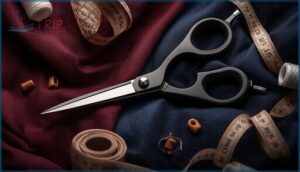
Not all left-handed scissors are created equal, and the difference comes down to specific design features that separate genuine left-handed tools from flipped right-handed pretenders.
When you’re investing in scissors built for your natural cutting motion, you’ll want to focus on four critical elements that determine performance and comfort. Understanding these features ensures you won’t waste money on scissors that force you to fight the fabric instead of gliding through it.
Blade Material and Sharpness
Your scissors are only as reliable as their high-carbon steel blades. High-carbon steel offers outstanding edge retention and sharpness tests prove it maintains cutting precision longer than stainless steel, though you’ll need to protect it from rust with regular oiling.
Stainless steel blades provide rust resistance without maintenance hassles, while titanium-coated options deliver remarkable blade durability by combining corrosion protection with enhanced blade material performance across metal alloys.
Ergonomic and Soft-Grip Handles
Comfortable grips transform marathon cutting sessions into smooth control. Ergonomic design features soft grip materials that compress slightly under pressure, cushioning your palm while textured surfaces prevent slipping when your hands sweat.
Contours align with your natural hand curves, and thumb rests positioned at the blade pivot deliver smoother operation. Left-handed sewing scissors with ergonomic grips reduce grip force by 20 percent, letting you maintain steady control during delicate thread work.
Adjustable Tension and Blade Coating
Fine-tuning your blade stiffness with adjustable tension control matches fabric weight perfectly—light touch for silk, firm resistance for denim.
Titanium coated blades on left-handed sewing scissors deliver exceptional edge retention through thousands of cuts, while high-carbon steel underneath maintains blade sharpness longer than standard stainless. This coating reduces friction and boosts cutting efficiency across all fabric types.
Weight, Size, and Handle Design
Balanced weight between 70 and 150 grams lets you slice through thick layers without wrestling fatigue, while ergonomic grips with soft-grip materials cushion your palm through marathon cutting sessions.
- Grip diameter of 9 to 11 millimeters fits most left-handed sewers comfortably without strain
- Contoured handle design matches your thumb’s natural curve for reduced pressure points
- Scissor length and weight ratio improve precision on intricate cuts
- Non-slip handle materials maintain control under fabric dust or moisture
- Symmetrical ergonomic design provides equal leverage for true left-handed sewing scissors
Types of Sewing Scissors for Left-Handed Users
You’ll find left-handed versions across every major category of sewing scissors, each designed for specific cutting tasks.
The blade orientation and handle configuration differ from right-handed models to give you proper visibility and cutting control. Understanding these five essential types will help you build a toolkit that matches your actual sewing needs.
Fabric Shears
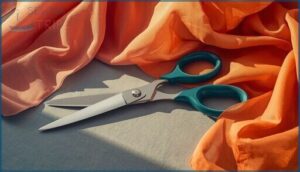
When you’re slicing through yardage on a large project, you need fabric shears with a high-carbon steel edge that keeps blade sharpness intact for consistent fabric cutting.
True left-handed sewing solutions position the top blade on your left, giving you a clear sightline and control. An ergonomic handle with cushioned grips reduces wrist strain during extended sewing techniques, while proper scissor maintenance keeps those edges ready for precision work.
Embroidery Scissors
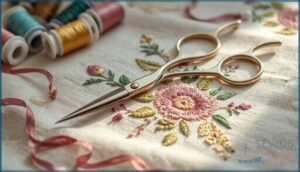
When your work requires delicate thread management and embroidery techniques on intricate fabric selection, you need embroidery scissors with fine point tips that deliver cutting precision in tight spaces.
- High-carbon steel blades with micro-serrations grip fibers without fraying during detailed embroidery work
- Ergonomic grips scaled for smaller hands provide control when trimming close to stitchwork
- True left-handed blade orientation places the top edge on your left for unobstructed visibility during thread snips
Pinking Shears
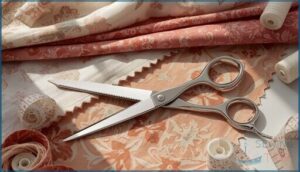
When edge finishing demands both fray prevention and aesthetic appeal in textile crafting, pinking shears deliver zigzag cuts that stop fabric from unraveling at seams.
The true left-handed models position serrated blades with the top edge on your left, giving you control during fabric cutting without obscuring the pattern line. The ergonomic handle reduces wrist strain when working through multiple layers of dense material.
Thread Snips
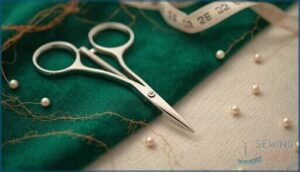
Quick thread management demands tools that fit in your palm without hesitation. Thread snips designed for left-handed sewers position the top blade on your left side, letting you see exactly where you’re cutting during fabric handling. The ergonomic handle cradles your thumb naturally while the sharp, spring-loaded action manages cutting techniques from seam trimming to precise embroidery work.
- Fine-point tips reach tight spaces between stitches without damaging surrounding fabric
- Spring-loaded action reduces finger fatigue during repetitive snipping tasks
- Compact size allows quick access while keeping sewing tools within reach
- Stainless steel construction maintains scissor sharpness through frequent use
Serrated and Specialty Scissors
Serrated blades grip slippery fabrics like silk and polyester without letting them shift under your scissors.
Micro serrations on specialty cutters lock onto lightweight materials while the ergonomic handle and high-carbon steel construction maintain edge retention through repeated use.
You’ll find left-handed sewing scissors with serrated edges particularly effective when standard fabric grippers can’t hold delicate fibers steady during precise cuts.
Top 7 Left-Handed Sewing Scissors Reviewed
You’ve learned what makes left-handed scissors different and why they matter for your work. Now it’s time to see which models actually deliver on comfort, precision, and durability.
Here are seven left-handed sewing scissors that stand out in 2026, each evaluated for blade quality, ergonomic design, and real-world performance.
1. Manufore Left Handed Sewing Tool Kit
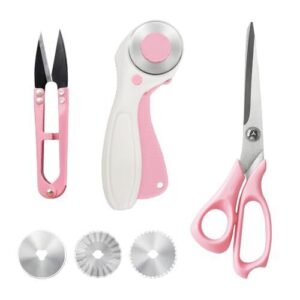
The Manufore kit delivers a 5 to 7 piece assortment designed for left-handed grip and blade orientation. You’ll find 8.5-inch fabric scissors with stainless steel blades, 4.5-inch thread trimmers, and a rotary cutter with three replacement blades offering straight, wave, and dotted edges.
The soft plastic overmold grips feature non-slip finger grooves sized for average adult hands. This beginner to intermediate collection suits home sewing and small project work, with a breathable travel case for organizing your tools.
| Best For | Left-handed sewers, quilters, and crafters who need a basic toolkit for cutting fabric, felt, leather, and other materials in small to medium DIY projects. |
|---|---|
| Blade Material | Stainless Steel |
| Hand Orientation | Left-handed |
| Primary Use | Crafting & Sewing |
| Handle Design | Ergonomic Metal |
| Approx Length | 8.5 inches |
| Material Compatibility | Fabric, Leather, Vinyl |
| Additional Features |
|
- Designed specifically for left-handed users with ergonomic handles and clear cutting line visibility
- Includes multiple tools in one kit: 8.5″ scissors, 4.5″ thread trimmers, and rotary cutter with 3 interchangeable blades (straight, wave, dotted)
- Versatile cutting options for various materials including fabric, fleece, vinyl, leather, cardboard, and wallpaper
- Blades may arrive dull and struggle to cut fabric cleanly according to some user reviews
- Handles can feel plasticky without the softer rubber grip some users expect
- Small components like the wavy washer are easy to lose during blade changes
2. Tim Holtz Left Handed Scissors
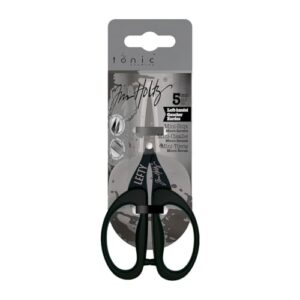
Tonic Studios engineered these 5-inch mini snips with a micro serrated blade edge that grips slick fabrics without sliding, giving you control over every cut. The titanium coating resists adhesive buildup and corrosion while maintaining smooth cutting action.
The Black Kushgrip grips conform to your left hand’s natural mechanics, distributing weight to prevent cramping during detail work. You’ll find these snips excel at precision trimming in tight spaces for sewing, embroidery, and paper crafting, though the serrated edge may leave visible marks on cut edges.
| Best For | Left-handed crafters who need precision control for detailed work like embroidery, card making, and fabric trimming in tight spaces. |
|---|---|
| Blade Material | Titanium |
| Hand Orientation | Left-handed |
| Primary Use | Precision Cutting |
| Handle Design | Kushgrip Non-slip |
| Approx Length | 6.3 inches |
| Material Compatibility | Paper, Fabric |
| Additional Features |
|
- Micro serrated blade grips slippery materials without sliding, giving you better control than smooth blades
- Titanium coating resists adhesive gunk and rust while keeping cuts smooth over time
- Kushgrip handles are shaped for left-hand comfort and prevent cramping during long projects
- Serrated edge can leave visible texture marks on cut edges
- Won’t handle thick or heavy-duty materials well
- Higher price point compared to standard craft scissors
3. Left Handed Titanium Scissors
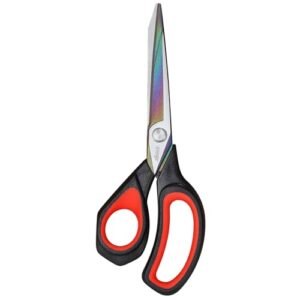
These titanium bonded blades deliver three times the hardness of stainless steel, maintaining sharpness through extended fabric cutting sessions without frequent resharpening. You’ll notice the top blade positioned on the outside when gripping, giving you clear visibility of your cut line for precise seam allowances and pattern tracing.
The lightweight aluminum grips paired with anti-corrosion coatings resist rust from damp fabrics while reducing hand fatigue. Non-stick surfaces prevent adhesive buildup when cutting fusibles and interfacing materials during garment construction.
| Best For | Left-handed sewers, quilters, and crafters who need precise fabric cuts with clear sightlines and comfortable grip for extended projects. |
|---|---|
| Blade Material | Stainless Steel |
| Hand Orientation | Left-handed |
| Primary Use | Sewing & Quilting |
| Handle Design | Ergonomic Plastic |
| Approx Length | 9.5 inches |
| Material Compatibility | Fabric, Paper |
| Additional Features |
|
- Titanium-bonded blades stay sharp three times longer than regular stainless steel, cutting through multiple fabric layers without dulling
- Left-handed design places the top blade on the outside for unobstructed visibility when following patterns and cutting curves
- Lightweight construction with ergonomic grips reduces hand strain during long sewing sessions
- Plastic handle material feels less durable and may not hold up to heavy daily use over time
- Basic aesthetic design lacks the premium look and feel of higher-end sewing shears
- Only works for left-handed users, making them unsuitable for shared workspaces or right-handed crafters
4. Left Handed Fabric Scissors
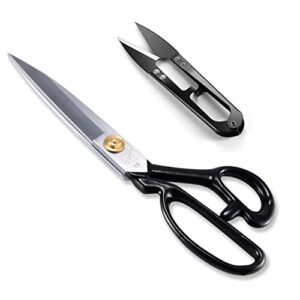
High-carbon steel blades with electroplated finishing give you the durability your projects demand, cutting through denim and knits without rust compromising performance.
The rubberized curved handle follows your left hand’s natural contours, with thumb and finger rests positioned exactly where they’ll reduce fatigue during multi-hour cutting sessions. You’ll find the 26.8-centimeter length accommodates multiple fabric layers cleanly, though the 3.2-ounce weight may challenge you if hand strength is a concern.
Regular oiling maintains the sharp edge and prevents corrosion.
| Best For | Left-handed sewers, quilters, and crafters who work with thick fabrics like denim and need durable scissors that won’t fatigue their hands during long projects. |
|---|---|
| Blade Material | High Carbon Steel |
| Hand Orientation | Left-handed |
| Primary Use | Tailoring & Sewing |
| Handle Design | Rubberized Curved |
| Approx Length | 10.5 inches |
| Material Compatibility | Fabric, Leather, Paper |
| Additional Features |
|
- High-carbon steel blades with anti-rust coating cut through multiple fabric layers and heavy materials like leather without dulling
- Ergonomic curved handle designed specifically for left hands reduces strain during extended use
- 26.8cm length handles large cutting tasks efficiently, plus includes a built-in thread cutter
- 3.2-ounce weight may feel heavy for people with weak grip or arthritis
- Needs regular oiling to keep blades sharp and rust-free
- Some users report the finger rest placement feels awkward and uncomfortable
5. Gingher Left Handed Scissors
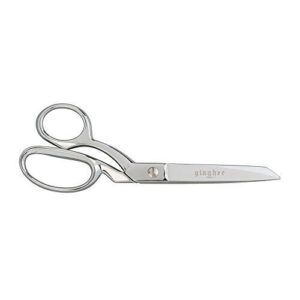
You’ll recognize Gingher’s true left-handed design the moment you pick it up—the blade sits on the left side, enabling natural cutting action instead of forcing you to work against the tool.
The 8-inch knife-edged blade cuts cleanly through multiple fabric layers from tip to pivot, while the bent handle keeps your cutting path flat on the table and reduces wrist strain during pattern work.
Chrome-over-nickel plating resists corrosion, and the protective sheath keeps blades sharp between projects.
| Best For | Left-handed sewers and quilters who need precision cutting through multiple fabric layers without fighting against right-handed blade orientation. |
|---|---|
| Blade Material | Chrome-over-nickel |
| Hand Orientation | Left-handed |
| Primary Use | Pattern Cutting |
| Handle Design | Bent Handle |
| Approx Length | 8 inches |
| Material Compatibility | Multiple Fabric Layers |
| Additional Features |
|
- True left-handed blade placement lets you see your cutting line clearly instead of blocking it with the top blade
- 8-inch knife edge slices through multiple fabric layers cleanly from tip to pivot point
- Bent handle design keeps fabric flat on your work surface and reduces wrist fatigue during long cutting sessions
- Blades will dull quickly if you use them on paper instead of keeping them fabric-only
- Chrome plating can wear down over time and may need professional sharpening to maintain that clean cut
- Some users found the blades aren’t as aggressively left-handed as expected despite the handle design
6. Fiskars Left Handed Scissors
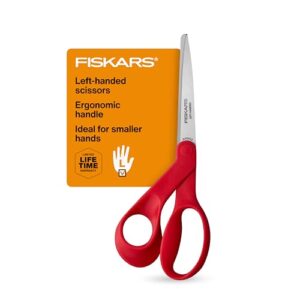
Fiskars gives you genuine left-handed blade geometry that aligns with your natural cutting motion, improving line visibility and cutting accuracy on every seam. The bright orange soft-grip grips reduce hand fatigue during long sessions, while the bent handle design keeps fabric flat against your work surface to prevent snagging.
At 8 inches, these stainless steel scissors balance control and reach for fabric and craft tasks. The precision-ground edge cuts cleanly through multiple layers, and the lightweight alloy construction won’t strain your hand through extended cutting work.
| Best For | Left-handed crafters, sewers, and quilters who need comfortable scissors that cut accurately through fabric and paper without hand fatigue. |
|---|---|
| Blade Material | Stainless Steel |
| Hand Orientation | Left-handed |
| Primary Use | Arts & Crafts |
| Handle Design | Contoured Ergonomic |
| Approx Length | 8 inches |
| Material Compatibility | Paper, Fabric |
| Additional Features |
|
- True left-handed blade design improves visibility and cutting precision along seam lines
- Ergonomic soft-grip handles reduce strain during extended cutting sessions
- Precision-ground stainless steel blades stay sharp and cut cleanly through multiple fabric layers
- May not fit comfortably for left-handed users with larger hands
- Requires careful use and maintenance to preserve blade sharpness over time
- Manufactured in China, which may be a concern for some buyers
7. Left Handed Sewing Scissors
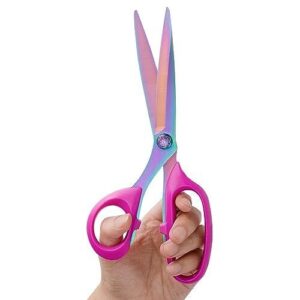
These pink-handled scissors deliver real left-handed blade orientation, so you’ll see the cutting line clearly instead of forcing your wrist into awkward postures.
The 9.3-inch titanium-coated stainless steel blades slice through denim, leather, and multiple fabric layers without hesitation, while the ergonomic ABS plastic grips reduce strain during extended quilting or tailoring sessions.
At 5.3 ounces, they provide enough heft for controlled cutting without weighing down your hand. Just apply occasional oil to maintain blade smoothness and keep them away from children.
| Best For | Left-handed sewers, quilters, and crafters who need precision cutting through heavy fabrics like denim and leather without straining their wrists. |
|---|---|
| Blade Material | High Carbon Steel |
| Hand Orientation | Left-handed |
| Primary Use | Professional Tailoring |
| Handle Design | Ergonomic Rubber |
| Approx Length | 10.5 inches |
| Material Compatibility | Denim, Leather, Fabric |
| Additional Features |
|
- True left-handed blade design lets you see your cutting line clearly instead of fighting right-handed scissors
- Titanium-coated stainless steel blades power through multiple fabric layers, leather, and thick denim without dulling
- Ergonomic grip reduces hand fatigue during long sewing or quilting projects
- 5.3-ounce weight might feel heavy if you’re used to lighter craft scissors
- Blades need occasional oiling to stay smooth and rust-free
- Must be stored safely away from kids due to ultra-sharp edges
Tips for Choosing and Maintaining Left-Handed Scissors
Finding the right left-handed scissors isn’t where your journey ends—you need to know how to keep them performing at their best.
The difference between scissors that last a decade and ones that disappoint after six months comes down to smart selection and consistent care. Here’s what you need to focus on to protect your investment and maintain cutting precision.
Selecting The Right Scissors for Your Needs
Start by matching your primary sewing tasks to the right blade length and Scissor Blade Materials—High-Carbon Steel blades maintain sharper edges for fabric work, while stainless options resist corrosion during embroidery detail. Left-Handed Sewing Scissors with true reversed blades eliminate the frustrating push-away effect you’ve battled with right-handed tools.
Prioritize these User Preference Factors:
- Ergonomic Handle Design that fits your grip without pinching
- Sewing Task Assessment to determine blade length needs
- Adjustable tension for tailored cutting control
Proper Cleaning and Oil Application
After each use, wipe your blades with a lint-free cloth to remove dust and resin—that simple habit is your first line of Rust Prevention.
Apply a thin layer of mineral oil or machine oil to the blade surface every few weeks, avoiding the pivot screw to keep your handle grips clean. This Blade Maintenance routine protects carbon steel from oxidation and keeps stainless options cutting smoothly for years.
Sharpening and Longevity
Even with diligent Rust Prevention and Blade Maintenance, your scissors will eventually need Edge Sharpening to maintain Cutting Longevity.
High-Carbon Steel retains its edge longer than stainless options, but all Blade Material dulls with use—that’s normal Tool Preservation, not a defect.
Whetstones remove minimal material while honing realigns the edge without aggressive wear, both extending your Steel Durability when you maintain proper sharpening angles throughout each session.
Warranty and Customer Support Considerations
Beyond sharpening, scrutinize Warranty Terms before you buy—a 10-year manufacturer’s warranty should detail coverage scope, Claim Process timelines, and Return Policy exclusions like normal wear.
Check Customer Support channels for Maintenance Tips and responsive service, then review Shipping and handling costs alongside warranty registration windows.
Strong Customer service transforms Product features and benefits into long-term value when Scissor care and maintenance questions arise.
Frequently Asked Questions (FAQs)
What are the best sewing scissors for left-handed people?
True left-handed blades position the top blade on the left, letting you see your cut line clearly. This reversed alignment prevents fabric tugging and delivers the control you’ve been missing.
Do left-handers need special scissors?
Yes, left-handers need special scissors because right-handed models obscure your cutting line and force awkward hand postures.
True left-handed scissors reverse the blade arrangement, dramatically improving cutting accuracy while reducing hand fatigue during extended projects.
Why do lefties struggle with scissors?
Standard right-handed scissor design forces lefties to twist their wrists and contort their grip, obscuring the blade edge from view.
This unnatural hand position leads to decreased cutting accuracy, increased hand fatigue, and frustrating imprecision during detailed work.
Where can I buy left-handed sewing scissors?
You can find left-handed sewing scissors at online retailers like Amazon and Etsy, specialty stores such as Leftys Left Handed, brand websites including Gingher and Fiskars, and local craft shops with varied shipping options.
Are left-handed scissors more expensive than regular ones?
Left-handed sewing scissors usually cost two to three times more than comparable right-handed models due to mirrored tooling requirements, smaller production runs, and limited market demand among the 10-15 percent left-handed population.
How do I know if scissors are truly left-handed?
True left-handed sewing scissors position the top blade on the left when held in your left hand, ensuring clear cutting line visibility.
Check blade orientation, handle design, and test whether the scissor geometry blocks your view.
What shipping options are available for scissor orders?
Most retailers offer FedEx Priority Express with free shipping on sewing scissors, delivering domestically in 2–4 days and internationally in 3–12 days, with tracking updates included for every order.
Conclusion
Your cutting hand shouldn’t apologize for its dominance—not when sewing scissors for left-handed sewers exist to match your natural biomechanics.
Investing in properly engineered left-handed shears eliminates the compensatory movements that breed fatigue and imprecision, transforming your cutting station from a battleground into a workspace aligned with your body’s design.
The scissors you choose determine whether your technical skill translates into clean execution or gets lost fighting backward blade geometry.