This site is supported by our readers. We may earn a commission, at no cost to you, if you purchase through links.
That pile of jeans at the back of your closet? It’s not trash, it’s raw material. Denim happens to be one of the toughest fabrics ever woven, which means an old pair you’ve outgrown still has years of life left in it.
Toss it, and it sits in a landfill for decades. Grab your scissors instead, and you’ve got a skirt, a tote bag, or a pocket pillow waiting to happen.
Learning to refashion old denim pieces takes a little patience and the right tools, but the payoff is worth it: less waste, more cash in your pocket, and clothes nobody else will own.
Table Of Contents
Key Takeaways
- Old denim is durable enough to refashion into skirts, vests, capris, bags, pillows, and rugs instead of being thrown away.
- Proper prep work—washing, removing hardware, cutting clean panels, and pressing seams—sets up any denim project for success.
- Using the right tools, like denim needles, polyester thread, and interfacing for stretch fabric, prevents common sewing headaches like broken needles and bulky seams.
- Refashioning denim saves money, reduces textile waste, and lets you create one-of-a-kind clothing and home decor pieces.
Why Refashion Old Denim Pieces?
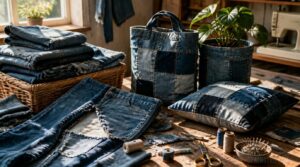
Got a pile of old jeans staring at you from the closet? Before you toss them, know that denim earns its keep in more ways than one. Here’s what makes refashioning worth your time.
Whether you’re patching pockets or turning old denim into tote bags, these budget-friendly sewing project tips can help stretch your materials and skills even further.
Reduce Textile Waste
Grab that pile of old jeans before it lands in a landfill. Denim is tough stuff, and textile waste reduction starts with keeping it out of the trash:
- Repair small tears instead of tossing
- Donate what you won’t refashion
- Save scraps for denim upcycling projects
- Support community mending clinics
Every reused pair extends upcycling garment life, easing pressure on textile recycling systems. Implementing circular design principles can further help make the most of the durability and recyclability of your fabrics.
Save Money on Projects
Beyond keeping denim out of landfills, upcycling jeans is just plain easy on your wallet. Skip pricey fabric stores and shop your own closet, thrift racks, or wholesale supplier strategies for bulk scraps at a fraction of retail cost.
Repurposing existing tools you already own—scissors, pins, your machine—means minimizing material waste and startup costs. A little budget planning turns clothing repurposing into seriously affordable DIY fashion.
Reuse Durable Fabric
Denim earns its second life honestly. Those warp threads were built to survive years of wear, so fiber strength doesn’t quit after one closet cycle.
Repurpose jeans instead of buying new:
- Check weight and weave
- Test stretch recovery
- Inspect seams for wear
- Prewash for shrinkage
- Sort by thickness
This material longevity helps drive a genuine circular supply, cutting textile waste and microplastics simultaneously.
Create Custom Styles
Old jeans are basically a blank canvas once you strip away the original brand identity. Sketch a mood theme (streetwear, vintage, utilitarian), pick your palette, and build repeatable presets:
| Element | Style Choice |
|---|---|
| Palette | Indigo, black tonal |
| Hardware | Copper vs. matte black |
| Texture | Distressed, raw |
| Stitching | Contrast topstitch |
| Sharing | Export presets |
That’s DIY fashion hacking with real staying power.
Master these techniques and you’ll see why tailors swear by horsehair canvas interfacing for structured garment shaping when durability really matters.
Prepare Denim Before Sewing
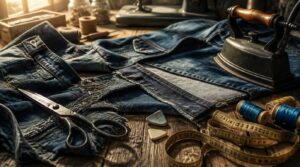
Before you cut a single stitch, your denim needs some prep work. This step keeps your projects sturdy and your sewing machine happy. Here’s what to tackle first.
Wash and Dry First
Ever wonder why your upcycled bag ends up shrunken or faded after one wash? Skip that heartbreak—wash and dry before cutting.
- Use cold water and mild dark-color detergent
- Turn pieces inside out for color preservation
- Skip the dryer; air dry to avoid shrinkage
- Inspect fabric during prewash for loose threads
This step locks in fit before your denim refashioning even begins.
Remove Zippers and Rivets
Grab your pliers and clip that rivet stem with wire cutters, then pop the cap free—safe extraction techniques protect surrounding fabric from tears. Use a hammer and punch for stubborn centers. Patch any holes afterward.
Zippers need gentler handling: pinch the top stopper with end nippers, then slide it off. Recycle salvaged denim hardware when possible—many manufacturers accept it back, cutting waste from your Upcycle Clothes DIY projects.
Cut Usable Fabric Panels
Now the fun part: turning stripped-down jeans into real fabric stock.
Slice along the inseams to open each leg flat, then square off panels with a rotary cutter for clean, straight edges.
Keep grain alignment consistent, and measure panels at 12–18 inches for patchwork versatility—every scrap counts toward your next upcycled denim creation.
Sort Scraps by Weight
Not all denim scraps pull their weight equally, so weigh them before anything else. Use a calibrated scale (0.5kg resolution minimum) and sort into light, medium, and heavy categories.
Run a magnet over hardware to catch stray rivets, then weigh magnetic and nonmagnetic piles separately. Log everything digitally with dates and project names, store scraps in labeled bins by weight range, and future cutting sessions become a breeze.
Press Seams Flat
That flat, flush finish doesn’t happen by accident—it’s earned with heat and patience. After stitching, press each seam allowance open using a hot iron with steam, working from both sides so fibers relax evenly. A pressing cloth protects dark washes from shine.
- Crisp, flat seam lines
- No stubborn puckers
- Smooth panel alignment
- Reduced bulk at intersections
- Professional-looking edges
Let pieces cool before handling. Patience here pays off later.
Refashion Denim Into Clothing
Once your denim’s prepped and ready, it’s time for the fun part: turning those old pieces into something you’ll actually reach for.
A pair of worn-out jeans or a beat-up jacket has way more life left in it than you’d think, if you’re willing to grab your scissors.
A worn-out pair of jeans has way more life left in it than you’d think—grab your scissors and find out
Here are five ways to give your denim a whole new job.
Jeans Into Skirts
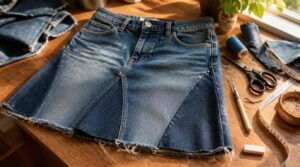
That old pair collecting dust in your closet? It’s a skirt waiting to happen.
Cut the legs off, add a triangular inseam insert from the scraps, and redesign the waistband.
| Step | Technique | Detail |
|---|---|---|
| 1 | Cut & Measure | Mark hemline with chalk |
| 2 | Insert Panel | A-line shape |
| 3 | Waistband | Add elastic |
Jackets Into Vests
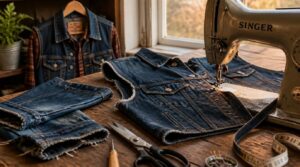
Got a jean jacket that’s seen better days? Skip the skirt scraps this time—snip off the sleeves, bind the armholes, and you’ve got a vest with real character.
Keep original pockets and topstitching for texture. Tailor the side seams for a fitted vest silhouette, then layer it over flannel or tees. Lighter denim weight drapes best for easy movement.
Jeans Into Capris
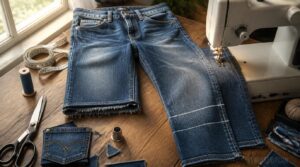
Vests aren’t the only rescue mission for old denim—full-length jeans deserve a second act too, especially once knees wear thin.
Mark your capri length (17–22") on both legs, cut straight, and keep the original cuff for a lived-in look.
- Freedom to reinvent your closet
- Confidence in a custom fit
- Pride in wearing something you made
Taper slightly at the knee, keep pockets aligned, and hem with sturdy topstitching.
Distressed Denim Shorts
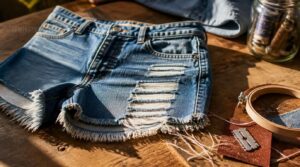
Cutoffs are just the beginning—distressing turns cutoffs into art. Grab sandpaper or a razor blade for controlled rips; pull weft threads for natural fray. Place horizontal slits at the thigh, whiskering near pockets, for that vintage wash look.
Stick to 100% cotton (elastane curls under abrasion). Strengthen seams so tears don’t run wild. Cold wash, no bleach—preserve every hard-earned thread.
Oversized Denim Resizing
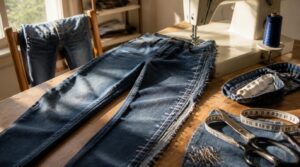
Baggy jeans that swallow your frame don’t have to hit the donation pile. Side seam tapering trims excess width at the hip and thigh, while thigh darting removes bulk without touching the waistband. Add waistband elastic insertion or a rise adjustment for real comfort.
- That drawer of "someday" jeans finally gets a purpose
- Watching baggy become body-skimming feels like magic
- Saving denim from landfills feels genuinely good
- Your own custom fit, made by your own hands
Sew Denim Accessories and Decor
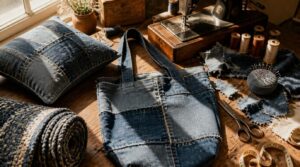
Got scraps left over from all that cutting and cropping? Don’t toss them, because denim’s second life as bags, pillows, and rugs might be even better than its first. Grab your needle and let’s turn those leftovers into something you’ll actually use every day.
Denim Tote Bags
Old jean legs make surprisingly sturdy totes. Choosing denim weight matters here—go with 8 to 12 ounce fabric for durability.
Add a reinforced handle design using cross-stitched straps, 1.25 to 2 inches wide. Double-stitch top seams, strengthen the bottom, and try organizing interior pockets for phones and keys.
Simple hardware selection tips: rivets and grommets add serious staying power to your upcycled denim tote bag.
Crossbody Pocket Purses
Turning back pockets into a built-in purse feature is denim upcycling at its cleverest.
Keep the original jeans pockets intact for front-and-back storage, add an interior zip pocket for cards, and attach an adjustable strap (18–24 inches) for strap versatility.
Choose sturdy rivets for hardware selection, plan capacity around daily essentials, and you’ve got a security-smart, refashioned accessory with real personality.
Frayed Zipper Pouches
Grab a single denim leg for this one—it’s the perfect beginner project. Trim edges, then gently pull weft threads to create irregular frayed tails along the zipper opening.
Pick a metal zipper for that rugged vintage look, add lightweight interfacing for structure, and finish with decorative topstitching to lock those frayed edges in place for good.
Denim Pocket Pillows
Those worn front pockets? Save them—they’re the star of this project.
Sew pockets onto a front panel with a quilt sandwich (batting between layers), backing with coordinating denim. Try a log cabin layout, using denim scraps for contrast strips.
Test colorfastness first, then stuff with a pillow form. Bonus: built-in storage for remotes or phones.
Braided Denim Rugs
Got a floor that takes a beating? A DIY denim rug turns your deepest scrap pile into serious durability.
Cut strip widths of 1-2 inches, then braid using classic three-strand patterns. Stitch coils into rectangles or spirals with zigzag seams. Try color blocking by grouping washes, add edge finishing for fray-proofing, and back with cotton or jute so it grips smooth floors.
Denim Sewing Tips for Beginners
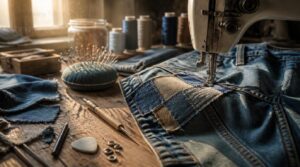
Ready to grab your sewing machine? Denim fights back a little, so a few smart habits will save you broken needles and frustrated afternoons. Here’s what every beginner should know before stitching into that first pair of jeans.
Use Denim Needles
Ever tried sewing thick denim seams with a regular needle, only to hear that dreaded snap? Denim needles solve that with reinforced shafts and sharp or wedge points.
- Needle size: 90/14–100/16 for medium weight, 110/18 for heavy layers
- Stretch denim: use ballpoint variants
- Skipped stitches: swap needles often
- Topstitching: pair heavier needles with thicker thread
Choose Strong Thread
Polyester thread is your best bet for denim—it’s stronger than cotton and shrugs off abrasion.
Bonded threads resist fraying at stressed seams like pockets. Go for tex 600-1200 on heavy layers.
| Thread Type | Tex Range | Best For |
|---|---|---|
| Polyester | 600-900 | General seams |
| Bonded Nylon | 800-1200 | Pockets, belt loops |
| Cottonized Poly | 400-700 | Topstitching |
Match color to your denim shade for a clean, professional finish.
Stabilize Stretch Denim
Stretch denim can be a diva about keeping its shape, especially around waistbands and hips. Apply lightweight interfacing to the wrong side before stitching; this locks elastane fibers in place.
Heat setting during pressing helps preserve fabric memory, so recovery stays snappy wash after wash. Skip fabric softeners and stick to cold water for laundering that protects stretch performance long-term.
Reduce Bulky Seams
Once your denim’s stable, thick seams are the next headache. Grade seam allowances by trimming layers to different widths; this stops bulky stacking.
Try flat felled seams for strength without lumps, or Hong Kong binding for a cleaner finish.
Press with a tailor’s ham to smooth curves, and layer trimming keeps corners flat before topstitching.
Distress Denim Safely
Distressing denim is where the fun happens, but skip the safety steps and you’ll regret it fast. Grab safety gloves and a dust mask first, then work in a ventilated space.
Try these controlled thinning techniques:
- Sandpaper on outer fabric only for subtle frays
- Limit worn areas to 2–3 cm wide
- Avoid distressing near pockets or zippers
Inspect often, stop when it looks right—fabric integrity matters more than speed.
Frequently Asked Questions (FAQs)
How to repurpose old denim?
Old jeans could outlive us all if we let them. Upcycled denim turns worn fabric into skirts, totes, or patchwork quilts—wash, cut usable panels, then sew. It’s practical textile repurposing that saves money and shrinks your closet’s carbon footprint.
What can I do with my denim scraps?
Turn tiny leftovers into patchwork memory quilts, textured wall hangings, or upcycled coasters. Try decorative appliqué, repurposed organizers, or zip pouches — sewing techniques that make denim upcycling ideas endlessly creative while keeping every scrap out of the landfill.
What can you do with old denim?
About 85% of unwanted clothing ends up in landfills, so denim upcycling ideas matter.
Old jeans become tote bags, denim pet beds, rustic home organizers, patchwork quilt patterns, or sustainable insulation—clothing refashioning turns worn fabric into fresh, functional treasures instead of trash.
Should you upcycle your denim?
Absolutely, yes. Denim upcycling cuts textile waste, saves cash, and taps denim’s tough fibers for lasting wear. It’s sustainable fashion in action, letting you conserve resources while expressing personal style through one-of-a-kind, custom-made pieces.
Can you quilt with denim that has stretch?
Yes—just stabilize stretch panels with lightweight interfacing first. This prevents wavy seams and fabric distortion while piecing your patchwork denim quilt. Pick cotton batting, quilt gently, then wash on cold, gentle cycle for lasting care.
Whats the best way to store denim scraps?
Think of your scrap bin like a spice rack: chaos wastes time. Sort by color family, size, and weight in labeled, stackable bins away from sunlight, keeping humidity moderate to protect fibers during long-term textile recycling storage.
How many old jeans make a full quilt?
Plan on 20 to 40 pairs for a queen-sized upcycled denim quilt, depending on block size. Five-inch blocks need more jeans; seven-inch blocks stretch your denim scraps further, roughly 4 to 8 squares per pair.
Can toddler backpacks be made from old jeans?
Sturdy jeans make perfect toddler backpacks.
Match fabric weight for a consistent look, add padded straps, strengthen attachments with box stitches, and include a soft lining for comfort.
Prioritize toddler safety—remove rivets, avoid loose threads, and keep zippers snag-free.
What lining works best for toiletry bags?
Picture your lining as the bag’s raincoat: TPU offers flexible, eco-friendlier waterproofing that resists cosmetic scents, while PVC works cheaply but lacks that same chemical resistance. For your upcycled denim toiletry bag, TPU wins on durability and easier cleaning.
Conclusion
Worried you’re not "crafty" enough for this project? You don’t need fancy skills, just scissors, thread, and a little patience.
Every seam you sew keeps denim out of landfills and turns forgotten jeans into something only you own. That’s the real magic behind learning to refashion old denim pieces: it’s not about everything being perfect, it’s about giving tired fabric a whole second story.
Grab that old pair tonight. Your closet, and the planet, will thank you.
- https://scrapfabriclove.com/how-to-make-a-denim-quilt-quilt-as-you-go-also-uses-quilting-scraps
- https://www.chicaandjo.com/upcycle-old-jeans-patchwork-denim-quilt
- https://thecrazycraftlady.com/denim-upcycling-projects
- https://upcyclemystuff.com/diy-denim-quilt-from-old-jeans-reversible-picnic-blanket
- https://scratchandstitch.com/30-denim-upcycling-ideas-using-old-jeans