This site is supported by our readers. We may earn a commission, at no cost to you, if you purchase through links.
single tangled thread can stop a sewing project cold—and nine times out of ten, the culprit is hiding right inside the bobbin case.
Thread tangling in the bobbin case is one of the most common mechanical complaints technicians hear, yet most sewists assume the machine is broken when the fix is often a matter of minutes.
Incorrect bobbin insertion, lint buildup, tension imbalance, a bent needle—any one of these can turn smooth stitching into a knotted mess underneath your fabric.
Knowing exactly where to look, and what to do when you find it, puts you back in control fast.
Table Of Contents
Key Takeaways
- Most bobbin tangles trace back to five fixable culprits: wrong bobbin direction, loose upper tension, lint buildup, a missed thread guide, or a bent needle—and checking these first saves you from unnecessary repairs.
- Seating your bobbin correctly matters more than most sewists realize—front-loaders unwind clockwise, top-loaders counterclockwise, and a case that doesn’t click into place will shift, rattle, and cause tangles mid-seam.
- Lint quietly packs into the hook race and tension discs over time, so brushing the bobbin area monthly—never blasting it with canned air—keeps your thread path clear and your tension consistent.
- When re-threading and cleaning don’t stop the tangling, the problem is likely hook timing or hook-to-needle clearance, and those fixes require slow handwheel turns, careful measurement, and sometimes a professional technician.
Common Causes of Bobbin Case Thread Tangling
Thread tangling in the bobbin case almost always traces back to one of a handful of fixable problems. Knowing what’s causing it puts you back in control fast.
Once you know the usual suspects, a quick scan of the Singer SE340 common thread and bobbin fixes can walk you through the exact steps to sort it out.
Here are the most common culprits to check first.
Incorrect Bobbin Insertion
Bobbin directionality is the first thing to check when thread tangling strikes. Front-loaders need clockwise unwinding; top-loaders need counterclockwise. Get it backwards, and you’ll see loose loops almost immediately.
Case seating check matters too — an unseated bobbin case shifts, rattles, and invites needle strikes.
- Confirm your bobbin spins the correct direction for your machine type
- Press the case in until it clicks securely
- Pull the thread tail at least 2 inches before starting
Regular cleaning helps avoid lint buildup prevention.
Tension Imbalance Issues
Even with the bobbin seated perfectly, tension imbalance can still pull everything apart. If your upper tension is too loose, the needle thread drops below the fabric and nests around the bobbin case.
Try a visual tension test using contrasting thread colors — it reveals the problem fast.
For specialty thread handling like metallics, lower your upper tension adjustment.
Always make bobbin tension screw changes in small, quarter‑turn increments.
Proper balanced stitch tension ensures smooth, consistent stitches.
Lint and Debris Buildup
Tension fixes only go so far if lint is quietly running the show. Lint buildup in the bobbin case is one of the most overlooked thread tangling solutions.
Debris packs between tension discs, blocks bobbin case ventilation, and jams the hook race — forcing the thread off‑path.
Preventive cleaning schedule, basic hook lint removal, and regular bobbin area maintenance keep everything flowing smoothly.
Improper Upper Threading
Cleaning lint buys you nothing if upper thread isn’t seated correctly. A guide path miss, lever skip, or disc bypass sends loose thread flooding straight into the bobbin case.
Foot position matters too — thread with the foot raised, not down. And always turn the handwheel toward you.
Regular upkeep plays a role here too — cleaning your machine monthly keeps tension consistent and prevents the small issues that throw off your stitching.
One wrong step in needle threading unravels your bobbin case maintenance work instantly.
Damaged or Bent Needles
A needle that looks fine can still be the culprit. Even a slight bend shifts the eye off-center, causing the hook to miss the thread loop and send tangles straight into the bobbin case. Watch for these warning signs:
- Needle Impact Damage — replace immediately after any hard strike or fabric jam
- Needle Replacement Frequency — swap every 6–8 sewing hours
- Needle Size Matching — use a 90/14 or 100/16 for denim to reduce flex
- Needle Inspection Techniques — roll it on a flat surface to spot wobble
Poor needle and hook clearance from a bent shaft disrupts thread tension and causes thread bunching underneath.
How to Properly Thread Your Sewing Machine
Most thread tangles trace back to one thing — machine wasn’t threaded correctly from the start.
Even a single missed guide or a loosely seated bobbin can throw everything off.
Here’s what you need to get it right every time.
Step-by-Step Upper Threading Guide
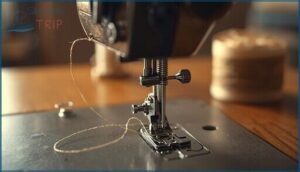
Getting your upper thread right is the foundation of tangle-free sewing. Start with spool pin placement — horizontal pins work best for cross-wound threads.
From there, follow the numbered guides, letting the pre-tension spring take hold before reaching midpoint guide alignment. Seat the thread firmly between the tension discs with your presser foot raised, work through take-up lever positioning, then down to the needle.
Correct Bobbin Insertion Techniques

Inserting the bobbin correctly makes or breaks your thread tension adjustment before you sew a single stitch. Bobbin Orientation matters more than most people realize — front‑load bobbins unwind clockwise, top‑load counterclockwise.
- Confirm Spring Engagement with a slight tug on the thread
- Check Case Alignment until you hear a firm click
- Verify Thread Tail Length at 4–6 inches
- Verify Winding Consistency sits just below the bobbin edge
- Match bobbin size to your machine’s specifications
Avoiding Threading Mistakes
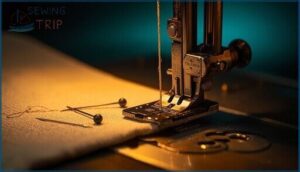
Small mistakes in threading techniques snowball quickly. Here’s a quick-reference table to keep your thread path clean and your bobbin case tangle-free:
| Mistake | What Goes Wrong | Fix It |
|---|---|---|
| Presser foot position down while threading | Thread bypasses tension discs | Raise foot first |
| Wrong needle insertion direction | Thread snags, loops under fabric | Flat side faces back |
| Poor thread tail handling | Bobbin pulls into nest | Hold both tails, 2–3 inches |
| Upper tension settings ignored | Loops or puckering appear | Start at 4, test on scrap |
| Skipping thread path visualization | Missed guides cause bunching | Follow every guide deliberately |
Essential Bobbin Case Maintenance Tips

A clean, well-maintained bobbin case is the difference between smooth sewing and a tangled mess every few minutes.
Most thread problems don’t start with the needle — they start down below, where lint hides and damage goes unnoticed.
Here are the key maintenance habits that keep your bobbin area running without issue.
Cleaning Lint and Dust From Bobbin Area
Lint is the silent troublemaker in any bobbin area.
Before you start, unplug your machine — that’s your first safety precaution.
For tool selection, use the small brush that came with your machine or tweezers for packed clumps.
Avoid air blasts entirely; canned air drives debris deeper.
Brush front to back during race cleaning, and repeat this sewing machine cleaning routine monthly.
Inspecting for Bobbin and Case Damage
A cracked or nicked bobbin case can wreck an entire project quietly. Before assuming it’s a threading issue, run a quick sewing machine component inspection — starting with a Visual Surface Inspection for chips, gouges, or warping along the thread path.
Check these five trouble signs:
- Thread Path Roughness — drag a fingertip around the bobbin case rim; any snag means damage
- Tactile Burr Check — burrs too small to see will still shred thread consistently
- Case Fit Seating — a healthy bobbin case sits firm, never rocks or tilts
- Hook Race Damage — inspect the surrounding race for nicks that catch the upper thread
- Tension spring condition — a bent spring kills consistent lower thread tension instantly
Ensuring Even Bobbin Winding
Once your bobbin case checks out, take a close look at how you’re winding your bobbin.
Poor bobbin winding causes just as many tangles as damage does. Use Bobbin Type Selection to match your machine’s exact spec — a slightly off‑size bobbin winds unevenly.
Apply Winder Speed Control at a steady, moderate pace. Check Visual Layer Inspection for smooth, level layers.
Floss through the Tension Disc Adjustment to seat the thread fully, and trim Thread Tail Management close after the first few wraps.
Troubleshooting and Fixing Tangled Bobbin Thread

When thread tangles in the bobbin case, the fix usually comes down to two things: clearing the mess safely and getting your tension back in line.
Knowing where to start makes the difference between a five-minute fix and an hour of frustration.
Here’s what to work through.
Removing Tangled Thread Safely
Clearing a tangled bobbin case starts with safety. Power Down your machine and unplug it first.
Presser Foot Raise releases fabric tension so you can work freely. Lift Needle to its highest point using the handwheel.
Then open the bobbin cover, remove the bobbin, and Cut Thread Sections with small scissors. Use Tweezers to pull fine loops from tight spots cleanly.
Adjusting Thread Tension Correctly
Once the mess is cleared, check your tension before sewing another stitch. Start with Tension Dial Calibration — set your dial near 4 to 4.5 for medium cotton.
Fabric Weight Matching and Thread Type Selection matter too: lighter fabrics need lower settings, heavier ones need higher.
Make one Incremental Tension Adjustment at a time, then run a Test Seam Evaluation on scrap fabric to confirm balance.
Advanced Solutions for Persistent Thread Tangling

Sometimes basics just aren’t enough.
When re-threading and cleaning don’t fix the problem, the issue usually runs a little deeper—inside the machine’s mechanical parts.
Here’s where to look next.
Checking Hook Timing and Alignment
Hook timing is one of those hidden culprits that mimics sewing machine tension issues but won’t respond to tension fixes. When the hook arrives too early or too late at the needle, the thread loop never forms cleanly — and your bobbin case pays the price.
Hook timing silently mimics tension issues, but when it’s off, your bobbin case pays the price
Follow this Timing Adjustment Procedure:
- Unplug the machine, remove the needle plate and bobbin case.
- Install a fresh needle, then turn the handwheel slowly toward you until the needle drops to its lowest point.
- Raise the needle roughly 1.6 mm — at that height, Hook Timing Basics say the hook point should sit just above the needle eye during a Gear Alignment Check.
- If the hook leads or lags that position, loosen the hook drive gear and reposition it, then run a slow test stitch for Timing Verification Tools confirmation.
Inspecting Hook and Needle Clearance
Once hook timing is confirmed, check the clearance between the hook and needle — the gap that determines whether your machine catches the thread loop or misses it entirely. Turn the handwheel slowly and watch for a Visual Gap Check: the hook should nearly kiss the needle without scraping it.
Use a Feeler Gauge Measurement (0.05–0.5 mm) to confirm the distance.
Remember, Needle Size Impact matters — switching needle sizes shifts that gap, so always recheck.
Watch for Hook Wear Signs like burrs or scoring, and apply Clearance Adjustment Tips from your service manual to dial it in precisely.
When to Seek Professional Repair
Sometimes, even after careful sewing machine troubleshooting, the problem isn’t something you can fix at home. Persistent nesting, loud noises from the bobbin area, and hook timing issues all signal it’s time for professional sewing machine repair. Watch for these warning signs:
- Thread keeps nesting after rethreading and bobbin reset
- Loud grinding or banging during common sewing machine problems
- Needle strikes the bobbin case repeatedly
- Worn springs cause unbalanced stitches despite tension adjustments
- Safety risks from forcing a jammed handwheel
Professional servicing protects your machine from deeper damage.
Frequently Asked Questions (FAQs)
Why does my thread keep tangling in the bobbin case?
Thread tangling in the bobbin case usually comes down to a few culprits: bobbin size mismatch, thread tension imbalance, improper upper threading, lint buildup, or a bent needle disrupting stitch formation.
Why does the thread keep jamming in the bobbin area?
Ever wonder why bobbin area keeps jamming mid-seam?
Worn bobbin spring tension, poor thread quality impact, and skipped thread guide paths all let loose thread pool underneath and tangle fast.
Why is my bobbin thread bunching up underneath?
Bobbin thread bunching underneath usually means your upper thread tension is too loose.
Check thread guide path, confirm proper bobbin insertion, and match your thread material choice to your fabric weight for balanced tension.
Can fabric type affect bobbin thread tangling?
Yes, fabric type directly affects bobbin thread tangling.
Fabric thickness impact, stretch fabric behavior, coated fabric friction, dense weave tension, and lightweight fabric loops all shift thread tension and stress your bobbin case differently.
Does sewing speed increase thread tangling risk?
Sewing fast absolutely raises your tangling risk.
Speed-Tension Interaction, Inertia Effects on your bobbin area, Fabric Sensitivity, Needle Heat Impact, and poor Operator Pedal Control all quietly undermine thread management and sewing machine maintenance when you push past a comfortable pace.
Which thread brands work best for bobbins?
For general projects, Premium polyester brands like Gutermann and Mettler are solid picks.
For quilting, a Cotton bobbin thread such as Aurifil 50wt keeps seams flat.
Prewound kits from high‑quality threads offer consistent low‑lint brands with reliable weight matching.
How does needle size impact thread behavior?
Needle size controls how smoothly thread moves through fabric. Too small, thread friction increases, throwing off stitch balance and knot position.
Match needle size to thread weight for clean, even stitch formation every time.
Can a worn machine cause chronic tangling?
Ironically, the machine that’s sewn a thousand projects flawlessly becomes your biggest obstacle.
Hook timing wear, feed dog fatigue, bobbin case burrs, needle plate erosion, and spring tension loss all quietly trigger chronic tangling.
Conclusion
Thread tangling in the bobbin case has a certain irony to it—a problem so small it fits in the palm of your hand, yet powerful enough to halt an entire project.
Now you know exactly where to look and what to fix. Clean the lint, seat the bobbin correctly, check your tension, replace a worn needle. These aren’t complicated repairs; they’re habits. Build them into your routine, and your machine will reward you with stitches that run clean every time.
- https://www.hooptalent.com/blogs/news/fix-bobbin-thread-tangling-causes-solutions-and-prevention-tips
- https://support.brother.com/g/b/faqend.aspx?c=as_ot&lang=en&prod=hf_jv1400eas&faqid=faqh00100036_011
- https://www.magnetichoop.com/blogs/news/how-to-thread-a-bobbin-master-tension-direction-and-troubleshooting
- https://sewcutepatterns.com/blog/bobbins-gone-bad-common-problems-and-how-to-fix-them
- https://www.thesewingdirectory.co.uk/thread-tension/