This site is supported by our readers. We may earn a commission, at no cost to you, if you purchase through links.

The Baby Lock Jazz 2 draws quilters in with a promise that’s hard to ignore: a roomy 6-inch throat space, 28 built-in stitches, and a solid metal frame at a mid-range price. For someone piecing together a king-size quilt or wrestling bulky batting through a machine, those specs matter.
But spend time in quilting forums, and you’ll notice a pattern—owners love what this machine can do and get frustrated by what it sometimes won’t.
Thread tension that needs coaxing past 7, skipped stitches mid-project, a needle button that starts ignoring you after months of use. Whether those problems are dealbreakers or minor annoyances worth living with depends on what you need from a quilting machine—and that’s exactly what’s worth unpacking here.
Table Of Contents
Key Takeaways
- The Jazz 2’s 6-inch throat space and solid metal frame make it a capable machine for big quilts, but recurring tension issues and skipped stitches mean you’ll spend real time dialing it in.
- Most problems—thread loops, bobbin nesting, feed dog quirks—trace back to dirty tension discs or poor threading, so clean and rethread before you touch any settings.
- Compared to the Juki TL-2000Qi and Janome’s quilting lineup, the Jazz 2 falls short on speed, auto-tension, and feed precision—gaps that matter most during long free‑motion sessions.
- The lower price looks appealing upfront, but tension troubleshooting and possible technician visits can quietly close that gap, so it’s best suited for casual quilters rather than those chasing consistent, high‑volume output.
Baby Lock Jazz 2 Overview and Key Features
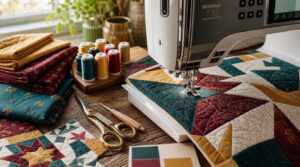
The Baby Lock Jazz 2 is built with quilters in mind, and its specs back that up. Before you decide if it belongs in your sewing room, it helps to know exactly what you’re getting. Here’s a quick look at the key features that define this machine.
If you’re weighing whether Baby Lock is the right brand for your setup, this breakdown of how Baby Lock sewing machines perform across skill levels gives useful context beyond just the Jazz 2.
Large Throat Space and Dimensions
The Baby Lock Jazz 2 gives you 6 inches of throat space — enough room to push a bulky quilt through without wrestling it into place. The flat bed runs about 9 by 15 inches, and the extension table adds 6 more inches of width, so wide backing fabric feeds smoothly past the needle plate and presser foot without bunching or dragging.
Quilters needing more width usually upgrade to mid‑arm quilting machines for greater throat space.
Built-in Stitches and Included Accessories
Beyond the throat space, the Jazz2 packs in a solid stitch selection.
You get straight stitch with stitch length control, zigzag with stitch width adjustment, blind hem, buttonhole, and a handful of decorative patterns.
The automatic thread cutter and free arm access keep your workflow moving, while LED lighting keeps the needle area clearly visible so you’re not squinting mid‑seam.
Price Range and Available Variations
Now that you know what the Jazz 2 can do, let’s talk money. Base model pricing runs roughly $850 to $1,000, while bundle options with quilting feet and extension tables push closer to $1,500.
Watch for seasonal discounts of 10–20% around holidays.
Refurbished units often land between $550 and $750 — a smart entry point if you’re budget-conscious.
Common Baby Lock Jazz 2 Problems

The Baby Lock Jazz 2 has a loyal following, but it’s not without its quirks. Some owners run into the same handful of problems — and knowing what they are can save you a lot of frustration. Here’s what keeps coming up.
Thread Tension and Stitch Quality Issues
Thread tension is one of the most consistent complaints you’ll hear from Jazz 2 owners. Needle thread loops appearing on the back of your quilt — called eyelashing — usually mean your top tension adjustment is off, your bobbin tension is too tight, or both. The two work together, and when either is out of balance, stitch quality suffers fast.
Lint disc cleaning matters more than most people expect. Buildup on your tension discs quietly chokes the thread’s grip, throwing off your thread path alignment and making the problem harder to diagnose. A quick brush-out often reveals issues you’d otherwise chase for hours.
Many owners report needing the tension dial pushed well past 7 just to get a decent stitch — which is a red flag. On this machine, bobbin tension balance is equally critical, and some technicians specifically warn against certain thread brands that introduce inconsistency.
Skipped Stitches During Free-Motion Quilting
Skipped stitches during free-motion quilting are frustrating, and the Jazz 2 gives many owners more than their fair share. Several factors pile up fast:
- Stitch timing issues between needle and hook cause missed loops
- Needle height settings affect how cleanly the hook catches the thread
- Foot selection tips matter — the darning foot outperforms generic ruler feet
- Speed control techniques reduce skips when you sew at a steadier pace
- Quilt stabilizer use limits fabric drift under the needle
Adjust the tension carefully, since both top tension and bobbin tension affect whether stitches form cleanly during free motion quilting.
Feed Dog Malfunctions and Delays
The feed dogs on the Jazz 2 can be genuinely unpredictable. Some units have a delayed stopping motion — the dogs keep moving briefly after you lift your foot, which pulls the bottom thread upward and wrecks your stitch quality mid-seam.
| Issue | What Happens |
|---|---|
| Feed Dog Height | Fabric rides up instead of feeding smoothly |
| Tooth Wear | Grip weakens, causing skipped stitches |
| Timing Mismatch | Dogs engage late, leaving gaps in the seam |
| Lint Blockage | Debris under the plate jams fabric feeding |
Regular machine cleaning — clearing lint and debris from under the needle plate — keeps the feed dogs moving freely. Notably, some Jazz 2 owners get better free-motion results with the feed dogs raised, not lowered.
Needle Up/Down Button Failures
Another frustrating issue quilters report is the needle up/down button failing to hold position. Instead of staying down, the needle drops and immediately pops back up.
This often traces to button switch wear, debouncing timing issues, or microcontroller input failure.
Lint buildup around the plunger and linkage rod misalignment — sometimes from corrosion — can make the problem nearly impossible for technicians to diagnose consistently.
Thread Breaking and Bobbin Nesting
Few things kill a quilting session faster than a snapped thread or a bird’s nest of loops under your fabric.
- Upper Thread Snaps often trace to needle eye burrs or thread path lint catching mid-stitch.
- Bobbin Thread Loops form when tension balance is off between top and bobbin.
- Bobbin Winding Tension affects how evenly the bobbin feeds throughout the stitch cycle.
When breaks keep happening, rethread the machine completely and inspect the bobbin case for damage before adjusting anything else.
Real Owner Reviews and Experiences
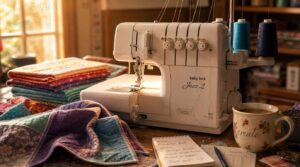
Owners of the Baby Lock Jazz 2 have a lot to say — and it’s not all the same story. Some quilters swear by it, while others have hit walls that no amount of rethreading could fix. Here’s what real people are actually reporting after putting this machine to work.
Positive Feedback From Quilters
Quilters who love the Baby Lock Jazz 2 often point to one thing first: room to work.
The spacious work area makes maneuvering a large quilt feel manageable rather than like wrestling an octopus.
The intuitive controls and snap-on feet mean less fumbling, more quilting.
Owners also appreciate how the great stitch quality holds steady across fabric weights during long free-motion quilting sessions.
Reported Frustrations and Dealbreakers
Not everyone walks away impressed, though. Plenty of owners have run into issues serious enough to make them question the purchase.
Here are five frustrations that come up again and again:
- Tension instability — The top tension dial sometimes needs pushing past 9 just to get balanced stitches.
- Skipped stitches — Free-motion quilting, especially moving right to left, produces skipped stitches even after switching needles.
- Feed dog malfunction — The feed dogs don’t always stop immediately when you lift your foot, which pulls thread up through the fabric.
- Needle up/down failure — The button moves the needle down but doesn’t hold it there, a problem some owners say existed from day one.
- Thread breaking and bobbin nesting — Breaks happen mid-project, and thread nests form underneath while the top looks fine.
Lint buildup on the tension discs and a misaligned bobbin case tend to make these problems worse over time.
Reliability for Long Sewing Sessions
When the frustrations pile up, it’s fair to wonder whether the Jazz 2 can even hold up through a full day of sewing.
The good news: motor longevity is a genuine strong suit. The heavy-duty motor operates during long sessions without overheating, and the metal frame keeps vibration low, so your stitches stay accurate even after hours at the machine.
Troubleshooting and Maintenance Tips
Most Jazz 2 tension and stitch problems are fixable if you know where to look. A little cleaning, some tension tweaking, and proper threading can go a long way before you ever need to call a technician. Here’s what to check first.
Cleaning Tension Discs and Bobbin Area
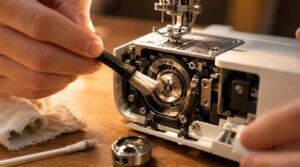
Before you touch the tension dial, clean the tension discs and bobbin area first — dirty components mimic real tension problems. Raise the presser foot, then use a soft brush or cotton swab to clear lint from between the discs.
For the bobbin housing clean, remove the bobbin and case, sweep out debris, and wipe everything with a lint‑free cloth.
Adjusting Top and Bobbin Tension

Once the machine is clean, it’s time to dial in your tension. For the Baby Lock Jazz 2, the ideal tension range sits between 5 and 6 for free-motion quilting. Try small dial increment adjustments — one half-step at a time — then run a balanced stitch test on scrap fabric to see where your threads meet.
If loops still appear on the underside, the fix may involve bobbin case adjustment. Use a small screwdriver to slightly loosen the bobbin spring, test again, and repeat until the stitch looks even on both sides.
Correct Threading for Balanced Stitches
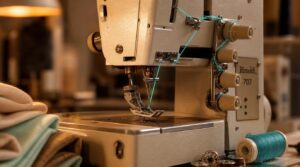
Even small threading mistakes can undo all that careful tension work you just finished. Before testing again, raise the presser foot completely — this opens the tension discs so the thread seats correctly.
Follow these four steps every time:
- Guide thread through every slot in the correct order
- Pass it fully through the take-up lever
- Thread the needle front to back
- Run a balanced stitch test on scrap fabric
Lower the foot, pull the thread gently, and you’re ready.
When to Take It to a Technician
Some problems are simply beyond what cleaning, rethreading, or sewing machine tension adjustment can fix. If you’re dealing with motor overheating that won’t cool down after a break, a circuit breaker tripping repeatedly, visible needle bar alignment issues, or error code display messages that won’t clear, stop troubleshooting at home. Professional service needed — a qualified sewing machine repair technician is your next call.
| Symptom | Likely Cause | Action |
|---|---|---|
| Motor overheating | Internal wear | Technician inspection |
| Circuit breaker tripping | Electrical fault | Professional diagnosis |
| Needle bar misalignment | Physical damage | Authorized repair |
Baby Lock Jazz 2 Vs. Competing Quilting Machines
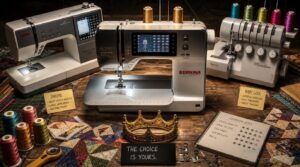
Knowing how the Jazz 2 stacks up against other machines can make or break your buying decision. A few strong competitors are worth putting side by side with it before you spend your money. Here’s how the Jazz 2 compares.
Jazz 2 Vs. Juki TL-2000Qi
The Juki TL-2000Qi and the Jazz 2 are built for different quilters. Here’s a quick side-by-side look:
| Feature | Baby Lock Jazz 2 | Juki TL-2000Qi |
|---|---|---|
| Max Speed | 1,000 SPM | 1,500 SPM |
| Throat Space | Standard quilting | Wide long-arm bed |
| Build Material | Metal frame | Aluminum die-cast |
| Needle Stop Down | Programmable | Precise, reliable |
| Stitch Options | 28 built-in | Straight stitch only |
If free motion quilting is your focus, the Juki’s rotary hook and reduced vibration give it a real edge — especially for fighting the quilting eyelash issue that plagues the Jazz 2 at inconsistent tensions.
Jazz 2 Vs. Janome Quilting Models
Janome’s quilting lineup gives the Jazz 2 a real run for its money, especially on feed system control and workspace flexibility.
| Feature | Baby Lock Jazz 2 | Janome Quilting Models |
|---|---|---|
| Throat Space | 12 inches | Varies, often larger |
| Feed System | Manual, knee lift | Sophisticated, multi-ratio |
| Free Motion Control | Single foot pressure | Multiple pressure adjustments |
| Stitch Options | 28 built-in | Computerized, memory-capable |
| Auto Tension | No | Yes, on select models |
Where Janome pulls ahead is auto tension and feed precision — two things Jazz 2 owners constantly troubleshoot. For free motion quilting, that smoother fabric advancement makes a noticeable difference, especially during long sessions where top tension drift becomes a real headache.
Is The Jazz 2 Worth The Price?
The Jazz 2 sits in a lower price tier, making it genuinely attractive if you’re just getting into free motion quilting or quilt construction. But factor in the top tension troubleshooting, regular machine maintenance, and possible technician visits, and that upfront savings shrinks fast.
The Baby Lock Jazz 2’s lower price loses its appeal once tension fixes and technician visits add up
For casual quilters, it delivers solid value. For anyone chasing consistency, the cost-benefit math gets complicated quickly.
Frequently Asked Questions (FAQs)
Does the Babylock Jazz 2 work with thick fabrics?
Yes, the Baby Lock Jazz 2 manages thick fabrics well. Its 12-inch throat space, adjustable presser foot pressure, and reliable feed dogs make it capable of sewing through quilts, denim, and canvas without major issues.
How long does the warranty typically last?
Baby Lock usually covers their machines with a standard warranty period of around 25 years on the machine body and 1–2 years on electronics. Always check your manual for exact terms.
Can I upgrade the machines software or firmware?
Surprisingly, yes — the Jazz 2 does support firmware updates through Baby Lock’s official channels. Download the update file, transfer it via USB, and follow the on-screen prompts. Don’t power off mid-update, or you risk serious issues.
Whats the best thread type for this machine?
For most quilting on the Jazz 2, 40 weight polyester thread is your best starting point. It feeds smoothly, holds tension well, and plays nicely with the bobbin during free-motion quilting.
Is it suitable for beginners or advanced users?
It accommodates both well, honestly. Beginner-friendly features like the automatic threader and drop-in bobbin ease the learning curve, while sophisticated tension controls and free motion quilting support keep experienced quilters satisfied.
Does the Baby Lock Jazz 2 work with thick batting?
The Jazz 2 manages thick batting well. Its 12-inch throat space gives you room to maneuver bulk, and pairing a walking foot with the right needle keeps stitches even through multiple layers.
Can beginners learn to quilt on the Jazz 2?
Yes, beginners can absolutely learn to quilt on the Jazz The large 12-inch throat space and included free motion quilting foot give you room to grow, though mastering top tension takes practice.
What warranty does Baby Lock offer on this machine?
Baby Lock offers a limited warranty covering defects in materials and workmanship, with terms varying by model. Coverage usually includes parts and labor, and claims must go through an authorized technician.
Is the Jazz 2 compatible with third-party presser feet?
The Jazz 2 uses a low shank foot system, so most third-party low shank feet will fit. Always verify height clearance and run a quick stitch test on scrap before committing.
How loud is the Jazz 2 during extended use?
The Jazz 2 runs at a moderate noise level during extended sessions. Its stable build helps reduce vibration, and keeping it clean and lubricated keeps sound consistent throughout long quilting runs.
Conclusion
Every machine is a tool, not a guarantee—and the Baby Lock Jazz 2 is no different. Most Baby Lock Jazz 2 reviews point to tension quirks and occasional mechanical hiccups, but none are permanent issues.
With proper setup, regular cleaning, and realistic expectations, this machine earns its place at the quilting table.
If you need generous throat space and dependable stitches for big projects, it delivers.
Just know what you’re walking into before you sit down to sew.