
This site is supported by our readers. We may earn a commission, at no cost to you, if you purchase through links.
Most sewers treat a zipper like a necessary evil—something to hide as best you can and move on. A lapped zipper flips that logic entirely. Done right, it doesn’t just conceal the closure; it becomes part of the garment’s architecture, clean and deliberate as a pressed seam on a custom jacket.
Hand sewing this technique gives you control that a machine can’t match, especially along curves or where fabric tension needs careful coaxing. The steps ahead will walk you through lapped zipper hand sewing from marking your seam allowance to that final topstitch—the one that makes the whole thing look intentional.
Table Of Contents
Key Takeaways
- Hand sewing a lapped zipper gives you stitch-by-stitch control that a machine can’t match, especially on curves or tricky fabric tension spots.
- The whole technique hinges on one folded flap that covers the zipper completely, leaving just a single topstitch line as the only visible clue that a zipper is even there.
- Getting your seam allowances marked right before you touch the zipper — at least 5/8 inch, ideally 3/4 to 1 inch — is what separates a flat, clean result from a puckered mess.
- Most zipper problems (dragging, shifting, puckering) have simple fixes: wax your thread, baste before you topstitch, and keep the teeth fully to the right of the seamline.
What is a Lapped Zipper Hand Sewing Technique?
lapped zipper is one of those techniques that looks polished but isn’t as tricky as it seems.
Once you’ve got it down, you might even want to try the invisible zipper insertion technique for an even cleaner, more seamless finish.
It uses a fabric flap to cover the zipper, giving your garment a clean, almost invisible finish.
Here’s what you need to know about how it works, why sewers love it, and where it shows up most often.
Definition and Characteristics
A lapped zipper is a concealed closure built on one simple idea: one side of the seam folds over to hide everything underneath. That flap mechanism covers the zipper tape, teeth, and slider completely. The underlap attaches directly to the zipper tape, while the overlap creates a clean fabric lap. Seam alignment keeps it flat, and a single visible topstitch runs along the lap edge — your only hint a zipper exists.
A lapped zipper hides everything beneath a folded seam, leaving only a single topstitch as its secret
A standard seam allowance of 3/4” is recommended for this technique.
Benefits of Lapped Zipper Closures
That clean concealment is just the beginning. A lapped zipper gives you invisible closure without sacrificing seam stability — the overlap stays flat through repeated wear.
Easy insertion means you don’t need specialty tools. The result is a professional finish that rivals high‑end tailoring.
This garment closure technique also offers real fabric versatility, working beautifully across medium to heavier weights where clean seam finishing matters most.
Proper zipper placement guidelines makes sure the zipper aligns accurately with the tailor’s tacks.
Common Uses in Garments
You’ll find the lapped zipper showing up exactly where a garment can’t afford visible hardware. It’s the go-to garment closure for:
- Slim-fit skirts and custom dresses needing an uninterrupted center‑back or side‑seam zipper installation
- Workwear trousers and high‑waisted pants where a hidden closure keeps the front panel unbroken
- Couture jackets where precise garment construction methods demand hand‑sewn excellence
These sewing techniques simply work where clean lines matter most.
Essential Tools and Materials for Lapped Zippers
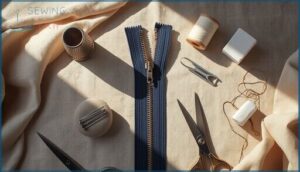
Before you sew a single stitch, you need the right tools in your corner. Getting this part right makes the whole process smoother and keeps frustration at bay.
If zippers are on your project list, knowing how to sew an invisible zipper is one skill that’ll save you a lot of headaches before you even thread your needle.
Here’s exactly what you’ll need to get started.
Choosing The Right Zipper Type
Not all zipper types work equally well for a lapped application.
For most dresses and skirts, a size 5 nylon zipper is your best bet — the zipper material stays flexible, the tape color blends easily with your lining, and the length overlap sits flat without bulk.
Metal zippers add weight, while coating options suit outerwear.
Master these zipper sewing techniques and your installation methods become second nature.
Selecting Suitable Fabrics
Fabric selection makes or breaks your lapped zipper result. Medium-weight selection is your sweet spot — woven textiles between 5 and 8 ounces hold their shape without fighting your hand stitches.
Weave compatibility matters too: twills and plain weaves distribute tension evenly.
For drape considerations, semi-structured fabrics conceal the zipper naturally.
If your fabric feels flimsy, stabilizer options like fusible interfacing keep the placket crisp and controlled.
Recommended Sewing Supplies
Your toolkit sets the tone for everything that follows. Stock it right, and the work feels smooth.
- Needle types — Size 2–4 sharps pierce zipper tape cleanly through medium layers.
- Thread conditioners — Run cotton or polyester thread over beeswax once for tangle‑free stitching.
- Pin selection — Ball‑head pins hold the overlap firmly without shifting.
- Thimble options — A leather thimble on your middle finger gives steady, comfortable push‑through.
- Scissors and seam ripper — Sharp scissors trim tape; a seam ripper corrects basting mistakes cleanly.
Preparing Fabric and Marking for Zipper Placement
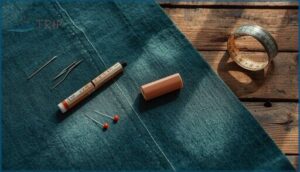
Before you touch your zipper, your fabric needs a little groundwork.
Getting your markings right at this stage saves you from a lot of frustration later.
Here’s what you need to tackle first.
Determining and Marking Seam Allowances
Getting your seam allowances right is where a clean lapped zipper begins. For this technique, you’ll want a minimum of 5/8 inch, though 3/4 to 1 inch gives you better control during Fabric Preparation and Cutting.
Use tailor’s chalk and a metal ruler for marking reference lines on both sides. Fuse 1-inch interfacing strips to stabilize the seam allowances before you sew.
Marking The Zipper Opening and Stop Points
Precision here is everything. Start your Opening Length Calculation by laying the closed zipper along the seamline — the coil span plus one inch of tape above tells you exactly where your marks go.
Use tailor’s chalk on the wrong side for Stop Marking Techniques, and a water-soluble pencil on the right side. Add a small notch at the bottom stop for instant Alignment Verification.
Prepping Fabric Edges for Hand Sewing
Raw edges are your enemy here. Before you sew a single stitch, edge finishing protects your work — serge, pink, or zigzag those seam allowances so they don’t fray under pressure.
Stabilizing edges with staystitching 1/8 inch from the seamline keeps bias grain from stretching out. Pressing techniques set each fold crisp. Tailor’s chalk, pins, and your measuring tape make seam allowance prep and fabric preparation exact.
Step-by-Step Guide to Hand Sewing a Lapped Zipper
Now that fabric is prepped and marked, it’s time to put it all together.
Hand sewing a lapped zipper moves through four clear stages, and each one builds on the last.
Here’s exactly what to do.
Stitching The Seam and Basting The Opening

Start by stitching your seam from the bottom up, stopping exactly at the zipper stop placement mark you made with tailor’s chalk. Lock it with a backstitch, then switch to a basting stitch length of 4–6mm for the zipper opening.
These loose basting stitches are your temporary placeholders. Press the seam allowance open flat — good seam alignment tips start here.
Attaching The First Side of The Zipper
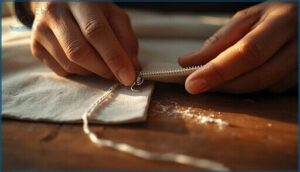
Now that seam is pressed open, zipper tape alignment is everything. Lay the closed zipper face-down on the right seam allowance, coils flush against the seamline. Your initial basting stitches hold it in place — hand picking through tape and allowance only.
- Align bottom stop to your chalk mark
- Pin perpendicular to edge
- Baste upward, 1/8" from coils
- Match thread tension to fabric weight
Folding and Securing The Overlap Flap

With the zipper basted in place, fold the full 1‑inch seam allowance under, pressing it lightly with a cloth to protect the fabric.
This flap fold precision matters — your fold edge should sit just 1/8‑inch past the underlap stitching line.
Use basting stitch angles to anchor the overlap, then secure it with blind stitch techniques for overlap seam reinforcement that holds invisibly.
Hand Topstitching for a Neat Finish
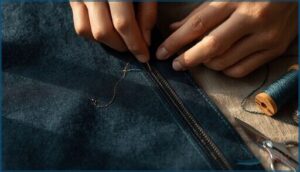
Now that your overlap flap is secured, topstitching locks everything into a clean, lasting finish.
Use a prickstitch — tiny dots on the right side, longer grips underneath — spaced about 3 to 4 millimeters apart for even stitch spacing. Match your thread color to the fabric. Keep tension control steady, never pulling it tight. Finish with a gentle pressing technique from the wrong side.
Finishing Touches and Troubleshooting Tips
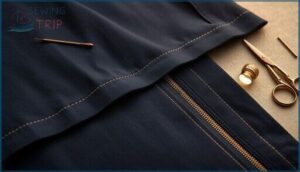
You’re almost there — the hard part is done.
A few finishing steps will make your zipper look clean, move smoothly, and last through years of wear. Here’s what to focus on now.
Removing Basting Stitches and Pressing
Those basting stitches served their purpose — now it’s time to let them go. Use a sharp seam ripper angled flat against the fabric for seam ripper safety, snipping every 2–3 inches. Pull fragments out with tweezers.
Then press from the wrong side first, using a press cloth and medium‑heat setting adjustments to protect your fabric. A final press inspection ensures a crisp, clean lap edge.
Ensuring Smooth Zipper Operation
Testing your lapped zipper is the moment of truth.
Slide it fully open and closed several times — this is your operation testing in action.
Good teeth alignment keeps the slider gliding without catching.
If it drags, lubrication methods like a wax stick or soap along the coils fix that fast.
Consistent stitch tension and clean prick stitch technique make sure the lap stays flat and smooth every time.
Common Mistakes and How to Fix Them
Even experienced sewists hit snags with lapped zippers — but most mistakes are fixable.
Zipper alignment errors cause puckering, so keep teeth fully right of the seam.
Basting errors let layers shift; always baste before topstitching.
For stitch tension issues, wax your thread.
Fabric marking with chalk prevents misplaced stitches.
These sewing tips and tricks turn frustrating zipper installation methods into clean, confident results.
Frequently Asked Questions (FAQs)
What is a lapped zipper in sewing?
A lapped zipper hides zipper teeth under a folded fabric flap, creating an invisible closure. It’s one of the most beginner-friendly zipper installation methods used in garment construction today.
What is the difference between centered and lapped zippers?
A centered zipper splits fabric evenly, exposing teeth on both sides.
A lapped zipper tucks everything under one overlapping flap — cleaner lines, better wear durability, and smarter edge alignment for polished garment closure methods.
Can lapped zippers be repaired without removal?
Yes — often without touching the seam. Slider tightening, wax lubrication, and teeth alignment fixes handle most issues in place. Hand stitch reinforcement and partial stop replacement cover the rest.
How do you reinforce a lapped zipper over time?
Backstitch ends, use waxed thread, and apply seam reinforcement tape periodically. Prickstitch load points every 50 wears, and periodic restitching keeps the flap secure and the zipper gliding smoothly for years.
What stitch length works best for hand sewing?
For hand sewing, stick to 2–3 mm stitches on medium-weight fabric.
Basting length runs longer at 4–6 mm for easy removal.
Fabric weight impacts your choice — lighter fabric needs shorter stitches for a clean visibility finish.
Can lapped zippers be added to existing garments?
Absolutely — adding a lapped zipper to an existing garment works well on stable, medium-weight fabrics. Choose the right zipper length, reinforce the seam opening, and you’re good to go.
How do you match zipper color to fabric?
Pick a zipper tape shade that disappears into your fabric. For solid colors, match closely or go one shade darker.
Always test under two light sources to catch metamerism before you sew.
Conclusion
Like a well-pressed lapel, a finished lapped zipper tells everyone who looks that you didn’t cut corners.
Lapped zipper hand sewing gives you that edge—literal control, stitch by stitch, that a machine rushing through the job simply can’t replicate.
Now you know how to mark, baste, fold, and topstitch with purpose. Trust the process you’ve learned here.
The next zipper you sew won’t feel like a necessary evil. It’ll feel like a signature.
- https://www.doinaalexei.com/sewing-hand-stitched-zipper-applications.html
- https://www.houseofsew.com/tutorials/lapped-zipper/
- https://threadsmonthly.com/sew-lapped-zip/
- https://digitalcommons.usu.edu/cgi/viewcontent.cgi?article=1087&context=extension_curall
- https://thedailysew.com/blog/2018/06/how-to-sew-in-a-zipper-by-hand/