This site is supported by our readers. We may earn a commission, at no cost to you, if you purchase through links.
Most sewers blame their machine when stitches skip or seams pucker—but the culprit is usually sitting on the spool pin.
Cheap thread breaks down faster under tension, sheds lint into your machine’s timing mechanism, and creates the kind of uneven friction that throws bobbin tension completely off.
A spool of bargain thread might save you a dollar today and cost you a service call next month.
Thread quality affects everything from seam strength and stitch consistency to how long your machine runs cleanly between tune-ups.
Getting this one decision right changes the results across every project you touch.
Table Of Contents
Key Takeaways
- Cheap thread sheds lint into your machine’s timing mechanism and throws off bobbin tension, making thread quality one of the most overlooked causes of skipped stitches and puckered seams.
- Matching your thread to your fabric — polyester for stretch knits, cotton for natural fibers — directly determines whether your seams hold up or fall apart after a few washes.
- Quality thread with consistent thickness and a smooth twist reduces friction inside your machine, which means less needle wear, fewer jams, and a longer machine lifespan overall.
- Getting your thread weight and needle size paired correctly is non-negotiable — mismatch them, and you’ll fight tension chaos and breakage no matter how good your technique is.
Why Thread Quality Matters
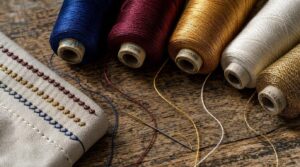
Thread quality touches every part of your sewing — from how your seams hold up after a hundred washes to how smoothly your machine runs over time. It’s one of those small choices that quietly shape your results in ways you might not notice until something goes wrong.
A simple step like using a thread conditioner for smoother, skip-free stitching can quietly solve tension issues before they become real problems.
Thread quality is a small choice that quietly shapes every seam, stitch, and wash cycle
Here’s what good thread actually does for your work.
Stronger, Longer-lasting Seams
Every seam you sew is only as strong as the thread holding it together. Strong thread — especially high‑tensile polyester — gives your seams real staying power through stress and repeated washing.
- Flat felled seams and double topstitching multiply seam durability greatly
- Reinforcement patches at stress points prevent tears before they start
- High stitch density paired with bias binding locks edges against fraying
A triple straight stitch reinforcement adds extra strength to high‑stress seams.
Thread strength is your foundation.
Fewer Skipped Stitches
Strong thread is only half the equation — skipped stitches often come from the thread fighting your machine. High-quality threads maintain consistent needle eye clearance and feed dog alignment, ensuring hook timing stays accurate and bobbin tension remains steady.
Poor thread causes lint buildup and tension drift, triggering skips mid-seam. These issues lead to unreliable stitch quality and frequent interruptions during sewing.
Opting for better thread minimizes such problems, resulting in fewer interruptions and more reliable stitch quality overall.
Cleaner Stitch Appearance
Thread feed stability plays a bigger role in stitch appearance than most sewers realize. When your thread flows smoothly through the needle eye, stitch line sharpness comes naturally — no staggered rows, no uneven sheen.
Low-lint thread keeps the path clean, supporting seam edge flawlessness and sheen consistency across every pass. That’s thread quality doing exactly what it should.
Less Thread Breakage
Breakage usually comes down to thread construction. Core-Spun Yarn — where a polyester core gets wrapped in cotton — withstands variable tension without snapping. Lubricated Thread slides through guides cleanly, cutting friction and heat.
Pair that with proper Needle Size Matching, solid Spool Winding Technique, and Humidity Management, and you’ve eliminated most breakage causes before you even press start.
Better Project Results
All of this adds up to better finished work — fewer seams to redo, less time fighting thread breakage, and reduced project costs over time.
High-quality threads support seam integrity, consistent color matching, and enhanced hand feel that your customers or clients actually notice.
Quicker turnaround and minimal rework become your new normal when stitch quality and thread durability are working together from the start.
How Thread Improves Stitch Quality
Thread quality shapes every stitch your machine makes, from the first pass to the final seam. The difference between smooth, even stitches and a frustrating mess often comes down to a few key factors.
Here’s what actually drives stitch quality when you’re working with better thread.
Consistent Thread Thickness
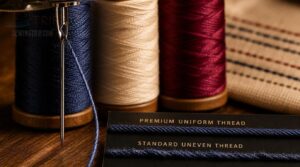
Think of your thread like a garden hose — if the diameter keeps changing, the water pressure gets unpredictable. The same thing happens with inconsistent thread thickness.
Uniform gauge and diameter stability keep your machine’s tension balanced, so you get clean, even stitches every time. A 40 wt or 50 wt thread with tight thickness tolerance, stable ply count, and high filament density threads smoothly through fabric without puckering or skipping.
Smooth Thread Twist
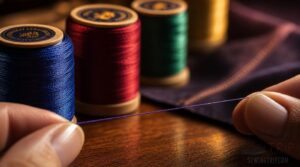
Twist consistency is what gives your thread its backbone, beyond thickness alone. High-quality threads with smooth, even twists glide through the needle plate with minimal friction, boosting seam flatness and stitch quality noticeably.
This smooth movement also enhances color uniformity across seams and builds resistance to thread pilling over time. The result is a finished project that stays looking sharp, even after repeated washes.
Balanced Machine Tension
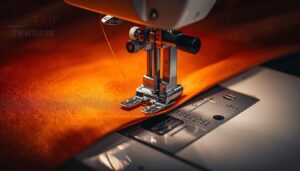
Thread quality plays a quiet yet powerful role in maintaining balanced tension. When adjusting your upper tension dial and fine-tuning the bobbin case screw to accommodate fabric weight, consistent thread thickness ensures the tension balance test becomes significantly more reliable.
Needle size matching and thread type work together—quality thread maintains stable tension settings, fostering smooth stitch formation and naturally preventing thread breakage.
Reduced Puckering and Looping
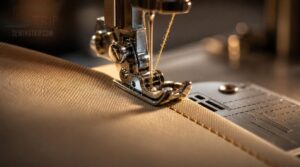
Puckering and looping usually come down to a mismatch — between thread, tension, and fabric. High-quality threads with Thread Lipid Coating glide through tension plates smoothly, reducing heat buildup that distorts seams.
Pair that with proper Presser Foot Pressure, Layered Fabric Sync, and tuned Take-up Lever Timing, and your thread elasticity works with the fabric rather than against it — keeping every stitch clean and flat.
Professional Seam Finish
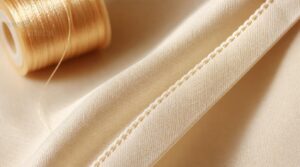
A clean seam isn’t just about technique — the thread you choose determines whether that finish holds up or falls apart after a few washes. High-quality threads make every finishing method work harder for you:
- Overedge binding stays smooth without fraying under stress
- French seam and Hong Kong finish edges seal cleanly with consistent thread diameter
- Topstitch reinforcement looks sharp with uniform stitch quality
- Bias edge binding lies flat when seam tension adjustment is dialed in right
Run your professional checks, and you’ll see the difference a quality thread makes.
How Thread Protects Your Machine
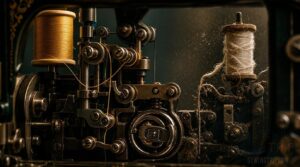
Most sewers think about thread in relation to what it does for their fabric, but it quietly does a lot for your machine too. Cheap thread is rough on internal parts — more friction, more lint, more wear over time.
Here’s how the right thread keeps your machine running smoothly.
Lower Friction During Sewing
Sewing with cheap thread is a bit like running sandpaper through your machine. High-quality threads — especially those with silicone coating or built-in thread lubricants — move through an optimized thread path with far less drag.
A lubricated needle paired with a PTFE presser foot reduces heat and wear considerably. This combination ensures smoother operation, minimizing friction and extending the machine’s lifespan.
This thread smoothness keeps your machine running cooler and lasting longer, preserving performance over time.
Reduced Lint Buildup
Less friction also means less fluff. Low-shedding yarns with tight weave fabrics and anti-static finishes cut lint buildup dramatically — premium threads produce roughly 30% less debris than bargain alternatives. That adds up fast.
Here’s what keeps your machine cleaner:
- Low-lint thread reduces interior clogging
- Integrated lint filters capture stray fibers early
- Short agitation cycles limit fiber breakage
- Regular cleaning prevents lint accumulation reduction setbacks
Fewer Bobbin Area Jams
Lint doesn’t just coat your machine’s internals — it works its way into the bobbin area and causes jams. High-quality threads combat this on two fronts: precision bobbin alignment ensures the case remains correctly seated, while self-cleaning bobbin designs actively eject loose fibers before accumulation occurs.
These features maintain consistent bobbin tension, significantly reduce thread breakage, and minimize disruptions.
Ultimately, this means far less time rethreading mid-project, allowing for smoother, more efficient sewing workflows.
Less Needle Wear
Your needles take a beating — but high-quality threads ease that load considerably. Smooth fiber coating reduces eye wear reduction issues by minimizing snagging through the needle eye, while consistent spool tension prevents tip deflection prevention problems caused by tension spikes.
Less thread lint buildup keeps the needle shank clean, cutting abrasive wear.
The result? Fewer needle breaks and less frequent needle replacement.
Longer Machine Lifespan
All of these small protections add up to something big — a machine that simply lasts longer. When you reduce thread lint buildup, lower friction, and prevent thread breakage, you’re practicing real preventive maintenance. The benefits stack up quietly:
- Gear Wear Reduction from smoother thread feed
- Bearing Longevity through less mechanical stress
- Motor Heat Management from fewer jams and stops
- Maintenance Interval Extension with Component Stress Minimization
That’s machine longevity in action.
Choosing Thread for Fabrics
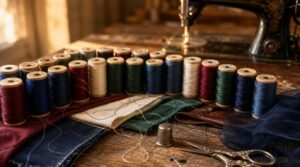
Not all threads are created equal, and the fabric you’re working with has a lot to say about which one belongs in your machine.
Getting that match right means better seams, less frustration, and projects that actually hold up over time.
Here’s what to keep in mind when choosing thread for your next project.
Polyester for Stretch Fabrics
Stretch fabrics like leggings and swimwear demand a thread that moves with the fabric — and polyester threads deliver exactly that. Their built-in elasticity enables four-way stretch without snapping under tension, while strong elastic recovery keeps seams intact after repeated movement. Thread quality directly influences stitch quality here, since poor fabric compatibility causes puckering quickly.
| Feature | Polyester Thread | Why It Matters |
|---|---|---|
| Four-way stretch | Moves with fabric | Prevents seam breakage |
| Moisture wicking | Transfers sweat away | Keeps garments comfortable |
| Elastic recovery | Returns to original shape | Maintains clean seam lines |
| UV resistance | Resists sun fading | Ideal for outdoor activewear |
| Shape retention | Holds structure after washing | Extends garment lifespan |
Dialing in your thread tension settings correctly — usually slightly looser for stretch knits — creates all the difference.
Cotton for Natural Fabrics
Cotton threads feel right at home on natural fabrics — linen, wool, and cotton blends all respond beautifully to their Natural Softness and Breathable Handfeel.
Unlike polyester, cotton thread offers a matte finish that blends seamlessly into woven textures without looking synthetic. This compatibility extends beyond aesthetics, ensuring functional harmony with natural fibers.
Here’s what makes cotton thread stand out:
- Moisture Absorption — Cotton absorbs up to 10% of its weight, keeping seams comfortable against skin
- Fabric Compatibility — Matches the natural fiber structure of cotton and linen, reducing puckering
- Mercerization Benefits — Mercerized cotton threads take dye more evenly, boosting stitch quality and color vibrancy
- Eco-friendly Production — Natural cellulose sourcing makes cotton a responsible choice for sustainable sewing projects
Thread Weight and Needle Size
Think of thread weight and needle size as dance partners — if one’s out of sync, the whole routine falls apart. Thread Thickness Impact is real: forcing a heavier thread through a small eye creates friction, skipped stitches, and tension chaos.
Use this quick Weight-Needle Pairing guide for confident Needle Gauge Selection:
| Thread Weight | Needle Size | Best Fabric Weight |
|---|---|---|
| 30 wt | 70/10–90/14 | Lightweight to medium |
| 40 wt | 90/14–100/16 | Medium to heavy |
| 50 wt | 60/8–80/12 | Delicate to lightweight |
Nail Needle Eye Compatibility and Fabric Weight Matching, and stitch consistency follows naturally.
Matching Thread to Projects
Every project tells you what it needs — you just have to listen. Garments require thread that moves with the fabric; leather demands waxed, heavy-weight thread; delicate lacework calls for fine single-ply. Thread Testing Protocols help confirm your choices before you commit.
Match using these Project Color Coordination and Specialty Fiber Pairing principles:
- Garments: Use polyester for knits; cotton for natural-fiber fabrics
- Decorative Variegated Threads: Adjust tension carefully to avoid stitch irregularities
- Eco-Friendly Thread Choices: Prioritize certified, low-impact dyed options for sustainable projects
- Quilting: Choose matte or sheen finish based on whether you want seams to show
Colorfastness and Durability
Color is a long-term commitment — your thread should honor it. Quality threads with UV resistance and built-in lightfastness durability keep outdoor projects vibrant for 12+ months, ensuring colors withstand sun exposure without fading.
Wash longevity guarantees hues remain consistent through 25 machine cycles without significant shift, preserving integrity during routine care.
Strong threads engineered for abrasion resistance and heat stability prevent cracking or fading under friction and ironing, maintaining structural integrity in high-stress applications.
That’s colorfastness testing in action — rigorously validating long-lasting colors and high-strength thread performance where durability matters most.
Top 7 Sewing Machine Threads
Finding the right thread doesn’t have to feel overwhelming, especially when you know what to look for.
These seven options cover a solid range of materials, weights, and uses — so whether you’re working with stretch knits or sturdy denim, there’s something here for you. Here’s a closer look at each one.
1. Connecting Threads Essential Cotton Thread Set
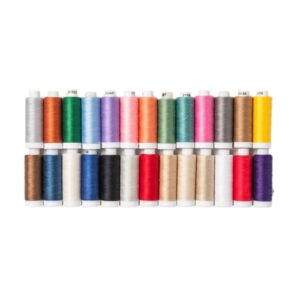
The Connecting Threads Essential Cotton Thread Set is a solid pick for quilting or working with natural fabrics. It includes 26 spools of 50-weight, triple-ply long-staple cotton, each offering approximately 220 yards of thread. The set comes in a reusable carrier designed to fit standard spindles, ensuring convenience and organization.
The mercerized finish reduces lint and keeps tension consistent, allowing seams to remain smooth without frequent adjustments. This feature enhances durability and ease of use, making it ideal for projects requiring precision.
At $36.45, the set delivers genuinely good value for a multipurpose, color-fast everyday set. Its versatility and reliability cater to both hobbyists and professionals seeking consistent results.
| Best For | Quilters, hobbyists, and intermediate sewists who want a reliable, colorful everyday thread set without breaking the bank. |
|---|---|
| Material | 100% Cotton |
| Spool Count | 26 spools |
| Total Yardage | 5,720 yd |
| Color Options | 26 assorted |
| Machine Compatible | Yes |
| Storage Included | Plastic carrier |
| Additional Features |
|
- 26 color-fast spools give you plenty of variety for multi-color projects without constant thread swaps
- Triple-ply, long-staple cotton keeps tension consistent and lint low — fewer headaches mid-project
- Great value at $36.45 with a reusable carrier that makes storage and transport easy
- 50-weight is too heavy for delicate embroidery or fine couture work where a thinner thread is a must
- Pure cotton can’t match polyester’s break-resistance, so it’s not ideal for high-stress seams
- The plastic carrier case has been known to crack during shipping, which takes some of the shine off the packaging
2. Gutermann Cotton Thread Box
The Gutermann Cotton Thread Box is another reliable option worth keeping in your sewing kit. You get 30 spools of 100-meter mercerized cotton thread, organized in a clear plastic case with labeled compartments — so color-matching takes seconds, not minutes.
The mercerization process gives each thread a subtle sheen, strengthens the fiber, and ensures even dye absorption, resulting in consistent colors from the first stitch to the last.
This practical, well-organized set is ideal for natural fabric projects.
| Best For | Sewers and crafters who want a solid variety of cotton threads in one organized kit — great for repairs, quilting, embroidery, and general hand or machine sewing. |
|---|---|
| Material | 100% Cotton |
| Spool Count | 26 spools |
| Total Yardage | 2,734 yd |
| Color Options | 26 assorted |
| Machine Compatible | Yes |
| Storage Included | Plastic box |
| Additional Features |
|
- 26 spools of 100% cotton thread in a range of colors, so you’re rarely scrambling for the right shade.
- The storage box keeps everything in place with spindles — easy to grab and go for workshops or sewing circles.
- Runs smoothly on both hand and machine needles with low breakage, which saves a lot of frustration mid-project.
- The plastic spool holders can arrive broken and feel pretty flimsy overall — not built to last long-term.
- With about 2.6 km of thread total, it may fall short for bigger projects like full-size quilts.
- Some buyers have received polyester thread instead of cotton, so quality control isn’t always consistent.
3. Connecting Threads Essential Cotton Thread
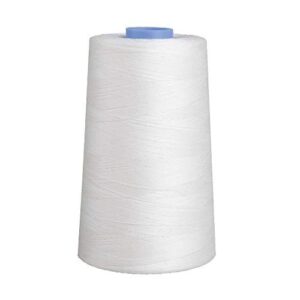
If you’re working on large quilting projects, the Connecting Threads Essential Cotton Thread is hard to overlook. One cone gives you 5,000 yards of triple-ply, 50-weight cotton — enough to carry you through big piecing sessions without constant re-threading.
The satin finish keeps feeding smooth, and lint stays low, which your bobbin area will thank you for. It’s a straightforward, no-fuss choice for natural fiber fabrics like cotton and linen, and it performs consistently whether you’re a beginner or a seasoned sewist.
| Best For | Quilters and sewists working on large cotton or linen projects who want a reliable, natural-fiber thread that doesn’t need constant replacing. |
|---|---|
| Material | 100% Cotton |
| Spool Count | 1 cone |
| Total Yardage | 5,000 yd |
| Color Options | White only |
| Machine Compatible | Yes |
| Storage Included | None |
| Additional Features |
|
- 5,000 yards per cone means you can power through big quilting and piecing sessions without stopping to swap thread
- The satin finish feeds smoothly and keeps lint minimal, so your bobbin area stays cleaner longer
- Triple-ply, 50-weight construction gives you consistent stitching across a wide range of skill levels and project types
- Some users find lint higher than expected, which can be a problem for fine or high-speed work
- Only comes in white, so you’ll need to buy more cones if your project calls for multiple colors
- Pure cotton doesn’t have the tensile strength of polyester blends, so it may not hold up well on heavy-duty or high-stress seams
4. Gütermann Creative Cotton Sewing Thread
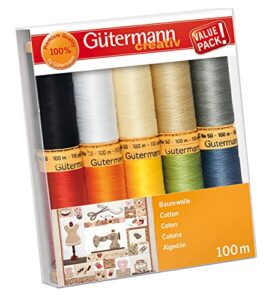
When your project calls for heirloom quilting or decorative stitching on natural fabrics, the Gütermann Creative Cotton Sewing Thread is worth a closer look. It’s made from 100% mercerized Egyptian cotton, which gives it that subtle sheen and smooth feed that keeps stitches looking sharp.
Each set includes 10 color-coded spools — great for mix-and-match projects.
At 95°C wash resistance with strong colorfastness, your seams stay clean and vibrant long after the project leaves your sewing table.
| Best For | Quilters, patchwork enthusiasts, and sewists working with natural cotton fabrics who want reliable, colorfast thread that holds up through heavy laundering. |
|---|---|
| Material | 100% Cotton |
| Spool Count | 10 spools |
| Total Yardage | 1,094 yd |
| Color Options | 10 assorted |
| Machine Compatible | Yes |
| Storage Included | None |
| Additional Features |
|
- Egyptian mercerized cotton gives seams a clean, polished look with a natural sheen — no dull or rough stitching.
- Ten color spools in one set means you’re covered for multi-color projects without buying thread separately.
- Handles high-heat washing up to 95°C, so your work stays looking great even after repeated cycles.
- At 100m per spool, larger projects will likely need extra thread — plan accordingly.
- Not ideal for synthetics or blended fabrics; you’ll get the best results sticking to natural cotton.
- You’ll need a NM 70–90 needle to avoid breakage — the wrong size can cause real headaches mid-project.
5. Gütermann All Purpose Polyester Thread
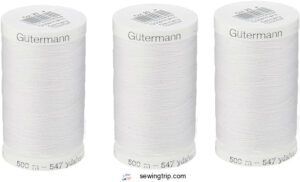
If you need a reliable, all-purpose thread that works across nearly every fabric in your stash, this Gütermann polyester delivers. Each spool holds 547 yards, and the three-pack gives you over 4,900 feet total — plenty for large projects without constant re-spooling.
The 100% long-staple polyester construction keeps lint low and ensures smooth feeding, resulting in fewer jams and cleaner stitches.
It withstands repeated washing without losing color or strength, making it a solid everyday choice for garments, home décor, and quilting.
| Best For | Home sewers and quilters who want a dependable, all-purpose thread that works on just about any fabric without fuss. |
|---|---|
| Material | 100% Polyester |
| Spool Count | 3 spools |
| Total Yardage | 1,641 yd |
| Color Options | White |
| Machine Compatible | Yes |
| Storage Included | None |
| Additional Features |
|
- Huge 3-pack gives you over 4,900 feet total — great for big projects or just keeping a solid stash on hand
- Low lint and smooth feeding mean fewer jams, which is a win whether you’re a beginner or sewing at high speed
- Holds up through repeated washing without losing strength or color
- The listing mentions black but ships white — a frustrating surprise if you ordered with a specific color in mind
- Thread can be wound tight, which sometimes causes catching or unexpected jams mid-project
- Large spools are a bit bulky if you’re working on something small and delicate
6. BlesSew All Purpose Polyester Thread
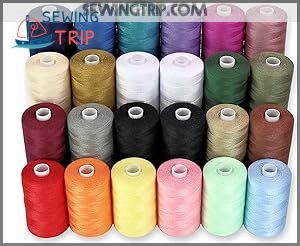
The BlesSew 24-spool pack offers 22 assorted shades, two black spools, and two white spools. Each spool contains 1,000 yards of 40-weight polyester, totaling 24,000 yards—ideal for extensive quilting and garment projects.
The threads use azo-free, OEKO-Tex certified dyes, ensuring vibrant colors that withstand repeated washes. This durability makes finished projects retain their quality over time.
Compatible with standard machines and universal needles (sizes 65/9–90/14), the thread is versatile for most applications. However, avoid using it in sergers, as this may increase breakage risk.
| Best For | Beginner and hobbyist sewers who want a wide color range without buying spools one by one. |
|---|---|
| Material | 100% Polyester |
| Spool Count | 24 spools |
| Total Yardage | 24,000 yd |
| Color Options | 24 assorted |
| Machine Compatible | Yes |
| Storage Included | Boutique box |
| Additional Features |
|
- 24,000 yards total across 24 spools — you won’t run out anytime soon
- OEKO-Tex certified, azo-free dyes that stay bright wash after wash
- Works with most home machines (Brother, Singer, Janome) and standard universal needles
- Not serger-friendly — users report more breakage and shedding in overlock machines
- Finding the thread end on a new spool can be a bit of a hunt
- No color codes printed on the spools, so reordering a specific shade takes some guesswork
7. Ilauke Polyester Sewing Thread Set
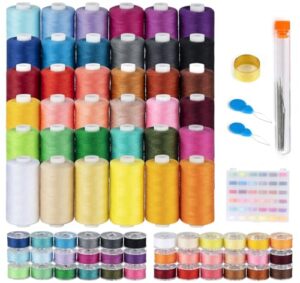
The Ilauke Polyester Sewing Thread Set is a color-lover’s dream, offering 36 vibrant shades of thread. Each spool contains 700 yards of 40/2 double-twist polyester, designed for break resistance to ensure durability during use.
Matching pre-wound Class 15 bobbins are included, eliminating the need for manual winding and allowing you to start sewing immediately.
The thread features a smooth finish that minimizes friction, ensuring even stitches and seamless performance across most major sewing machines.
Note that it runs thin, so slightly reduce your tension settings when working with heavier fabrics to prevent potential breakage.
| Best For | Home sewists and hobbyists who want a ready-to-go thread set with matching bobbins and a wide color range, without the hassle of manual winding. |
|---|---|
| Material | 100% Polyester |
| Spool Count | 36 spools |
| Total Yardage | 25,200 yd |
| Color Options | 36 assorted |
| Machine Compatible | Yes |
| Storage Included | Cardboard box |
| Additional Features |
|
- 36 colors with matching pre-wound bobbins means you can swap colors fast and get right to sewing.
- 700 yards per spool is a solid amount — you won’t be running out mid-project constantly.
- Works with most major machines (Brother, Singer, Janome, and more), so compatibility usually isn’t an issue.
- The thread runs thin, so high tension or heavy fabrics can cause breakage.
- Bobbins tend to get loose near the end, which can lead to bunching or jams.
- Not compatible with Singer Futura embroidery models (CE-100 through CE-350).
Frequently Asked Questions (FAQs)
Does the quality of thread matter on a sewing machine?
Yes, absolutely. The thread you choose affects everything — how your seams hold up, how your stitches look, and even how hard your machine has to work.
How to tell if sewing thread is good quality?
Good thread feels smooth, winds evenly, and shows consistent color from end to end.
Run a quick test seam — clean stitches with no breaks or skips usually confirm you have quality thread.
Which singer is best for heavy fabrics?
For heavy fabrics, a Singer Heavy Duty machine — like the 4452 or 4423 — is your best bet.
It sews through denim, canvas, and upholstery with ease, thanks to its powerful motor and sturdy feed dogs.
Can old thread damage a sewing machine over time?
Old thread might seem harmless, but it quietly wears down your machine. Lint buildup, friction spikes, and fraying fibers create persistent stress on critical components.
Over time, this strain damages the tension discs, bobbin case, and needle, leading to real damage.
How should thread be stored to preserve quality?
Store thread in a cool, dry spot — ideally between 15 and 25°C with 40–60% humidity. Airtight containers and shade protect fibers from moisture, sunlight, and color loss.
Does thread color affect its strength or durability?
Thread color is mostly cosmetic — like paint on steel, it doesn’t change what’s underneath. Reputable dyes won’t weaken fiber strength or alter how your thread performs under tension.
What causes thread to snap during high-speed sewing?
Heat is the main culprit. At speeds over 4,000 stitches per minute, your needle gets hot fast, weakening synthetic fibers by up to 20%.
Added tension imbalance or inconsistent thread twist, and snapping becomes inevitable.
Is expensive thread always better than budget options?
Not always — but more often than not, yes. Premium threads offer tighter ply construction, better colorfastness, and fewer filament breaks.
This translates to smoother seams and less rethreading frustration over time.
Conclusion
The smallest spool on your shelf makes the biggest difference in your finished work—that’s exactly why thread quality matters for sewing machines more than most sewers ever realize. Quality thread isn’t an upgrade; it’s the baseline your machine was designed around.
Feed it something consistent, smooth, and well-twisted, and everything clicks into place—stitches, tension, seams. Your machine operates more efficiently, your creations endure longer, and the frustrating guesswork finally stops.
Choose better thread once, and you’ll never look back.
- https://www.dainessewing.com/blog/the-role-of-thread-quality-in-sewing-machine-care-and-maintenance
- https://www.superiorthreads.com/sewing-threads
- https://www.bsewinn.com/blogs/inspiration/best-sewing-threads
- https://www.goldstartool.com/blog/choose-high-quality-thread.htm
- https://sewingmachineman.substack.com/p/the-problem-with-poor-quality-thread