This site is supported by our readers. We may earn a commission, at no cost to you, if you purchase through links.
Picking the wrong fabric for a traditional quilt is a heartbreak most quilters learn the hard way. You cut, press, and piece everything together—then step back and wonder why it looks flat, busy, or just off. The fabric did that.
For classic patterns like log cabin, nine-patch, or Dresden plate, the right quilting fabrics for traditional patterns aren’t a nice-to-have. They’re the whole story.
Knowing which cottons hold their color, cut cleanly, and play well with vintage-style prints saves you time, money, and a lot of unpicking. These picks make the choosing part easier.
Table Of Contents
- Key Takeaways
- Top 8 Quilting Fabrics Reviewed
- 1. Needbrock William Morris Fabric Squares
- 2. Sage Green Cotton Quilting Squares
- 3. Fingerinspire Light Steel Blue Dragon Fabric
- 4. Exclaith Vintage Rose Quilting Fabric Squares
- 5. AOOSA Cotton Fabric Squares
- 6. HunnmingRe William Morris Quilting Fabric
- 7. Japanese Cotton Fabric Squares
- 8. HunnmingRe Sage Green Quilting Fabric Squares
- Best Fabrics for Traditional Blocks
- Prints That Suit Classic Patterns
- Buying Traditional Quilting Fabrics
- Matching Fabric to Quilt Style
- Frequently Asked Questions (FAQs)
- Conclusion
Key Takeaways
- Fabric quality makes or breaks a traditional quilt — thin, loosely woven cotton leads to fraying seams and colors that fade fast, so always look for tightly woven, quilting-weight cotton.
- Each classic block has its own fabric logic: log cabin needs strong light-dark contrast, nine-patch needs balanced print scales, and Dresden plate needs color harmony across every blade.
- Pre-cut squares save you time and take the guesswork out of color-matching, making them a smart starting point — just measure before you sew, since many run slightly smaller than advertised.
- Small-scale calico, vintage florals, William Morris botanicals, and Japanese cotton motifs are the print styles that feel most at home in traditional quilt patterns.
Top 8 Quilting Fabrics Reviewed
Finding the right fabric can make or break a traditional quilt. These eight picks cover a solid range of prints, colors, and styles worth knowing about.
If you’re just getting started, brushing up on beginner quilting techniques and fabric tips can help you pair these picks with confidence.
Let’s take a closer look at each one.
1. Needbrock William Morris Fabric Squares
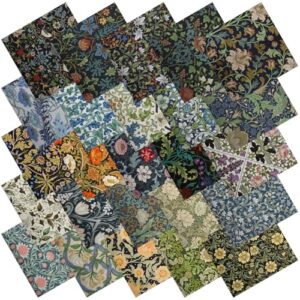
If you love the look of old botanical prints, the Needbrock William Morris Fabric Squares are worth a look.
Each pack comes with 20 pre-cut, 5-inch cotton squares featuring leafy vines and earthy greens in that unmistakable Morris style. The print scale is sized just right for small blocks, so your motifs won’t get lost in the seams.
They’re quilting weight, pre-shrunk, and cleanly cut — a solid pick for nine-patch or sampler projects.
| Best For | Beginner quilters and crafters who want a quick, no-fuss way to work with classic William Morris florals without spending time measuring and cutting. |
|---|---|
| Material | 100% cotton |
| Pre-cut | Yes |
| Piece Count | 25 squares |
| Square Size | 10 x 10 in |
| Primary Use | Quilting/crafts |
| Fabric Weight | Lightweight/thin |
| Additional Features |
|
- 25 coordinated cotton squares ready to go — no cutting required, which saves real time on small projects
- The vintage Morris floral designs bring a timeless, elegant look to quilts, pillows, or décor pieces
- 100% cotton feels good to work with, holds its shape well, and plays nicely with other quilting fabrics
- The fabric runs thin, so it’s not the best choice if you’re making something meant to last generations
- Squares come in at about ¼ inch short of the advertised 10 inches, and some cuts aren’t perfectly straight — worth knowing before you plan tight seams
- Light-colored squares can be tricky near translucent layers, and slight grain issues may cause warping after a wash
2. Sage Green Cotton Quilting Squares
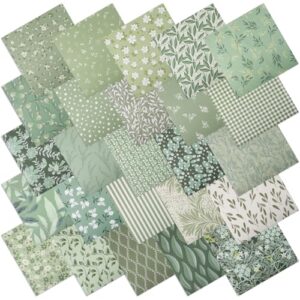
If earthy greens aren’t your thing, sage might be the better fit.
The Needbrock Sage Green pack gives you 25 pre-cut 10-inch cotton squares in a soft, muted green palette with 25 unique prints — gingham, vintage motifs, and more. That consistent color family makes planning your layout surprisingly easy. It pairs beautifully with cream, dusty rose, or navy in classic blocks like Nine-Patch or Log Cabin.
Just know fabric runs a little thin, so it’s better for wall hangings than heirloom quilts.
| Best For | Quilters and crafters who want an easy-to-coordinate green palette for low-stakes projects like wall hangings, pillows, or practice quilts. |
|---|---|
| Material | 100% cotton |
| Pre-cut | Yes |
| Piece Count | 25 squares |
| Square Size | 10 x 10 in |
| Primary Use | Quilting/crafts |
| Fabric Weight | Lightweight/thin |
| Additional Features |
|
- 25 unique prints in one cohesive sage palette — no color-matching headaches
- 100% cotton gives a natural feel and works well for hand or machine sewing
- Pre-cut squares save time and make it beginner-friendly at a great price
- Fabric runs thin, so it’s not ideal for heirloom or heavy-use quilts
- Squares can measure up to ¼ inch smaller than advertised, which matters for precise piecing
- Grain alignment and cutting accuracy vary, and some warping may show up after washing
3. Fingerinspire Light Steel Blue Dragon Fabric
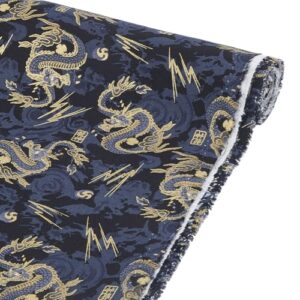
Want something with a more personality? This Fingerinspire fabric brings a traditional Japanese dragon motif printed in a soft light steel blue — calm enough to play well with others but distinct enough to anchor a block.
It’s 100% cotton, cuts cleanly, and holds its color after washing.
The repeat is small and even, so it works nicely in nine-patch and log cabin blocks without overwhelming your piecing.
Each sheet measures about 1 m × 1.5 m, giving you a solid working size for smaller projects.
| Best For | Quilters and DIY crafters who want a culturally rich accent fabric for smaller projects like nine-patch blocks, table runners, or wall hangings. |
|---|---|
| Material | 100% cotton |
| Pre-cut | No |
| Piece Count | 1 sheet |
| Square Size | 1.09 yd x 1.64 yd |
| Primary Use | Quilting/decor |
| Fabric Weight | Lightweight/thin |
| Additional Features |
|
- Soft, breathable 100% cotton that cuts cleanly and holds up well for sewing and quilting
- The traditional Japanese dragon print in light steel blue is distinctive without being loud — easy to pair with other fabrics
- At 1 m × 1.5 m, it’s a practical size for small projects without buying more than you need
- One sheet won’t go far if your project needs serious coverage — you’d likely need multiples
- Only comes in light steel blue, so no flexibility if that color doesn’t fit your palette
- At 0.2 mm thin, it’s not the right pick for anything that needs structure or weight
4. Exclaith Vintage Rose Quilting Fabric Squares
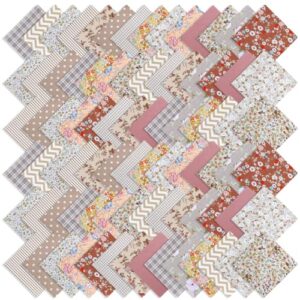
If soft and romantic is more your speed, the Exclaith Vintage Rose pack is worth a look. You get 84 pre-cut 5-inch squares across 14 patterns — florals, plaids, stripes, and polka dots — all in warm khaki tones.
The cotton fabric is tightly woven and light enough to piece without bulk. It’s a great fit for Nine-Patch and Log Cabin blocks.
And at $15.99, it’s an easy yes for beginners building their first traditional quilt.
| Best For | Beginners and hobbyists who love a soft, vintage aesthetic and want to jump straight into quilting without the hassle of cutting fabric. |
|---|---|
| Material | Cotton/blend |
| Pre-cut | Yes |
| Piece Count | 84 squares |
| Square Size | 5 x 5 in |
| Primary Use | Quilting/patchwork |
| Fabric Weight | Lightweight/thin |
| Additional Features |
|
- 84 pre-cut squares across 14 patterns gives you plenty of variety to mix and match right out of the bag.
- The warm khaki tones work beautifully for traditional blocks like Nine-Patch and Log Cabin.
- At $15.99, it’s a low-risk way to start a project or experiment with new designs.
- Some buyers report the fabric isn’t fully cotton — could matter if you’re particular about materials.
- The fabric runs thin, so you may need interfacing for anything that takes heavier wear.
- The khaki-only palette is lovely but limiting if your project calls for more color variety.
5. AOOSA Cotton Fabric Squares
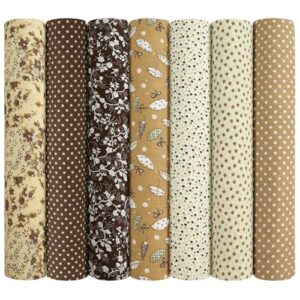
If you like variety in your bundle, the AOOSA Cotton Fabric Squares are worth grabbing. You get 7 pre‑cut squares, each measuring nearly 20 inches — bigger than most charm packs.
These larger squares are especially handy for English paper piecing and other precut quilting techniques where generous, consistent sizing makes a real difference.
The 100% cotton is lightweight and machine‑washable, with reactive dyes that hold up after washing.
Prints include florals, plaid, polka dots, and geometric patterns in a fun mix of colors.
It’s a solid pick for pillowcases, patchwork blocks, or even a quick parent‑child sewing afternoon.
| Best For | Beginner sewers, crafters who love variety, and parents looking for a fun, low-stakes project to do with their kids. |
|---|---|
| Material | 100% cotton |
| Pre-cut | Yes |
| Piece Count | 7 squares |
| Square Size | 19.68 x 19.68 in |
| Primary Use | Quilting/crafts |
| Fabric Weight | Lightweight/thin |
| Additional Features |
|
- Seven pre-cut squares in a range of prints and colors — no cutting required, just pick up and sew
- Pure cotton that’s machine-washable and holds its color well after multiple washes
- Big enough at nearly 20 inches to tackle pillowcases, pouches, or patchwork without piecing tiny scraps together
- Fabric runs thin, so it’s not the best choice for anything that needs to hold up to heavy use
- Colors on screen can look different from what shows up in real life
- Some buyers have reported getting a pack with a piece missing
6. HunnmingRe William Morris Quilting Fabric
Morris lovers, this one’s for you.
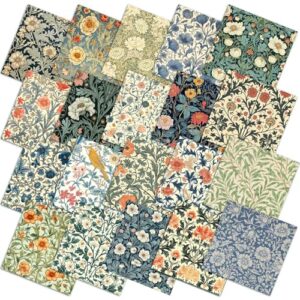
The William Morris Quilting Fabric comes as a bundle of 20 pre‑cut 10×10‑inch squares, each featuring vintage botanical prints in rich greens, warm terracottas, and antique blues.
The dense floral motifs look beautiful in Nine‑Patch and Log Cabin blocks.
Just know the polyester‑cotton blend runs thin and slippery, so a light interfacing helps.
Edges fray easily too, so finish them before you start.
But for the price, the visual payoff is real.
| Best For | Crafters and quilters who love vintage botanical aesthetics and want a ready-to-use bundle for patchwork, appliqué, or small home décor projects. |
|---|---|
| Material | Polyester-cotton blend |
| Pre-cut | Yes |
| Piece Count | 20 squares |
| Square Size | 10 x 10 in |
| Primary Use | Quilting/appliqué |
| Fabric Weight | Lightweight/thin |
| Additional Features |
|
- 20 pre-cut squares means less prep time and more time actually making things
- The William Morris floral prints are genuinely gorgeous — great variety across 20 distinct patterns
- Versatile enough for quilts, bags, pillows, doll clothing, and more
- Fabric runs thin and slippery, so you’ll likely need interfacing or a stabilizer to work with it comfortably
- Cutting can be inconsistent — some squares may show partial designs instead of a full centered print
- Edges fray easily and the blend behaves more like polyester than cotton, which may disappoint purists
7. Japanese Cotton Fabric Squares
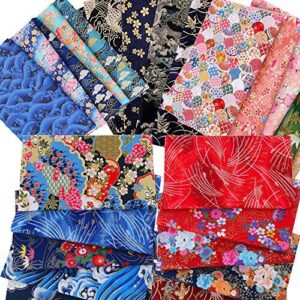
If you’re new to quilting, this bundle is a solid place to start.
You get 30 pre‑cut squares, each 8×10 inches, made from 100% natural cotton with Japanese‑printed designs.
Every square carries its own pattern — think sakura blossoms, geometric asanoha motifs, and classic cranes.
The colors stay bright after washing, which matters when you’re building something to last.
Just expect raw edges and a small size variation.
A quick press and trim before sewing keeps everything square.
| Best For | Beginner quilters and DIY crafters who want an affordable, coordinated set of cotton fabric squares for patchwork, home décor, or small sewing projects. |
|---|---|
| Material | 100% cotton |
| Pre-cut | Yes |
| Piece Count | 30 squares |
| Square Size | 8 x 10 in |
| Primary Use | Quilting/sewing |
| Fabric Weight | Lightweight/thin |
| Additional Features |
|
- 30 squares with distinct Japanese-printed patterns — great variety for mixing and matching designs
- Colors hold up well after washing, so your finished project keeps looking good
- At $13.29, it’s a low-risk way to stock up on fabric for multiple craft projects
- Manual cutting means raw edges and up to 1 cm size variation — you’ll need to trim before sewing
- Cotton can shrink after washing, so pre-washing before cutting is a smart move
- Low thread count and occasional duplicate or missing squares have been flagged by some buyers
8. HunnmingRe Sage Green Quilting Fabric Squares
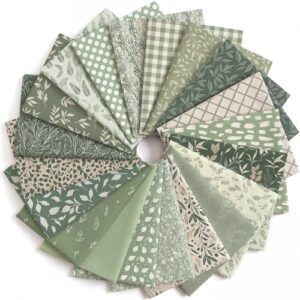
Sage green is one of those colors that just works in a traditional quilt. These HummingRe squares give you 20 precut 10×10-inch pieces, each printed with a different motif — gingham, polka dots, botanicals, and more.
They’re lightweight and coordinated, so you don’t have to guess what goes together. The edges do fray, so a quick zigzag stitch before you start saves headaches later.
For wall hangings, pillow covers, or a simple nine-patch sampler, these squares are a smart, low‑fuss pick.
| Best For | Quilters and crafters who want a ready-to-use, coordinated set of fabric squares for patchwork, pillow covers, or small decorative projects. |
|---|---|
| Material | Polyester-cotton blend |
| Pre-cut | Yes |
| Piece Count | 20 squares |
| Square Size | 10 x 10 in |
| Primary Use | Quilting/patchwork |
| Fabric Weight | Lightweight/thin |
| Additional Features |
|
- 20 different sage-green prints that mix and match easily — no color-matching guesswork
- Precut squares save time and are great for quick projects like nine-patch quilts or pouches
- Lightweight and smooth, making them a solid pick for wall hangings and decorative items
- High polyester content means the fabric can melt near heat — not great for apparel or anything iron-heavy
- Edges fray easily, so you’ll need to finish them before sewing
- Factory cuts sometimes split a motif in half, so you may not get the full print on every square
Best Fabrics for Traditional Blocks
Different blocks call for different fabrics, and getting that right makes a big difference in how your quilt turns out. Some patterns need strong contrast, others need calm and balance.
Here’s what works best for five classic blocks.
Log Cabin Fabric Choices
Log cabin quilts thrive on contrast — that push‑and‑pull between light and dark fabrics is what gives each block its depth. For fabric selection, lean into Earth Tone Palettes: warm browns, deep reds, and creamy neutrals.
Jelly rolls are a smart pick here since you get color‑coordinated fabrics without the guesswork. Rustic Weave Options like plaid and buffalo check also feel right at home in this pattern.
Choosing high‑contrast color pairs ensures each block pops visually.
Nine-patch Print Balance
Getting a nine-patch quilt block right comes down to Print Placement and Value Contrast. Pair a light print with a darker neighbor so your eye moves smoothly across the grid.
Keep Motif Scaling small — busy prints shrink visually. Texture Balance and Repeat Harmony matter too.
Color coordinated fabrics in four to six tones keep traditional quilt patterns looking calm and cohesive, never crowded.
Star Block Contrast
Star blocks live or die by contrast — and it’s Value vs. Hue that really matters here. A deep navy against pale white hits harder than two pretty mid-tones ever will. For traditional quilt patterns and lone star quilt patterns, Historical Star Contrast shows us that Print vs. Solid pairings keep Star Point Definition crisp and clean.
Choose color-coordinated fabrics that offer:
- High value difference between star tips and background
- Small-scale prints or solids for Contrast Paper Piecing accuracy
- Consistent light-dark rhythm across all points
- Tightly woven quilting fabrics for sharp, stable edges
Dresden Plate Color Planning
Unlike star blocks where contrast does the heavy lifting, Dresden Plate color planning is more like conducting a choir — every blade needs its own voice, but they all have to sing together.
Dresden Plate quilting is less about contrast and more about harmony, where every blade needs its own voice but all must sing together
Use a Color Wheel Applications approach: alternate warm and cool blades, keep a Value Gradient Tips range from light to dark, and let a quiet background fabric do its job.
| Blade Position | Recommended Fabric Colors | Print Scale |
|---|---|---|
| Outer blades | Deep, rich tones | Small-scale calico |
| Mid blades | Medium warm or cool | Ditsy floral |
| Inner blades | Soft, light hues | Subtle texture |
| Center circle | Neutral or complementary | Solid or near-solid |
Blade Color Harmony, Center-Blade Contrast, and Background Fabric Impact all shape how your Dresden plate quilts come alive in traditional quilt patterns.
Rail Fence Strip Fabrics
Rail Fence quilts are all about contrast. Where Dresden Plate asks you to balance many colors, this pattern keeps it simple — light strips beside dark ones, stepping across the quilt in a clean zigzag.
Your Rail Contrast Choices drive everything. Grab a jelly roll for easy Strip Piecing Tips, since precut fabric strips keep your rails perfectly even and make the traditional quilt patterns come together fast.
Prints That Suit Classic Patterns
The right print can make or break a traditional quilt. Some fabrics just feel at home in classic patterns, whether it’s a nine-patch or a Log Cabin block.
Here are the print styles that tend to work best.
Small-scale Calico Prints
Small-scale calico prints are a quiet workhorse in traditional quilting fabrics. Calico Print Scale stays under one inch, so each block reads crisp and clean.
Muted Calico Palettes — soft blues, warm browns, earthy greens — blend beautifully in classic fabric layouts.
That’s why Historical Calico Uses go hand in hand with Log Cabin and nine-patch cotton textile projects.
Look for tight-woven vintage fabric prints that hold their detail wash after wash.
Vintage Floral Fabric Squares
Vintage floral fabric squares carry a long story. Their Chintz History traces back to 19th-century botanical prints made using Woodblock Methods, which gave each piece slightly uneven tones — that’s the charm.
Motif Symbolism runs deep too; roses meant love, daisies meant simplicity.
Store your collection in Acid-Free Storage to slow Fabric Aging.
These vintage fabric prints bring antique quilt designs to life beautifully.
William Morris-inspired Designs
William Morris-inspired designs bring something truly special to your quilting table. Their Botanical Motifs — dense vines, leaves, and flowers drawn from Medieval Tapestry Patterns — create instant visual depth.
Natural Dye Palettes of madder red and indigo blue keep things earthy and cohesive. Artisanal Printing Techniques give each Seasonal Garden Theme crisp, clean edges.
This historical fabric feels like heritage textile art you can actually sew.
Sage Green Traditional Palettes
Sage green quietly ties a whole quilt together. That Vintage Sage Appeal feels warm but never loud — perfect for Log Cabin or Nine Patch blocks. It’s a true Heirloom Quilt Sage tone that works across Seasonal Sage Palettes and Sage Border Designs alike.
- Pairs beautifully with cream and taupe
- Gender-Neutral Sage suits every quilter’s style
- Enhances traditional quilt patterns without competing
- Elevates timeless fabric bundles effortlessly
Japanese Cotton Motif Styles
Japanese cotton motifs carry centuries of meaning right into your quilt blocks.
Asanoha’s crisp star geometry and kikkogare’s hexagonal lattice both trace their Edo‑era origins to everyday textiles dyed using indigo dye techniques.
This motif symbolism — longevity, prosperity, harmony — adds quiet depth to your work.
Modern motif adaptations translate these traditional fabric patterns beautifully onto 100% cotton quilting fabrics, making Quilt Block Fusion feel easy with colorful fabrics and thoughtful textile design.
Buying Traditional Quilting Fabrics
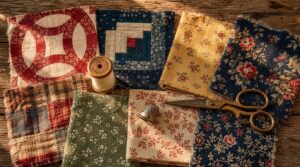
Finding the right fabric doesn’t have to feel overwhelming. A few simple things can make a big difference in how your finished quilt looks and feels.
Here’s what to keep in mind before you buy.
Cotton Weave Quality
Good cotton isn’t just cotton — the weave behind it shapes everything.
With 100 cotton quilting weight fabric, fiber strength impact means your seams hold through years of washing. Weave tightness benefits show up in how cleanly your cuts stay put. Dye absorption factors depend on yarn spin consistency and fabric softness balance — all hallmarks of high-quality quilting fabrics.
- Tight plain weave resists fraying at seam edges
- Strong fibers reduce pilling over time
- Consistent yarn spin creates even, predictable stitching
- Clean fibers absorb dye evenly for truer colors
- Traditional fabric and timeless fabric feel smooth under your needle
Precut Square Advantages
Precut squares are a genuinely invaluable asset, especially if you’re just starting out. Beginner-Friendly Start options come in consistent 5‑inch or 2.5‑inch sizes, delivering real time‑saving benefits and waste reduction tips built right in.
Charm Packs, Layer Cakes, and Mini Charms offer Color coordination ease and accuracy enhancement across traditional fabric patterns.
Precut Fabric Bundles make piecing feel less like math and more like fun.
Color Coordination Tips
Once your squares are sorted, color coordination makes or breaks the final look. Lean on nature inspiration — think earthy greens, dusty roses, warm golds. These seasonal palettes carry real emotional impact and feel right at home in traditional fabric patterns.
Pair light values with dark ones. Let classic fabric breathe beside busy prints. That contrast is what gives timeless fabric its quiet power.
Yardage Versus Fabric Squares
Once you’ve nailed your color story, the next call is how you buy your fabric.
Yardage gives you control. Fabric yardage lets you cut pieces exactly where you need them — great for pattern adjustments and keeping prints aligned across blocks.
Precut fabric saves time. Layer cakes and fat quarter bundles offer:
- Cost efficiency on coordinated colors
- Storage solutions for small spaces
- Project scalability without overbuying
Beginner-friendly Bundle Selection
Bundles take the guesswork out of starting. A good beginner-friendly quilt kit gives you precut bundles, coordinated Fat Quarter Bundles, and even a Layer Cake — all in one box.
Add project guides, care instructions, and beginner patterns, and you’re ready to sew.
Look for fatigue-reducing fabrics with smooth, light cotton.
Bundle discounts also mean you spend less while getting more.
Matching Fabric to Quilt Style
Not every fabric works for every quilt, and that’s actually a good thing. The style you’re going for — whether it’s Civil War-era, 1930s scrappy, or heirloom floral — shapes every fabric choice you make.
Here’s how to match your fabric to the quilt you have in mind.
Civil War-inspired Quilts
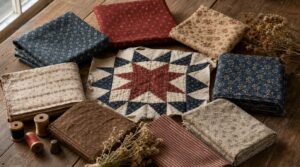
Civil War quilts carry real weight — every stitch tied to Patriotic Symbolism, Regional Loyalties, and Soldier Comfort. Quilts made for wartime fundraising.
To honor that history, reach for muted indigos, warm reds, and earthy calicos.
Designers like Pam Buda and Marcus Fabrics offer collections built around Historical Reproduction Techniques and authentic historical quilting patterns, giving your Civil War-inspired project genuine depth and heart.
1930s-style Patchwork Quilts
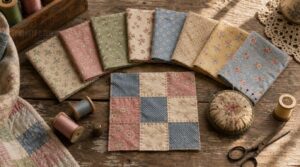
Depression-Era Designs have a charm that’s hard to resist. These quilts leaned into scarcity — and that’s exactly what makes them beautiful.
Here’s what defines authentic 1930s Scrappy Quilt Aesthetics:
- Feedsack Fabric Use in soft pastels and small prints
- Nine-patch and rail fence blocks
- Mixed feedsacks creating scrappy quilt cohesion
- Lightweight cotton batting for flat drape
- Tight hand-quilted finishes
Authentic Reproduction Tips and Quilt Preservation Methods keep this quilt making history alive.
Heritage Floral Quilt Layouts
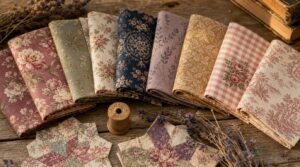
Floral quilts are all about balance. Floral Symmetry Techniques keep your layout feeling calm and intentional — centering large blooms and letting smaller ones fill the surrounding blocks. Motif Orientation Rules matter too, so keep your flowers pointing the same direction.
Heritage Color Contrasts like cream backgrounds against dusty rose or muted green make traditional fabric patterns sing.
Fussy Cutting Blooms from your quilting fabrics adds real Garden Gatherings charm.
Balanced Light-dark Placement
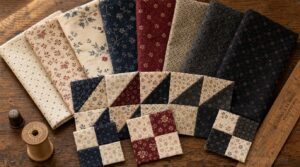
Think of your quilt like a room — too much darkness in one corner feels heavy. Value Contrast Principles help you spread lights and darks evenly across quilt block repeats, half square triangles, and four patch squares.
Depth Illusion Techniques create that raised, dimensional look.
Historical Palette Use and Lighting Impact Analysis guide smarter fabric coordination, while Block Balance Fixes keep traditional quilting techniques feeling effortlessly calm.
Mixing Solids and Prints
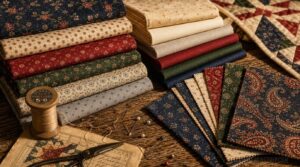
Solids are the quiet anchors of any patchwork quilting project. A good rule of thumb: aim for a Print‑Solid Ratio of 1:1 or 2:1, so neither side fights for attention.
Neutral Solid Pairing — think cream or soft gray — calms busy prints beautifully. For Historical Fabric Combos, let Focal Point Techniques guide placement, and use Texture Harmony Tips to keep your quilting fabrics feeling cohesive throughout traditional quilting techniques.
Frequently Asked Questions (FAQs)
What is the best fabric for pattern making?
Cotton is your best bet for pattern making. Muslin vs. calico comes down to weight — muslin drapes naturally, calico holds chalk marks better.
Both are affordable and easy to work with.
Which fabric weights work best for hand quilting?
For hand quilting, medium-weight cotton around 0 to 5 oz is your best choice. It lets the needle glide smoothly and keeps your stitches even without fighting the fabric.
How do historical reproductions differ from modern prints?
Historical reproductions mimic aging effects, using muted ink formulations and authentic paper texture. Modern prints prioritize color fidelity.
Look for edition markings on Civil War, Great Depression, and feed sacks-inspired Marcus Fabrics traditional fabric lines.
Can batik fabrics work in traditional quilt patterns?
Yes, batik fabrics work beautifully in traditional patterns.
Their tight weave and rich Batik Color Blending suit log cabin quilts and nine-patch quilt blocks, honoring quilting tradition while adding quiet depth.
How do you care for antique-style quilting cotton?
Wash antique-style cotton gently using cold water and mild detergent. Always test for dye stability first.
Flat drying techniques prevent warping, and climate-controlled storage keeps fibers safe. Simple fabric care goes a long way.
What thread colors complement traditional fabric palettes?
Bright clashes can ruin a quilt, but the right thread pulls everything together. Neutral threads, analogous pairings, and undertone harmony keep your traditional fabric looking balanced, intentional, and beautifully timeless.
Conclusion
The right fabric carries your pattern. The wrong one buries it.
Choosing the best quilting fabrics for traditional patterns means trusting what generations of quilters already knew—that cotton quality, print scale, and color balance aren’t small details. They’re the difference between a quilt that gets folded away and one that gets handed down.
You’ve got the knowledge now. Let your next project show it, one carefully chosen square at a time.
- https://www.hancocks-paducah.com/fabrics/historic-reproduction-fabric
- https://historicalsewing.com/fabric-choices-for-19th-c-costumes-part3-cotton
- https://www.mendedheartsquilting.com/collections/reproduction-cotton-fabric
- https://blog.americanduchess.com/2021/06/fabrics-for-the-18th-century-and-beyond.html
- https://www.missouriquiltco.com/blogs/missouri-star-blog/the-ultimate-guide-to-1930s-fabrics-history-patterns-and-projects