This site is supported by our readers. We may earn a commission, at no cost to you, if you purchase through links.
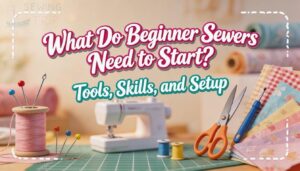
Most beginners don’t quit sewing because they lack talent. They quit because they buy a pile of random supplies, sit down at the machine, and realize they don’t know what matters yet.
A sharp pair of fabric scissors helps. So does a seam ripper, good light, and a machine that can sew a straight line without a fight.
That’s the real answer to what do beginner sewers need to start: not everything in the craft store, only the tools and habits that make learning feel manageable. Get the basics right, and your first seams come together faster, cleaner, and with far less frustration.
Table Of Contents
- Essential Tools Every Beginner Needs
- Must-Have Hand Sewing Supplies
- Beginner Sewing Machine Basics
- Needles, Thread, and Bobbins
- Fabric, Pins, and Marking Tools
- Cutting and Pressing Essentials
- Simple Sewing Workspace Setup
- Best First Projects to Try
- Basic Skills to Practice First
- Top 5 Beginner Sewing Items
- Frequently Asked Questions (FAQs)
- Conclusion
Essential Tools Every Beginner Needs
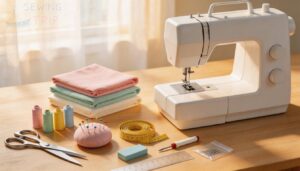
Starting out in sewing means picking up a few basics that make every project smoother.
For inspiration and step-by-step guidance, check out these beginner-friendly sewing projects that build your skills from the ground up.
The right tools help you cut, measure, and stitch with confidence.
Here’s what you’ll want close at hand before you begin.
Fabric Scissors
If you’re serious about sewing, fabric scissors are your best friend. Choosing the right scissors for fabric means looking for a sharp blade angle, ergonomic grips, and—if you want extra grip—a micro serrated edge.
Carbon steel lasts longer, but stainless is rust-resistant. Practice good sharpening techniques and keep them just for fabric.
Imagine:
- Clean, crisp cuts every time
- No fraying or snagging
- Comfortable grip for longer sessions
- Smooth slicing through woven cotton
Seam Ripper
When your stitches go sideways, a seam ripper is your rescue tool. Its sharp, curved blade slips under threads for easy seam ripping and correction.
Look for grip comfort and multi-function features—like a thread pick or brush.
For safe handling, always work away from your body and keep the blade capped.
Blade maintenance matters: keep it sharp for clean, snag-free fixes.
Measuring Tape
After fixing a seam, you’ll reach for your measuring tape next. Choose a soft pink tape measurer or a retractable black tape measurer—both offer Tape Length Options and clear Scale Readability.
Material Durability matters: fiberglass resists stretching, vinyl wipes clean. Locking Mechanisms help measurements stay put.
Tape Care? Keep it flat, avoid twists, and store away from sharp tools.
Straight Pins or Clips
Once you’ve measured, grab your sewing pins or fabric clips.
Pin Insertion Angle matters—slide pins perpendicular to seams for accuracy. Dressmaker pins work for thick layers; pretty glass heads boost Pin Head Visibility. Pin Material Choice—stainless steel resists rust.
Clip Edge Gripping is gentle on delicate fabric. Clips? No piercing, just hold.
Both are essential sewing tools for beginners.
Pin Cushion or Magnetic Holder
Even if you’re just starting, keeping your sewing pins handy is a real benefit. Pin cushions—made from cotton or felt—offer tactile feedback and easy access. Magnetic holders bring ergonomic benefits and strong magnetic strength for one‑handed pin placement.
Here’s what you’ll love:
- Cushion Materials protect pins.
- Portable Design fits any Sewing kit.
- Cleaning Care prevents rust.
- Organizing sewing supplies feels easy.
Ruler or Sewing Gauge
How do you keep your seams crisp and measurements spot-on? A sewing gauge or ruler is your secret weapon.
Stainless steel durability means it won’t bend under pressure, while acrylic visibility lets you see fabric markings clearly. Try a curved seam gauge or a clip-on ruler for tricky spots.
Gauge edge alignment matters—precision here makes your finished project look polished.
Must-Have Hand Sewing Supplies
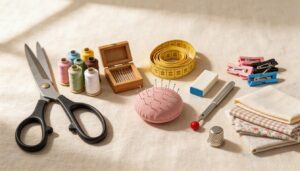
Hand sewing is where most beginners start, and having the right supplies makes everything easier.
You don’t need much to get going—just a handful of basics that cover all the essentials.
Here’s what you’ll want in your kit before you tackle your first stitches.
Hand Sewing Needles
Ever wondered why the right hand sewing needle feels like magic in your fingers? It’s all in the details—needle types, needle point shapes, needle eye design, and sturdy needle materials. Here’s what matters:
- Smooth, circular eye
- Polished shaft
- Sharp or ball point
- Nickel-plated steel
- Secure needle storage
Truly essential sewing tools for beginners.
All-purpose Thread
Think of all-purpose thread as your sewing sidekick — one that manages almost every project you’ll tackle. A poly-cotton blend gives you the best of both worlds: Fiber Composition Benefits, like strength from polyester and softness from cotton.
Thread Weight Choices, start with 40-weight — it works with most fabrics and machines. Stick to neutral colors first.
Thread Compatibility with both knits and wovens makes it truly essential.
Needle Threader
Ever tried threading a needle and felt like you needed superhero eyesight? A needle threader is your trusty shortcut. There are several types to explore in your sewing kit:
- Manual Threader—simple wire loop for easy threading
- Spring Loaded—quick reset for multiple needles
- Magnetic Guide—holds slippery threads steady
- Self Gauge—measures thread length and fits eye size compatibility
Thimble
A thimble is your armor for push sewing—protects your fingertip from needle pricks. Choose from Thimble Materials like metal, plastic, or leather; adjustable metal sewing thimble offers flexible Fit and Sizing.
Tip Design Features range from domed to textured.
For essential sewing tools for beginners, practice protective thimble use, ergonomic grips, and safe Usage Techniques.
Clean and store for Care and Maintenance.
Small Embroidery Scissors
Once your finger’s shield is in place, reach for small embroidery scissors—your go-to for snipping threads close and clean. Their stainless steel Blade Material stays sharp, while Micro Point Tips make trimming near seams a breeze. Ergonomic grips fit snugly in your hand.
Stick to a regular Maintenance Routine and store them safely—these Sewing kit essentials last for years.
Basic Hand-stitch Kit
Now, let’s talk about your basic hand-stitch kit—a real game changer for quick repairs and creative hand sewing stitches.
Whether you’re customizing your kit or keeping it budget‑friendly, focus on portable storage and eco materials.
For thread color matching and easy embroidery, here’s what you’ll want:
- Hand sewing needles (sizes 3–9)
- Needle threader
- Sewing pins
- All-purpose thread
- Compact scissors
Beginner Sewing Machine Basics
If you’re just getting started with a sewing machine, a few basics will make everything feel less intimidating. It’s helpful to know what features matter most for beginners.
Let’s walk through the essentials you’ll want to look for as you set up your first machine.
Straight Stitch and Zigzag Stitch
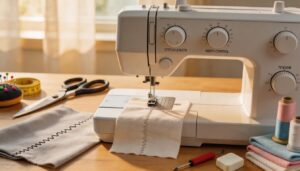
Once you’re comfortable with your machine, straight stitch and zigzag stitch quickly become your go-to basic sewing techniques for beginners. Adjust stitch length for neat seams, tweak zigzag width settings for stretchy fabrics, and balance tension for crisp lines.
These machine stitch types and settings are essential sewing tools for beginners—especially when you want clean edge finishing techniques and reliable stitch quality tips.
Easy Threading Path
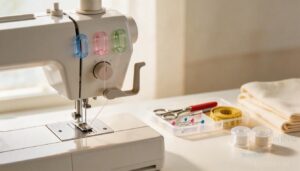
Once you’re set with your stitches, threading a sewing machine should feel straightforward—not a puzzle. Machines with color-coded guides and built-in threader levers make things simple, but keep SINGER Plastic Needle Threaders or Dritz Disc Needle Pullers handy for tricky moments.
Remember:
- Clean thread guides often to avoid snags
- Use the right spool cap for your thread
- Adjust tension before sewing
Bobbin System
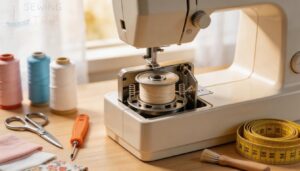
A bobbin system is the heart of threading a sewing machine—without it, your stitches won’t hold. Understanding sewing machine basics means knowing Bobbin Winding Techniques and following your Bobbin Compatibility Guide.
Keep an eye on Bobbin Tension Adjustment and Bobbin Case Maintenance. Clean thread paths and use essential sewing tools for beginners to avoid skipped stitches and snarls.
Reverse Stitch Function
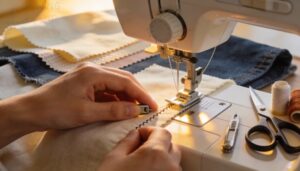
A reverse stitch function is your sewing machine’s secret handshake—locking seams so they won’t unravel. You’ll use it to backstitch at the start and end of every seam. Try these basics:
- Manual reverse: Hold the lever for control.
- Automatic reverse: Tap, let go.
- Fabric-specific reverse: Adjust stitch length for delicate or thick fabrics.
- Troubleshoot skipped or bulky stitches.
Presser Feet for Beginners
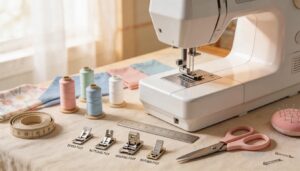
When you’re getting started, sewing machine foot selection can feel like picking tools from a mystery box. Stick with the All Purpose Foot for most seams—think of it as your trusty sidekick.
For zippers, Zipper Foot Basics reveal neat edges. Buttonhole Foot Setup makes closures easy. Walking Foot Tips help with thick layers. Invisible Zipper Foot polishes hidden zippers—essential sewing tools for beginners.
Mechanical Vs Computerized Machines
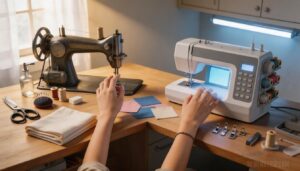
Ever wonder if you need a machine that remembers stitches or just the basics? Mechanical models rely on a belt mechanism—solid, hands-on, and predictable. Computerized machines offer Stitch Memory, Electronic Tension, and an LCD Interface. Firmware Updates add new stitches.
For beginners, choose what fits your style: simple reliability or tech-driven ease. Maintenance? Oil gears or update software—your call.
Needles, Thread, and Bobbins
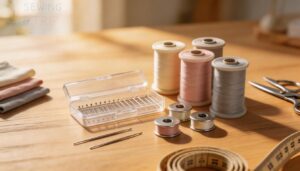
When you’re ready to sew, having the right needles, thread, and bobbins makes everything easier. These basics help your stitches stay strong and your machine run smoothly.
Here’s what you’ll want to keep handy as you start out.
Universal Needle Sizes
Did you know needle sizes speak two languages? The Needle Size Chart shows both European (60–110) and American (8–18) numbers—think of it as a passport for your sewing machine needles.
Here’s what you need to remember:
- European vs American sizing
- Needle Point Types matter for fabric
- Needle Coating Options prevent rust
- Proper needle size selection boosts stitch quality
Polyester Vs Cotton Thread
Choosing between polyester and cotton thread? Think of it as picking a running shoe or a slipper—each has its strengths.
Polyester wins for Colorfastness Comparison, Abrasion Resistance, and Moisture Management, making it a staple in sewing basics and Essential sewing tools for beginners. Cotton feels softer, offers Allergy Compatibility, and suits natural fabrics.
Your thread selection for different fabrics shapes every project.
Neutral Thread Colors
Now, let’s talk neutral thread colors—your unsung sewing sidekick. A well-chosen neutral blends right in, making seams nearly invisible.
Shade Matching Guide:
- Pick mid-tones for most fabrics (think beige, gray, taupe).
- Test visibility under daylight—sometimes a lighter thread is least visible.
- Prioritize colorfastness for lasting results.
Undertone Selection and Fabric Compatibility matter more than you’d think!
Extra Bobbins for Projects
Once you’ve nailed your neutral thread shades, extra bobbins become your secret weapon. Bobbin Color Coding saves time—grab the right shade fast.
Pre-wound Bobbin Benefits mean less fuss when switching projects. Bobbin Storage Solutions keep sewing kit accessories tidy.
For Bobbin Capacity Planning, stash a few spares. Always check Bobbin Compatibility with your sewing machine—starter sewing supplies shouldn’t trip you up.
Matching Needle to Fabric
With bobbins sorted, Needle Fabric Pairing is your next move. Needle Point Types matter—sharp for woven, ballpoint for knits. Fabric Weave Compatibility keeps stitches clean.
Specialty Needle Uses shine on leather or vinyl. Hand sewing needles and sewing machine needles come in varieties; match thread selection for different fabrics. Here’s your cheat sheet:
- Sharp for woven
- Ballpoint for knits
- Leather for tough
- Fine for delicate
When to Change a Needle
Once your needle matches your fabric, you’ll want to watch for Needle Dullness Indicators—like skipped stitches or thread fraying. Stitch Quality Signals tell you when it’s time for a swap.
For most, Time-Based Replacement means changing sewing machine needles after 8–12 hours.
Safety Before Change matters: always power off before switching.
Here’s a quick reference:
| Signal | Action |
|---|---|
| Skipped stitches | Replace needle |
| Thread fraying | Swap immediately |
| Bent or rusty needle | Discard instantly |
| Heavy seams finished | Change needle |
Fabric, Pins, and Marking Tools
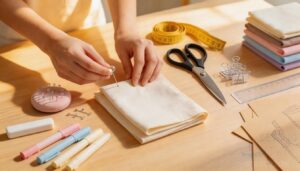
Getting your fabric ready and knowing how to mark and pin makes sewing so much easier. The right tools help you cut, stitch, and keep everything lined up as you go.
Here’s what you’ll want to have on hand before you start your first project.
Beginner-friendly Cotton Fabric
Ever wondered why cotton is the go-to for beginner sewing supplies? It’s forgiving, easy to handle, and comes in endless colors.
When choosing the right fabric for projects, stick with plain weave structures and soft handfeel characteristics. Here’s what to look for:
- Long-staple Cotton Fiber Types for smoother seams
- Bright dye compatibility for creative flair
- Essential sewing tools and supplies work perfectly
Pre-washing Fabric
Starting with fabric prep and prewash sets you up for success. Use cold to warm Wash Temperature—delicate types stick to 30°C or less. Choose a mild Detergent Choice and sort colors to avoid surprises.
Fabric Shrinkage is real, especially with cotton, so measure after drying. Air drying is safest for most fabric types for sewing. Smart fabric care means fewer headaches later.
Dressmaker Pins
A handful of dressmaker pins is like your secret weapon for fabric control.
You’ll want to know Material Types—steel or brass—and Head Styles, from round balls to flat pearls. Sharpness Levels and Length Variants matter for delicate fabrics or thick seams.
Keep your sewing pins clean and organized; it’s one of those Sewing kit essentials and organization tricks that pays off.
Fabric Clips
Why fuss with pin marks when fabric clips let you glide through sewing? With spring mechanism jaws and clip pressure that’s just right, these sewing tools grip layers without distorting fibers.
Transparent clips help you track alignment, while industrial strength options tackle denim.
Clip maintenance is easy—just wipe lint away.
They’re must-have sewing accessories for any sewing kit essentials.
| Clip Feature | Why It Matters |
|---|---|
| Spring Mechanism | Keeps grip even |
| Transparent Clips | See fabric edges |
| Industrial Strength | Holds thick layers |
| Clip Maintenance | Lasts longer |
Tailor’s Chalk
Tailor’s chalk is your go-to for fabric marking and pattern making—think crisp lines that vanish like magic. Whether you reach for dustless chalk options or classic calcium carbonate, the marks brush away easily.
Here’s what makes it essential:
- Clear chalk visibility for precise fabric measurement
- Simple chalk removal techniques—just a damp cloth
- Chalk storage tips keep your lines sharp and tools ready
Disappearing Ink Pens
Ever wish your fabric marking could vanish on cue?
Disappearing ink pens are sewing essentials for beginners—think fabric markers with ink fading speed customized to your pace. Perfect for crisp, precise lines on cotton, they’re safe, non-toxic, and refill cartridges keep you stocked.
For accurate fabric measurement and marking techniques, these pens offer material suitability and marking precision—just test first for best results.
Cutting and Pressing Essentials
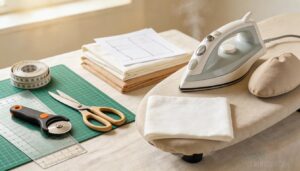
Cutting and pressing are where your sewing projects start looking polished and professional. These tools help you work neatly and keep your fabric in shape.
Here’s what you’ll want in your kit to make the process easier.
Dedicated Fabric Scissors
Although you might be tempted to grab any scissors, dedicated fabric scissors are a game changer. Stainless steel blades, micro bevel edge, and ergonomic handle design make fabric cutting techniques smoother and easier.
Blade length variants (8–12 inches) suit different projects.
Stick to fabric only—sharpness lasts longer. One sharpening tip: wipe blades clean and store them safely, always among essential sewing tools and supplies.
Small Thread Snips
Once your sewing scissors have handled the big cuts, small thread snips step in for the fine work.
Ergonomic grips and spring-loaded mechanisms make quick trims easy, even in tight spots. Their blade geometry lets you snip close without fraying.
Keep yours in a storage sheath and use the locking latch. Picture these in your kit:
- Curved ergonomic grips
- Narrow beveled blades
- Spring-loaded self-opening
- Protective locking latch
Iron for Pressing Seams
After trimming threads, it’s time to set your seams. Preheat your steam iron—don’t rush it—so the soleplate’s ready for action.
Cotton muslin makes a great pressing cloth, guarding prints and delicate finishes.
Use steady seam pressure techniques, not heavy passes.
Steam vs. dry? Steam ironing relaxes fibers, while dry keeps heat-sensitive fabrics safe.
Vertical steaming refreshes, but isn’t for seams.
Ironing Board or Pressing Surface
Now, let’s talk about your ironing board.
Look for Board Height Adjustment so you’re not hunched over—most adjust between 30 and 36 inches.
Cover Material matters: cotton or reflective aluminum manages heat well, while Padding Thickness (at least ¼ inch) gives you a smooth finish.
Stability Features, like non-slip feet, and an Integrated Sleeve Board make steam ironing truly effective.
Why Pressing Improves Results
When you press as you sew, your fabric transforms—wrinkles vanish, seams lie flat, and your project feels crisp and polished.
Press as you sew, and your fabric turns smooth, crisp, and beautifully polished
A Bartnelli Ironing Board and steam iron with adjustable thermostat control help you get that professional finish look.
Here’s what pressing brings:
- Seam Bulk Reduction for smoother lines
- Fabric Drape Enhancement with heat-set stability
- Yarn Realignment Benefits for lasting shape
Safe Cutting Habits
Even if you’re enthusiastic to dive into precision cutting and fabric preparation, don’t skip sewing safety precautions—wear Protective Eye Gear or Side Shield Goggles to block stray threads.
Keep your Sharp Scissor Maintenance routine solid and work in a Clutter-Free Cutting Area.
Use Finger Guard Use for close cuts.
These safety features for tools protect your hands and keep your workspace stress-free.
Simple Sewing Workspace Setup
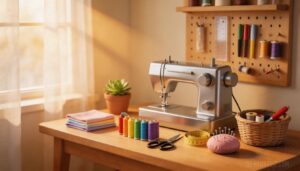
Creating a sewing space doesn’t have to be fancy or complicated. You just need a spot that feels comfortable and keeps your tools within easy reach.
Here’s what to look for when setting up your own workspace.
Stable Table or Desk
Think your kitchen table will do?
You’ll want a stable desk with a reinforced worktop and leveling feet for sewing workspace ergonomics and safety. Table height adjustability keeps your wrists happy, especially during marathon sessions.
Locking casters prevent unwanted movement, while a cable management system helps tame cords.
Organizing sewing supplies and storage solutions nearby means less scrambling, more creating in your home sewing workspace.
Good Lighting
Ever noticed how fabric colors shift under different bulbs? That’s why your home sewing workspace needs both ambient light levels (300–600 lumens) and focused task lighting placement (400–800 lumens).
Choose neutral white LEDs for true color temperature choice. Diffused light helps with glare management and sewing safety. LEDs also offer energy savings—perfect for workspace ergonomics in your organized sewing studio.
Comfortable Chair
Want to sew longer without aches? Your chair matters.
Look for Ergonomic Seat Height so your feet rest flat, Adjustable Lumbar Support for your back, Swivel Base Stability to move easily, and Breathable Upholstery Fabric with Memory Foam Cushion for comfort.
These features boost sewing safety and workspace ergonomics—making your home sewing studio feel inviting and your posture stay happy.
Storage for Tools and Notions
Is your workspace feeling cluttered?
Organizing a sewing workspace starts with clear drawer dividers for pins and rulers, magnetic tool strips for scissors, and stackable acrylic organizers to make the most of space. Labelled plastic bins make craft supplies organization easy—no more hunting for notions.
Roll-up pouches and a sewing basket keep sewing kit accessories portable.
Sewing cabinets help everything stay tidy, ready, and within reach.
Keeping Fabric Organized
Once your tools are sorted, fabric needs its own system.
Color-coded bins and labeling tags cut search time in half. Roll storage racks keep bolts neat, while the folded stack method in sewing cabinets prevents shifting.
For quick checks, digital inventory lets you track yardage and content. Add a sewing basket for scraps and:
- Uniform bins for fabric families
- Name tags with care instructions
- Master list for location and type
Small-space Sewing Setup Tips
Once your fabric’s sorted, it’s time to make every inch count.
A Wall-mounted Pegboard keeps scissors and rulers right at your fingertips. Rolling Storage Cart—Perfect for stashing thread and notions.
Slip a Magnetic Tool Strip along your table’s edge, and tidy up cords with a Cable Clip System.
Compact Cutting Mat fits snugly—no need for a sprawling home sewing room.
Best First Projects to Try
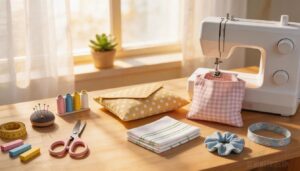
Starting out, it helps to pick projects that are simple, useful, and boost your confidence.
You’ll find plenty of options that don’t require fancy skills or tools.
Here are a few beginner-friendly ideas you can try right away.
Pillow Cover
If you’re dipping your toes into DIY home décor sewing projects, pillow covers are a classic first step. With clear size standards—like 18×18 inch covers for square inserts—you’ll find sewing patterns for beginners everywhere.
Try envelope or zipper closure options. Use cotton canvas or linen for easy care instructions.
Decorative stitching adds flair. Basic sewing tools and sewing essentials for beginners keep things simple.
Tote Bag
Next up: tote bags.
You’ll get a taste for Material Choice—canvas, cotton, or linen are sturdy favorites. Play with Closure Types like zippers or snaps, and experiment with Handle Design for shoulder comfort.
Construction Details matter: boxed corners and reinforced grips boost durability.
Follow Care Instructions—gentle wash, air dry.
Tote bags are classic DIY sewing projects, perfect for sewing patterns for beginners.
Fabric Bunting
A fabric bunting is one of those DIY sewing projects that instantly lifts your space. Pennant shapes—triangles or rectangles—let you play with color coordination for seasonal themes.
Use string materials or bias tape finishing for durability. With a sewing machine and basic sewing tools, you’ll stitch each piece together.
Beginner sewing tips? Create a simple sewing workspace and prewash your fabric.
Simple Zipper Pouch
Even if you’re just dipping your toes into DIY sewing project ideas, a simple zipper pouch makes a satisfying win. You’ll practice basic sewing skills—like attaching zipper tape types and choosing interfacing choices for structure.
Pick lining fabric options that hide seams, and play with pocket capacity planning. Use your sewing machine, thread, and sewing needles to explore neat seam finishes.
Cloth Napkins
Napkins are a canvas for creativity—think Napkin Shapes, Thread Count, Monogramming Ideas, and Seasonal Designs.
Choose cotton for easy care tips and crisp folds.
With basic sewing supplies, your sewing machine, and simple sewing patterns for beginners, you’ll master fabric selection and straight seams. Try these steps:
- Cut squares
- Hem edges
- Add monogram
- Press for finish
Scrunchies or Key Fobs
Ever wondered how a simple scrunchie or key fob can teach you so much?
Play with elastic width for holding, pick hardware options like split rings or lobster clasps, and experiment with color palettes and decoration techniques.
Use your sewing machine or hand stitches. Durable fabric, strong thread, and basic sewing tools make these projects last—and let your creativity shine.
Basic Skills to Practice First
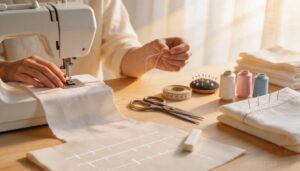
When you’re just starting out, a few basic sewing skills make everything feel less intimidating. These simple steps help you build confidence and get comfortable with your tools.
Here’s what you’ll want to practice first.
Threading a Needle
Threading a needle feels like threading a tiny maze—especially when you’re starting out. Needle Eye Alignment matters: make sure the thread slides in smoothly, not forced. For easy Thread Slip Prevention, use a needle threader from your sewing kit accessories.
Try Left-Handed Threading if you’re right-handed. Choose the right Thread Material Choice, adjust Tension Adjustment, and your hand needles will cooperate.
Threading a Sewing Machine
Think of your sewing machine as a tiny orchestra—each part must play in tune.
Start by threading the upper thread through the guides, tension dial, and take-up lever at its highest position. Drop the bobbin into its case, following the bobbin thread guide. Double-check needle insertion and use a needle threader if needed. Adjust upper thread tension for smooth stitches.
Sewing Straight Seams
Once your machine’s threaded, it’s time to sew straight seams. Line up your fabric edges with the correct seam allowance selection—usually 5/8 inch for most projects.
Use your pinning strategy, placing pins perpendicular every few inches. Set your stitch length adjustment around 2.5 mm, check tension balancing, and guide fabric gently. Press and finish seam edges for a polished look.
Backstitching Starts and Ends
Once you’ve nailed straight seams, let’s talk about backstitching starts and ends. Needle Entry Control matters—keep your needle down before you hit the Reverse Stitch Anchor.
For Tension Consistency, use 1–2 stitches to lock things tight. Trim Thread Ends for a clean look, and finish the seam edge so nothing unravels.
- Needle Entry Control
- Reverse Stitch Anchor
- Tension Consistency
- Trim Thread Ends
Practicing on Scrap Fabric
Once you’ve locked those seams, it’s time to play with scrap fabric. Grab small cotton pieces—nothing fancy, just what’s handy. Use them for Stitch Length Consistency, Tension Adjustment Tests, Edge Finish Experiments, and Color Transfer Checks.
Keep a Scrap Storage System close. This is where basic sewing tools and basic sewing skills meet budget sewing and DIY fashion projects.
| Practice Focus | What to Watch For | Handy Tip |
|---|---|---|
| Stitch Length Consistency | Even lines, no skipping | Use marked lines on scraps |
| Tension Adjustment Tests | No puckering or loops | Adjust dial, test again |
| Edge Finish Experiments | Fray control | Try zigzag or pinking |
| Color Transfer Checks | No dye bleeding | Iron scraps before use |
| Scrap Storage System | Easy access, tidy space | Label by fabric type |
Top 5 Beginner Sewing Items
If you’re wondering what to grab first for your sewing toolkit, you’re in the right spot. These five beginner items make starting out a whole lot easier.
Let’s take a look at what should be on your table.
1. Brother SE400 Sewing and Embroidery Machine
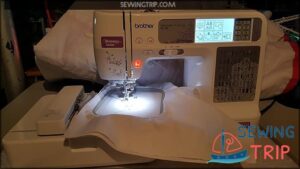
Ever wished your sewing could jump from simple stitches to custom monograms in a snap? The Brother SE400 makes it happen.
You get 67 sewing stitches, 70 embroidery designs, and five fonts—all on a backlit touchscreen.
Setup’s easy thanks to automatic threading and a drop-in bobbin. USB connectivity lets you import new designs, so you’re not stuck with basics.
The 4×4-inch embroidery hoop suits most beginner projects, and the built-in tutorials guide you step by step.
It’s confidence in a box.
| Best For | Beginners and hobbyists who want an easy way to sew, embroider, and personalize projects at home. |
|---|---|
| Brand | Brother |
| Color | White |
| Material | Metal housing |
| Warranty | 25-year limited |
| Intended Use | Sewing/embroidery |
| Portability | Portable |
| Additional Features |
|
- Automatic needle threader and on-screen tutorials make setup simple.
- USB port lets you import custom embroidery designs.
- Wide accessory set covers most sewing and embroidery needs right out of the box.
- 4×4-inch hoop limits larger embroidery projects.
- Editing and combining designs requires separate software.
- Occasional bobbin or needle issues may need service or troubleshooting.
2. Singer Regular Point Sewing Needles
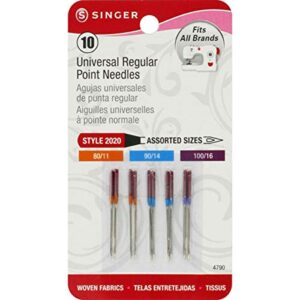
Needles are the unsung heroes of sewing. Singer Regular Point Sewing Needles come color-coded for quick size checks, packed in a sturdy case—so you won’t lose them in the chaos.
You get three sizes, covering lightweight to heavyweight woven fabrics. Compatible with most machines, these needles keep your stitches neat and your confidence high.
If a needle snaps mid-project, just pop in a fresh one from the pack. Simple, reliable, and ready for everything from repairs to quilting.
| Best For | Home sewers who need reliable, easy-to-identify needles for everyday projects on woven fabrics. |
|---|---|
| Brand | Singer |
| Color | Multi-color |
| Material | Metal |
| Warranty | None listed |
| Intended Use | Sewing |
| Portability | Compact case |
| Additional Features |
|
- Color-coded tips make picking the right size fast and easy.
- Works with most domestic sewing machines like Singer and Brother.
- Comes in a sturdy case that keeps needles organized and protected.
- Not suitable for knits, stretch fabrics, or heavy materials like leather.
- Only includes three standard sizes, limiting options for specialized tasks.
- Occasional reports of needles breaking early or missing from the pack.
3. Fiskars Orange Handled Stainless Scissors
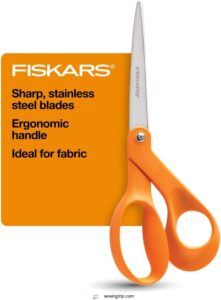
Let me tell you: Fiskars Orange Handled Stainless Scissors are your fabric-cutting MVP. Their sharp, precision-ground blades glide cleanly through cotton, felt, or even paper—no snagging, just crisp edges.
That bent handle keeps your material flat, so you won’t slip up mid-cut. The iconic orange grip? Easy to spot in a busy sewing space and comfy for longer sessions.
Sure, they cost a bit more, but you’re getting reliability and control—two things you’ll appreciate with every project.
| Best For | Crafters, quilters, and anyone who needs reliable, precise scissors for fabric, paper, and creative projects. |
|---|---|
| Brand | Fiskars |
| Color | Orange |
| Material | Stainless Steel |
| Warranty | Lifetime |
| Intended Use | Fabric cutting |
| Portability | Handheld |
| Additional Features |
|
- Sharp, high-quality stainless steel blades cut cleanly through various materials.
- Ergonomic, bent handle design offers comfort and keeps fabric flat for accuracy.
- Iconic orange color makes them easy to find in your workspace.
- More expensive than many other scissors.
- Requires occasional cleaning to maintain sharpness.
- Handle design may not suit left-handed users.
4. Fiskars Premier Micro Tip Fabric Scissors
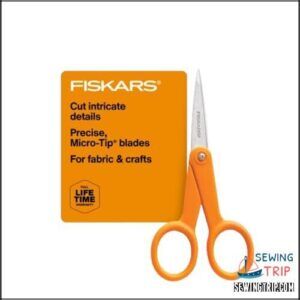
Here’s a secret weapon for detail work: Fiskars Premium Micro Tip Fabric Scissors. Their sharp, micro-tip blades reach right into tight corners—think trimming applique edges or snipping threads at the base without fraying your fabric.
The ambidextrous handle fits comfortably, whether you’re left- or right-handed, and the lightweight feel won’t tire your hand out. At $15.99, they’re an investment, but you’ll notice the difference the first time you cut a tricky curve or tidy up a seam allowance.
| Best For | Sewists and quilters who need precise, comfortable scissors for detailed fabric work and tight corners. |
|---|---|
| Brand | Fiskars |
| Color | Orange |
| Material | Stainless Steel |
| Warranty | Lifetime |
| Intended Use | Thread trimming |
| Portability | Handheld |
| Additional Features |
|
- Micro-tip blades make it easy to snip threads and trim small, intricate patterns.
- Ambidextrous handle is comfortable for both right- and left-handed users.
- Lightweight design helps reduce hand fatigue during long crafting sessions.
- Small size isn’t ideal for cutting through thick or multiple layers of fabric.
- Fine tip can be damaged if used on hard or inappropriate materials.
- Thumb holes may feel tight for users with larger fingers.
5. Dritz Disappearing Ink Pen
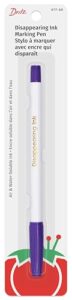
Think you’ll never mark a seam wrong again? The Dritz Disappearing Ink Pen makes it possible.
Its fine tip draws crisp, visible lines that fade away on their own—or vanish instantly with a bit of water. That purple ink stands out on most fabrics, so you can trace patterns or stitch guides without worrying about permanent marks.
Just remember: marks fade fast, so start sewing soon after marking. It’s a real asset for beginners who want clean, confident results every time.
| Best For | Anyone who needs to mark temporary lines on washable fabrics for sewing, quilting, or other needlecraft projects. |
|---|---|
| Brand | Dritz |
| Color | Purple |
| Material | Brass |
| Warranty | None listed |
| Intended Use | Fabric marking |
| Portability | Handheld |
| Additional Features |
|
- Fine tip lets you draw precise, detailed lines.
- Ink disappears on its own or wipes away easily with water.
- No harsh chemicals needed for cleanup.
- Marks fade quickly, so you need to sew soon after marking.
- Not ideal for dry-clean-only or special-finish fabrics.
- Can be hard to see on dark, red, or pink fabrics.
Frequently Asked Questions (FAQs)
What do you need to start sewing for beginners?
Starting out is like packing for a road trip—you need fabric scissors that cut cleanly, a sharp seam ripper, a measuring tape, straight pins or clips, and a pin cushion.
These basics make sewing feel manageable and rewarding.
Where can I find beginner sewing supplies?
You’ll find beginner sewing supplies at local craft stores, big chain retailers with sewing aisles, independent quilt shops, and online marketplaces.
Manufacturer websites also offer starter kits—great for comparing bundles, reading reviews, and seeing photos before you buy.
A key feature to look for is a built-in needle threader.
How do you plan a sewer system?
Planning a sewer system means mapping how stormwater and wastewater will flow, sizing pipes for future growth, separating sanitary and storm sewers, minimizing disruption, and ensuring easy maintenance.
It’s a careful balance of design, codes, and long-term needs.
What are some easy sewing projects to start with?
Pillow covers, tote bags, fabric bunting, simple zipper pouches, and cloth napkins are all easy projects.
Each uses basic shapes and straight seams—perfect for getting comfortable with your sewing machine and building confidence right away.
What to make for beginner sewers?
You might try making a simple tote bag from sturdy cotton, a cheerful fabric bunting, or cloth napkins with neat hems.
Zipper pouches and envelope-style pillow covers are also great—just straight seams and practical practice.
What is the best material for beginner sewers?
Think of cotton as your training wheels—it’s stable, easy to handle, and forgiving. Choose 100% cotton or cotton blends with tight weaves like broadcloth or cambric.
Prewash to prevent shrinkage, and press before cutting for accuracy.
How do I choose the right fabric type?
Choosing fabric starts with your project’s needs. Cotton is forgiving—easy to sew, soft, and comes in endless patterns.
For stretch or durability, blends like cotton-poly work well. Always pre-wash to avoid shrinking surprises later.
What’s the best way to store sewing supplies?
Stack clear bins for fabric, threads, and notions—label each for quick access. Store needles and pins in magnetic holders, and organize fabric by type and weight.
Keep frequently used tools on a shallow tray or pegboard near your workspace.
How can I find free sewing patterns online?
If you’re itching for inspiration, free sewing patterns are a breeze to find—try Mood Fabrics, BurdaStyle, or AllFreeSewing. Just click, download the PDF, and print at home—no payment or fancy hoops to jump through.
Check out the extensive collection of free modern sewing patterns for a variety of styles.
How do I troubleshoot common sewing machine issues?
If your machine skips stitches or threads break, check if the needle matches your fabric and is seated properly.
Uneven stitches? Adjust tension.
Bird’s nests underneath? Rethread both top and bobbin.
Clean out lint to prevent jams.
Conclusion
Think of sewing as planting a garden—you don’t need every seed in the store, just the right ones for your patch of earth. With the tools, setup, and basic skills covered here, you’ll know exactly what beginner sewers need to start.
Each stitch is a step, and every project grows your confidence. Keep your workspace simple, your habits steady, and your curiosity alive. Before you know it, you’ll be sewing pieces that feel uniquely yours.
- https://www.bhf.org.uk/what-we-do/news-from-the-bhf/news-archive/2017/june/bhf-exposes-uk-sewing-skills-shortage-to-launch-the-big-stitch-camapaign
- https://www.pinterest.com/crazylittleproj/things-to-sew/
- https://www.textileschool.com/articles/330/type-of-fabrics
- https://sizzlestitch.com/best-sewing-tools-notions-and-equipment/
- https://www.moodfabrics.com/blog/free-sewing-patterns/