This site is supported by our readers. We may earn a commission, at no cost to you, if you purchase through links.
That fabric scrap pile isn’t clutter — it’s a mini wall hanging waiting to happen! Grab a few 5-inch squares and a walking foot, and you’ve got a project ready before your coffee gets cold.
That’s the magic of sewing projects for quilting: some come together in an afternoon, others grow into heirlooms you’ll pass down. Whether you’re stitching your first four-patch block or dreaming up a trapunto masterpiece, there’s a project sized just for your skill level.
Ready to find yours? Grab your rotary cutter — let’s get you piecing like a pro.
Table Of Contents
Key Takeaways
- Quilting projects scale from quick, beginner-friendly wins like mug rugs and four-patch blocks to advanced heirloom techniques like trapunto and free-motion quilting, so there’s an entry point for every skill level.
- Choosing quality quilting cotton—checking thread count, pre-washing, and testing colorfastness—prevents shrinkage and dye bleeding that can ruin a finished project.
- Mastering core tools and techniques, like the walking foot for straight lines and the half-square triangle for pattern variety, builds the foundation for more complex designs.
- Success in quilting comes down to precision basics—a scant quarter-inch seam allowance, careful pressing, and upfront planning—more than speed or fancy equipment.
Quilting Project Ideas for Every Skill Level
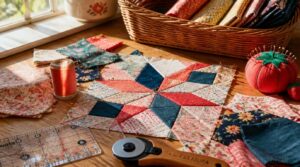
New to quilting or been at it for years? Either way, there’s a project here calling your name. Grab your favorite fabric scraps, because these ideas are about to get you excited to sew.
From cozy throw pillows to charming table runners, these creative sewing projects for home decor show just how far a handful of fabric scraps can go.
Small Quilting Projects for Home Decor
Ready to give your walls some love? Small quilting projects turn blank spaces into cozy corners fast.
Try quilted pillow covers, mini wall hangings (hang ’em with clips or hangers!), or a mini runner pattern for your table. Mug rugs use up scrap fabric beautifully—waste not!
You can also create decorative wall hangings by using wooden dowels for stable display.
Mix in seasonal decor themes for holiday flair, and watch scrap fabric utilization become your secret superpower. Small quilting, big personality. You’ve got this!
Quilting Gift Ideas for Special Occasions
Nothing beats a handmade gift that says "I made this just for you."
For weddings, try a double wedding ring design with embroidered names and dates.
Baby showers? Signature memory quilts let guests sign squares instead of a card.
Add custom embroidery, photo accents, or quilted gift tags for that personal touch.
Come Christmas, quilted holiday ornaments and stockings round out your DIY sewing gifts perfectly!
Quilting Projects for Kitchen and Dining
Wedding quilts and baby memory squares are sweet, but your kitchen deserves love too! Cozy up mealtime with these:
- Table Runners using scrappy strip construction for a charming, patchwork look.
- Placemats in patchwork or picnic styles.
- Potholders and a casserole hot pad for safe serving.
- Mug Rugs for coffee breaks.
- Cloth Napkins to finish the table!
Seasonal and Holiday Quilting Projects
Table napkins had their moment—now let’s deck the halls! Holiday sewing projects turn scraps into cheer: quilted stockings, a cozy tree skirt, or gift tags stitched in minutes.
Skip traditional red-and-green—try bubble-gum pink, turquoise, or eco-friendly holiday fabrics like organic cotton for guilt-free giving. Multi-seasonal patterns (think blue "garlands" or non-orange "picnic" prints) work year-round!
| Project | Season | Skill Level |
|---|---|---|
| Quilted Stockings | Winter | Beginner |
| Christmas Tree Skirt | Winter | Beginner-Advanced |
| Gift Tags | Any Holiday | Beginner |
You’ve got this—stitch smart, stitch sustainably!
If you want more scrap-friendly projects like this, check out these easy traditional quilt block patterns for your next stash-busting session.
Quick Projects Using Fabric Scraps
Staring at that scrap bin? Turn chaos into cash-worth crafts! Try these:
- Mug rug creation for cute coasters
- Fabric bookmark sewing for gifts
- Bowl cozy utility for hot dishes
Don’t forget scrap basket organization or a quick pencil case assembly—both are small quilting projects that pack big charm. Scrap busting has never felt this satisfying. You’ve got this!
Easy Sewing Projects for Beginner Quilters
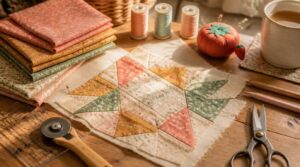
New to quilting? You’re in the right spot! These beginner-friendly projects build your skills one step at a time, no overwhelm allowed. Grab your fabric and let’s get you started with these easy wins.
Simple Patchwork Squares and Blocks
Ready to piece your very first quilt block? The four-patch is your best friend here—just four squares in a 2×2 grid! Pick 3.5-inch or 5-inch squares (charm packs work great), then try strip piecing to save time and cut down on seams.
Press seams toward the center. Simple, satisfying, and totally doable. You’ve got this!
Basic Straight-Line Quilting Practice
Grab your walking foot—it’s a total lifesaver! Set stitch length to 2.5-3mm and pick thread matching your lightest fabric (skip black, it looks kinda medicinal).
Before stitching, baste well: pin every 4 inches, smooth out bunching, and iron everything flat first. Start at the quilt’s center, following a seam line as your guide. Straight lines, steady pace—stitch accuracy comes with practice!
Beginner-Friendly Quilt Block Patterns
Four patch blocks are your best friend when starting out—easy, fast, and endlessly customizable!
- Use 2.5-inch squares for a 4.5-inch finished block
- Try strip piecing to whip up several blocks at once
- Mix precut fabrics for instant contrast
- Arrange in a checkerboard for classic charm
Free beginner patterns online make this even easier. You’ve got this!
Essential Tools for New Quilters
Ready to gear up? You don’t need a mountain of gadgets—just the right basics.
Start with a 45mm rotary cutter and self-healing mat, plus fabric scissors for precision. Add glass head pins, acrylic rulers for measuring accuracy, and a quarter-inch foot for your machine. Use 80/12 needles for piecing. Grab an iron (no steam!) for pressing. These sewing notions turn beginner fumbles into confident, precise stitches. You’ve got this!
Quilting Cotton Fabric Basics for Quilters
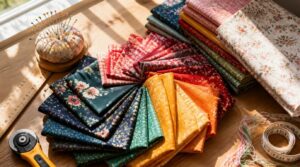
Ready to get familiar with your fabric’s best friend? Quilting cotton is the go-to choice for a reason, and knowing why makes every project easier. Let’s break down what makes this fabric tick, from its basic properties to prepping it right.
Properties of Quilting Cotton Fabric
Ever wonder why quilting cotton feels so right under your fingers? It’s all in the build. Plain weave locks warp and weft at tight angles, so both sides look the same and edges resist fraying like champs.
Thread count (often 60-200+) affects smoothness and print clarity. Good fabric weight—around 4 oz/yd²—adds structure without stiffness. Always pre-wash: it stops shrinkage and dye bleeding before they wreck your project!
Best Uses of Quilting Cotton in Quilts
Every part of a quilt can use quilting cotton, from top to backing to binding. Its minimal shrinkage keeps seams neat, and its smooth surface glides through your machine like butter. Bold prints hold their color for binding pop, while value contrast between light and dark pieces makes your patchwork sing. It’s a one-fabric wonder for quilt making!
Choosing The Right Quilting Cotton
Check thread count first—aim for 68×68 or higher, so your seams stay tight and fray-free. Look for long-staple fibers like Pima; they’re smoother and shed less lint.
Grab fat quarters to test colorfastness before committing to yardage. Red and indigo run easiest, so don’t skip this step!
Pick a medium weight (4-4.5 oz) for balanced drape.
Prepping Fabric Before Piecing
Got your fabric picked out? Good—now let’s prep it right.
Pre-washing removes dust and residue, though some quilters skip it for that crinkly quilt look later. Loose weaves fray more when washed, so precuts often stay dry.
Warm the fabric, apply light starch like Best Press, then press again to set it. This stabilizes fibers, cuts fraying, and makes cutting way easier!
Easy Quilting Patterns and Step-by-Step Tutorials
Ready to turn fabric and thread into something real? These patterns break every step down so you always know what’s next. Grab your rotary cutter, because it’s time to start piecing!
Free Quilting Patterns for Beginners
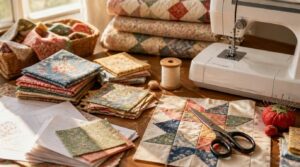
Free patterns are your best friend right now, and there’s zero shame in that game!
Fat Quarter Shop organizes hundreds of free PDFs by Beginner, Intermediate, and Expert, plus precut type—so jelly rolls and charm packs match instantly. SewCanShe rates 45 patterns beginner-friendly, and Jordan Fabrics’ YouTube channel walks you through it step-by-step. Try Suzy Quilts’ Rocksteady or a themed collection like Holiday Tidings. Download, print, thread your bobbin, go!
Step-by-Step Piecing Tutorials
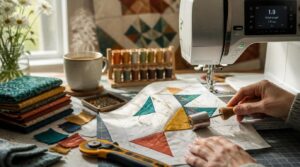
Ready to actually sew instead of just admiring patterns? Foundation paper piecing is where quilt block construction gets fun. Number your pieces, keep stitch length around 1.9mm, and press seams open with a roller.
- Confidence grows with each clean seam
- Pride kicks in when blocks match perfectly
- Calm settles in once your workspace is organized
- Excitement builds as patterns take shape
You’ve got this!
Half-Square Triangle Patterns Explained
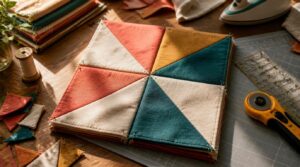
Two little triangles, endless design power! Master the half-square triangle (HST) and you can make pinwheels, chevrons, and classic Ohio Star blocks.
Cutting math is simple: finished size + 7/8-inch = your square size. Try the two-up method for speed, or split HST for zero trimming.
Watch print orientation—directional fabrics can create fun opposing stripes!
Quilt-As-You-Go Project Tutorials
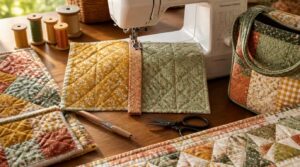
Quilting sections separately, then joining them? That’s the magic of QAYG! Quilt each block first, trim to match, then use the strip and flip method for smooth joins. A walking foot keeps stitching accurate. Choose natural batting to avoid melting.
Try the Sophie Bag or a table runner—both manage bulk beautifully and prove small quilting projects can pack big style!
Advanced Quilting Techniques and Project Ideas
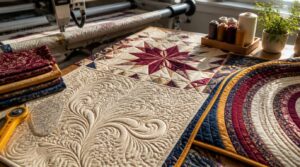
Ready to level up? These techniques take your quilting from "nice job" to "wow, you made that?!" Grab your machine (or find a longarm buddy) and let’s check out five ways to add some serious skill to your next project.
Free-Motion Quilting Methods
Drop the feed dogs and suddenly you’re the boss of every stitch! Free-motion quilting uses a darning foot, letting you doodle stippling, swirls, and feathers freehand.
- Keep speed at half-max for control
- Aim for 8-12 stitches per inch
- Move fabric smoothly, not the machine
Breathe steady, relax those shoulders—tension shows up in your stitches. Practice with feed dogs up first!
Walking Foot Quilting Techniques
Feed dogs up, ruler out—now you’re playing it straight! A walking foot moves top and bottom fabric together, perfect for crisp lines.
Try cross hatch grids, chevron designs, or echo quilting around shapes. Attach a guide bar for evenly spaced rows.
Space lines 1-3 inches apart—wider spacing quilts faster! Templates help trace flowers or waves. You’ve got this!
Trapunto and Dimensional Quilting
Ever wonder how quilts get that puffy, sculpted look? That’s trapunto, a stuffing technique dating back to 15th-century Italy!
Trapunto gives quilts that puffy, sculpted look through a stuffing technique dating back to 15th-century Italy
Machine trapunto skips hand-stitching—just use water-soluble thread, add extra batting behind your motif, then trim close to the stitch line.
Want an ethereal look? Try shadow trapunto with sheer organza on top. Mix fabric layers, add stuffing, and watch your quilt pop with dimension!
Longarm Machines and Quilt Frames
Ready to level up your machine quilting game? A longarm turns your quilt top into a masterpiece, fast!
- Stitch regulation keeps stitches even, no matter your speed
- Frame sizes run 5 to 12 feet for any project
- Extended throat space (15-24") fits bigger patterns
- Aluminum frames stay lightweight and rust-free
You’ve got this!
Quilting Software for Pattern Design
Not a machine person? No problem! Quilting software makes pattern making a breeze.
Try EQ8 for custom block creation from 1,100+ blocks. Want to see fabric before cutting? PatternJam and Quiltster offer digital fabric visualization.
PreQuilt brings cloud design collaboration plus automated yardage calculation. Bonus: EQ8 pairs with AccuQuilt for smooth cutting machine connection.
Your next quilt patterns start on screen!
Frequently Asked Questions (FAQs)
What is the basic rule of quilting?
Your basic rule: keep that seam allowance a precise scant 1/4 inch, every time.
Consistency lets pieces nest properly and your quilt top lie flat. Press consistently, match seams carefully, and cut accurately—precision beats speed in piecing together!
What do quilters call unfinished projects?
Like a closet stuffed with good intentions, quilting has a name for those projects: UFOs, or Unfinished Objects! Some quilters even call them PHDs ("Projects Half Done"). Either way, don’t stress—every quilter’s got a stash!
What is the most popular quilt pattern of all time?
The Double Wedding Ring takes the crown! Born in 1928, it exploded through the ’20s-’30s. Those interlocking circles symbolize commitment, making it THE go-to wedding gift pattern—still topping bestseller lists today. Talk about staying power!
What is the first thing quilters do to begin a project?
Funny thing—quilters don’t start with a needle at all. They start with planning! Pick your size, colors, and pattern, prewash your quilting cotton, then gather a full materials checklist before that rotary cutter touches a single precut bundle.
How to repair a damaged quilt section?
A ripped quilt tells a story, not a sob story! Cut a patch an inch bigger than the hole, whip stitch it in place, and work it into your design. Quilt surgery, done with love.
What tools help with precise quilting lines?
Want laser-straight lines every time? Try water-soluble markers or chalk for marking, a precision ruler for accuracy, and a walking foot to grip layers evenly.
Laser alignment tools and adjustable guide bars? Total game-changers for confident stitching!
How to store and protect finished quilts?
Imagine this: you spend a rainy weekend piecing a quilt, then toss it in a plastic bin and forget it. Don’t! Fold loosely with acid-free tissue, store in breathable cotton, keep cool and dry, and refold every six months.
Tips for joining quilt-as-you-go blocks?
Trim batting flush, align seams tight, then join with a zigzag stitch or ladder stitch over the edges. Prep backing 1 inch larger for a clean self-binding finish—no extra strips needed!
How to clean and maintain old quilts?
Grandma’s grand old quilt got you nervous? Test colorfastness first with a wet cloth. Hand wash gently in cold water, air dry flat, then store folded with acid-free tissue—easy textile preservation for treasured heirlooms!
How much fabric do I need for a quilt?
It comes down to math: add Block Yardage, Backing Calculations, Binding Strip Math, and Border Yardage together. Standard quilting cotton runs 40–44 inches wide, so measure your quilt top, patchwork pieces, and fabric scraps carefully before buying!
Conclusion
Quilters spend an average of 100 hours hand-stitching a full-size heirloom quilt—yet your very first project can come together in one cozy evening. That’s the charm behind sewing projects for quilting: every skill level gets a real starting point.
Small squares teach big lessons. Scraps become treasures. Your walking foot becomes your best friend.
Don’t wait for "perfect" fabric or "someday" time. Thread that needle, trust your hands, and start stitching your story today!
- https://www.conoverquilt.com/module/news/13404/stitch-happens-why-fabric-sewing-and-quilting-are-taking-over-crafting-in-2025
- https://blog.sewingboutique.com/quilting-trends-2025-walking-foot-vs.-free-motion-the-colors-inspiring-todays-stitchers
- https://sewcanshe.com/the-24-most-popular-free-sewing-patterns-from-2024
- https://likesew.com/blog/quilting-trends
- https://www.polkadotchair.com/12-quilted-projects-to-make-that-arent-quilts