This site is supported by our readers. We may earn a commission, at no cost to you, if you purchase through links.
Most embroidery problems aren’t thread problems—they’re needle problems. A slightly too-small eye creates friction that shreds delicate metallic thread before it reaches the fabric. A needle one size too large leaves visible holes in silk. These aren’t dramatic failures; they’re quiet mismatches that accumulate into frustrating, unpredictable results.
Needle sizing adds another layer of confusion because hand and machine systems work in opposite directions. A size 1 hand needle is the thickest; a size 1 machine needle is the finest. Mix up that logic once, and your whole project suffers.
This embroidery needle thread compatibility chart cuts through the guesswork—matching thread weight, fabric type, and eye size to the right needle, every time.
Table Of Contents
Key Takeaways
- Hand and machine needles count in opposite directions—size 1 is thickest for hand needles, but finest for machine needles, so mixing up that logic wrecks your whole project.
- Your needle’s eye should be about 40% wider than your thread diameter—too tight frays the thread, too loose causes skipped stitches.
- Match needle size to both thread weight and fabric type: fine 60 wt thread needs a 65/9, standard 40 wt uses a 75/11, and heavy 30 wt or thicker jumps to a 90/14 or beyond.
- Replace your needle after 6–8 hours of stitching or at the first sign of burrs, bent tips, or rough threading—a dull needle is the quietest way to ruin clean embroidery.
Embroidery Needle Size Chart Basics
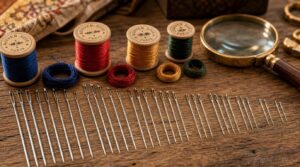
Needle sizing isn’t complicated once you know the logic behind the numbers. The system looks different depending on whether you’re working by hand or by machine — and knowing which is which saves a lot of frustration.
Once you understand how hand and machine sewing needles actually differ, the sizing logic starts to click into place naturally.
Here’s what you need to understand before matching any needle to your thread.
Hand Needle Numbering Vs. Machine Needle Sizing
Here’s the thing most beginners miss: hand needles and machine needles count in opposite directions.
With hand needles — a numbering history rooted in wire gauge logic — size 1 is the thickest and size 12 is the finest.
Machine needles flip that.
A 90/14 is larger than a 70/10.
That diameter perception difference is a leading user error source.
| Feature | Hand Needles | Machine Needles |
|---|---|---|
| Size 1/60 | Thickest | Finest |
| Size 12/120 | Finest | Thickest |
| Sizing logic | Inverse | Direct |
| Stitch density effect | Manual control | Speed-dependent |
| Auto-threading limits | Not applicable | Eye geometry-dependent |
Understanding needle size charts and inverse relationships between these two systems keeps your work accurate.
Choosing the correct needle size for fabric weight prevents damage, as detailed in the needle sizing systems guide(https://www.magnetichoop.com/blogs/news/ultimate-needle-size-chart-guide-for-machine-embroidery-success).
US, UK, and Metric Conversion Rules
Three sizing systems — US size, UK size, and metric — all measure the same needle differently. Like an inch‑millimeter conversion (1 inch = 25.4 mm), needle size conversion between metric and American systems uses shaft diameter as the common anchor.
| System | Size Example |
|---|---|
| Metric US Size | 0.75 mm |
| US Size | 75/11 |
| UK Size | Inverse scale |
| Metric Range | 0.6–1.0 mm |
| Conversion Key | Shank diameter |
Always match by metric diameter first.
Why Needle Eye Size Matters for Thread Flow
Sizing the eye right is everything. The eye should be about 40% wider than your thread diameter — that’s your clearance ratio. Too tight and you get thread fraying and heat buildup from friction. Too loose and thread tension suffers, causing skipped stitches.
The needle eye must be 40% wider than your thread — too tight frays, too loose skips
| Eye Size | Thread Diameter | Result |
|---|---|---|
| Too small | Larger than eye | Fraying, shredding |
| Balanced | 40% clearance | Smooth stitch consistency |
| Too large | Much smaller | Loose tension, skips |
Eye shape impact matters too — oval eyes reduce bending stress on thread.
For a deeper look at how eye shape affects your stitching, choosing the right needle eye for your thread type can make a noticeable difference in tension and finish.
How to Read a Thread Compatibility Chart
Once your eye-to-thread clearance is dialed in, a needle size chart tells the rest of the story. Read across rows for thread weight units (like 40 wt or 60 wt), then down columns for fabric type.
Legend symbols flag specialty threads; color codes highlight best matches versus safe alternatives.
| Chart Element | What It Tells You |
|---|---|
| Color codes | Best match vs. acceptable alternative |
| Legend symbols | Specialty thread or fabric exceptions |
Scale reference runs smallest to largest — remember that inverse relationship: higher hand-needle numbers mean finer shafts.
Match Needle Size to Thread Weight
Thread weight and needle size aren’t suggestions — they’re a matched pair.
Get it wrong and you’ll deal with skipped stitches, shredding, and frustration.
Here’s how each thread weight lines up with the right needle.
Fine Thread Pairings for 60 Wt Embroidery Thread
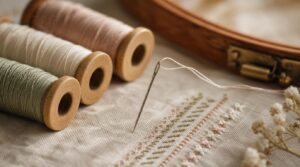
60 wt thread is delicate — treat it that way. For most woven fabrics, a size 65/9 needle hits the sweet spot on the needle size chart, giving the right Eye Size and Thread Clearance without shredding.
Matching needle size to thread weight and fabric type matters here. Always run a Test Swatch Procedure first: reduce top tension slightly for Tension Calibration, lower Stitch Density Adjustment by 10–15%, and dial back Speed Optimization to protect fine thread.
Bobbin Thread Matching with a coordinating 60 wt keeps the underside clean.
Standard Pairings for 40 Wt Embroidery Thread
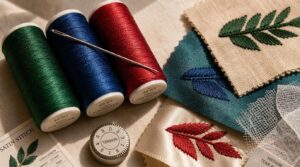
40 wt is the workhorse of embroidery threads — and matching needle size to thread weight and fabric type keeps your stitching clean. On the needle size chart, a 75/11 hits the standard mark for most fabrics.
- Use satin finish needles to reduce friction with rayon or polyester, 40 wt
- Follow stitch density guidelines: 0.8–1.0 for mid-weight fabrics
- Dial thread tension settings to mid-range for balanced stitching
- Apply stabilizer recommendations based on fabric stretch and weave tightness
Heavy-thread Pairings for 30 Wt and Thicker Threads
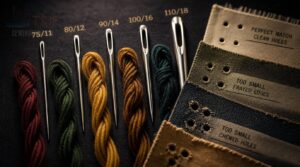
When your thread weight jumps to 30 wt and beyond, everything shifts. Heavy thread sewing demands a larger needle — your needle size chart points to 90/14 as the baseline.
Matching needle size to thread weight and fabric type prevents shredding. Bump to 110/18 for canvas or denim. Add stabilizer selection, dial in tension adjustment, and shorten your stitch length.
A needle too small for thread chews it apart.
Needle Ranges for Single-strand Floss and 3–4 Strand Floss
Strand count changes everything. Your needle size chart isn’t a suggestion — it’s your blueprint.
- Single-strand floss: sizes 9–12 for ideal hole size and clean entry
- 3–4 strands: sizes 5–7 for floss tension management without compression
- Cotton embroidery floss on midweight cotton: size 5–7 balances stitch density planning
- Pearl cotton benefits from chenille needles with enlarged eyes
- Thread weight and embroidery needle size inverse relationship always always guides your final call
Choose Needles for Specialty Threads
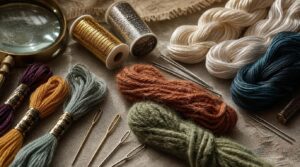
Specialty threads don’t play by the same rules as standard floss. Metallic, pearl cotton, wool, and rayon each have their own demands — and the wrong needle turns a good thread into a fraying mess.
what works for each one.
Metallic Thread Needle Sizes and Enlarged Eyes
Metallic thread is punishing — it shreds quickly if your needle isn’t built for it. The fix starts with needle eye size. Enlarged eyes, generally 0.8–1.3 mm, reduce thread friction substantially. Eye Shape Variants like slotted or beveled openings guide twisted metallic fibers smoothly, especially during high‑speed stitching.
Use this Embroidery Needle Size Chart Guide for Thread and Needle Pairing Guidelines:
| Metallic Thread Weight | Needle Size | Eye Size (mm) |
|---|---|---|
| Fine (60 wt) | 75/11 | 0.8 |
| Standard (40 wt) | 80/12–90/14 | 1.0 |
| Medium-heavy | 90/14 | 1.0–1.1 |
| Thick/multi-ply | 100/16 | 1.2 |
| Heavyweight | 110/18 | 1.3 |
Always prioritize Metallic Thread Testing on scrap fabric first. Needle Strength Balance matters too — oversized eyes weaken the tip on dense fabrics. Follow these needle eye size impact on thread clearance rules, and your metallics will run clean.
Pearl Cotton and Ribbon Thread Recommendations
Pearl Cotton and ribbon thread both demand respect. Match Pearl Cotton Size 8 with a chenille needle, size 24–26 — it’s built for the job.
- Use needle eye size 1.0 mm minimum for ribbon thread widths up to 7 mm.
- Check your Embroidery needle size chart for thread weight before starting.
- Apply proper Hoop Tension — too tight crushes ribbon texture.
- Choose Stabilizer Types suited to your fabric weight.
- Press using Finishing Techniques from the back only.
Wool and Bonded Yarn Needle Choices
Wool and bonded yarns play rougher than ribbon. They’re bulky, fuzzy, and unforgiving with the wrong needle. Eye Shape Optimization matters here — you need a long oval eye, smooth‑edged, so fibers glide instead of shred. Shaft Material Choice counts too: stainless or fluorocarbon‑coated shafts resist bending under bulk.
| Yarn Type | Needle Size | Key Feature |
|---|---|---|
| Light wool | 10–14 | Minimal perforation |
| Medium wool blend | 16–18 | Balanced eye clearance |
| Heavy/bonded yarn | 18–24 | Large eye, stiff shaft |
Choosing the correct needle for bonded threads means checking your Needle size chart against Thread weight. Wool Point Geometry — tapered sharp for wovens, rounded for knits — prevents torn fibers. Eye Alignment Angle parallel to the shaft cuts lateral friction. Needle Coatings Bonded with fluorocarbon reduce drag noticeably. For knit wool, a Ballpoint needle for knits separates fibers cleanly. Match your Needle eye size to roughly 1.4× your yarn’s diameter.
Best Needle Types for Rayon and Polyester Embroidery Thread
Rayon and polyester run slick — smoother than wool, but still demanding.
Eye Shape Optimization is non-negotiable: the needle eye should be roughly twice your thread’s diameter for clean Thread Glide Friction. For 40 wt, use 75/11 or 80/12.
Ballpoint vs Sharp depends on fabric — ballpoint for knits, sharp for wovens. Coated Point Longevity keeps titanium needles sharper longer through high-sheen synthetic runs.
Select Needles by Fabric Weight
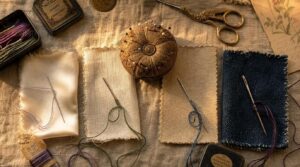
Fabric weight changes everything about which needle you reach for. The wrong choice leaves holes in silk or snaps thread on denim — neither is a fun fix.
Here’s how to match your needle to four common fabric types.
Lightweight Fabrics Like Silk and Fine Weaves
Silk’s smooth surface finish doesn’t forgive oversized needles — even a slightly wide shaft leaves visible holes that won’t close.
For lightweight fabrics, stick to machine needles 60/8–70/10. Check your needle size chart and match needle size to fabric weight before you start. Lightweight fabric stabilization keeps everything crisp.
Weave count influence is real: tighter weaves need finer needle eyes for proper thread clearance.
Medium Fabrics Like Cotton and Standard Aida
Cotton and standard Aida sit in the sweet spot for mediumweight fabrics. For Aida count matching, 14-count uses a size 24 tapestry needle; 18-count moves to size 26.
Machine needle size chart calls for 75/11.
Thread weight matters here — three to four strands of floss work well.
Use hoop placement tips and fabric grain direction to keep stitch density planning consistent and thread color contrast sharp.
Heavy Fabrics Like Denim, Canvas, and Leather
Denim, canvas, and leather push your needle to its limits. All three demand machine needles in the 90/14–110/18 range — refer to your needle size chart and match needles to fabric weight before you start.
heavy-duty thread and a reinforced stitching foot for fabric tension control.
Leather needs specialty needles with wedge-shaped tips. Their abrasion resistance and water repellent finishes make lightweight needles useless here.
Knit Fabrics and When to Use Ballpoint Needles
Knit fabrics stretch — and that’s exactly where standard sharp needles fail. Their pointed tips pierce yarn loops, causing laddering and runs.
A ballpoint needle pushes fibers apart instead, giving you fabric ladder reduction and real seam flexibility.
For jersey, use 70/10–75/11. Heavier interlock or fleece needs 90/14.
Match thread diameter to needle eye size — too tight causes breakage on stretch fabrics.
Solve Needle-Thread Compatibility Problems
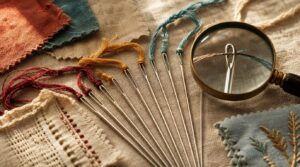
Even the best thread-needle pairing can go sideways fast when something’s off. Most problems—fraying, skipped stitches, puckering, fabric damage—trace back to a fixable cause.
Here’s how to spot what’s going wrong and correct it.
Fixing Thread Shredding and Fraying
Thread shredding usually means the needle eye is too small for your thread — friction does the damage.
Check your needle size chart and size up.
Tension Adjustment helps too: lower top tension for metallic or specialty threads.
Keep the Needle Path Cleaning routine, and use Lubricated Thread Prep or Thread Conditioning to reduce micro-fraying.
The right Stabilizer Selection prevents fabric shifting that stresses fibers further.
Preventing Skipped Stitches and Broken Thread
Skipped stitches usually trace back to one cause: mismatched needle and thread. Check your needle size chart first. A needle eye size that’s too tight creates friction — thread breaks before it forms a clean stitch.
Balance your thread tension and bobbin tension evenly. Slow your machine speed and ease foot pressure on dense sections.
The right stabilizer choice prevents fabric shift that throws off stitch timing.
Avoiding Puckering, Holes, and Fabric Damage
Puckering isn’t random — it’s a signal. Wrong needle eye size forces thread fraying and distortion into every stitch.
Stabilizer Selection matters: use tear-away on wovens, breathable types on knits.
Hoop Tension Management keeps fabric flat.
Stitch Length Adjustment reduces stress on delicate areas. Thread Tension Balancing distributes pull evenly.
Fabric Pre-treatment and Matching Needles to Fabric Types prevent holes before they start.
When to Replace a Worn or Bent Needle
A dull or bent needle is the silent saboteur of clean embroidery. Replace it when you spot any of these:
- Visual wear checks reveal burrs or a bent tip under light
- Burr fray signs — thread shreds consistently mid-stitch
- Eye deformation alerts — threading feels rough or catches
- Bent tip symptoms — skipped stitches, puckering, audible tapping
- Usage time limits — swap after 6–8 stitching hours
Frequently Asked Questions (FAQs)
How to match needle size to thread?
Match needle to thread like a lock to a key.
Use a needle size chart: pair thread weight with eye size and shaft strength for smooth thread feed and clean stitches.
What is the difference between 40 wt and 60 wt embroidery thread?
40 wt is thicker with higher stitch density and a bold thread sheen. 60 wt runs finer, boosting color vibrancy on delicate work.
Heavier thread needs a larger needle eye — roughly twice the thread’s diameter.
How do titanium-coated needles compare to chrome needles?
Titanium-coated needles stay sharp five times longer than chrome. They reduce thread friction and heat buildup, making them ideal for metallic threads.
Chrome needles cost less, but wear faster under heavy use.
What shank shape does my embroidery machine require?
Your machine’s shank shape depends on its build. Home machines like Brother use flat shank needles. Industrial systems like Tajima need round shanks. Check your manual before buying.
How should embroidery needles be stored long-term?
Keep needles in airtight containers with silica gel packs — moisture is their biggest enemy.
Use magnetic segmented cases in a dry environment, and wrap specialty needles in acid-free tissue to prevent corrosion.
When do ballpoint needles damage knit fabric instead?
Even good tools cause harm in the wrong hands.
ballpoint needles damage knits when stitch density is too high, needle angle shifts, or presser foot pressure is uneven — causing loop thinning, edge distortion, and fabric puckering.
Conclusion
Think of your needle as a doorway—too narrow, and the thread fights its way through; too wide, and the fabric pays the price. Every pairing in this embroidery needle thread compatibility chart exists to eliminate that friction before it reaches your hoop.
You now know which sizes serve fine silks, heavy wools, and tricky metallics. Match your needle deliberately, and your stitches will speak for themselves—clean, consistent, and exactly as intended.