This site is supported by our readers. We may earn a commission, at no cost to you, if you purchase through links.
That hole in your knee isn’t a tragedy. It’s an invitation.
Most people toss jeans the second they rip, blow out, or fade weird at the knees. But here’s the thing — worn denim holds way more possibilities than a fresh pair ever will. The fading, the fraying, even the busted seams? That’s texture you can’t fake, and it’s exactly what makes distressed denim upcycle projects so satisfying to dig into.
So grab that old pair from the donate pile. We’re turning "ruined" into gorgeous, one stitch at a time.
Table Of Contents
Key Takeaways
- Before cutting anything, inspect old jeans for weak spots, wash them properly, and carefully deconstruct them to sort usable pieces like pockets and waistbands for future projects.
- Gathering the right tools—like 90/14 denim needles, heavy-duty thread, clips instead of pins, and stabilizer for thin spots—makes sewing thick denim far easier and prevents frustration.
- Visible mending techniques like backed patches, sashiko stitching, floral embroidery, and frayed-area weaving turn rips and holes into decorative features instead of flaws to hide.
- Denim scraps can become countless finished projects, from wearable accessories like pouches and bags to home decor like pillows, rugs, and quilts, especially when finished with pro techniques like trimmed seams and proper topstitching.
Choose and Prepare Distressed Denim
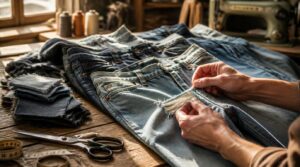
So before you cut a single stitch, let’s talk about that pile of old jeans staring at you from the closet. Not every pair is ready to become something new, and figuring that out first saves you a ton of headache later. Here’s exactly what to check and do before you start any project.
Check the fabric weight, fading, and stretch in the seams, since this guide to refashioning old denim pieces breaks down which pairs are worth saving.
Inspect Holes and Weak Spots
Grab those old jeans and hold them up to the light first—seriously. That trick reveals density loss instantly, those pale thin spots where fibers are worn down 30%. Check holes: anything over 1cm may widen. Look for dye bleed (weak fibers!), fraying seams at pockets, and microtears from folding. This detective work decides your whole denim upcycle plan.
Wash and Dry First
Once you’ve scouted the damage, wash before you cut a single thread. Test colorfastness with a damp cloth, use cold temperature settings and color-safe detergent, and skip the dryer—air drying prevents shrinkage and protects those distressed spots.
- Cold wash
- Gentle cycle
- Mild detergent
- Air dry flat
- Reshape while damp
Remove Seams and Hardware
Once your jeans are dry, it’s time for the fun (slightly nerdy) part: taking them apart. Use a seam ripper, not scissors, and start at corners for clean precision.
While working with materials, you might learn how seam removal processes work in other hobbies.
For rivets, pry gently with pliers—safety glasses on, always. Save hardware in labeled bags!
| Tool | Use | Tip |
|---|---|---|
| Seam ripper | Threads | Corner start |
| Pliers | Rivets | Perpendicular pull |
| Tweezers | Stray threads | Post-rip cleanup |
Sort Usable Denim Pieces
Now that your denim is deconstructed, spread everything out and really look at it. Sort by color shade—light, medium, dark—then by texture (rigid vs. softened). Group scraps by shape and size, too.
- Squares and rectangles for patchwork
- Strips under 2" for fringe or binding
- Irregular scraps for patchwork mending
- Worn or thin spots set aside for backing
Check fiber content while you’re at it—stretch denims sort separately!
Save Pockets and Waistbands
Before you toss any waistband scraps, stop and look closer—those pieces are gold for garment reconstruction.
| Piece | Best Feature | Save For |
|---|---|---|
| Waistband | Zippered waistband security | Pouches |
| Pockets | Reinforced pocket edges | Wall organizers |
| Belt loops | Integrated belt channels | Bag straps |
Original pockets already have hidden pocket design and ergonomic access built right in—reuse that engineering!
Gather Tools for Denim Sewing
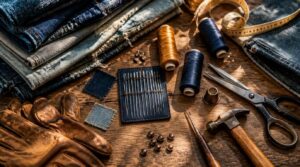
Before you sew a single stitch, let’s talk gear. Denim is thick and stubborn, so your regular sewing kit probably won’t cut it. Here’s what you actually need on hand to make this whole process way easier.
A few denim needles, a sturdy thread, and some beginner-friendly upcycled jeans sewing patterns will set you up for a smooth, frustration-free project.
Denim Needles Size 90/14
Your regular sewing needle will bend, snap, or just refuse to punch through thick layers—so grab a 90/14 denim needle instead. That "90" is metric (0.90mm shaft), "14" is US sizing, meaning a reinforced shaft that won’t deflect.
Match your thread tension to it, watch for bent tips (swap immediately!), and you’ll dodge skipped stitches on every denim upcycle project.
Heavy-duty Thread Options
Thread breakage ruins more projects than bad needles do, so pick strength on purpose.
- Polyester – colorfast, UV-resistant, great everyday choice
- Nylon – stretchy, flexes hard on high-stress seams
- Kevlar – near-indestructible for heavy repairs
Match Tex 30-60 to your fabric weight, balance thread tension, and always test colorfastness before committing to a whole project!
Clips Instead of Pins
Ever tried pinning six layers of denim and just… watching your needle bend? Yeah, skip that. Clips grip without piercing, so no holes on your good fabric, and they hold bulky layers flat without shifting.
They’re genius for slippery linings too. Grab the 1-2 inch sizes, color code them by project step, and watch your sewing machine thank you.
Fabric Markers or Chalk
How do you sketch a design on denim that won’t ghost through your final stitches? Chalk markers are your best friend here—they brush off with a lint roller, no water needed. White chalk shows beautifully on dark washes.
Quick picks:
- Chalk for bold, temporary lines
- Water-soluble pens for fine detail
- Test scraps first
- Label by tip size
Stabilizer for Thin Areas
That threadbare knee spot? It needs backup before you stitch. A nonwoven stabilizer (18-28 gsm) gives lattice reinforcement without bulk, or fuse one on at 120-135°C for instant support.
Water-soluble types vanish in cold water after decorative work, while tear-away peels off clean post-topstitch.
Match the stabilizer to your repair, and thin denim stitches like a dream!
Repair Denim With Visible Mending
Those rips and worn spots aren’t flaws, they’re an invitation to get creative. Instead of hiding the damage, you can turn it into the best part of the jacket. Here are five visible mending tricks that’ll have you actually hoping for more holes to fix.
Patch Holes From Behind
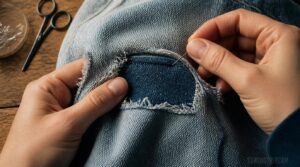
Grab a scrap of denim bigger than the hole—at least a half-inch border all around—and slide it behind the damage. Discreet patch placement keeps repairs invisible from outside.
Working through a pocket? Tuck the patch behind it to skip bulk.
Backstitch tight, even lines around the edges, trim excess, flip right-side out, and check your work!
Try Sashiko Stitching
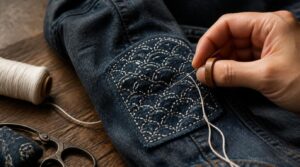
Once you’ve got that patch secure, why not make it gorgeous?
Sashiko stitching is a centuries-old Japanese technique—simple running stitches in geometric patterns like waves or diamonds. Use white thread on indigo denim for serious contrast, work with a long sashiko needle, and keep stitches loose to avoid puckering.
It’s rhythmic, meditative, and turns clothing repair into wearable art.
Add Floral Embroidery
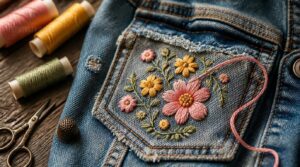
Not into geometric patterns? Go floral instead! Sketch petals in satin stitch for solid color, add French knot centers, and shade with two thread tones for dimension.
Use stem stitch vines to connect blooms across pockets or seams. Pick pinks, yellows, and greens for that classic garden palette—gorgeous against indigo, and totally your own signature on any upcycled denim piece.
Weave Over Frayed Areas
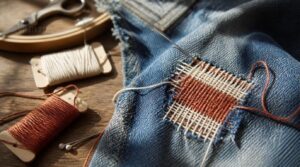
Once your flowers bloom, tackle those frayed edges with the same needle-and-thread magic.
Weaving over frays locks loose threads into a new path, stopping shedding cold. Trim ragged bits, stabilize the spot, then interlace matching or contrasting thread for a decorative punch.
- Keep tension even
- Backstitch both ends
- Press low heat after washing
That’s visible mending at its most genius—part repair, part signature.
Visible mending is genius in its purest form: equal parts repair and personal signature
Reinforce Stressed Seams
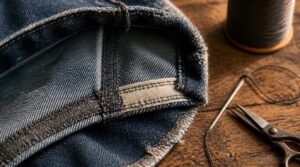
Before you call it done, check those seams that take the most abuse—pocket corners, fly points, crotch curves. This is where bar tack placement matters most.
Use heavy-duty thread with real tensile strength, stitch a second parallel line, and add stay tape for stress point prevention. Felled seams distribute load beautifully. Your jeans will outlast the fashion trend, guaranteed.
Make Wearable Upcycled Accessories

Okay, so once your denim is patched up and looking gorgeous, why not turn those scraps into something you can actually wear? You’ve got a whole pile of possibilities here, from tiny accents to full-blown bags. Let’s break down five projects you can start today.
Denim Zipper Pouch
Small scraps, big payoff — this is where your denim upcycle projects get seriously satisfying!
- Compact dimensions: 4-7" wide, 3-5" tall
- Choose centered or edge zipper installation
- Line with cotton for a smooth interior
- Strengthen corners and stress points
- Repurpose old pockets for handy pouch organizers
Topstitch edges for durability, and you’ve got a genius little DIY accessory from pure denim scraps!
Crossbody Bag With Pockets
Ready to level up from pouches to a full upcycled denim tote you’ll actually reach for daily? Use back pockets for exterior storage (phone-ready!) plus a hidden zip pocket for security. Add RFID-blocking fabric inside for card protection, pad straps for comfort, and choose a sturdy metal zipper. Repurpose jeans legs for the body — genius sewing project, zero fabric waste!
Braided Denim Bracelet
Scraps too small for anything else? Braid them into a bracelet — genius use of your denim odds and ends!
- Use 3-6 oz denim strips, three-strand braided
- Add brass or white thread for contrast
- Finish with a lobster clasp
- Fits 6.5-8.5 inches, adjustable
- Fold raw edges inward before braiding
Hand wash gently, air dry — your wrist candy stays gorgeous for years!
Denim Hair Bow
Little denim scraps make the cutest bows! Use medium-weight (8-12 oz) denim, layer two pieces for fullness, and zigzag stitch edges to stop fraying.
| Size | Clip Type | Best For |
|---|---|---|
| 4.5" | Alligator | Ponytails |
| 5" | Snap clip | Buns |
| 5.5" | Alligator | Half-up styles |
Add a matching denim headband—instant coordinated set, and genuinely genius repurposing!
Fold-over Clutch Tutorial
Grab your best denim scraps and let’s fold some magic—this clutch turns leftover jeans into a statement accessory!
- Cut mirrored exterior/lining pieces
- Add interfacing for stiffness
- Install a 7-9" zipper (or magnetic closure!)
- Sew, leave a turning gap
- Press, topstitch, customize your flap
Try lace trim or embroidery—so gorgeous, and totally you!
Create Home Decor Projects

Okay, so once your denim scraps are patched up and looking gorgeous, don’t just stuff them in a drawer! Your whole house is basically begging for a denim makeover, from the couch to the kitchen table. Here are five home decor projects that turn old jeans into pieces you’ll actually be proud to show off.
Patchwork Throw Pillow
Every worn-out pair deserves a second act, and turning denim scraps into a patchwork throw pillow is pure genius.
Mix washes for color balance, layer patches for texture, and pick your filling density (fluffy or firm—your call). Add a hidden zipper or envelope closure for easy washing.
Bonus: go reversible for two looks in one gorgeous pillow!
Denim Pocket Organizer
So if pillows aren’t your thing, turn those leftover back pockets into a wall-mounted denim pocket organizer—it’s one of the most genius upcycled denim projects out there.
- Four equal pocket columns for easy scanning
- Mix wash levels for color contrast
- Add a dowel for sturdy hanging support
- Scale it 24–40 inches wide
- Customize pocket shapes to fit your gear
Braided Denim Rug
Okay, so pockets are great, but what about all those scraps left over? Braid them into a DIY denim rug!
Cut strips, braid tight for even tension, then coil and stitch to a jute backing for stability. Go reversible for two looks in one. It’s rustic, sturdy, and pure textile recycling genius—just vacuum gently to keep it fray-free!
Recycled Jeans Quilt
So the rug soaked up your bulkiest scraps, but this project is where the sentimental stuff shines.
An upcycled denim quilt turns old pockets and waistbands into cozy heirloom quilt construction. Mix denim wash contrast for nostalgic color stories, choose warm batting weight, and strengthen the seams. Denim patchwork pillow leftovers work great as accent blocks—pure repurposing old textiles magic!
Denim Coasters and Placemats
Grab your smallest denim scraps for this one—coasters and placemats are the perfect scrap-buster project! Layer absorbent inner materials like cotton batting between denim and a non-slip backing, then topstitch for durability.
- 4×4" coasters, frayed edges
- 12×18" reversible placemats
- Cork backing for moisture protection
Machine wash cold, air dry—those frayed edge aesthetics just get better with time!
Finish Projects Like a Pro
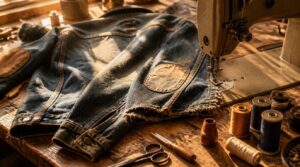
Okay, you’ve patched, stitched, and pieced your way through some seriously cool projects. But the difference between "homemade" and "handmade with pride" comes down to those last few finishing touches. So let’s walk through the five little moves that’ll make everything look sturdy, sharp, and totally professional.
Trim Bulky Seam Allowances
Ever notice how a single seam can turn lumpy and stiff when you’re sewing denim? That’s bulk talking. Trim raw edges toward the stitch line, then grade seam layers—innermost to 1/8 inch—so nothing shows through. Notch curved edges on pockets or yokes. Watch your thread tension, too; it keeps everything flat instead of puckered, reducing those annoying ridge lines underneath.
Press Seams Carefully
Grab your iron, because this step makes or breaks that professional look.
Use a press cloth to protect dark denim from shine, with a dry cotton setting and short bursts of heat.
Press seams open for flat topstitching, or to the side when nesting quilt intersections.
Always press along the grain, moving up and down—not sliding—to avoid distortion.
Topstitch for Durability
Topstitching isn’t just decorative—it’s what keeps your seams alive through years of use. Use heavy-duty polyester thread rated at least 5.5 N, paired with a 90/14 denim needle, and set your stitch length to 3-4mm. A walking foot keeps layers from shifting, while slightly higher tension prevents loopy stitches. Double-stitch pocket corners and armholes—those stress zones take the most abuse!
Add Lace or Patches
Lace turns a simple patch into a story. White or ivory lace glows against dark indigo denim—that’s the classic contrast styling every upcycler loves.
Cut patches in rounded shapes (no fraying corners!), back with fusible interfacing for stability, and secure using fabric glue before stitching. Finish edges with tight zigzag or satin stitch.
- Peekaboo lace under torn denim
- Framed patches on pockets
- Lace accents on a denim-and-lace windsock
Check Washable Embellishments
All that gorgeous embroidery deserves to survive laundry day! Run a quick colorfastness test on scraps first.
Use polyester thread (it resists shrinking), strengthen stitching durability at attachment points, and wash inside a mesh bag on cold, gentle cycle. Skip high heat—it causes damage to beads, glue, or delicate embellishments.
Check pieces after each wash and resecure anything loose, keeping your upcycled denim treasures wearable for years!
Frequently Asked Questions (FAQs)
What can you use upcycled denim?
One person’s trash, another’s treasure—so put those old jeans to work!
From reconstructed tote bags to denim pet toys, wine bags, book covers, and even baby shoes, upcycled denim scraps turn into genius, sustainable crafts limited only by your imagination.
What can you do with upcycled jeans?
Old jeans can become reconstructed tote bags, denim book covers, or wine bags. Try braided pet toys, kids’ whales, or upcycled denim crafts like pouches and bracelets.
Refashioning existing garments turns worn-out denim into something totally fresh and useful!
Are blue jeans a good idea for upcycling?
Absolutely, yes! Blue jeans bring serious denim durability to any project, holding shape through years of use.
Repurposing old jeans cuts fabric waste and promotes circular fashion—turning worn garments into gorgeous bags, quilts, or rugs instead of landfill fodder.
What can I do with my denim scraps?
Every scrap is a tiny treasure chest waiting to be opened! Turn denim scraps into denim labels, braided dog toys, or textured wall art.
Small pieces make big magic—patchwork blankets, denim book covers, and playful crafting with scraps prove textile repurposing never wastes an inch.
What are some projects I can make with scrap denim?
Try a denim patchwork pillow, a sturdy tote bag, braided dog toys, or wine bags. Add plant sleeves, book covers, or coasters — scrap denim stretches into gorgeous, genius projects for every corner of your home.
What can you use old denim for?
Your jeans can become almost anything! Think upcycled pet toys, denim cleaning rags, reusable wine bags, decorative wall art, or sturdy phone sleeves—so many upcycling ideas turn old jeans into genuinely useful, repurposed treasures instead of landfill fodder.
What can I do with old worn out jeans?
Old jeans are basically a blank canvas waiting for your imagination. Turn them into reconstructed tote bags, woven denim baskets, denim wine bags, or even childrens denim whales—upcycled pet toys too! Repurposing old garments means endless refashioning possibilities.
What are some good denim crafts I can sell?
Sashiko-stitched patches, upcycled denim tote bags, and denim patchwork pillows sell best!
Add sustainable branding, cute craft fair displays, and Etsy tags like "sourced vintage denim" — your handmade home accessories practically sell themselves at boutique prices.
What can I make with denim scraps too small to reuse?
Tiny bits are gold, honestly! Fuse them into fusible scrap sheets for appliques, stitch denim key fobs, whip up a lavender sachet DIY, or arrange fabric tile mosaics into textured collage art — genius ways to keep crafting with scraps.
How do I upcycle denim into a pet toy?
Braid trimmed strips into a denim dog toy using crown knots for durability, size it to your breed (8-12 inches for small pups, 18-24 for large), skip rivets, avoid choking hazards, and use natural dyes only.
Conclusion
What’s a torn knee, really, but denim asking for a second chance? You’ve got the needles, the stitches, the scraps saved from the cutting floor.
Now that pile of "ruined" jeans has turned into pouches, pillows, patches, and pride. That’s the real magic behind distressed denim upcycle projects: nothing’s actually broken, just waiting for your hands.
So keep every rip, every frayed hem. Your next favorite thing might already be hanging in your closet.