This site is supported by our readers. We may earn a commission, at no cost to you, if you purchase through links.
Chiffon shreds under dull blades. Denim laughs off flimsy craft scissors. And that gorgeous appliqué you spent hours planning? One wrong snip with the wrong tool, and it’s ruined.
Costume making pushes fabric to its limits, silk one day, vinyl the next, so your shears need to keep up. The right pair of sewing scissors for costume making means cleaner seams, sharper details, and fewer ruined yards of fabric.
Below, you’ll find nine standout picks, from titanium-coated heavy-duty shears to precision embroidery scissors, built to handle whatever your next costume throws at them.
Table Of Contents
- Key Takeaways
- Top 9 Costume Sewing Scissors
- 1. Livingo Titanium Coated Tailor Scissors
- 2. Professional heavy duty fabric scissors
- 3. Professional High Carbon Steel Fabric Scissors
- 4. Gingher professional dressmaker fabric scissors
- 5. Fiskars Micro Tip Spring Assisted Scissors
- 6. JISTL Green Pinking Shears
- 7. Professional titanium coated fabric shears
- 8. Fiskars RazorEdge Fabric Shears
- 9. Mr.do Stainless Steel Fabric Scissors
- Choosing Costume Making Scissors
- Best Scissors by Fabric Type
- Essential Costume Cutting Tools
- Scissor Care for Costumers
- Frequently Asked Questions (FAQs)
- Conclusion
Key Takeaways
- Match your scissors to your fabric: heavy-duty shears with 16-32 layer capacity handle denim, canvas, and leather, while lightweight, sharp-tipped scissors suit silk, chiffon, and stretch fabrics without snagging.
- Blade material and hardness (high-carbon steel at 56-64 HRC, titanium coatings, and chromium content) determine how well scissors resist rust, hold an edge, and cut cleanly over time.
- Handle design matters as much as blade quality, since ergonomic grips, balanced weight, and right- or left-handed options prevent hand fatigue during long costume-building sessions.
- Regular maintenance—oiling pivots, adjusting tension, storing blades in protective sheaths, and reserving scissors for fabric only—keeps cuts precise and extends the life of your shears.
Top 9 Costume Sewing Scissors
Costume work demands scissors that can handle everything from slippery satin to stiff denim without letting you down mid-project. You need blades sharp enough for precision and sturdy enough for heavy layers, all wrapped in a handle that won’t wreck your grip after hours of cutting.
If satin’s part of your costume plans, pairing the right scissors with proper technique makes all the difference—this guide on hemming satin fabric without puckering walks through both.
Great costume scissors cut through slippery satin and stiff denim alike, without ever wrecking your grip
Here are nine standouts worth adding to your sewing kit.
1. Livingo Titanium Coated Tailor Scissors
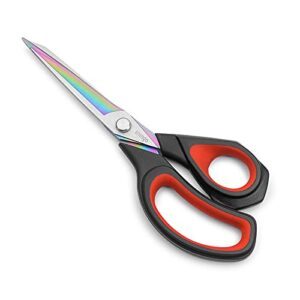
Nine and a half inches of forged stainless steel, coated in titanium that’s built three times harder than standard blades. That coating isn’t just for looks — it fights rust and stops adhesive residue from gumming up your cuts.
These shears slice through 16+ layers of fabric, from lightweight cottons to stubborn canvas. The ergonomic handle keeps your hand comfortable through long costume-building sessions, though smaller hands may find the grip a touch bulky.
| Best For | Sewists, tailors, and crafters who need a heavy-duty pair of shears for cutting through thick fabrics like denim, canvas, and leather. |
|---|---|
| Blade Material | Stainless steel |
| Handle Design | Comfort grip |
| Blade Length | 9.5 inches |
| Fatigue Reduction | Yes |
| Fabric Layers | 16+ layers |
| Blade Tip Design | Titanium coated |
| Additional Features |
|
- Cuts cleanly through 16 layers of fabric, even heavy-duty materials
- Titanium coating resists rust and prevents adhesive buildup on the blades
- Ergonomic handle helps reduce hand fatigue during long projects
- Bulky handle may feel too large for users with smaller hands
- Some users notice tight tension that takes extra effort over time
- Doesn’t quite match the precision of high-end Japanese shears
2. Professional heavy duty fabric scissors
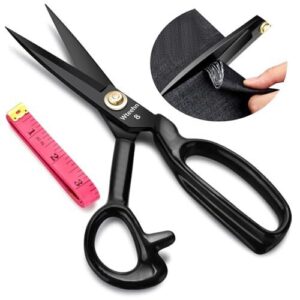
Want blades that shrug off leather, canvas, and stacked denim without flexing? This JD-8 model delivers galvanized manganese blades, hand-forged and set at a 45-degree cutting angle for genuinely labor-saving performance.
An adjustable bolt lock keeps alignment precise cut after cut, while chamfered tips guard your fabric from accidental snags. The aluminum alloy grips wear a non-slip coating, so grip stays steady through marathon cutting sessions — even though the heavier build means your wrist will notice the difference versus lighter craft scissors.
| Best For | Tailors, quilters, and DIY sewers who need serious cutting power for leather, canvas, and multiple layers of thick fabric. |
|---|---|
| Blade Material | Zinc manganese steel |
| Handle Design | Ergonomic aluminum alloy |
| Blade Length | 8 inches |
| Fatigue Reduction | Yes |
| Fabric Layers | Multi-layer |
| Blade Tip Design | Chamfered tips |
| Additional Features |
|
- Hand-forged galvanized manganese blades stay sharp through heavy, repeated use on tough materials
- Adjustable bolt lock keeps blade alignment precise for clean, accurate cuts
- Ergonomic aluminum handles with non-slip coating reduce hand fatigue during long cutting sessions
- Heavier than standard craft scissors, which can tire out your wrist over time
- Bolt lock needs occasional adjustment to keep the blades cutting precisely
- Not ideal for fine paper cutting since it’s built specifically for fabric and thick materials
3. Professional High Carbon Steel Fabric Scissors
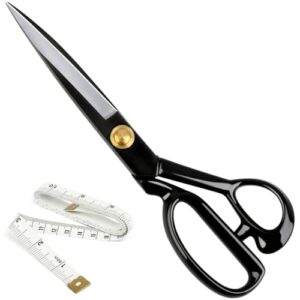
If heavy-duty muscle isn’t your priority and everyday precision is, this pair earns its keep. The high carbon steel composition runs 0.65 to 1.0 percent carbon, hardened to 56-62 HRC, so edges stay sharp through layer after layer of cotton, wool, and blends.
Micro-serrations bite into woven fibers without slipping, and that 25-30 degree edge angle keeps cuts clean without wearing out your grip. Rust-resistant coating protects the steel between projects, making this a dependable daily workhorse for your costume table.
| Best For | This scissor set is best for dressmakers, tailors, and artists who need precise, reliable cuts through multiple layers of fabric, leather, and other thin materials. |
|---|---|
| Blade Material | High carbon steel |
| Handle Design | Rubberized rounded |
| Blade Length | 5.51 inches |
| Fatigue Reduction | Yes |
| Fabric Layers | Multi-layer |
| Blade Tip Design | Chamfered heads |
| Additional Features |
|
- High carbon steel blades hold their edge and stand up to repeated use
- Ergonomic rounded handles with a rubberized grip help reduce hand fatigue during long projects
- Comes with a handy 60-inch dual-sided measuring tape for accurate work on flat or curved surfaces
- Requires proper care and maintenance to keep the professional-grade steel sharp
- Handle shape is designed for a specific grip, so it may not suit every hand comfortably
- Best suited for lighter materials, not ideal for heavy-duty cutting tasks
4. Gingher professional dressmaker fabric scissors
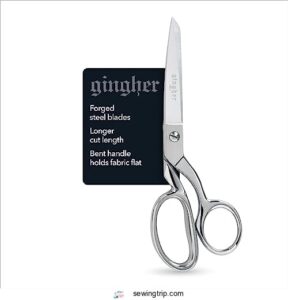
For a name that’s practically synonymous with sewing rooms everywhere, Gingher delivers knife-edge blades forged from stainless steel, running 7 to 8 inches for that sweet spot between control and reach. The bent handle design keeps fabric flat while you cut, and chrome-over-nickel finish resists corrosion through countless silk and chiffon sessions.
Precision-ground blades stay aligned tip to pivot, so your seam allowances come out clean, layer after layer, project after project.
| Best For | Sewists, quilters, and dressmakers who need a reliable, precise scissor for cutting multiple layers of fabric, trimming seams, and handling detailed pattern work. |
|---|---|
| Blade Material | Stainless steel |
| Handle Design | Bent handle |
| Blade Length | 8 inches |
| Fatigue Reduction | Yes |
| Fabric Layers | Multiple layers |
| Blade Tip Design | Knife-edge |
| Additional Features |
|
- Knife-edge stainless steel blades stay aligned from tip to pivot for clean, accurate cuts
- Bent handle design keeps fabric flat on the table, making long cutting sessions more comfortable and precise
- Durable chrome-over-nickel finish resists corrosion, even with delicate fabrics like silk and chiffon
- Designed specifically for fabric and soft materials, so it’s not suited for cutting paper, cardboard, or other tougher materials
- Requires the included nylon sheath for storage to keep the blade edges protected
- At 8 inches long, it may feel bulky for smaller hands or very detailed, tight cutting work
5. Fiskars Micro Tip Spring Assisted Scissors
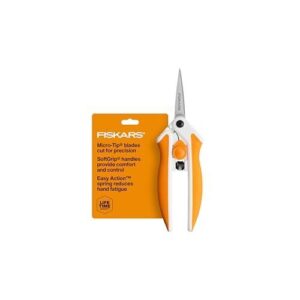
At just 2.08 ounces, these scissors practically disappear in your hand, which matters when you’re picking out lace appliqués for hours straight. The spring-assisted Easy Action handle pops blades open after every snip, easing strain on tired fingers.
For tackling thicker stacks or cutting straight through several fabric layers at once, pairing these scissors with precision rotary cutters built for professional seamstresses can speed up your workflow considerably.
Micro-tip blades carve into tight corners without forcing you to rotate the fabric, and RazorEdge grinding keeps cuts clean from base to point. SoftGrip grips add comfort, making these ideal for silk, felt, and crepe detail work rather than bulk cutting.
| Best For | These scissors are best for crafters and sewists who need precise, detailed cutting on projects like quilting, scrapbooking, and intricate fabric patterns. |
|---|---|
| Blade Material | Stainless steel |
| Handle Design | SoftGrip |
| Blade Length | 6.06 inches |
| Fatigue Reduction | Yes |
| Fabric Layers | Detail layers |
| Blade Tip Design | Micro-tip |
| Additional Features |
|
- Micro-tip blades allow precise cutting in tight corners and intricate details without needing to rotate the fabric
- Spring-assisted Easy Action handle reduces hand fatigue during long crafting sessions
- RazorEdge stainless steel blades deliver clean, reliable cuts from base to tip
- Backed by a full lifetime warranty
- Not designed for heavy-duty or bulk cutting tasks
- Small scale makes them unsuitable for large-format fabric shear needs
- Best suited to lightweight materials like silk, felt, and crepe rather than thicker fabrics
6. JISTL Green Pinking Shears
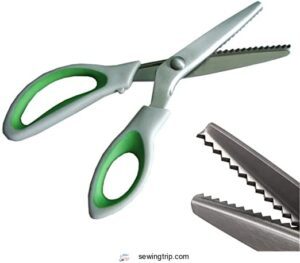
Fraying edges on costume seams can ruin a whole look mid-performance, and that’s exactly what these zigzag-tooth blades prevent. The 5mm tooth spacing cuts a clean, decorative edge into cotton and linen without shredding the weave.
At 9.5 inches, the stainless steel construction resists rust, while ergonomic ABS grips ease fatigue during long finishing sessions. Just remember: oil the blades before first use, since the screw mechanism isn’t adjustable and new blades run tight initially.
| Best For | Sewists, dressmakers, and craft enthusiasts who need clean, fray-resistant edges on fabric, leather, or paper for both professional and home projects. |
|---|---|
| Blade Material | Stainless steel |
| Handle Design | ABS inner ring |
| Blade Length | 9.5 inches |
| Fatigue Reduction | Yes |
| Fabric Layers | Anti-fray layers |
| Blade Tip Design | Serrated triangular |
| Additional Features |
|
- Durable stainless steel blades stay sharp and resist rust with proper care
- Ergonomic ABS handles reduce hand fatigue during long cutting sessions
- Versatile enough for fabric, leather, PU, paper, and ribbons
- Blades must be oiled before first use to prevent rusting
- Fixed screw mechanism can’t be adjusted to personal preference
- Bulkier and heavier than standard scissors, which may take getting used to
7. Professional titanium coated fabric shears
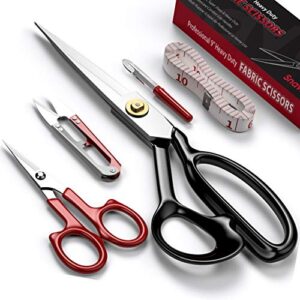
Slippery costume satins and sweaty backstage sessions both meet their match here. The titanium coating resists corrosion while adding surface hardness, so blades stay sharp through synthetic fabrics that dull ordinary steel fast.
You’ll notice cooler cuts during marathon fitting sessions, plus a smoother finish that won’t snag delicate fibers. Lightweight, balanced grips reduce fatigue, and symmetrical grip geometry works whether you’re right or left-handed—a genuine win for any costume shop with mixed-handed staff.
| Best For | Costume designers, tailors, and dressmakers who need a heavy-duty shear that can handle everything from thick denim to slippery synthetic fabrics without dulling. |
|---|---|
| Blade Material | High-carbon steel |
| Handle Design | Soft-grip |
| Blade Length | 9 inches |
| Fatigue Reduction | Yes |
| Fabric Layers | 32 layers |
| Blade Tip Design | Chamfered heads |
| Additional Features |
|
- High-carbon steel with titanium coating stays sharp and corrosion-resistant even through tough synthetic materials
- Chamfered, tempered blades cut cleanly through up to 32 layers of fabric without snagging delicate fibers
- Comfortable, ergonomic grip design reduces hand fatigue during long fitting or cutting sessions
- Requires wiping down and occasional oiling to keep the blades in top condition
- Bulkier and heavier than what’s needed for very lightweight or delicate silks
- Set includes only one precision scissor size, which may limit options for finer detail work
8. Fiskars RazorEdge Fabric Shears
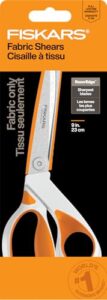
Ever notice how a dull blade drags before it cuts? These 9-inch RazorEdge shears solve that with premium stainless steel honed to slice cleanly clear to the tip.
The smooth pivot keeps action smooth across the full blade, tracking straight through satin, cotton, and canvas alike. Sculpted SoftGrip loops with an offset handle protect your wrist during marathon fittings, while the included sheath guards edges between uses—reliable, corrosion-resistant performance for everyday costume work.
| Best For | Sewists and costume makers who need clean, precise cuts through long stretches of fabric without hand fatigue. |
|---|---|
| Blade Material | Zinc manganese steel |
| Handle Design | Ergonomic aluminum alloy |
| Blade Length | 8 inches |
| Fatigue Reduction | Yes |
| Fabric Layers | Multi-layer |
| Blade Tip Design | Chamfered heads |
| Additional Features |
|
- Premium stainless steel blade with a RazorEdge cut that stays sharp clear to the tip
- Ergonomic SoftGrip handles with large loops ease strain during long cutting sessions
- Protective sheath included to keep blades safe and sharp between uses
- Not suited for heavy-duty or industrial materials beyond fabric
- Sharp RazorEdge blades require careful handling and safe storage
- Larger handle loops may feel oversized for those with smaller hands
9. Mr.do Stainless Steel Fabric Scissors
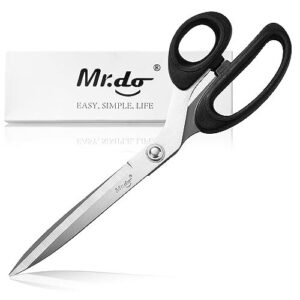
Rounding out this lineup at roughly 110 grams, the Mr.do 10-inch scissors pack surprising heft-to-performance ratio into a lightweight frame. Precision-ground stainless steel cuts through cotton, silk, linen, and even leather without dulling fast.
The ABS composite handle keeps grip secure through dense fabric layers, though it’s built strictly for right-handed users. Expect brief stiffness while blades break in—standard for manually adjusted tension. For budget-conscious costumers wanting daily reliability across cotton to canvas, this one earns its spot.
| Best For | Right-handed tailors, sewists, and crafters who need a durable, precise scissor for everyday cutting across fabrics like cotton, silk, linen, and leather. |
|---|---|
| Blade Material | Stainless steel |
| Handle Design | SoftGrip loops |
| Blade Length | 9 inches |
| Fatigue Reduction | Yes |
| Fabric Layers | Long swathes |
| Blade Tip Design | Honed edges |
| Additional Features |
|
- Precision-ground stainless steel blades stay sharp through repeated use on multiple fabric types
- Ergonomic ABS handle provides a secure, fatigue-reducing grip during extended cutting sessions
- Heavy-duty build holds up well for both professional tailoring work and DIY projects
- Only designed for right-handed users, which limits accessibility for lefties
- Blades may feel stiff at first due to the manual adjustment process
- Not suited for cutting excessively heavy or hard materials
Choosing Costume Making Scissors
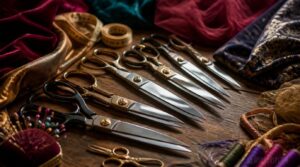
Not every pair of scissors belongs in your costume kit, and picking the right one takes more than a quick glance at the price tag. Your fabric choice, your grip, even your dominant hand all play a role in what’ll actually work for you. Here’s what to weigh before you buy.
Blade Material Quality
Steel alloy benefits make or break your blade’s performance. High carbon steel delivers astonishing edge retention, while forged stainless steel resists rust during sweaty costume marathons. Chromium above 12% fights corrosion; vanadium boosts wear resistance.
Watch hardness vs brittleness: HRC 58-64 balances sharpness with chip resistance. Titanium bonded blades add coating wear resistance, and tight metallurgical grain structure ensures consistent, snag-free cuts every time. Understanding different steel types helps you select the best tool for your specific fabric needs.
Handle Comfort
Blade steel means nothing if your hand gives out before the fabric does. Anatomical grip shapes and softgrip grips reduce wrist torque and hand fatigue during marathon cutting sessions.
Look for:
- Contoured, textured grip zones
- Cushioned material compliance
- Balanced weight distribution
- Right/left-hand ergonomic options
Sweaty palms? Rubberized surfaces keep control steady, letting your costume vision take shape without hand strain slowing you down.
Cutting Accuracy
Even grip won’t save a wobbly cut. Bevel angle matters here — dressmaking shears sharpened at 10-12 degrees glide cleanly along fabric grain without snagging.
Keep an eye on blade runout (under 0.03mm ideally) and pivot tension, since loose pivots warp your line on curves. Tight edge alignment in quality sewing shears means every cut tracks true, curve after curve.
Fabric Thickness
Fiber diameter and weave density decide how much muscle you need. Tight plain weaves and dense yarns pack thicker profiles than airy satins, so your fabric scissors should match that load.
For multilayer fabrics — pattern pieces stacked with interfacing or lining — reach for heavy duty sewing shears rated for 16+ layers. Calendered or brushed finishes shift thickness too, so test your precision cutting tools before committing to the full cut.
Left-handed Options
Weight matters, but so does which hand’s holding the shears. Lefties know standard sewing scissors fight them with awkward mirrored blade alignment, blocking left-eye visibility mid-cut.
Look for:
- Reversed locking mechanisms for left-thumb access
- Left-specific grip ergonomics with contoured grips
- True left-handed sewing scissors, not just ambidextrous tool compromises
Ambidextrous designs sacrifice precision cutting tools’ accuracy—dressmaking equipment built specifically for lefties wins every time.
Best Scissors by Fabric Type
Not every fabric plays by the same rules, and your scissors shouldn’t either. Slippery silks demand a different approach than stiff denim or stretchy spandex. Here’s how to match your blade to your material, one fabric type at a time.
Satin and Silk
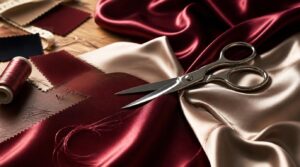
That gorgeous shine on satin comes from its weave, floating warp threads that catch light and glide under your blades. That same float structure makes snagging a real risk, so precision cutting matters here.
Silk satin’s fiber strength controls clean cuts beautifully, plus silk’s natural temperature regulation feels luxe against skin.
For synthetic satin, sharp fabric scissors prevent pulls and keep dressmaking projects looking perfect.
Chiffon and Organza
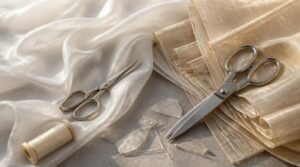
Two fabrics, two totally different personalities—chiffon flows, organza stands tall. That fabric drape comparison matters when choosing your blades.
Handling slippery edges means sharp, fine-tipped fabric scissors for chiffon; organza’s crisp hand tolerates sturdier shears.
- Silk vs polyester chiffon changes needle drag
- Precision cutting prevents snags on sheer layers
- Organza holds pleats without extra interfacing
- Sheer layering techniques demand clean, controlled textile cutting for managing fabric volume
Denim and Canvas
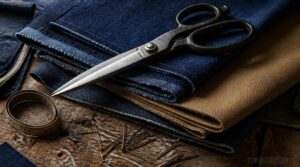
Six ounces of denim’s twill diagonal versus canvas’s tight plain weave—that’s your first cutting clue. Denim (12-16 oz) softens with washing, fading indigo dye beautifully; canvas (8-14 oz) stays crisp, resisting abrasion for structural garment drape.
| Fabric | Weave | Weight |
|---|---|---|
| Denim | Twill | 12-16 oz |
| Canvas | Plain | 8-14 oz |
Grab heavy duty sewing shears with forged blades—32-layer capacity ensures cutting precision through both.
Leather and Vinyl
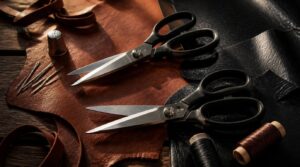
One’s animal hide, one’s PVC magic—yet both demand heavy duty sewing shears for clean results.
Leather’s fibrous edges fray without proper finishing, while vinyl stays sealed naturally. Genuine leather ages into rich patina; vinyl’s embossed texture imitation keeps a uniform look.
For leather sewing, use heavy-duty needles and forged fabric scissors—precision cutting through structured panels means fewer frayed edges, professional results every time.
Stretch Fabrics
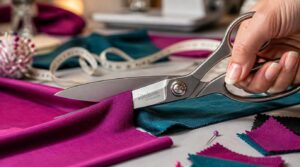
Spandex fights back when you cut it—so your blades need to glide, not drag, through 50-600% stretch recovery zones.
Ponte and jersey knits demand razor-sharp, non-serrated fabric scissors for precision cutting without distorting elasticity.
- Sharp, smooth blades preserve knit structure stability
- Titanium coatings prevent snagging on elastane fibers
- Lightweight grips support control on slippery, moisture-wicking blends
Skip pinking shears here; clean edges maintain recovery and shape.
Essential Costume Cutting Tools
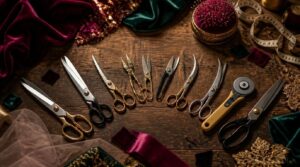
No single pair of shears can handle every job in your costume shop, and that’s exactly why specialized tools matter.
From finishing raw edges to trimming delicate appliqués, each cutting tool earns its spot in your kit for a specific reason.
Here are the five essentials every costumer should have within reach.
Dressmaker Shears
Dressmaker shears are the backbone of any costume workroom. Forged from high-carbon steel with precision grinding, they hold an edge through hundreds of cuts.
Bent grips keep fabric flat, while blade thickness around 1.0-1.5mm adds stability without weight. Ergonomic grips ease long sessions, and regular pivot maintenance keeps your cuts clean, accurate, and snag-free, session after session.
Pinking Shears
Once your straight cuts are done, that zigzag edge is your fraying insurance. Pinking shears use serrated, sawtooth blades to slice a chevron pattern that resists unraveling, especially on tightly woven fabrics.
They won’t stop fraying on loose weaves entirely, but for costume seams and decorative accents, they’re gold. Tooth widths vary by model, so pick based on fabric weight and desired finish.
Embroidery Scissors
Once seams are finished, the real detail work begins—and that’s where embroidery scissors shine. With blades between 3.5 and 5 inches, they offer micro-tip precision for trimming close to dense stitching.
Curved or duckbill tip styles reach tight spaces without snagging thread, while straight blades handle general embroidery snips. Stainless or high-carbon steel keeps edges sharp for hundreds of cuts.
Appliqué Scissors
Appliqué scissors take precision even further with their signature duckbill blade—that curved lower bill slides under your appliqué fabric, protecting the background layer while you trim.
You’ll cut within 1–2mm of your satin stitch line without fear. Micro-serrated versions grip slippery fabrics beautifully, while the pointed top blade grips inner curves other embroidery snips simply can’t reach.
Rotary Cutters
For flowing yardage where scissors just can’t keep pace, a rotary cutter changes everything. That spinning blade glides through multiple layers cleanly—no jagged edges, no shifting fabric.
- Choose 45mm blades for most costume work
- Look for carbide-tipped durability
- Confirm the safety shield locks properly
- Always pair with a cutting mat
Keep blades clean and lubricated, and they’ll outlast cheaper scissors for precision cutting.
Scissor Care for Costumers
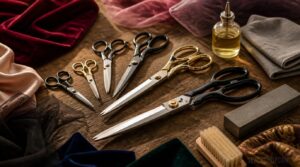
Great scissors deserve great care, especially when you’re investing in blades built for heavy-duty costume work. A few simple habits will keep your shears sharp, smooth, and ready for your next big project. Here’s exactly what your maintenance routine should include.
Fabric-only Use
Ever grab your fabric shears to trim a pattern envelope? Don’t. That one shortcut is edge dulling in the making.
Textile-only rules exist because paper fibers and plastic packaging wreck the fine bevel that keeps satin and chiffon fraying-free. Reserve your fabric scissors exclusively for cloth, and you’re preventing blade damage while preserving fabric integrity cut after cut, project after project, for years of precision cutting ahead.
Safe Blade Storage
Toss your shears loose in a drawer, and you’re inviting nicks, rust, and blade-to-blade damage.
Give them a protective sheath, keep humidity below 60%, and store in a dedicated compartment.
- Rigid blade protectors that snap securely
- Silica packs for moisture control
- Labeled compartments for each tool
These sewing kit essentials stay sharp longer when organized properly, away from sunlight and dampness.
Pivot Oiling
That squeak in your fabric scissors? That’s friction begging for relief. A single drop of light mineral oil at the pivot, worked in by opening and closing the blades, keeps precision cutting smooth.
Wipe excess immediately—stray oil stains fabric fast. Skip heavy grease; it traps lint. Oil every few months, or after heavy costume production, and always before long-term storage.
Tension Adjustment
Loose blades snag fibers; overtight ones fight you stroke after stroke. Pivot screw calibration is the fix—usually 1 to 2 turns from fully loose gets fabric scissors humming.
Test on scrap first. You’re aiming for tight blade gap precision without stiffness, plus balanced spring tension on assisted models. Correct tension reduces blade chatter, preventing fiber snagging on delicate costume fabrics like chiffon or satin.
Professional Sharpening
Even the sharpest fabric scissors dull eventually—that’s where professional sharpening earns its keep. Technicians dial in the perfect sharpening angles (60-70 degrees), manage grinding heat, and hone micro-edges for razor performance.
Benefits worth chasing:
- Restored edge retention
- Smoother glide through denim
- Reduced hand fatigue
- Longer blade lifespan
Gingher’s $15 mail-in service delivers pro-level edge geometry maintenance precision cutting tools demand.
Frequently Asked Questions (FAQs)
What are dressmaker scissors called?
Same tool, two names: what you call it depends on which side of the pond—or the pattern room—you’re standing in.
Dressmaker shears and tailor scissors are interchangeable terms, though "professional dressmaker scissors" often signals shop-quality craftsmanship built for straight, bolt-length fabric cuts.
What is the difference between dressmaker scissors and sewing scissors?
Blade geometry sets them apart: dressmaker scissors feature longer, curved blades for layered cutting efficiency and handle control, while sewing scissors stay shorter with pointed tips for precision cutting, trim work, and everyday fabric scissors tasks in costume making.
Do dress making scissors cut fabric?
Absolutely, like a hot knife through butter—dressmaking scissors deliver blade edge precision for easy fabric cutting. Their sharp bevels make cutting smooth, prevent fabric snagging, and handle layered cutting beautifully across cotton, silk, and heavier costume-making materials with confidence.
How often should costume scissors be replaced entirely?
Heavy use means replacing fabric scissors every 3–6 months; occasional projects stretch that to 12–24 months. Watch for persistent snagging, chips, or dulling that sharpening won’t fix—those are your cue for fresh blades, not another trip to the sharpener.
Can one pair handle both cutting and pinking tasks?
Technically, yes, but dual-purpose efficiency has limits: straight blades handle general cutting beautifully, while true pinking shears’ serrated edges prevent fraying better.
For costume making, owning dedicated fabric scissors and pinking shears avoids uneven blade wear patterns and keeps both cuts razor-precise.
How do I know when blades need professional resharpening?
Your blades will practically scream at you: fabric tugging, jagged edges, or a dragging sound mid-cut. Spot micro-scratches, uneven alignment, or dull sheen? Time for professional sharpening to restore true edge retention and cutting accuracy.
Conclusion
Every costumer has a few fabric casualties tucked away, quiet reminders of blades that weren’t up to the task. The right sewing scissors for costume making rewrite that story, turning silk, denim, and vinyl into fearless territory instead of gambles.
Match your blade to your fabric, keep edges honed, and oil the pivot often. Your shears become an extension of your hands, and every seam proves it. Cut with total confidence.
- https://sewcanshe.com/10-best-sewing-scissors-what-you-need-to-stay-sharp-in-2026
- https://www.andibedsworth.com/sew-artfully/my-top-picks-for-sewing-scissors
- https://www.stitchclinic.com/best-types-of-scissors
- https://suzyquilts.com/best-sewing-scissors
- https://www.moodfabrics.com/collections/all-scissors