This site is supported by our readers. We may earn a commission, at no cost to you, if you purchase through links.
That grinding noise your machine just made? Nine times out of ten, it’s a bobbin problem, not a machine problem. Beginners tend to blame the whole sewing machine when really, one tiny plastic (or metal) spool is throwing everything off.
Here’s the thing about bobbins: they’re small, they’re cheap, and almost nobody teaches you how to pick the right one. Grab the wrong class, mix plastic with metal, or overfill it past that 1/16" mark, and you’ll spend more time picking out birdnests than actually sewing.
Get bobbins for beginners right from the start, and half your stitching headaches disappear before they happen.
Table Of Contents
- Key Takeaways
- What Are Sewing Bobbins?
- Common Bobbin Types and Sizes
- Plastic Versus Metal Bobbins
- How to Wind and Load Bobbins
- Top 10 Bobbins for Beginners
- 1. Singer Class 15 Metal Bobbins
- 2. Plastic Class 15 Sewing Bobbins
- 3. Singer Class 15 Transparent Bobbins
- 4. Silicone Round Bobbin Holder Rings
- 5. Beadnova embroidery floss bobbin winder
- 6. Metal Class 15 sewing machine bobbins
- 7. Singer 66 Sewing Machine Bobbins
- 8. Transparent plastic sewing machine bobbins
- 9. Plastic embroidery floss bobbins organizer
- 10. Universal Metal Sewing Machine Bobbins
- Beginner Bobbin Problems and Fixes
- Frequently Asked Questions (FAQs)
- Conclusion
Key Takeaways
- Match your bobbin’s class (like Class 15, Class 66, L-style, or M-style) and material to your machine’s manual before buying, since size or material mismatches cause grinding, jamming, and skipped stitches.
- Never mix metal and plastic bobbins in the same case, as this throws off tension balance and increases wear on your machine.
- Wind bobbins evenly and stop about 1/16 inch below the rim to avoid overfilling, which causes friction, birdnesting, and odd noises.
- Most bobbin problems—like tension puckering, loose winding, or bird-nesting—come down to size mismatches, incorrect thread direction, or winding issues, and can be fixed with careful rethreading and testing on scrap fabric.
What Are Sewing Bobbins?
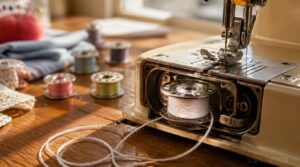
Every sewing machine has two threads working together, and the bobbin is the unsung hero holding the bottom one steady. It’s a small spool, but it plays a big role in every stitch you make.
If you’re wondering whether every spool fits every machine, it’s worth checking whether sewing machine bobbins are universal before you buy replacements.
Let’s break down what it actually does, how it holds thread, and why picking the right one matters more than you’d think.
Bobbin Purpose in Sewing
Picture two threads shaking hands under your fabric—that’s the lockstitch. Your bobbin holds the lower thread, which loops with the needle thread to lock each stitch tight, giving you seam strength.
- Stabilizes stitches
- Prevents fabric separation
- Feeds thread evenly
- Helps keep tension balanced
The primary functions of bobbins include providing the lower thread required to create stitches. Without proper bobbin winding, that interlocking role falls apart, weakening stitch quality fast.
How Bobbins Hold Thread
That small spool spins inside the bobbin case, feeding bottom thread up through a slot as the hook mechanism catches each loop. The tension spring presses against the thread, controlling pull-off speed. Too tight, and stitches pucker; too loose, and you’ll get loops on the fabric’s underside.
Proper bobbin winding keeps thread capacity even, so the take-up lever can do its job smoothly during stitch formation.
Bobbin Versus Thread Spool
Up top, that big spool feeds your top thread through the tension disc, needle, and take-up lever. Down below, the bobbin supplies bottom thread from inside its case. Two totally different paths, one lock stitch formation.
Spool vs bobbin isn’t just size, either: spools handle long unwinding runs, while bobbins store tightly wound thread for short, controlled bursts under the fabric.
Why Beginners Need Matching Bobbins
Here’s a rule that’ll save you headaches: match your bobbin to your machine and thread, every time. Beginners who mix and match are just inviting trouble.
Why it matters:
- Keeps stitch tension balanced
- Reduces thread looping
- Minimizes fabric shadowing
- Simplifies spare parts
- Speeds up your learning curve
Fewer variables mean fewer surprises while you’re still building confidence.
Common Bobbin Types and Sizes
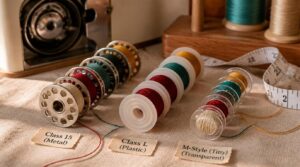
Not all bobbins are created equal, and mixing up sizes is one of the fastest ways to jam your machine. Every brand and model usually favors a specific class, so knowing yours matters more than you’d think. Let’s break down the most common types you’ll run into, starting with the one you’ll probably use most.
If you’re still getting comfortable with your machine overall, it’s worth troubleshooting common beginner mistakes like bobbin mix-ups alongside other early hiccups, from tension imbalance to uneven stitching problems new sewers face.
Class 15 Bobbins
Class 15 bobbins are the workhorse you’ll meet most often—about 20 millimeters across and 10mm tall. They’re the go-to for Brother, Singer, and Janome machines with drop-in or removable cases.
Machine fitment matters here: check your manual before buying, since mismatched sizes cause bird-nesting and skipped stitches. Both metal bobbins and plastic bobbins work fine, as long as material durability stays consistent within your case.
Class 66 Bobbins
Vintage Singer owners, meet your bobbin’s best friend. Class 66 bobbins measure 20.5mm across and 10.8mm tall, with a domed side for old-school tension mechanisms.
- Check the axis hole (6.2mm) for a snug fit
- Choose steel for heavy fabrics
- Pick clear plastic to watch thread levels
- Confirm winding direction before loading
Mixing bobbin materials in one case? That’s asking for tension trouble.
L-style Bobbins
L-style bobbins trade a bit of diameter for a slimmer profile, measuring 20.3mm across but only 8.7-8.9mm wide, with flat sides for high-speed stability. That flatter build means less wobble in the case, which matters for longarm compatibility and industrial embroidery work.
- Choose metal for durability under heavy use
- Pick plastic bobbins for lighter, rust-free spinning
- Confirm your case accepts L-style before winding
M-style Bobbins
M-style bobbins step up in size at 24.9mm across, built for embroidery machines chewing through long, high-speed runs. Metal construction controls that speed without warping, while extra thread capacity cuts down rethreading.
They only work in matching M-style cases, so check your manual before winding—mixing styles causes tension headaches and messy stitches fast.
Bernina Bobbin Styles
Berninas throw a curveball: four bobbin styles, none interchangeable. CB Hook bobbins fit vintage machines with a finger-tension mechanism; Rotary Hook suits high-speed models like the 940; L-Style is great for heavy embroidery runs; Jumbo bobbins pack extra thread for marathon quilting sessions.
Grab your manual before buying—matching machine compatibility saves you tension nightmares and wasted trips to the store.
Plastic Versus Metal Bobbins
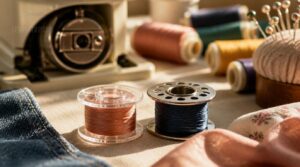
Once you know your bobbin size, the next choice is what it’s made of. Plastic and metal each bring something different to your machine, and picking wrong can cause more headaches than it’s worth. Let’s break down which material fits your fabric, your machine, and your sewing habits.
Plastic Bobbin Benefits
See-through and featherlight — that’s plastic at its best. You can spot remaining thread at a glance, no guesswork needed.
- Visual thread tracking through clear casings
- Lighter weight for smoother stitching
- Budget-friendly for bulk classroom packs
- Corrosion resistance in humid sewing rooms
They won’t rust, snag fabric, or drain your wallet — solid picks for everyday sewing machine accessories while you’re still learning the ropes.
Metal Bobbin Benefits
Built to outlast: metal bobbins shrug off cracking and warping, even under heavy embroidery loads or years of daily stitching.
Their heat dissipation keeps thread from fusing on synthetic fabrics, while steady weight means tension stability stays locked in through dense layers.
For sewers eyeing a long-term investment, these sewing machine accessories deliver consistent stitch quality, cycle after cycle.
When to Use Aluminum
Aluminum bobbins strike a nice middle ground between plastic and steel. Lightweight yet sturdy, they resist corrosion naturally (that thin oxide layer does the heavy lifting), and their thermal conductivity helps prevent thread fusing on hot runs.
Some machine models call for aluminum specifically, so check your manual before swapping. They’re also fully recyclable, which is a nice bonus for eco-minded stitchers.
Avoid Mixing Bobbin Materials
Tempting as it sounds to swap in whatever bobbin fits, mixing plastic bobbins and metal bobbins in one machine causes real trouble.
- Tension balance shifts, throwing off stitch evenness
- Rotational inertia risks that make bobbins spin unevenly
- Faster machine wear factors on the case and hook
- Warranty compliance issues if manuals require one material
Material friction effects add up fast during sewing machine troubleshooting—stick to one material per bobbin winding session.
Match Your Machine Manual
When in doubt, check your manual: it lists your machine’s serial number and approved spare parts, telling you exactly whether plastic bobbins, metal bobbins, top-loading bobbins, or front-loading bobbins fit your model. Manuals also cover voltage specs and safety symbols worth knowing.
Skipping this step, and guessing, is how mismatched bobbins sneak in—so stick to your maintenance schedule and approved parts list.
How to Wind and Load Bobbins
Winding and loading a bobbin correctly can make or break your stitch quality, so it pays to get the steps right from the start. A few small habits (proper threading, careful filling, correct direction) save you from headaches down the road. Let’s walk through exactly what to do, one step at a time.
Thread The Winder Correctly
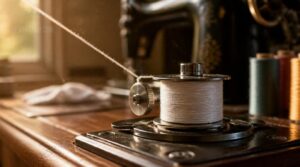
Line it up: rest the bobbin flat on the winder plate, keep the spindle aligned, and guide thread through the tension disc. Hold the tail taut (no slack!) as you start. Set a moderate winding speed—too fast causes wobble. Watch for smooth, even layers; that’s your tension check before you ever touch the machine itself.
Avoid Overfilling The Bobbin
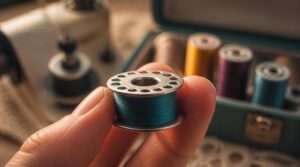
Watch the rim, not the clock: stop winding once thread reaches evenly just below the edge—about 1/16" of margin prevents binding. Overfilled bobbins create friction against the case, causing skipped stitches or odd noises. Your bobbin winder’s stopper should catch this automatically, but don’t rely on it blindly. Uneven density or lint buildup can trick that mechanism, so a quick visual check saves headaches later.
Loading Top-drop Bobbins
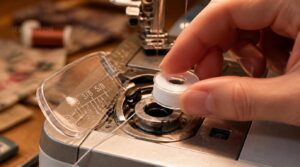
Raise the needle first (needle position safety matters), then drop your top-loading bobbin into its cradle, thread facing counterclockwise.
- Check bobbin cradle alignment
- Spin gently to confirm free rotation
- Guide thread through the slot
- Peek through the transparent window to monitor thread supply
Verify the thread path before closing the cover—this catches most dropin bobbin mishaps early.
Loading Front-case Bobbins
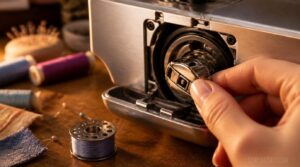
Front-loading bobbins hide behind a little door, and finding it is half the battle. Pop off the front cover to expose the bobbin case, then slide the case straight out—no yanking.
Drop in your bobbin (metal or plastic works), seat it snug, and engage the latch firmly. Reinsert the case, replace the cover, then test stitch on scrap fabric to confirm smooth feeding before trusting it with real fabric.
Check Thread Direction
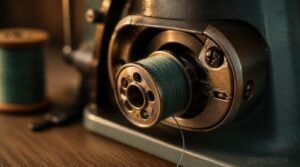
Ever notice your top thread looks fine, but stitches still pucker? Bobbin winding direction matters just as much as tension.
- Top-load: thread feeds counterclockwise
- Front-load: thread feeds clockwise
- Check bobbin storage grooves for arrows
- Mismatched direction causes tension drag
- Rewind if unsure—don’t guess
Getting this right prevents the sewing machine bobbins from fighting your thread tension settings later.
Top 10 Bobbins for Beginners
Ready to stop guessing and start stitching? Below are ten bobbin picks that cover the basics: metal, plastic, transparent, and a few handy organizers thrown in. Here’s where to start shopping.
1. Singer Class 15 Metal Bobbins
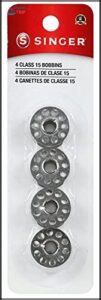
Singer Class 15 Metal Bobbins are the workhorse pick for older Singer machines that demand metal, not plastic. They measure 7/16 inch tall by 13/16 inch wide (12mm by 21mm), with flat top and bottom surfaces for stable, even winding.
Durability’s the draw here: metal resists warping and cracking, handling heavier fabrics without deforming. Just don’t swap them for Class 15J or Class 66—wrong size means tension trouble fast. Check your manual before buying.
| Best For | Sewing enthusiasts, from beginners to experts, who own compatible Singer or Brother machines and want a durable metal bobbin for garment construction, quilting, and home decor projects. |
|---|---|
| Material | Metal |
| Brand Compatibility | Singer, Brother |
| Primary Use | Sewing |
| Included Storage | No |
| Skill Level | Novice-Expert |
| Class Compatibility | Model-specific |
| Additional Features |
|
- Sturdy metal construction resists warping and stands up to heavier fabrics
- Flat top and bottom design supports smooth, even thread winding and unwinding
- Helps prevent machine jamming for more consistent, reliable stitches
- Only fits specific Singer and Brother models, so compatibility must be checked first
- Using the wrong bobbin size can cause tension issues or damage the machine
- Bobbins need to be replaced once chipped, bent, or otherwise damaged
2. Plastic Class 15 Sewing Bobbins
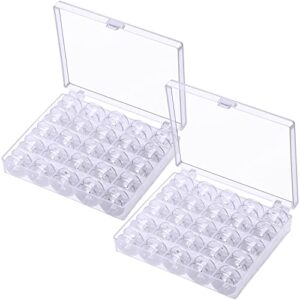
Metal’s great for heavy-duty work, but plastic Class 15 bobbins are your budget-friendly, beginner-perfect swap. They run about 20 mm in diameter and 11 mm deep with a 6 mm center hole—light, quiet, and easy on your machine’s inertia during winding.
Fit check matters most: confirm your machine (Brother, Singer, Bernette, Janome, Elna) takes Class 15 Style A before buying, since a mismatch causes skipped stitches fast.
| Best For | These plastic Class 15 bobbins are best for beginners and everyday sewing or embroidery enthusiasts who want an affordable, easy-to-use option for their machine. |
|---|---|
| Material | Plastic |
| Brand Compatibility | Most machines |
| Primary Use | Sewing/Embroidery |
| Included Storage | Yes, 2 cases |
| Skill Level | Beginner-Pro |
| Class Compatibility | Class 15 |
| Additional Features |
|
- Smooth, transparent plastic makes it easy to spot thread colors at a glance and won’t damage your thread
- Comes with two clear storage cases with individual slots, keeping all 50 bobbins organized and easy to grab
- Lightweight and quiet during winding, which puts less strain on your machine’s inertia
- Plastic construction isn’t ideal if your machine specifically calls for metal bobbins
- You’ll need to double-check compatibility with your exact Class 15 machine model before buying, since a mismatch can cause skipped stitches
- Not as durable as metal for heavy-duty or continuous industrial use
3. Singer Class 15 Transparent Bobbins
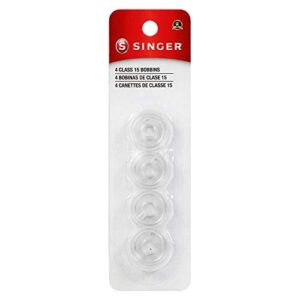
See-through construction takes the guesswork out of Class 15 winding. You’ll spot low thread before it stalls your seam, and the flat top-and-bottom design keeps winding consistent every time.
These fit Singer, Atlas, Brother, Elna, and Pfaff machines built for plastic Class 15 bobbins, holding roughly 50 yards of thread when fully wound.
Clear plastic also means quick lint checks—no squinting required. Just don’t mix them with metal bobbins in the same case; that mismatch invites tension trouble fast.
| Best For | These transparent Class 15 bobbins are best for quilters, clothing makers, and DIY home decor enthusiasts who want reliable, jam-free winding on Singer, Brother, or Elna machines. |
|---|---|
| Material | Plastic |
| Brand Compatibility | Singer, Brother, Elna |
| Primary Use | Sewing |
| Included Storage | No |
| Skill Level | All levels |
| Class Compatibility | Model-specific |
| Additional Features |
|
- Clear plastic design lets you monitor thread levels and spot lint buildup at a glance
- Flat top-and-bottom construction ensures even, consistent winding every time
- Compatible with multiple popular sewing machine brands
- Must be fully wound before use to avoid uneven tension or tangling
- Compatibility can vary, so checking your machine manual first is essential
- Cannot be substituted with a different bobbin size, class, or material without risking tension issues
4. Silicone Round Bobbin Holder Rings
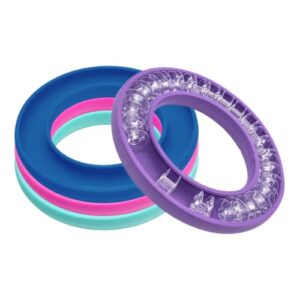
Once your bobbin collection grows past a handful, tangled thread becomes the real enemy—not the machine.
This four-pack (Model SD4) uses flexible silicone rings to keep bobbins corralled and centered, so they won’t wobble or roll off your worktable. The donut shape fits both metal and plastic bobbins snugly, including standard Class 15 and L-style sizes.
Silicone resists lint, wipes clean easily, and won’t crack with repeated use. Purple’s your only color option here, but each ring holds 20-30 bobbins comfortably.
| Best For | Sewers with a growing bobbin collection who want a simple, tangle-free way to keep bobbins organized and within reach. |
|---|---|
| Material | Silicone |
| Brand Compatibility | Metal & plastic rings |
| Primary Use | Bobbin Organization |
| Included Storage | N/A (is organizer) |
| Skill Level | All levels |
| Class Compatibility | Universal rings |
| Additional Features |
|
- Durable silicone construction that resists lint, wipes clean, and holds up to repeated use
- Ring design fits both metal and plastic bobbins, including standard Class 15 and L-style sizes
- Keeps bobbins centered and secure, preventing rolling and thread tangling
- Only four holders included per pack, which may not be enough for larger collections
- Available in a single purple color, with no other options
- Designed for bobbin organization only, not for general thread storage
5. Beadnova embroidery floss bobbin winder
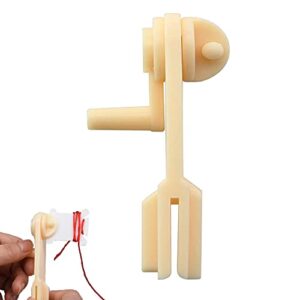
Rings keep bobbins tidy, but if you’re winding embroidery floss by hand, this little gadget saves your wrists.
The Beadnova bobbin winder uses a rotating spindle to wrap floss onto plastic or cardboard bobbins with even tension, guided by a notch that stops tangling before it starts. Secure your bobbin, align the floss, then turn steadily for smooth layers.
It’s budget-friendly, portable, and works with most craft-store floss brands—perfect for organizing sprawling color collections.
| Best For | Crafters and stitchers who want a fast, tidy way to wind leftover embroidery floss onto bobbins instead of doing it by hand. |
|---|---|
| Material | Plastic |
| Brand Compatibility | Standard bobbin box |
| Primary Use | Thread Winding |
| Included Storage | N/A (is winder) |
| Skill Level | All levels |
| Class Compatibility | Standard box fit |
| Additional Features |
|
- Simple pin and slot design makes winding quick and beginner-friendly
- Perches upright on standard plastic bobbin boxes for easy access and storage
- Lightweight, sturdy plastic build that’s easy to carry along to projects
- Only one winder included per package, so multiples require extra purchases
- Needs a standard plastic bobbin box to stand upright, which isn’t included
- Fixed bobbin size (92mm x 25mm) may not fit all bobbin types
6. Metal Class 15 sewing machine bobbins
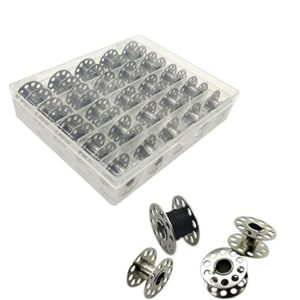
Twenty-five bobbins, one tidy box—that’s what you get with these stamped steel Class 15 bobbins, and they hold up beautifully under heavy use.
Polished edges mean no snagged thread or nicked fingers, and the tight tolerances keep wobble (and wonky stitches) out of the equation.
| Best For | Sewing and crafting enthusiasts—from beginners to seasoned pros—who need reliable Class 15 bobbins for quilting, upholstery, crocheting, and other frequent machine projects. |
|---|---|
| Material | Metal |
| Brand Compatibility | Brother, Singer, Janome |
| Primary Use | Sewing/Embroidery |
| Included Storage | Yes, 1 box |
| Skill Level | Beginner-Expert |
| Class Compatibility | Class 15 |
| Additional Features |
|
- Durable metal construction built to withstand long-term, heavy use
- Polished surfaces and edges prevent thread snagging and protect fingers from irritation
- Transparent, compartmentalized storage box keeps bobbins organized, dust-free, and easy to find
- Only compatible with Class 15 bobbin systems, so it won’t work for machines requiring other sizes
- Requires users to verify exact dimensions beforehand to confirm machine compatibility
- Fixed inner/outer dimensions offer no flexibility for non-standard bobbin cases
7. Singer 66 Sewing Machine Bobbins
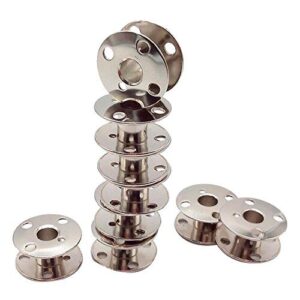
If your machine’s an oldie but goodie (a vintage Singer 66), steel bobbins built specifically for that front-loading system are worth every penny.
These fit Singer Class 66 Apollo models and swap in easily for parts 172222 and 32522—handy if your original bobbin’s seen better days.
Bonus: they’re also compatible with White 8600 and 8800 machines, so if you’ve inherited a mixed sewing stable, one bulk pack covers you. Steel means they’ll outlast plastic under heavy, frequent use.
| Best For | Owners of vintage Singer Class 66 Apollo machines or White 8600/8800 models who need a reliable, bulk supply of bobbins for regular sewing or repairs. |
|---|---|
| Material | Steel |
| Brand Compatibility | Singer, White |
| Primary Use | Machine Replacement |
| Included Storage | No |
| Skill Level | All levels |
| Class Compatibility | Class 66 |
| Additional Features |
|
- Durable steel construction that holds up better than plastic under heavy, frequent use
- Directly replaces original part numbers 172222 and 32522, making swaps simple
- Bulk supply is convenient for frequent sewing projects or ongoing machine maintenance
- Only compatible with Class 66 style front-loading bobbin systems, not all machines
- Limited to specific Singer and White model numbers, so compatibility must be checked first
- Not suitable for modern or drop-in bobbin systems outside the listed models
8. Transparent plastic sewing machine bobbins
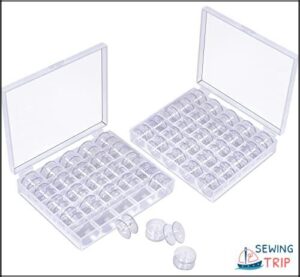
Fifty see-through bobbins in one pack sounds excessive, until you realize how fast they disappear into your sewing basket.
Two included storage cases keep them sorted with individual slots, so you’re not fishing around for a match. Sized to Class 15 standards (2 x 1.1 cm), they fit Brother, Singer, Janome, Babylock, and Pfaff machines without a fuss.
The clear plastic lets you check thread levels mid-project—no more guessing games. Smooth, burr-free edges mean your thread glides on without snagging or fraying.
| Best For | Sewing enthusiasts who go through bobbins quickly and want a well-organized, portable supply compatible with popular machine brands like Brother, Singer, Janome, Babylock, Kenmore, Pfaff, and Futura. |
|---|---|
| Material | Plastic |
| Brand Compatibility | Brother, Singer, Janome, more |
| Primary Use | Sewing |
| Included Storage | Yes, 2 cases |
| Skill Level | All levels |
| Class Compatibility | Varies by model |
| Additional Features |
|
- Generous 50-bobbin bulk pack prevents mid-project interruptions
- Two transparent storage cases with individual slots keep bobbins organized and easy to transport
- Smooth, burr-free surface prevents thread scratching and breakage during wrapping
- Compatibility can vary by specific machine model despite standard sizing
- Requires checking your machine’s manual for exact tube size before purchase
- Plastic construction may feel less durable than metal bobbins over long-term heavy use
9. Plastic embroidery floss bobbins organizer
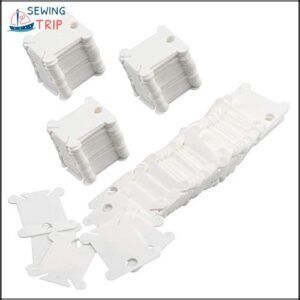
Not all bobbins go inside your machine—these 128 flat white boards are made for storing embroidery floss between projects.
Each one measures 3.8cm x 3.6cm, small enough to pack dozens into a drawer, with dual thread clips to lock the ends down so skeins stay put. The waterproof plastic won’t warp or snag your floss, and the smooth surface takes marker labeling well (DMC numbers, anyone?). A reusable, tangle-proof upgrade from cardboard.
| Best For | Embroiderers and sewists who want a tidy, reusable way to keep loose floss and skeins organized between projects. |
|---|---|
| Material | Plastic |
| Brand Compatibility | Marker-compatible surface |
| Primary Use | Thread Organization |
| Included Storage | No |
| Skill Level | All levels |
| Class Compatibility | N/A |
| Additional Features |
|
- Dual thread clips keep loose ends secure so skeins don’t unravel in storage
- Smooth, marker-friendly surface makes labeling colors or DMC numbers easy
- Waterproof plastic construction holds up better than cardboard bobbins over time
- Requires manual labeling, so there’s no built-in numbering or color system
- Small size (3.8cm x 3.6cm) means they can be easy to misplace individually
- Plastic thickness may vary, which could affect durability with heavier use
10. Universal Metal Sewing Machine Bobbins
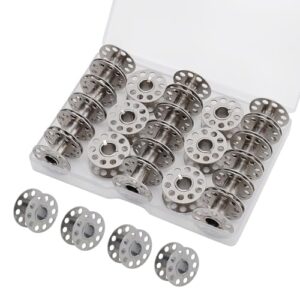
Rounding out this list with a jack-of-all-trades: these steel bobbins claim compatibility across Brother, Janome, Singer, Bernina, and Babylock machines. Metal holds more thread than plastic and resists warping under high-speed stitching, which matters for long projects.
Double-check your bobbin style first, though—some machines want 66k’s curved end, others need 15k or 15A. Match the manual before buying, or you’ll trade smooth stitches for jammed thread and timing headaches.
| Best For | Sewers and crafters using Singer, Brother, Janome, Bernina, or Toyota class 15 machines who want reliable, even tension for quilting, crocheting, or embroidery projects. |
|---|---|
| Material | Steel |
| Brand Compatibility | Singer, Brother, Janome, Bernina, Toyota |
| Primary Use | Sewing/Embroidery |
| Included Storage | Yes, 1 box |
| Skill Level | Beginner-Pro |
| Class Compatibility | Class 15 |
| Additional Features |
|
- Galvanized steel construction resists rust, corrosion, and warping even during high-speed stitching
- Polished edges and smooth surface help protect thread from scratching or fraying
- Comes with a transparent storage box to keep bobbins organized and easy to find
- Only fits standard class 15 machines, so it won’t work with other bobbin styles
- Buyers must carefully check their machine’s exact bobbin requirements before ordering
- Steel bobbins add a bit more weight compared to lightweight plastic alternatives
Beginner Bobbin Problems and Fixes
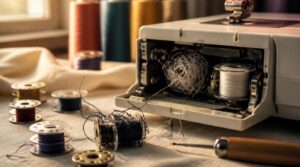
Even careful sewists hit snags with their bobbins now and then, and that’s completely normal. The good news? Most bobbin troubles come down to a handful of repeat offenders, and each one has a straightforward fix. Let’s walk through the five most common culprits so you can spot them fast and get back to stitching.
If your machine is part of the problem, choosing one with a drop-in bobbin system built for easy clothing repairs can prevent a lot of these headaches before they start.
Bird-nesting Under Fabric
Ever peek under your machine’s throat plate and find a tangled mess that looks suspiciously like a bird’s nest? That’s birdnesting in sewing terms—loose loops snarled beneath your fabric, caused by incorrect threading or uneven bobbin winding. Loose top thread tension is often the culprit.
Birdnesting is that tangled mess under your fabric caused by uneven bobbin winding and loose top thread tension
Fix it fast: rethread through the tension disc, check your bobbin winding for tightness, and always test stitch quality on scrap fabric before your real project.
Loose or Uneven Winding
Beyond messy threading, birdnesting often starts on the bobbin winder itself. Watch for:
- Tension variability—uneven pressure creates gaps and overlaps.
- Winding path misalignment—stepped, diagonal wraps instead of neat layers.
- Thread moisture—damp thread seats unevenly.
- Improper fill levels—aim for 85-95% capacity, no more, no less.
Regular maintenance and consistent spool tension keep winding smooth every time.
Wrong Bobbin Size Issues
Size mismatch shows up fast: grinding noises, skipped stitches, or a bobbin that binds and won’t spin freely.
Too large? It jams the case. Too small? It rattles loose, throwing off tension. Diameter errors mess with stitch formation, since your machine’s timing depends on exact fit—whether you’re running sewing machine bobbins in plastic or metal, or loading front or top.
Bobbin Tension Problems
Puckering or loopy stitches usually point to tension, not size. Tight stitches on light fabric? Loosen the bobbin case screw slightly. Loops showing on top? Tighten it—small turns only, an eighth-turn changes everything.
Lint buildup, mismatched thread weights, or a sticky tension disc can mimic real problems. Clean the case, test on scraps, and check stitch balance before adjusting further.
Bobbin Storage Mistakes
Where you toss your bobbins matters more than you’d think. Humid closets and hot windowsills quietly ruin thread over time.
- Skip damp bathrooms or laundry rooms—humidity control prevents mildew
- Never mix metal bobbins and plastic bobbins in one bin—material mixing scratches both
- Choose airtight, labeled containers over loose baggies to dodge lint buildup and temperature swings
Frequently Asked Questions (FAQs)
How do I know which bobbins to buy?
Picture a bobbin drawer looking like a tiny hardware store explosion—wrong sizes everywhere, none fitting.
Skip the chaos: check bobbin dimensions, identify your machine model, read the manual, and match thread weight before buying plastic, metal, top-loading, or front-loading styles.
How to use yarn bobbins for beginners?
Wind a small length onto each yarn bobbin for colorwork yarn management—this keeps intarsia colors separate, prevents tangles, and makes color changes easier.
Let each bobbin dangle and feed thread as needed, minimizing waste for beginners still building confidence.
Is bobbin lace making difficult to learn?
There’s a real learning curve, but it’s manageable: cross and twist stitches build muscle memory fast. Success hinges on tension control, practice consistency, and pattern reading. With a lacemaking pillow, lace bobbins, and steady thread, beginners progress quicker than expected.
What are the two types of bobbins?
Your machine uses either drop-in bobbins, which sit visibly with center-unwinding thread feed, or side-loading bobbins, housed in a horizontal case that feeds thread sideways.
Toploading bobbins suit most domestic machines, while frontloading styles appear in older or specialized setups.
How many bobbins should a beginner keep on hand?
Six to eight bobbins covers most beginner needs — enough for light, medium, and dark thread tones, plus a couple spares for tangles. Toss in one clear bobbin for easy color-checking, and color-code your holders so grabbing the right one stays fast.
Can pre-wound bobbins replace winding your own thread?
Skipping a step can actually save your stitches: prewound bobbins replace winding entirely, offering instant thread tension consistency, real time saving benefits, and cost efficiency on bulk spools—though rare specialty threads still need your trusty bobbin winder.
How often should bobbins be cleaned or replaced?
Give your bobbin case a quick clean every session, deeper after 4-6 hours. Replace bobbins showing scratches, rust, or jams. Watch for lint buildup and uneven winding—those are your cues something needs attention before stitches suffer.
Are lacemaking bobbins the same as sewing bobbins?
Not even close cousins! Bobbin lace bobbins are slender wooden sticks for hand-guided thread work, while sewing bobbins are compact plastic or metal discs built for a bobbin case and machine winding. Shape, material, and purpose differ completely.
Conclusion
Isn’t it funny how the smallest part causes the biggest tantrums? Master bobbins for beginners, and that grinding, snarling, thread-jamming chaos becomes a distant memory. You’ve learned the classes, the materials, the winding tricks, and the fixes—your machine has no excuse to misbehave now.
Keep a matching set on hand, check that tension disc often, and trust the process. Small spool, steady hands, smooth stitches. That’s the real secret every confident sewist eventually discovers.
- https://blog.wawak.com/post/bobbin-size-chart
- https://www.qualitysewing.com/blogs/news/all-about-bobbins
- https://sewing-mind.com/blog/sewing-machine-bobbins
- https://www.sewingpartsonline.com/blogs/education/understanding-bobbins-every-sewist-know
- https://undergroundcrafter.com/2020/07/19/sewing-basics-all-about-bobbins