This site is supported by our readers. We may earn a commission, at no cost to you, if you purchase through links.
Your machine snaps another needle, and you’re not even sewing anything wild, just plain old jeans. Denim fights back because it’s woven tight and thick, and a needle built for quilting cotton just can’t punch through those layers without bending or snapping clean off.
That’s the whole game with what size needle for denim fabric: match the needle to the weight, or keep buying needles by the dozen.
Get the size right, though, and denim sews up smooth, seams lay flat, and your machine stops fighting you every few stitches. Below, you’ll find the exact sizes, needle types, and thread pairings that turn stubborn denim into an easy project.
Table Of Contents
Key Takeaways
- Match needle size to denim weight: 80/12–90/14 for light denim, 90/14 for medium (10–12 oz), and 100/16 or larger for heavy denim (12 oz+) and multi-layer seams.
- Use a true jeans/denim needle with a reinforced shaft and medium ball point, since universal needles bend, skip stitches, and wear out fast on dense weaves.
- Pair your needle with the right thread, like Tex 30–40 corespun polyester for topstitching or Tex 60–150 core-spun polyester for general seams, and make sure the needle’s eye is roughly 40% bigger than the thread for smooth feeding.
- Replace denim needles every 4–8 hours of sewing and address skipped stitches, thread breaks, or puckering promptly, since tension imbalance, dull points, or a needle-thread-weight mismatch are usually the culprits.
Best Needle Size for Denim
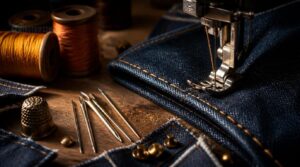
Ever grabbed the wrong needle and watched your denim fight back? The right size makes the difference between smooth stitches and a jammed, skipped mess. Here’s how needle sizes break down by weight, so you can match yours with confidence.
For a full rundown of which size pairs best with denim, silk, knits, and everything in between, check out this universal sewing machine needle sizing guide.
Quick Size Chart
Ever grab a needle and wonder if it’s really right for your denim? A quick needle size chart takes the guesswing out: 80/12–90/14 for light denim, 9014 needle for medium weight, and 10016 needle for heavy stuff.
Think of it like a fitting room chart for jeans needles, matching thickness to weight so you sew clean seams every time, no puckering, no broken threads.
Lightweight Denim Needles
Chambray shirts and summer denim projects call for a gentle touch. That’s why lightweight denim needles run 80/12 to 90/14, using a reinforced blade with a medium ball point that slips between fibers instead of tearing them.
This protects lightweight seam integrity, gives clean fine weave penetration, and helps prevent fabric fraying on those thin, delicate weaves you’re stitching all summer. For heavier materials, specialized jeans denim needles help prevent skipped stitches and needle deflection.
Medium Denim Needles
Now step up to your everyday jeans fabric. Medium denim needles run 90/14, built for that 10–12 oz weight range most jeans use.
The ball point glides between fibers instead of cutting them, while blade reinforcement stops bending through multiple layers. This tip geometry protects fibers without skipping stitches, making these your go-to sewing machine needles for everyday mediumweight denim projects.
Heavy Denim Needles
Traditional heavyweight denim (12–14 oz and up) calls for a size 100/16 needle, and this is where jeans needles really earn their keep.
The reinforced shaft resists deflection through thick layers, while a wedge-shaped tip cuts cleanly instead of pushing through. Look for color-coded branding and strong shank construction; both signal a needle built for serious denim work.
Multi-layer Seam Needles
What happens when your seam hits five or six layers of denim at once, like a folded hem or a bulky pocket stack? A multi-layer seam needle takes care of it. With a thicker shank and reinforced eye, it resists deflection through thick layers. Sharp tip geometry keeps penetration depth consistent, cutting friction and layered fabric creep, so you avoid needle breakage on heavyweight fabric sewing jobs.
Match Needle to Denim Weight
Not all denim is created equal, and your needle should match the weight in your hands. A light chambray shirt and a stiff pair of work jeans call for two totally different needles. Let’s break it down by weight, so you can pick the right size every time.
8–10 Oz Denim
Think of 8–10 oz denim as your favorite summer tee, but in jean form. It’s got great drape and breathability, perfect for warm weather and casual wear.
Because it’s thinner, you’ll get away with a standard 9014 or 9014 needle size for jeans—no need for anything heavier.
Great for seasonal denim trends like dresses or relaxed-fit shorts.
10–12 Oz Denim
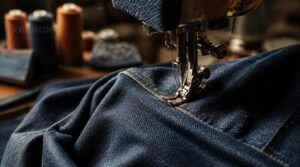
Ten to twelve ounces is the sweet spot, the denim equivalent of a good pair of walking shoes. That midweight fabric drape comes from a tight twill weave that’s strong but not stiff, and indigo dye fades beautifully with wear.
Stick with a standard needle size for jeans, size 90/14, unless it’s an elastane mix.
Why this weight works:
- Year-round versatility
- Softer hand feel
- Shorter break-in period
12–14 Oz Denim
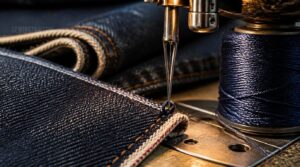
This is where denim starts feeling like real heavyweight denim, dense enough to stand up to years of wear. That tight weave density (think selvage-quality construction) needs a size 100/16 denim needle to punch through cleanly.
Sanforization keeps shrinkage in check, and indigo fades gorgeously along stress points. Pair with Tex 150 thread, and nudge your tension settings slightly higher for clean stitches.
Workwear Denim Layers
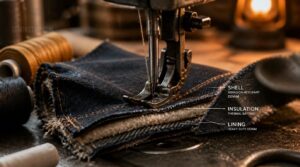
Ever tried sewing through a jacket with three fabric layers stacked up? That’s workwear denim territory, and it needs a reinforced denim needle, size 100/16 or bigger.
These layers combine moisture control bases, insulation, and abrasion-resistant shells, so thick layers build up fast. Bump your sewing machine tension slightly, use a walking foot, and let the needle’s strength handle seasonal layering versatility without skipping stitches.
Upholstery-grade Denim
Sofas take a beating, so upholstery-grade denim needs to survive way more than your average pair of jeans.
- Weight: 12–16 oz, heavyweight denim territory
- Weave: tight, minimum 60 threads per inch
- Abrasion: Wyzenbeek rated 60,000+ double rubs
- Extras: stain resistance, protective backing
Use a size 110/18 denim needle, walking foot, and slightly higher sewing machine tension.
Choose The Right Needle Type
Size is only half the battle, though. The right needle type matters just as much, since denim isn’t one single fabric with one single personality. Here’s what sets each option apart.
Jeans Needle Features
Think of jeans needles as the workhorses of your machine, built tough where regular needles give up. They feature a reinforced blade design and thicker shaft, giving real shaft deflection resistance so they won’t bend under pressure.
That stability matters. A wobbly needle skips stitches; a stable one punches through layer after layer with confidence, keeping your seams straight and your sanity intact.
Denim Needle Points
What actually happens at the needle’s tip matters as much as its size. A denim needle uses a medium ball point—sharper than universal, gentler than a true sharp—to push fibers aside instead of slicing them, reducing weave damage.
That fiber displacement, paired with a strong shaft and slender eye, is why needle point sharpness balances so well here:
- Cleaner holes, less strain
- Fewer skipped stitches
- Less fraying at the eye
- Steadier seams overall
Stretch Denim Needles
Stretch denim needs its own needle, not a regular denim needle. A stretch needle in size 80/12 or 90/14 uses a rounded point and deeper scarf (that groove above the eye) to protect elastic fibers from snapping.
Skip it, and you’ll get skipped stitches or fabric distortion along your seams—annoying stuff that’s easy to avoid with the right point geometry.
Universal Needle Limits
Universal" needles sound like a promise, but they’re more like a compromise. They fit most machines, sure, but denim performance gaps show up fast on heavy weaves.
Watch for:
- Skipped stitches
- Bent tips
- Shank tolerance issues
Scarf sizes vary by brand, too. Always check your machine manual—universal compatibility myths break down when denim’s on the table.
Titanium Needle Benefits
Ever wonder why your needle glows warm after a long denim session? That’s friction, and it’s exactly where titanium earns its keep.
| Feature | Steel Needle | Titanium Needle |
|---|---|---|
| Corrosion resistance | Moderate | Excellent |
| Sharpness retention | Shorter | Longer-lasting |
| Bending under tension | Common | Minimal |
With better heat management and a reinforced shaft, titanium needle size options keep sewing machine needles stable, sharp, and ready for dense denim.
Pair Denim Needles With Thread
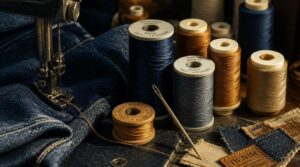
A great needle can still let you down if you pair it with the wrong thread. Think of thread as the needle’s partner, they need to work together, not against each other. Here’s what to look for when matching the two up.
Polyester Thread Options
Why does polyester dominate denim projects? Simple: it’s got tensile strength that shrugs off heavy seam stress, plus solid UV resistance so colors won’t fade in sunlight.
Look for:
- Core-spun threads for extra tenacity
- Silicone coatings to cut friction
- Good recovery properties, so seams flex without snapping
That combo makes polyester ideal for heavyduty topstitching thread work.
Heavy Topstitching Thread
Bold topstitching demands bold thread. Heavy topstitching thread runs Tex 30 to Tex 40, thick enough to sit proudly on top of denim seams.
Most are corespun polyester with wax coatings for friction reduction, letting thread glide through needle eyes smoothly.
| Tex Weight | Best Use |
|---|---|
| Tex 30 | Standard topstitch |
| Tex 40 | Bold, heavy-duty seams |
Colorfastness standards keep colors vivid through repeated washing.
Cotton Topstitching Thread
Want that classic denim look, all matte and no shine? Cotton topstitching thread, spun 30–40 wt, delivers it.
- Matte, authentic finish
- Works with 14 oz+ denim
- Colorfast dyes resist fading
- Cotton-poly cores add strength
Pair it with a sharp jeans needle, test tension on scraps first, since cotton runs thicker than polyester and needs a firmer hand.
Needle Eye Compatibility
Here’s a trick tailors swear by: match the eye, not just the needle size, to your thread. A larger eye size lets thick topstitching thread glide through without friction. Slotted eyes work best for bulky threads, cutting down on drag.
Get the eye diameter ratio right, roughly 40% bigger than your thread, and denim needles feed smoothly, every stitch, every layer.
Preventing Thread Shredding
Ever notice thread fraying like a rope pulled too tight? That’s usually tension imbalance, not a bad thread.
Keep spools elevated, angle the thread path away from sharp edges, and clean lint from the bobbin area often. Add a stabilizer underneath for dense seams, and use a sharp needle sized right for your thread weight. Small habits, fewer breaks.
Top 2 Denim Sewing Needles
Ready to stop guessing and just buy the right needle? Two brands show up again and again in serious denim projects, and for good reason. Let’s look at what makes each one worth keeping in your sewing kit.
1. Schmetz Jean and Denim Needles
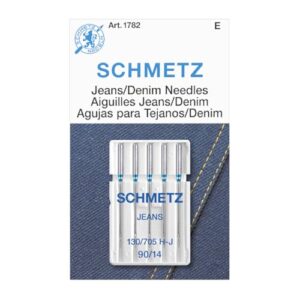
When denim brands get mentioned in sewing circles, Schmetz comes up first, and for good reason. Their 130/705 H J system covers sizes 70/10 through 110/18, so you’re set whether you’re stitching light chambray or thick workwear.
The specially designed point slices through tight weaves with minimal deflection. That means fewer skipped stitches, less breakage, and cleaner seams on multi-layer denim projects your machine might otherwise struggle with.
| Best For | These needles are best for sewers who regularly work with heavy fabrics like denim, canvas, and twill and need reliable performance on multi-layer projects like quilts and coiled bowls. |
|---|---|
| Point Type | Medium ball point |
| Best For | Denim, canvas, twill |
| Needle Length | 1.5 inches |
| Pack Quantity | 5 needles |
| Construction | Reinforced, bend-resistant |
| Fabric Weight | Heavy/dense fabrics |
| Additional Features |
|
- Reinforced construction resists bending and breakage, even under demanding use
- Medium ball point and optimized blade design reduce needle deflection and skipped stitches
- Works with all standard home sewing machines, no special equipment needed
- Not suited for lightweight fabrics, so you’ll need a different needle for delicate projects
- Designed only for home sewing machines, not industrial setups
- Comes in a single pack size of 5, which may require reordering for larger projects
2. Janome Denim Sewing Machine Needles
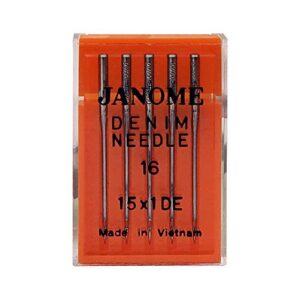
If your machine’s a Janome, this one’s your match. These needles have a reinforced shaft built to handle two or more denim layers without bending, plus a sharp point that pierces dense weaves cleanly.
The slender eye and larger front groove make room for thicker topstitching thread, so shredding stays rare. Just remember: they’re made for Janome’s flat-back needle system only, so double check compatibility before you buy.
| Best For | Janome sewing machine owners who regularly work with denim, leather, vinyl, or other thick, heavy-duty fabrics. |
|---|---|
| Point Type | Medium ball point |
| Best For | Denim, canvas, twill |
| Needle Length | 1.5 inches |
| Pack Quantity | 5 needles |
| Construction | Reinforced, bend-resistant |
| Fabric Weight | Heavy/dense fabrics |
| Additional Features |
|
- Wedge-shaped tip delivers strong piercing power for clean, large holes on tough materials
- Handles a wide range of heavy fabrics, including denim, leather, vinyl, and suede
- Produces even, reliable stitching on thick, non-woven fabrics
- Only works with Janome machines that use flat-back needles, limiting compatibility
- Not suitable for lightweight or delicate fabrics
- Comes in a pack of just 5 needles, so you may need to reorder often for frequent projects
Fix Denim Needle Problems
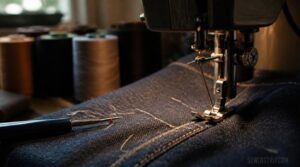
Even with the right needle, denim can still throw you a curveball now and then. Maybe it’s skipping stitches or snapping thread when you least expect it. Here’s how to spot the problem and get your machine back on track.
Skipped Stitches
Nothing’s more annoying than watching your seam skip along like a bad heartbeat. Usually it’s needle size mismatch, tension imbalance, or dull points losing grip on dense denim weave.
Check these 5 fixes:
- Match needle to fabric weight
- Rewind bobbin evenly
- Recheck thread tension path
- Inspect for timing misalignment
- Swap dull needles promptly
Needle Bending
Needle bending is like steering a stubborn shopping cart—if your denim needle starts to curve, you lose precision and risk breakage. High bevel angles on tips help needles slice sideways, but if you push past a safe bend radius (2–6 mm), fatigue sets in. Always check for micro cracks and use precision bending guides. Stainless steel lasts longest.
A curving denim needle loses precision fast, so respect the bend radius before fatigue turns into breakage
| Needle Type | Safe Bend Radius | Tip Deflection |
|---|---|---|
| Denim (100/16) | 4–6 mm | High |
| Jeans (90/14) | 3–5 mm | Medium |
| Universal (80/12) | 2–4 mm | Low |
| Titanium (100/16) | 4–6 mm | High |
| Stretch (90/14) | 3–5 mm | Medium |
Thread Breaking
Ever notice thread snapping right as you hit your stride? Nine times out of ten, it’s tension imbalance—top too tight, bobbin too loose. Check for thread shredding at the eye, spool friction, or bobbin path snags first.
Also confirm proper thread pairing: match thread weight to your denim’s density. Fixing tension and rethreading solves most breaks fast.
Fabric Puckering
Why does a seam ripple like tiny waves instead of lying flat? Usually it’s tension imbalance or stitches packed too tight.
Check these first:
- Sewing machine tension settings (upper vs. bobbin)
- Stitch length—shorten too much, puckers worsen
- Feed system errors from mismatched layers
- Shrinkage differential after washing mixed fabrics
A stabilizer or walking foot often smooths things right out.
Needle Replacement Timing
Your denim needle isn’t immortal, it dulls fast under heavy fabric. Replace it every 4 to 6 sewing hours to avoid deflection, skipped stitches, or breakage.
| Warning Sign | Action |
|---|---|
| Dulling, popping sounds | Swap needle |
| Bent tip | Replace immediately |
| Lint buildup | Clean, then test |
Always test on a scrap first—cheap insurance against ruined seams.
Frequently Asked Questions (FAQs)
Can I use a 100/16 needle for denim?
Think of the 100/16 as denim’s trusty workhorse, sturdy and reliable. Yes, this denim needle cuts through heavyweight denim penetration beautifully.
It suits most sewing machine compatibility needs, though upholstery-grade layers push past its needle size limitations for optimizing stitch strength.
What needle works best on denim?
A true denim needle with a sharp, blade-like point wins for stitch precision. It slices dense weaves cleanly, matches fabric density impact and material thickness, and pairs well with size 100/16 for heavyweight denim’s toughest layers.
Is a 110-18 needle good for denim?
Yes—an 11018 needle is your go-to for extra heavy sewing: industrial workwear, multi-layer seam density, and upholstery grade strength. It controls maximum thickness penetration on heavyweight denim without bending, making it the sturdiest sewing needle for denim projects like these.
How often should I replace a jeans needle?
Swap it out every 6 to 8 hours of stitching, sooner for dense multi-layer seams. Watch for dulling, thread friction, or skipped stitches. Many sewers just replace after each project, keeping sharpness and machine timing solid throughout.
Can I use a regular needle on denim?
Ever tried forcing a butter knife through a steak? That’s a regular needle on heavyweight denim. It skips stitches and bends fast. Universal needles handle light layers okay, but always test on scraps before committing.
What thread weight works best with denim needles?
Think of thread weight like shoe size for your stitches—too small and it slips. Core-spun polyester in Tex 60–150 works well for most denim, while heavyduty polyester or Tex 180+ topstitch thread suits thicker, multi-layer seams beautifully.
Do I need a walking foot for denim?
Picture two hikers crossing gravel, one solo, one roped together in sync. That’s a walking foot on heavy denim.
Not mandatory, but it prevents seam crawling and fabric shifting on multi-layer thickness — dual feed machines work too.
How do I flatten bulky denim seams before sewing?
Press seams hot with steam, then set them flat with a wooden clapper. Trim and grade seam allowances, tap stubborn spots with a mallet, and use a hump jumper so your presser foot glides smoothly over thick intersections.
Conclusion
Most machines snap three needles before someone finally checks the size chart, that’s how common this mistake really is. Don’t be that statistic.
Once you know what size needle for denim fabric actually calls for, the rest falls into place: right point, right weight, right thread. Your seams lay flat, your machine quits fighting you, and jeans stop feeling like a battle. That’s the whole reward, smooth stitches instead of snapped needles.
- https://zon.everysimply.com/denim+needle+size/dp/sewingtrip-20
- https://sewyoursoul.com/what-size-sewing-machine-needle-for-denim
- https://www.maggieframes.com/blogs/embroidery-blogs/the-ultimate-guide-to-needle-size-for-jeans-sizes-types-and-techniques
- https://www.kenssewingcenter.com/30338-klasse-jeans-denim-needle-size-14.html
- https://www.mhthread.com/blog/products/jeans-needle-sizes-for-hemming