This site is supported by our readers. We may earn a commission, at no cost to you, if you purchase through links.
Most sewers only call a technician when something breaks. By then, the damage is done—worn gears, blown timing, a repair bill that dwarfs what regular upkeep would have cost.
Your machine is a precision instrument. Dozens of moving parts work in tight coordination every time you press the foot pedal, and each one accumulates wear you can’t see. A missed service interval doesn’t just shorten your machine’s life. It quietly degrades stitch quality, strains your motor, and turns small fixes into expensive ones.
The good news? Staying ahead of it isn’t complicated. This sewing machine servicing intervals guide breaks down exactly when to clean, oil, and service—based on how you actually sew.
Table Of Contents
Key Takeaways
- Your service interval should match how you actually sew — light home use needs professional servicing every 1–2 years, daily sewers every 6–9 months, and heavy-duty use every 300 hours.
- Five minutes of daily cleaning (lint, thread path, exterior wipe-down) prevents the slow damage that turns small fixes into expensive repairs.
- Always use lightweight sewing machine oil on approved parts only — household oils like olive oil attract lint, clog mechanisms, and ruin stitch quality over time.
- Grinding sounds, persistent thread nesting, smoke, or a stiff handwheel are your machine’s way of asking for a technician before the damage gets worse.
Set Your Service Schedule

Not every machine runs on the same schedule — and neither should your maintenance routine. The right service interval depends on how often you sew, what type of machine you have, and how hard you push it. Here’s how to match your schedule to your machine.
Tailoring your routine to your actual habits is exactly what this sewing machine maintenance schedule guide helps you figure out.
Light Home Sewing Intervals
Most light home sewers only sit down a few times a week — and that’s perfectly fine for your machine, as long as you stick to a rhythm.
- Annual timing check keeps stitches consistent
- Service logs track wear before problems start
- Professional servicing every 1–2 years extends machine lifespan
- Routine inspection habits catch small issues early
Think of it as preventive maintenance planning, not damage control.
Daily Sewing Intervals
If you sew 15 to 60 minutes daily, your machine works harder than most home setups — so your service schedule tightens. Aim for professional servicing every 500 hours, roughly every six to eight months at two hours daily.
Prep your space five minutes early to cut setup friction. That small habit keeps momentum steady and prevents fatigue from derailing your routine.
Heavy-duty Use Intervals
Step up from daily sewing to heavy-duty use — think high-speed production runs, continuous operation for hours — and your service schedule changes fast.
Schedule professional servicing every 300 hours of use. At full tilt, that arrives quickly. Take a 15-minute cooldown break every two hours to manage motor strain and heat buildup. Your machine’s longevity depends on it.
Vintage Machine Schedules
Older mechanical models run on a tighter timeline. Plan preventive maintenance every 6 to 12 months, and check belts and pulleys every three months — worn pulleys cause slipping that quietly damages gears.
Grease point lubrication follows a 6-month cycle on most vintage machines. Keep a service log marking dates, parts, and hours. Quarterly restoration cycles help you catch gear wear before it becomes a real problem. For example, cleaning a vintage electric sewing machine can be done effectively using white vinegar.
Computerized Machine Needs
Computerized machines need a slightly different approach than mechanical ones. Every 8–10 hours of use, run the built-in self-diagnostic routine to check motor drivers and sensor health. Keep firmware update security current — outdated firmware can introduce errors that mimic mechanical faults. Enable cloud pattern sync to back up your project libraries automatically.
Wireless connectivity options like Bluetooth or Wi-Fi simplify pattern transfers, but check that your hardware storage needs are met — at least 256GB SSD keeps everything running smoothly. Watch for overheating: clear ventilation paths regularly, as thermal management directly affects motor control accuracy during long runs. Your computerized machine is smart, but it still needs your attention.
Follow Daily Cleaning Steps
Daily cleaning doesn’t have to take long — five minutes after each session keeps your machine running smoothly for years. Think of it as a quick reset that prevents small problems from turning into costly repairs. Here’s exactly what to do each time you finish sewing.
Wipe Exterior Surfaces
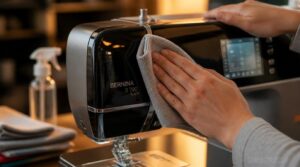
Your machine’s outer shell deserves the same respect as its inner parts. After every session, grab a microfiber or lint-free cloth — paper towels can scratch glossy finishes.
For a deeper clean between sessions, preventing sewing machine jams before they start means wiping down the needle plate and feed dogs where lint quietly builds up.
Dampen it lightly with diluted mild dish soap or a 50% isopropyl solution for sticky spots. Never spray liquid directly on the machine. Wipe top to bottom, then dry immediately to protect plastic panels and metal edges.
Clear Bobbin Lint
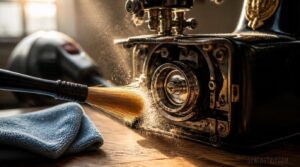
Lint silently wrecks smooth stitches. Preventing lint accumulation in the bobbin area keeps tension steady.
- Sweep the bobbin housing with a lint brush
- Wipe with a microfiber cloth for stray fibers
- Use a small vacuum in tight spaces
- Choose low-lint bobbin thread to cut future buildup
Some bobbin cases feature lint-reducing coatings — still, the slot needs daily attention.
Brush Needle Plate
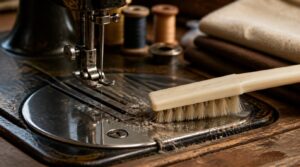
The needle plate takes more abuse than it looks. After each session, use a small nylon brush to sweep bristles and loose fibers away from the needle path. Nylon bristles handle this without scratching delicate surfaces.
Watch for flattened or bent bristles — they stop guiding fabric cleanly and let snags creep in. Replace worn bristles before they become a problem.
Check Thread Path
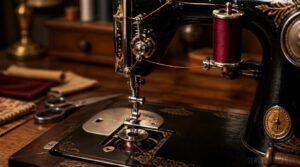
Thread slipping out of a guide is silent trouble. Run through this quick check each session:
- Confirm upper thread routing passes every guide in order
- Check lower thread path exits the bobbin case cleanly
- Verify needle eye alignment — thread front to back
- Make sure the take-up lever sits fully engaged
- Peek under fabric for any bird nest buildup
Misrouting causes thread bunching fast.
Cover After Sewing

A bare machine is a dust magnet. Slipping a dedicated cover on after every session blocks lint, reduces static dust buildup by up to 35 percent, and protects painted surfaces from scratches.
| Cover Feature | What It Does | Why It Matters |
|---|---|---|
| Quilted cotton exterior | Cushions accidental bumps | Guards paint and cosmetic finishes |
| Non-slip inner lining | Keeps machine stable | Prevents shifting during storage |
| Elastic or drawstring edge | Seals base and sides | Blocks dust and lint entry |
| Exterior pockets | Stores needles and bobbins | Keeps tools close and organized |
| Breathable fabric panel | Allows heat to escape | Prevents moisture buildup inside |
Model-specific fit matters — loose fabric snags on knobs. Store your covered machine away from direct sunlight to slow fabric aging.
Add Weekly Monthly Maintenance
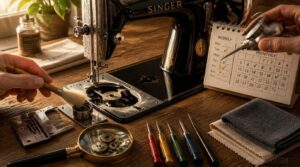
Daily cleaning keeps things tidy, but weekly and monthly habits are what actually protect your machine long-term. A little extra attention at regular intervals catches problems before they turn into costly repairs. Here’s what to add to your routine each week and month.
Clean Tension Disks
Sticky residue is tension’s quiet enemy. Old oil and cotton lint pack between hardened steel or brass disks, reducing grip consistency and causing skipped stitches.
Weekly, slide a lint-free swab lightly dampened with isopropyl alcohol between the disks — never spray directly. Use soft nylon floss to clear debris without scratching precision-machined surfaces. Always release tension first, then recheck your tension settings after cleaning.
Deep-clean Feed Dogs
Once the tension disks are sorted, move a few inches lower — the feed dogs need the same attention.
Remove the needle plate first. Use a soft brush to sweep lint from between the teeth, then a dental-type pick to dislodge stubborn threads without bending the teeth. Vacuum loosened debris with a slim nozzle. Confirm feed dog height is correct after reassembly, then test on scrap fabric.
Inspect Bobbin Case
With the feed dogs clean, slide out the bobbin case and hold it to the light. Run a fingernail along the thread path edge — any snag means a burr or nick that frays thread and causes nesting underneath.
Check these during every inspection:
- Spring tension should feel firm, not floppy
- Edges must be smooth and burr-free
- The case should sit snug with no lateral wobble
- Confirm correct notch alignment per your manual
- Look for lint packed around the tension spring
A loose or misaligned case quietly causes skipped stitches at speed.
Replace Dull Needles
Once the bobbin case checks out, turn your attention upward — the needle takes more punishment than any other part.
Skipped stitches, fabric snags, or frayed edges are your clearest signals. Replace needles after every project, or every four hours of heavy use. Match needle type to fabric — ballpoint for knits, sharp for wovens. Drop old needles into a capped container. Never bin them loose.
Record Maintenance Dates
Every service session deserves a paper trail. Log three things after each maintenance cycle:
- The date of completion
- Your name as the responsible party
- The next due date
Use a digital maintenance log — it timestamps changes automatically. Set a reminder one month ahead. That single habit turns reactive repairs into real preventative care.
Lubricate at Proper Intervals
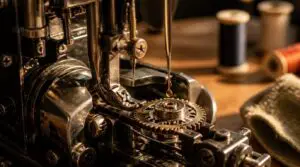
Lubrication is one of those things that’s easy to skip — until your machine starts groaning at you. Done right, it keeps every moving part running smoothly and extends your machine’s life by years. Here’s exactly what you need to know to oil your machine the right way.
Check Your Manual First
Your manual is the most reliable lubrication guide you own. It identifies approved lubricant grades, pinpoints exact moving parts, and flags safety warning symbols to watch before opening any cover.
| Machine Type | Lubrication Reference |
|---|---|
| Light home use | Every 8–10 sewing hours |
| Daily sewing | Monthly or per manual spec |
| Heavy-duty models | Every 8–10 active hours |
| Vintage machines | Model-specific guide only |
Skipping this step risks voiding your manufacturer warranty. Some models have authorized service features requiring specific tool sizes — your manual identifies those clearly.
Oil Approved Moving Parts
Apply one drop of lightweight sewing machine oil to approved moving parts every 8–10 sewing hours. The right oil maintains film strength under load, protecting metal-to-metal contact points without attracting dust.
Look for oils that offer:
- Strong viscosity index for consistent flow across temperatures
- Shear stability under rapid or heavy cycling
- Seal material compatibility with nitrile rubber components
- Metal corrosion inhibitors to prevent rust on bearings
- OEM-approved lubricant grade matching your machine’s spec
Avoid Household Oils
Reach for olive oil in a pinch, and you’ll regret it. Kitchen oils attract lint, clog your tension mechanisms, and leave residue on the needle plate that ruins stitch formation.
Mineral-based skin oils soften gaskets and seals over time. High-viscosity contaminants don’t absorb evenly into moving parts — they sit, collect dust, and eventually transfer grime straight onto your fabric.
Grease Heavy-duty Gears
Heavy-duty machines run gear systems that need more than oil — they need synthetic PTFE grease. It maintains consistency from -20 to 150°C, so viscosity stays stable under load.
Look for NLGI grade 2 with EP additives, which form a protective film between gear teeth and prevent micro-welding during shock loads. One application done right protects gears for months.
Watch for Dry Mechanisms
A dry mechanism doesn’t announce itself — it just quietly grinds down. When internal moisture evaporates from lubricated parts without replacement, friction increases and heat transfer suffers.
Watch for these warning signs:
- Stiff or sluggish handwheel movement
- Unusual clicking during operation
- Uneven stitch formation
- Increased motor noise under normal loads
Good airflow control speeds evaporation — which means oil depletes faster than you’d expect.
Know Professional Service Signs

Your machine can’t speak, but it does send signals when something’s wrong. Learning to read those signs early keeps small problems from turning into expensive repairs. Here are the key warning signs that mean it’s time to call a professional technician.
Your machine speaks through warning signs — learn to read them before small problems become expensive repairs
Skipped Stitches
Skipped stitches are rarely random. They usually point to something specific — a dull or wrong needle, tension disk slippage, or poor hook timing alignment.
Start by rethreading completely and testing on a scrap. If skips persist, check your needle type against your fabric weight. Stretch fabrics need ballpoint needles. When basic fixes don’t hold, your timing likely needs a technician.
Grinding or Clicking
That metallic grinding or clicking mid-stitch isn’t just annoying — it’s your machine flagging real damage. Common culprits include worn bearing races, misaligned gear trains, drive belt slippage, or motor commutator wear from heavy use.
Each problem worsens under load. If slowing the handwheel changes the sound’s pitch, bearing wear is likely. Stop sewing and call a technician before the damage spreads.
Thread Nesting Underneath
Unlike grinding, thread nesting is quieter but just as telling. That tangled bird’s-nest under your fabric means tension balance is off — often loose upper thread or a bobbin tension mismatch.
Check these five things first:
- Rethread with the presser foot up
- Test bobbin tension adjustment on scrap fabric
- Confirm the takeup lever rises fully
- Clear lint buildup from the bobbin area
- Match needle size to your fabric weight
Persistent nesting after those steps needs a technician.
Stiff Handwheel Movement
A handwheel that resists turning is your machine signaling something’s wrong inside. Common causes include lint-clogged shaft bearings, dry gears from missed lubrication, or a thread jam locked in the hook race.
Try re-threading completely and applying one drop of sewing machine oil to the shaft. If it still drags, worn bearings or a bent shaft need a technician’s hands.
Smoke or Burning Smells
Don’t ignore a burning smell — it’s rarely nothing. Causes range from dust combustion on hot surfaces to electrical insulation breakdown on aging wiring harnesses. Motor bearing overheating and worn belt friction both produce sharp, metallic-tinged odors before visible damage appears.
Stop sewing immediately. Unplug the machine and check for scorch marks or melted plastic near the motor. This one needs a technician.
Frequently Asked Questions (FAQs)
How often should your sewing machine be serviced?
Servicing schedules save serious headaches. Most home machines need professional attention once a year — or every 500 hours of use. Daily sewers should book service every 6 to 9 months.
Which singer is best for heavy fabrics?
Singer heavy-duty models with metal frames handle denim, leather, and canvas well. Use a 90/14 or larger needle, engage the walking foot, and set high torque for clean, consistent stitching through tough layers.
What is the average cost to service a sewing machine?
A standard tune-up runs $75 to $110 for mechanical models. Computerized machines? Expect $100 to $250. Some shops add a $20–$40 diagnostic fee separately. Always get three written quotes before committing.
Can I service my sewing machine myself at home?
Yes, you can handle daily maintenance yourself — wiping surfaces, clearing lint, and replacing needles. Leave internal timing and gear repairs to a professional to protect your warranty and avoid costly damage.
What happens if I skip regular oiling sessions?
Skipping oil causes internal friction heat to spike. Metal grinds against metal, accelerating wear fast. Without proper sewing machine lubrication, parts seize up unexpectedly — and repairs cost far more than a single oil drop ever would.
How do I find a qualified sewing machine technician?
Look for a technician with manufacturer factory training and verified brand authorization. Check customer reviews, confirm they use genuine parts, and ask for a written estimate before any repair begins.
Does machine brand affect how often servicing is needed?
Yes, brand matters. Sealed or self-lubricating models need less frequent oiling than older belt-driven machines. Digitalized machines may also require software updates and sensor calibration as part of their regular maintenance cycle.
Are warranty claims affected by missed service appointments?
Missed service appointments can absolutely affect your warranty claim approval. Manufacturers may deny claims if a fault links directly to skipped maintenance. Keeping verifiable service records protects your coverage and strengthens any claim you need to file.
Conclusion
A stitch in time saves nine — and with your machine, that’s not just a saying. Follow this sewing machine servicing intervals guide and you’re not reacting to problems; you’re preventing them.
Clean lint before it builds. Oil before parts run dry. Call a technician before grinding becomes grinding halt.
Your machine rewards every bit of attention you give it. Stay consistent, and it’ll run quietly, stitch cleanly, and last longer than you expect.
- https://sewandvac.com/blogs/news/sewing-machine-maintenance-handy-tips-straight-from-the-experts
- https://sterlingsewing.com/blogs/tag/sewing-machine-maintenance-checklist
- https://whip-stitch.com/sewing-machine-maintenance-a-sample-schedule
- https://blog.moodfabrics.com/sewing-machine-care-and-maintenance
- https://www.vintagesingerparts.com/blogs/sew-central/unlocking-sewing-machine-longevity-the-ultimate-guide-to-oil-and-lubrication