This site is supported by our readers. We may earn a commission, at no cost to you, if you purchase through links.
A well-made suit jacket holds its shape after years of wear—and most people assume that’s the fabric doing the work. It isn’t.
Hidden inside, a layer of hair cloth interfacing canvas acts as the jacket’s skeleton, quietly holding everything together. This woven material blends cotton, viscose, and a small but mighty percentage of horsehair, which gives it a firmness no synthetic alternative quite replicates.
Tailors have relied on it for centuries because it molds to the body under steam, bounces back after daily wear, and breathes in ways that fused alternatives simply can’t match.
Understanding what it is—and how to work with it—changes how you approach structured garments entirely.
Table Of Contents
Key Takeaways
- Hair canvas interfacing is the hidden skeleton inside a well-made jacket, using real horsehair fibers to hold shape and breathe in ways no synthetic alternative can match.
- Where and how you place it matters — front panels, lapels, collars, and shoulders each have precise placement zones that determine whether your garment looks polished or just put together.
- Matching canvas weight to your fabric is non‑negotiable: too heavy and your garment stiffens, too light and it loses structure, so always pair GSM to fabric type before you cut.
- Once sewn in, hair canvas becomes dry‑clean only — water causes horsehair to felt and shift unevenly, undoing the structure you worked hard to build.
What is Hair Canvas Interfacing?
Hair canvas interfacing is one of those materials that serious sewists swear by once they try it.
It provides the kind of firm, lasting structure that’s hard to replicate with modern alternatives, making it worth understanding how lining and underlining differ before choosing your stabilizer.
It’s the hidden layer that gives a jacket its shape and keeps it looking sharp wear after wear.
Here’s what you need to know about what it’s made of, how it behaves, and what to expect when you work with it.
Definition and Composition
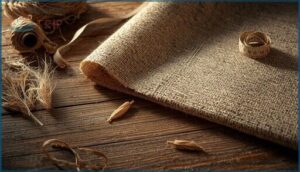
Hair canvas is a woven fabric interfacing, built from a blend of natural and synthetic fibers — usually around 27% cotton, 47% cotton viscose, 11% polyester, 4% wool, and 11% horsehair. That animal hair proportion is what sets it apart.
The stiffness mechanism comes straight from those fibers woven into the weave structure, giving the canvas its signature body and resilience. It’s considered the gold standard in tailoring for its soft shaping properties.
Key Properties and Characteristics
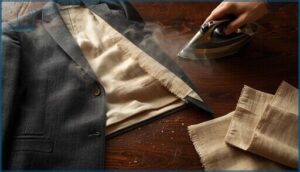
What makes hair canvas stand out as a fabric interfacing is how it performs — not just what it’s made of. The firmness level holds jacket fronts crisp without feeling cardboard‑stiff.
Its resilience quality means it bounces back after daily wear. You get real breathability from the open weave, plus impressive molding ability under steam.
That’s garment reinforcement working exactly as it should. It is commonly employed for menswear shoulder reinforcement.
Common Dimensions and Weight

Size and weight matter more than most sewers expect. Picking the wrong canvas can throw off your entire garment construction and tailoring plan.
Standard widths generally run 58 to 80 cm, while roll lengths range from single meters to 50‑yard bulk cuts. Weight ranges span 151 g/m² for lightweight options up to 277 g/m² for heavy structured coats.
- Lightweight options start around 151–174 g/m²
- Medium weight variants land between 190–234 g/m²
- Standard widths range from 58 cm to 80 cm
- Roll lengths vary from retail cuts to 50‑yard bulk rolls
- Heavyweight fabric interfacing for garments reaches 277 g/m²
How Hair Canvas is Used in Sewing
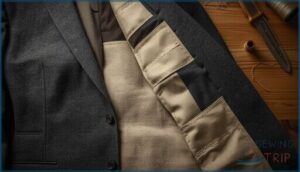
Hair canvas does a lot of heavy lifting inside a well-made garment. It’s not just stuffed in there randomly — where and how you use it actually makes a big difference in the final result.
Here’s a look at the key ways tailors put it to work.
Applications in Tailoring
hair canvas is your jacket’s backbone. In tailoring, it drives front canvas construction, lapel shaping, and collar support — keeping every edge crisp and in place.
Tailors also rely on it for waistband reinforcement and pocket stability. These sewing techniques are what separate a polished, store-ready garment from one that just looks homemade.
For bags and accessories where structure matters just as much, free printable sewing patterns for tote bags show how these same reinforcement principles translate beautifully outside of garment work.
That’s the real power of proper interfacing and garment construction.
Structured Garments and Bodices
Bodices and structured jackets need more than good fabric — they need a solid foundation.
That’s where hair canvas interfacing earns its place.
Chest support keeps the upper torso smooth, while roll line precision controls exactly where a lapel folds.
Collar reinforcement stops curling at the neck.
These shaping methods give your garment construction real staying power, turning fashion design and tailoring into something truly lasting.
Placement Within Garments
Placement is everything in garment construction. Hair canvas interfacing sits precisely within each zone — front panel alignment starts at the roll line and stops about 1/8 inch from seam allowances.
The lapel reinforcement zone extends just above the break line. At the collar attachment point, canvas overlaps the neckline by 1/2 inch. Shoulder seam positioning and the hem support zone complete the structure.
Types of Hair Canvas and Alternatives
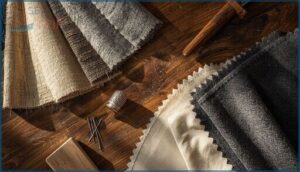
Not all hair canvas is the same, and the differences actually matter more than you’d think. Your choice between woven or non-woven, sew-in or fusible, can shape how your finished garment looks and holds up over time.
Here’s a breakdown of the main types and alternatives worth knowing.
Woven Vs. Non-Woven Interfacing
Woven and non-woven interfacing aren’t just different materials — they behave completely differently. Hair canvas is a woven fabric interfacing, meaning it has a grainline alignment you actually need to respect when cutting. That grainline gives it drape flexibility that non-woven options simply can’t match.
Non-woven interfacing wins on cost efficiency and supplier availability, but it feels stiff and papery.
For custom-fit jackets, woven hair canvas is the clear choice.
Sew-in Vs. Fusible Options
Sew-in interfacing is the traditional choice for custom hair canvas work. It preserves your fabric’s natural drape impact and resists bubbling over time — strong durability concerns answered.
Fusible interfacing wins on application speed and cost efficiency, but it can stiffen delicate fabrics. For most sewing and embroidery projects, fabric compatibility decides it.
Structured suits? Go sew-in. Quick builds? Fusible works fine.
Alternative Interfacing Materials
Not every project calls for hair canvas. Sometimes a lighter or firmer option fits better.
Linen canvas strength makes it a top pick for lapels and collars — it holds shape without bulk.
Need buckram stiffness for rigid cuffs? It delivers.
Silk organza lightness works beautifully under delicate fabrics.
Cotton duck body suits casual coats, while muslin breathability keeps lighter builds comfortable and stable.
Choosing The Right Hair Canvas
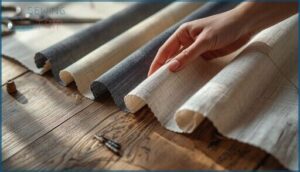
Picking the right hair canvas comes down to few key factors.
Not every canvas works for every project, and the wrong choice can throw off your whole garment.
Here’s what to look at before you buy.
Matching Weight to Fabric Type
Think of hair canvas as a partner for your fabric — it needs to match the weight to work well.
For lightweight fabric pairings, use 137 gsm canvas with silks or fine wools. Medium weight matching calls for around 180 gsm. Heavyweight canvas choices, like 242 gsm, support thick coatings. These GSM compatibility guidelines keep your garment balanced and structured without stiffness.
Quality Considerations
Weight sets the foundation, but quality seals the deal. Look for canvas with a high hair ratio — at least 20–35% real horsehair — and tight weave density for lasting resilience. Certifications like OekoTex Standard 100 and SGS Certified signal fiber purity and uniformity standards you can trust.
True hair canvas quality starts with at least 20–35% horsehair and certified fiber purity you can trust
- Check for shrink‑resistant, washable construction
- Confirm resilience testing in the product specs
- Prioritize dry cleaning‑safe, certified blends
Budget Vs. Premium Options
Once you nail quality, price becomes the next real question. Budget hair canvas runs $7–$15 per yard with 10–20% horsehair. Premium climbs to $20–$30 but delivers noticeably better durability differences and chest shaping.
| Feature | Budget | Premium |
|---|---|---|
| Material Ratio | 10–20% horsehair | 28–40% horsehair |
| Cost Comparison | $7–$15/yard | $20–$30/yard |
| Performance Metrics | Light blazers | Structured suits |
| Durability Differences | Softens faster | Lasts years longer |
For serious tailoring, premium pays off.
Tips for Sewing With Hair Canvas
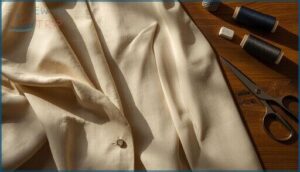
Sewing with hair canvas isn’t difficult, but few good habits make a real difference in how your finished garment looks and feels.
It responds well when you treat it right from the start.
Here are the key things to keep in mind before you begin.
Cutting and Grain Alignment
Getting your cuts right sets the whole jacket up for success. Here’s how to handle hair canvas like a pro:
- Use straight grain cutting for front panels — parallel to the selvedge.
- Apply bias grain flexibility at shoulders, cut 45 degrees for smooth curves.
- Trim seam allowances 1/8‑inch for bulk reduction trims.
- Transfer notches using carbon paper for clean pattern marking techniques.
- Cut canvas 2–3 inches short of side seams to ease garment construction.
Hand Vs. Machine Stitching
Once your cuts are done, time to stitch. Hand sewing gives you real stitch precision — pad stitches sit just 1/4 to 1/2 inch apart and shape the lapel roll beautifully.
Machine stitching wins on speed tradeoffs, securing canvas edges in under five minutes. Regarding strength differences, machine lockstitches hold firmer in high‑wear zones.
Your tool selection depends on the finish you’re after.
Pressing and Shaping Techniques
Pressing and shaping are where your canvas really comes alive. Use a pressing cloth for Steam Molding over a tailor’s ham — this Ham Shaping technique builds that chest curve naturally.
your Interfacing Guide for Roll Line Creasing along the lapel break. Trim edges for Bulk Reduction, and always let pieces dry fully. A good Pressing Cloth Selection protects the fabric from shine every time.
Care and Maintenance of Hair Canvas
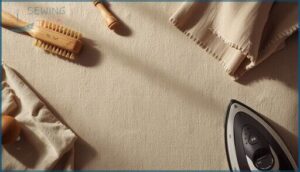
You’ve put real work into your custom garment, so it’s worth taking care of it the right way.
Hair canvas responds well to the right handling — and poorly to the wrong kind.
Here’s what you need to know to keep it looking sharp for years to come.
Washing and Dry Cleaning Guidelines
Once you sew hair canvas into a garment, it becomes dry-clean only — no exceptions. Water causes the horsehair fibers to felt, shift, and shrink unevenly against your outer fabric. Keep these guidelines close:
- Dry clean finished suits to protect the fabric stabilizer layer
- Use spot cleaning with a cold, damp cloth for surface stains
- Apply pre‑steam treatment before cutting to handle shrinkage prevention early
- Make sure moisture‑free storage between wears
- Trust professional cleaners — they keep shrinkage under 2 percent
Ironing and Pressing Precautions
Heat is your sharpest tool — and your biggest risk. Iron Temperature Limits matter here: set your iron to medium wool range, around 140–160°C.
Pressing Cloth Selection is non-negotiable; always layer cotton muslin between the iron and your canvas. Those Heat-Sensitive Areas, like lapels and chest pieces need short, lifted touches — three to five seconds max. Let each section cool completely before handling, or you’ll lose that Crisp Shaping you worked for.
Longevity and Storage Tips
Store your hair canvas right, and it’ll outlast most of the garments you build with it. Natural fibers age well — but only if you protect them.
- Use Roll Storage around cardboard tubes to prevent creasing
- Practice Scrap Labeling with permanent marker on gallon Ziploc bags
- Apply Humidity Management by keeping interfacing off concrete floors
- Layer Breathable Covers over textile materials and sewing supplies
- Do Seasonal Rotation when storing garments built for garment construction and repair
Frequently Asked Questions (FAQs)
How long does hair canvas interfacing last?
Hair canvas interfacing lasts decades with proper care.
Its wash durability and wear resistance keep garments structured through years of use.
Strong fiber density prevents degradation, making it a reliable choice for long-term garment construction.
Can hair canvas be machine washed safely?
Most hair canvas shouldn’t be machine washed.
Fiber shrinkage risk is real — wool and horsehair felt are damaged under agitation.
If the manufacturer label compliance allows it, use a cold cycle with mesh bag protection.
What thread works best with hair canvas?
Thread choice depends on the task. Use silk for pad stitching, cotton for basting, and size 40 polyester for machine seams. Waxed hand thread glides smoothly through canvas fibers without snagging.
Does hair canvas work with stretch fabrics?
No, it doesn’t. The elasticity mismatch causes seam puckering and kills fabric recovery. For stretch fabrics, skip hair canvas entirely and use a knit alternative interfacing instead.
How thick is standard hair canvas interfacing?
Standard hair canvas interfacing generally measures between 5 mm and 2 mm thick. Most suit work calls for around 8 mm — firm enough to shape lapels cleanly without adding noticeable bulk.
Can hair canvas be used for structured bags?
Yes, hair canvas works great for structured bags. It adds edge crispness, bag shape reinforcement, and handle stability without bulk.
For any sewing project needing firm lining support and even weight distribution, it’s a solid choice.
Does hair canvas work with stretch or knit fabrics?
Hair canvas doesn’t play well with stretch fabrics. Its Stretch Compatibility Limits make it too rigid for knits.
Try Knit Interfacing Alternatives instead — they flex with your fabric and won’t fight the weave.
How do you repair damaged hair canvas in a garment?
Start with a damage assessment. Trim frayed edges, patch with matching canvas, and use catch stitches to secure. Finish with a steam press over a ham to restore shape.
Is hair canvas suitable for historical costume construction?
Absolutely.
Hair canvas has been used in garment construction since the 19th century.
Its period accuracy, structural integrity, and authentic materials make it ideal for historical costumes requiring real fabric interfacing and traditional sewing techniques.
Where can you buy hair canvas interfacing locally?
Check your local fabric store locations first — independent shops and tailoring supply shops near garment district vendors often carry hair canvas. Call ahead to confirm stock before making the trip.
Conclusion
The most invisible part of a jacket does the most visible work. That’s the quiet power of hair cloth interfacing canvas.
It never shows, yet everything you see—the clean lapel, the lifted chest, the shape that stays after years of wear—depends on it.
Once you understand that, you stop treating it like a hidden extra and start treating it like the foundation it actually is. Build right from the inside, and the outside takes care of itself.
- https://www.dalstonmillfabrics.co.uk/synthetic-tailors-hair-canvas-interlining.html
- https://www.sewinggem.com.au/products/horsehair-chest-canvas
- https://www.williamgee.co.uk/product-category/linings-and-interlinings/interlinings/tailors-canvas/
- https://www.globalsewingsupplies.com/fabrics/hair-canvas-fabric-made-in-germany-07-131
- https://www.wawak.com/bag-making/bag-interfacing/hair-canvas-sew-in-interfacing-67-oz-23-natural/