This site is supported by our readers. We may earn a commission, at no cost to you, if you purchase through links.
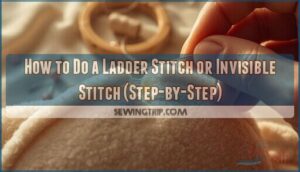
A stuffed animal with a hole in its side, a pillow with a gaping seam, a dress lining that keeps slipping out—these are the little sewing disasters that feel impossible to fix without leaving an ugly row of visible stitches. That’s exactly where the ladder stitch earns its reputation.
Sewists call it the invisible stitch for a reason: when done right, the thread disappears completely into the fabric, leaving behind nothing but a clean, smooth edge.
It’s one of those techniques that looks like a magic trick the first time you pull the thread tight and watch the gap close.
Once you learn how to do a ladder stitch, you’ll reach for it constantly.
Table Of Contents
- Key Takeaways
- What is a Ladder Stitch or Invisible Stitch?
- Materials and Tools Needed for Ladder Stitch
- How to Prepare Fabric for Ladder Stitch
- Step-by-Step Guide to Sewing a Ladder Stitch
- Tips for Achieving an Invisible Finish
- Practical Uses for Ladder Stitch in Sewing Projects
- Frequently Asked Questions (FAQs)
- Conclusion
Key Takeaways
- ladder stitch—also called the invisible or blind stitch—closes open seams by threading back and forth across the gap, then pulling tight so the thread hides completely inside the fabric folds.
- matching your thread color (one shade darker when unsure) and using the right needle size for your fabric type are the two easiest ways to make your finish look truly professional.
- consistent stitch depth, gentle tension every few stitches, and pressing your fold before you start are what separate a clean result from a puckered, uneven mess.
- once you know this stitch, you’ll use it constantly—from closing stuffed animals and pillows to finishing garment linings and mending torn seams without a single visible thread.
What is a Ladder Stitch or Invisible Stitch?
If you’ve ever sewn a stuffed animal or closed up a pillow by hand, you’ve probably needed this stitch without even knowing its name.
The ladder stitch — also called the invisible stitch, hidden stitch, or blind stitch — is one of those hand‑sewing basics that makes your finished work look clean and polished.
Once you nail the basics, exploring invisible stitching methods will help you choose the right technique for every project.
Here’s what you need to know about it.
Definition and Alternative Names
The ladder stitch goes by many names — and that can trip up beginners fast. You might see it called a hidden stitch, invisible stitch, blind stitch, or even invisible hem in different patterns.
Regional naming variations and cross-disciplinary terms like open chain stitch add to the confusion.
But here’s the truth: these ladder stitch synonyms all describe the same essential technique. The stitch’s origin in the 1880s is documented in sewing history.
How The Stitch Works
Once you know the name, here’s what’s actually happening. Your needle entry goes into the fold of one fabric edge, slides a quarter inch along the crease, then crosses to the opposite side.
That back-and-forth creates the ladder formation — loose horizontal bars spanning the gap. A gentle tension tightening every few stitches pulls those bars into the folds, triggering the stitch hiding magic.
The invisible ladder stitch is ideal for joining fabric edges inconspicuously.
Benefits and Uses in Sewing
That hidden finish isn’t just pretty — it’s genuinely useful. A ladder stitch pulls its weight across so many projects:
- Seam strength that endures daily use on cushions and bags
- Easy repairs on stuffed toys, pillows, and torn seams
- Adaptable projects from garment linings to fabric repair
- Design flexibility that keeps your invisible stitch clean and topstitching-free
Materials and Tools Needed for Ladder Stitch
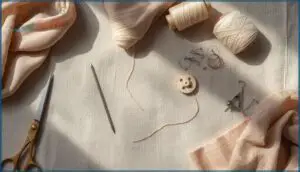
Before you make a single stitch, it helps to have the right supplies within reach. Nothing slows you down more than stopping mid-project to hunt for scissors or the right needle.
Here’s what you’ll want on hand before you get started.
Recommended Thread and Needle Types
Your thread and needle choices make or break invisible stitch.
For the best results, pair your fabric with a thread that virtually disappears—this guide to basic hand sewing stitch types walks you through smart thread-matching techniques for each one.
For most fabrics, a 40–50 weight polyester thread choice gives you strength with stretch — perfect for plush toys or stuffed animals. Cotton thread benefits lighter, natural-fiber projects beautifully.
Pair fine fabrics with a fine sharps needle, and use betweens needle application for small, controlled stitches.
Matching thread weight to your fabric keeps everything clean and invisible.
Essential Tools for Hand Sewing
Good hand stitching starts with having the right tools nearby. You’ll need a sharp sewing needle — fine sharps work best for most fabrics. A thimble protects your fingertip during repeated pushes; thimble varieties range from metal to silicone, so pick what feels comfortable.
Fabric clips hold your edges steady without pins piercing delicate material. Keep scissors and a measuring tape close, too.
Optional Supplies for Better Results
A few optional supplies can seriously level up your results. Fabric marking pens let you trace the seam allowance opening before you start — air erasable versions fade on their own, no rinsing needed. Clip holding aids keep fabric edges aligned while you stitch.
Pressing tools like a steam iron crisp the fold first. Adhesive stabilizers prevent fraying, and comfort visibility aids — think magnifying lamps — help you place each stitch precisely.
How to Prepare Fabric for Ladder Stitch

Before your needle ever touches the fabric, a little prep work goes a long way.
Getting your edges lined up and your thread ready makes the whole process smoother — and your finished seam cleaner.
Here’s what to do before you take that first stitch.
Aligning and Securing Fabric Edges
Before you take a single stitch, your fabric edges need to be lined up and locked in place. Fold each raw edge inward about 1/4 inch — press that fold crisp with your fingers or an iron. Then secure it using these edge pinning techniques and fray control solutions:
- Pin or clip both sides so nothing shifts while you sew
- Press the fold flat using fold pressing methods for a clean, even line
- Turn raw edges inward to keep fraying hidden inside the seam
- Match both folds evenly so your invisible stitch closes in a straight line
Choosing and Threading The Needle
Your needle is the unsung hero of a clean ladder stitch. For most fabrics, a size 7 or 8 sharp works perfectly — fine enough to slip through without leaving marks. Match your eye shape to your thread: a round eye for standard thread, a longer eye for thicker strands. Always cut thread at a 45-degree angle, then glide the needle over the thread rather than poking the thread through. A needle threader saves serious frustration on fine eyes.
| Fabric Type | Needle Size | Eye Type |
|---|---|---|
| Delicate silk | Size 11–12 | Fine round eye |
| Cotton/quilting | Size 7–9 | Standard round eye |
| Canvas/upholstery | Size 1–3 | Larger round eye |
| General hand sewing | Size 7–8 | Standard round eye |
Tips for Selecting Thread Color
Thread color is the secret to a truly invisible stitch.
Always check your match in natural light — indoor lighting lies.
Lay the thread directly on the fabric and squint; the best color disappears.
When in doubt, go one shade darker.
Test on a scrap swatch first.
For neutral fabrics, a gray or beige thread often blends better than an exact match.
Step-by-Step Guide to Sewing a Ladder Stitch
Now comes the part where it all comes together.
Sewing a ladder stitch is really just three moves repeated—starting clean, stitching across, and finishing tight.
Here’s exactly how to do each one.
Starting and Hiding The Knot
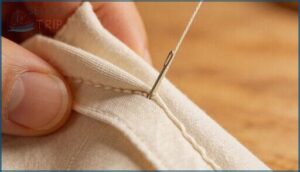
Knot placement is where most invisible stitches fail — or succeed. Insert your needle from inside the opening and bring it out through the folded crease, so the knot hides inside. Many hand sewing techniques suggest a quilter’s knot here; it’s compact and buries cleanly.
Prefer a no-knot start? A few anchoring backstitches work just as well. Double-thread reinforcement adds extra security at stress points.
Making The First Stitches
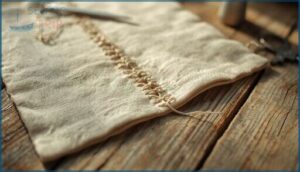
Once your knot is hidden, you’re ready to build the ladder. Start 3–6 mm from the edge of the opening — this is your entry point placement.
Pick up just a few threads along the fold (that’s your bite depth), then cross directly to the opposite side and repeat. Don’t tighten yet — lay 2–3 rungs first.
- Keep stitch spacing at 3–6 mm for light fabrics
- Match opposite stitches precisely — alignment technique matters here
- Work right to left for a comfortable directional order
- Shallow bite depth keeps the invisible stitch truly hidden
Finishing and Securing The Stitch
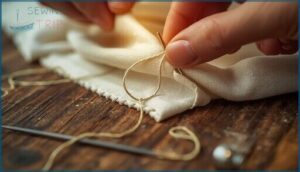
Once rungs are laid, gently pull the thread so the edges meet—no gaps, no overlap. That’s your tension adjustment.
Then use a knot locking technique: slip the needle under the last stitch, loop through, and repeat twice. Finish with the tail burial method—run the needle inside the seam and trim. Your invisible stitch disappears completely.
Tips for Achieving an Invisible Finish
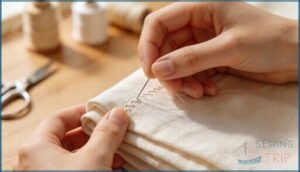
Getting the stitch right is one thing — making it truly disappear is another.
A few small habits make all the difference between a finish that looks handmade and one that looks professionally done.
Here’s what to keep in mind as you work.
Keeping Stitches Even and Tension Balanced
Getting your ladder stitch truly invisible comes down to two things: consistency and control. Use stitch length markers — tiny removable‑pen dots along the opening — to keep each bite 2–4mm apart.
For thread tension control, snug gently after every stitch rather than yanking. Let your hand grip technique stay relaxed. Apply thread conditioning with beeswax so it glides smoothly, and use rhythm and inspection every few stitches.
Avoiding Puckering and Distortion
Even tension helps, but fabric tension matters just as much. Keep stitches the same depth on both sides — uneven bites pull one edge tighter, and that is your pucker forming.
For seam smoothing, press your fold before you start.
Stitch perpendicular, not angled.
Let the thread untwist every few rungs.
These simple sewing techniques keep your invisible stitch clean and flat.
Troubleshooting Common Issues
Something going wrong mid-stitch? Here’s what’s likely happening and how to fix it fast:
- Thread Breakage: Cut a fresh 45–60 cm length — old or long thread twists and snaps.
- Fabric Gapping: Tighten every 3–4 stitches and start slightly before the tear.
- Misaligned Edges: Pin first; uneven folds cause crooked seams.
- Popping Seams: Bury your knot and add a few backstitches at the start.
Practical Uses for Ladder Stitch in Sewing Projects

Once you’ve got the stitch down, you’ll find yourself reaching for it all the time.
Ladder stitch is one of those techniques that quietly solves a lot of common sewing problems.
Here are some of the most practical ways to use it in your projects.
Mending Holes and Seams
This is where the ladder stitch really earns its reputation. Whether you’re repairing a torn couch seam or mending a stuffed toy, invisible stitch makes fabric repair feel almost like magic.
The ladder stitch earns its reputation by making fabric repair feel almost like magic
Fold raw edges inward using edge folding techniques, then use thread tension control to pull stitches snug without puckering. Stitch visibility testing is simple — matching thread disappears completely into the seam.
Attaching Linings and Facings
Finishing a jacket or coat lining by hand is where ladder stitch quietly shines. Keep these three things in mind:
- Folded Edge Placement — press seam allowances under 6–10mm for a clean edge
- Curved Seam Alignment — clip curves before stitching so the fold lays smooth
- Reinforcement Stitching — add extra stitches at corners and stress points
Use thread tension control and hidden knot securing to keep everything invisible inside the garment.
Frequently Asked Questions (FAQs)
Can ladder stitch be used on leather?
Ladder stitch works well on thin, soft leather with folded edges. For heavy or structural seams, choose saddle stitch instead.
Think of it as a finishing tool, not a workhorse.
How to repair a ladder stitch that’s come undone?
Re-sewing a ladder stitch that’s come undone is straightforward.
Realign the edges, replace weak thread, and re-stitch with even tension. Finish with knot reinforcement and seam testing to confirm the mending holds.
Is ladder stitch suitable for stretchy fabrics?
Not really. The ladder stitch works best on stable, non-stretch fabrics.
On stretchy knits, thread elasticity becomes critical — without it, the stitch tension pulls, puckers, and may snap with repeated wear.
How to adjust ladder stitch for thick fabrics?
Use a heavier needle and sturdy polyester thread. Space stitches 6–10mm apart, press seam allowances inward, and pull tension gradually to close without puckering.
Can ladder stitch be done with a sewing machine?
Not quite. A true ladder stitch is a hand-sewing technique that machines can’t fully replicate. Your closest machine alternatives are the blind hem stitch or a serger flatlock ladder effect.
Can ladder stitch be used on stretchy fabrics?
Yes, ladder stitch works on stretchy fabrics — but tension control is everything.
Use polyester thread for elasticity, a ballpoint needle, and keep stitches loose so the seam moves with the fabric.
How do you remove a ladder stitch if needed?
A seam ripper technique works well here. Slide the point under a loose thread, cut, then pull gently. Protect fabric edges as you go, and press flat once done.
What needle size works best for thick fabrics?
For thick fabrics, hand needle sizes 1 to 3 work best. On a machine, go with a 100/16 or 110/18 needle. Match your thread weight to needle size for clean, strong stitches.
Conclusion
Once you’ve got this technique under your belt, a split seam or stuffed animal rescue stops feeling like a problem worth dreading.
Knowing how to do a ladder stitch or invisible stitch gives you a clean, professional finish that no one will ever spot—and that’s exactly the point.
The gap closes, the thread disappears, and the fabric looks like nothing ever happened.
That quiet, invisible result is the whole reward.
- https://www.applegreencottage.com/invisible-stitch-ladder-stitch/
- https://happiestcamper.com/ladder-stitch-tutorial/
- https://sewinginspo.com/hand-stitch/how-to-sew-a-ladder-stitch-by-hand/
- https://whatthecraft.com/how-to-sew-the-ladder-stitch-hand-sewing-tutorial/
- https://sweetcinnamonroses.com/blogs/blog/how-to-close-your-seams-by-hand-using-a-ladder-stitch