This site is supported by our readers. We may earn a commission, at no cost to you, if you purchase through links.
Your sewing machine’s built-in stitches are precision tools, not random decorative buttons—and knowing which ones actually matter separates frustrating seams from professional results. Most sewers stick to the straight stitch out of habit, ignoring the zigzag that prevents knit fabrics from puckering or the blind hem that creates invisible trouser hems in seconds.
Each pre-programmed pattern solves a specific construction challenge, from preventing frayed edges to handling stretch without snapping threads. The best built-in stitches transform how quickly you complete projects while boosting durability across every fabric type.
Choosing the right machine means understanding which stitches you’ll genuinely use—and mastering three powerhouse models changes everything from garment construction to decorative finishing.
Table Of Contents
- Key Takeaways
- What Are Built-in Sewing Machine Stitches?
- Essential Built-in Stitches for Every Sewer
- Choosing The Right Built-in Stitch
- Factors to Consider in Stitch Selection
- Top 3 Sewing Machines With Best Built-in Stitches
- Tips for Using Built-in Stitches Effectively
- Frequently Asked Questions (FAQs)
- Conclusion
Key Takeaways
- Built-in stitches are pre-programmed patterns that automatically handle specific construction challenges—from preventing knit fabric puckering with zigzag to creating invisible hems—eliminating manual adjustments and dramatically boosting sewing efficiency.
- The straight stitch, zigzag stitch, and blind hem form your essential foundation because they cover 80% of everyday sewing needs across different fabric types, while specialty decorative stitches add polish without compromising structural integrity.
- Choosing the right stitch depends on matching three factors to your project: fabric weight and stretch behavior, seam durability requirements, and whether you need functional construction or decorative finishing.
- Adjusting stitch length and width transforms results from mediocre to professional—start at 2.5mm for wovens, test on scraps first, and troubleshoot common issues like thread breakage or skipped stitches by checking threading, tension, and needle condition before anything else.
What Are Built-in Sewing Machine Stitches?
Built-in stitches are pre-programmed stitch patterns your sewing machine can create automatically with the turn of a dial or push of a button. These stitches handle everything from basic seams to decorative flourishes, eliminating the need to manually adjust needle position and thread tension for each technique.
Most home machines include 10–50 built-in options, though advanced computerized models offer hundreds of specialized stitches for complex projects.
Understanding what built-in stitches are and how they work will help you choose the right machine and achieve faster, more professional results in every project.
If you’re exploring options, check out our top-rated Brother sewing machines to find models that balance stitch variety with everyday usability.
Definition and Function of Built-in Stitches
Built-in stitches are pre-programmed patterns stored in your sewing machine, ready to deploy with a simple dial turn or touchscreen tap. Each stitch performs a specific task—joining seams, finishing edges, or adding decorative flair—without you manually forming each loop.
The Singer Talent 3323 offers 23 built-in stitches spanning utility, decorative, and stretch options to cover most home sewing needs.
This stitch variety streamlines fabric compatibility and boosts sewing efficiency by eliminating guesswork. Your machine settings handle the technical details while you focus on creating.
The automatic sewing fabric guide takes this convenience further by detecting material thickness and adjusting tension automatically.
Difference Between Built-in and Manual Stitches
Your sewing machine offers two distinct approaches: builtin stitches execute automatically through programmed settings, while manual stitches demand your hands-on control via the handwheel.
Builtin options deliver consistent stitch length and uniform tension across every seam, boosting sewing efficiency dramatically. Manual methods provide greater stitch customization and user control, though they sacrifice speed and repeatability.
This difference impacts fabric compatibility, machine limitations, and how quickly you complete projects.
How Built-in Stitches Improve Sewing Efficiency
Stitch automation transforms your workflow by eliminating repetitive setup tasks. Instead of attaching accessories or adjusting settings for each seam, factory-calibrated tension settings and automatic stitch selection deliver immediate efficiency gains.
You’ll experience genuine time savings—preset sequences minimize manual thread changes while builtin stitches handle straight stitch and zigzag stitch work without constant intervention.
This sewing productivity boost means less fatigue and faster project completion.
Essential Built-in Stitches for Every Sewer
Your sewing machine comes loaded with stitches that do far more than just hold fabric together. Some handle everyday seams and hems, while others tackle stretchy materials or create polished finishes that look professionally done.
If you’re still shopping around, knowing which stitches matter most when buying a sewing machine can help you pick one that actually fits your projects.
Let’s walk through the essential stitches you’ll actually use and what makes each one worth knowing.
Straight Stitch and Its Uses
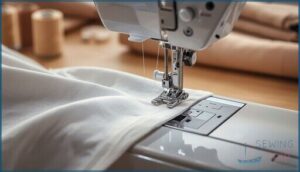
Your machine’s workhorse stitch creates uniform, single-thread lines that join fabric pieces together. The Straight Stitch manages most basic sewing machine techniques with precision when you:
- Match Stitch Length to fabric weight (2.5mm for medium fabrics)
- Set Tension Control to neutral for balanced seams
- Practice Seam Reinforcement through backstitching
- Consider Fabric Selection (works best on woven materials)
Master this foundation before exploring other sewing machine stitches.
Zigzag Stitch for Stretch and Finishing
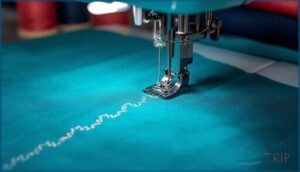
Your flexibility champion accommodates knits through diagonal needle penetrations that preserve fabric resilience.
Adjust zigzag settings between 1.5mm and 6mm width depending on stretch fabric demands—narrow widths secure seams while maintaining seam stability, wider settings provide edge finishing that prevents fraying.
This sewing machine stitch delivers both edge stitching precision and stretch stitches functionality, making it essential for seam finishing on everything from activewear to jersey.
Blind Hem and Overcast Stitches
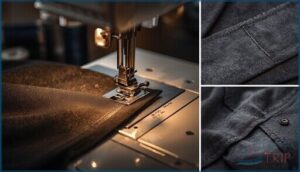
Master these invisible finishers for professional-grade results. Your blind hem creates nearly invisible hems on trousers and skirts through controlled stitch tension that catches minimal fabric on the right side. The overcast stitch wraps thread around your fabric edge, preventing fraying during seam finishing without a serger.
Adjust sewing speed slower for precise edge stitching control, and match thread selection to your fabric weight for flawless hem techniques.
Specialty and Decorative Stitches
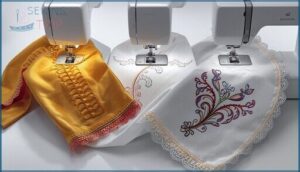
Transform plain projects into textile artistry through your machine’s embellishment techniques library. Modern computerized machines offer hundreds of decorative stitches—from satin stitch’s smooth, ribbon-like finish to scallop stitch’s elegant curves along edges.
Your fabric manipulation options include:
- Embroidery stitches that mimic hand-worked chain and running patterns
- Decorative edging with feather and blanket variations
- Stitch variations combining width and density for custom effects
Pair contrasting threads with stabilizers for consistent results.
Choosing The Right Built-in Stitch
Your machine’s stitch library isn’t just a collection of options—it’s a toolkit that needs to match the work you’re doing. The right stitch choice depends on three key factors: what you’re sewing on, what you’re making, and whether you need function or flair.
Let’s break down how to select the perfect stitch every time.
Matching Stitch to Fabric Type
Your fabric determines everything—pick the wrong stitch and watch seams pucker or pop. Woven cottons thrive with a straight stitch, while knits demand zigzag stitch flexibility to accommodate fabric stretch.
Check fabric weight before adjusting stitch length: heavier materials need longer stitches to prevent perforation. Balance thread tension carefully, and test satin stitch on scraps when decorative touches matter.
Your sewing machine manages the work; you supply the wisdom.
Selecting Stitches for Specific Projects
Think of your project as a puzzle—each piece demands its own stitch to lock everything into place. Garment construction relies on straight stitch for seams, while quilting projects benefit from stitch variation for texture.
Analyze fabric weight during project planning—heavyweight denim needs triple straight stitch for seam optimization, but delicate silk demands shorter lengths. Your sewing machine stitches adapt when you match thread selection to material.
Decorative Vs. Functional Stitch Choices
Your stitch selection shapes both form and function—decorative stitches create visual impact, while functional options like straight stitch and zigzag stitch protect seam integrity through proper thread tension and edge finishing.
Balance these priorities:
- Structural seams demand functional sewing machine stitches that withstand stress and maintain fabric behavior
- Visual accents benefit from embroidery stitches without compromising durability
- Knit fabrics require stretch-compatible functional stitches before adding decorative elements
- Stress points need reinforced functional construction, reserving decorative stitches for low-tension areas
Factors to Consider in Stitch Selection
Picking the right stitch isn’t just about what your machine can do—it’s about what your project actually needs. You’ll want to think through a few key factors before you start sewing, from how much wear and tear the seam will face to the final look you’re after.
Let’s break down the main considerations that’ll guide your stitch selection.
Seam Strength and Durability Needs
Durability hinges on matching your stitch to the load your seam will bear. Straight stitch excels for wovens, while zigzag stitch and serging techniques handle stretch without snapping.
Seam testing reveals whether your thread strength and stitch density can withstand fabric tensile demands—aim for at least 60% elongation resistance.
Blind hem and lock stitch offer reliability where appearance meets endurance, ensuring durability factors align with real-world wear.
Project Type (Garment, Quilting, Craft)
Your project dictates which built-in stitches will deliver results. Garment construction methods demand straight and zigzag for seams, plus blind hem for clean finishes. Quilting and patchwork thrive on shorter straight stitches that lock piecing tight. Craft projects open the door to embroidery and decorative stitches that add personality.
- Garments need stretch accommodation through zigzag or specialty sewing techniques
- Quilting requires precision piecing with controlled stitch variations
- Crafts benefit from decorative options beyond basic sewing machine techniques
- Fabric selection influences which stitches prevent fraying or puckering
- Thread choices and machine settings must align with your project’s demands
Desired Appearance and Finish
Once you’ve nailed down the technical requirements, it’s time to let your creative vision shape which stitches will give your work that polished, professional look you’re after. To achieve a smooth finish, understanding top stitching techniques is essential for any sewing project.
Fabric texture influences seam visibility—straight stitch disappears into fine silk while decorative stitching pops on denim. Edge finishing with satin stitch adds refinement. Stitch density transforms visual appeal through embroidery stitches and zigzag variations that match your aesthetic goals.
Top 3 Sewing Machines With Best Built-in Stitches
You’ve narrowed down your stitch needs—now it’s time to match them with the right machine. The three options below represent different approaches to built-in stitch mastery, from all-in-one powerhouses to specialized accessories that expand your capabilities.
Let’s look at what makes each one worth your attention.
1. Brother Metal Sewing Machine
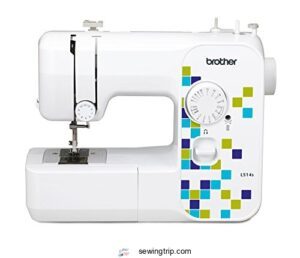
Your command center for serious stitching starts with Brother’s metal frame construction—a rock-solid foundation that dampens vibration even when you’re pushing 800 to 1,200 stitches per minute.
This sewing machine delivers genuine stitch variety, typically offering straight stitch, zigzag stitch, buttonhole stitch, and decorative options through an easy-to-use user interface. The automatic needle threader and drop-in bobbin system keep you focused on your fabric, not fumbling with thread.
Machine durability comes standard with multi-year coverage on the frame and motor, so you can tackle everything from delicate silks to heavy canvas.
| Best For | Sewers who want a reliable, metal-frame machine that can handle everything from quick repairs to multi-hour projects without vibrating across the table. |
|---|---|
| Primary Material | Metal |
| Brand | Brother |
| Color | White |
| Item Weight | 11.2 Pounds |
| Use Case | General sewing |
| Skill Level | Beginner-friendly |
| Additional Features |
|
- Metal construction reduces vibration and holds up better than plastic alternatives, especially during high-speed stitching
- Fast stitching speed (800–1,200 SPM) lets you finish projects quickly without sacrificing control
- Automatic needle threader and drop-in bobbin save time on setup so you can focus on the actual sewing
- Power plug may need an adapter depending on your country’s outlet type
- Weighs over 11 pounds, so it’s not the easiest to move around or store frequently
- Long-term durability isn’t fully proven yet since some users haven’t put it through extended heavy use
2. Framad Sewing Machine Presser Foot Set
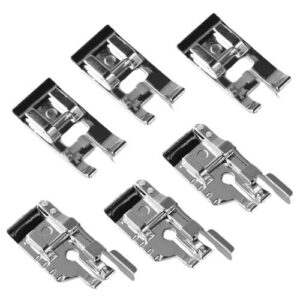
Transform your machine’s stitch repertoire by swapping presser feet—that’s where the Framad set earns its spot. This 6-piece zinc alloy bundle delivers specialized feet for quilting, edge finishing techniques, and joining seams with precision your standard presser foot can’t match.
The 1/4″ quilting foot guides perfect straight stitch seams, while the edge joining tool perfects zigzag stitch applications on binding.
Check your sewing machine compatibility carefully—it’s designed for low-shank Brother, Janome, and Singer models. These presser foot types access precise sewing machine stitches without buying a new machine.
| Best For | Quilters and home sewists who want to expand their sewing machine’s capabilities with specialized feet for precise seam allowances, edge finishing, and decorative stitching. |
|---|---|
| Primary Material | Zinc |
| Brand | Generic |
| Color | Silver |
| Item Weight | Not specified |
| Use Case | Quilting & hemming |
| Skill Level | All levels |
| Additional Features |
|
- Durable zinc alloy construction with transparent soles lets you see your stitching line clearly
- The 1/4″ quilting foot includes an integrated guide that takes the guesswork out of seam allowances
- Compatible with multiple popular low-shank brands like Brother, Janome, and Singer
- Only works with low-shank machines, so you’ll need to verify compatibility before buying
- No warranty or customer support information provided
- Some sewing machine models within compatible brands may still not fit properly
3. Gutermann Sewing Thread Set
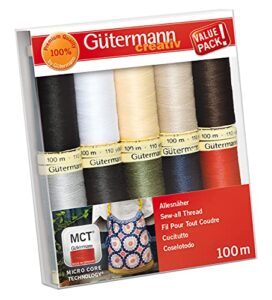
Thread quality determines whether your best built-in stitches shine or struggle—that’s why Gütermann’s 10-spool polyester set belongs in your sewing arsenal. Each 100-meter spool features Micro Core Technology that strengthens straight stitch seams and smooths zigzag stitch tension across fabrics from cotton to stretch knits.
The color selection covers neutral essentials for buttonhole stitch work and hemming, while the polyester construction ensures thread durability through repeated washes.
Your sewing machine performs better when fabric compatibility meets professional-grade thread—these spools deliver both without breaking your budget.
| Best For | Home sewers who want reliable polyester thread in essential colors for everyday projects like hemming, buttons, and general garment repairs. |
|---|---|
| Primary Material | Polyester |
| Brand | Gütermann |
| Color | Popular |
| Item Weight | 84 Grams |
| Use Case | Thread for sewing |
| Skill Level | All levels |
| Additional Features |
|
- Micro Core Technology creates strong seams that hold up well across different stitch types and fabric weights
- 10 basic colors cover most common sewing needs without overwhelming your thread collection
- Works smoothly with various sewing machines and threads easily through needles
- 100m spools run out faster than larger options if you’re tackling big projects
- Some users feel the price is steep compared to budget thread brands
- Spools are smaller than expected, which can be disappointing when they arrive
Tips for Using Built-in Stitches Effectively
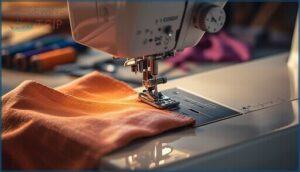
Getting the most from your machine’s built-in stitches means knowing how to dial in the perfect settings for each project. Small adjustments to stitch length and width can transform a mediocre seam into a professional finish.
When things don’t look quite right, a few quick troubleshooting checks will get you back on track.
Adjusting Stitch Length and Width
Think of stitch length and width as your control panel for seam durability and fabric tension—mastering these settings transforms your straight stitch and zigzag stitch results. Your sewing machine functions give you precise thread control over stitch density:
Stitch length and width are your control panel for seam durability and fabric tension
- Start at 2.5 mm length for woven fabrics, then test on scraps
- Adjust width in 1-2 mm increments for zigzag finishing
- Shorten length on delicate materials to prevent damage
- Consult your sewing machine stitch guide for best baseline settings
Troubleshooting Common Stitch Issues
When your straight stitch starts misbehaving, check thread breakage first—improperly threaded machines cause most stitching disasters. Adjust stitch tension to balance top and bottom threads evenly. Needle issues like bent or dull points create skipped stitches and fabric fraying. Your sewing machine stitch guide helps troubleshoot common sewing problems before zigzag stitch work or serging techniques.
| Problem | Primary Cause | Quick Fix |
|---|---|---|
| Skipped Stitches | Needle size mismatch | Replace with fabric-appropriate needle |
| Thread Breakage | Improper threading | Rethread completely, check tension |
| Uneven Tension | Machine calibration off | Balance dial to 4-5 setting |
| Fabric Fraying | Dull blade/needle | Install fresh needle before sewing |
Frequently Asked Questions (FAQs)
Can built-in stitches work on leather or vinyl?
Yes, built-in stitches handle leather and vinyl beautifully with the right setup. Use a heavy-duty needle (90/14 or larger), adjust stitch tension carefully, and select zigzag stitch or straight stitch for secure edge finishing on your sewing machine.
How many built-in stitches do beginners actually need?
Most beginners only need 5–6 stitches to handle everyday projects comfortably. Master straight and zigzag first—they cover 80% of sewing essentials—then add blind hem and overcast as your confidence grows.
Do more built-in stitches mean better machine quality?
Not necessarily. Machine quality hinges on construction and reliability, not stitch variety alone.
Performance ratings and durability matter more than counts—choose models offering essential stitches plus sturdy fabric compatibility for genuine sewing efficiency.
Which built-in stitches save the most sewing time?
Time is money in sewing—and straight stitch delivers the fastest seaming with consistent speed across fabrics.
Zigzag and overcasting stitches simplify edge binding, while buttonhole features eliminate hand-finishing for enhanced sewing efficiency.
Are computerized built-in stitches more reliable than mechanical?
Computerized sewing machines deliver exceptional stitch consistency and fabric compatibility through electronic controls and error detection.
However, mechanical systems often win for machine durability in low-usage scenarios, excelling with basic straight stitch and buttonhole stitch reliability.
Conclusion
Your machine won’t magically master every fabric challenge—but the best built-in stitches turn technical hurdles into straightforward solutions once you understand their purpose. The Brother Metal, Framad presser foot set, and Gutermann thread collection give you the precision tools to match stitch function to fabric behavior.
Stop treating built-in patterns like decorative extras. Test each one methodically, adjust length and width deliberately, and watch your seams transform from functional to impeccable.