This site is supported by our readers. We may earn a commission, at no cost to you, if you purchase through links.
That old denim jacket gathering dust in your closet? It’s three spray cans away from something worth wearing again. Fabric can absolutely be spray painted—and done right, the results hold up through real washes, real wear, and real life.
The catch is that fabric behaves nothing like wood or metal. It flexes, it breathes, it absorbs differently depending on the weave. Fabric behaves nothing like wood or metal. Grab the wrong paint or skip one prep step, and you’ll end up with stiff, cracked color that peels off by the second wash.
The right approach makes all the difference between a project you’re proud of and one you hide.
Table Of Contents
- Key Takeaways
- Can Fabric Be Spray Painted?
- Best Fabrics for Spray Painting
- Choose The Right Spray Paint
- Top 5 Fabric Spray Paints
- Prepare Fabric Before Spraying
- Spray Paint Fabric Step-by-Step
- Create Designs With Spray Paint
- Dry and Heat-Set Paint
- Wash and Care Guidelines
- Common Fabric Spray Painting Mistakes
- Frequently Asked Questions (FAQs)
- Conclusion
Key Takeaways
- Cotton, linen, and denim are the easiest fabrics to spray paint because they absorb color deeply and grip paint well, while silk and waterproof synthetics need extra prep or should be avoided altogether.
- Always wash your fabric first, insert cardboard to block bleed-through, and test a hidden patch before committing — skipping any of these steps is the fastest way to ruin your project.
- Build color with multiple thin coats held 6–12 inches from the surface, letting each layer flash-dry for 10–15 minutes, rather than trying to cover everything in one heavy pass.
- Heat-setting is non-negotiable — whether you use an iron, dryer on low, or oven at 300°F, this step is what makes your design survive real washes instead of cracking after the first one.
Can Fabric Be Spray Painted?
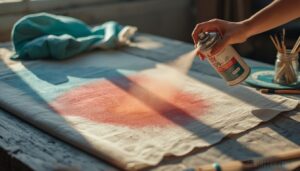
Yes, you can absolutely spray paint fabric — and it works better than most people expect. The results depend on a few key factors, like the type of paint you use, the fabric you’re working with, and how you apply it.
If you want a deeper look at what actually works, spray painting fabric techniques and tips covers the best paints, prep steps, and common mistakes to avoid.
Here’s what you need to know before you start.
Best Projects for Spray Paint
Spray paint isn’t just for fabric — it opens a whole world of DIY upcycling possibilities. Think tin can planters with a chalky matte finish, a quick gallery frame makeover with metallic shimmer, or ceramic pot glaze effects on plain pots. Consider a gold wicker chair makeover for furniture transformation. Creative textile projects like colored jar containers and furniture ombre legs are just the beginning.
- Transform old denim or canvas totes with stencil art on textiles
- Experiment with tie-dye spray effects for bold, one-of-a-kind patterns
- Refresh home décor fabric painting on cushion covers or curtain panels
When Spray Painting Works
Good surface preparation — washing and drying your fabric first — makes a huge difference for paint adhesion. Work somewhere with proper ventilation and ideal temperature (around 70°F).
Always test a swatch first to check fabric compatibility and paint compatibility. Then build color through gradual layering, and heat set the paint afterward to lock everything in.
When to Avoid It
Not every fabric is ready for paint, though. Some materials will fight you the whole way.
- Loose threads or fraying edges snag and pull under spray pressure
- Waterproof finishes and reactive plastics repel or discolor paint completely
- Flammable fabrics like silk need special low-heat formulas only
Poor ventilation makes any project unsafe. Always prioritize material compatibility testing before committing.
Painted Fabric Feel
Once you move past the compatibility hurdles, you’ll naturally wonder: what does painted fabric actually feel like? Light coats preserve fabric flexibility and keep that natural softness intact, while heavier coverage creates noticeable stiffness.
Texture shifts are real: glossy finishes feel slicker, and metallics feel cool and smooth. The overall hand softness depends heavily on sheen’s impact and how well you heat-set the paint.
Expected Durability
Done right, painted fabric holds up surprisingly well. Wash longevity improves dramatically with proper heat-set stability — delicate fabrics retain 85–90% of color after 20 cold-water machine washes.
Heat-set your painted fabric correctly, and delicate materials retain up to 90% of their color after 20 machine washes
Colorfastness, peel strength, and paint adhesion to fibers all strengthen when you cure correctly.
UV fade resistance and abrasion resistance get a real boost from a clear sealer, extending fabric durability after painting by months.
Best Fabrics for Spray Painting
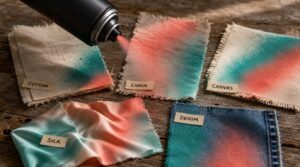
Not every fabric plays nicely with spray paint, and knowing the difference saves you from a ruined project.
Some materials soak up color beautifully, while others need a little extra help to hold on.
Here’s a look at how the most common fabrics handle spray paint.
Cotton and Linen
Cotton and linen are your best starting canvas for fabric spray painting. Both absorb paint deeply, hold color well, and respond beautifully to heat-set finishing. Their natural fiber strength and moisture management make them forgiving to work with.
Here’s why they’re ideal:
- Cotton fabric accepts dye evenly, giving you crisp, vibrant results.
- Linen fabric offers natural texture contrast that adds visual depth to designs.
- Both support eco-sustainability — biodegradable, breathable, and durable after proper fabric preparation steps.
Denim Fabric
Denim fabric is a spray painter’s dream. Its tight Denim Twill Weave grips paint with strong fabric adhesion, ensuring color stays put wash after wash.
Always prewash the cloth first—Raw Denim Stiffness and shrinkage can crack dried paint if skipped. This step prevents issues caused by the fabric’s initial rigidity.
Denim’s natural fade patterns add unique character to designs. Stretch Denim Compatibility allows spray painting across any Denim Weight Range without sacrificing flexibility.
Just heat set the paint when finished to secure the design.
Polyester and Nylon
Polyester and nylon are slick customers — literally. Their non-porous surfaces make spray paint adhesion tricky without proper preparation. Start with thorough fabric preparation, then use a polyester-specific spray or fabric primer.
The payoff? Dimensional stability, impressive UV resistance, and serious abrasion durability. Both synthetic fabrics dry fast thanks to moisture management, ensuring practical performance.
Once properly heat-set, stretch recovery remains intact, preserving the fabric’s structural integrity over time.
Wool Fabric
Wool is a bit of a wild card regarding spray paint on fabric. Its scaly cuticle structure** absorbs color beautifully, but existing dyes can interfere — undyed wool works best.
- Crimp insulation keeps fibers flexible after painting
- Strong moisture absorption may cause color shifts
- Thermal regulation properties remain largely intact post-paint
- Fiber elasticity helps paint move with the fabric
Heat setting is non-negotiable here.
Silk and Delicate Fabrics
Silk is the diva of the fabric world — stunning, but high-maintenance. Its protein fibers weaken when wet, making gentle handling non-negotiable.
Aggressive heat setting of fabric paints should be avoided, as high temperatures damage silk’s natural sheen. UV fading hits silk fast, accelerating deterioration.
To protect silk, use a light fabric primer and opt for low-heat sprays to minimize stiffness. Always test first to ensure compatibility with the delicate material.
Choose The Right Spray Paint
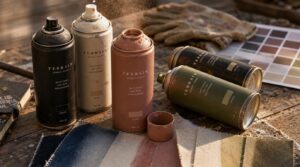
Not all spray paints are created equal, and grabbing the wrong one can leave your fabric stiff, cracked, or faded after the first wash. The good news is there are several solid options depending on your fabric type, project, and finish.
Here’s what you need to know before you pick one.
Fabric-specific Spray Paint
Fabric-specific spray paints are your best friend here — they’re built with flexible acrylic binders that move with the fabric instead of cracking. Brands like Tulip, Krylon, and Rust-Oleum lead the pack.
Here’s what sets high-quality spray paints apart:
- Binder Compatibility – bonds directly to textile fibers
- Flexibility Retention – stays soft after drying
- Odor Levels – water-based formulas keep things breathable
- Curing Temperature – most heat-set at around 300°F for wash-fast results
Upholstery Spray Paint
Upholstery spray paints skip the primer entirely — they’re engineered with polyurethane-acrylic blends that grip polyester and vinyl on contact. That built-in vinyl compatibility makes them ideal for fabric upholstery renovation projects like chairs or car seats.
These adhesion enhancers bond without cracking, so you don’t need extra prep to heat-set the paint later.
Look for low-odor formulas, and always wear protective gear.
Acrylic Spray Paint
Regular acrylic spray paint can work on fabric — but binder chemistry matters. Standard formulas dry rigid, so mix them 1:1 with fabric medium for flexibility and fabric/paint adhesion. Always heat-set the paint afterward using an iron.
Work in a ventilated space — ventilation safety is non-negotiable.
Check shelf life before spraying, and match nozzle selection to fabric weight for optimal results.
Water-based Formulas
Water-based fabric paints are the friendlier choice — low VOC benefits mean fewer fume stress and easier cleanup. The binder chemistry here is gentler, sitting closer to the fiber surface, so fabric absorbency really matters for adhesion.
Thin carefully; thinning ratios affect color strength. Drying time factors, like humidity, slow curing, so UV stabilizers help long-term durability.
Consider washability concerns and adhere to proper fabric curing time guidelines for optimal results.
Metallic and Shimmer Finishes
Metallic and shimmer finishes make fabric catch the light effectively. Silver and gold fabric spray paint options—including Rust-Oleum—utilize flake orientation to control sparkle intensity and light interaction.
For lasting color vibrancy, heat-set the paint at 300°F, then apply a protective clearcoat. This ensures durability and enhances resistance to wear.
Gloss control and UV protection preserve the shimmer’s freshness, even after repeated washing.
Top 5 Fabric Spray Paints
Not all fabric spray paints are created equal, and grabbing the wrong one can leave you with cracked, faded results after just one wash. The good news is there are a handful of tried-and-true options that actually hold up.
Here are five worth keeping on your radar.
1. Tulip ColorShot Silver Shimmer Fabric Spray Paint
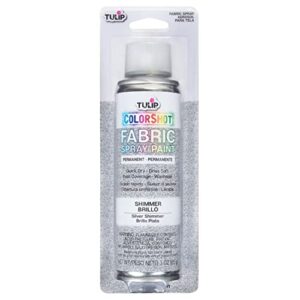
Tulip ColorShot Silver Shimmer is a must-have for metallic fabric accents, offering a flexible, reflective finish in a 3 oz aerosol. It works seamlessly on cotton and synthetic blends without stiffening the fabric, ensuring comfort and versatility.
The formula dries soft, blends effortlessly with other colors, and withstands machine washing, making it both practical and durable. For optimal results, apply to light-colored fabrics to enhance the silver shimmer’s light-catching effect.
Ideal for creative projects, it excels in stencils, tote bags, and garment details, adding a touch of sparkle to any design.
| Best For | Crafters and DIYers who want to add a metallic touch to light-colored fabrics—whether that’s customizing clothes, sprucing up curtains, or giving tote bags a little sparkle. |
|---|---|
| Form Factor | Aerosol spray |
| Finish Type | Metallic shimmer |
| Wash Durability | Machine washable |
| Fabric Compatibility | Natural and synthetic |
| Dry Time | Quick-dry formula |
| Color Blending | Yes, on fabric |
| Additional Features |
|
- Dries soft and flexible, so your fabric doesn’t feel stiff or crunchy after
- Machine-washable finish that actually holds up through laundering
- Easy to use for stenciling, blending, or all-over coverage without drips
- Works best on light fabrics—dark colors will likely mute the shimmer effect
- It’s permanent, so there’s no undoing a mistake without harsh chemicals or replacing the fabric
- Aerosol spray means overspray is a real thing—you’ll want to work outside or in a well-ventilated space with surfaces protected
2. Tulip ColorShot Fabric Spray Paint Black
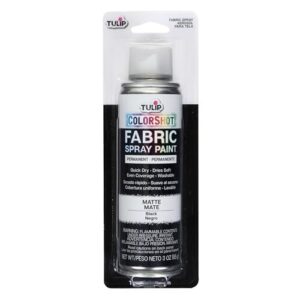
Black is bold, and the Tulip ColorShot Fabric Spray Paint Black delivers exactly that. This 3 oz aerosol lays down a rich, matte finish on cotton, denim, canvas, and polyester blends without making the fabric stiff or uncomfortable.
It dries quickly to the touch, eliminating wait time. Apply light, overlapping coats from 6 to 8 inches away for even coverage.
Once cured, it withstands machine washing—simply turn projects inside out first.
| Best For | DIY crafters and casual makers who want to refresh faded clothes, shoes, or home textiles without a lot of fuss. |
|---|---|
| Form Factor | Aerosol spray |
| Finish Type | Matte flat |
| Wash Durability | Machine washable |
| Fabric Compatibility | Natural and synthetic |
| Dry Time | Minutes to touch |
| Color Blending | Yes, on fabric |
| Additional Features |
|
- Matte finish looks natural on fabric—no shiny, painted-on look
- Works on both natural and synthetic fabrics, so it’s pretty versatile
- Stays flexible and machine-washable once it’s fully cured
- Strong chemical smell that sticks around longer than you’d want
- Coverage on dark fabrics is thin—you’ll likely need several coats
- The 3 oz can goes fast on bigger projects, and the nozzle can clog near the end
3. SEI Classic Tie Dye Spray Kit
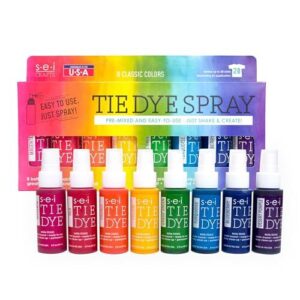
The SEI Classic Tie Dye Spray Kit turns a messy afternoon project into something surprisingly clean and fun.
Each kit comes with eight pre-mixed color bottles — no salts, no hot water, no guesswork. Just shake, spray, and go.
The dyes work best on cotton and natural blends, and a single kit can cover up to 20 t-shirts.
Heat-set in a dryer for about 20 minutes, and you’re ready to wear it the same day.
| Best For | Families, camps, and anyone hosting group events who want a quick, low-mess tie-dye activity that kids can actually handle. |
|---|---|
| Form Factor | Spray bottle |
| Finish Type | Dye penetration |
| Wash Durability | Heat-set washable |
| Fabric Compatibility | Washable fabrics |
| Dry Time | 5–6 hours total |
| Color Blending | Yes, multiple colors |
| Additional Features |
|
- No mixing needed — the dyes come pre-made and ready to spray right out of the box.
- Safe for kids and indoor use, with low odor and easy water cleanup.
- Fast turnaround — heat-set in the dryer and you’re wearing it the same day.
- Nozzles can clog, especially with the neon colors, which gets frustrating mid-project.
- The spray pattern is wide, so fine details and stencil work tend to bleed.
- Colors can fade over time with hot washes, so you’ll want to keep washing in cold water.
4. Mont Marte Acrylic Paint White Black
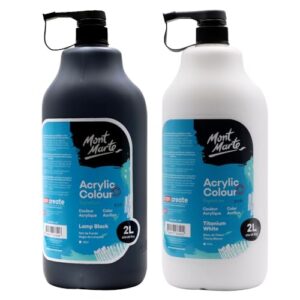
Mont Marte’s 2-liter acrylic paint set gives you real creative muscle — especially when you need to mix your own fabric-ready colors from scratch.
The titanium white and black paints are thick, opaque, and highly pigmented, so a little goes a long way. Thin them 1:1 with fabric medium, and they apply smoothly to cotton or denim without cracking after washing.
At $54.99 for four liters total, it’s a smart buy for larger projects or group crafting sessions.
| Best For | Artists, students, and crafters who work on large-scale projects or group sessions and need plenty of white and black paint without constantly restocking. |
|---|---|
| Form Factor | Liquid bottle |
| Finish Type | Opaque acrylic |
| Wash Durability | Water-soluble wet only |
| Fabric Compatibility | Multi-surface acrylic |
| Dry Time | Fast-drying acrylic |
| Color Blending | Yes, mixable |
| Additional Features |
|
- Thick, creamy formula with strong coverage — one coat usually does the job
- Great value at $54.99 for four liters total, especially for classrooms or bulk projects
- Mixes easily with mediums and other colors, giving you a lot of flexibility
- Very high viscosity means the pump can be a struggle — and if you don’t clean it right away, it clogs
- Fluid art fans will need to thin it down a lot, which can dull the pigment intensity
- Some users have had pump seal issues that let paint dry out in the spout over time
5. Tulip ColorShot Tie Dye Fabric Spray
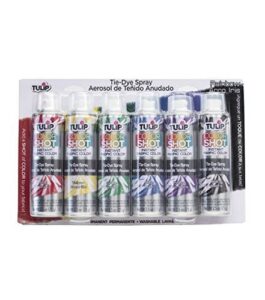
Tie-dye just got a whole lot easier. Tulip ColorShot Tie Dye Fabric Spray lets you crumple, fold, spray, and walk away — no rubber bands, buckets, or messy dye baths required.
Each 2.5-oz can delivers fast-drying, permanent color that stays soft after washing. Layer two or three shades while they’re still wet to achieve gorgeous blended gradients almost effortlessly.
The spray works on cotton, denim, and even polyester. Just remember: ventilate well, as the solvent odor is noticeable.
| Best For | Anyone who wants quick, creative fabric projects without the mess of traditional tie-dye — especially teens and crafters who love experimenting with color. |
|---|---|
| Form Factor | Aerosol spray |
| Finish Type | Soft touch |
| Wash Durability | Wash resistant |
| Fabric Compatibility | Clothing and textiles |
| Dry Time | Quick-drying |
| Color Blending | Yes, on fabric |
| Additional Features |
|
- Super easy to use — just spray and go, no rubber bands or dye baths needed
- Permanent, wash-resistant color that works on cotton, denim, and polyester
- Six-color rainbow set makes blending and layering gradients really fun
- Strong solvent smell means you need to work outside or in a well-ventilated space
- The 2.5-oz cans run out fast, making it pricier per ounce than other options
- Color can fade on darker fabrics after repeated washing, and some users find the finish stiffer than expected
Prepare Fabric Before Spraying
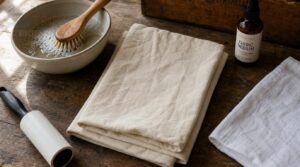
Before any paint touches your fabric, a little prep work goes a long way. Skipping this part is the most common reason projects end up faded, cracked, or just plain blotchy.
Here’s exactly what to do before you pick up that can.
Wash and Dry Fabric
Pre-washing your fabric is the first real step to getting paint that actually sticks. Oils, dust, and factory sizing all fight adhesion — so don’t skip this.
- Use a gentle detergent and cold water to prevent shrinkage.
- Add color catcher sheets to pull loose dyes before painting.
- Allow proper drying time on a drying rack for best results.
Iron Out Wrinkles
Once your fabric is dry, grab your iron—wrinkles are the enemy of a clean, even color. Uneven surfaces create patchy results. Use an ideal iron temperature for your fabric type, and always employ the pressing cloth technique to avoid scorching. A heat gun works too for stubborn creases.
Smooth fabric ensures better tension practice, which provides a consistent surface for spray paint to grip.
Insert Protective Cardboard
Smooth fabric is only half the battle—bleed-through can ruin both sides of your garment in one pass. Slip a thin piece of cardboard between each side before you start. This cardboard shield acts as your multi-layer cushioning barrier, giving you full overspray control.
Why cardboard inserts matter:
- Prevents paint from soaking through to the back layer
- Protects your workspace from stray spray
- Creates a firm, flat painting surface
- Bolsters edge protector design along hems and seams
- Recyclable cardboard makes it an eco-friendly recycling win
Test a Hidden Area
With your cardboard in place, don’t skip the patch test. Find a hidden seam or inside hem and test the paint there first. This Patch Test Method reveals Color Fastness, texture changes, and fabric paint adhesion before you commit to the full project.
| What to Check | What to Look For |
|---|---|
| Adhesion Evaluation | Paint bonds without flaking |
| Texture Monitoring | No unexpected stiffness |
Document your results before moving on.
Mask Edges Carefully
Once your patch test checks out, sharp edges are what separate a polished finish from a messy one. Press stencils or masking tape firmly to prevent edge bleed. Use fine line masking tape for curves, and apply a feathered edge to soften harsh borders naturally.
- Follow mask alignment tips to keep patterns straight
- Do a zoom inspection at 100% to catch stray threads
- Peel tape slowly after each coat
Spray Paint Fabric Step-by-Step
Now that your fabric is prepped, it’s time to actually spray.
A few simple habits make the difference between a clean, lasting finish and a patchy mess.
Here’s exactly how to do it, step by step.
Shake The Can Well
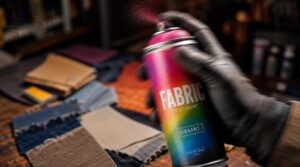
Shake the can vigorously for a full 60 seconds before use—a step often skipped by beginners. Hold it upright during shaking to prevent foaming and spitting.
Wear protective gloves and ensure the workspace is well-ventilated to prioritize safety.
Hold Six to Twelve Inches
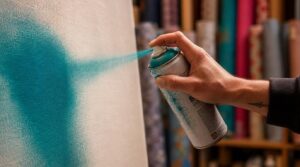
Distance is everything—hold your spray can 6–12 inches from the fabric for ideal spray distance and spray bead control. Too close, and you’ll flood the fibers; too far, and color fades out fast.
Keep these spray paint techniques in mind:
- Maintain consistent arm length throughout each pass
- Use even strokes to manage overspray
- Adjust adjustable nozzle spacing per product label
- Stay at 6–12 inches for balanced saturation
Spray Light, Even Coats
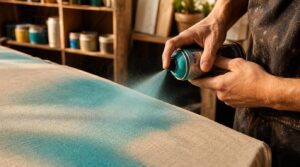
Think of each coat like a whisper, not a shout. Use multiple thin coats, keeping a consistent speed and steady hand as you work across the fabric.
Overlap passes by about 50 percent, using a light coating technique with continuous and even motion.
Adjust your nozzle angle slightly downward, apply even strokes, and you’ll achieve professional results every time.
Let Layers Flash Dry
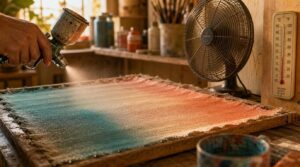
Between coats, patience is your best tool. Each layer needs to hit that tacky but not wet sweet spot before adding the next. Flash timing matters here: allow it to dry for 10–15 minutes between multiple thin coats.
Watch for these during the drying and curing process:
- Ambient Humidity above 60% slows spray paint drying time — use airflow management with a gentle fan
- Temperature range of 60–70°F promotes faster flash without cracking
- Open weaves flash faster than dense fabrics
Build Color Gradually
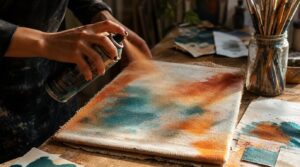
Color builds the way confidence does — one layer at a time. Apply multiple thin coats using even strokes, letting each dry fully before the next. This technique of incremental hue layers and thin coat stacking ensures controlled color intensity without muddiness.
The stepwise shade-deepening process creates subtle tone transitions that appear far more intentional than a single heavy application of color. Avoiding a "dump" of pigment preserves clarity and refinement in the final result.
Create Designs With Spray Paint
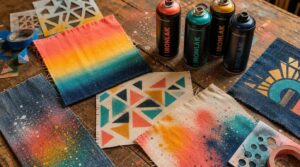
This is where spray painting gets really fun. Beyond solid color coverage, you can use a few simple techniques to create patterns, gradients, and effects that look intentional and polished.
Here are five ways to get creative with your spray paint.
Stencil Fabric Designs
Stencils are your secret weapon for crisp, repeatable designs on fabric. Choosing the right stencil material—such as durable Mylar or acetate—ensures longevity across multiple projects without warping. Adhesion methods like low-tack spray keep edges flat, while simple bleed prevention tips maintain clean lines.
To achieve professional results, follow these essential steps:
- Secure stencil firmly before applying paint.
- Use even strokes with light, multiple coats.
- Dab with a sponge for precision edge control.
- Wear a mask and gloves during fabric spray painting.
- Practice cleaning and storing stencils after each use.
Prioritizing safety and maintenance ensures both your health and stencil longevity.
Painter’s Tape Patterns
Painter’s tape opens up a whole new world beyond stencils. Press strips firmly to create Striped Bands, Chevron V‑Shapes, Diamond Mosaic tiles, Grid Layouts, or wild Freeform Shapes.
Always wear mask and gloves, lay down drop cloths, and watch for overspray.
| Pattern | Tape Technique |
|---|---|
| Striped Bands | Parallel strips, even spacing |
| Chevron V‑Shapes | Angled joints, aligned edges |
| Diamond Mosaic | Crossed diagonal strips |
| Grid Layouts | Vertical and horizontal overlap |
Use even strokes, peel while tacky.
Tie-dye Spray Effects
Want chaos that actually looks intentional? Try the scrunch technique — twist or bunch your fabric before spraying. This traps color in the folds, creating that classic tie-dye look without a bucket of dye.
Tools like SEI Tie Dye Spray Kits or Tulip ColorShot make it easy.
Adjust your mist distance to control droplet density and color bleed naturally.
Blended Color Gradients
Gradients are where spray paint truly shines. Pick two colors and start with your lightest shade. Begin with even strokes, maintaining a consistent gradient direction across the fabric. Overlap each pass slightly to ensure perceptual uniformity and avoid harsh lines.
To achieve a natural fade, reduce opacity gradually by increasing your distance from the surface at the edges. This technique creates a softer transition instead of abrupt stops.
Edge handling is critical for a polished result. Prioritize a soft finish over a blunt cutoff to maintain the gradient’s seamless flow.
Layered Color Effects
Building depth into fabric demands patience. Start with a base coat, let it flash dry, then add translucent overlays using even strokes at slightly different angles. Each layer of opacity layering shifts the hue interaction beneath it.
Experiment with gradient blending between two tones — light-angle shifts will make the colors appear almost alive.
Apply multiple spray paint coats slowly, and observe as the color vibrancy grows.
Dry and Heat-Set Paint
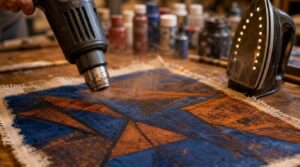
Once your design is done, the real work of making it last begins. Drying and heat-setting are what turn a fresh coat of paint into something that survives the wash cycle.
Here’s what you need to know about each stage.
Touch-dry Timing
Most spray-painted fabric feels dry to the touch within 15 to 60 minutes — but several things affect that window. Ambient temperature, humidity control, and ventilation impact how fast solvents escape.
Coat thickness matters too: thin layers from a proper spray distance dry faster than heavy ones. Hang your piece on a drying rack and allow it to dry completely before moving on.
Full Air-dry Time
Touch-dry isn’t the same as fully cured. Allow at least three days for the paint to dry completely before washing.
Coat thickness and fabric porosity both play a role — denim and wool can take 12 to 24 hours, while polyester may be done in 4 to 8.
Temperature affects, humidity influences, and airflow benefits all speed the process.
Keep your piece on a drying rack throughout.
Ironing to Heat-set
Think of ironing as the moment your design becomes permanent. Once you apply a hot iron over the painted surface, you’re locking the pigment into the fibers for good.
- Use a pressing cloth between the iron and fabric
- Follow fiber-specific settings — cotton withstands high steam pressure, silk needs low
- Follow temperature guidelines and iron for 3–5 minutes
- Let the cooling process finish completely before moving the fabric
Heat setting done right means colors that actually last.
Dryer Heat-setting Method
Your dryer can do more than dry clothes — it can heat set the paint just as effectively as an iron. Tumble dry on low for 15 minutes, as Dryer Temperature Control is critical. Excessive heat risks Shrinkage Risks and Color Fading Prevention issues. Modern dryers utilize Sensor-Driven Cycles to safeguard Fabric Compatibility across materials.
| Setting | Temperature | Duration |
|---|---|---|
| Low heat | 120°F | 15 minutes |
| Medium heat | 150°F | Not recommended |
| High heat | 170°F | Avoid completely |
| Delicate cycle | 120°F | 10–15 minutes |
| Air-only | No heat | Not effective |
This heat set process ensures fabric spray paint becomes machine-washable long-term.
Oven Curing Instructions
Oven curing is the industry standard for metallic and fluorescent fabric sprays. Preheat your oven to 300°F for 20–30 minutes—this Preheat Soak ensures Uniform Heat Distribution with no cold spots.
Place your item inside for a 30-minute Dwell Time Optimization hold, guaranteeing a full cure. This heat-set process for textiles locks in lasting paint curing results.
Let the item cool slowly—this Controlled Cooldown prevents cracking, ensuring durability.
Wash and Care Guidelines
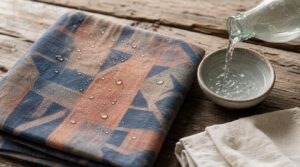
All that prep and painting work deserves a proper finish line. How you wash and store your piece from here on out makes the difference between paint that lasts and paint that flakes.
Follow these simple care steps to keep your fabric looking sharp.
Wait Before Washing
Patience here pays off more than you’d think. Before tossing your project into the wash, allow at least three days for the paint to dry completely — that’s your full cure window. Humidity and temperature can extend this timeline further.
Watch for these Cure Time Indicators before washing:
- Surface feels firm, not tacky
- No color transfer on a white cloth
- Uniform finish across the fabric
- Prewash Testing shows zero smearing
Delayed Wash Benefits are real — rushing fabric washing after paint risks cracking and fading. Your wash guidelines start with a full cure.
Wash Inside Out
Once your cure window closes, flip the garment inside out before washing. This simple habit delivers multiple benefits: it cuts surface abrasion reduction on your design, manages print protection during machine agitation, and keeps dye transfer prevention active.
Dark fabric preservation especially benefits from this practice, as inside-out washing shields rich exterior color—safeguarding the hues you worked hard to achieve.
Use Cold Water
Flipping your garment inside out is step one — cold water is step two. Washing with cold water keeps your painted design vivid longer. Cold color preservation works because lower temperatures reduce dye bleeding and fiber stress.
Run a gentle cycle, and you’ve got cold wash efficiency built right in.
Cold rinse benefits your fabric’s feel, too, leaving it softer without fading.
Avoid Bleach and Softeners
Cold water protects your design — but what you skip matters just as much. Bleach damage and fiber weakening are real risks, and fabric conditioner leaves softener buildup that dulls color over time.
When your fabric is machine washed, avoid these three:
- Bleach — causes color patchiness and yellowing
- Fabric softeners — create stiffness increase and residue
- Harsh detergents — break down paint adhesion fast
Smart fabric care after painting keeps your work looking sharp.
Spot-clean When Possible
Spot-cleaning is your best friend when something spills on your painted fabric. Rather than tossing the whole piece in the wash, immediate stain response saves both your design and the paint layer.
Use a colorfast cloth and gentle blotting technique — never scrub. Test cleaner on a hidden area first, then apply fabric protector once dry.
Common Fabric Spray Painting Mistakes
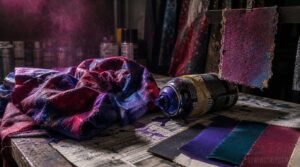
Even with the right paint and a solid prep routine, a few slip-ups can undo all your hard work.
Most of them are easy to avoid once you know what to watch for. Here are the common fabric spray painting mistakes and how to steer clear of them.
Spraying Too Close
Holding your spray can too close is one of the easiest ways to ruin a project. Less than six inches triggers color pooling in fabric folds, texture distortion along weave lines, and breathability loss as fibers become oversaturated. You’ll also face overspray bounce-back and safety hazards from concentrated mist.
Use even strokes and maintain proper distance when you spray paint fabric.
Using Heavy Coats
Piling on thick coats might feel like the faster path to bold color—but it’s actually where most projects go wrong. Heavy coats wreck flexibility retention, cause edge pooling, and extend layer drying times beyond control. Instead, apply multiple coats in thin passes.
Heavy coats create multiple problems:
- Paint adhesion to fibers weakens under oversaturated layers
- Fabric stiffness increases dramatically with each heavy application
- Edge pooling prevention becomes nearly impossible
- Airflow management suffers when wet layers trap solvents
- Fabric durability and wear resistance drop without proper heat-set requirements
Adopting thin, layered applications avoids these pitfalls entirely.
Skipping The Patch Test
Skipping a patch test is one of those shortcuts that almost always backfires. Unseen dye sensitivity and the risk of allergic reactions are real — skin irritation can appear up to 72 hours later, long after you’ve painted the whole piece.
Always test the paint on a hidden swatch first. It checks fabric dye compatibility, paint adhesion to fibers, color fading behavior, and fabric damage uncertainty before you commit.
Forgetting Heat-setting
Heat-setting isn’t optional — skip it and your painted fabric starts fighting back. Without it, you get shrinkage increased, color migration, and dimensional instability after the first wash.
The heat set process for textiles locks fiber softening at the right point, preserving crease recovery and keeping your fabric spray-paint machine washable and fade-resistant for the long haul.
Ignoring Overspray Protection
Overspray travels further than you’d expect — paint drift can coat nearby windows, cars, and plants before you notice.
Without drop cloths and proper masking, surface contamination turns a quick project into extended cleanup you didn’t plan for.
Always protect your workspace, wear protective gear for spray painting, and maintain ventilation safety for aerosol paints.
A little prep prevents real property damage.
Frequently Asked Questions (FAQs)
Will spray paint stay on fabric?
Yes — fabric spray paint can practically outlast the garment itself when applied correctly. Proper prep, thin coats, and heat-setting lock in adhesion, wash resistance, and flexibility retention for lasting colorfastness.
What safety precautions should I take when spray painting fabric?
Always work in a ventilated area and wear gloves and a mask rated for organic vapors.
Eye protection keeps splashes away, and keeping soapy water nearby makes spill cleanup quick and easy.
How do I properly prepare the fabric before spray painting?
Before you pick up that can, clean the fabric first. Wash it, remove lint, and pre-treat stains. Prewash benefits go beyond cleanliness — it strips sizing that blocks adhesion.
Apply fabric primer on polyester, use a water-softener mist on thirsty cotton fabrics, and securely clamp the fabric to your drop cloth.
Wear gloves and a mask, work in a ventilated area, and you’re ready.
What mistakes should I avoid when using fabric spray paint?
Ever ruined a project by rushing? Wrong paint choice, neglecting fabric prep, insufficient drying, and improper ventilation are the usual culprits.
Always test the paint first, work in a well-ventilated space, and allow at least three days for the paint to dry — otherwise spray paint is likely to crack.
Can spray paint be used on outdoor furniture fabric?
Spray paint works great on outdoor furniture fabric — just grab a product like Rust-Oleum Outdoor Fabric Paint.
It offers flexibility retention, UV protection, and weatherproof sealant properties that withstand weather exposure beautifully.
How do you fix spray paint mistakes on fabric?
Fixing mistakes is like catching a typo before you hit send — easier when you act fast. Blot wet paint gently, test solvents first, sand dried drips, then heat-set your touch-up.
Can multiple spray paint colors be layered together?
Layer multiple colors by letting each coat flash-dry first to prevent paint bleeding issues. This technique ensures clean edges and avoids color mixing.
Use Mist-Control Spraying for precise application, maintaining sharp boundaries between hues. Finally, seal your design with a Protective Top Coat to preserve the layered colors and enhance durability.
Does spray painting fabric affect its breathability?
Paint fills the microvoids between fibers, reducing fabric porosity and air permeability.
Thinner coats help minimize ventilation loss, while repeated washing can gradually aid in the recovery of breathability.
Can spray-painted fabric be altered or overdyed later?
Yes, spray-painted fabric can be over-dyed later, though results vary. Water-based formulas with lower paint penetration allow better dye absorption.
Heat-setting durability and existing stiffness reduction both influence how well new color takes.
Conclusion
Spray paint is just a key—fabric is the door you’ve been waiting to open. Now that you know fabric can be spray painted and exactly how to do it right, that dusty jacket or faded canvas chair is a real project, not a gamble.
Prep carefully, build your coats slowly, and heat-set before you wash. The technique is simple once you trust it. Your next favorite piece might already be sitting in your closet.
- https://www.diygeeks.com/spray-paint-dry-time/
- https://www.pfonline.com/articles/curing-oven-basics
- https://www.gobelovac.com/understanding-industrial-curing-ovens-technical-functions-and-key-applications
- https://www.iqsdirectory.com/articles/industrial-oven/curing-ovens.html
- https://www.despatch.com/blog/what-are-curing-ovens-a-practical-guide-for-manufacturing-teams/