This site is supported by our readers. We may earn a commission, at no cost to you, if you purchase through links.
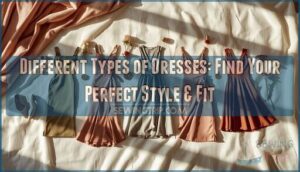
A dress does something no other garment can—answers the question of what to wear before you’ve fully woken up. One piece, one decision, done.
But that simplicity disguises staggering variety: fashion historians have catalogued dress silhouettes evolving continuously since ancient Egyptian women wrapped sheer linen around their bodies in 2000 BCE, each era adding new shapes, hemlines, and intentions to the mix.
Today, the different types of dresses range from a bodycon that commands a room to a breezy maxi that feels like a vacation you’re already on. Knowing cut works for your body and your life turns getting dressed from a daily negotiation into something that actually feels like you.
Table Of Contents
- Key Takeaways
- What is a Dress? Key Basics
- Main Types of Dress Silhouettes
- A-line Dress Features and Who They Suit
- Shift and Sheath Dresses for Streamlined Shapes
- Empire Waist Dresses for Balanced Proportions
- Fit-and-flare and Skater Dress Silhouettes
- Bodycon and Bandage Dresses for Figure-hugging Looks
- Mermaid and Trumpet Dresses for Dramatic Flair
- Ball Gown and Princess Silhouettes for Formal Occasions
- Dress Lengths and Hemline Variations
- Necklines and Sleeves That Define Dresses
- Dress Styles for Different Occasions
- Top 3 Casual Dress Types to Try
- Frequently Asked Questions (FAQs)
- Conclusion
Key Takeaways
- The silhouette you choose — A-line, sheath, mermaid, or empire waist — does the heavy lifting before color or fabric even enters the picture, so understanding your body shape makes every dress decision easier.
- Dress length isn’t just a style preference; it’s a signal — minis say party, midis say versatile, maxis say effortlessly dressed without trying too hard.
- Necklines and sleeves quietly set the formality of any dress, meaning you can take the same silhouette from brunch to a black-tie event just by switching those two details.
- Fabric choice is the difference between a dress that works for you and one that works against you — breathable cotton and linen own summer, while velvet and wool carry you through winter without skipping a beat.
What is a Dress? Key Basics
A dress is one of the simplest concepts in fashion — one piece, worn on the body, done.
But that simplicity is exactly what makes it endlessly adaptable across centuries, occasions, and personal styles.
From neckline to hem, a tent dress pattern gives you a simple foundation you can twist into something entirely your own.
Here’s what you need to know before exploring all the ways a dress can work for you.
Definition of a Dress as a One-piece Garment
A single garment that does it all — no mixing, no matching, no second‑guessing. Its Bodice‑Skirt Fusion creates one Unified Upper‑Lower Design that flows from shoulders to hem in a clean, Single‑Piece Silhouette.
Here’s what makes that Integrated Garment Structure special:
- Smooth Body Coverage from shoulders down
- Built‑in bodice and skirt as one
- No coordination needed — it’s a complete look
- Easy to wear, endlessly adaptable
The historical dress evolution shows how styles have changed over centuries.
Brief History and Evolution of Dress Styles
That one-piece magic you’re wearing? It’s been thousands of years in the making.
Dress history stretches from Minoan Drapery around 2000 BCE through Italian Renaissance Gowns, the Victorian Hourglass corset era, rebellious 1920s Flapper silhouettes, and Dior’s dreamy 1950s New Look revival.
Each chapter of dress evolution reflected its culture — and honestly, every dress fashion trend you love today has roots in one of them.
The roots trace back to ancient Egyptian dresses that favored sheer linen and gold‑embellished fabrics.
How Dresses Differ From Other Women’s Clothing
Unlike separates, a dress manages everything in one shot. That smooth silhouette flows shoulder to hem without a waistline break interrupting your look.
Here’s what makes dresses uniquely different:
- One-piece construction means zero matching stress
- Dressing simplicity cuts your morning routine down instantly
- Formality perception shifts automatically — one garment, endless occasions
Reduced mix options? Sure. But that freedom-in-simplicity is exactly the trade-off worth making.
Factors Used to Categorize Different Dress Types
Every dress you see fits into a larger system — sorted by silhouette, length, neckline, sleeves, and fabric. Knowing these categories makes shopping so much easier.
| Category | Examples | Why It Matters |
|---|---|---|
| Dress silhouettes & lengths | A-line, maxi, mini | Shapes your overall look |
| Dress necklines & sleeves | V-neck, bell sleeves | Sets formality and mood |
| Dress fabrics & texture | Sustainable materials, seasonal textures | Defines comfort and occasion |
Main Types of Dress Silhouettes
The silhouette is the first thing a dress says about you — before color, before fabric, before anything else.
It’s the shape that either works with your body or fights it, and getting it right makes all the difference.
Here are the main silhouettes worth knowing.
A-line Dress Features and Who They Suit
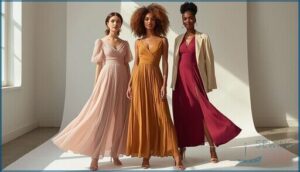
The A-line dress is honestly most universally flattering dress silhouettes out there — and for good reason.
It’s fitted at the shoulders with a flattering waist, then gradually widens toward the hem, creating that classic A-line dress shape.
Body type compatibility is real here: the eased skirt skims hips without clinging.
Adaptable fabrics like chiffon and crepe make seasonal styling easy year‑round.
Shift and Sheath Dresses for Streamlined Shapes
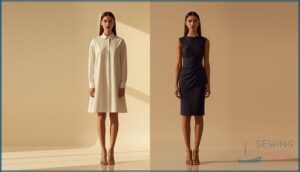
Two dress cuts worth knowing: the shift dress and the sheath dress.
Shift Comfort comes from its relaxed, straight‑down silhouette — no defined waist, generous room, serious Layering Potential over shirts or under blazers.
The sheath dress flips that script entirely, using Sheath Tailoring, darts, and princess seams for serious Curve Emphasizing and sleek Midsection Skimming.
These dress silhouettes and dress waistlines truly do opposite jobs beautifully.
Empire Waist Dresses for Balanced Proportions

The empire waist dress is a quiet magic trick.
Its High Waistline sits just under the bust, instantly creating Leg Lengthening illusions and serious Body Flattery without trying too hard. Fabric flows freely over your midsection — no clinging, no stress.
That’s why it’s a go-to silhouette for Maternity Style and Boho Appeal alike, flattering a wide range of body types effortlessly.
Fit-and-flare and Skater Dress Silhouettes
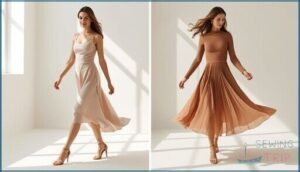
Want a silhouette that celebrates your waist without overthinking it? Fit and flare dress styles do exactly that — fitted bodice, fuller skirt, instant hourglass.
Here’s why these dress silhouettes work so well:
- Waist definition feels natural, not forced
- Fabric choice like knit keeps skater dress styles breezy for warm seasonal variations
- Styling tips are simple — just move freely
Bodycon and Bandage Dresses for Figure-hugging Looks
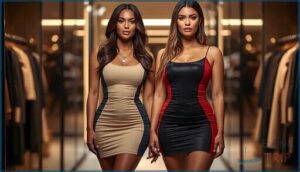
Bodycon and bandage dresses are basically a love letter to your curves.
A bodycon dress uses stretch fabric technology and smooth construction to trace every line of your silhouette — no hiding, just confidence.
Bandage dress styles take it further, using color blocking and texture layering with elastic panels for serious figure-flattering details.
These dress styles are unapologetically bold.
Mermaid and Trumpet Dresses for Dramatic Flair
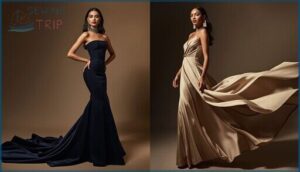
Few dress styles command a room like the mermaid silhouette dress. It hugs your bodice, waist, hips, and thighs, then fans out below the knee for dramatic flare variations that make grand entrances unforgettable.
The trumpet dress offers softer curve enhancement, flaring gradually from mid‑thigh.
Both dress shapes bring real movement challenges, so pair them with bold accessories for maximum accessorizing drama.
Ball Gown and Princess Silhouettes for Formal Occasions
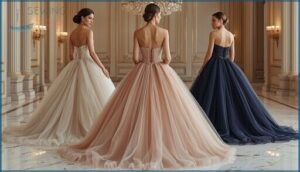
If mermaid styles feel bold, ball gowns go all the way. A Corset Bodice paired with Tulle Layers creates that full, sweeping skirt you’ve probably dreamed about. Princess dress silhouettes work beautifully for formal wear and evening gown moments alike.
- Train Lengths vary from subtle sweeps to dramatic cathedral styles.
- Royal Color Palettes like ivory, blush, and midnight navy feel timeless.
- Accessory Pairings shine best when kept elegant and minimal.
- Structured bodices balance the skirt’s volume perfectly.
- This ball dress silhouette flatters nearly every frame.
Dress Lengths and Hemline Variations
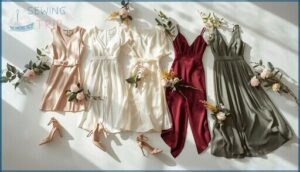
The length of a dress changes everything — how you move, where you wear it, and how you feel in it.
From a flirty mini to a floor-grazing maxi, each hemline tells its own story.
Here’s a look at the most common dress lengths and what makes each one worth knowing.
Mini Dresses and When to Wear Them
Mini dresses — usually hitting 30 to 35 inches from shoulder to hem — are your go-to for Party Night energy and Holiday Festivities shimmer.
In summer, a breezy cotton mini is perfect for a Summer Brunch. Winter Layering keeps them relevant year‑round. Follow a Body Shape Guide to find mini dress styles and dress lengths that actually flatter you.
Above-the-knee and Knee-length Dress Options
Step up from the Mini Dress and you’ll find two seriously wearable dress lengths. Above-the-knee styles — hitting 2‑4 inches above the knee — suit daytime outings beautifully, especially with smart footwear options like heeled sandals. Knee-length works perfectly for cocktail dress moments or office days.
Fabric selections like linen or satin, plus seasonal styling, make both lengths incredibly adaptable.
Midi Dresses and Their Versatile Styling
Going a little longer feels good sometimes. Midi dresses — falling mid-calf — nail that sweet spot between breezy and polished, making them one of the most flexible dress lengths around.
Here are three dress styling tips to work yours:
- Shoe Coordination: Knee-high boots or heeled sandals both work beautifully.
- Seasonal Layering: Try a leather jacket in fall or a linen blazer in spring.
- Body Shape Tips: A-line midis flatter pear shapes; belted styles define rectangles.
Fabric Pairings and Accessory Styling seal the look.
Maxi Dresses for Casual and Dressy Looks
Maxi dresses do double duty like almost no other dress length can.
Flowing to the ankle, they shift from casual wear — think cotton or linen with sandals and a straw hat — to dressy looks with satin, heels, and bold Accessory Accents.
Smart Layering Strategies, Seasonal Color Palettes, and thoughtful Footwear Choices keep these dress styles endlessly fresh across Fabric Pairings and occasions.
Tea-length Dresses for Vintage-inspired Outfits
If you’ve ever felt drawn to that dreamy mid-century sweetness, a tea length dress hits the sweet spot — falling between your knee and ankle, usually mid‑calf.
Retro Fabric Choices like lace over satin or tulle skirts bring those Midcentury Color Palettes to life.
Add Vintage Shoe Pairings like peep‑toe heels, Classic Accessory Trends, and Nostalgic Hair Styling for an effortlessly vintage‑inspired look.
High-low Hem Dresses for Modern Movement and Drama
Want a dress that turns heads from every angle?
A high low dress does exactly that — shorter in front to show off your shoes (hello, Heel Showcase), with a sweeping back hem that brings serious Train Drama.
Lightweight fabrics like chiffon deliver gorgeous Fabric Flow, while the Petite Flare silhouette elongates your frame.
It’s one of those dress styles that never fully leaves fashion trends.
Necklines and Sleeves That Define Dresses
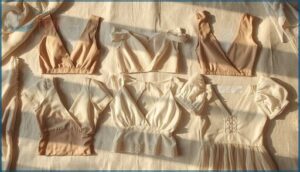
The neckline and sleeves of a dress do more than you’d think — they shape the whole vibe of an outfit before you even think about shoes or accessories.
Whether you’re dressing up for a rooftop event or keeping it easy on a Sunday, these details quietly set the tone.
Here’s a look at the styles worth knowing.
Halter, Off-shoulder, and One-shoulder Necklines
Your neckline sets the whole mood of a look. A halter dress draws eyes upward, elongating your neck while showing off toned shoulders — a silhouette with roots in 1920s Hollywood glamour.
The off-shoulder dress hugs your collarbone beautifully, balancing curves with symmetrical exposure. One-shoulder dress styles add asymmetric drama through diagonal fabric drape. Each neckline style transforms both body shape pairing and overall silhouette impact effortlessly.
V-neck, Scoop Neck, and High-neck Dress Styles
Three necklines, three totally different vibes.
V-neck elongates your torso and balances body type beautifully — deeper cuts suit evening dress silhouettes, while modest depths work for day dress styles.
Scoop necks widen narrow shoulders and complement warm-season fabric choices like linen.
High necks shift focus to your face, pairing best with minimalist accessory coordination and structured dress types.
Collared Shirt Dresses and Their Polished Appeal
The collared shirt dress is where laid-back confidence meets boardroom polish. Point collars give you that custom fit and sharp button detailing that feels intentional without trying too hard.
Fabric choice matters too — cotton poplin keeps things crisp for office styling, while chambray softens the look for weekends.
Seasonal color swaps make this one of the most adaptable dress styles you’ll reach for year‑round.
Sleeveless, Cap Sleeve, and Short Sleeve Designs
Sleeve styles shape how a dress feels as much as how it looks.
A sleeveless dress wins on climate comfort — open armhole construction keeps you cool when humidity hits.
Cap sleeve dresses skim the shoulder for body shape balance, gently broadening narrower frames.
Short sleeve designs are the prime styling layer base, moving from summer solo to jacket-ready in seconds.
Fabric choice seals the deal.
Long Sleeves, Bell Sleeves, and Flutter Sleeves
When warmth and coverage matter, a long sleeve dress delivers — think velvet for winter evenings or lightweight cotton for breezy layering.
Bell sleeve dresses bring that unforced drama, their flared arms swinging with every step.
Flutter sleeve dresses soften your shoulder line beautifully while keeping things airy.
Fabric choices and sleeve embellishments — lace, ruffles, embroidery — do the styling work for you.
How Neckline and Sleeve Choices Change Dress Formality
Your neckline and sleeve choices quietly set the tone before you say a word.
A deep V-Neck Drama elongates and draws focus at formal events, while Cap Sleeve Modesty bridges casual and polished effortlessly.
Off-Shoulder Elegance brings romance to cocktail hours; High Neck Formality signals evening sophistication.
Even a Collared Structured Look transforms simple fabric into boardroom-ready confidence — that is the real power of dress necklines and dress sleeves.
Dress Styles for Different Occasions
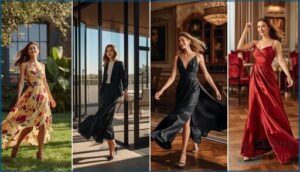
The right dress doesn’t just cover the occasion — it fits the mood, the setting, and the version of you showing up that day.
The right dress doesn’t just fit the occasion — it fits the mood, the moment, and the you showing up for both
Whether you’re grabbing brunch, heading into a board meeting, or dancing at someone’s wedding, there’s a style built exactly for that moment.
Here’s a breakdown of dress styles matched to the occasions where they actually make sense.
Day Dresses and Casual Everyday Styles
Think of a casual day dress as your wardrobe’s best friend — always ready, never overdressed. Whether you reach for a shirt dress, a relaxed wrap dress, or a classic t-shirt dress, breathable fabrics like cotton and linen do the heavy lifting. Adaptable prints and seasonal color palettes keep things fresh, while smart layering options and comfortable footwear seal the look.
- Shirt dress cinched with a belt for easy polish
- T-shirt dress paired with sneakers for easy errands
- Wrap dress in a floral print for a put-together brunch
- Casual day dress layered under a denim jacket for cooler days
Sundresses as a Warm-weather Staple
When the heat shows up, sundresses show out.
These sleeveless designs in breathable fabrics like cotton, linen, and rayon keep you cool without sacrificing style.
Floral prints and soft dress colors — think whites, pastels, pale blues — make them easy warm‑weather wins.
Mini lengths add playful movement, while midi and maxi options cover longer days.
Casual or slightly dressy, they’re summer’s most easy occasion wear.
Work Dresses Where Function Meets Fashion
Your work dress needs to pull double duty — looking sharp at 9 a.m. and still feeling good by 6 p.m.
Sheath and shift dresses offer Adjustable Silhouettes with serious Fabric Performance, that resist wrinkles through back-to-back meetings.
A shirt dress or blazer dress brings Layering Versatility and Temperature Adaptive comfort, while Pocket Innovation keeps your essentials within reach — no bag required.
Cocktail Dresses and Semi-formal Party Looks
Cocktail dresses live in that sweet spot between dressed-up and overdone.
A Silk Cocktail or Satin Sheath dress hits knee length perfectly for semi-formal dress occasions where full gowns feel like too much.
Love some sparkle? An Embellished Mini turns heads effortlessly. Add V‑Neck Details to elongate your frame, finish with Metallic Accessories, and you’ve got cocktail dress styling that works for almost every body type.
Evening Gowns and Formal Event Dresses
Evening gowns aren’t just dresses — they’re a full statement. Whether you’re drawn to mermaid Silhouette Trends or classic ballgown drama, the right formal dress transforms any black-tie moment.
Here’s what makes evening gown dressing work:
- Fabric Choices — silk, satin, and chiffon drape beautifully under event lighting
- Color Palettes — jewel tones like emerald and sapphire photograph strikingly
- Silhouette Trends — fitted trumpet styles create an hourglass effect
- Accessory Pairings — evening clutches and fine jewelry complete the look
- Pricing Strategies — rentals offer luxury dress styles without the splurge
Special-occasion Dresses for Weddings and Celebrations
Weddings and celebrations call for occasion‑specific dresses that do real work — setting the mood, flattering your figure, and honoring the event.
Bridesmaid Fabric Choices like chiffon and crepe keep things breezy and polished.
Mother‑of‑Bride Silhouettes in A‑line or sheath hit that sweet spot between elegant and comfortable.
Don’t overlook Rehearsal Dinner Styles, either — a midi dress in celebration color palettes like dusty lavender or burgundy feels just right.
Top 3 Casual Dress Types to Try
the best outfit is the one you reach for without thinking twice. Casual dresses hit that sweet spot — easy to wear, easy to style, and somehow always right for the moment.
Here are three worth adding to your rotation.
1. Prettygarden Spring Lantern Sleeve Dress
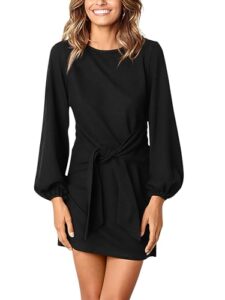
Prettygarden Spring Lantern Sleeve Dress is one of those rare finds that genuinely works hard for you. The lantern sleeves create instant visual interest, while the knit tie waist lets you adjust the fit to your shape — no guessing, no squeezing.
It comes in sizes S through XL and covers everything from brunch to a casual evening out. Swap in ankle boots for fall or heeled sandals for spring, and you’ve got a completely different look without trying.
| Best For | Women who want a versatile, put-together look that works for everything from a casual lunch to a holiday party without overthinking the outfit. |
|---|---|
| Sleeve Style | Lantern long sleeve |
| Dress Length | Above knee |
| Material | Knit fabric |
| Care Instructions | Machine washable |
| Season Suitability | Spring/Fall/Winter |
| Occasion | Wedding/Party/Work |
| Additional Features |
|
- The lantern sleeves and tie waist give it a flattering, feminine shape that works across body types
- Super easy to style — throw on boots or heels and you’re done
- Machine washable and lightweight enough to pack without much fuss
- Runs short in the back, so curvier women may want to size up
- Some buyers have reported odors, stains, or loose threads out of the bag — worth inspecting on arrival
- The knit can feel warmer and scratchier than expected, so it’s not the best pick for hot weather
2. Mordenmiss Women’s Cotton Linen Cap Sleeve Dress
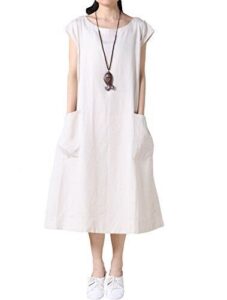
If the Prettygarden is your statement piece dress, the Mordenmiss Cotton Linen Cap Sleeve Dress is its laid-back counterpart — the one you reach for without thinking twice. Made from a breathable cotton linen blend, it’s loose, light, and genuinely comfortable on hot days.
The V-neck and cap sleeves keep things cool, while two front pockets make it practical. Dress it up with jewelry or throw it on as‑is — either way, you’re sorted.
| Best For | Anyone who wants a no-fuss, everyday dress that’s cool and comfortable in summer heat. |
|---|---|
| Sleeve Style | Cap sleeve |
| Dress Length | Knee length |
| Material | Cotton linen |
| Care Instructions | Machine washable |
| Season Suitability | Summer |
| Occasion | Travel/Vacation/Party |
| Additional Features |
|
- Breathable cotton linen keeps you cool on hot days
- Two front pockets and a loose fit make it genuinely practical
- Versatile enough to dress up or down for travel, errands, or a casual night out
- Fabric runs thin and can be see-through in bright light
- May need hemming if you’re on the shorter side
- Quality has left some shoppers wanting a little more for the price
3. Ecowish Bohemian V Neck Maxi Dress
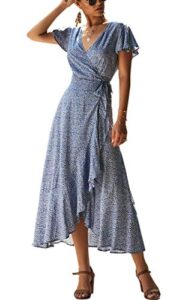
Want something with a little more personality? Ecowish Bohemian V Neck Maxi Dress brings the vacation energy — a flowing wrap silhouette with a wrap V‑neck, short sleeves, and a high side split that gives every step some drama.
It’s built for beach days and summer gatherings, pairing effortlessly with sandals and a sun hat.
The tie waist adjusts to your shape, and the boho floral prints practically do the styling for you.
| Best For | Anyone who loves a relaxed, boho-chic look and wants an easy outfit for beach trips or summer hangouts. |
|---|---|
| Sleeve Style | Short sleeve |
| Dress Length | Maxi length |
| Material | Unknown (likely polyester) |
| Care Instructions | Ironing required |
| Season Suitability | Summer |
| Occasion | Beach/Casual |
| Additional Features |
|
- The wrap V-neck and high side split give it a flowy, effortless vibe that looks great on warm-weather occasions
- Short sleeves keep you cool without sacrificing style
- The tie waist adds some shape and lets you adjust the fit to your liking
- The top area tends to fit poorly, especially if you have a smaller bust
- The tie closure can be fiddly and frustrating to get right
- It wrinkles easily, so expect to break out the iron before wearing it
Frequently Asked Questions (FAQs)
What are the four types of dress?
Think of dresses as having four core identities: the A-line, the sheath, the empire waist, and the fit-and-flare.
Each one drapes, fits, and flatters your body in a completely different way.
What are different types of dresses called?
Dresses go by names like A-line, sheath, mermaid, empire waist, ballgown, wrap, shift, sundress, cocktail, and maxi — each describing a unique silhouette, length, or occasion that shapes how you wear it.
What styles of dress are there?
From body-skimming sheaths to dramatic ball gowns, dress styles run the full spectrum.
You’ll find silhouettes like A-line, empire waist, mermaid, and bodycon — each designed to flatter differently and suit your occasion perfectly.
What are the 4 dress codes?
There are four main dress codes: white tie, black tie, cocktail, and business formal. Each one sets a different expectation for how dressed up you should be.
How many types of dressing styles are there?
There’s no single number — dress styles are genuinely endless.
From silhouettes and lengths to necklines and sleeves, you’re looking at dozens of core categories, each branching into countless variations every season.
What dress fabrics work best for different seasons?
The fabric you choose can make or break your comfort. Cotton and linen breathe beautifully in summer, wool and velvet insulate in winter, chiffon layers perfectly in spring, and corduroy transitions effortlessly through fall.
How do I choose the right dress size?
Start with your three key measurements — bust, waist, and hips — then match them to the brand’s size chart.
When you’re between sizes, go with the larger one for the best fit.
What undergarments should I wear with different dresses?
Think of undergarments as your dress’s secret foundation — the right ones make everything sit smooth, and shine better.
Match your bra and panties to your dress’s neckline, back, and fit for a perfect look.
How do I care for and store dresses?
Care depends on fabric. Cotton manages cold water and gentle cycles well, while silk needs hand washing and flat drying.
Always store dresses clean, hung with breathing room, or folded with acid-free tissue.
Which dress colors flatter different skin tones?
Your undertone is the real style compass here.
Cool skin glows in sapphire and lavender.
warm skin shines in terracotta and mustard.
neutral skin flatters in jade, blush, and rich plum.
Conclusion
style is deeply personal—and different types of dresses prove that one garment can speak a thousand languages.
Whether you’re drawn to the clean confidence of a sheath, the ease of a breezy maxi, or the drama of a mermaid silhouette, the right dress doesn’t just fit your body—it fits your life.
Trust what makes you feel like yourself, and getting dressed stops being a chore and starts being yours.
- https://thedreamstress.com/2012/01/terminology-the-so-called-viking-apron-dress/
- https://www.bustle.com/articles/86034-a-brief-history-of-the-jumper-because-theyre-adorable-and-not-just-for-kids
- https://www.joyofclothes.com/style-advice/clothing-guides/dresses/asymmetric-dress.php
- https://www.alldressy.com/what-is-a-dress/
- https://fashion.fandom.com/wiki/One-Piece_Dress