This site is supported by our readers. We may earn a commission, at no cost to you, if you purchase through links.
Somewhere between your third box of disposables this year and that landfill statistic you can’t unread—245,000 tonnes of CO₂ from pads alone—something shifts. Suddenly, a stack of cotton flannel and a sewing machine starts looking less like a craft project and more like a quiet act of defiance.
Over a lifetime, disposable pads add up to roughly 10,000 products per person, most of them plastic, most of them outliving your great-grandchildren. The math is wild. The alternative? Softer, cheaper, and surprisingly simple to make. Free sewing patterns, beginner-friendly construction, and materials that cost less than a single month of disposables are all waiting.
Table Of Contents
- Key Takeaways
- Benefits of Reusable Cloth Menstrual Pads
- Materials Needed for Cloth Menstrual Pads
- Free Sewing Patterns for Cloth Menstrual Pads
- Step-by-Step Sewing Instructions
- Washing and Caring for Cloth Menstrual Pads
- Overcoming The Initial Adjustment Period
- Donating Homemade Cloth Menstrual Pads
- Tips for Customizing Your Cloth Menstrual Pads
- Troubleshooting Common Issues With Cloth Menstrual Pads
- Frequently Asked Questions (FAQs)
- Conclusion
Key Takeaways
- Switching to DIY cloth pads can save you close to $4,800 over a lifetime, with most people breaking-even within just six months.
- The right material stack — soft flannel on top, an absorbent core in the middle, and waterproof PUL backing on the bottom — is what makes these pads actually work.
- Free beginner-friendly patterns from sites like Luna Wolf and Put A Cup In It mean you don’t need any prior sewing experience to get started.
- Beyond your own stash, extra handmade pads can be donated to fight period poverty — organizations actively welcome them when packed clean and unscented.
Benefits of Reusable Cloth Menstrual Pads
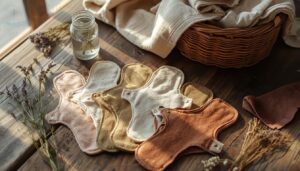
Switching to cloth pads isn’t just a craft project — it’s a quiet rebellion against waste, expense, and harsh chemicals.
And honestly, the benefits go deeper than most people expect. Here’s what makes them worth every stitch.
From durability to a polished finish, different leather lacing stitches each bring their own strengths to the table.
Environmental Benefits of Cloth Pads
Every pad you sew is a quiet act of rebellion against a wasteful system. The environmental impact of reusable pads adds up fast — and the numbers don’t lie. Reusable cloth pads eliminate single-use waste by replacing hundreds of disposables.
- Landfill reduction: Over 10,000 disposable products per person, lifetime. Yours? Near zero.
- Plastic waste cut: Most disposables are 90%+ plastic, taking 500+ years to break down.
- Carbon footprint drop: 12 billion disposables yearly pump ~245,000 tonnes of CO₂ into the atmosphere.
- Waterway protection: No chemicals, no flush-related sewage disasters — just clean, circular economy vibes.
Sustainable period products aren’t a sacrifice. They’re a power move.
Cost Savings of Cloth Menstrual Pads
Your wallet deserves that same rebellion. Switching to cloth pads is one of the smartest budget-friendly period solutions out there. DIY cost advantage is real — homemade pads run under $10, versus $4,800 spent on disposables over a lifetime.
That’s a dramatic lifetime cost reduction. Most people hit their break-even timeline within six months. Annual maintenance savings stay under $28.
Cost-per-use analysis makes it clear — Cloth wins, every single time.
Health Benefits of Cloth Menstrual Pads
Your body deserves better than plastic pressed against your skin all day. Cloth pads offer breathable comfort, reducing trapped heat and chafing for improved skin health during periods. This natural approach minimizes irritation, with many users noticing serious skin irritation reduction within months.
Free from synthetic chemicals and artificial scents, cloth pads provide natural fiber advantages that prioritize quiet, gentle care. Their chemical-free composition eliminates unnecessary additives, letting your skin breathe easy.
A critical benefit? TSS elimination becomes a genuine possibility. Preventing TSS with cloth pads offers profound reassurance, addressing a risk tied to less breathable alternatives.
For postpartum relief, the soft, chemical-free nature of cloth pads delivers essential comfort. Many new parents swear by their gentle support during this sensitive recovery phase.
Alternative to Disposable Pads
Ditching disposables feels bold — and it’s. Reusable cloth menstrual pads put you in charge of your period routine. No more midnight drugstore runs or mystery chemicals against your skin. They’re one of the best eco-friendly period alternatives out there, alongside menstrual cups, period panties, and reusable underwear.
- Zero-waste hygiene that actually saves money
- Free sewing patterns mean fully custom-fit
- Community workshops make learning fun and social
Materials Needed for Cloth Menstrual Pads
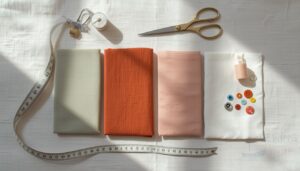
Before you cut a single piece of fabric, you need the right materials in your corner. The good news — you don’t need anything fancy or hard to find.
Here’s exactly what to grab before you start sewing.
Choosing The Right Fabric for Cloth Pads
Your fabric choice makes or breaks these pads — seriously. Breathable fibers like cotton flannel and organic cotton offer the softness you want against your skin, while bamboo terry excels in moisture-wicking and absorbency. Opt for dark or patterned fabrics to hide stains effectively. Additionally, consider pilling resistance; flannel, for example, wears faster than hemp.
| Fabric | Why It Works |
|---|---|
| Cotton flannel | Ultra-soft, breathable |
| Bamboo terry | Strong moisture wicking |
| Organic cotton | Gentle, durable, natural |
| Patterned cotton | Hides stains beautifully |
Selecting Absorbent Materials for Cloth Pads
Picking the right absorbent core material is where your pad truly earns its keep. Zorb vs Bamboo? Both are MVPs — Zorb absorbs up to 10x its weight in seconds, while bamboo fleece builds absorbency over time.
Match your GSM standards to your flow: 300–500gsm for light days, 600–850gsm regular, 1000gsm+ overnight.
Smart layering absorbent combos ensure better durability after washes — and zero compromises.
Pair those durable combos with designs from easy online sewing patterns to create pieces that hold up beautifully wash after wash.
Waterproof Liner for Cloth Pads
Think of your waterproof liner as the unsung hero keeping everything in check. PUL selection matters here — this polyurethane laminate fabric is lightweight, flexible, and survives 200+ washes without losing its waterproof PUL layer integrity.
Liner placement sits beneath your Zorb fabric core, blocking leaks cold. Fleece comparison? PUL wins for durability testing. No seam sealing drama — just reliable, breathable protection.
Fasteners for Cloth Menstrual Pads
Your fasteners make or break the fit — literally. Here’s a quick breakdown of your best options:
- Plastic Snap Options (KAMsnaps): Size-20 KAMsnaps handle hundreds of wash cycles without budging. Use a snapper tool to press male and female pairs about 1 inch from the wing edge.
- Velcro Longevity: Easy to adjust, but loses grip faster — remove lint regularly to maintain hold.
- Metal Snap Maintenance: Super durable, but dry thoroughly to prevent rust.
Fabric Tie Techniques and Button Fasteners work too — totally snap-free and customizable for any underwear style.
Free Sewing Patterns for Cloth Menstrual Pads
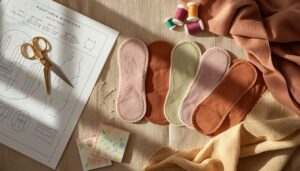
Good news — you don’t have to draft your own pattern from scratch. Several free downloadable options exist, each covering different sizes and skill levels.
Here’s a look at what’s out there and how to make it work for you.
Downloadable Sewing Patterns for Cloth Pads
Ready to grab your free patterns and get cutting? Here are the best download sources for cloth pad sewing patterns—no guessing, no stress:
- EcoFriendlyFamily – Free PDF patterns with seam allowances already included.
- Luna Wolf – Free printable sewing patterns in five sizes, with photo tutorials.
- Put A Cup In It – Free cloth menstrual pad patterns for instant download.
Print at 100% scale with no margins. Done.
Customizing Your Cloth Pad Pattern
Your free pattern is just a starting point — now make it yours. Adjustable wing length (4–6 cm works for most underwear styles), seam allowance tweaks, and core layering variations let you dial in the perfect fit.
| Customize This | How To Do It |
|---|---|
| Pad length | Trim 2–3 cm for snug underwear |
| Wing size | Extend or shorten for your style |
Pattern scaling methods and edge finish options = total control.
Tips for Beginners Using Cloth Pad Patterns
Print your free sewing patterns on heavy cardstock — they hold up through dozens of cuts. Always check the test square scaling before cutting fabric. Add a 3/8 inch seam allowance around every edge. Use pattern weights to prevent shifting.
Test your stitch tension on scrap flannel first. Beginner-friendly pad tutorials make these sewing techniques for cloth pads click surprisingly quick.
Step-by-Step Sewing Instructions
Now comes the fun part — actually making your pad.
The process breaks down into four simple steps that even first-time sewers can handle. Here’s exactly what to do, start to finish.
Cutting Out The Cloth Pad Pattern
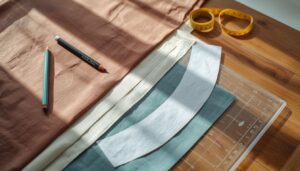
Lay your fabric flat and smooth out any wrinkles first. Align pattern pieces along the grain to prevent twisting.
Trace shapes using chalk or a fabric pencil, marking notch markers at wingtips.
Add your seam allowance — usually ¼ inch — before rotary cutting along curves in smooth, confident strokes. Sharp scissors work great too.
Your free printable cloth pad patterns plus a measuring tape make precision genuinely easy.
Assembling The Cloth Pad Layers
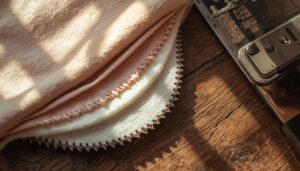
Pieces cut? Now comes the fun part — building your pad from the inside out.
Stack your inner layers like a pro: top flannel facing up, absorbent core layers sitting right below it, then your waterproof liner on the bottom, shiny side toward the core. This fabric layering technique is everything.
- Core stacking controls your flow coverage
- Layer alignment keeps everything centered and secure
- Liner placement locks in leak protection from below
Use proper pinning technique throughout, then zigzag around the edge of your absorbent core to hold it flat before final assembly.
Attaching The Snap Fasteners
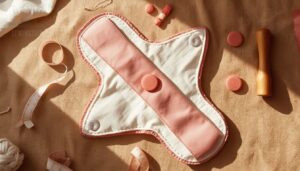
Layers stacked? Mark your snap placement about an inch from each wing edge — too close can pull the fabric apart. Wing reinforcement is smart here; a backing scrap saves the day. For snap size selection, KAMsnaps are beginner gold.
Press firmly to ensure proper pressure setting, then test snap alignment by closing both wings. Satisfying click? You’re golden.
Finishing Touches for Your Cloth Pad
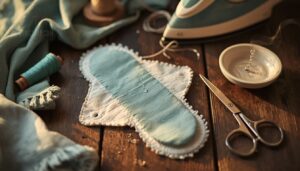
Press your pad flat with a warm iron — it keeps edges crisp and wings behaving. Edge topstitching locks everything down and seals that turning gap cleanly.
Add a center stitch to stop bunching. Try final pressing around the wing shaping for a smooth finish.
Then do a quick absorbency test — pour a little water on and watch it work.
Washing and Caring for Cloth Menstrual Pads

You’ve made your pads — now let’s keep them fresh and working hard. Caring for cloth pads is simpler than you think, and a little routine goes a long way.
Here’s everything you need to know to wash, store, sanitize, and dry your pads like a pro.
Regular Washing Routine for Cloth Pads
Washing your cloth pads doesn’t have to feel complicated. A cold pre-rinse first — cold water rinse right after use stops stains from setting. Then toss them into the machine. Here’s your simple routine:
- Cold Pre-Rinse: Rinse until water runs clear
- Temperature Settings: Warm cycle, around 40–60°C works great
- Detergent Choice: Mild, softener-free only — softener kills absorbency
- Air Dry: Skip high heat; sunlight manages odor control naturally
Stick to this wash frequency every 2–3 days and your pads stay fresh for years.
Storing Used Cloth Pads
Used pads need a smart home between rinse and laundry day. A PUL-lined wet bag locks in moisture without sealing out airflow completely, offering a practical solution for containment. These bags prevent messes while allowing ventilation, keeping dampness managed without full sealing.
For on-the-go needs, portable pad wrappers or discreet travel pouches provide quick swaps between clean and used pads. Designed for day trips, they hold 1–2 pads compactly, ensuring hygiene and convenience without drawing attention.
At home, mesh laundry bags and breathable damp containers excel at storing rinsed pads until wash day. Their open weaves and ventilated designs actively combat odor and mildew, maintaining freshness through airflow.
- Wet bags contain damp pads without full sealing
- Portable pad wrappers hold 1–2 pads for day trips
- Mesh laundry bags store rinsed pads until wash day
- Breathable damp containers prevent odor and mildew buildup
Sanitizing Cloth Pads
Think of sanitizing as your pads’ monthly reset. Bleach soak — one tablespoon per gallon, 30 minutes — wipes out stubborn microbes after infections. Boiling sterilization hits 100°C, killing bacteria, fungi, and spores fast.
Oxygen bleach dissolves in hot water without wrecking your PUL layers.
Sunlight UV does quiet, powerful work after washing and sanitizing pads. Nature’s disinfectant, zero effort.
Drying and Folding Cloth Pads
Sun is your secret weapon — UV rays kill bacteria while drying your pads fast. Set up an airflow rack with wings spread flat for shape-retention stretching.
No sun? Tumble dry on low heat for 10–15 minutes, then hang dry the rest.
For travel, use the tri-fold technique: fold soiled pads inward to create a compact handkerchief-sized bundle.
These laundry tips ensure reusable pads stay fresh and well-maintained with minimal effort.
Overcoming The Initial Adjustment Period
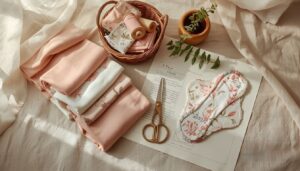
Switching to cloth pads feels weird at first — and that’s totally normal. Your brain needs time to catch up with your smart, rebellious decision.
Push through the awkward early days by focusing on what helps most people: patience, practice, and reminding yourself why you made the switch.
Managing The Eww… Factor
Real talk — the "eww" feeling is just social conditioning, not biology. Menstrual blood is completely normal.
- Cold rinse immediately — most blood disappears quickly
- Visualization practice helps: picture it as regular laundry
- Sensory comfort tip: use mild, lightly scented soap
- Community sharing normalizes everything — others handle this too
- Confidence-building happens naturally after just two or three cycles
Establishing a Consistent Washing Routine
Once you’ve made peace with the "eww" factor, a solid washing routine practically runs itself. Rinse timing matters — cold water right after removal keeps stains from setting. Follow a simple soak schedule if you’re not washing same-day.
For wash temperature, warm around 40°C works great — your laundry detergent for pads should be mild, fragrance-free, and softener-free (softener kills absorbency). These eco-friendly washing practices are genuinely low-effort.
Ventilated storage between washes prevents odor buildup.
Wash every two to three days — that’s it.
Dealing With Leaks and Accidents
Leaks happen — even with a solid routine. For emergency stain fixes, cold water, fast is key. Rinse immediately, and the stain will lift easily.
To enhance leakproof protection, ensure wings snapped tightly to prevent shifting. Proper positioning is critical for minimizing leaks.
Backup strategies, like period underwear, provide up to 20 ml of extra coverage. These layers add security during heavier flow days.
A waterproof liner and absorbent core combo offers reliable defense on high-flow days, eliminating drama during rapid pad swaps.
Building Confidence With Cloth Pads
Once leaks stop scaring you, real confidence kicks in. Each use is a win — track your progress and own it.
- Start with 1–2 hours of home wear
- Try free sewing patterns to nail your fit
- Customize reusable menstrual pads for your flow
- Join a supportive community for real talk
- Practice self-affirmation — this is women’s health empowerment
DIY cloth pads build an empowerment mindset, one cycle at a time.
Donating Homemade Cloth Menstrual Pads
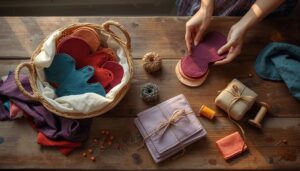
Your sewing skills can do more than just stock your own drawer. Making extra pads to donate is one of the most powerful things you can do for someone who can’t afford period products.
Here’s what to keep in mind before you start sewing for others.
Supporting Women in Underserved Communities
Community training programs in Uganda and Bangladesh teach women to sew reusable cloth menstrual pads, building micro-enterprise income from local material sourcing. Over 3,000 pads were produced in Bangladesh refugee camps alone.
Donating homemade cloth pads addresses period poverty directly. Grab free sewing patterns online, stitch a few extra, and send them where menstrual hygiene still feels like a luxury.
Promoting Menstrual Hygiene and Empowerment
Every stitch you sew carries a bigger story. Donating reusable cloth menstrual pads confronts period poverty head-on — and sparks real period empowerment in communities where menstrual hygiene still feels out of reach. You’re weaving dignity.
Every pad you donate stitches dignity into the lives of those for whom menstrual hygiene remains out of reach
School curriculum programs, peer mentorship circles, and bold advocacy campaigns are already shifting that narrative. Community outreach efforts also push for lasting policy change.
Grab free sewing patterns, make a few extra pads, and join that movement.
Guidelines for Donating Cloth Menstrual Pads
Ready to donate? A few simple rules ensure your pads are safe and welcome.
- Cleanliness Protocols: Wash unused pads with unscented detergent, sun-dry fully
- Packaging Standards: Bag in clear Ziplocs, label quantities clearly
- Quantity Requirements: Aim for 10-pad dignity kits per recipient
- Prohibited Items: No used, scented, or worn pads
- Contact Verification: Email organizations like [email protected] before shipping
Your charity donation kits fight period poverty — one careful stitch at a time.
Tips for Customizing Your Cloth Menstrual Pads
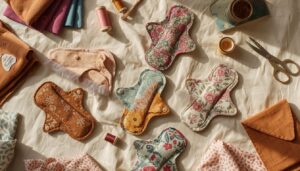
Your cloth pads don’t have to look or feel like anyone else’s — that’s the whole point. A few smart tweaks can make them fit your flow, your style, and your body perfectly.
Here’s where the real fun starts.
Choosing The Right Size and Shape
Size is everything — literally. Flow matching starts with knowing your heaviest days versus your lightest days. Body proportion matters too: petite frames are better suited for 8–9" pads, while taller builds need 10–12". Pad geometry and wing flexibility affect how it sits during movement.
| Size | Length | Best For |
|---|---|---|
| Small | 8–9" | Light days, petite frames |
| Medium | 9–11" | Moderate flow, daily wear |
| Large | 12–15" | Heavy/overnight coverage |
Pattern customization lets you nail the fit.
Selecting Colors and Patterns for Cloth Pads
Color is your quiet rebellion. Dark vs. light isn’t just aesthetic — it’s strategic. Dark blue, black, or deep purple hide stains gracefully; light fabrics demand more scrubbing. Pattern hiding works best with busy prints. Here’s how to choose smartly:
- Print vs Solid — Bold prints camouflage stains better than plain fabric
- Colorfastness Rating — Choose dye rated 4+ so colors won’t bleed through washes
- Coordinated Styling — Match colors by absorbency level for easy sorting
Your customizable cloth pad designs should reflect you.
Adding Custom Features to Cloth Pads
Think of your cloth pads as a blank canvas — yours to hack however you want. Add pocket inserts so you can swap absorbency on the fly. Use adjustable snap rows to fit different underwear widths perfectly.
Reinforced edge stitching keeps everything together wash after wash.
Individualized embroidery or bold prints make them unmistakably you. Play with customizable pad thickness using modular absorbency layers.
Customizing reusable menstrual pads means smarter fastener options and placement — and adding waterproof layers where it counts most.
Troubleshooting Common Issues With Cloth Menstrual Pads
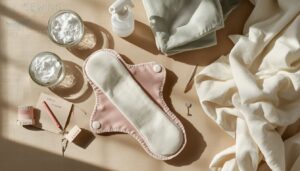
Even the best custom pads hit a snag sometimes — here’s how to fix the most common ones fast.
- Absorbency buildup? Skip the fabric softener and do a rinse cycle with no detergent. A vinegar soak breaks up residue that blocks absorption.
- Fit shifts or snap leakage? Check your fastener options and placement — snaps too close to the edge won’t hold. Snug underwear helps too.
- Odor persistence? That’s a washing and care issue for cloth pads. Cold rinse first, then a proper wash cycle with unscented detergent.
- Stain removal? Hit it with hydrogen peroxide or baking soda before it sets — cold water only.
- Fabric shrinkage? Pre-wash all materials before cutting your pattern.
Leak prevention strategies come down to this: right absorbency, right fit, consistent care. You’ve got the skills — trust the process.
Frequently Asked Questions (FAQs)
Can you sew reusable cloth menstrual pads?
Yes — and it’s easier than you’d think. Grab flannel, Zorb, and PUL fabric. Layer, sew, snap, done. Free sewing patterns make DIY cloth pads totally beginner-friendly.
How to make a reusable menstrual pad?
Making reusable cloth menstrual pads is simpler than you’d expect. Layer absorbent flannel, add a PUL waterproof backing, sew with a zigzag stitch, and snap the wings shut. Done.
Are cloth menstrual pads free?
Free sewing patterns exist online, and scraps you already own can slash costs to nearly zero.
No government subsidies, no guaranteed charity distribution. Just smart DIY choices saving you hundreds long-term.
Where can I find a tutorial for cloth menstrual pads?
Tutorials are everywhere — seriously.
YouTube tutorials, blog guides, and free sewing patterns from Luna Wolf or Put A Cup In It make finding a solid DIY menstrual pad tutorial ridiculously easy.
Can I make my own menstrual pads?
Absolutely — and it’s easier than you think. A few fabric scraps, free sewing patterns, and basic stitching skills are all you need to start making your own reusable cloth menstrual pads today.
Did you know the average person spends around $4,800 on menstrual products over a lifetime? That’s a lot of cash thrown away. DIY menstrual pads flip that script entirely: Buy fabric once, sew a small stack of reusable pads, and you’re set for years.
Start with fabric pre-washing to prevent shrinkage and boost absorbency. Layer materials as follows: soft flannel on top, an absorbent core in the middle, and a waterproof PUL backing beneath. Stitch everything together to bond the layers into one solid pad. Finish edges with a tight zigzag stitch to prevent fraying and extend durability. Position snaps on the wings about an inch from the edge to ensure a secure fit in underwear.
Sewing patterns for menstrual pads are widely available online, often for free. Once mastered, you can customize size, absorbency, and even eco-friendly packaging for gifting or donating.
Where can I find a basic pattern for a menstrual pad?
Several sites offer free downloadable cloth pad patterns. Put A Cup In It, Luna Wolf, and Simply Living Well are great starting points.
Pinterest boards, sewing forums, and YouTube tutorials also provide free printable cloth pad patterns ready to download.
What is the best fabric for reusable sanitary pads?
Think of it like building a sandwich — each layer has a job.
Cotton or flannel feels soft on the skin.
Bamboo wicking absorbs moisture fast.
Hemp’s strength keeps heavy days covered.
How do you make reusable pads step by step?
Start simple: pre-wash fabrics, cut using free sewing patterns with seam allowance measurement, layer your core.
Sew edges, flip, and finish with an edge reinforcement stitch. That’s your DIY cloth pads pattern — done.
How to make a homemade pad for your period?
Making a homemade period pad is surprisingly simple. Layer soft flannel, an absorbent core, and waterproof PUL fabric.
Sew around the edges, flip it right-side out, then snap the wings shut. Done.
What materials are used in reusable sanitary pads?
Soft against your skin, an organic cotton top layer is just the beginning.
Add a bamboo wicking core, a kenaf antibacterial core, and PUL waterproof backing — and you’ve got a pad that works.
Conclusion
One small sewing project could quietly change everything—your budget, your footprint, your whole relationship with that monthly inconvenience. Now you know how to make reusable cloth menstrual pads. Links to free sewing patterns are just a click away.
No pharmacy runs. No plastic guilt. Just soft, custom-made pads you built with your own hands. That’s not just crafting—that’s reclaiming something.
Grab your flannel, thread your needle, and stitch your way out of the disposable cycle for good.
- https://snuggymom.com/how-to-make-reusable-menstrual-pads/
- https://sewguide.com/reusable-cloth-menstrual-sanitary-pad/
- https://zorbfabrics.com/2025/05/06/why-zorb-is-perfect-for-reusable-menstrual-pads-and-period-panties/
- https://clothpads.wordpress.com/fabrics/
- https://putacupinit.com/free-cloth-menstrual-pad-patterns/