This site is supported by our readers. We may earn a commission, at no cost to you, if you purchase through links.
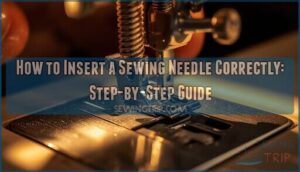
Your needle snaps mid-seam, the thread shreds for the third time this hour, and the fabric puckers like a bad hem. The culprit? That tiny metal shaft you pushed into place without a second thought. Incorrect needle insertion doesn’t just waste time—it cuts stitch quality by 30 percent, increases thread fraying by 15 percent, and turns what should be smooth sewing into a battle with your machine.
The flat side, the groove, the clamp tension—each detail matters more than most sewers realize. Master the mechanics of proper needle placement, and you’ll transform frustrating sessions into clean, professional results that hold up stitch after stitch.
Table Of Contents
Key Takeaways
- Incorrect needle insertion cuts stitch quality by 30 percent and increases thread fraying by 15 percent, making proper placement essential for clean, professional results.
- The flat side of the needle must always face the back of your machine, pushed fully up into the clamp until it stops, then secured firmly with the clamp screw.
- Match your needle type and size to your fabric—universal needles work for basic wovens, but specialty needles prevent damage on delicate silks, heavy denim, or stretchy knits.
- Replace needles every six to eight hours of sewing or immediately when you notice skipped stitches, thread breakage, or fabric snagging, since dull needles can’t be sharpened effectively.
Why Correct Needle Insertion Matters
You might think inserting a needle is simple, but doing it wrong can ruin your entire project. A needle that’s not seated properly causes frustration, wasted fabric, and sometimes machine damage.
If you’re working on garments like shirts, mastering proper needle installation and fabric-matching techniques will save you from costly mistakes and uneven seams.
Here’s why getting this basic step right makes all the difference in your sewing.
Understanding how to true a sewing pattern ensures your pieces align perfectly before you even cut your fabric.
Impact on Stitch Quality
Precision matters when you insert your sewing machine needle. Proper alignment cuts fabric puckering by up to 30 percent and keeps stitch consistency within a tight 2mm tolerance. Stable needle positioning prevents needle deflection, which means no more wavy seams.
Upgrading to a sewing machine with automatic features can eliminate deflection issues entirely, thanks to computerized needle alignment that holds position within 0.2 mm.
Proper needle alignment cuts fabric puckering by 30 percent and prevents wavy seams through stable positioning
Incorrect insertion increases thread fraying by roughly 15 percent, weakening seam durability and creating uneven stitch quality you’ll notice immediately.
Preventing Needle Breakage
A misaligned needle can snap in seconds during high sewing speed. When you push the needle all the way up into the needle clamp and tighten that needle clamp screw firmly, you protect the needle material from uneven stress. Poor needle alignment creates three breakage causes:
- Uneven impact against the needle plate damages the shaft
- Incorrect tension settings bend the needle during insertion
- Side-to-side wobble cracks the needle at the shank
Avoiding Fabric and Thread Issues
Beyond breakage, incorrect needle insertion distorts stitch formation and damages both fabric and thread. A needle that isn’t fully seated disrupts the hook timing, causing skipped stitches. Wrong orientation frays thread at the eye through increased friction.
You’ll see fabric puckering when needle selection doesn’t match your material, especially on lightweight wovens. Proper insertion protects fabric compatibility and prevents thread breakage before you even start sewing.
To achieve best sewing results, consider consulting sewing experts online for tailored guidance.
Choosing The Right Sewing Machine Needle
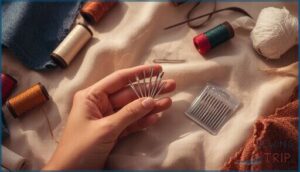
Before you insert a needle, you need to pick the right one for your project. The needle you choose affects how your machine stitches, how your fabric looks, and whether your thread cooperates.
Let’s look at the different needle types, sizes, and when it’s time to swap in a fresh one.
Needle Types for Different Fabrics
Matching your sewing machine needle to your fabric isn’t just helpful—it’s essential for successful stitching. Universal needles work well for woven fabrics like cotton, while ballpoint types prevent snags in knits and stretchy materials.
For delicate silks, choose sharp Microtex needles that glide cleanly through fine weaves.
Heavy denim demands sturdy needles, sized 90/14 to 110/18, that won’t bend or break under pressure.
If your needle keeps breaking or skipping stitches, check out how to thread your sewing machine correctly to eliminate common tension and threading errors.
Needle Sizes and Their Uses
Sewing machine needles use a numbering system that runs from 60/8 for sheer fabrics to 120/19 for upholstery, and knowing which size to reach for can save you from puckered seams and broken threads.
Size 70/10 manages lightweight silks, while 80/12 manages medium cottons with ease.
For denim or canvas, you’ll want 100/16, which won’t buckle under fabric thickness or strain during high sewing speed.
Signs You Need a New Needle
Vigilance keeps your machine humming smoothly. When you notice skipped stitches, snagging, or thread breakage, your sewing machine needle has likely dulled. Fabric damage, visible rust, or a bent tip signal immediate needle replacement.
Even without obvious sewing issues, swap needles after six to eight hours of stitching. Needle wear sneaks up quietly, so fresh needle insertion prevents headaches before they start.
Preparing Your Sewing Machine for Needle Insertion
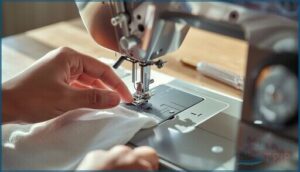
Before you touch that needle, you need to set the stage for a safe, smooth swap. A few simple prep steps will protect both you and your machine from unnecessary trouble.
Let’s walk through what you need to do before the old needle comes out.
Powering Off and Ensuring Safety
Before you touch that needle, think about this: most sewing injuries happen when machines are still plugged in. Electrical safety and accident prevention start with a simple action—disconnect power completely, not just flip the switch.
Follow these sewing safety precautions every time:
- Unplug the cord from the wall outlet to eliminate shock risk
- Press the emergency stop if your machine has one, halting motion instantly
- Check the foot pedal isn’t pressed or wedged under anything nearby
- Clear your workspace of clutter that could bump controls unexpectedly
This protective step in sewing machine maintenance takes seconds but prevents puncture wounds from accidental activation. Machine guarding means nothing if the power’s still flowing. Personal protection begins here—you’re taking control of the hazard before it takes control of you.
Cleaning The Needle Area
Before you insert your new sewing machine needle, lint removal is the essential prep step that keeps everything running smoothly. Dust and thread fragments around the needle plate and needle clamp screw can sabotage even perfect needle insertion.
Here’s your quick clamp cleaning and debris prevention routine:
| Cleaning Task | Best Method |
|---|---|
| Lint around needle plate | Soft brush or vacuum with narrow nozzle |
| Thread remnants in slot | Tweezers or lint-free cloth |
| Needle clamp area | Damp cloth, then dry completely |
| Feed dog debris | Small brush between teeth |
| General sanitizing | Isopropyl alcohol on microfiber swab |
This simple thread management and needle sanitizing process takes two minutes but prevents skipped stitches, needle breakage, and fabric snags. Proper sewing machine maintenance means a clean workspace equals impeccable stitching every time.
Gathering Required Tools
You can’t change a needle with empty hands, so let’s round up the few simple tools that’ll make this job easy. Your sewing kit needs just the basics: a fresh sewing machine needle in the right needle type for your fabric, a small screwdriver for the needle clamp screw, and tweezers for thread selection cleanup.
Keep your tool organization simple—everything within arm’s reach means faster needle insertion.
Step-by-Step Guide to Inserting a Sewing Needle
Now that your machine is ready, you’ll follow a simple sequence to get that new needle in place correctly. Each step matters, from raising the needle bar to tightening the final screw.
Let’s walk through the exact process so you can do this confidently every time.
Positioning The Needle Bar
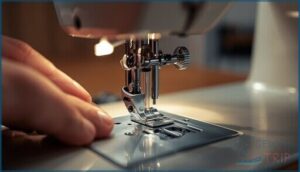
Before touching the needle clamp screw, turn your machine’s handwheel toward you until the needle bar reaches its highest point. This needle bar alignment step isn’t optional—it prevents the needle from striking sewing machine parts during installation.
Raising the bar fully creates clearance for safe needle insertion and ensures proper rotational positioning when you install your new sewing machine needle.
Removing The Old Needle Safely
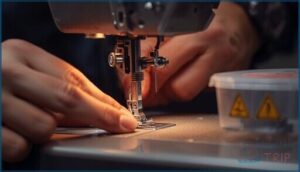
With the needle bar raised, grasp the needle clamp screw and turn it counter-clockwise to loosen. Pull the old needle straight down—no twisting—and immediately place it in a puncture-resistant container for safe handling and old needle disposal.
Never toss used needles into regular trash; proper sharp waste management prevents injuries. This needle removal tip protects both you and anyone handling your sewing machine maintenance waste later.
Identifying Needle Orientation
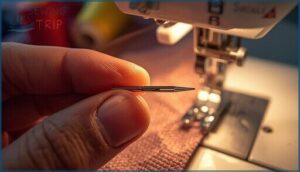
Before pushing anything upward, take a close look at your sewing machine needle. Notice the flat spot on the shank? That’s your needle alignment guide—it always faces the back of your machine.
The groove orientation runs along the front, creating the thread path. This shank direction matters more than you’d think; get it backwards and your needle threading won’t work right.
Inserting and Securing The New Needle
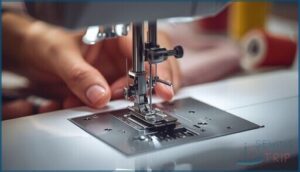
Once orientation is clear, grip the needle firmly and slide it straight up into the clamp. Push until it hits the stopper—that’s proper insertion depth. Now tighten the clamp screw snugly with your screwdriver. Check needle stability by giving it a gentle wiggle; it shouldn’t budge.
This needle alignment protects thread tension and prevents breakage during sewing.
Troubleshooting Common Needle Insertion Problems
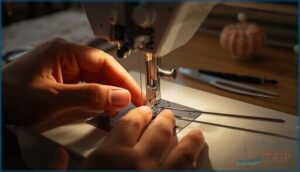
Even when you follow all the steps correctly, you might run into a few hiccups after inserting your needle. These issues are common, easy to spot, and even easier to fix once you know what to look for.
Let’s walk through the most frequent problems and how to resolve them quickly.
Needle Not Sitting Properly
If your needle wobbles or sits crooked, you’ve likely missed a key step in needle insertion. First, check that the flat side faces the back of your sewing machine needle bar—wrong orientation throws off needle alignment completely.
Push the needle up until it stops, then tighten the clamp screw firmly. A loose needle causes poor stitch consistency, damages fabric, and disrupts sewing tension.
Skipped Stitches or Broken Thread
When stitches skip or thread snaps repeatedly, improper needle insertion is often the culprit. A misaligned needle can increase skipped stitches by up to 30 percent, while incorrect seating disrupts thread tension and causes breakage.
Check these common fixes:
- Reseat the needle with the flat side facing back, pushed fully into the clamp
- Replace dull or damaged needles after 6-8 hours of use
- Adjust thread tension if the needle sits correctly but problems persist
Machine Noise After Needle Change
Unexpected vibration or metallic sounds after replacing your sewing machine needle usually mean the needle isn’t seated properly. When the needle shifts even slightly, it creates friction against the needle bar and presser foot, amplifying noise.
Check for burrs on the needle plate that could worsen contact sounds. Proper needle alignment and insertion depth are your best tools for noise reduction.
Ensuring Needle Clamp is Tight
After needle insertion, test the clamp screw by gently tugging the needle—zero play means proper needle security. Use the correct screwdriver for tightening techniques that won’t strip threads or damage the clamp. Don’t overtighten; excessive torque settings can deform the needle shank.
Regular clamp maintenance and sewing machine maintenance prevent needle threading issues. Run test stitches to confirm your needle clamp holds firm during operation.
Frequently Asked Questions (FAQs)
Can I sharpen a dull sewing needle?
Think of sharpening like trying to revive wilted flowers—it’s tempting but rarely works. Sewing machine needle replacement is best practice since sharpening risks damage.
Dull needle symptoms include skipped stitches, so swap it out instead.
How do I dispose of old needles safely?
Store used needles in a rigid container, like an empty pill bottle or metal tin. Once full, seal it completely and label “sharps” for waste management.
Many pharmacies also accept them for proper needle disposal and sewing safety.
Are universal needles suitable for all projects?
Universal needles handle many fabrics, but specialized needle types often deliver better stitch consistency and fabric compatibility.
For heavy denim or delicate knits, match your needle size and type to your material selection for best results.
What causes needles to bend during sewing?
Several factors trigger bending: excessive thread tension, forcing thick fabrics, high sewing speed, or loose needle clamps.
Dull needles and misalignment with presser feet also cause shaft stress, leading to permanent bends.
Do expensive needles last longer than cheap ones?
Premium materials and coatings often give expensive needles better durability, but longevity tests show fabric type, tension, and needle insertion matter more than cost.
Budget options work fine when you match needle size to your project.
Conclusion
Before the Industrial Revolution, each needle carried hours of hand-forging labor. Today, learning how to insert a sewing needle correctly takes minutes but saves countless hours of frustration.
You’ve mastered the flat side orientation, the firm clamp pressure, the proper height positioning. These aren’t just mechanical steps—they’re your foundation for every clean seam, every professional finish. Install that needle with confidence, and watch your machine respond with precision you can feel in every stitch.
- https://home.howstuffworks.com/screwdriver.htm
- https://www.groz-beckert.com/en/news/newsletter/sewing/2018/m2_sewing_sewing_problems.html
- https://medcraveonline.com/JTEFT/a-comprehensive-study-on-the-effect-of-different-seam-parameters-on-woven-fabrics.html
- https://pubs.nmsu.edu/_c/C202/index.html
- https://topnotchsewvac.com/blogs/sewing-machine-blog/top-10-essential-tips-for-diy-repair-for-sewing-machine-problems