This site is supported by our readers. We may earn a commission, at no cost to you, if you purchase through links.
A single skipped guide, a thread seated wrong in the tension discs, a bobbin wound too full — and your machine will fight you on every stitch. Most threading mistakes don’t announce themselves loudly. They show up as broken thread, skipped stitches, or that maddening puckering along a seam you’ve already trimmed.
Threading a sewing machine correctly isn’t complicated, but the sequence matters more than most beginners expect. Each step depends on the one before it. Miss one, and the whole system loses sync.
Get it right, and your machine runs smooth, quiet, and consistent — exactly the way it was built to.
Table Of Contents
Key Takeaways
- Threading sequence is non-negotiable — each step depends on the one before it, so skipping even a single guide breaks the entire system.
- Before threading, always raise the presser foot and lift the take-up lever to its highest point, as both must be set correctly for thread to seat properly in the tension discs.
- Bobbin quality matters as much as upper threading — wind evenly at moderate speed, stop before the outer edge, and orient the bobbin so thread feeds counter-clockwise in top-loaders.
- Most stitching problems trace back to a misrouted thread path or wrong needle, so retrace the full path and replace needles every 6–8 sewing hours before adjusting anything else.
Prepare Your Sewing Machine for Threading
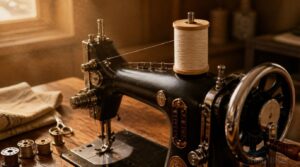
Before you pull a single inch of thread, your machine needs to be set up correctly — skip this part and you’re asking for tangles, skipped stitches, or worse. Think of it as laying the groundwork so every step that follows actually works. Here’s what to do first:
Pay special attention to how you thread the needle and insert it correctly — two small details that cause most skipped stitch problems.
Turn Power Off
Before you touch a single thread, turn the machine off completely. The power switch should move fully to the off position — no half measures. Check that the power indicator light goes dark within a second.
- Unplug if the cord feels warm
- Never thread with the machine on
- Dry your hands before touching the plug
- Check the cord for fraying first
Raise Presser Foot
Raise the presser foot lever before threading. It opens the tension discs so thread seats correctly along the upper path. Skip this, and your thread misses the tension area entirely.
| Lift Method | Benefit |
|---|---|
| Lever | Opens tension discs |
| Knee lift | Hands stay free |
| Height setting | Clears thick layers |
| Spring return | Auto-resets position |
| Foot pedal | Fully hands-free |
The knee lift keeps both hands on your fabric while repositioning.
Lift Take-Up Lever
With the presser foot raised, turn your attention to the take-up lever position. Before threading, rotate the handwheel until the lever sits at its highest point. This keeps lever movement synchronization correct once you start sewing.
- Check the lever reaches full lift height
- Verify the pivot moves freely without sticking
- Wipe away any lint blocking the lever path
A stuck or low lever disrupts the entire upper thread path from the first stitch. This component is key for regulating upper thread tension to make sure balanced stitches.
Choose Correct Thread
With the lever set, your next job is picking the right thread. Fabric type matching matters more than most beginners expect.
| Fabric Type | Thread Type | Recommended Weight |
|---|---|---|
| Lightweight cotton | Cotton thread | 60 wt |
| Knits and wovens | Polyester thread | 40 wt |
| Denim and canvas | Nylon thread | 30 wt |
| Silk and satin | Silk thread | Fine weight |
| Decorative stitching | Rayon thread | 40 wt |
Thread tensile strength must align with your fabric weight. A 40-weight polyester is your go-to for general seams. Store your spools upright in a cool, dry spot — brittle thread breaks before it even reaches the needle.
For smaller projects, 40-yard polyester thread sets for school sewing strike the right balance between usability and value without overwhelming beginners.
Check Needle Position
Slide your needle into place and confirm it sits centered over the plate hole. A needle even slightly off-center can snag fabric or skip stitches entirely.
- Check that the needle clamp screw is tight — no wobble allowed
- The needle eye faces forward, threading front-to-back
- Lower the needle manually to verify it drops through the plate center
- Replace bent or burred needles before threading
How to Thread a Sewing Machine Correctly
Threading your machine correctly comes down to following a specific path — skip a step, and you’ll likely end up with tangled thread or broken stitches.
Every machine has its own numbered guides, but the basic sequence stays the same across most models. Work through each step below in order, and you’ll have your upper thread set up and ready to sew.
Place Spool on Pin
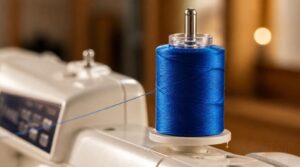
Set the spool on the pin with the thread unwinding from the front. A vertical spool pin works best for standard spools, while a horizontal pin suits wider or specialty thread.
Either way, snap the spool cap firmly into place — it keeps the spool stable at speed and prevents uneven unwinding that throws off your tension before you’ve even started.
Follow Numbered Thread Guides
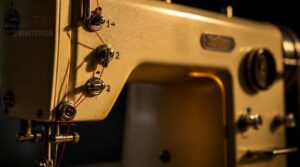
Your machine’s numbered thread guides create the path the thread must follow — skip one, and lateral friction builds fast, pulling your stitches sideways before the needle even moves.
Work through each guide in sequence, pressing the thread firmly into every groove. A bright thread color makes it easy to spot any guide you’ve missed.
Seat Thread in Tension

The tension discs are the gatekeepers of your thread path — get this step wrong and every stitch after it suffers. Slide the thread between the discs, pressing it firmly until you feel it seat.
Seat the thread firmly between the tension discs — every stitch that follows depends on it
Worn or dirty discs can’t grip consistently, so clean them before threading. A mid-range setting, around 4–5, prevents puckering on most fabrics.
Thread Take-Up Lever
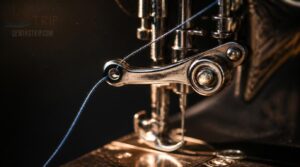
Pull the thread upward and hook it through the take-up lever’s hole — that small metal arm near the top of the machine head. It moves on a pivot pin, cycling up and down in sync with your needle to form each stitch loop. Miss it, and your thread won’t lift correctly.
The lever housing catches lint, so keep it clear.
Thread Needle Front-to-Back

Lower the needle to its highest point, then cut your thread end at a 45-degree angle for clean entry.
- Thread enters front to back through the needle eye
- Use a needle threader if the eye is hard to see
- Light the eye directly to spot the opening fast
Misrouting here causes skipped stitches every time.
Wind and Load The Bobbin Properly
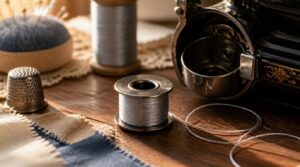
The bobbin is just as important as the upper thread — get it wrong, and your stitches will fight you the whole way through. Winding it evenly and loading it correctly sets the foundation for smooth, consistent sewing. Here’s what you need to do:
Use Bobbin Winding Disc
Before you wind a single layer, pass your thread through the bobbin winding tension disc. This small component applies controlled friction, so thread wraps evenly rather than stacking on one side.
Disc surfaces wear over time, so check for scoring or lint buildup regularly. Proper disc alignment keeps tension consistent — misalignment causes uneven layers that throw off your stitch balance later.
Wind Bobbin Evenly
Start at a moderate winding speed and keep it consistent throughout. Sudden bursts cause thread to pile unevenly, creating dense spots on one side and gaps on the other.
Check that the bobbin sits flush against the winding post — any wobble shifts coverage off-center. Pause briefly to inspect the edges. Even layering across the bobbin sleeve means reliable tension once you’re sewing.
Avoid Overfilling Bobbin
Even winding means nothing if you push past capacity. Stop before thread reaches the bobbin’s outer edge — overfilling restricts the case, preventing the tension spring from engaging properly.
Most machines have a bobbin winder stopper that halts automatically. Trust it. An overfilled bobbin creates uneven tension and can jam the case entirely, forcing disassembly.
Insert Top-Loading Bobbin
With your bobbin wound and trimmed, drop it straight into the top-loading chamber — no needle plate removal needed. Orient it so the thread feeds counter-clockwise, forming a "P" shape. Most machines include an orientation mark to confirm this.
The translucent cover lets you check alignment visually. Seat it fully until you feel slight resistance when pulling the thread.
Insert Front-Loading Bobbin
Front-loading machines keep the bobbin compartment behind a small door on the machine’s face. Open that panel, then drop your wound bobbin into the removable bobbin case so the thread rotates in the direction your machine diagram specifies.
- Align the case notch to its seat
- Check the tension spring finger sits correctly
- Pull thread under the spring
- Confirm clockwise or counter-clockwise rotation
- Snap the case firmly until it clicks
Bring Up The Bobbin Thread Before Sewing
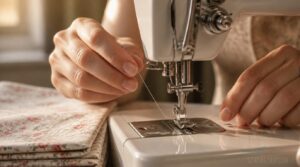
Your bobbin is loaded and your upper thread is in place — but you’re not quite ready to sew yet. Before your first stitch, you need to bring the bobbin thread up through the needle plate so both threads work together. Here’s exactly how to do it.
Hold Upper Thread Tail
Hold the upper thread tail 6 to 8 inches above the needle plate before you begin. Keep it taut but relaxed — too much tension twists the thread, too little lets it slip into the bobbin area.
Thread nesting almost always starts here. A controlled tail ensures your top thread forms a clean loop with the bobbin thread on that critical first stitch.
Turn Handwheel Toward You
Rotate the handwheel toward you — always toward you — in one slow, controlled motion.
This direction keeps needle and bobbin timing synchronized, so the hook catches the upper thread cleanly.
Watch for these cues as you turn:
- The needle lowers, then rises smoothly
- No grinding or resistance should occur
- The upper thread pulls slightly downward
- The needle reaches its highest point
- Movement feels fluid, never forced
Catch Bobbin Thread Loop
When the needle reaches its highest point, gently tug the upper thread tail. You’ll feel a slight resistance — that’s the hook engaging the bobbin thread loop below the needle plate.
| What You See | What It Means |
|---|---|
| A loop rises through the plate | Loop formation is correct |
| Nothing appears | Rethread and repeat |
Pull the loop fully up before moving on.
Pull Both Thread Tails
Once the loop is up, grasp both the upper and bobbin thread tails together. Synchronized tension is everything here — pull evenly so neither tail tightens before the other.
- Pull tails to roughly 3–4 inches
- Keep tension steady and moderate to avoid puckering
- Position the knot slightly away from the needle entry
Uneven pulling skews the knot and creates bulk.
Position Threads Behind Presser Foot
Slide both tails — upper and bobbin — behind the presser foot before you sew your first stitch. This simple move prevents thread tangles and avoids the classic nest that forms under fabric when loose tails catch in the feed dogs.
Hold both threads back firmly for the first two or three stitches, then release.
Fix Common Threading and Tension Problems

Even careful threading can lead to skipped stitches, puckering, or thread breaks — and most of the time, the fix is simpler than you’d think. Before you assume something’s wrong with your machine, run through these quick checks. Here’s where to start.
Check Thread Path
Start by tracing the thread from the spool pin through every guide in sequence.
- Check each thread guide for snags or misalignment
- Confirm the thread sits correctly in the tension area
- Verify the take-up lever is fully engaged
Pull both threads gently — if either resists, rethread completely. Even one skipped guide derails your stitching.
Adjust Tension Dial
Once your thread path is confirmed, tension is usually the next fix. Set the tension dial between 4 and 5 for medium-weight fabrics. Go higher — around 6 or 7 — for denim. Drop lower for lightweight fabrics to stop puckering.
Adjust in 0.5 to 1 step increments, then test on scrap. Even stitches on both sides mean you’ve got it right.
Replace Bent Needles
Skipped stitches after adjusting tension are often a needle problem, not a thread one. Inspect the needle shaft for any visible bend or wobble before assuming the worst. Even a slight curve causes uneven feeding and thread bunching.
Replace needles every 6–8 hours of active sewing. Match size to fabric — 70/10 for light, 90/14 for medium. Push the new needle fully up into the clamp, flat side back, and test on scrap.
Clean Bobbin Area
A bent needle fix won’t help if your bobbin compartment is packed with lint. That buildup is often the real culprit behind jams and tension drops.
Remove the bobbin case and use a narrow brush to clear the lint removal tools’ target zones:
- Under the leaf spring
- Around the hook and race
- Between the feed dogs
Apply one drop of sewing machine oil to the hook race only, then turn the handwheel slowly to distribute it.
Test Stitches on Scrap
Never sew your actual project until you’ve tested on scrap. Use fabric that matches your project’s weight — a heavyweight denim test won’t reveal how chiffon behaves.
| Setting Tested | Scrap Result |
|---|---|
| Tension 4–5, medium fabric | Balanced stitches on both sides |
| Straight stitch first | Confirms correct thread path |
| Zigzag on knit + stabilizer | Prevents skipped stitches |
| Decorative stitch, full width | Checks even stitch density |
| Re-set to project stitch | Verifies final consistency |
Label each scrap with the stitch type, tension, and fabric used. That record becomes your quick-reference guide for every project ahead.
Frequently Asked Questions (FAQs)
Should a sewing machine be threaded up?
Yes, a sewing machine must be threaded before every use. Without it, the upper thread can’t lock with the bobbin thread, causing fabric snagging, thread nests, and skipped stitches across your seam.
How do you use a bobbin threaded sewing machine?
Once both threads are ready, hold the upper thread tail and turn the handwheel toward you. Pull gently until the bobbin thread rises. Move both tails behind the presser foot before sewing.
How do you thread a sewing machine?
Place the spool on the pin, secure the spool cap, and follow the numbered guides. Seat the thread in the tension discs, hook the take-up lever, then thread the needle front to back.
How do you tension a sewing machine?
Set your tension dial to 4 or 5 for medium-weight fabrics. Turn it clockwise to tighten, counterclockwise to loosen. Always test on scrap fabric first to confirm balanced stitches on both sides.
How do you thread a sewing machine step by step?
Turn off your machine, raise the presser foot, and lift the take-up lever. Follow the numbered guides in order, seat the thread in the tension discs, and thread the needle front to back.
How do you thread a sewing machine needle with poor eyesight?
Poor eyesight doesn’t have to stop you. Use a needle threader tool to guide thread through the eye. Pair it with a bright side lamp and high-contrast thread for accuracy.
Is there a trick to threading a sewing machine needle?
As they say, the right tool makes any job easier. Cut your thread at a 45-degree angle, dampen the tip slightly, and use strong lighting or a needle threader for a clean, first-pass result.
Which way should thread go on a sewing machine?
Thread direction matters at every point in the path. The spool unwinds toward the back, thread moves front-to-back through guides and the needle eye, and the bobbin rotates counter-clockwise in top-loading machines.
How do you thread a sewing machine left to right?
Like a river finding its channel, your top thread flows from the spool pin, travels left through numbered guides, enters the tension discs right-side first, hooks the take-up lever eye, then drops down to the needle front-to-back.
Why is threading a sewing machine important?
Every skipped stitch, thread nest, or puckered seam traces back to one root cause: incorrect thread path. When your thread flows correctly, stitch quality holds steady, tension stays balanced, and your machine runs cleaner, longer.
Conclusion
Threading looks simple — and that’s exactly what makes it deceptive. One misrouted loop undoes everything.
When you learn how to thread a sewing machine correctly, you’re not just following steps; you’re aligning a system built on precision. Every guide, disc, and lever depends on the others. Get the sequence right, and your machine stops fighting you. It just sews. That quiet, consistent rhythm is the only confirmation you need.
- https://www.stitchclinic.com/thread-a-sewing-machine
- https://www.wikihow.com/Thread-a-Sewing-Machine
- https://winslets.com/blogs/sewing-basics/how-to-thread-a-sewing-machine
- https://tillyandthebuttons.com/blogs/sewing/thread-tension-troubleshooting
- https://www.threadsmagazine.com/2015/10/13/how-to-achieve-ideal-sewing-machine-thread-tension