This site is supported by our readers. We may earn a commission, at no cost to you, if you purchase through links.
Most quilters hit a wall somewhere around their third king-size project. The machine bogs down, the stitches go unevenly, and the whole thing becomes a wrestling match instead of a craft.
The Husqvarna Viking Mega Quilter was built specifically to end that fight. It runs at 1,600 stitches per minute through a servo motor that stays smooth even across thick batting layers, and its 9 × 6‑inch throat gives you actual working room.
This Husqvarna Viking Mega Quilter review breaks down whether that combination of speed, space, and straight‑stitch precision justifies the investment—or whether a more multi‑functional machine benefits you more.
Table Of Contents
Key Takeaways
- The Husqvarna Viking Mega Quilter runs at 1,600 stitches per minute with a servo motor, giving you twice the speed of a standard home machine and smooth, even results across thick batting layers.
- Its 9 x 6-inch throat expands to 24 x 16 inches with an optional extension table, so larger quilts stop being a wrestling match and start feeling manageable.
- The machine locks you into the Inspira frame system and HLx-5 needles only, so factor in those constraints — and the $1,500–$3,500 used price range — before you commit.
- If you quilt large projects regularly and want precision over versatility, this machine delivers; if you need decorative stitches or a do-it-all setup, look elsewhere.
Husqvarna Viking Mega Quilter Overview
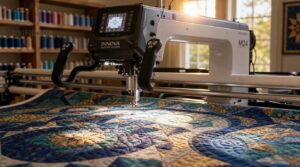
The Husqvarna Viking Mega Quilter isn’t trying to do everything — it’s built for one thing and built to do it well. Before you decide if it belongs in your workspace, there are a few core traits worth knowing about. Here’s what defines this machine at a glance.
Understanding why dedicated quilting machines outperform general-purpose alternatives makes it easier to appreciate what the Mega Quilter brings to the table.
Straight-stitch Quilting Focus
The Husqvarna Viking Mega Quilter is built around one thing: straight-stitch quilting. No decorative stitches, no zigzag — just clean, precise lines across your quilt surface. That focus is actually a strength.
Here’s what straight-stitch mastery looks like with this machine:
- Stitch spacing techniques stay consistent thanks to automatic stitch control
- Thread choice impact matters — cotton or polyester reduces breakage on long runs
- Frame quilting precision improves with the Inspira frame system keeping fabric taut
- Modern design applications shine through minimalist, straight-line quilt patterns
- Machine calibration tips like adjusting presser foot pressure achieve flat, even stitches
If you want control over every line, this machine delivers it.
1,600 Stitches Per Minute
That straight-stitch precision means nothing if the machine can’t keep up with you — and at 1,600 stitches per minute, the Mega Quilter absolutely does.
| What You Get | Why It Matters |
|---|---|
| 1,600 SPM max speed | Covers large quilts faster |
| Servo motor technology | Smooth, low-vibration power |
| Electronic speed slider | Full control at any pace |
| Consistent stitch timing | Even results across thick layers |
| High-capacity bobbin | Fewer thread interruptions |
That speed isn’t just a number — it’s roughly twice what a standard home machine delivers.
Mid-arm Working Space
Speed gets you moving — but working space is what keeps you in control.
The Mega Quilter offers a 9 by 6 inches throat area, making it a true mid-arm machine. An optional quilter’s extension table expands that to 24 by 16 inches, giving you room to handle larger projects comfortably without fighting the fabric.
Heavy-duty Build Quality
That extended workspace pairs with something even more reassuring — the machine itself feels built to last decades, not just seasons.
Keeping it covered between uses is one of the simplest habits that pays off — here’s why covering your sewing machine extends its lifespan in ways most people overlook.
The Mega Quilter is extremely solid construction, with hardened steel gears, rubber-isolated motor mounts for machine vibration reduction, and a powder-coated finish that resists corrosion. It’s industrial sewing technology in a mid-arm body. Pick it up once and you’ll understand why it earns the heavy-duty label.
Built with hardened steel gears and industrial precision, the Mega Quilter earns its heavy-duty label the moment you lift it
Key Features and Specifications
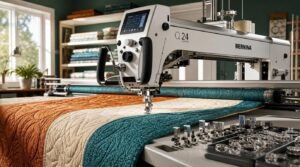
The Mega Quilter packs a lot into one machine, and the features are what make it stand out from a standard home sewing setup. Each one is designed to give you more control and less hassle while you work. Here’s what you’re actually getting.
Adjustable Stitch Length
The Mega Quilter gives you stitch length up to 6 mm, so you can shift from tight, dense quilting to long basting stitches with a simple adjustment. Lighter fabrics hold better with shorter settings, while heavier layers move faster with longer ones.
That kind of quilting density control puts you in charge of every project. Understanding stitch length measurement helps you choose the right setting for different fabrics.
Needle Up/down Control
Pivoting around corners is where the needle up/down control earns its keep. Press the button, and the needle locks down into your fabric — no slipping, no drifting. That’s your anchor point. Reposition your hands, realign your quilt, then go.
Combined with the knee lift function, you keep both hands on the fabric the whole time. That’s real hands-free control.
Automatic Thread Cutter
The automatic thread cutter takes over the moment you finish a seam — one button press, and both top and bobbin threads are trimmed clean, close to the needle. No scissors, no fumbling.
Combined with the built-in needle threader and up/down needle button, you stay in control and keep momentum. Blades handle frequent use well, but regular cleaning around the needle area prevents jams.
Knee Lift Convenience
The professional knee lift changes how you work. Instead of stopping to reposition your hands every time you need to raise the presser foot, your knee does it — clean, quick, no interruption.
- Adjustable position fits different heights and seating setups
- Minimal activation force reduces fatigue during long sessions
- Syncs with needle up/down control for smooth pedal synergy
- Spring-assisted return keeps it ready without thinking
Extension Table Option
The standard 9 x 6 working area is solid for mid-size projects, but when a king-size quilt is on your frame, you’ll want more room to move. That’s where the optional quilter’s extension table earns its place — expanding your surface to 24 x 16 inches and giving you real control over larger pieces.
Quilting Performance and Stitch Quality
The real test of any quilting machine is how it performs when you’re actually running fabric under the needle. The Mega Quilter has a lot going for it on paper, but performance is where it either earns your trust or loses it. Here’s how it holds up across the areas that matter most.
Free-motion Quilting Results
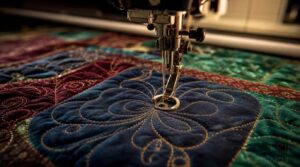
Free-motion quilting on the Mega Quilter feels surprisingly smooth. The free motion foot glides over medium-weight cotton batting with minimal drag, and quilt tension control stays balanced at mid-range without constant adjusting.
Lower the feed dogs, guide steadily, and your motifs come out clean — tight curves included.
Stitch Consistency
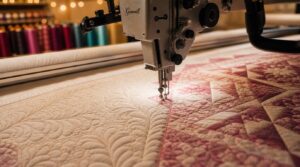
Smooth free-motion results are only half the story. What really sets the Mega Quilter apart is how reliably it holds stitch length settings across a full session.
The built-in stitch regulation keeps things even without constant correction — a genuine advantage when you’re covering a large quilt top and can’t afford inconsistency creeping in mid-run.
Fabric Thickness Handling
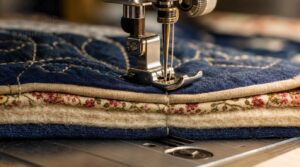
Consistent stitch length only holds up if the machine can actually push through what you’re sewing. The Mega Quilter manages layered quilting composites well — its adjustable presser foot pressure and automatic tension system do most of the heavy lifting.
- Needle size selection changes everything with thick fabric
- Larger gauge needles prevent deflection and skipped stitches
- Presser foot pressure adjustments keep feeding smooth
- Wider seam allowances reduce bulk at turning points
Speed Control Performance
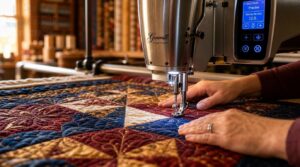
Getting through thick layers is one thing — but controlling your quilt stitch speed is what separates clean results from a tangled mess.
The Mega Quilter’s electronic speed control slider lets you dial in exactly where you want to be, from a crawl to the full 1,600 spm without losing motor power or consistency.
Frame Quilting Setup
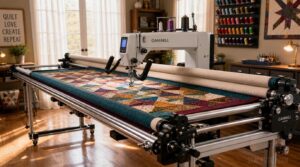
The Mega Quilter pairs naturally with the INSPIRA frame system, which runs from 5 to 10 feet and keeps your backing, batting, and top locked in place while the machine moves instead of the fabric.
Quilt frame stability matters here — mount it level, check your tension knobs, and test with scrap fabric first.
Pros, Cons, and Common Problems
No machine is perfect, and the Mega Quilter is no different. It has some real strengths worth knowing about, but also a few quirks that can catch you off guard. Here’s an honest look at both sides.
Main Advantages
The Mega Quilter’s biggest selling point is simple: it’s built to work as hard as you do.
- 1,600 stitches per minute keeps large quilts moving fast
- A quiet, low-vibration motor won’t fatigue you through long sessions
- Automatic stitch regulation and presser pressure deliver even results across layers
- The built-in thread cutter and knee lift free your hands when it matters
Notable Limitations
But no machine is perfect — and the Mega Quilter has real limits worth knowing.
Frame integration is strict: it works best with the Inspira system, and non-Husqvarna frames often lose full functionality.
Parts sourcing delays can stretch weeks, and using aftermarket parts risks voiding your warranty.
The 9-inch throat space also creates quilt sizing limitations, making king-size projects genuinely difficult.
Thread Breakage Issues
Thread breakage is one of the most frustrating complaints you’ll hear from Mega Quilter owners. Most breaks trace back to tension unit calibration — when upper and bobbin tension don’t work together, the thread snaps under load. Always do a thread tension adjustment on scrap fabric before starting a project.
Poor Thread Path Maintenance makes it worse. A worn or damaged guide creates sharp friction points that weaken thread fibers before they even reach the needle.
Needle Compatibility Concerns
The Mega Quilter uses Hlx-5 compatible needles only — no substitutions. That’s a narrow standard, so stock up when you find them.
- Match needle type to fabric: sharp for cotton, ballpoint for knits
- Use a larger eye needle with metallic thread to prevent shredding
- Wrong gauge causes skipped stitches on thick layers
- Correct insertion depth prevents bird nesting
- Topstitch needles suit straight-stitch quilting best
Foot-changing Requirements
Foot changes on the Mega Quilter aren’t quick. The machine ships with two presser feet in the accessory box, and swapping them requires a screwdriver — no snap‑on convenience here.
Always raise the presser foot fully before switching, and align it carefully with the needle center.
Run a scrap test after every change to catch skipped stitches before they reach your quilt.
Price, Value, and Buying Advice
So you’ve decided the Mega Quilter might be the right machine — now comes the part that actually determines whether you pull the trigger. Pricing can vary quite a bit depending on where you look and what’s included. Here’s what you need to know before you spend a single dollar.
Used Price Range
Used Mega Quilters usually sell for $1,500 to $3,500, depending on condition and what’s included.
- Excellent condition with low stitch count: near $3,000+
- Missing manual or accessories: expect a lower ask
- Recent servicing adds $100–$300 in value
- Private sales often drop 5–15% with negotiation
- Holiday seasons push prices higher
Regions with fewer listings tend to show noticeably higher asking prices.
Frame Accessory Costs
Frame accessories can quietly push your total cost past what you expected.
An extension table runs $150–$350, while wheel upgrades cost $40–$60 per wheel. Bungee system replacements usually fall between $25–$45 per set. Frame rulers, clamp replacements, and quick-release tensioners add another $10–$70 each.
Factor these in before comparing dealer trade-in value against a private sale.
Where to Find One
Once you’ve sorted the cost, the next step is actually tracking one down — and that’s where things get interesting.
Local Husqvarna Viking dealers are your best starting point. Some keep the Mega Quilter on the floor; others can order one in. For used units, check flea markets, classified ads, and local repair shops. eBay listings are rare, but quilt festivals occasionally surface complete setups.
Parts and Manual Availability
Once you’ve located a machine, support is surprisingly solid. Husqvarna Viking’s official site lets you download owner’s manuals as PDFs, searchable by model number.
OEM part access runs through authorized dealers, who can order unavailable items within 5–7 business days. Part compatibility lists cover needles, presser feet, and frame components — so you’re not guessing.
Who Should Buy It
So, who’s this machine actually for?
If you’re a advancing hobbyist moving past domestic machines, the Mega Quilter’s straightforward controls and steady stitch feed make the step up feel natural. Small studio owners get solid mid-arm clearance without sacrificing floor space. Precision-focused pros will appreciate the needle up/down control and free motion quilting capability. Budget-minded buyers can find used units well under $1,000 — iblondie paid around $2,000 for a complete setup and calls it worth every cent. If you’re expansion-ready, the extension table and frame options grow with you.
Frequently Asked Questions (FAQs)
Does the Mega Quilter work with other frame brands?
Want to know if you’re locked into Viking’s ecosystem? Third-party frames can work, but you’ll likely need adapter kits or some DIY ingenuity. Results vary by rail spacing and mounting hardware.
How long does a typical bobbin last per session?
Bobbin longevity depends on thread type and speed. At 1,600 stitches per minute, you’ll burn through a bobbin faster than expected. Thicker thread drains it quicker. Plan on refilling every 20–30 minutes during long sessions.
Can beginners learn free-motion quilting on this machine?
Yes — and it’s actually a great starting point. The quiet motor and slow speed control let you build confidence without the machine running away from you. Start with simple meanders, use small practice sandwiches, and you’ll progress naturally.
What maintenance schedule does the Mega Quilter require?
Keep it simple: clean the bobbin area monthly, oil moving parts every six months, and book an annual service with a repairman. Check tension at the start of each project.
Is Cruise Control compatible with all frame lengths?
The Cruise Control device works with frame lengths from 5 to 10 feet — but not beyond that. Stick within those limits, and you’ll get accurate, consistent stitch regulation every time.
Conclusion
At 1,600 stitches per minute, the Mega Quilter finishes what slower machines can’t. Every Husqvarna Viking Mega Quilter review eventually circles back to the same truth: this machine was built for one thing, and it does that one thing exceptionally well.
If you quilt large projects regularly, it earns its place. If you need versatility, look elsewhere.
But if king-size quilts have been winning the fight, this machine finally puts you back in control.
- https://sewingmachinesplus.com/products/viking-megaquilter
- https://sewing.patternreview.com/SewingMachine/423
- https://www.quiltingboard.com/main-f1/about-husqvarna-viking-mega-quilter-t303048.html
- https://www.allbrands.com/products/9265
- http://vikingsewinggallery.com/wp-content/uploads/2016/09/TradeIn_Pricing_9.30.16.pdf