This site is supported by our readers. We may earn a commission, at no cost to you, if you purchase through links.
Your sewing machine holds at least a dozen decorative stitches you’ve probably never touched. Those mysterious symbols on the dial aren’t just for show—they’re your gateway to transforming plain fabric into something that looks custom-made.
Learning decorative stitch techniques opens up a world beyond straight seams: imagine adding delicate feather patterns to a blouse cuff, creating lace-like fagoting between fabric panels, or finishing blanket edges with that signature looped stitch you’ve admired on handmade quilts.
The difference between a beginner and someone who sews with confidence often comes down to mastering just five or six essential stitches. Once you understand how thread weight, fabric choice, and machine settings work together, you’ll stop avoiding those decorative options and start reaching for them first.
Table Of Contents
- Essential Decorative Stitch Types
- Choosing The Best Thread and Fabric
- Setting Up Your Sewing Machine
- Practicing Decorative Stitch Techniques
- Troubleshooting Decorative Stitch Issues
- Creative Applications for Decorative Stitches
- Tips for Mastering Decorative Stitches
- Top 5 Tools for Decorative Stitching
- Frequently Asked Questions (FAQs)
- Conclusion
Essential Decorative Stitch Types
Every decorative stitch has its own personality—some create bold geometric patterns while others whisper delicate texture into your fabric.
If you’re just starting out, mastering a few essential stitches for beginners will give you the foundation to experiment confidently with decorative options later.
Every decorative stitch carries its own personality, from bold geometric patterns to delicate whispers of texture
You’ll discover that mastering a handful of foundational stitches opens up endless creative possibilities, from crisp edge finishes to intricate embroidered designs. Let’s explore seven essential stitches that’ll form the backbone of your decorative stitching toolkit.
Straight Stitch for Precision
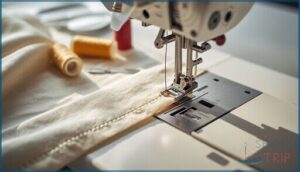
Straight stitch is your foundation for precision stitching on any sewing machine. Set your stitch width to zero and adjust length between 1.5 and 3.0 mm depending on fabric weight.
Sharp needles glide through tightly woven materials without skipping, while proper thread tension keeps decorative stitches balanced.
Add a stabilizer under lightweight fabrics to prevent shifting and maintain crisp, professional lines every time.
Zigzag Stitch for Flexibility
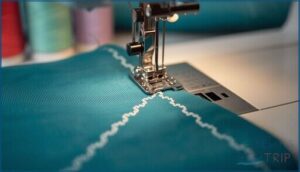
Unlike rigid straight lines, zigzag stitch basics give your seams the flex they need for knits and woven edges alike. Set your sewing machine between 1.5 and 3.0 mm width for lighter fabrics, wider for stretch stitch patterns.
- Prevents fraying on raw edges with reliable edge finishing techniques
- Facilitates fabric elasticity management without popping threads
- Works beautifully for appliqué and decorative stitches
- Adjusts tension lower for flexible seam construction
- Accepts polyester or cotton blends smoothly
Featherstitch for Elegant Branching
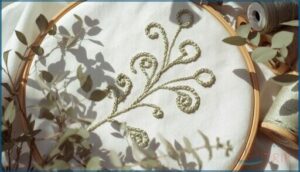
Featherstitch basics create delicate, branch-like patterns that resemble actual feathers across your fabric. This embroidery technique uses V-shaped loops extending from a central spine, perfect for botanical motifs and heirloom linens.
Thread selection matters—fine cotton or silk shows the branching patterns best on crisp linen. Keep your stitch tension even so loops don’t flatten, and practice those branching paths on scrap fabric first.
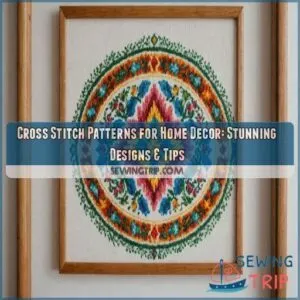
Cross Stitch for Charming Designs
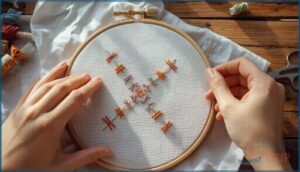
Cross stitch transforms fabric into charming gridded art using two diagonal stitches that form neat X-shapes. Work over even-weave cloth like 14-count Aida, where each square guides your needle perfectly.
Design inspiration flows from color theory—pairing warm tones against cool creates enchanting focal points. This embroidery technique demands careful thread management and fabric selection, but your needlework rewards you with timeless decorative stitches that tell stories square by square.
Fagoting Stitch for Lace-Like Effects
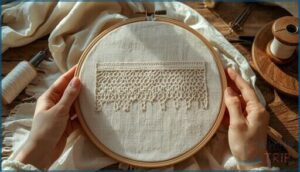
Fagoting stitch creates an airy, lace-like bridge between two fabric panels using decorative stitches that form elegant lattice patterns. You’ll love how this embroidery technique transforms simple seams into delicate openwork reminiscent of vintage weaving. For more details on this method, explore the guide to creating decorative seams with faggoting stitch.
- Master fabric selection by choosing lightweight cottons or linens that showcase lace effects without fraying
- Adjust machine settings for stitch tension—narrow zigzag with consistent length prevents bunching
- Practice fagoting basics on stabilized scrap fabric before tackling final stitching methods
Satin Stitch for Smooth Finishes
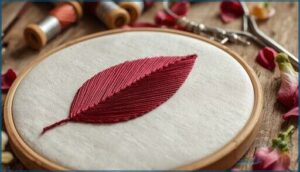
Satin stitch delivers a silky, ribbon-like surface by filling shapes with parallel straight stitches packed tightly side by side. You’ll achieve smooth finished techniques when you control stitch length and keep fabric taut in your hoop.
Master these satin stitch basics and watch small fills transform into polished embroidery and needlework.
A key part of its historical significance is seen in Chinese and European embroidery traditions.
| Satin Stitch Basics | Thread Tension Tips |
|---|---|
| Fill from center outward | Keep tension consistent |
| Use single strand for smoothness | Avoid pulling too tight |
| Outline shape with backstitch | Match needle to fabric choice guide |
Blanket Stitch for Edge Finishing
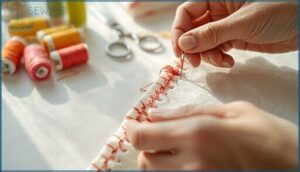
Blanket stitch forms a row of looped stitches that secure fabric edges and create a decorative border—perfect for felt and woven fabrics. You’ll wrap the thread around the edge, keeping tension consistent and spacing even for a tidy finish.
Master corner techniques by pivoting your work and making small extra stitches at sharp turns. Thread choices matter: heavier floss creates bold edge finishing, while fine cotton delivers delicate results.
Choosing The Best Thread and Fabric
Your thread and fabric choices set the stage for every decorative stitch you create.
The right combination makes stitches pop with clarity and color, while the wrong pairing can leave your work looking flat or puckered.
Let’s break down the materials that’ll give your decorative stitching the best chance to shine.
Thread Types for Decorative Stitches
Your thread selection shapes every decorative stitch you create. Polyester embroidery thread resists fraying and holds color through countless washes, while rayon delivers that gorgeous sheen on lighter fabrics.
Cotton offers a classic matte finish, and metallic options add sparkle—though they need stabilizers to prevent snagging. Thread weights, fiber blends, and color options all affect stitch visibility and thread tension, so choose wisely for your project.
Best Fabrics for Stitch Visibility
Your fabric choice shapes every stitch you see. Light cotton voile and polyester muslin show decorative lines clearly, while silk twill makes small satin stitches crisp.
For bold thread contrast on dark fabrics, black cotton drill reveals white threads beautifully. Fabric texture and color choice directly affect stitch visibility—dense cotton sateen enhances sharp edges, while sheer organza needs stabilizers to prevent distortion.
Thread Weights and Fiber Blends
Weight numbers run from 3 to 80—higher means finer thread. For decorative stitches, 40-weight polyester or cotton embroidery thread balances visibility and manageability.
Fiber blends change everything: polyester-cotton boosts stitch tension stability, while silk-rayon adds sheen but frays easily. Matching thread weight to fabric compatibility prevents puckering. Choose thread options that complement your sewing techniques and yarn types for crisp, professional results.
Matching Needle to Fabric
Your thread choice matters, but the needle you pair it with makes stitch quality shine or suffer. Universal needles handle most wovens in sizes 80/12 to 90/14, while ballpoint types protect knits from snags.
Fabric thickness drives needle selection—lightweight silks need 70/10, heavy canvas demands 100/16 or larger. Thread compatibility seals the deal: rayon embroidery thread flows through larger-eyed embroidery needles, preventing frustrating breaks mid-stitch.
Setting Up Your Sewing Machine
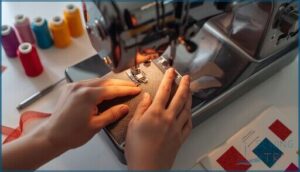
Your sewing machine can feel like a puzzle when you’re getting started with decorative stitches, but setup doesn’t have to be complicated.
Getting the right foot attached, tension dialed in, and stabilizer in place makes the difference between frustration and beautiful results. Here’s what you need to check before your first stitch hits the fabric.
Selecting The Correct Presser Foot
Your presser foot guides fabric under the needle, and choosing the right one transforms decorative stitches from frustrating to impeccable. Check your sewing machine manual for foot shank types—low, high, or slant shank compatibility matters more than you’d think.
- Embroidery foot: Creates room for dense decorative stitches without crushing them
- Satin stitch foot: Grooved underside lets thick threads glide smoothly
- Standard foot: Works for basic sewing techniques but limits stitch alignment tips
Adjust foot pressure settings to prevent fabric drag.
Adjusting Stitch Width and Length
Once you’ve locked in the right presser foot, dial in your sewing machine’s stitch width control and length adjustment to transform decorative stitches from mediocre to mesmerizing.
Stitch widths determine coverage—wider creates bold edges, narrower produces tight satin lines. Stitch lengths affect density; shorter equals compact, stronger hold. Test both on scrap fabric first, adjusting fabric tension as needed for precision sewing and thread visibility that’s error-free.
Filling and Inserting The Bobbin
Now it’s time to master bobbin thread management—the hidden engine behind perfect decorative stitches. Wind your bobbin evenly using the pre-tension guides, then check bobbin case alignment before insertion.
The thread should exit counterclockwise, case clicking snugly into place. Pull your top thread gently to capture the bobbin thread, testing thread tension control on scrap fabric to guarantee balanced, skip-free stitching every time.
Using Stabilizers for Decorative Stitches
Stabilizer types transform your decorative stitches from puckered disasters into crisp designs. Place cutaway stabilizer, tear-away, or wash-away stabilizer under fabric in the hoop before stitching—this provides fabric support that prevents tunneling and maintains thread tension.
Your stitch stability depends entirely on choosing the right weight for your fabric. Water-soluble options disappear completely on your sewing machine embroidery projects, while tear-away works beautifully on denser materials.
Practicing Decorative Stitch Techniques
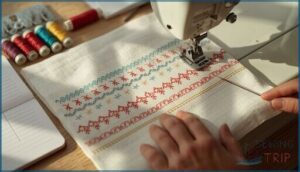
Before you stitch on your final project, you need to build muscle memory and confidence with each decorative pattern.
The best way to master these techniques is through deliberate practice that reveals how your machine reacts to different settings and movements. Here’s how to practice decorative stitches effectively before working on anything that matters.
Practicing on Scrap Fabric
Think of scrap fabric as your training ground—it’s where you build muscle memory without risking your main project. Grab a 4×4 inch square and test decorative stitches while tweaking thread tension and stitch alignment.
Use your sewing machine to run speed exercises, practice edge finishing, and observe how fabric choice affects stitch patterns. Save these samples to track your progress.
Using Contrasting Threads for Visibility
High-contrast threads transform practice from guesswork to precision sewing. White on black or bright primary colors on mid-tones reveal every decorative stitch with sharp clarity—essential for mastering thread tension and embroidery techniques.
Choose 40-weight threads for best visibility on medium fabrics, and test your contrast stitching on a scrap swatch first. Thread color theory makes weaving, fabric choice, and thread management instantly clearer.
Overlapping and Securing Stitches
Overlapping stitches prevent unraveling and keep your decorative work looking sharp and professional. When you align your overlaps with staggered repeats and balanced thread tension, you create secure anchors that lock decorative stitches in place—whether you’re working featherstitch embroidery or intricate overlap patterns.
- Start with a backstitch at the beginning and end to lock thread tails
- Space overlaps 1 to 2 millimeters apart for delicate fabrics
- Use zigzag reinforcement over edges to distribute stress
- Maintain consistent tension to prevent gaps and guarantee fabric stability
- Test stitch patterns on scraps before committing to your final piece
Troubleshooting Decorative Stitch Issues
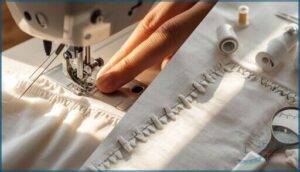
Even the most careful stitchers hit snags—threads break, fabric bunches, or stitches skip for no apparent reason.
These frustrations don’t mean you’re doing something wrong; they’re signals that a simple adjustment will set things right.
Here’s how to troubleshoot the most common decorative stitch problems and keep your machine running smoothly.
Fixing Thread Breakage
Thread breakage during decorative stitches often points to three culprits: incorrect thread tension, poor needle alignment, or a dull needle. Start by re-threading your sewing machine completely, checking that thread flows smoothly through every guide.
Replace your needle if it’s bent or worn. Test stitch settings on scrap fabric, and verify your thread matches your fabric’s weight for better breakage prevention.
Preventing Fabric Bunching
Fabric bunching during decorative stitches signals tension trouble—your sewing machine is trying to tell you something. Tension control and proper fabric preparation prevent this common frustration.
- Balance thread tension settings on both top and bobbin threads
- Use appropriate stabilizer weight for your fabric choice
- Adjust presser foot pressure to match fabric thickness
- Select proper stitch optimization and length settings
- Practice thread management through correct needle-to-fabric pairing
Test on scraps first.
Resolving Skipped Stitches
When your machine skips stitches, don’t panic—start with the needle check. Replace bent or dull needles immediately and check needle orientation: the flat side must face the correct direction.
Next, inspect your thread path from spool to bobbin tension, ensuring smooth flow through every guide. Install fresh stabilizer under delicate fabrics, then test your presser foot pressure. Troubleshooting common sewing issues becomes second nature with systematic checking.
Maintaining Your Sewing Machine
Keeping your sewing machine in top shape prevents most stitch problems before they start. Clean feed dogs and bobbin areas every 8 to 10 hours of sewing, then apply oil lubrication only where your manual specifies.
- Remove lint from behind the needle plate weekly
- Check thread tension and bobbin maintenance together
- Verify needle alignment after every cleaning session
- Cover your machine between projects to block dust buildup
Creative Applications for Decorative Stitches
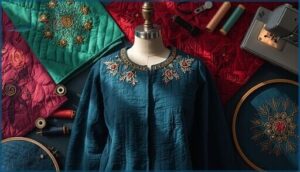
You’ve spent hours perfecting your decorative stitches—now it’s time to put them to work. From quilts that tell stories to clothes that catch the eye, decorative stitches transform everyday projects into something worth showing off.
Let’s explore where these techniques shine brightest in your creative work.
Quilting With Decorative Patterns
Your quilt blocks transform when you add feathers, swirls, or geometric patterns stitched into the surface. Decorative stitches in quilting basics require planning stitch density and pattern design upfront—6 to 12 stitches per inch works for most motifs. Machine setup with a darning foot lets you trace designs freely.
| Pattern Element | Recommended Approach |
|---|---|
| Feathers & Swirls | Free motion quilting with stitch regulator |
| Geometric Shapes | Mark guidelines with erasable fabric pen |
| Thread Contrast | High contrast on dark fabrics, low contrast to soften |
Practice simple loops on scrap fabric before tackling complex tessellations. Your sewing machine becomes a drawing tool when you master consistent speed and fabric selection for embroidery effects.
Embellishing Garments and Accessories
You can enhance your wardrobe with decorative stitches by adding embellishments to collars, cuffs, and pockets. These garment details transform basic pieces into custom fashion statements using sewing techniques that range from simple zigzag borders to intricate embroidery.
- Blanket stitch around jacket lapels for polished edge finishing
- Cross stitch monograms on shirt pockets for customized accessory design
- Featherstitch along jean hems for bohemian fabric decoration
Decorating Home Décor Projects
Your living room and bedroom deserve the same creative attention as your wardrobe. Decorative stitches turn plain throw pillows, curtain panels, and table linens into textile art that reflects your style.
| Home Decor Item | Recommended Stitch Patterns |
|---|---|
| Throw pillows | Satin stitch borders, zigzag appliques |
| Table runners | Blanket stitch edges, cross stitch motifs |
| Curtain panels | Straight stitch hems, featherstitch accents |
| Placemats | Geometric embroidery, decorative edge finishing |
Choose fabric selection carefully—linen napkins show fine embellishment ideas beautifully, while cotton cushions accept dense fabric decoration without puckering on your sewing machine.
Personalizing Sewing Projects
Custom embroidery transforms any project into something distinctly yours. Tailored monograms on garments create memorable gifts, while stitch patterns in contrasting thread colors showcase your decorative stitches beautifully.
Smart fabric choices matter for lasting embroidery on your sewing machine:
- Adjust stitch density from 0.5 mm to 3.0 mm for bold or subtle designs
- Use contrasting thread colors to enhance visibility against base fabric
- Choose lightweight cottons for dense embroidery without distortion
- Add small motifs like leaves at cuffs or pocket corners
- Coordinate thread with buttons and zippers for cohesive fabric selection
Tips for Mastering Decorative Stitches
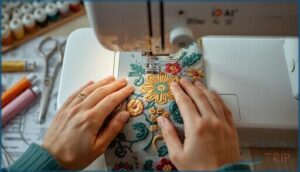
You’ve learned the stitches, set up your machine, and worked through a few practice runs.
Now it’s time to sharpen your skills and avoid the pitfalls that trip up most beginners. These tips will help you choose the right patterns, stitch with confidence, and keep your finished work looking sharp for years.
Choosing and Selecting Stitch Patterns
Before you start decorating, match your stitch pattern to your fabric choice and thread selection. Delicate featherstitches shine on linen, while satin fills suit woven cottons best.
Sketch your design planning notes to visualize stitch density across your sewing machine project. Testing different decorative stitches on scrap fabric reveals which embroidery patterns complement your chosen weave—this step saves frustration later.
Enhancing Stitch Precision and Control
Precision in decorative stitches depends on stitch guide alignment and thread tension balance. Adjust your sewing machine’s needle offset to control stitch patterns along your seam line—even 1 to 2 grams of fabric grip management has a noticeable impact on delicate weaves.
Master foot pedal control with smooth acceleration to reduce skipped starts on tight embroidery designs, and your sewing tips will shine.
Avoiding Common Beginner Mistakes
Most beginners rush through fabric preparation, but skipping a simple test panel invites frustration with thread tension and stitch consistency.
Before starting any decorative stitching techniques, verify your machine calibration on scrap material—it’s the quickest sewing tip for embroidery stitches that look polished.
Apply these beginner troubleshooting steps and your sewing machine tips will transform messy practice into confident, controlled sewing for beginners.
Storing and Caring for Finished Projects
After mastering fabric decoration and sewing and embroidery techniques, you’ll want your textile decoration and embellishment to endure for years.
Proper fabric preservation and project handling protect your investment in time and stabilizer.
The following steps can help:
- Storage Conditions: Keep finished work in cool, dry areas between 60–75°F away from sunlight
- Fabric Selection and Preparation: Fold with acid-free tissue to prevent yellowing
- Long Term Storage: Use breathable cotton bags—never plastic
- Display Care: Rotate displayed pieces every 3–6 months to reduce light exposure
- Handling: Clean gently before storing to avoid embedded dust
Top 5 Tools for Decorative Stitching
The right tools transform decorative stitching from frustrating guesswork into smooth, satisfying work.
You don’t need a mountain of equipment—just five essential items that handle thread tension, fabric stability, and stitch precision. Here’s what belongs in your decorative stitching toolkit.
1. Brother Sewing And Embroidery Machine
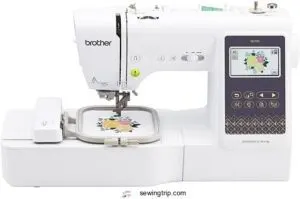
You’ll find a powerful creative partner in the Brother SE700, which combines full sewing and embroidery functions in one compact machine.
Its 4 x 4 embroidery field lets you stitch 135 built-in designs, while the 3.7 touchscreen makes on-screen editing feel natural.
The automatic needle threader saves your eyes during setup, and wireless LAN connectivity means you can transmit custom patterns directly from your device.
At 15.6 pounds, it won’t anchor your workspace but delivers serious embroidery muscle for decorative stitch work.
| Best For | Crafters who want to explore both sewing and embroidery without buying separate machines, especially those ready to move beyond basic projects. |
|---|---|
| Primary Use | Sewing & Embroidery |
| Material Type | Metal & Plastic |
| Compatibility | Standalone Machine |
| Skill Level | Beginner to Advanced |
| Made In | Not Specified |
| Weight | 15.6 pounds |
| Additional Features |
|
- Wireless connectivity lets you send custom designs straight to the machine without dealing with USB drives
- Automatic needle threader takes the frustration out of setup, especially helpful when switching between projects
- Touchscreen interface makes editing and navigating designs much easier than dealing with buttons and knobs
- 4″ x 4″ embroidery area feels limiting once you start getting ambitious with projects
- Threading feature can be temperamental and doesn’t always cooperate when you need it most
- You’ll need to budget extra for threads, needles, and possibly design software to really unlock what this machine can do
2. Brothread Polyester Embroidery Thread Kit
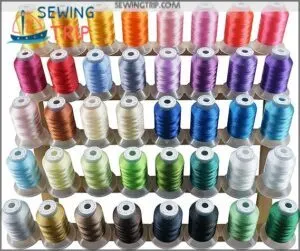
Once your machine is ready to embroider, you’ll need thread that can keep up. The Brothread 40-spool polyester kit gives you 500 meters per color—enough for multiple projects without constant restocking.
Its tensile strength resists breakage even at high speeds, and the color fastness means your work survives repeated washing. The included color chart helps you plan designs quickly, and at 40 weight, these spools work smoothly across Brother, Janome, Singer, and most embroidery machines without constant tension adjustments.
| Best For | Hobbyists and small businesses running frequent embroidery projects who need reliable, vibrant thread across multiple compatible machine brands. |
|---|---|
| Primary Use | Thread Supply |
| Material Type | Polyester |
| Compatibility | Multiple Machine Brands |
| Skill Level | All Levels |
| Made In | Not Specified |
| Weight | 40 WT |
| Additional Features |
|
- 40 spools with 500 meters each provide excellent value and reduce the need for frequent restocking
- Strong tensile strength and elasticity minimize thread breaks during high-speed embroidery
- Works seamlessly with Brother, Janome, Singer, and other major embroidery machine brands
- No storage rack included, so you’ll need to buy one separately or find another organization solution
- Requires attention to proper needle size and bobbin thread pairing to avoid potential fraying issues
- Thread ends may need manual securing with a notch cut into the spool
3. HBI Water Soluble Embroidery Stabilizer
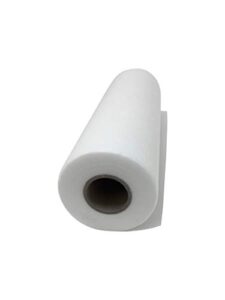
Thread only shines when your fabric stays flat. The HBI Water Soluble Stabilizer aids low to medium density designs with its 1.5 oz fibrous construction—sturdy enough to hoop smoothly but light enough to dissolve completely in warm water.
Use it under delicate fabrics like organza or as a topper on textured weaves to prevent pile interference. The 12″ x 25-yard roll lets you cut precise lengths for each hoop, and after stitching, a quick soak removes every trace without residue or stiffness.
| Best For | Embroiderers working with delicate fabrics or textured materials who need a stabilizer that vanishes completely after stitching. |
|---|---|
| Primary Use | Stabilizer Material |
| Material Type | Non-woven |
| Compatibility | Universal Embroidery |
| Skill Level | All Levels |
| Made In | USA |
| Weight | 1.5 oz |
| Additional Features |
|
- Dissolves fully in warm water with no residue or stiffness left behind
- Works as both a backing and topper to prevent pile interference on textured fabrics
- Long 25-yard roll gives you plenty of material to cut custom sizes for different projects
- Too thin for high-density or heavy stitch-count designs without layering
- Requires multiple layers for added stability on some projects
- Not suitable if you need any structure to remain after washing
4. VANICE Monogramming Sewing Machine Foot
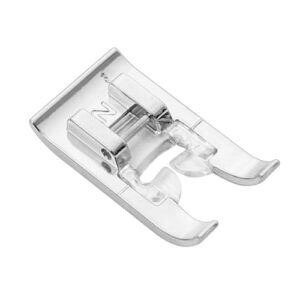
Wide decorative stitches need room to breathe. The VANICE Monogramming Foot‘s open front design gives you clear visibility while your needle builds satin-filled letters and intricate patterns without crowding.
Its broad underfoot channel glides smoothly over thick thread buildup, preventing snags that ruin monograms halfway through. Snap it onto your low shank machine, practice letter spacing on scrap fabric first, and watch your custom touches transform from wobbly to professional.
Clean the channel after dense stitching to keep performance sharp.
| Best For | Sewers who want to add professional monograms and decorative stitching to garments or home decor projects without guesswork. |
|---|---|
| Primary Use | Presser Foot Accessory |
| Material Type | Alloy Steel & Plastic |
| Compatibility | Low Shank Machines |
| Skill Level | All Levels |
| Made In | Not Specified |
| Weight | 0.634 ounces |
| Additional Features |
|
- Clear front visibility lets you see exactly where your needle’s going during complex letter work
- Wide channel underneath handles thick satin stitches without snagging or bunching
- Snaps onto most low shank machines without needing adapters or special tools
- You’ll need to double-check compatibility with your specific machine model before buying
- Only includes the presser foot itself—no machine or accessories
- Dense embroidery requires regular cleaning of the channel to maintain smooth performance
5. Water Soluble Embroidery Stabilizer Film
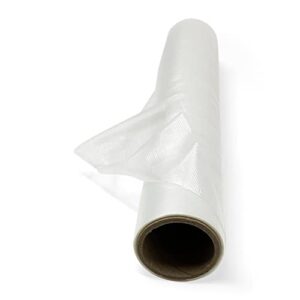
Delicate fabrics like organza and towels need stabilizer support that vanishes completely. This water-soluble film dissolves in cold water, leaving zero residue behind—perfect for high-pile textures where stitches can sink and disappear.
Use it as a topper on fuzzy fleece or as backing for sheer materials. The 12″ x 15-yard roll cuts hooping hassle and gives you clear visibility during stitching. Double-layer it for dense satin fills, then rinse away the film to reveal crisp lettering without stiffness or show-through.
| Best For | Embroiderers working with high-pile fabrics like towels, fleece, and velvet who need a stabilizer that dissolves completely without leaving residue or stiffness. |
|---|---|
| Primary Use | Stabilizer Material |
| Material Type | Water-soluble Film |
| Compatibility | Universal Embroidery |
| Skill Level | All Levels |
| Made In | USA |
| Weight | 7 ounces |
| Additional Features |
|
- Dissolves entirely in warm water or steam, leaving no trace on delicate or textured fabrics
- Works as both a topper and light stabilizer, preventing stitches from sinking into fuzzy materials
- 12″ x 15-yard bulk roll reduces waste and keeps you stitching longer without frequent replacements
- Thin material tends to roll up and can be tricky to hoop due to stretchiness
- May require double layering for adequate stability on dense embroidery designs
- Higher cost compared to other stabilizer options, which adds up for frequent users
Frequently Asked Questions (FAQs)
How do I combine multiple decorative stitches?
Sketch your layout first, marking rows and borders with an erasable pen.
Stick to two or three main stitch styles so your design looks intentional, not cluttered, and space lines a few millimeters apart.
Can decorative stitches be used on leather?
Can leather hold embroidery’s charm? Yes. Use waxed linen thread, sharp needles, and punch holes first for even spacing.
Test on scraps, choose contrasting colors, and seal edges afterward to protect your decorative work.
Whats the best lighting for detailed stitch work?
You need bright light—at least 1000 lumens—positioned twelve to eighteen inches above your work.
Choose a daylight bulb around 5000K to reveal true thread colors and reduce eye strain during detailed stitching.
How do I create custom stitch patterns?
Most machines let you combine built-in motifs at different widths and lengths—just test each variation on scrap fabric, then save your favorites in the machine’s memory or document settings in a pattern notebook.
When should I hand stitch versus machine stitch?
Hand stitch delicate fabrics like silk and lace where precision matters most.
Use your machine for long seams, heavy denim, and projects needing speed.
Let fabric type and finishing purpose guide your choice.
Conclusion
Picture the woman at your local quilt show whose blanket edges look handmade with love—she started exactly where you’re now.
Learning decorative stitch techniques transforms your machine from basic tool into creative partner.
The stitches you’ve practiced today—feather stitch, blanket stitch, satin stitch—will soon flow from your fingertips without conscious thought.
That’s when sewing stops feeling like following instructions and starts feeling like speaking a language only fabric understands.
- https://www.threadsmagazine.com/2023/01/18/decorative-stitch-guide
- https://www.nationalquilterscircle.com/post/exploring-decorative-stitches-on-your-sewing-machine
- https://www.maggieframes.com/blogs/embroidery-blogs/decorative-stitching-mastery-techniques-and-creative-applications-for-stunning-fabric-embellishment
- https://thequiltshow.com/quiltipedia/what-are-decorative-stitches
- https://www.weaverleathersupply.com/collections/hand-stitching